

RayNeo has just made the AR glasses market a little more crowded and honestly, a lot more interesting. Instead of launching one pair of glasses that tries to be a smart assistant, gaming screen, movie theater and everything else at once, the company has taken a different approach.
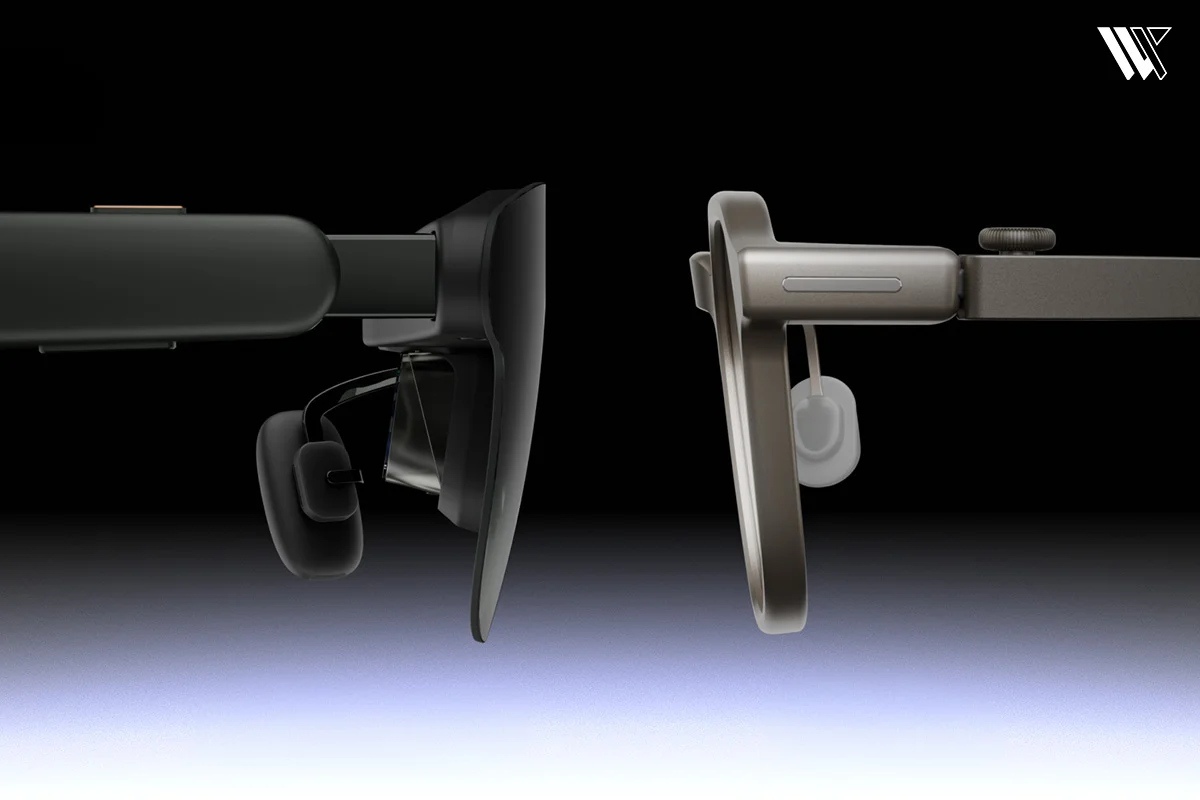
On August 21, 2026, RayNeo announced the RayNeo iO Smart Glasses, along with the new RayNeo GT and GT Max. The iO is focused on lightweight AI productivity, while the GT Series is designed around large virtual screens, gaming and entertainment. All three models are scheduled to go on sale on September 4, 2026.
So, if you are wondering what the RayNeo iO Smart Glasses actually do, why the GT Max has a huge 59-degree field of view and how these three glasses are different, here is everything you need to know.
RayNeo Is Splitting Its New AR Lineup Into Two Very Different Products
The primary message being conveyed by the launch is that RayNeo is not producing 3 iterations of one device. RayNeo is working hard at bifurcating the field of augmented reality based on two distinct use cases by consumers:
Decode the Decor
The Smart Jewelry Revolution — a practical guide to wearable tech.
- RayNeo iO: A device that is designed for ambient computing, productivity without requiring the use of hands, live translation, teleprompter capabilities and recording of meetings within a feather-light 33 grams device.
- RayNeo GT Series (GT & GT Max): A device that is designed for media consumption, gaming, spatial audio and a full virtual 3DoF screen experience.
This way, RayNeo makes it easy for consumers to buy exactly what they need.
RayNeo iO Is Built as a 33g Heads-Up AI Assistant

© RayNeo
© RayNeo
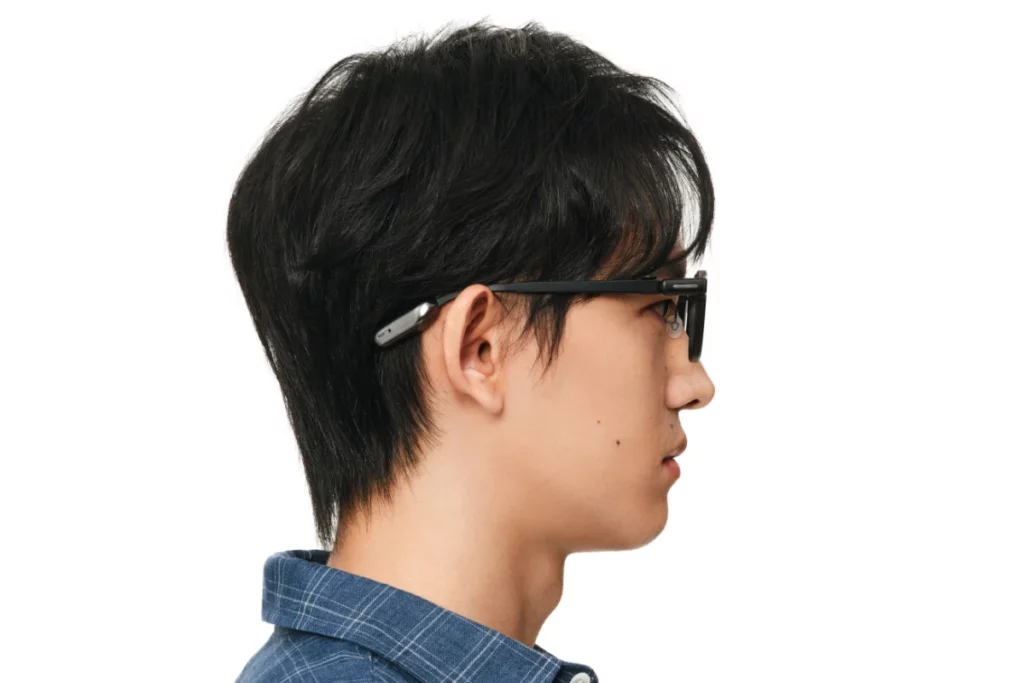
One of the most innovative hardware designs coming out of this launch includes the RayNeo iO Smart Glasses. At just 33 grams, this design is meant to resemble traditional glasses rather than a cumbersome technological accessory.
In designing the glasses, the company opted for a classic Crown Panto style frame which is made of lightweight AZ91D magnesium-aluminum alloy in the front and titanium used for the temples. Such an approach allowed the engineers to achieve perfect 50:50 weight distribution between the front and rear parts, which means that you will not have any discomfort in wearing them even throughout the whole day.
Its Waveguide Display Is Designed to Be As Invisible as Possible
© RayNeo
© RayNeo
The design does not require an opaque screen covering all your vision, therefore, it utilizes an ultra-compact 0.085cc monochrome green Firefly Nano optical engine and a diffractive Blue Lake waveguide. The combination of these two is designed to make sure that you will have a fully functional and useful display while wearing the glasses without having the latter look like a screen attached to your head. The main display parameters of the glasses are:
- Field of View (FOV): 23.5°
- Optical Transparency: 97%
- Eye-Level Brightness: Up to 1,300 nits
With such parameters, green text overlays will be perfectly visible even in bright sunlight, while 97% of the natural light will go straight into your eyes. Moreover, the display is completely invisible to the naked eye and does not interfere with eye contact.
Ambient AI Can Turn Conversations Into Tasks and Calendar Prompts
The best software feature available in the RayNeo iO Smart Glasses is called the Ambient AI Life Log. This system works in an ultra-low power background mode where it listens to the ambient conversations, work discussions and personal notes during the day.
As per the claim made by RayNeo, the system will automatically be able to create actionable tasks along with scheduling prompts from the calendar when the discussion comes to an end. You do not need to go through the trouble of taking out your phone and can simply nod your head.
RayNeo Is Also Offering Multiple AI Models
On the inside, the brain of the iO is powered by both RayNeo AI and Gemini 3.1 Flash Lite.
For users who prefer other large language model engines, RayNeo is providing a choice of another plan called Multi-Model AI selection that can be accessed from the mobile phone app. In the multi-model AI plan, you have the option to choose among the following LLM engines:
- Gemini
- ChatGPT
- Claude
- DeepSeek
Note: RayNeo has not announced the subscription plans for the multi-model add-on yet.
Live Translation and a Teleprompter Are Central to the iO’s Productivity Pitch
In addition to time management, the RayNeo iO Smart Glasses give great importance to real-time speech and visuals-based processes.
Live Translation
Equipped with Timekettle BabelOS 3.0, iO offers real-time streaming translation of text in 55 international languages and 109 regional accents. According to RayNeo, the delay rate is one second at most and it translates the speech in your field of vision while giving a presentation abroad.
Auto Teleprompter
While making presentations in person, in a lecture hall or in videos, the Auto Teleprompter feature helps you give a seamless presentation by scrolling the text according to your pace.
There Are No Speakers on the RayNeo iO
One of the surprising hardware decisions made about the RayNeo iO Smart Glasses is the complete lack of speakers on them.
These smart glasses have been built keeping in mind only the visual needs of the user. Audio capturing is done using a 4-microphone setup paired with a bone conduction sensor. The bone conduction sensor is solely used for picking up vocal cords of the wearer.
Battery Life, Controls and Privacy Features
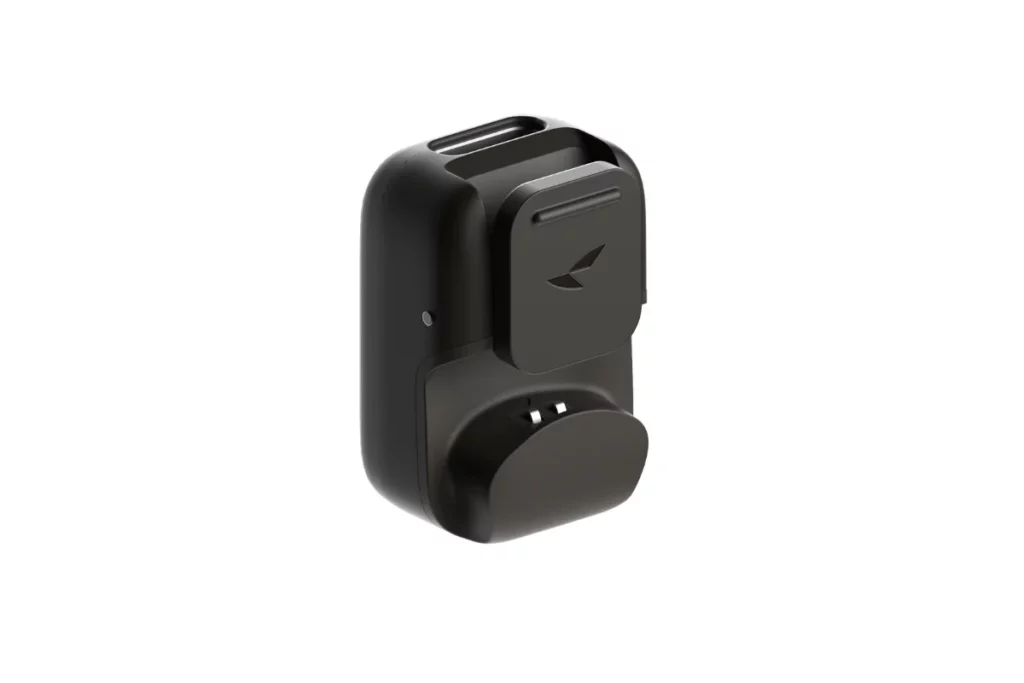
The power source of the RayNeo iO Smart Glasses is an integrated 240mAh battery. The battery capacity of the RayNeo iO Smart Glasses is listed below:
- Mixed Usage: Up to 2 days
- Continuous Voice Recording: Up to 18 hours
- Continuous Live Translation: Up to 6.2 hours
The RayNeo iO glasses feature Bluetooth 5.4 with certified MFi Apple ecosystem integration, IP54 protection class from water and dust and also Smart Crown dial on the right temple which will be used for menu selection.
To solve the problem of the constant monitoring function of smart glasses, there is a built-in LED indicator which starts flashing when the microphone modules are working.
RayNeo GT and GT Max Take the Opposite Approach
While the RayNeo iO Glasses focus toward ambient everyday usage, the RayNeo GT Series is designed for premium multimedia entertainment purposes. The RayNeo GT Series features a specialized dual-chip hardware design, which includes the following:
- The Vision 4000 Display Chip, which enables real-time visual processing and rendering.
- The Zone 360 3DoF Chip that manages hardware-based motion tracking and screen stabilization.
GT Max Pushes the Field of View to 59 Degrees

© RayNeo
© RayNeo
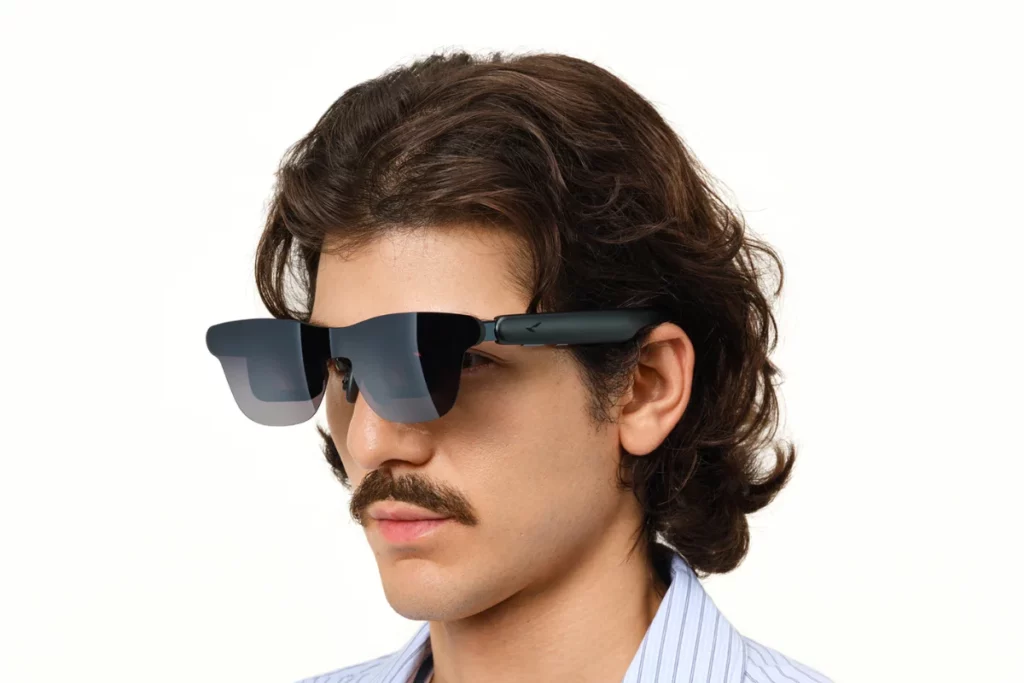
The GT Max from RayNeo has surpassed the standard portability AR device in terms of offering the largest virtual screen size. This is because the GT Max has adopted the Peacock Optical Engine 3.0 Max and the 5.5th generation Tandem MicroOLED, giving an impressive Field of View (FOV) of 59°.
These are the three virtual screen size scales that the GT Max allows:
- 85% Scale: 227-inch virtual display
- 100% Scale: 267-inch virtual display
- 115% Scale: The massive 307-inch virtual display
Whereas the standard RayNeo GT adopts a Birdbath (BB) optical engine with a 46° FOV and a 231-inch virtual display.
RayNeo Says GT Series Is the First AR Glasses System With Native Dolby Vision
According to RayNeo, in conjunction with the RayNeo Pocket TV Pro, the GT Series acts as the first augmented reality glasses device to offer native playback of Dolby Vision and real-time video upscaling from standard dynamic range to high dynamic range via artificial intelligence.
Specialized 3DoF Hardware Ensures Stability of the Virtual Display
© RayNeo
The built-in Zone 360 processor enables the GT Series to offer 3 different hardware-tracked display settings without overloading the processing of the host phone:
- Steady Mode: Compensates for any vibrations that occur while traveling in an aircraft, train or a car.
- Pinned Mode: Holds the virtual display at a set spatial point in your actual room environment.
- Follow Mode: Maintains the centering of the virtual display in the field of view of your eyes as you move your head.
Bang & Olufsen Takes Care of the Audio Aspect
© RayNeo
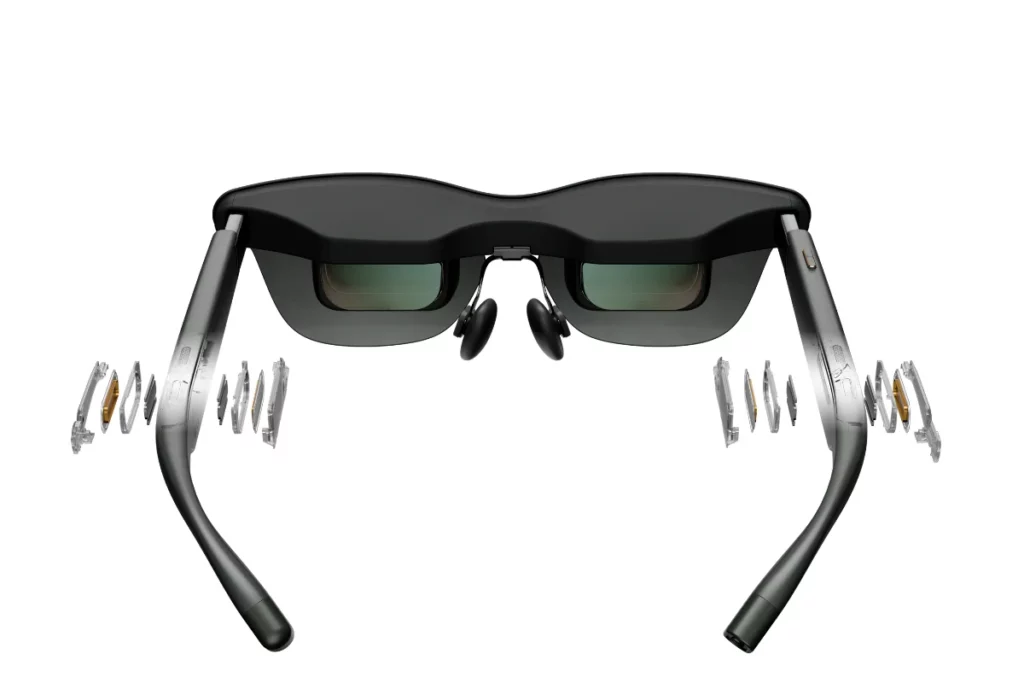
Alongside the display experience, the GT series has an acoustics solution that has been developed in conjunction with the luxury audio manufacturer, Bang & Olufsen.
The acoustics system has a 6-magnetic circuit configuration, which has an enhanced low-frequency bass sensitivity by 5dB. The glasses also have a head-tracked acoustics mode and a whisper mode, which prevents sound leaks to the people around you.
GT Max is Available in Three Physical IPD Sizes
To address the problem of optical blur as a result of eye spacing alignment, GT Max is available in three different physical Interpupillary Distance (IPD) chassis sizes as follows:
- Size S: Sub-64mm IPD
- Size M: 64mm to 67mm IPD
- Size L: Over 67mm IPD
Unlike using only software crops to make adjustments, physical hardware size guarantees that the pupil is right in the optical sweet spot. In terms of weight, a standard RayNeo GT is 68 grams, whereas RayNeo GT Max is 78 grams.
RayNeo iO vs GT vs GT Max: What’s the Difference?
| Specification | RayNeo iO | RayNeo GT | RayNeo GT Max |
|---|---|---|---|
| Primary Function | Ambient Heads-Up Productivity & AI | Portable AR Media & Gaming | Cinema-Grade AR Display |
| Chassis Weight | 33g (50:50 Balanced Layout) | 68g | 78g |
| Optical Engine | Firefly Nano (0.085cc MicroLED) | Birdbath (BB) | Peacock Optical Engine 3.0 Max |
| Field of View (FOV) | 23.5° | 46° | 59° |
| Display Sizing | Heads-Up Text Overlay | Up to 231-inch (136″/201″/231″) | Up to 307-inch (227″/267″/307″) |
| Audio Configuration | Visual-First (0 Speakers / Bone Conduction Mic) | Quad-Speakers (Co-Tuned by B&O) | Quad-Speakers (Co-Tuned by B&O) |
| Tracking / Input | Smart Crown Dial & Head Gestures | Zone 360 Native 3DoF Chip | Zone 360 Native 3DoF Chip |
Which RayNeo Glasses Are Meant for Which User?
Buy RayNeo iO if…
- Productivity, note-taking and tasks management is your key objective.
- You require live multilingual translation or automated speech teleprompting.
- You prefer an ultra-light 33g frame that resembles normal prescription glasses.
- You do not require built-in speakers for listening to music or watching videos.
Buy RayNeo GT if…
- You would like to own a light-weight 68g wearable display for watching movies and playing mobile games while you’re on the move.
- The 46° FOV with 231 inches of virtual screen size serves your travel purpose.
- You require excellent built-in spatial audio tuned by Bang & Olufsen.
Buy RayNeo GT Max if…
- You desire to experience the largest possible field of view (FOV) of 59° and maximum virtual display size of 307 inches.
- You wish to experience Dolby Vision support through the RayNeo Pocket TV Pro.
- You require a customized physical IPD chassis fit (Small, Medium, Large).
RayNeo iO and GT Series Release Date and Availability
Both product series will be available for purchase internationally starting from September 4, 2026, on RayNeo’s official website and from Amazon.
- RayNeo iO Smart Glasses: Available in two color variants: Polar Night (Dark Grey) and Dune (Gold).
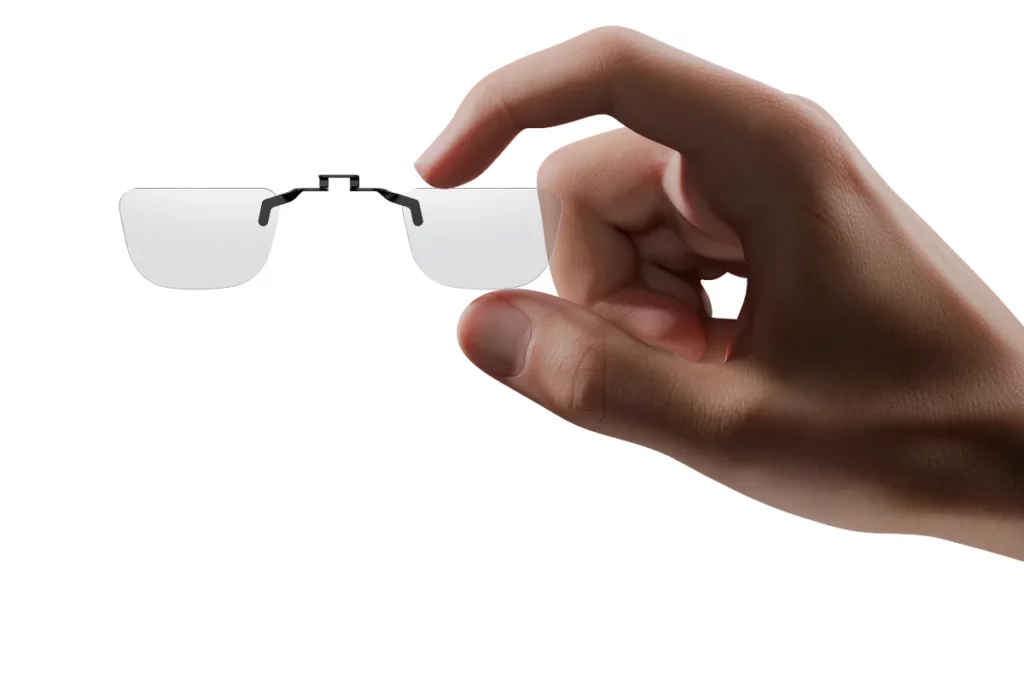
- RayNeo GT Series: The GT and GT Max versions allow the use of prescription lens insertions with magnetic properties.
Wrap Up
The latest release from RayNeo demonstrates the diverse uses that AR glasses can have. The RayNeo iO Smart Glasses have been designed with an emphasis on light-weighted AI, translation and productivity, while GT and GT Max have been made to serve as devices for movie watching, gaming and virtual screens.
The iO weighs only 33g and the GT Max boasts a 59° FOV and 307-inch virtual display. Nevertheless, it will remain to be seen whether these specs will prove practical when the products become available for purchase on September 4.
FAQs
Decode the Decor
The Smart Jewelry Revolution
A practical guide to wearable tech's future — delivered straight to your inbox.
Authors

