

Smartglass tech has always been fascinating to me and XREAL is a prime example. Especially with their newest launch, the XREAL 1S, which introduced automatic 2D-to-3D video conversion. While the 1S positions itself as a great “entry-level” AR headset, the company also recently announced a more high-end AR entertainment and gaming glasses, the XREAL One Pro.
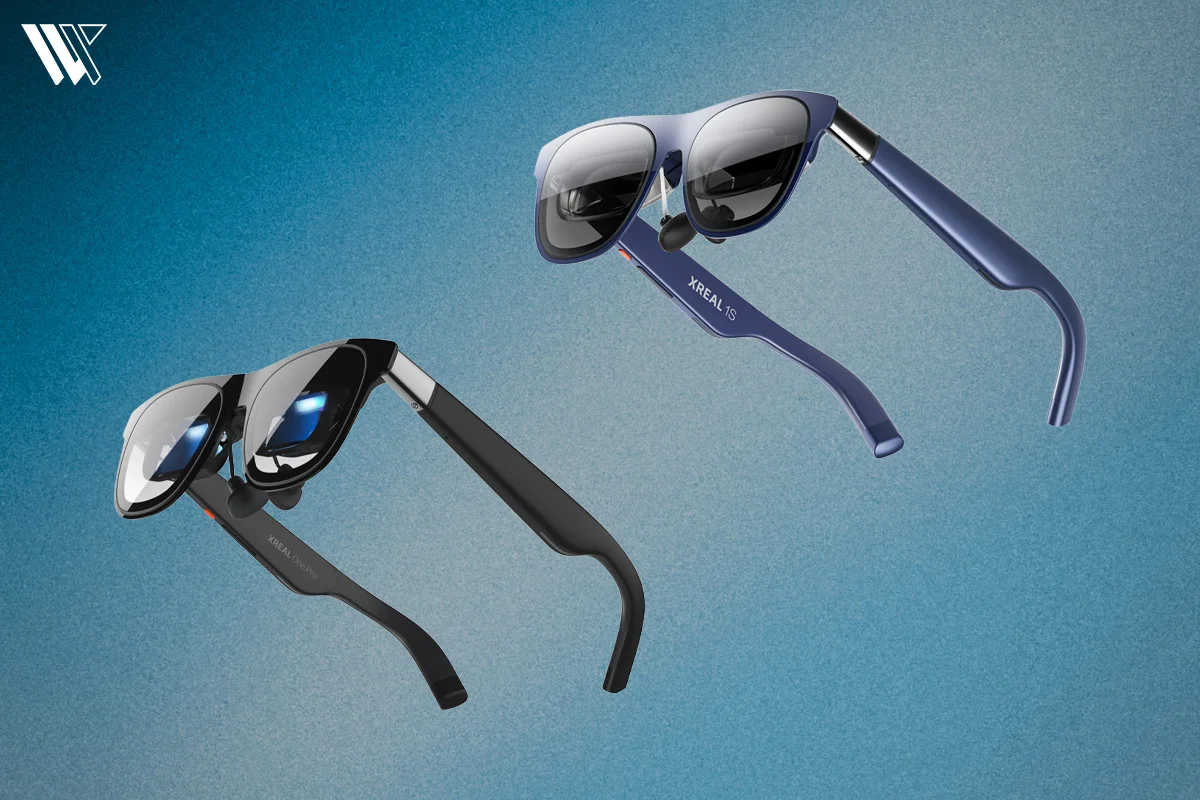
Here is a breakdown of how these models differ and, if you’re considering buying an XREAL, which one you should invest in before the 1S launches worldwide.
Specifications and Features
| Specifications | XREAL 1S | XREAL One Pro |
|---|---|---|
| Price | ¥67,980 (~$450) | $649 |
| Availibility | Currently only available in Japan | Available worldwide |
| Chip | New XREAL X1 proprietary spatial chip | XREAL X1 Chip |
| Color | Silent Blue | Black |
| 2D-to-3D Conversion | Yes (AI-based, in-glasses) | No (will be introduced in future software updates) |
| 3DOF | 3DoF representation of all host device video inputs | 3 DoF Supported, powered by glasses |
| Display | Sony 0.68-inch OLED microdisplay | Latest SONY 0.55” Micro-OLED |
| Virtual screen size | 73 to 500 inches (2m to 10m distance) | Up to a 171-inch screen |
| Color Accuracy | Individual calibration, Delta E ≤ 3 | ΔE <3, Individualized Color Calibration |
| Latency | 3 ms M2P latency | 3 ms M2P latency |
| Display Brightness | 700 nits | 700 nits |
| Resolution (per eye) | 1920 × 1200 | 4 Million Pixels,1080p |
| Field of View (FoV) | 52° | 57° (wider) |
| Refresh Rate | 120Hz (All modes 90Hz, 2D to 3D 30Hz) | 120Hz |
| Weight | 82g | 87g |
| Adjustable Lens Transparency | 3-level Electrochromic Dimming | 3 Modes Electrochromic Dimming |
| Audio | Bose-tuned stereo | Sound by Bose |
| Tracking | 3DoF | 3DoF, 6DoF |
| Compatibility | Phones, PC, tablets | iPhone, Android, Steam Deck, ROG Ally, PC |
| Unique Strength | AI spatial computing + auto 2D-to-3D | Wider FoV + premium build |
Design and Comfort
What I like about the XREAL smartglass lineup is that they don’t look like I have a bulky theater screen in front of my eyes. The glasses-like style focuses on easy wearability, everyday comfort and portability. Both the XREAL 1S and the One Pro deliver in this department with adjustable temples, prescription lens inserts and a lighter weight as compared to traditional VR headsets.
The 1S weighs slightly lighter at 82g, as compared to the One Pro at 87g with its headstrap attached. Although there isn’t a massive difference in weight, I have noticed that when it comes to smartglasses, because they sit on your face for longer durations, even a minor difference makes a huge impact.
Decode the Decor
The Smart Jewelry Revolution — a practical guide to wearable tech.
The One Pro, however, has a more premium build with titanium and plastic and feels sturdy in the hand. The case is a hard shell that shuts magnetically, but inside is just one open compartment where the glasses and the USB-C cable sit together. This is not ideal, especially because the metal cable tips can potentially scratch the lens of the glasses.
We will have to wait for the 1S to launch in the US to experience how it feels, but my guess is that it will be a great experience.
Display and Field of View


The display on both uses high-quality micro-OLED panels, but the newer 1S upgrades its resolution to 1920×1200 per eye, while the One Pro sits at 1920×1080 per eye. The brightness for both remains the same at 700 nits.
But the One Pro isn’t a pro model for nothing. It has a wider field of view of 57 degrees as compared to the 1S’s 52 degree FoV. This wider FoV means a more immersive, theater-like experience, especially noticeable when watching movies or playing games.
One Pro remains the more cinematic option because of its expanded field of view, even though the 1S offers a crisper panel.
Unique Features

The XREAL 1S has one unique feature that even their One Pro does not have- the 2D-to-3D automatic conversion, powered by AI running directly on the glasses. This not only makes 1S the world’s first AR glasses capable of generating 3D visuals from standard 2D content, but it also pulls the 1S significantly ahead of the One Pro.
The 1S also has extremely low latency, down to 3ms M2P, which makes the 3D mode stable because the refresh rate in 3D dips from 120Hz to 30Hz.
The One Pro does not have the 2D-to-3D conversion, but as per reports, this feature will be made available via a software update for the XREAL One and One Pro around the time of the 1S launch.
Audio
Both the 1S and the One Pro have Bose sound systems. The 1S promises to deliver a richer stereo experience, better bass response and more precise directional positioning. It also has an open-ear design that makes outside noise still audible.
The 1S also supports Spatial Sound 4.0, four array microphones with an uplink ENC noise-cancellation algorithm and a dynamic audio algorithm for a clearer calling experience.
The One Pro does have a lot of sound bleed and does not give a lot of privacy because the people sitting close to you would be able to hear the audio. This is especially uncomfortable when I’m sitting on a long flight and have people sitting in such close proximity. Personally, I like to pair my One Pro with my earbuds because of privacy reasons.
While they do look promising, I do hope this problem does not persist in the 1S.
Tracking and Controls
The XREAL 1S and One Pro use 3DoF tracking, with the One Pro also supporting 6DoF. The 3DoF tracks head turns and tilts, but does not track movement (forward and backward) in physical space.
One thing that stands out is the XREAL One Pro’s Follow Mode. This is because it doesn’t let the screen jerk when it drifts because of anchor issues; it smoothly re-centers itself and glides back into your view. It may not seem like much, but when you’re working with AR glasses in such an immersive environment, it makes a big difference.
When it comes to controls, the 1S seems to be more user-friendly. It has an on-glasses OSD (on-screen display) menu, auto dimming and quick mode switching, so you can change settings without touching your phone or laptop.
The One Pro also supports dimming, but most adjustments have to be made through the device the glasses are connected to. So while both glasses are easy to use, the 1S feels more convenient, as per the knowledge we have so far.
Price and Availability
The XREAL One Pro is priced at $649 and is available worldwide, whereas the XREAL 1S is only available in Japan currently and is priced at ¥67,980 ,which is roughly ~$450.
Despite being cheaper, the 1S introduces new technology and a better user experience, but the One Pro still justifies the price for users who want the widest possible field of view and a premium frame design.
But if we talk about value for money with the current stats available, the 1S seems to be a great competitor even when it is a lower range product.
Final Verdict
After having tested multiple XREAL products such as XREAL Air, Air 2, Ultra and more, the 1S seems to be more advanced and a much better value for money option. But all these claims will only be solidified when the product hits the market outside of Japan and we get to have a hands-on experience with them.
The XREAL One Pro still holds a considerable charm and offers users an experience unlike any other. Yes, there are a few caveats, such as the less-than-ideal carrying case and some usability quirks.
If you’re planning to pick up the One Pro, I would wait for the 1S to hit the US market because of the promising new features at a much better price tag.
FAQs
Decode the Decor
The Smart Jewelry Revolution
A practical guide to wearable tech's future — delivered straight to your inbox.
Author
