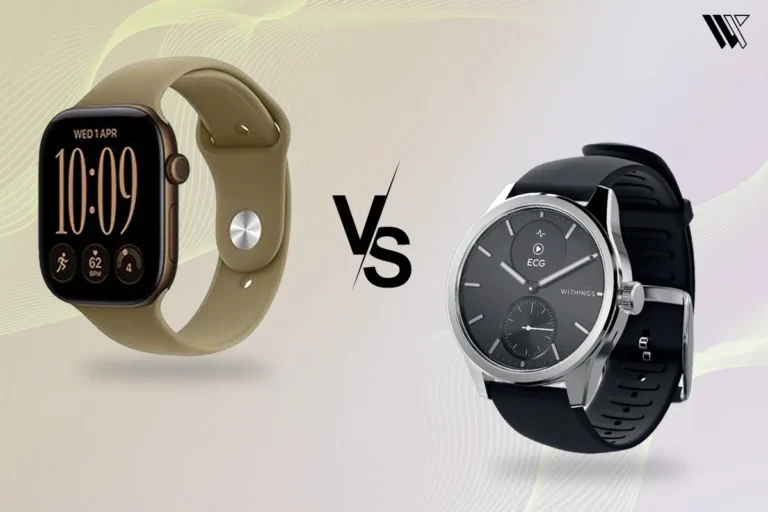
 Smart WatchesWithings ScanWatch 2 vs Apple Watch: Which Is Better for Health Tracking?
How Accurate Is Garmin Heart Rate?
Discover how accurate the Garmin watch monitors heart rate and what affects its readings. Also, get tips for precise readings for everyday workouts.
Independently tested. We never accept payment for reviews.How we test

What’s inside3 sections · 4 min read
I can’t always go to my doctor, which is why I rely on Garmin’s heart rate capabilities. This feature is part of the Garmin smartwatch, which I trust blindly. However, people are curious about its accuracy.
Since Garmin is a well-known brand, I trust all of its features completely. Garmin itself states that the heart rate shown on the watch is a close representation of the actual results. However, let’s be clear that they never claim it to be 100% reliable. So, in case you want to double-check your readings, you can always go to a doctor.
However, I like to stay updated on my health metrics using this feature, and if I notice drastic changes, I will visit my doctor. Most of the users find this feature to be accurate and helpful; however, there are also cases where it does not function as expected. So why is this disparity?
Well, there can be certain reasons why Garmin Heart Rate is not functioning correctly for you. Below, I have mentioned the most common issues that lead to this problem:
How To Make Garmin Heart Rate More Accurate?#
Wear It Properly#
I will be in the wrong if I use a heart rate wristwatch and do not wear it properly. Not wearing a Garmin is one of the major reasons why it cannot read your heart rate properly. If it is too tight, then you can expect it to fall off; hence, the heart rate reading will not be accurate.
Another reason can be wearing it too tightly, which again affects the blood flow in the capillaries. Make sure you wear it ike our normal wear. It should not hang on your wrists, nor should it be extremely tight. Therefore, ensure that you wear a Garmin watch, as it should be worn for accurate results.
Wear It 2-3 Inches Above Your Wrists#
A wristwatch should be worn like a wristwatch. Ideally, I wear it 2-3 inches above my wrists, and that is how it should be. If you are wearing it closer to your wristbone, then it is a wrong placement. So is positioning your watch too far back on your arm. Once again, wear it like you would wear your usual watches.
Use Silicone Bands#
The Garmin watch comes with different kinds of straps. It could be either leather, silicone, or metal. There are also nylon bands available. Since I like to use them for measuring my heart rate, I use silicone bands. Now, you may ask what the logic is behind this? Personally, I feel silicone straps are much better at holding a position on your wrist and slide around less than other materials, making it better and more precise for heart rate tracking.
Keep The Watch Clean#
I make it a priority to keep my watch clean. Garmin comes with optical sensors that need to be cleaned. If not, then the reading will not be accurate, and in most cases, there won’t be a reading at all.
My routine does not permit me to clean it every day; however, it is part of my weekly routine. Every day travel and wearing it in different weather makes it quite dirty. Essentially, salt from sweat can also be a contributing factor to this condition. Over time, when too much of it is accumulated, it leads to the malfunction of the watch. Hence, make a plan and keep your watch clean to keep it functional in the long run.
Watch Software Is Not Up-to-date#
A Garmin smartwatch, much like other electronic devices, needs regular updates. If you’re someone like me who hits the gym and gets in their 10K steps every day, our smartwatches need to keep up with our fluctuating heart rates, based on the level of activity. In case of outdated software, there may be glitches or discrepancies in the reading, which could be misleading.
I always keep an eye out for updates, and that goes not only for Garmin smartwatches but for any technological device out there. If you are unsure about how to check updates, you can go to the Garmin app on your phone, iPad, or Mac and look for updates, if any.
Add Correct Information#
If you have not added the correct health-related information from the get-go, then of course your reading will be incorrect. Another reason can be that you added your health metrics a long time ago, and now you are in a completely different state.
Age, health, weight, and other metrics can affect your heart-related data. So, if it has been a long time since you last updated your Garmin watch metrics, now is the time to update them.
Final Thoughts#
Apart from these reasons, other reasons like getting tattooed and swimming activities can also affect Garmin’s heart rate. To ensure that my Garmin watch functions properly, I restart it regularly. I also clean it regularly so that it functions to the best of its capabilities.
I think it would be a big waste to have a watch like Garmin and not use it to its full potential. Garmin is one of the best smartwatches out there, which focuses on providing accurate readings to its users. Although Garmin’s heart rate reading is generally accurate and suitable for daily monitoring by a healthy individual, I’ve outlined how to get the most out of your watch, so be sure to follow these tips to stay updated on your health.
Frequently Asked Questions#
01Can cold or hot skin affect Garmin’s heart rate?
Yes, cold or hot skin can affect Garmin’s heart rate.
02How does the Garmin heart rate monitor work?
The Garmin watch has heart rate sensors at the back of the watch, which measure blood flow in the wrist. This is how it senses and gives you heart rate readings.
03How does the Garmin heart rate monitor work?
The Garmin watch has heart rate sensors at the back of the watch, which measure blood flow in the wrist. This is how it senses and gives you heart rate readings.
04How to clean your Garmin Watch?
To clean your Garmin watch, you can use a clean cloth and wash it in lukewarm water.
 RK
Written by
With a focus on real-world usability, Rahul at WearableXP covers smartwatches and wearable fitness tech. He evaluates how devices combine activity tracking, health metrics, battery life and connectivity. His work helps readers understand how smartwatches fit into everyday routines through practical performance and software-driven features.
More from Rahul 340 storiesKeep readingmore from Smart Watches
All storiesSmart WatchesWithings ScanWatch 2 vs Apple Watch: Which Is Better for Health Tracking? Screenless BandsFitbit Air vs Samsung Galaxy Watch Ultra 2: Which Wearable Fits Your Health Goals?
 Screenless BandsFitbit Air vs Apple Watch: Which Wearable Is Better for Health Tracking?