

The wearable world has changed quietly. The best Fitbit in 2026 is no longer just a simple step-tracking device but rather a sophisticated health buddy with Google’s AI and ecosystem integration capabilities.

Since Google fully acquired Fitbit and added it to its ecosystem, the question is no longer which Fitbit to buy but rather what kind of health experience do I want to have on my wrist?
Today, the answer is more and more defined by AI, software and ecosystem capabilities, not just devices and their sensors. The Fitbit ecosystem now has the all-rounder Fitbit Charge 6 and a renewed Fitbit app with Gemini and it’s more segmented than ever.
If you’re looking to buy your first Fitbit device, I’ve got you covered with my guide to the best Fitbits in 2026 that you should invest in!
Decode the Decor
The Smart Jewelry Revolution — a practical guide to wearable tech.
Quick Picks of the Best Fitbit Models in 2026
| Model | Best For | Verdict |
|---|---|---|
| Fitbit Charge 6 | Best overall | The perfect balance of features, accuracy and battery |
| Fitbit Air | Best screenless | The no-distraction companion for everyday |
| Fitbit Sense 2 | Best for health tracking | Advanced biometrics, especially for stress and heart |
| Google Pixel Watch 4 | Best smartwatch-style | The “pro” Fitbit experience with full smart features |
| Fitbit Inspire 3 | Best budget | Simple, effective and lasts over a week |
Fitbit Feature Comparison
| Feature | Charge 6 | Fitbit Air | Sense 2 | Pixel Watch 4 | Inspire 3 |
|---|---|---|---|---|---|
| Battery Life | ~7 days | ~7 days | ~6 days | 24-40 hours | ~10 days |
| GPS | Built-in (dual-band) | No | Built-in | Built-in | Connected only |
| ECG / Stress | ECG + EDA | No | ECG + cEDA | ECG + advanced metrics | Stress only |
| AI Coach | Yes | Yes | Yes | Yes (advanced) | Yes (app-based) |
| Price | $159.95 | $99.99 | $249.95 | ~$349.99 | $99.95 |
Best Fitbit Overall: Fitbit Charge 6

The Charge series has quietly become the center of gravity for Fitbit. It’s what most people actually need, instead of being the cheapest or having the most features, it’s simply the most complete device for tracking your health.
The Fitbit Charge 6 hit that sweet spot extremely well when it first came out, but even in 2026, it still manages to compete incredibly well. One of the most discussed features in recent versions of Fitbits is their GPS capabilities. The Charge 6 comes with built-in GPS, which is extremely handy if you want to go for a run or bike ride without your phone.
However, it can sometimes have difficulty locking in or being accurate in highly wooded areas or in cities. It works much better with connected GPS.
Beyond the ability to track your location, the fundamentals of the Charge 6 are excellent, making it one of the best Fitbits in 2026. You get one of the most accurate optical heart rate sensors available, which is among the best in the tracker category, with notable improvements in intense activities like HIIT, spin class or rowing compared to the previous generation.
It also comes with on-demand ECG scans to check heart rhythms (for irregular rhythms like AFib, where available) and EDA sensors to check out wrist-based stress management scans. Sleep tracking is another standout feature, not just in its accuracy but how well the insights are presented in the app.
What makes the Charge 6 the best Fitbit in 2026 lineup is the software side of the experience. With regular updates and the new Gemini-powered Fitbit app, it now serves as the gateway to the increasing AI-driven health coaching features available. Your daily readiness score is no longer just a number, it now influences the recommendations available to you. With the continuous heart rate, SpO2, skin temperature and stress features, the experience now feels more intelligent and more responsive.
This is the best Fitbit to feel the most alive and balanced. Comfortable enough to wear around the clock, capable enough to do what you need without overwhelming you with features and with the support of Google’s increasing ecosystem.
If you are someone who wants the best tracking experience, the best insights and up to 7 days of battery life without entering the full smartwatch experience, the Charge 6 is the best Fitbit in 2026, reason why it also made it to our list of best fitness trackers in 2026!
Best Screenless: Google Fitbit Air

For those looking for the Fitbit with more discreet health tracking, the Google Fitbit Air would make for an excellent alternative, especially to the likes of WHOOP.
Fitbit Air is the company’s first device that does not come with a display. Unlike its predecessors, the latest Fitbit offers passive tracking of activity, sleep, and various health-related metrics through the Google Health app only. It includes heart rate, number of steps, number of burned calories, sleep, blood oxygen levels, skin temperature and other health metrics, as well as automatic activity tracking.
What makes the Fitbit Air unique is its size. With a weight of about 12g with the band, it is supposed to be worn all day long and during sleep. There is also no display nor any notification stream, meaning that the device does not draw any attention from its owner.
The battery is supposed to work for up to 7 days and even a five-minute charge will be enough for a whole day of usage. However, the Fitbit Air does not include built-in GPS and for runners or those who prefer outdoor workouts, the Charge 6 would work much better.
What is more important in this case is the shift in the company’s app, which is now called Google Health. With Gemini-powered Google Health Coach playing a major role there, it offers basic health and fitness tracking and the Google Health Premium subscription brings more insights and personalized recommendations.
The new Fitbit Air does not replace a smartwatch, rather, it goes back to the classic Fitbit idea of wearing the tracker discreetly and collecting the necessary data.
Pros:
- Screenless design
- Long battery life (up to 7 days)
- Sleep, activity and health metrics tracking
- Available for Android and iOS
- No distractions associated with the smartwatch
- Google Health and Health Coach
Cons:
- No GPS
- No display for real-time workout metrics
- Some additional insights need Google Health Premium subscription
- Not the best solution for athletes with outdoor training needs
Best Fitbit for Health Tracking: Fitbit Sense 2

Where the Charge series is about smart balance, the Sense 2 is about going deeper into the signals your body sends every day.
The Sense 2 is Fitbit’s most health-focused device, not because it does all the things the others do, but because it listens more closely to the subtle changes in your body. While the other devices offer surface-level tracking, the Sense 2 goes deeper into the background and tries to make sense of your patterns in real time, reason why it is on our list of best Fitbits in 2026.
The most exciting feature is the continuous EDA sensor, also called cEDA or Body Response. Rather than having to stop and perform the manual stress scan, the Sense 2 simply tracks electrodermal activity in the background. If it detects changes that indicate increasing levels of stress, even when you might be unaware of it, it can even send awareness notifications and contribute to your daily Stress Management score.
Layered on top are some of the best Fitbit features such as:
- On-demand ECG to check your heart rhythms and detect conditions such as AFib
- Skin temperature tracking
- SpO2 monitoring
- Advanced sleep tracking with personalized Sleep Profiles and Sleep Score
- Built-in GPS for precise outdoor activity tracking
- 24/7 heart rate with decent accuracy
On paper, it’s the most comprehensive health tool in the Fitbit family right now, with the Sense 2 being one of the most accurate wrist worn devices for clinical ECG, according to studies.
The Sense 2 offers fantastic raw data, but making the most of that and changing your behavior in the long term is still heavily dependent on the Fitbit app and, increasingly, Fitbit Premium for the most comprehensive AI-based guidance.
There’s also the overall shift in the wearable landscape to think about in 2026. As Google continues to pour more and more innovation into the Pixel Watch ecosystem, the Sense 2 starts to feel like a niche product in a world that’s clearly embracing the all-in-one device. It’s all about the health features and the subtle nudges rather than notifications, apps and the overall smarts of a regular smartwatch.
But if your primary concern is health and getting more in-depth data about your body and your well-being- your stress levels, your sleep quality and your recovery, then the Sense 2 is the one that goes the furthest. It’s lightweight and comfortable to wear all the time.
Best Fitbit Smartwatch: Google Pixel Watch 4
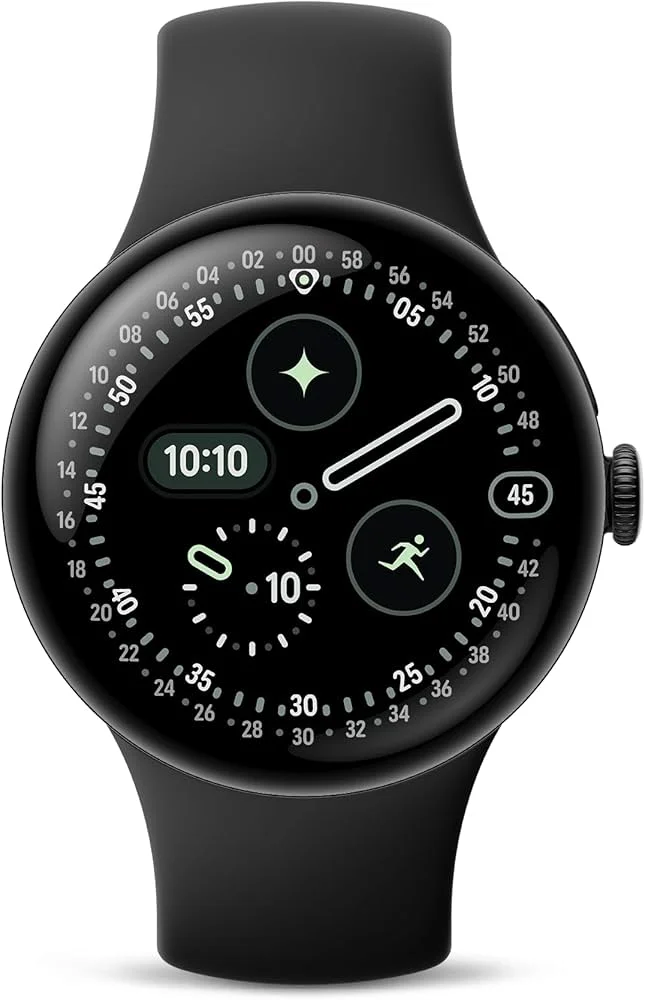
In 2026, the most powerful “Fitbit” available isn’t even a Fitbit.
The Google Pixel Watch 4, represents Fitbit at its very best, where Fitbit’s most comprehensive health features meet the entire smart ecosystem of Google, all in one device. While the Fitbit Charge 6 represents a great balance of everything and the Fitbit Sense 2 represents the most in-depth health features, the Google Pixel Watch 4 represents having it all and having it all in a smartwatch.
Here, you get the entire package:
- The entire Wear OS platform, with a smooth and responsive user interface
- LTE connectivity for phone calls, texts and full independence (where available)
- Gemini Assistant for voice responses, smart answers and coaching
- The entire app ecosystem, offline music, maps, payments and integration of all your Google services
But beneath all of that, you get Fitbit’s most advanced health features. Cardio Load and Target Cardio Load, Daily Readiness, automatic workout recognition, sleep, cEDA-based stress, ECG, SpO2, skin temperature and Loss of Pulse are all here. The information feels deeper and the analysis feels more refined. The entire experience feels more proactive, especially with the help of Gemini AI.
Of course, this brings us back to a familiar but unavoidable compromise that hasn’t changed: battery life. Even though there are significant improvements to be found in the Pixel Watch 4, you’re still looking at around 30 hours of battery life for the smaller 41mm model or up to 40 hours for the larger 45mm model if you’re using the always-on display.
In practice, that means you’re looking at a range of around 1.5 to 2 days, depending on your usage. When you compare this to the week-long battery life of a Fitbit Charge or Inspire, this is a very different kind of ownership experience. It’s a very different kind of rhythm that requires charging as part of your routine.
So, the Pixel Watch 4 isn’t simply a better Fitbit, it’s a very different kind of device. It’s for people who want everything that Fitbit does well, but also everything that a smartwatch today can do. It’s for people who want that intelligence always available on your wrist.
If your lifestyle requires a high-end fitness device, but also requires a smartwatch that can adapt to your needs, then this is where Fitbit’s potential reaches its highest in 2026.
Best Budget Fitbit: Fitbit Inspire 3

The Inspire 3 is what Fitbit was once and, in some ways, what it still is at heart.
The Inspire 3 is easy to wear and easy to use. It’s dedicated to helping you build better habits without trying to blow your mind with all the latest and greatest features. While other Fitbits add more and more features and better and better coaching, the best Fitbit in 2026, the Inspire 3 keeps quiet and just does the basics. It’s the perfect device for building habits without getting in the way.
At its core, the Inspire 3 tracks:
- Daily steps and active minutes
- 24/7 heart rate
- Sleep stages and quality
- SpO2 during sleep
- Basic activity tracking with automatic workout detection for common activities
But it’s not going to bombard you with all that data. It’s going to remind you to get up and move around more, to celebrate your successes and to wind down for better sleep.
The real standout feature, however, is still its battery life. Boasting up to 10 days on a single charge, the Inspire 3 eliminates one of the largest frustrations in fitness tracking: remembering to charge it.
And with the ability to achieve a full week or more with notifications and sleep tracking enabled, there’s no question that Fitbit has hit upon something remarkable. It’s also arguably one of the most comfortable fitness trackers on the market, especially at night.
Weighing in at just shy of 18 grams, it’s almost imperceptible on your wrist. Of course, there are also some obvious trade-offs here. You’ll be missing out on features like built-in GPS (it uses connected GPS with your phone for accurate tracking), more sophisticated sensors, more interactivity on the screen and more in-depth insights into your health. The screen is small and basic compared to other Fitbits in the range.
However, all of that is part of the point. The Fitbit Inspire 3 is designed specifically with people in mind who do not want a fitness tracker that constantly requires your input or your focus. It’s designed to be in the background, helping you stay on track with your fitness goals without turning it into just another chore.
And in 2026, if you’re looking for an entry point into fitness tracking that’s affordable, with none of the bells and whistles but still manages to punch far above its weight, then the Inspire 3 is still an excellent choice.
Fitbit Models Explained
At a glance, Fitbit’s range may look a bit chaotic, but there’s a logic to it, especially as a result of the acquisition by Google.
Charge series sits squarely in the middle. It’s the “pro tracker” – it’s got all the features, but in a small package. It’s the middle ground for most people.
The Fitbit Air is the latest model and the most unique with a screenless design, which are becoming more and more popular since WHOOP and now the Garmin CIRQA.
Sense, meanwhile, puts health front and centre. It’s all about deeper biometrics, ECG and stress, but it’s not as appealing for smartwatch usage.
Then there’s the Versa, which is a bit of a compromise. It’s a smartwatch, but not really. It looks and behaves like a smartwatch, but runs a less complex operating system.
Finally, there’s Inspire, where simplicity and comfort are the only goals. It’s not about features, it’s not about smart features, it’s not even about fitness features. It’s simply a device that works well and works consistently.
Fitbit vs Smartwatch: What’s the Difference
This, of course, is where most people are disappointed.
A traditional Fitbit, especially a Fitbit Charge 6 or Fitbit Inspire 3, is a passive device. It simply works behind the scenes, accurately tracking your health and fitness metrics, occasionally prompting you to take action if necessary. It charges once a week or even less and most of the time, you don’t even realize it’s there.
A smartwatch, such as a Google Pixel Watch 4, however, is an active device. It’s a true extension of your phone. It’s something you use constantly. You’re checking notifications, answering messages, controlling your music, launching apps, making phone calls and getting deep, detailed information. It’s not passive and that’s why it’s so active.
This difference, of course, affects everything else:
- Fitbit offers long battery life, no distractions and a relaxed, set-it-and-forget-it experience.
- Smartwatch offers high functionality, deep integration and always-on connectivity, but requires frequent charging and high maintenance.
So, why does this all matter? Well, even if you buy the best Fitbit in 2026 and expect the interactivity and smart features of a true smartwatch, you’ll feel disappointed and even limited. And if you buy a smartwatch and expect the long battery life and no distractions of a Fitbit, you’ll feel disappointed and even annoyed.
So, what’s the best choice? It’s not necessarily the better of the two. It’s the choice that best fits how you want to live your life, how you want to use a device on your wrist. Some people need a Fitbit. Some people need a smartwatch.
Fitbit Premium: What You Actually Get
Fitbit Premium is now the intelligence layer of the entire ecosystem.
So, if you don’t have it, your device simply tracks your data. If you do have it, your device interprets your data and makes it actionable.
The key feature is that it’s powered by Gemini, which is an AI Health Coach. It’s not just tracking your data, it’s also explaining why your energy levels are low or why your sleep was bad.
Other features include:
- Daily Readiness Score (actionable recovery guidance)
- Advanced sleep profiles and long-term trends
- HRV, breathing rate, SpO2 insights
- A large library of guided workouts and mindfulness sessions
You still get basic tracking for free, but if you want deeper insights that actually make sense, you have to pay for it.
Who Should Buy a Fitbit
Fitbit still excels in specific use cases and if you fall into one of these, it’s hard to beat.
- For casual users, it’s one of the easiest ways to build healthier habits. You don’t need to understand data, you just follow the nudges.
- For sleep-focused users, Fitbit remains one of the most intuitive platforms. The way it presents sleep data is simple, consistent and genuinely useful.
- For motivation-driven users, features like Active Zone Minutes and Reminders to Move are still among the best in the industry at turning passive tracking into action.
Who Should Avoid Fitbit
Fitbit is not for everyone and even if you get the best Fibtit in 2026, forcing it into the wrong use case leads to frustration.
- If you’re an advanced athlete training for endurance events, you’ll likely outgrow it. GPS accuracy, training load metrics and performance analytics still lag behind brands like Garmin.
- If you want a full smartwatch experience, with apps, deep integrations and constant connectivity, Fitbit’s native ecosystem will feel limited.
- And if you’re a data maximalist who wants full control over metrics and customization, Fitbit’s guided, simplified approach may feel restrictive.
Wrap Up
The Fitbit ecosystem has come a long way since the early days of fitness trackers. Today, it’s easy to see the various devices and the different approaches each one takes to the idea of health and wellness.
Whether it’s the simplicity of a dedicated device or the power of a smartwatch with the guidance of Fitbit’s algorithms, the underlying philosophy is the same: data collection with the least amount of hassle. The real difference now is in the software and AI guidance and how deep you want the device to be integrated with your body.
At the end of the day, the strength of Fitbit devices has always been the emphasis on real-world health and fitness tracking rather than the latest and greatest features. The hardware is user-friendly and the most intelligent features come with the Premium experience.
In 2026, Fitbit provides options across the spectrum and helps users get healthier one day at a time.
FAQs
Decode the Decor
The Smart Jewelry Revolution
A practical guide to wearable tech's future — delivered straight to your inbox.
Author
