

The original Fitbit was a tiny clip on pedometer, with no screens, no notifications and just one job. Then, somewhere along the way, wearables forgot what they were supposed to do and turned into tiny smartphones on your wrists.

Now, Google is pulling it back. With a 2026 makeover, of course, the Fitbit Air is a screenless, distraction-free tracker, built around doing less on your wrist. Underneath that minimal design is a full sensor suit- SpO2, continuous heart rate monitoring, HRV, sleep stages, the works.
A $100 tracker with the same “leave me alone” energy and completely different internal working that lasts a week, and we’re breaking down whether it’s actually worth it.
What Is Google Fitbit Air?

After months of squinting my eyes, the rumors finally have a clear picture- the Fitbit Air is Google’s first new Fitbit hardware in about 4 years and honestly, it feels like a throwback.
Decode the Decor
The Smart Jewelry Revolution — a practical guide to wearable tech.
It’s a screenless fitness tracker that sells for $99.99 which puts it in the “affordable” category of wearables. With no display, no app notifications and no tapping through menus on your wrist, it’s just a small sensor pod that sits quietly and collects your health data throughout the day and night.
Google’s pitch is clear. A large percentage of the population thinks that fitness trackers are too bulky, too pricey and too complicated. With the new Fitbit Air, Google wants to change all of these aspects. This piece of technology is small, affordable and it essentially runs itself.
The target audience here is pretty broad. They are focusing on everyone, including newcomers to wearables who feel intimidated by other products. It is also for people who already own a Pixel Watch and need something light during the night.
The product works via Google Health, which has been rebranded and rebuilt around it. More specifically, advanced AI coaching capabilities come with the Premium Google Health subscription, while the core tracking stuff works without paying anything extra after the included three-month trial.
Design, Price and Availability

For everyday usage, the 12g weight is almost nothing. The band options also give a lot of flexibility depending on how you plan to wear them.
- Performance Loop Band– This is the band that comes in the box with every Fitbit Air and is available in a lot of colors. It is made from recycled materials and is micro-adjustable for a breathable, flexible fit.
- Active Band- This is a ribbed design for workouts and activities. It is made from sweatproof and waterproof silicone.
- Elevated Modern Band- This band is discreet and stylish and looks like a bracelet with 3 classic colors and a metal finish.
- Stephen Curry Special Edition Performance Loop Band- You remember the released leaked because of the Stephen Curry video? Well, co-designed with Stephen Curry, this band features a rye brown finish with orange accents, a water-resistant coating and raised airflow patterns inspired by racing stripes for better ventilation during workouts.

Fitbit Air is priced at $99.99 with preorders already started. The new device in the lineup is supposed to hit the shelves in the US on 26 May. The accessory bands start at $34.99, while the Stephen Curry Special Edition Fitbit Air costs $129.99.
Google Fitbit Air Specifications and Features
Google Fitbit Air Specifications

The pebble, as Google calls it, is really small. Here are the key specifications:
| Spec | Google Fitbit Air |
|---|---|
| Dimensions | 34.9mm x 17mm x 8.3mm |
| Weight (with band) | 12g |
| Weight (pebble only) | 5.2g |
| Display | None (screenless) |
| Battery Life | Up to 7 days |
| Fast Charge | 1 day in 5 minutes; full charge in 90 min |
| Water Resistance | 5 ATM (50 meters) |
| Connectivity | Bluetooth 5.0 |
| Compatibility | Android 11+ and iOS 16.4+ |
Google Fitbit Air Sensors
It may be small but it is mighty. The sensor suite is solid for its price point:
- Optical heart rate monitor
- 3-axis accelerometer and gyroscope
- Red and infrared sensors for SpO2 (blood oxygen)
- Skin temperature sensor
- Vibration motor
Google Fitbit Health Tracking
The hardware on the Google Fitbit Air enables a solid range of continuous health tracking features such as:
- 24/7 heart rate and resting heart rate
- Heart rate variability (HRV)
- Blood oxygen (SpO2)
- Sleep stages and duration
- AFib detection and alerts
- Breathing rate
- Cardio Load
- Daily Readiness
The AFib detection is worth calling out specifically, because it is something rarely offered by wearables of such a price range. The same applies to sleep monitoring since Google says it relies on new Gemini-powered sleep models which are 15% more precise at determining sleep stages, naps, and disturbances compared to its previous generations.
Activity tracking is automatic and doesn’t require any user input. You went for a run? It will recognize your activity, send a summary to your phone. And over time will learn more about your unique pattern. In addition to automatic activity tracking, users can initiate workout sessions from the app or from the device, perform guided workouts with Google Health Coach, or just snap a picture of cardio machines or gym boards and have the coach add a workout session for you based on that information. That last feature is surprisingly useful in a real-world way.
The screenless approach is intentional, not cutting corners. According to Google, its main function is allowing users to track health metrics and only viewing them when needed.
What Makes Fitbit Air Different from Other Fitbit Devices?
As far as the rest of the Fitbit lineup, the Charge series, the Inspire and the older Sense, all of them were built around screens and smartwatch-type features. More notifications, more useful widgets, more reasons to take a look at your wrist. The Air takes another approach. When compared to the Fitbit Charge family, the Air is significantly slimmer and lightweight.
It cannot boast about its screen and its ability to show you something without even opening your phone. It does not draw your attention and drains less power due to its non-screen design. The Charge series can be considered more powerful and versatile on the surface, yet it requires much more management in comparison.
Speaking of the Fitbit lineup, as compared to the Inspire, the two devices differ only in the number of features: the Inspire has basic heart rate monitoring, while the Air comes with AFib detection and advanced sleep monitoring powered by Gemini, among many other things.
Fitbit Air vs Pixel Watch: What’s the Difference?
| Feature | Fitbit Air | Pixel Watch |
|---|---|---|
| Display | None | Yes |
| Battery Life | Up to 7 days | Up to 40 hours |
| Notifications | No | Yes |
| Apps | No | Yes (Wear OS) |
| Google Pay | No | Yes |
| Health Tracking | Advanced | Advanced |
| Price | $99.99 | From $349.99 |
| Best Use | Passive/sleep tracking | Daily smartwatch |
Then there’s the Pixel Watch. Unlike Fitbit’s devices, it is meant to replace your smartphone to a great extent, with apps, maps, Google Pay and even Google Assistant support. In this case, the Air and Pixel watches are not even competitors: Google suggests combining these two watches, wearing the Pixel throughout the day and replacing it with the Air at night.
So the strategy behind the Air in the Fitbit lineup may be seen as “the smallest, the cheapest, and the most passive.”
Fitbit Air vs WHOOP: Which Makes More Sense?
The comparison is obvious becuase of their form factor. Both products are portable and compact devices that do not contain screens and concentrate on passive data tracking. Both products are built around 24/7 recovery and health monitoring ideas. Philosophy is very much alike but the business models differ.
| Features | Fitbit Air | WHOOP |
|---|---|---|
| Price | $99.99 | Included with membership |
| Subscription | $10/month (optional) | Starts at $199/year (required) |
| Basic tracking without subscription | Yes | No |
| Screen | No | No |
| Target User | General wellness | Performance athletes |
WHOOP has deeper roots in the field of performance optimization and sports recovery and more advanced features regarding coaching. Google Health Coach was created recently and is driven by Gemini AI. However, it requires further research.
While there are many WHOOP alternatives in the market, the Fitbit Air adds to that list and might I say, is better suited for people who do not require advanced coaching and prefer cheaper options.
Battery Life and Everyday Usage
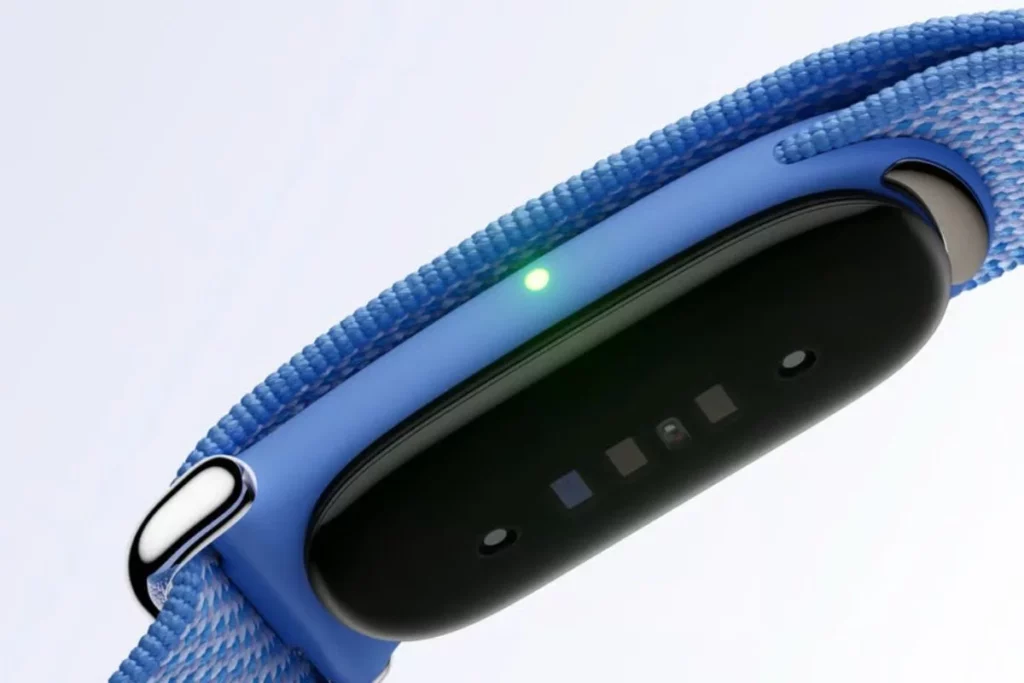
The battery life of the Fitbit Air is up to 7 days, according to Google. A quick 5 minute charge gives you a full day worth of use and it will only take 90 minutes for a full charge.
I am sure the number of features you use throughout the day will impact how much this battery lasts in real world usage. That said, a week is a significant period because most people will be able to charge it during the weekends without having another gadget to take care of during a busy week.
The 5 minute fast charge is also genuinely useful. Forgot to charge it overnight? spend five minutes plugged in while you make coffee and you’re good.
Who Is Google Fitbit Air Actually For?
You may choose the Fibit Air if you are:
- A casual fitness junkie seeking health awareness without a complex device to manage.
- Sleep monitoring focused user. In terms of sleep tracking, the feature set is genuinely one of the best qualities of the Fitbit Air.
- Owners of Pixel Watch looking for an improved level of passive tracking throughout the night without compromising the smartwatch functions.
- Newbie wearable users on a budget. A hundred dollars isn’t cheap, but it’s significantly cheaper than other watches on the market. At this price, the health benefits offered by the device are pretty decent.
- Those who want lightweight bracelets that won’t interfere with their lives, with constant beeping or pinging or demanding attention.
Who Should Avoid Fitbit Air?
The Fitbit Air is not for everyone. Avoid if you are:
- A serious athlete seeking real-time information during training. The absence of a screen excludes the possibility of heart rate during workouts, pace or the use of interval timers, all of which will require you to grab your smartphone.
- A dedicated smartwatch user, since this device does not have a screen for reading emails, messages, using apps, Google Maps navigation and NFC payments.
- Those who require on-device data management. There is one LED indicator on the watch face indicating the charge level of the bracelet. It is your only interaction tool with the device.
- Those who require a clinical-grade health monitoring. The Air provides a series of medical measurements, including AFib alerts, SpO2 levels and sleep monitoring. These features are designed to raise health awareness and not replace professional diagnosis and medical assistance.
Is Google Fitbit Air Worth Buying?

At $99.99, it’s difficult to argue against the value as long as you understand what you’re paying for. You’re getting a small, comfortable device with a great battery life that silently gathers data about your health and streams that information into an app that just works. You are not purchasing a smartwatch alternative.
The three-month Health Premium trial is quite generous. This gives you actual access to the AI coaching features and a chance to see if the $10/month subscription price is worth it without any charges upfront.
The sensor array is impressive at this price. AFib detection and enhanced sleep tracking models are features that would cost you significantly more money elsewhere. Fast charging can be considered a small detail but until you’ve experienced it yourself, you would know how much this tiny detail adds to the user experience.
The only feature worth mentioning honestly is the lack of a screen altogether. It is one of those aspects that some people will appreciate greatly while others may regret having to open their smartphones when wanting to check their heart rate.
Wrap Up: Should You Pre-Order the Fitbit Air?
It feels like Google is finally figuring out what Fitbit should be like in 2026. It’s not a budget smartwatch, it’s not even a features-checklist type of wearable. Just a small, unobtrusive weeklong health monitor that doesn’t take up too much of your attention but gives you the information you seek when you look for it. Because do we really need another screen full of stats in front of our faces all day?
Sure, there will be people who won’t be happy with it. The serious athletes will be looking for something else, like a Garmin, just as smartwatch people do, because they will want that display. For everybody else though, who would like health awareness without constant interference, this may be the perfect low cost choice.
The $99 price point, sleep tracking, AFib detection and a decent battery make it an easy pick. And, really, finding out whether it’s a good fit for you isn’t all that hard: if you’d like a smaller monitor which works in the background without requiring your constant attention, it’ll serve you well enough. I, for one, can’t wait to use it and do a full Google Fitbit Air review.
FAQS
Decode the Decor
The Smart Jewelry Revolution
A practical guide to wearable tech's future — delivered straight to your inbox.
Author

Thanks for your thorough review. I really appreciated the sensor details, missing from a lot of other reviews. Great writing style, too.
Thanks, Shon! I appriciate you reading through the article. You can also check out our Fitbit Air review and let me know your thoughts!