

 Add Us On Google
Kids today are growing up around technology much faster than most parents expected. A few years ago, giving a child a smartwatch sounded unnecessary. Now, for many families, it has become a practical middle ground between giving a child a smartphone and having no communication device at all.

I have tested and explored many smartwatches for kids over the past few years and honestly, not all of them are worth buying. Some are overloaded with distracting features, while others barely work properly when it comes to GPS tracking or calling reliability. The best smartwatches for kids are the ones that balance safety, communication, durability and simplicity.
Decode the Decor
The Smart Jewelry Revolution — a practical guide to wearable tech.
Some watches are designed mainly for calling and GPS tracking. Others focus more on fitness and healthy routines. A few premium options even work almost like mini smartphones for older kids and teens.
In this guide, I’ll walk you through the best smartwatches for kids in 2026, including which ones are actually worth spending money on, which age groups they suit best and which models are better avoided depending on your family needs.
Best Smartwatches for Kids (Quick Picks)
- Best Overall smartwatch: Garmin Bounce
- Best Kids Smartwatches With Calling: GizmoWatch 3
- Best Kids Smartwatches With GPS Tracking: Fitbit Ace LTE
- Best for health tracking: Spacetalk Adventurer
- Best Samsung Smartwatch: Samsung Galaxy Watch 5
- Best Apple Smartwatch: Apple Watch SE
- Best fitness band: Garmin Vivofit Jr. 3
- Best Huawei Smartwatch for Kids: Huawei Watch Kids 4 Pro
Comparison Table
| Smartwatch | Calling | GPS | Battery Life | Age Group | Best For | Price |
|---|---|---|---|---|---|---|
| Garmin Bounce | ✓ | ✓ | Up to 2 days | 6–12 years | Best overall balance | $149 USD |
| GizmoWatch 3 | ✓ | ✓ | 2–4 days | 5–11 years | Calling & communication | $149.99 USD |
| Fitbit Ace LTE | ✓ | ✓ | 1–2 days | 7–13 years | GPS tracking | $179.99 |
| Spacetalk Adventurer | ✓ | ✓ | 1–2 days | 6–14 years | Health tracking | $199.99 USD |
| Samsung Galaxy Watch 5 | ✓ | ✓ | 1–2 days | 10+ years | Samsung/Android User | $201.99 USD |
| Apple Watch SE 3 | ✓ | ✓ | Up to 18 + hours | 10+ years | iPhone User | $249 USD |
| Garmin Vivofit Jr. 3 | ✕ | ✕ | Up to 1 year | 4–10 years | Fitness & simplicity | $89.99 USD |
| Huawei Watch Kids X1 | ✓ | ✓ | 1 day | 4–10 years | International travel | €249 |
Best Overall Smartwatch for Kids: Garmin Bounce
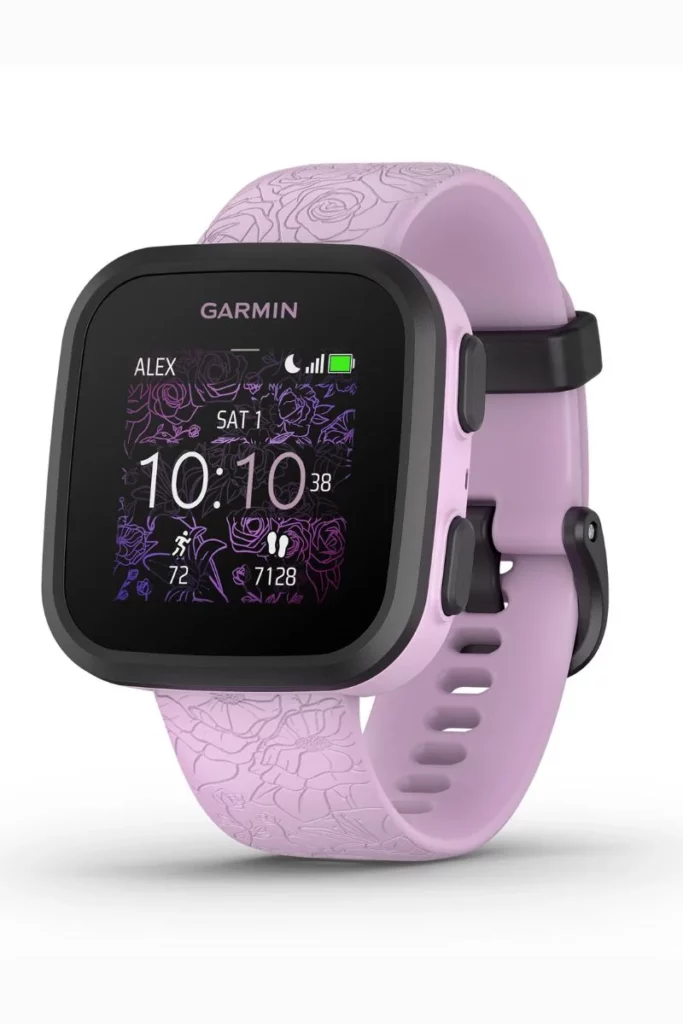
The Garmin Bounce stands out as a highly engineered balance of security framework and physical hardware. This watch features a built-in 4G LTE transceiver managed directly via a parental subscription model, removing the hassle of setting up a separate commercial phone carrier line. I found its location architecture to be exceptionally accurate, utilizing a combination of integrated L1 GPS and Galileo satellite receivers to update geographic positioning data cleanly within the companion parental dashboard app.
On the front, the 1.3-inch liquid crystal color touchscreen display panel delivers clear text readability under bright sunlight. This is particularly impressive when compared to how specialized optical coatings filter glare on the best smart sunglasses. The watch chassis is constructed from a rugged, fiber-reinforced polymer compound paired with a durable silicone strap, giving it a 5 ATM swim-proof water resistance certification.
Its software implementation emphasizes controlled communication because it offers two-way text messaging and recorded voice memos exclusively to pre-authorized contacts inside the parent app. For school hours, parents can deploy a scheduled “School Mode” feature that disables interactive apps and silent notifications, turning the device into a baseline timepiece. The integrated accelerometer tracks steps and specific exercises like running, swimming and cycling, while the lithium-ion battery reliably powers the watch for up to two days on a single charge.
Battery Life: Up to 2 days
Age Group: 6-12 years
Price: $149 USD
Best Kids Smartwatches With Calling: GizmoWatch 3
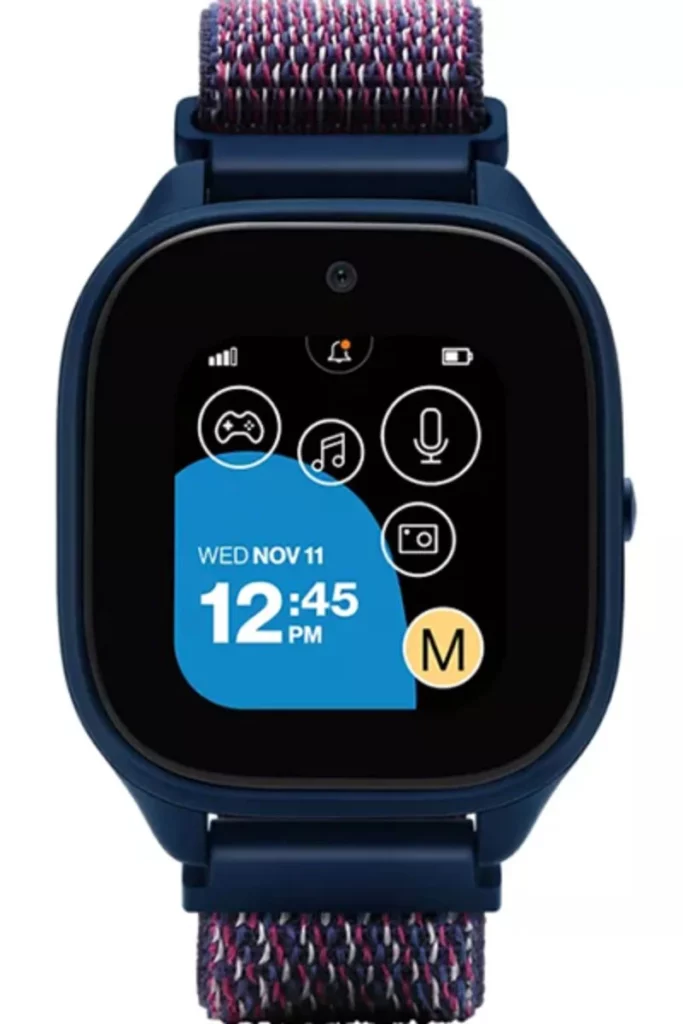
The GizmoWatch 3 is designed specifically for high-clarity voice and video communication. Under the hood, its updated cellular radio module supports expanded 4G LTE frequency bands, allowing it to maintain a stable connection even in lower-coverage zones. The front-facing camera array lets kids make direct video calls to verified parent smartphones, providing a clean, jitter-free video stream across LTE networks.
The audio system utilizes a front-firing speaker and an integrated noise-canceling microphone system that reduces ambient background noise during outdoor use. The physical frame features a bright, high-definition display panel shielded by scratch-resistant hardened cover glass, offering a robust user interface that holds up against scratches and rough playtime.
For safety, the companion app lets parents set up strict contact white-lists, preventing unverified numbers or spam calls from reaching the device. It also includes an instantaneous SOS emergency calling hot-key sequence that dials the primary parental guardian if held down. Location tracking is supported by an Assisted-GPS (A-GPS) chipset that works alongside local Wi-Fi positioning to speed up location lock times when moving from indoors to outdoors.
Battery Life: 2–4 days
Age Group: 5–11 years
Price: $149.99 USD
Best Kids Smartwatches With GPS Tracking: Fitbit Ace LTE
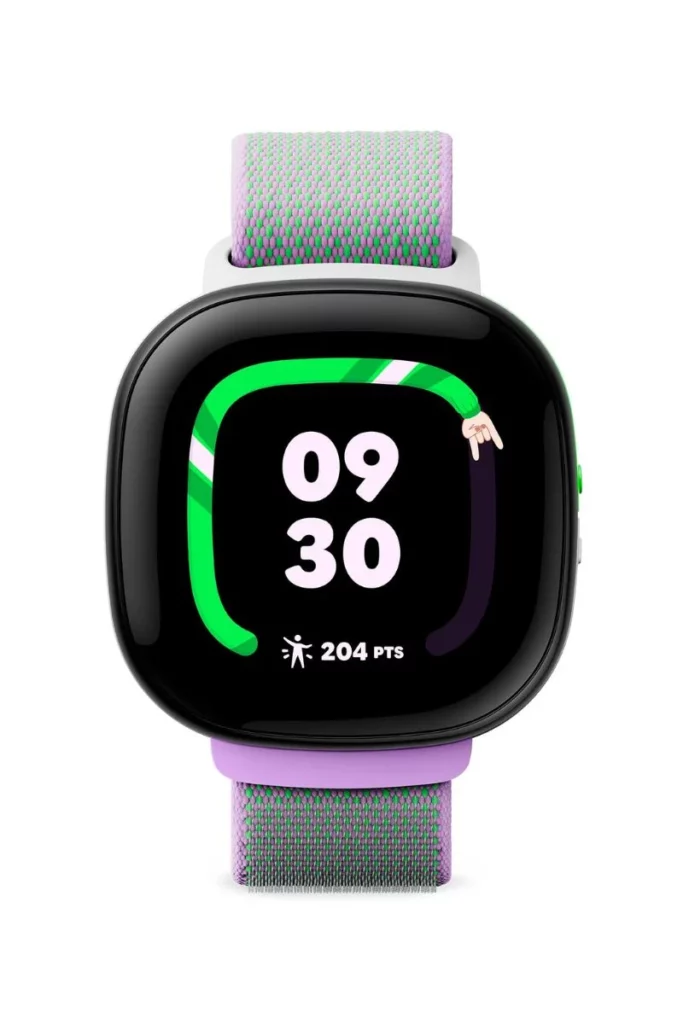
The Fitbit Ace LTE stands out for its real-time location precision and dynamic user engagement. Driven by Google’s hardware ecosystem, this watch utilizes a high-refresh multi-constellation GNSS receiver array to provide real-time updates and geofencing responses. Parents can set up precise virtual safety zones inside the app, triggering immediate push alerts the moment the watch crosses those boundaries.
The display uses an ultra-responsive OLED panel with deep contrast ratios, ensuring text and gamified animations remain highly legible even under bright, direct sunlight. Protecting the screen is a scratch-resistant layer of Corning Gorilla Glass 3. To help survive intense playground use, Google also includes a colorful, clip-on protective bumper right in the box that wraps around the watch edges to absorb impacts from inevitable drops and scrapes.
Instead of traditional apps, the onboard processor powers gamified activity tracking routines called “Eejie,” which transform physical movement data into arcade-style gameplay. This approach encourages regular exercise without exposing kids to open web browsers or social media networks. The internal lithium-ion battery is designed for fast charging, reaching an 80% charge capacity in under an hour, though the frequent GPS updates mean it needs to be recharged daily.
Battery Life: 1–2 days
Age Group: 7–13 years
Price: $179.99 USD
Best Smartwatch for Kids Health Tracking: Spacetalk Adventurer
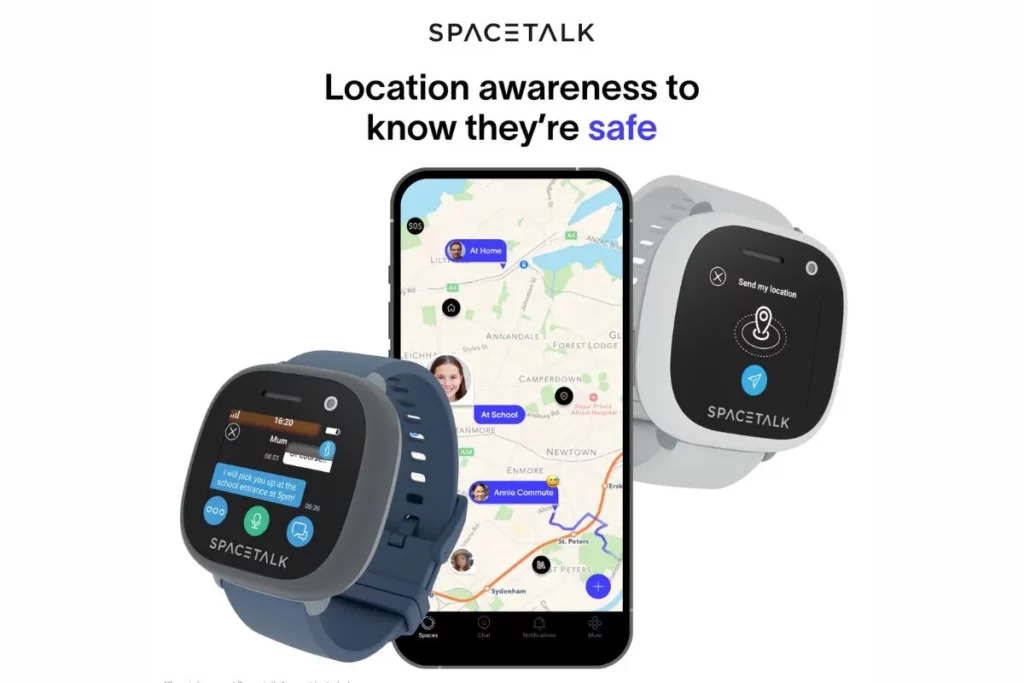
The Spacetalk Adventurer focuses heavily on biometric wellness monitoring and robust parental safety controls. It features an integrated optical heart-rate sensor on the rear housing, giving parents real-time visibility into daily exertion levels, cardiovascular trends and sleep stage cycles without any exposed social media access.
The chassis is built with high-grade, impact-resistant polycarbonate components and carries an IP67 dust and water-resistance rating, keeping the internal electronics safe from dust and splashes. The 1.41-inch display provides a clean interface for reading text messages and tracking daily activity goals, helping kids build healthy routines.
Communication relies on an un-throttled, standalone 4G LTE cellular architecture that handles clear two-way voice calls and standard SMS texting across regional mobile carriers. For emergencies, the device features a prominent SOS button that broadcasts live location coordinates and initiates consecutive phone calls to pre-approved contacts. Additionally, parents can activate a software-locking “School Mode” to keep kids focused on their schoolwork during classroom hours.
Battery Life: 1-2 days
Age Group: 6-14 years
Price: $199.99 USD
Best Samsung Smartwatch for Kids: Samsung Galaxy Watch 5
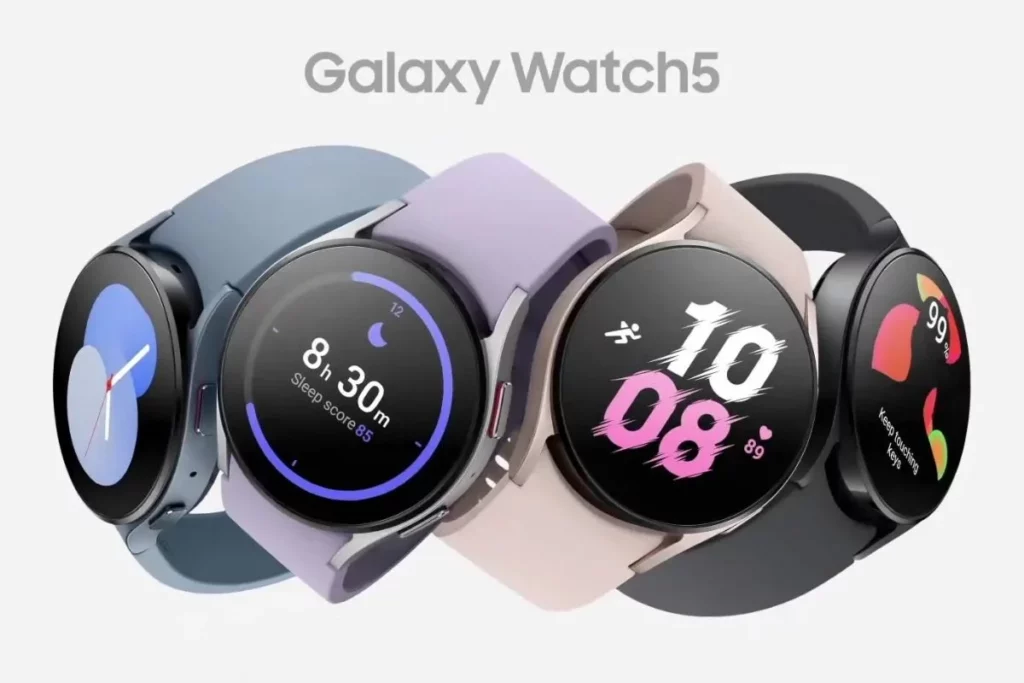
For older children and teenagers who need an Android-compatible ecosystem, the Samsung Galaxy Watch 5 provides a premium, feature-rich hardware option. It runs on Wear OS, powered by an efficient 5nm dual-core processor that delivers fast performance and smooth UI transitions across apps. The display is protected by an ultra-durable premium sapphire crystal glass layer, offering excellent scratch resistance against rough handling.
The device includes Samsung’s BioActive 3-in-1 sensor array, which combines optical heart rate tracking, electrical heart signaling and bioelectrical impedance analysis to measure body composition metrics. While these advanced health tools are tailored for older kids and teens, parents can still manage communication boundaries and app permissions using Google Link parental control profiles.
Connectivity includes full LTE and eSIM integration, allowing standalone voice calls, text messaging and precise location tracking via GPS, GLONASS and BeiDou satellite arrays. Its aluminum enclosure is built to a 5 ATM and IP68 durability standard, ensuring the internal hardware remains safe during high-impact sports and swimming.
Battery Life: 10+ years
Age Group: 1–2 days
Price: $201.99 USD
Best Apple Smartwatch for Kids: Apple Watch SE
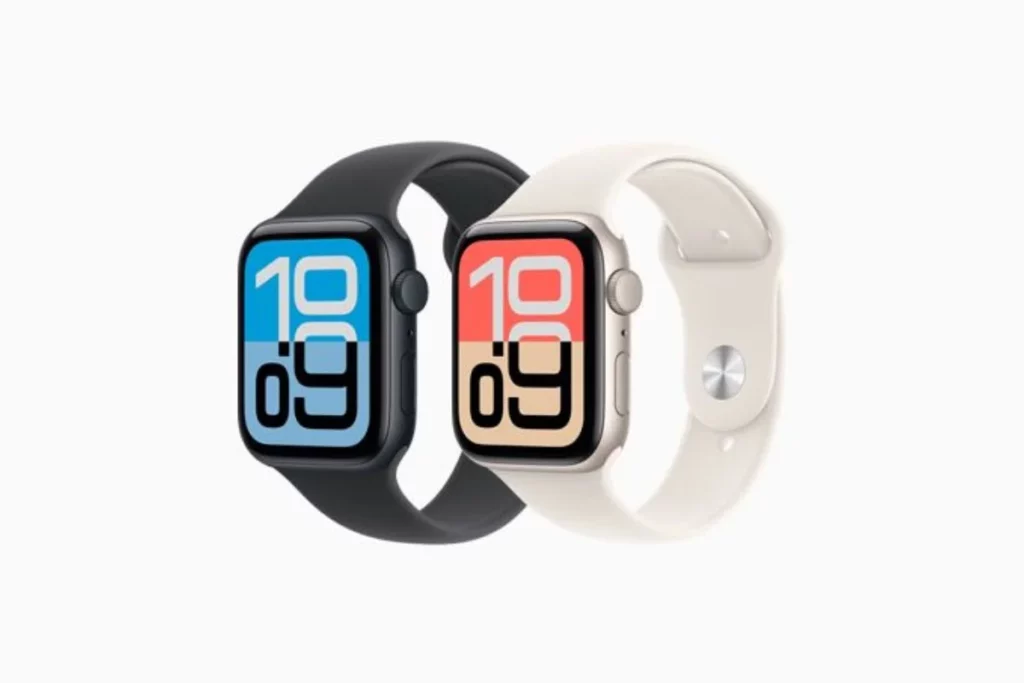
If you’re wondering whether the Apple Watch is good for kids, read my two cents here! The Apple Watch SE 3 is a powerful, standalone wearable option for families using iPhones. It is driven by Apple’s advanced S10 System-in-Package (SiP) architecture, delivering smooth app performance and fast on-device processing. Parents can configure the device independently using Apple’s “Family Setup” feature, which gives the watch its own cellular number and plan without requiring the child to own a standalone iPhone.
The Retina LTPO OLED display panel reaches a peak brightness of 1,000 nits, ensuring great legibility even in direct sunlight. This advanced screen engineering matches the glare-reduction properties found in the polarized lenses of the best smart sunglasses. The display glass is made from hardened Ion-X front glass, designed to resist cracks and deep scratches from everyday drops.
Safety features include High-G accelerometers and gyrosensors that enable crash and fall detection algorithms, alongside international emergency SOS calling. Location tracking uses Apple’s “Find My” network, which combines L1 GPS satellite data with secure crowdsourced Bluetooth signals from nearby Apple devices to provide highly reliable positioning tracking. For kids, it also features Schooltime mode, which appears as a yellow icon with a kid sitting on a bench. It’s one of the many icons and symbols of the Apple Watch, which allows no notifications and only the time to be displayed.
It also has Apple Pay, wherein you can add a small amount to the cards loaded on your kid’s watches for emergencies.
Battery Life: Up to 18 + hours
Age Group: 10+ years
Price: $249 USD
Best Fitness Band for Kids: Garmin Vivofit Jr. 3
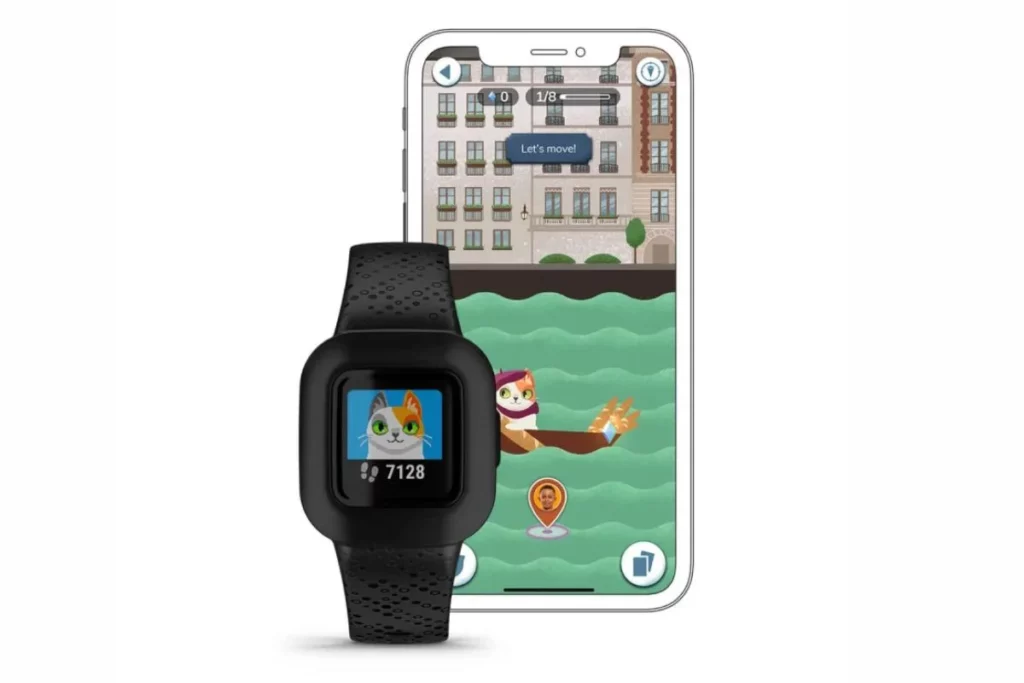
The Garmin Vivofit Jr. 3 takes a minimalist approach, focusing entirely on fitness tracking without the distractions or battery drain of cellular connectivity. It features a sunlight-readable, power-efficient color display that stays on continuously. Instead of a rechargeable battery that needs daily plugging in, it uses a user-replaceable CR2032 coin cell battery that keeps the tracker running for up to a full year.
The tracker module is housed inside a highly flexible, food-grade silicone band that completely seals the internal electronics, earning it a 5 ATM water resistance rating suitable for swimming and intense mud runs. It tracks daily steps, active minutes and sleep cycles, syncing all the data over a low-power Bluetooth connection to the parental app when nearby.
Parents can use the companion app to assign custom chores, set reminder timers and reward kids with virtual coins when they meet their movement goals. With no built-in cameras, SIM card slots or messaging systems, this band is an ideal option for younger kids, providing a simple tracker focused on healthy habits and physical activity.
Battery Life: Up to 1 year
Age Group: 4-10 years
Price: $89.99 USD
Best Huawei Smartwatch for Kids: Huawei Watch Kids X1
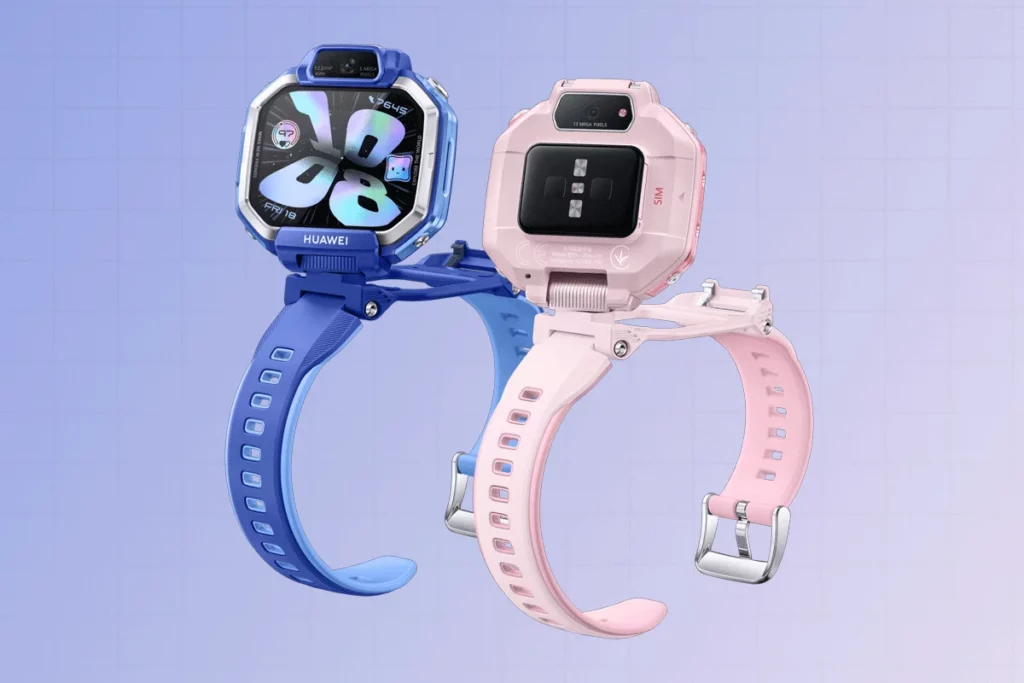
As for families not in the Apple or Samsung ecosystem, or for parents planning overseas travels, Huawei Watch Kids X1 is the most mature product among Huawei’s watches for children. It features dual-band GNSS, dual-band Wi-Fi for indoor location assistance, cellular connectivity, WLAN and Bluetooth to maintain location accuracy indoors and overseas.
Communications happen through cellular connectivity with clear bi-directional audio and high-definition video calling supported by a 5-megapixel ultra-wide front camera and a 13-megapixel rear camera to ensure clarity of communication regardless of whether the child is at home or abroad. All the settings such as geofencing and video calls are controlled via the FamCare app developed by Huawei. Other specifications include:
- Live activity monitoring, safety/unsafe zones alerts, video calls, focus mode limitations, and call blocking via FamCare
- 1.82-inch AMOLED screen with a 360-degree flip screen design
- Heart rate monitoring and emotional well-being tracking along with the regular safety measures
- SOS button to send alerts or make a phone call in case of pressing the button five times in a row
This device will be a good choice for those families who travel overseas and use other products of Huawei, as the roaming and positioning accuracy in this case will be higher than those of the main rivals targeted to customers in the USA.
Battery Life: Up to 1 day typical use
Age Group: 4–10 years
Price: €249
Parental Controls and Safety Features
The core value of any dedicated kids smart watch lies in its security framework and parental controls. Unlike adult smart watches that offer open communication, these devices feature hardware and software restrictions designed to protect younger users.
Inbound & Outbound Contact Whitelisting
The companion app blocks all unauthorized phone numbers. If a number isn’t manually added by a parent, the watch’s cellular modem automatically rejects the call, protecting kids from spam, phishing attempts and unverified contacts.
Scheduled School Modes
Parents can set up automatic calendar blocks that disable games, messaging and camera tools during school hours. This turns the device into a simple time display, ensuring it doesn’t cause distractions in class while keeping background location services fully active.
Instant SOS Emergency Triggers
A dedicated physical button shortcut lets kids send an emergency alert instantly without navigating menus. When triggered, the watch sends real-time GPS coordinates to parents and calls pre-set emergency contacts in a continuous loop until someone answers.
Dynamic Geofencing & Multi-Layered Positioning Arrays
While a basic GPS chip can pinpoint a child’s location in an open field, it often struggles inside concrete school buildings. To solve this, premium smart watches use a five-layer location tracking framework that combines L1 GPS, GLONASS, A-GPS (Assisted GPS), local Wi-Fi router MAC address triangulation and cellular tower data. This multi-layered approach feeds directly into a geofencing engine. Parents can map out virtual boundaries around areas like schools or homes and the moment the watch crosses those coordinates, it instantly shifts its tracking frequency to high-power mode and broadcasts an immediate push notification to the guardian’s phone.
Backend Data Encryption & Privacy Compliance
Because these devices continuously collect sensitive personal data such as real-time location histories, voice memos and biometrics, the backend cloud infrastructure must be built with strict security protections. Premium wearables are engineered to comply with federal regulations like the Children’s Online Privacy Protection Act (COPPA). All data moving between the device, the cloud servers and the parent’s smartphone is secured using end-to-end AES-256-bit encryption, ensuring that location details and personal voice recordings remain completely unreadable to unauthorized third parties.
Secure Firmware Updates & Tamper-Proof Hardware Blocks
Reputable brands protect their hardware from remote exploits by using secure Over-The-Air (OTA) firmware updates that require cryptographic digital signatures from the manufacturer before any code can be installed. On the physical side, the hardware is built with tamper-proof restrictions. Physical SIM card slots are sealed behind screw-fastened panels to prevent accidental removal and the magnetic charging pins are frequently limited to power delivery only, completely disabling USB data paths to block unauthorized physical data extraction or sideloading.
Controlled Ambient Audio Monitoring
Some advanced smart watches include a silent ambient listening feature designed for critical safety situations. If a parent suspects their child is in immediate danger or cannot answer a standard call, they can trigger a secure, one-way audio check-in through the companion app. The watch’s built-in noise-canceling microphone opens an audio stream to the parent’s phone while keeping the watch display completely dark and silent, allowing the guardian to assess the surrounding environment without drawing unwanted attention to the child.
Battery Life and Durability
Durability and battery life are critical factors when evaluating these wearables. Kids put their devices through continuous physical stress, meaning the hardware needs robust structural reinforcement to last.
Devices like the Garmin Bounce and Fitbit Ace LTE use fiber-reinforced polymer shells and raised bezels to absorb impacts and protect the display glass from direct drops. Water resistance ratings of 5 ATM or IP68 are standard for reliable designs, ensuring the watch continues to function during handwashing, rainstorms and swimming.
Battery lifecycles vary based on how often the cellular modem and GPS tracking features are used. Continuous real-time tracking can drain a battery in 16 to 24 hours, requiring a daily overnight charge. On the other hand, non-cellular trackers like the Garmin Vivofit Jr. 3 use low-power screen tech to deliver up to a year of battery life, making them a great low-maintenance alternative.
Are Kids Smartwatches Allowed in School?
Most schools allow kids’ smartwatches, provided they include a functional “School Mode” or “Do Not Disturb” feature. Teachers generally accept these devices because they don’t have the open web access or social media apps found on smartphones, which can create classroom distractions.
Before buying, it’s wise to check your local school district’s specific policies regarding wearable tech. In regions with strict rules, parents can use the app to lock down all communication and interactive features during the school day, ensuring the watch only acts as a basic clock while keeping background GPS tracking active for peace of mind.
Do Kids Smartwatches Need a SIM Card?
Yes, any smartwatch that supports standalone calling, text messaging or real-time location tracking outside of Wi-Fi range requires cellular connectivity via a SIM or eSIM profile.
- Carrier-Locked Devices: Models like the GizmoWatch 3 are tied to specific networks (such as Verizon) and require adding a dedicated line to an existing family plan.
- Platform-Managed Models: The Garmin Bounce handles connectivity through a built-in eSIM managed directly within Garmin’s parent app, removing the need to deal with an external phone carrier.
- Wi-Fi Only Options: Simple fitness bands do not require cellular plans, instead syncing data over Bluetooth whenever they are near a parent’s smartphone.
Kids Smartwatch vs Smartphone: Which Is Better?
| Metric | Dedicated Kids Smartwatch | Standard Smartphone |
|---|---|---|
| Social Media Access | Completely Restricted | Open App Store Access |
| Web Browsing | Disabled on Hardware Level | Open Browser Access |
| Physical Durability | High (Wrist-Attached, Polymer Casing) | Low (Glass Screen, Dropped Easily) |
| Parental Oversight | Hardcoded App Monitoring | Variable Software Overlays |
| Distraction Factor | Distraction Factor | High (Endless Notifications) |
For younger children, a dedicated smartwatch provides a safer, more focused introduction to technology. It offers essential communication tools and location tracking without exposing kids to the unmonitored web access, social media platforms and screen-time challenges that come with a standard smartphone.
Are Smartwatches for Kids Worth Buying?
A kids’ smartwatch is basically the ultimate “training wheels” gadget. It gives your kid the freedom to walk home from school or play at the neighborhood park, while giving you peace of mind.
The biggest selling point? It has zero access to the open internet, addictive games or social media. It strictly handles what you actually care about: real-time tracking and quick calls. Because it stays strapped to their wrist, it’s much harder to lose than a phone. A smartphone usually ends up buried at the bottom of a backpack on silent, but a rugged, waterproof watch is always attached and ready.
Just keep the monthly network fees in mind. Since these devices use cellular towers to send GPS locations and make phone calls, they require a data plan that usually adds about $10 to $15 to your monthly bill.
Also, remember that kids outgrow things fast. A bright, chunky watch that a 7-year-old loves will feel way too childish for an 11-year-old. Think of it as a great 2-to-3-year bridge tool before they are ready for a real phone.
Who Should Buy a Kids Smartwatch?
- Parents of younger children (ages 5–11) who want reliable safety tools without the complications of a smartphone.
- Families looking for a secure transitional device to keep tabs on kids during their daily school commutes or after-school activities.
- Safety-conscious guardians who want real-time GPS location tracking and whitelisted calling capabilities.
Who Should Avoid Them?
- Parents of toddlers or very young children who lack the coordination to navigate touch displays or care for a wearable device.
- Families wanting full smartphone capabilities, such as web browsing, high-end gaming and mainstream social apps.
- Highly privacy-sensitive households who prefer to avoid cloud-connected biometric logging and continuous GPS positioning data.
Wrap Up
If I had to pick one smartwatch for kids, if I had any, I would choose the Garmin Bounce.
The main reason is that it gives the best balance of safety, calling, GPS tracking, fitness features and battery life without feeling too complicated. It feels properly made for kids and the parental controls are simple to use. A close second option would be the Apple Watch SE 3.
I also like that it focuses more on communication and healthy habits instead of turning into a mini smartphone full of distractions. For most families, especially kids between 6 and 12 years old, I think the Garmin Bounce is one of the safest and most practical smartwatches you can buy right now.
FAQs
Decode the Decor
The Smart Jewelry Revolution
A practical guide to wearable tech's future — delivered straight to your inbox.
Author
