 Smart WatchesWithings ScanWatch 2 vs Apple Watch: Which Is Better for Health Tracking?
Pixel Watch 5 vs Galaxy Watch 9: Which Android Watch Is Better for Health?
Pixel Watch 5 vs Galaxy Watch 9: Compare ECG, sleep apnea detection, heart health, fitness tracking, accuracy and battery life.
Independently tested. We never accept payment for reviews.How we test
What’s inside11 sections · 15 min read
- 01Pixel Watch 5 vs Galaxy Watch 9 Specifications Table1 min
- 02Pixel Watch 5 vs Galaxy Watch 9: What’s the Difference?1 min
- 03Design and Comfort2 min
- 04Health Sensors and Monitoring: Which Watch Tracks More?1 min
- 05Heart Health: ECG, Blood Pressure and Cardiovascular Insights2 min
- 06Sleep Tracking: Is Samsung Better at Detecting Sleep Problems?2 min
- 07Fitness and Recovery: Which Watch Is Better for Training?2 min
- 08Software, Compatibility and Subscription Costs2 min
- 09Battery Life and Charging1 min
- 10Who Should Buy Which Smartwatch1 min
- 11Final Verdict1 min
A smartwatch can tell you how many steps you have taken, how well you slept and how active you were throughout the day. But is that enough to understand what is actually happening with your health? Not really. After all, counting steps is easy, but making sense of all those numbers is where things get interesting. And thankfully, today’s smartwatches are trying to do a little more than simply congratulate us for reaching our daily step goal.
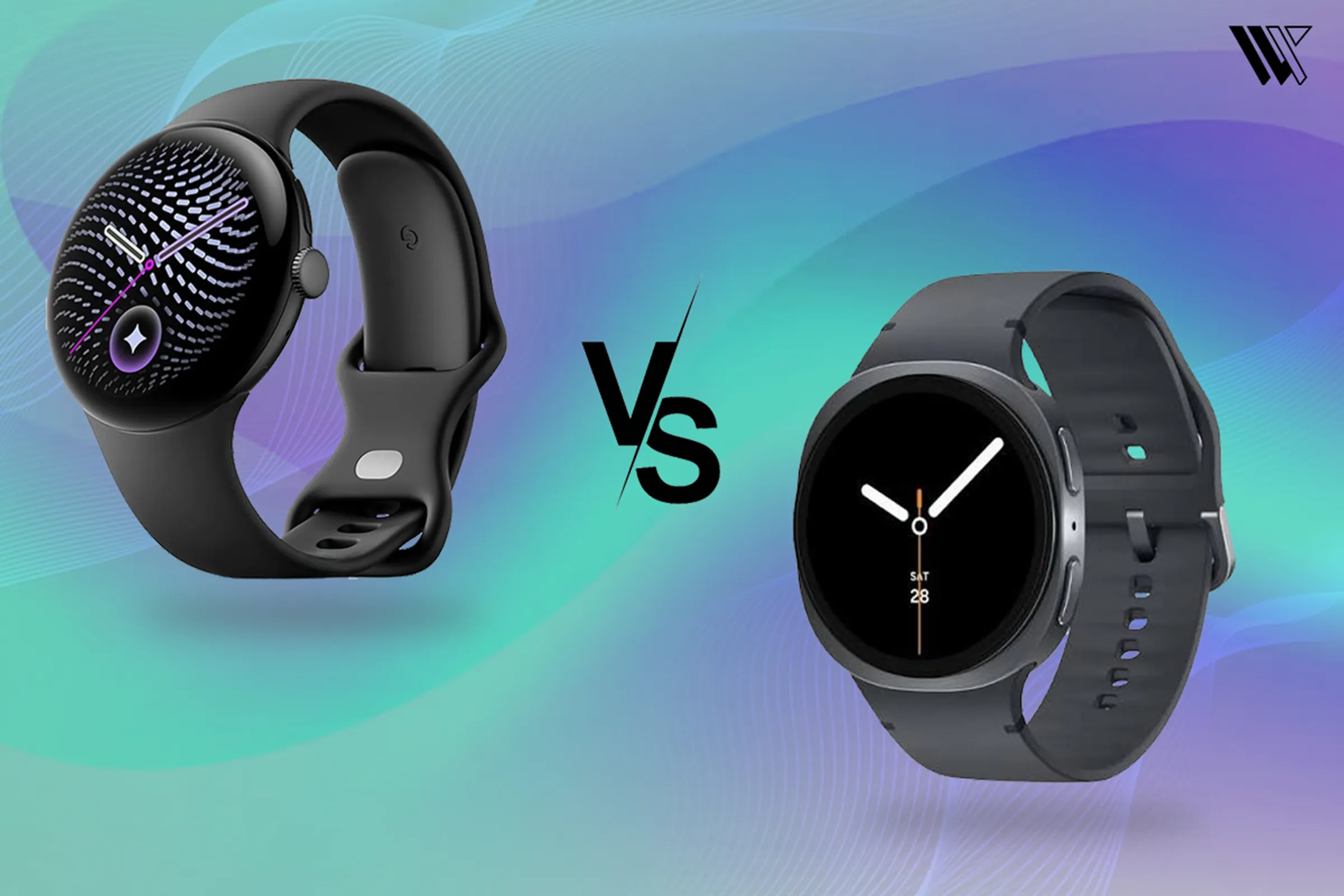
Two names that are taking different approaches to this are Google’s Pixel Watch 5 vs Samsung’s Galaxy Watch 9. Both promise to make health tracking more useful, but they have their own ideas about what information matters most and how it should be presented. With starting prices of $399.99 and $379.99, respectively, neither is exactly an impulse purchase.
So, which one actually deserves a place on your wrist? Is it the Pixel Watch 5 or the Galaxy Watch 9? Rather than getting carried away by a long list of sensors and health features, let’s look at what these two smartwatches bring to the table and see which one makes more sense for everyday health tracking.
Pixel Watch 5 vs Galaxy Watch 9 Specifications Table#
| Specifications | Google Pixel Watch 5 | Samsung Galaxy Watch 9 |
|---|---|---|
| Available sizes | 41mm, 45mm | 40mm, 44mm |
| Case material | 100% recycled aluminium | Aluminium |
| Case dimensions | 41mm: 41 × 41 × 12.3mm | 40mm: 42.7 × 40.4 × 8.6mm |
| Weight | 41mm: 31g | 40mm: 31.5g |
| Display type | AMOLED LTPO Actua 360 | Super AMOLED |
| Display resolution | 320 ppi | 40mm: 438 × 438 |
| Peak brightness | Up to 3,000 nits | Up to 3,000 nits |
| Display protection | Custom 3D Corning Gorilla Glass 5 | Sapphire Crystal |
| Processor | Qualcomm Snapdragon W5 Gen 2 with Cortex-M55 co-processor | Qualcomm Snapdragon Wear Elite Platform |
| Operating system | Wear OS 7.0 | Wear OS 7 with One UI 9 Watch |
| Battery capacity | 41mm: 332mAh | 40mm: 390mAh |
| Bluetooth | Bluetooth 6.0 | Bluetooth 6.0 |
| GPS | Dual-frequency GPS | Dual-frequency GPS (L1 + L5) |
| Heart-rate sensor | Multi-path optical heart-rate sensor | Samsung BioActive Sensor |
| ECG | Multipurpose electrical sensors | Electrical heart-signal sensor |
| Blood oxygen monitoring | Red and infrared SpO2 sensors | Optical blood oxygen monitoring |
| Skin temperature sensor | Far-field skin temperature sensor | Temperature sensor |
| Health application | Google Health | Samsung Health |
| Price | Starts at $399.99 | Starts at $379.99 |
Pixel Watch 5 vs Galaxy Watch 9: What’s the Difference?#
While comparing Pixel Watch 5 with Galaxy Watch 9, it is important to define the primary differences in their respective systems. While the Pixel Watch 5 includes Google Health with a Fitbit ecosystem, the Galaxy Watch 9 includes Samsung Health with the BioActive Sensor platform. As a result, there are major differences in how the information about your health is processed and presented by these watches. Google, for example, concentrates on providing information on health trends and health coaching. On the other hand, Samsung prefers to concentrate on clinically-oriented metrics that include body composition, sleep apnea and heart analysis.
However, there are certain drawbacks associated with each watch when it comes to the compatibility issue. First, the Pixel Watch 5 works perfectly with Android 12+ phones, but is not compatible with iPhones at all. Secondly, the Galaxy Watch 9 works with Android 13 phones, but to access its most sophisticated health capabilities, including ECG and blood pressure tools, the user will have to use a Samsung Galaxy smartphone. In other words, users of other Android smartphones will be deprived of some of the device’s features if they decide to purchase the Samsung wearable. Moreover, the Google wearables require paying a monthly subscription to access the most sophisticated coaching options, whereas the Samsung wearable can provide the core metrics for free. Thus, the Pixel Watch 5 vs Galaxy Watch 9 discussion ultimately depends on the phone you have in your pocket and the price you are willing to pay for the software.
Design and Comfort#
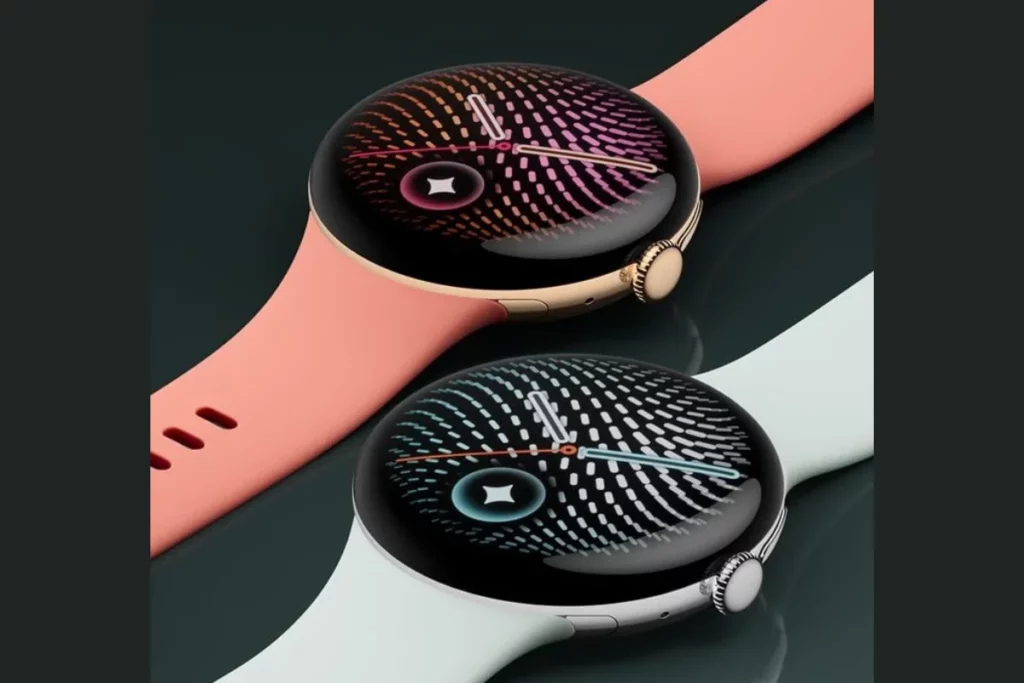
From the perspective of the physical construction, the Pixel Watch 5 boasts an eye-catching domed glass design that blends perfectly with the sleek housing while the Galaxy Watch 9 has a classic flat sapphire crystal display that is encased in the robust armor aluminum housing. As a result, such structural disparities directly affect the way the health sensors operate while interacting with the skin. Google wearable device has a prominent sensor bump on the bottom, which ensures that the multi-path optical sensor and cEDA monitor keep close contact with the skin during intense physical activity. On the other hand, Samsung wearable device has a more spacious and flat bottom construction, providing the necessary area for the BioActive sensor to conduct bioelectrical impedance analysis.

© Samsung
Although both watches have an emphasis on all-day wearability, there are some key differences in how the straps are secured and what each of them is like when worn at night. Firstly, while the Pixel Watch 5 has its own special watch band attachment mechanism, providing an extremely seamless and light experience, the Galaxy Watch 9 uses a highly convenient one-click button for securing compatible watch bands. Secondly, the lightweight design of the Google watch is ideal for overnight wear because it does not add any discomfort during sleep tracking and its SpO2 and skin temperature sensors are able to gather data without wrist strain. As for the cons of the Pixel Watch 5, it has its own band ecosystem, so if your skin does not react well to its default active strap and you need a replacement urgently, you are out of luck. On the other hand, the cons of the Galaxy Watch 9 come from its flatter and wider design, which may slide off the wrist at night during sleep tracking.
Verdict: The Google Pixel Watch 5 emerges as the superior gadget in this class due to the smooth curve design and the domed sensor on it, which ensures constant skin contact, enabling precise tracking of health, while being comfortable enough to be ignored throughout the night when tracking sleep.
Health Sensors and Monitoring: Which Watch Tracks More?#
When we take a look at the hardware in more detail, the Pixel Watch 5 vs Galaxy Watch 9 review finds several differences in terms of sensors used in the devices. The Pixel Watch 5 has a very sophisticated multi-path optical heart rate sensor while the Galaxy Watch 9 has a BioActive sensor which unites optical heart rate, electrical heart rate and bioelectrical impedance (BIA). Also, both watches have ECG-compatible electrical sensors, SpO2 monitors and skin temperature sensors. So, both watches can do any modern health tracking tasks.
On the other hand, the Pixel Watch 5 comes equipped with a cEDA sensor, which stands for electrodermal activity, to track body responses and stress levels, whereas the Galaxy Watch 9 does not have this particular piece of hardware. The Galaxy Watch 9 has one more unique thing in terms of sensors – it can perform bioelectrical impedance analysis to calculate body fat and muscle mass. Thus, while the Google smartwatch pays much attention to detecting stress through small signs during the day, the Samsung one works similarly to a smart scale located on the wrist. In any case, it should be noted that more sensors do not guarantee more accurate measurements of users’ health data. The cons of the Pixel Watch 5 consist in the absence of body composition sensors and the disadvantages of the Galaxy Watch 9 are the absence of cEDA sensors.
Section Verdict: The Google Pixel Watch 5 wins in everyday wellness monitoring because its dedicated cEDA sensor provides a more holistic and continuous understanding of the body’s subtle stress responses throughout the day.
Heart Health: ECG, Blood Pressure and Cardiovascular Insights#
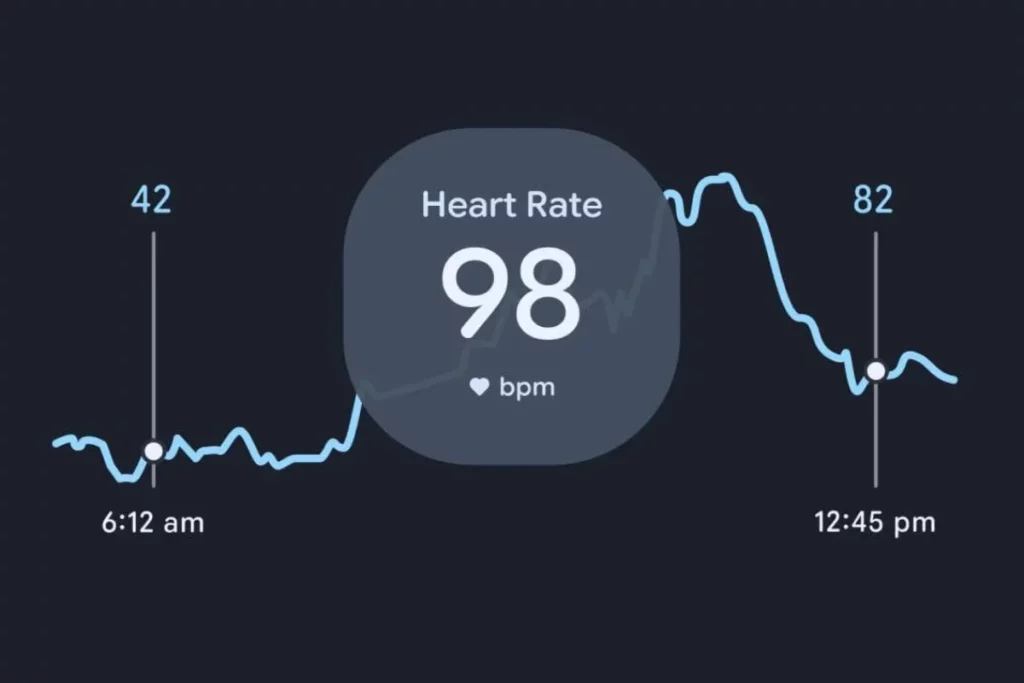
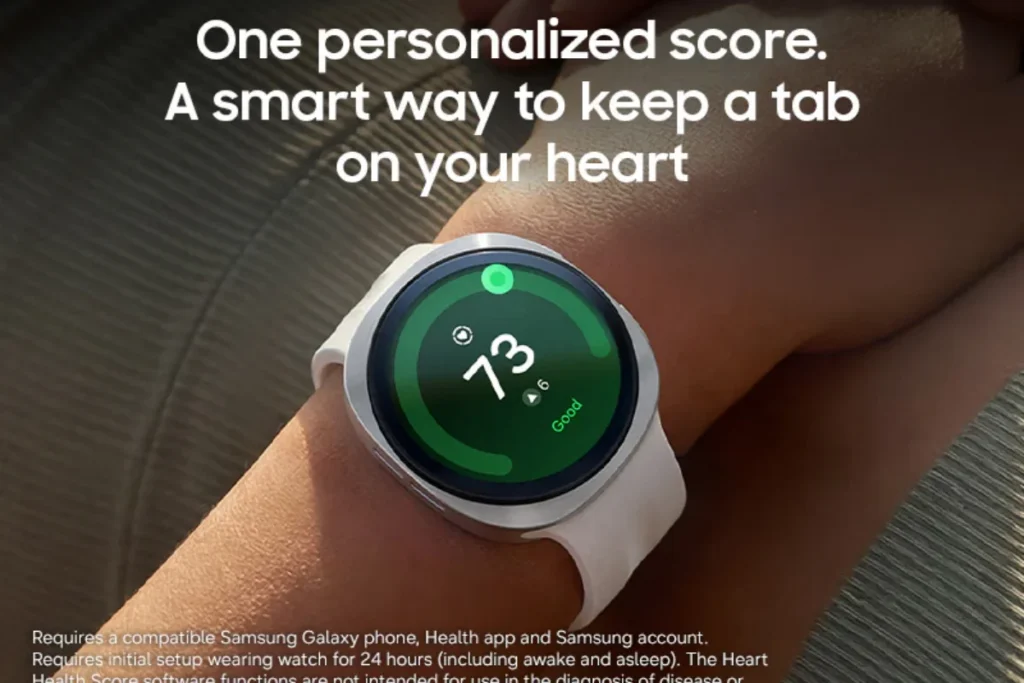
The cardiovascular monitoring features constitute an extremely significant aspect of the Pixel Watch 5 vs Galaxy Watch 9 discussion, particularly in terms of the hardware of the devices. To start with, the Pixel Watch 5 is equipped with a multi-path optical PPG sensor to monitor the heart rate and heart-rate variability, while the Galaxy Watch 9 has the integrated BioActive sensor to monitor the precise heart signals via optical and electrical methods. Moreover, both of the watches are furnished with a specific ECG app and alerts for irregular heart rhythm, which use in built electrical sensors to detect the signs of atrial fibrillation. Besides, both of the watches monitor heart-rate alerts to keep users proactively informed of unusually high or low resting rates during their daily routines.
© Samsung
But the way these smart watches perform the task of blood pressure monitoring is entirely different from each other, not only in technical but also in software aspects. While the Pixel Watch 5 features the Google’s Health Guardian software that calculates long-term trends in the user’s blood pressure and arteries stiffness, no additional calibration equipment is needed. At the same time, the Galaxy Watch 9 provides on demand measurements of the user’s blood pressure through pulse wave analysis. Thus, it is important to highlight one very crucial difference for the US market. While Google calculates the cardiovascular trends based on monthly reports and not on the numbers of blood pressure, Samsung provides the actual blood pressure numbers that require regular maintenance.
The limitations and drawbacks of both systems become quite clear when comparing these advanced cardiovascular tools in everyday scenarios. The cons of the Pixel Watch 5 is that you will not get an immediate, actionable blood pressure number if you suddenly feel unwell, leaving a gap in acute medical monitoring. Meanwhile, the cons of the Galaxy Watch 9 are that you must own a conventional upper-arm medical cuff to calibrate the watch every 28 days to keep the feature active and you absolutely must use a compatible Samsung Galaxy smartphone to process the ECG and blood pressure data. You can read more about Google’s breathing safety feature to understand how Google approaches its broader passive monitoring, but cardiovascular data heavily depends on the ecosystem you choose.
Verdict: Samsung Galaxy Watch 9 proves to be a better fit in monitoring heart health due to its BioActive sensor which provides instant blood pressure measurements numerically, despite the necessity of the cuff calibration, which makes it much more clinical than only trend estimates.
Sleep Tracking: Is Samsung Better at Detecting Sleep Problems?#
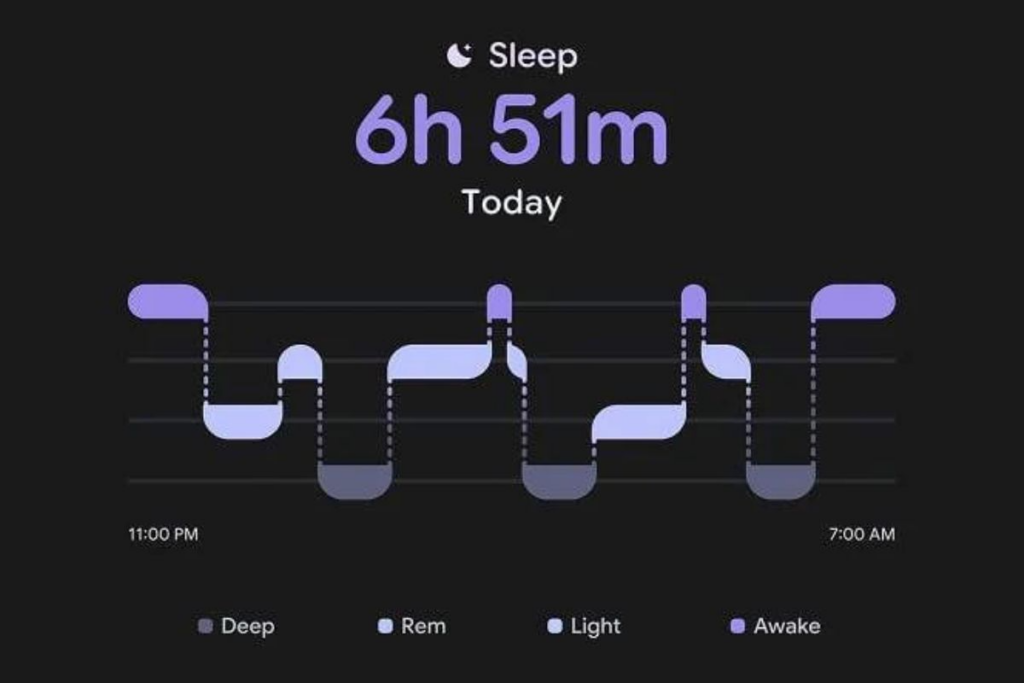
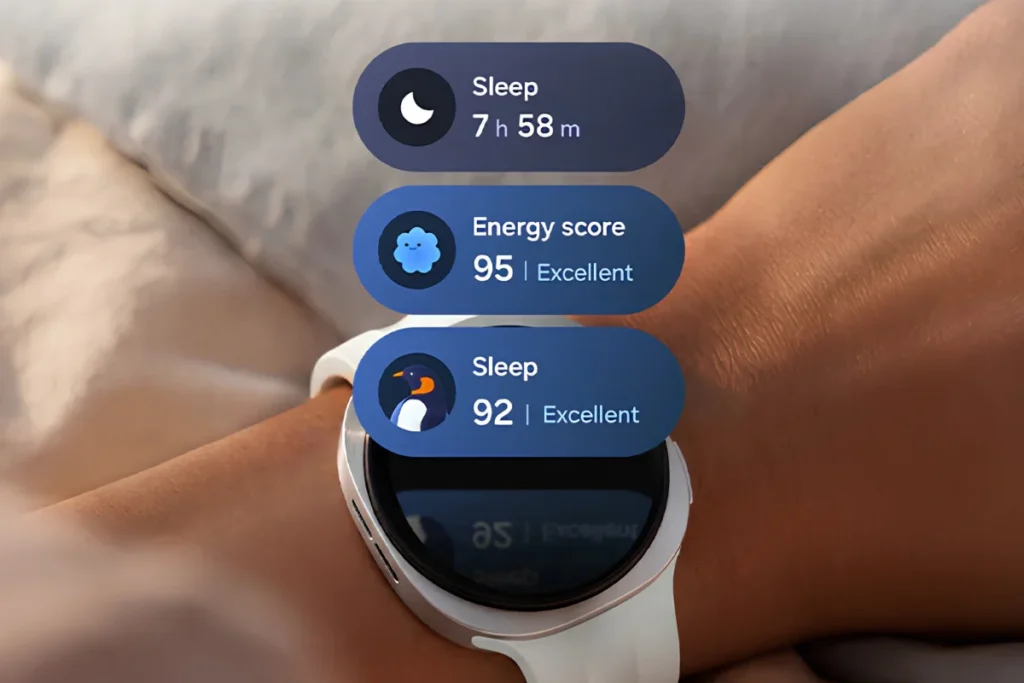
In terms of overnight monitoring, the comparison between the Pixel Watch 5 vs the Galaxy Watch 9 becomes an interesting topic to discuss. The Pixel Watch 5 features complete sleep stages, Sleep Score each day and overnight heart rate monitoring through the use of multi-path optical sensor. On the other hand, the Galaxy Watch 9 includes complete sleep stages, sleep duration and Sleep Coaching through the use of BioActive sensor. Moreover, both of the watches include the use of red and infrared sensors for providing overnight blood oxygen (SpO2) monitoring, helping to track the breathing stability of the users.
© Samsung
Nonetheless, the key technical factor when choosing between the Pixel Watch 5 and the Galaxy Watch 9 in terms of sleep tracking is how they address breathing problems. The Pixel Watch 5 has a Sleep Breathing Quality metric which uses the minor fluctuations in your breathing rate and SpO2 level during the night in order to detect wellness trends. On the other hand, the Galaxy Watch 9 has an FDA-cleared sleep apnea risk detection. As such, Samsung’s watch can screen for symptoms of obstructive sleep apnea on a two-day period through major breathing disturbances. It is worth noting that the FDA clearance of the Samsung feature makes it a screening test while the Google metric remains a wellness feature.
When you evaluate these nighttime metrics in the Pixel Watch 5 vs Galaxy Watch 9 comparison, both the devices present distinct drawbacks. The cons of the Pixel Watch 5 include its lack of FDA clearance for a dedicated sleep apnea screening tool, meaning it cannot provide clinical-grade alerts for severe breathing disruptions. Meanwhile, the cons of the Galaxy Watch 9 stem from the intensive processing required for its overnight oxygen tests, which tends to drain the battery significantly faster during the active sleep apnea screening period.
Verdict: Samsung Galaxy Watch 9 here earns the title of the best sleep monitor among these two due to its FDA-approved detection of the risk of sleep apnea as it uses advanced blood oxygen tracking, something that a basic health parameter cannot achieve.
Fitness and Recovery: Which Watch Is Better for Training?#
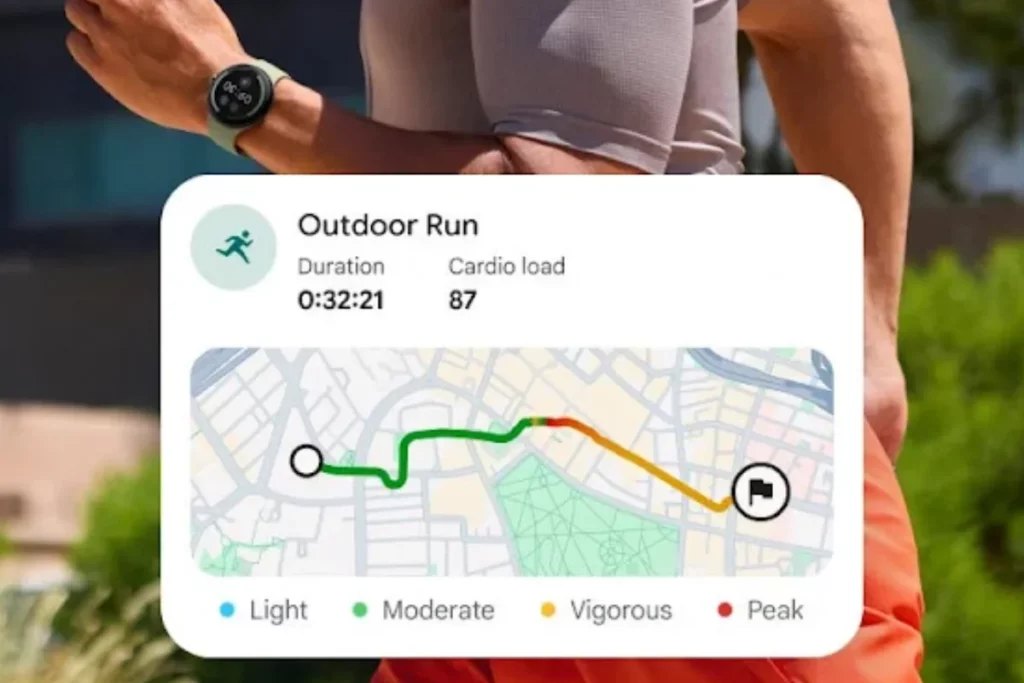
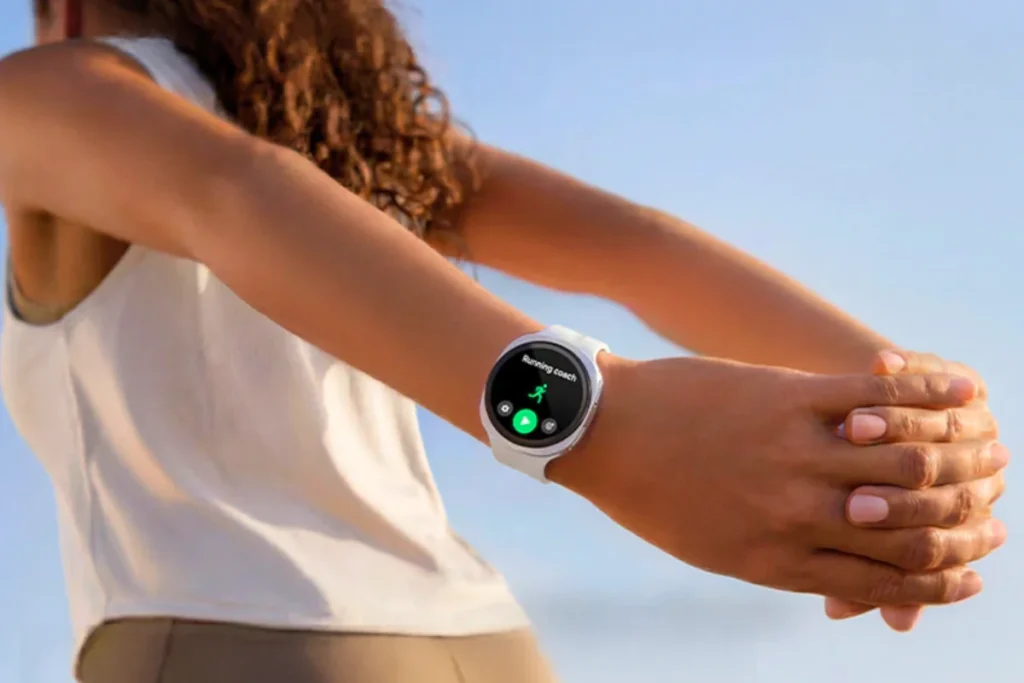
The Pixel Watch 5 features daily readiness scores, activity analysis and real-time heart-rate zone monitoring, while the Galaxy Watch 9 features an energy score, a daily cardio load score and fitness index analysis that is highly sophisticated. Moreover, the Samsung wearable takes advantage of the BIA sensor for body composition analysis and this will enable you to monitor changes in your skeletal muscle mass and body fat percentage. Conversely, the Google wearable does not have bioelectrical hardware like the Samsung wearable and this device constantly analyzes your cardio load target for optimization of workouts and recovery times.
© Samsung
Thus, choosing between the Pixel Watch 5 vs Galaxy Watch 9 for fitness is basically determined by your preference in receiving sports statistics. The Pixel Watch 5 offers the Google Health Coach and Gemini-enabled personalized coaching, where AI is used to provide you with detailed and actionable information in regard to your everyday workouts. On the other hand, Galaxy Watch 9 includes the Personalized Running Coach and detailed strength exercises tracking, offering a vast array of statistics in the form of tables, such as VO2 max estimation and recovery indexes after workouts. Both watches are great at monitoring your physical activity, but while Google concentrates on translating your efforts into easy to understand language, whereas Samsung focuses on providing clinical-style charts for data-driven athletes.
However, there are disadvantages of both ecosystems when it comes to optimizing the performance of your workouts. The disadvantage of the Pixel Watch 5 is that Google’s sophisticated Gemini-powered coaching requires a premium subscription to Google Health for $9.99 monthly, making the most prominent analytical tool available only through the financial barrier. As for the Galaxy Watch 9, its main disadvantages are a scattered ecosystem and a need for a Samsung account with a connected Galaxy phone in order to get access to some of the advanced fitness functions. When it comes to the Pixel Watch 5 vs Galaxy Watch 9 comparison, it is crucial to take into consideration all these factors.
Verdict: Fitness and recovery are areas where the Google Pixel Watch 5 really shines since its Google Health Coach that runs on Gemini is able to provide personalized tips for you to act upon, rather than a boring dashboard with confusing fitness numbers.
Software, Compatibility and Subscription Costs#
The actual software experience plays an immense role in any comparison between the two Pixel Watch 5 and Galaxy Watch 9 watches, particularly when talking about their operating systems. In this case, the Pixel Watch 5 is running Wear OS 7 natively and offers a really polished stock Android experience, whereas the Galaxy Watch 9 is running Wear OS powered by Samsung’s One UI Watch 9 interface. As a result, the experience will be completely different when one is exploring the metrics on their health. Here, the Google watch will be using Google Health ecosystem as an application for analyzing the multi-path data collected by the sensors, while Samsung Watch will only use Samsung Health app for working with its BioActive sensors. Also, both of these watches have now introduced Gemini as their artificial intelligence assistant in the process of analyzing health data.
Among the technical limitations of the Pixel Watch 5 vs Galaxy Watch 9 comparison, the smartphone compatibility is the one that stands out the most. Pixel Watch 5 is compatible with most of the Android phones running Android 12+, which makes it accessible to anyone who uses Android devices. On the other hand, Galaxy Watch 9 is compatible with the latest Android 13+ smartphones and all its most advanced medical capabilities can only be unlocked via Samsung Health Monitor application. If you plan to use Galaxy Watch 9’s FDA-approved screening for sleep apnea, on-demand ECG and cuff-calibrated blood pressure readings, then you must have Samsung Galaxy smartphone with you.
Ultimately, however, the cost of ownership is defined by an awareness of the subscription systems and the downsides of the wearables themselves. The Pixel Watch 5 is free in terms of the basic health trends provided by the Health Guardian and alerts about arrhythmias, but its sophisticated Gemini-powered coaching and interpretations of cardio load depend on having the Google Health Premium service, which costs $9.99 per month or $99 per year. In other words, the downsides of the Pixel Watch 5 are the recurring expenses which make use of the most powerful AI health features exclusive to its users. As for the Galaxy Watch 9, the major downsides of the watch lie in the way that it has locked itself into only working with certain smartphones through its hardware constraints. To learn more about how such software environments have developed historically, you can look at the previous generation comparison.
Verdict: The Samsung Galaxy Watch 9 adds tremendous value in comparison to this kind of product since it comes with all the sophisticated fitness tracking and sleep coaching features without imposing the costly monthly subscription fee wall which is needed in Google’s Wear OS products.
Battery Life and Charging#
A dead watch on your nightstand will be unable to monitor your physiological parameters during sleep. Thus, battery endurance is a key technical issue for comparison between the Pixel Watch 5 and the Galaxy Watch 9. The Pixel Watch 5 boasts an advertised 30-hour battery life of the 41mm watch and a 40-hour one of the 45mm version. Both times are achievable when the always-on display feature is activated. In turn, the Galaxy Watch 9 is fitted with a 390 mAh battery, which ensures the performance of the resource-demanding BioActive sensor array. That is, the Google device leverages its battery efficiency in order to conduct multi-path monitoring of heart rate and cEDA stress levels, while the Samsung counterpart uses its battery power for intensive monitoring of the specified health metrics.
Besides, how efficiently you are managing your charging regime will determine how well you will be able to gather your recovery data in an uninterrupted way. The two smartwatches feature the fast magnetic charging pucks where users can charge their gadgets fast before they go to bed. Nevertheless, the excessive consumption of power during the night by the health functions highlights the technical challenges in the two wearable devices. The disadvantages of the Galaxy Watch 9 include the fast discharge of its 390mAh battery while it is performing its FDA-approved sleep apnea test since the function involves intensive blood oxygen monitoring within two nights. On the other hand, the disadvantage of the small 41mm Pixel Watch 5 is the 30 hours of battery life forcing users to adopt a strategic fast-charging process before bed to make sure that the gadget survives through the night to measure its Sleep Breathing Quality.
Who Should Buy Which Smartwatch#
You should buy Google Pixel Watch 5 if:#
- You need comprehensive tracking of your health data over time using Google’s Health Guardian.
- You want AI-based fitness training and workout suggestions.
- You own a non-Samsung Android phone.
- You need breathing quality and blood pressure trends.
- You prefer to have more memory and extended battery time on the 45mm version.
You should buy Samsung Galaxy Watch 9 if:#
- You need the function of sleep apnea risk detection on top of sleep tracking.
- You need cuff-calibrated blood pressure measurement and ECG capabilities.
- You need body composition measurement, which includes body fat and skeletal muscle estimation.
- You exercise frequently and you want more information with Energy Score and Daily Cardio Load.
- You have a compatible Samsung Galaxy smartphone and want to access all the health functions of it.
Final Verdict#
If I had to choose a smartwatch for everyday health tracking, I would pick the Galaxy Watch 9. Its combination of blood pressure monitoring, body composition measurements and sleep apnea risk detection gives me more ways to understand my health. I also like its Energy Score and Daily Cardio Load features, which make tracking fitness and recovery more useful.
For me, a smartwatch should do more than fill my wrist with numbers, it should help me understand what those numbers actually mean. And with the Galaxy Watch 9, I feel I would get the kind of health insights that make checking my watch worthwhile, even when I am not checking the time.
 RK
Written by
With a focus on real-world usability, Rahul at WearableXP covers smartwatches and wearable fitness tech. He evaluates how devices combine activity tracking, health metrics, battery life and connectivity. His work helps readers understand how smartwatches fit into everyday routines through practical performance and software-driven features.
More from Rahul 341 storiesKeep readingmore from Smart Watches
All storiesSmart WatchesWithings ScanWatch 2 vs Apple Watch: Which Is Better for Health Tracking? Screenless BandsFitbit Air vs Samsung Galaxy Watch Ultra 2: Which Wearable Fits Your Health Goals?
 Screenless BandsFitbit Air vs Apple Watch: Which Wearable Is Better for Health Tracking?
What’s inside
- 01Pixel Watch 5 vs Galaxy Watch 9 Specifications Table1 min
- 02Pixel Watch 5 vs Galaxy Watch 9: What’s the Difference?1 min
- 03Design and Comfort2 min
- 04Health Sensors and Monitoring: Which Watch Tracks More?1 min
- 05Heart Health: ECG, Blood Pressure and Cardiovascular Insights2 min
- 06Sleep Tracking: Is Samsung Better at Detecting Sleep Problems?2 min
- 07Fitness and Recovery: Which Watch Is Better for Training?2 min
- 08Software, Compatibility and Subscription Costs2 min
- 09Battery Life and Charging1 min
- 10Who Should Buy Which Smartwatch1 min
- 11Final Verdict1 min