

Samsung has done a great job with the Galaxy Watch 9. It is faster than the previous generation, has a brighter display, improved battery life and continues to be one of the best Wear OS smartwatches available for Android users. If you already use a Samsung phone, it feels even more complete because many features are deeply connected with Samsung Health and the Galaxy ecosystem.

However, after spending time comparing the Galaxy Watch 9 with several other smartwatches, I realized it isn’t automatically the best choice for everyone. Some watches last much longer on a single charge, some offer deeper fitness insights, while some simply give you better value for your money. That’s exactly why I decided to put together this guide by covering the best Galaxy Watch 9 alternatives instead of simply recommending the newest Samsung watch to every Android user.
Decode the Decor
The Smart Jewelry Revolution — a practical guide to wearable tech.
Rather than ranking these watches from “best” to “worst,” I’ve chosen them based on the reason you might want something different. Every smartwatch on this list solves a specific trade-off that I noticed while comparing the Galaxy Watch 9, making it easier to find the one that actually fits the way you use a smartwatch every day.
Best Galaxy Watch 9 Alternatives at a Glance
- Pixel Watch 4: Best direct Wear OS alternative
- OnePlus Watch 4: Best for Wear OS battery life
- Galaxy Watch Ultra 2: Best premium Samsung/outdoor option
- Garmin Venu 4: Best for fitness and training
- Galaxy Watch 8: Best lower-cost Samsung option
- Amazfit Balance 2: Best battery/value alternative
Galaxy Watch 9 Alternatives Compared
| Smartwatch | Operating System | Battery Life | Display and Build | GPS | Price | Best For |
|---|---|---|---|---|---|---|
| Galaxy Watch 9 | Wear OS 6 (One UI 6 Watch) | Up to 40 Hours | 1.34″ or 1.47″ Super AMOLED (3,000 nits), Armor Aluminum | Dual-Frequency GPS (L1+L5) | Starts at $379.99 USD | Benchmark flagship with seamless Galaxy ecosystem integration |
| Google Pixel Watch 4 | Wear OS 6 | 30 Hours (41mm) / 40 Hours (45mm) | 1.4″ LTPO AMOLED (3,000 nits), Recycled Aluminum | Dual-Frequency GPS (L1+L5) | Starts at $349.99 USD | Best direct Wear OS alternative with stock Google software |
| OnePlus Watch 4 | Wear OS | Up to 5 Days (Smart) / 16 Days (Power Saver) | 1.5″ LTPO AMOLED, Stainless Steel & Sapphire Glass | Dual-Frequency GPS (L1+L5) | $330–$365 (Estimated) | Best Wear OS alternative for multi-day battery life |
| Galaxy Watch Ultra 2 | Wear OS | Up to 60 Hours (AOD On) | 1.52″ Super AMOLED (5,000 nits), Titanium Case | Dual-Frequency GPS (L1+L5) | Starts at $699 USD | Rugged durability, extreme brightness and battery upgrade within Samsung |
| Garmin Venu 4 | Garmin OS | Up to 10–12 Days | 1.2″ or 1.4″ AMOLED, Aluminum / Polymer | SatIQ Multi-Band GPS | Starts at $549.99 USD | Serious fitness training, deep recovery analytics and 10+ day endurance |
| Galaxy Watch 8 | Wear OS | Up to 40 Hours | 1.3″ or 1.5″ Super AMOLED (2,000 nits), Armor Aluminum | Dual-Frequency GPS (L1+L5) | Starts at $329.99 USD | Best value for staying within the Samsung ecosystem for less |
| Amazfit Balance 2 | Zepp OS | Up to 14-21 Days | 1.5″ AMOLED, Aluminum Alloy & Sapphire Glass | Dual-Band 6-Satellite GPS | Starts at $299.99 USD | Maximum battery value, offline maps and subscription-free health stats |
What Should You Look for Instead of the Galaxy Watch 9?
Before diving into the individual Galaxy Watch 9 alternatives, it helps to understand what Samsung’s standard model offers. The Galaxy Watch 9 comes in standard 40mm and 44mm sizes, featuring a vibrant 3,000-nit peak display, 390mAh or 445mAh batteries and the speedy Snapdragon SW6100 Wear Elite chip. In the U.S., pricing starts at $379.99 for the 40mm Bluetooth configuration. It is a fast, beautiful device, but it carries a few key trade-offs that lead buyers toward Galaxy Watch 9 alternatives:
- Battery Constraints: With typical daily use, the Galaxy Watch 9 requires a charge every 24 to 36 hours. If you want to log overnight sleep data alongside morning workouts without top-up anxiety, you will want to look at alternatives with multi-day power management.
- Samsung App Restrictions: While the Galaxy Watch 9 runs Google’s Wear OS platform, certain advanced health tracking features, like ECG analysis and blood pressure history, still require a paired Samsung Galaxy smartphone running the Samsung Health Monitor app. If ECG is one of the main reasons you’re buying a smartwatch, it’s worth comparing how different brands handle these features in our guide to the best smartwatches for ECG and Heart Monitoring.
- Fitness Depth: Samsung Health is fantastic for casual wellness tracking, but dedicated runners, cyclists and endurance athletes often find its recovery metrics and training load tools less insightful than deep analytical platforms like Garmin Connect.
- Value & Form Factor Preferences: Starting around $380, the Watch 9 isn’t cheap. Depending on your needs, you can find rugged outdoor smartwatches, multi-week battery champions or previous-gen hardware for significantly lower price points.
1. Google Pixel Watch 4: Best Direct Wear OS Alternative

If you want a refined Wear OS experience on Android without feeling tied to Samsung’s proprietary ecosystem, the Google Pixel Watch 4 stands as the top overall Galaxy Watch 9 alternative. Having switched back and forth between both watches, the first thing I noticed was how clean and fluid the Pixel Watch 4 feels during everyday navigation . If you’ve previously considered Samsung’s older flagship, you’ll also notice many of these differences in our detailed Pixel Watch 4 vs Galaxy Watch 7 comparison.
To complement this smooth software, Google crafted the exterior using a domed, scratch-resistant Corning Gorilla Glass 5 face that flows into a sleek recycled aluminum housing, available in both 41mm and 45mm case sizes. That seamless curved glass protects an upgraded LTPO AMOLED display that scales dynamically down to 1Hz to conserve power, while ramping up to 3,000 nits of peak brightness for effortless readability under harsh sunlight.
Behind that vibrant display, the Pixel Watch 4 runs on the Qualcomm Snapdragon W5 Gen 2 platform paired with a dedicated ultra-low-power co-processor, along with 2GB of RAM and 32GB of internal storage. That hardware combo handles real-time app switching, Gemini voice commands and turn-by-turn Google Maps navigation without any noticeable lag.
Thanks to those efficient internal chips, daily battery performance improves noticeably over older models, with the 45mm model packing a 455mAh battery rated for roughly 40 hours of use with Always-On Display enabled, while the 41mm variant reaches about 30 hours. Meanwhile, Google introduced a magnetic fast-charging dock that takes the watch from 0% to 50% in roughly 15 minutes, which helps you top up the battery quickly while getting ready in the morning.
Alongside reliable power delivery, health tracking on the Pixel Watch 4 relies on Google Health and Fitbit integration, using an upgraded multi-path optical sensor to capture continuous heart rate metrics, skin conductivity (cEDA) for stress monitoring and nightly skin temperature fluctuations. It also includes an electrical heart sensor for FDA-cleared ECG readings and fall detection, giving you essential safety features directly on your wrist.
To keep track of your outdoor training sessions, the watch incorporates dual-frequency GPS (L1+L5) positioning, which helps lock onto satellite signals quickly to ensure precise route logging between tall city buildings and under dense tree canopies. Standard wellness stats are free out of the box, though deeper historical trend analyses, custom workout builders and personalized Target Cardio Load metrics require a Fitbit Premium membership after the included trial.
If you own a Pixel phone or simply want a Wear OS platform that works seamlessly across all Android brands, the Pixel Watch 4 is the cleanest competitor to the Galaxy Watch 9. And if you’re still exploring other watches in Google’s ecosystem, our guide to the best Pixel Watch 4 alternatives covers a few more excellent options worth considering.
2. OnePlus Watch 4: Best Wear OS Alternative for Battery Life

For many smartwatch buyers, having to charge a wearable every single night can be frustrating. The OnePlus Watch 4 solves this exact pain point, making it one of the most compelling Galaxy Watch 9 alternatives for endurance seekers who still want true Wear OS app access.
It achieves this balance through an upgraded Dual-Engine Architecture, pairing the high-performance Qualcomm Snapdragon W5 chip with an ultra-efficient BES2800 secondary co-processor. This hybrid setup lets the main Wear OS platform step aside when you are not actively using apps, allowing the low-power chip to handle background tasks like step counting and continuous sensor polling.
Because these two processors divide the workload intelligently, this dual-engine design gives you up to 5 full days of battery life in Smart Mode, roughly 3 days under intense use and up to 16 days in Power Saver Mode. When the 646mAh battery does run low, 7.5W fast charging gets you a full day of power in about 10 minutes, so you never have to leave the watch on a charging puck overnight.
To protect these internal components, the watch features a durable titanium chassis paired with a scratch-resistant sapphire crystal lens. Beneath that glass lies a spacious 1.5-inch LTPO AMOLED display that scales down its refresh rate to save power while ramping up to 3,000 nits of peak brightness, which helps you view live stats under direct sunlight.
Along with its impressive display and battery performance, the OnePlus Watch 4 keeps all essential Wear OS functionality intact. You can download apps directly from the Google Play Store, process Google Wallet contactless payments and reply to incoming text messages directly from your wrist using integrated Gemini voice commands.
For fitness and health monitoring, the watch includes dual-frequency (L1+L5) GPS for precise route tracking, alongside sensors for continuous heart rate, blood oxygen levels, skin temperature and sleep hygiene analysis. While its official U.S. retail availability can vary compared to mainstream options, its expected $330 to $365 USD price point makes its 5-day Wear OS battery life virtually unmatched.
3. Samsung Galaxy Watch Ultra 2: Best for Samsung Users Wanting More Battery and Durability

If you love Samsung’s software ecosystem, One UI Watch controls and deep Samsung Health integration, but find the standard Galaxy Watch 9 too delicate, the Samsung Galaxy Watch Ultra 2 is the premier upgrade path. Designed as a rugged flagship for demanding environments, it steps up from lightweight aluminum to an armor-grade Grade 4 Titanium case built to withstand extreme shock, heavy impacts and severe outdoor weather.
To protect its display from outdoor hazards, Samsung covered the front lens with thick sapphire crystal glass that resists heavy scratches during trail runs and rock scrambles. Beneath that protective crystal sits a massive 1.5-inch Super AMOLED screen pushing an incredible 5,000 nits of peak brightness, which helps you view fine topographic maps clearly under direct, blinding sunlight.
Beyond its rugged exterior, the hardware durability ratings on the Ultra 2 are engineered for extreme sports. It features IP69K dust and high-pressure water ingress protection, 10 ATM water resistance for ocean sports and EN13319 compliance, which allows recreational scuba divers to use the watch as a functional dive computer down to 40 meters.
Inside that tough shell, an 800mAh battery delivers up to 60 hours of active use with Always-On Display enabled or up to 100 hours in targeted power-saving modes. This massive battery capacity gives you complete peace of mind during multi-day backcountry trips without requiring daily visits to a charger.
To power the watch, it uses the same 3nm Snapdragon Wear Elite platform which is found in the standard Watch 9, paired with Samsung’s complete BioActive sensor suite. This setup handles complex health features like personalized heart rate zones, multi-sport transition logging, BIA body composition analysis and FDA-cleared sleep apnea detection with effortless speed.
To help you manage your workouts in tough conditions, the watch includes a physical orange Quick Button on the side frame. This tactile button lets you instantly start workouts, mark lap splits or trigger an 86-decibel emergency siren without needing to swipe a wet touchscreen.
Furthermore, its dual-frequency (L1+L5) GPS antenna ensures precise location logging through dense forests and deep mountain canyons where single-band GPS signals often get lost. While starting at $699.99 for the LTE model makes it a steep investment over the standard Galaxy Watch 9, its combination of extreme durability, extended battery life and complete Samsung integration makes it an outstanding outdoor alternative.
4. Garmin Venu 4: Best for Fitness Training and Multi-Day Battery

If your primary goal is tracking workouts and measuring recovery, smartphone-like smartwatches can feel like a constant distraction. The Garmin Venu 4 stands out as one of the strongest Galaxy Watch 9 alternatives for athletes who prioritize deep fitness tracking over a busy app store.
This watch features an upgraded metal case in 41mm and 45mm sizes, providing a premium feel on your wrist while remaining lightweight for intense workouts. Under the Corning Gorilla Glass lens, there is a bright 2,000-nit AMOLED touchscreen, which helps you read live metrics clearly under direct sunlight.
The main advantage of the Venu 4 is its multi-day battery life paired with deep health tracking. Instead of lasting just 30 to 40 hours, it runs up to 10 to 12 days in standard smartwatch mode. Because you rarely need to charge it, the watch continuously tracks your sleep patterns and recovery without interruption.
Inside, Garmin included its Elevate Gen 5 optical heart rate sensor with FDA-cleared ECG capabilities. This helps you monitor heart rate variability (HRV), track resting heart rate trends and check for signs of irregular heart rhythms. It also includes Sleep Alignment tools, which help you see how your rest aligns with your natural circadian rhythm.
For route accuracy, the watch uses SatIQ dual-frequency multi-band GPS to log exact running paths through dense areas without draining excess battery. It also features an integrated multi-LED flashlight with white and red light modes, which helps illuminate dark paths during early morning runs.
On the software side, the Garmin Connect app delivers training load metrics, running power and Body Battery energy scores without a monthly subscription fee. While it trades off complex Wear OS apps and standalone LTE, its built-in speaker and microphone still handle quick Bluetooth calls and voice assistant commands. At $549.99, it remains a premier pick for fitness-focused buyers.
5. Samsung Galaxy Watch 8: Best Value for Staying With Samsung
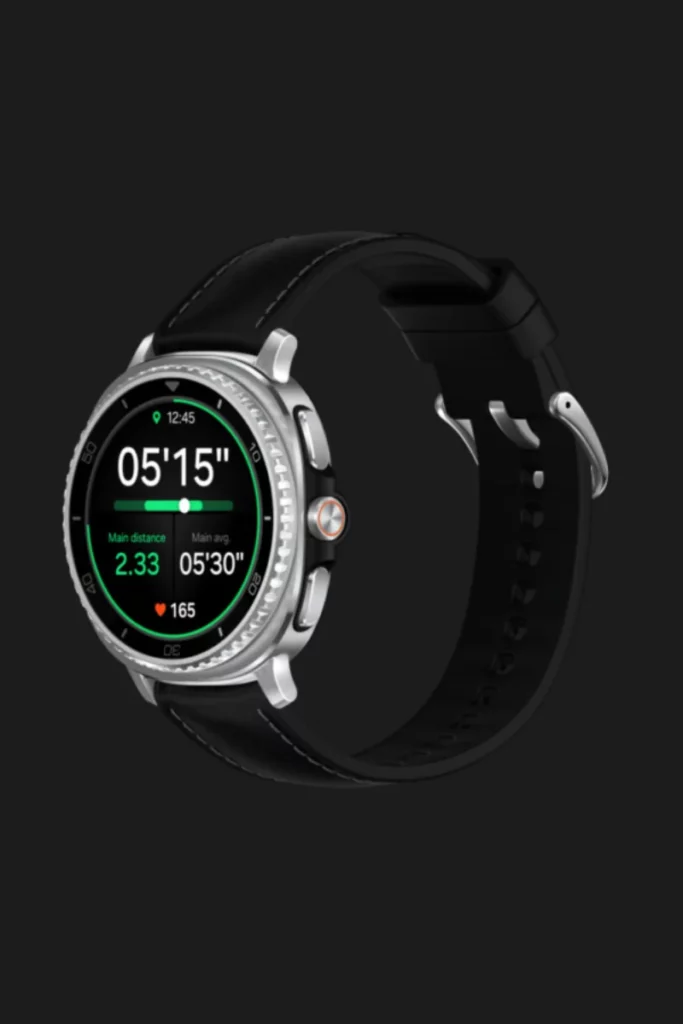
If you are set on buying a Samsung wearable for its seamless connectivity with your Galaxy smartphone, but you don’t want to spend nearly $380 for the newest generation, consider the previous-generation Samsung Galaxy Watch 8. Positioned as a value-driven Galaxy Watch 9 alternative, the Watch 8 offers roughly 85% to 90% of the flagship experience at a noticeably discounted street price, often found starting around $299.99 or lower during promotional sales.
The Galaxy Watch 8 features a slim aluminum chassis topped with scratch-resistant sapphire crystal glass. Its Super AMOLED screen hits a bright 2,000 nits, which is plenty legible for outdoor workouts. It runs Wear OS with Samsung’s One UI Watch layer, granting you access to Google Wallet, Google Maps, Samsung Health, body composition analysis (BIA) and ECG tracking.
Another reason I still recommend the Galaxy Watch 8 is that it doesn’t feel outdated in everyday use. From checking notifications and replying to messages to tracking workouts and monitoring your sleep, the watch remains smooth, responsive and reliable. It also receives the latest Wear OS updates, so you’re not missing out on the core smartwatch experience.
However, day-to-day usability for checking notifications, logging workouts and tracking sleep feels nearly identical across both models. If the price difference between the Watch 8 and Watch 9 is substantial, picking up the Galaxy Watch 8 is a smart financial move.
6. Amazfit Balance 2: Best Affordable Alternative for Long Battery Life

The Amazfit Balance 2 is designed specifically for anyone who wants high-end build quality and multi-week battery life without paying $350 or subscribing to monthly health apps. This watch features a lightweight aluminum alloy frame topped with a scratch-resistant sapphire crystal lens, which helps protect the screen from accidental scuffs during outdoor adventures.
Beneath that protective glass, there is a 1.5-inch 480×480 AMOLED display that reaches 2,000 nits of peak brightness, which helps you quickly read your live stats under blinding midday sunlight without straining your eyes. It is powered by Zepp OS 4, which is a lightweight operating system that processes health data efficiently and also helps to conserve energy while keeping the interface responsive.
Because this lightweight software operates smoothly alongside a large battery, the watch lasts up to 21 days under typical use, which helps you go on extended trips without packing a charging puck. Inside the watch casing, Amazfit packed serious location and health hardware to keep up with demanding workouts.
This watch has a dual-band circularly polarized GPS antenna connected to 6 satellite positioning systems, which helps maintain rock-solid route tracking through dense forests and tall city buildings where standard GPS signals frequently drop.
For health metrics, it includes the BioTracker PPG biometric sensor alongside a BIA bioelectrical impedance sensor, which helps you monitor continuous heart rate, blood oxygen levels and body composition metrics like body fat percentage directly from your wrist. It also features 10 ATM water resistance and a 45m diving certification, which helps water sports enthusiasts and scuba divers track aquatic activities safely. Additionally, the built-in Zepp Flow AI voice assistant lets you start workouts or check stats hands-free, which helps you make quick adjustments while on the move.
When I wore the Amazfit Balance 2 during daily routines and weekend runs, its complete freedom from daily charging felt remarkably liberating compared to the Galaxy Watch 9. This watch has free offline downloadable Topo maps and full course maps for over 40,000 golf courses, which helps you navigate remote trails and golf fairways without needing a phone connection. If offline navigation is important to you, you’ll also find more great options in our guide to the best wearables with offline maps.
Furthermore, its comprehensive sleep tracking calculates your daily BioCharge energy score every morning, which helps you understand your body’s recovery level before starting a tough workout session. While it does trade off Wear OS third-party app access and standalone LTE cellular calling, its unmatched battery efficiency, rich health tracking and affordable price point make it one of the best value alternatives on the market.
Which Galaxy Watch 9 Alternative Should You Buy?
Choosing the right Galaxy Watch 9 alternative comes down to defining what you want to fix about Samsung’s standard smartwatch formula. Every watch on this list solves a specific limitation of the flagship model:
- Choose the Google Pixel Watch 4 if you want clean Wear OS software, rapid charging and un-walled Fitbit metrics on any Android phone.
- Choose the OnePlus Watch 4 if you want full Wear OS app capabilities paired with multi-day 5-day battery life.
- Choose the Samsung Galaxy Watch Ultra 2 if you want maximum ruggedness, 5,000-nit display visibility and multi-day battery without leaving Samsung Health.
- Choose the Garmin Venu 4 if your primary focus is deep athletic recovery, multi-band GPS accuracy and multi-week battery performance.
- Choose the Samsung Galaxy Watch 8 if you want the Samsung experience at a significantly reduced price point.
- Choose the Amazfit Balance 2 if you want long 21-day battery endurance, offline mapping and zero subscription costs on a budget.
Final Verdict
If I had to choose just one of these Galaxy Watch 9 alternatives, I would go with the Google Pixel Watch 4. That said, the right smartwatch always depends on your priorities. If you’re still comparing more options before making a decision, our roundup of the best Android smartwatches for 2026 is a good place to continue your search.
What I like most is that it doesn’t try to be completely different from the Galaxy Watch 9, it simply offers a different experience that many Android users may actually prefer. Whether you’re using a Pixel phone or another Android device, the Pixel Watch 4 strikes a great balance between smartwatch features, health tracking and everyday usability. For me, that’s what makes it the Galaxy Watch 9 alternative I would confidently recommend. Of course, if you’re also open to Apple, Garmin, Amazfit, and other platforms, our roundup of the best smartwatches in 2026 compares the top models available today.
.
FAQs
Decode the Decor
The Smart Jewelry Revolution
A practical guide to wearable tech's future — delivered straight to your inbox.
Author
