

Imagine your Pixel Watch not only tracking your steps and heart rate but also noticing that something is terribly wrong with your breathing and trying to save you in case you cannot do anything on your own?
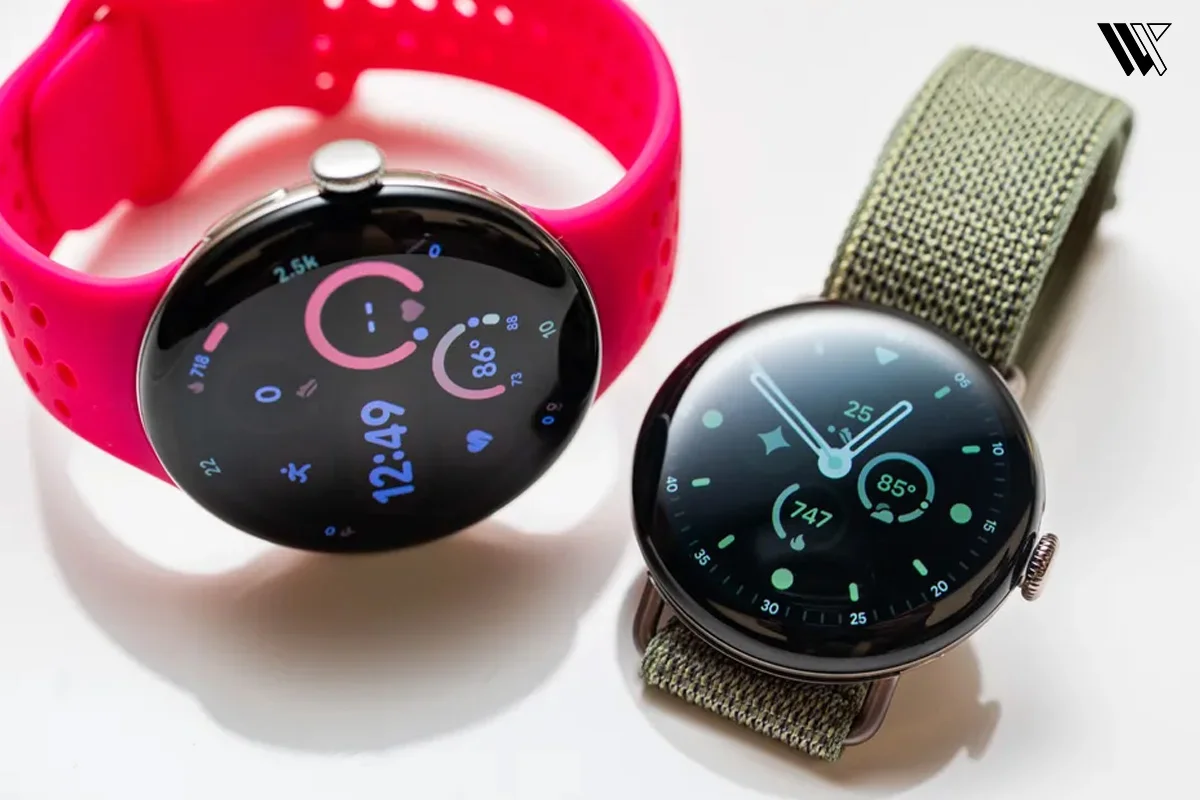
This is the main principle of Pixel Watch 5 Breathing Emergency Detection feature, which will detect some types of acute reduction in oxygen levels and, in case of your absence of reaction, will begin a process of calling for help.
Isn’t it great? There is one problem though: it is still not available for US citizens.
But how exactly does Pixel Watch 5 Breathing Emergency Detection work, what happens during an emergency situation and why Google does not offer it to its US customers?
Decode the Decor
The Smart Jewelry Revolution — a practical guide to wearable tech.
What Is Pixel Watch Breathing Emergency Detection?
Pixel Watch Breathing Emergency Detection is an emergency safety feature meant to function in the event of catastrophic physical well-being, not as a passive wellness tracking tool. Normal sensors on wearable technology simply record a baseline reading periodically. However, this safety feature kicks in when the body is in an acute state of compromised breathing.
The function was developed by Google to deal with situations where there is an emergency such as:
- Airway blockages caused by choking.
- Severe and acute pneumonia causing problems with the exchange of oxygen
- Accidental poisoning or overdose with drugs that inhibit the body’s inherent breathing mechanism.
- Acute situations that cause an oxygen shortage in the blood.
The device does not detect, treat or cure any diseases. Its main purpose is the detection of dangerously low oxygen concentration and calling for help.
How Does Breathing Emergency Detection Work?
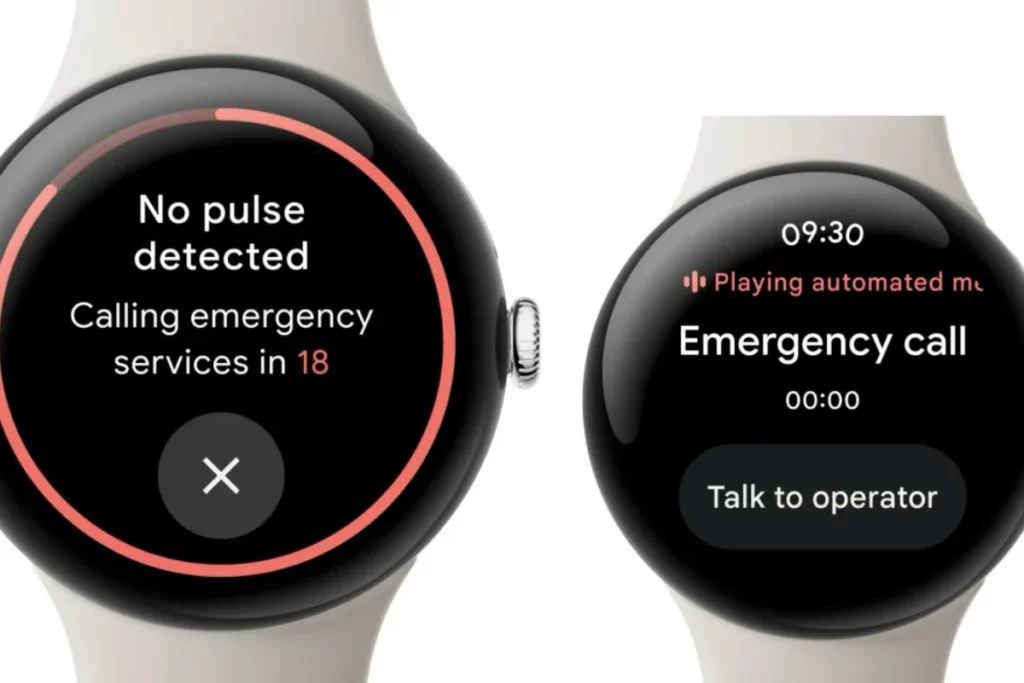
The Pixel Watch 5 Breathing Emergency Detection system uses a constant stream of multiple sensors to deliver quick and highly accurate decision-making without triggering false alarms. Using only one parameter like oxygen levels in the blood, for example, would lead to an unreasonably large number of false emergency calls to local 911 services.
Google is using multimodal hardware and machine learning algorithms to determine acute distress:
- PPG (Photoplethysmography) Optical Sensors: Combination of green, red and infrared lights used to measure the heart rate and estimate continuous blood oxygenation.
- Trend Detection for Oxygen Levels: Determines if the drop in oxygen is serious, continuous and acute, instead of a short-lived measurement error. Google’s experiments focused on determining the triggers for severe and continuous drops to around 83% SpO2.
- Motion Tracking via Accelerometer and Motion Sensors: Determining if the individual is either moving, walking or not moving at all.
- Barometer and Altitude Sensors: Takes into account the ambient air pressure and ensures that the altitude of thin air does not lead to any false positives.
- Machine Learning Model on Device: Local analysis of all telemetry data in real-time using the on-device AI model, ensuring privacy and detection without any cloud latency.
If the algorithm determines that there has been a steep fall in the oxygen levels and no movement is detected, then the device initiates an emergency protocol.
What Happens If the Watch Thinks You’re in Danger?
Upon detecting a potential respiratory distress situation, the system triggers an ordered alert process prior to making an outbound call:
- Vibration and Notification: The watch vibrates strongly and displays a full-screen message that asks if the wearer is okay.
- Dismiss Notification: Should the wearer be okay and conscious, the message will be dismissed immediately through pressing the screen or movement.
- Alarm Chime & 30-Second Timer: If the initial message is not responded to within 30 seconds, the watch will send out an increasing alarm chime and set a 30-second timer.
- Automatic Emergency Call: In case there is no reaction from the wearer when the timer runs out to zero, the watch calls emergency numbers automatically.
- Coordinates & Information Exchange: Once the connection is established, the watch will play a synthesized voice message to alert the emergency dispatcher about the breathing emergency and the coordinates of the wearer.
Note on Connectivity: The emergency call feature uses an LTE signal on cellular watches and a Bluetooth paired with the wearer’s smartphone on Wi-Fi watches.
Is Breathing Emergency Detection Available in the US?
Breathing emergency detection through Pixel Watch 5 is not currently available in the USA.
Since the automation of such a system can be used in case of a life-threatening situation, Google needs to gain clearance from the FDA in order to enable it in America. In Europe, the functionality was only activated in a few selected countries (including the UK, France and Germany), where the regulation allowed it to be launched right away. There is no information on when it would be approved in the USA.
You Don’t Need a Pixel Watch 5: Pixel Watch 4 Gets It Too
Current users would not need to swap their current device just for the sake of this feature. The Pixel Watch 4 will get the feature through a software update in regions where it is available.
Both Pixel Watches use the same hardware that comprises the optical sensors, accelerometers and processing capability for running the detection models from Google.
What processor powers the Google Pixel Watch 5?
The Google Pixel Watch 5 runs on the Qualcomm Snapdragon W5 Gen 2 Accelerated processor paired with a Cortex-M55 co-processor to deliver faster performance and improved power efficiency.
The Pixel Watch 5 comes with a faster Qualcomm chip and higher brightness in addition to the dual-precision GPS technology but it is not necessary for the breathing emergency detection feature.
Does It Work While You’re Sleeping?
Pixel Watch 5 Breathing Emergency Detection feature will be deactivated when the user is in a deep sleep.
Google’s software algorithm has been programmed to automatically disable the escalation of emergency calls when the wearer has been in sleep mode for around 30 minutes. This is because during regular sleep patterns, there will be fluctuations of blood oxygen level and the heart rate, hence, one might experience shallow breathing temporarily. The deactivation of active emergency calling feature while sleeping will prevent unwanted emergency calls.
Breathing Emergency Detection vs. Sleep Apnea Detection vs. Loss of Pulse
| Feature | Primary Purpose | Real-Time Emergency Call? | Active Time Window |
|---|---|---|---|
| Breathing Emergency Detection | Detects sudden, critical drops in oxygen accompanied by unresponsiveness | Yes (Automated call after countdown) | Daytime / While awake |
| Sleep Breathing Quality | Tracks nighttime variations in blood oxygen and breathing disturbances | No (Passive metric in Fitbit/Health app) | Overnight during sleep |
| Sleep Apnea Notification | Screens for long-term breathing interruption patterns indicating sleep apnea | No (Periodic screening report) | Overnight historical data |
| Loss of Pulse Detection | Identifies the complete absence of a detectable heart rhythm / circulatory arrest | Yes (Automated escalation protocol) | Continuous while worn |
How Is It Different From Loss of Pulse Detection?
Lack of Pulse Detection first featured on earlier versions of Pixel Watch, works by analyzing photoplethysmography to detect circulatory shock or cardiac arrest. When no pulse is detected by the watch and there is no motion detection, an emergency check-in will be automatically activated.
Breathing Emergency Detection expands upon the emergency response capabilities of Google to the breathing system. In cases of choking, pneumonia and accidental drug overdose, blood oxygen levels will drastically drop even before pulse detection is activated. This feature makes it possible for the Pixel Watch to call for help early in the sequence of events.
Who Should Not Rely on This Feature?
Google clearly states that the Pixel Watch 5 Breathing Emergency Detection cannot be used as an alternative to professional medical care, specialized clinical diagnosis or personal emergency response system.
- Patients Diagnosed with Chronic Respiratory Conditions: Patients with COPD, severe asthma and pulmonary fibrosis must not depend on the function of this feature since chronic changes in oxygen levels may interfere with the detection process.
- Patients Undergoing Medical Monitoring: The watch is not a hospital-level pulse oximeter and must never replace medically prescribed tools.
- Users Who Live in Locations with Poor Coverage: The watch cannot make emergency calls when cellular and paired Bluetooth connections are not available.
Do You Need LTE for Breathing Emergency Detection?
Standalone connectivity is determined by your specific Pixel Watch device:
- Pixel Watch 5 (4G LTE): Is capable of placing an emergency call right from the watch as long as there is cell service and support from the carrier.
- Pixel Watch 5 (Wi-Fi/Bluetooth): Has to be connected via Bluetooth to your smartphone in order to make a phone call using your smartphone’s cellular data.
Google’s final connectivity requirements for Breathing Emergency Detection must be reviewed before adopting the criteria used for Loss of Pulse Detection.
Is This a Reason to Buy Pixel Watch 5?
- US Consumers: No, definitely not for this particular feature by itself. The device is still under clearance from FDA and hence, cannot be used in the US.
- Pixel Watch 4 Owners: No, due to the fact that Google will soon roll out the same feature for Watch 4 in select regions through software updates.
- First Time Buyers: Pixel Watch 5 offers an excellent Android smartwatch experience, with starting prices of $399 for the 41mm variant and $429 for the 45mm model, with the addition of better battery, dual-frequency GPS and Snapdragon W5 Gen 2 processor. But the buying decision should not be made based on this potential safety feature.
What Happens Next?
Google is still working hard on regulatory submissions internationally with the ultimate goal of being FDA approved in the United States. As regulatory approvals continue to make progress, Google will provide specific guidance on their site about the carrier requirements and countries that support the product. WearableXP will keep this guide updated as soon as there are any changes.
Wrap Up
The Pixel Watch 5 Breathing Emergency Detection may make the Pixel Watch a more helpful safety tool since the function can detect some oxygen deprivation cases, notify the wearer and try to connect the victim with emergency services if no response occurs.
However, there are some limitations. The feature is not available in the USA, it does not diagnose any disease and cannot detect all emergencies. Pixel Watch 4 also gets that feature, so it cannot be used as an upgrade reason.
For the time being, it is a good safety feature, but only not for US residents.
FAQs
Decode the Decor
The Smart Jewelry Revolution
A practical guide to wearable tech's future — delivered straight to your inbox.
Author
