

 Add Us On Google
Sweating through a morning commute or right before an important event/meeting makes personal comfort a priority. Over the past years, a wave of wearable Air Conditioner tech has emerged, which promises a portable escape from summer heat waves. These aren’t just basic plastic fans that blow warm air around your face, the modern market features advanced, app-connected thermoelectric cooling hardware that is designed to alter how you experience hot weather.

Having spent the last several seasons testing and reviewing various wearable gadgets and personal cooling tech, ranging from minimalist airflow fans to heavy-duty, multi-module thermoelectric units, the clear differences in performance have emerged. Also, the real-world testing reveals which devices provide genuine thermal relief and which ones struggle when the humidity rises.
In this guide, I am breaking down the best wearable air conditioner devices I have tried so far, including premium cooling wearables, affordable neck fans and even stronger outdoor-focused cooling gadgets.
Decode the Decor
The Smart Jewelry Revolution — a practical guide to wearable tech.
Best Wearable Air Conditioner Devices (Quick Picks)
- Best Overall Wearable Air Conditioner: Sony Reon Pocket Pro
- Best Air Flow: Civpower Portable Neck Fan
- Best Wearable Air Conditioner for Travel: TORRAS COOLiFY Cyber Neck Air Conditioner
- Best Wearable Cooling Device for Outdoor Use: Ranvoo AICE Lite Max
- Best Budget Wearable Cooling Device: OVIFM Neck Fan
- Best Battery Life Wearable Air Conditioner: TORRAS COOLiFY 2S Lite
Comparison Table
| Device | Cooling Type | Battery Capacity | Weight | Best For | Price |
|---|---|---|---|---|---|
| Sony Reon Pocket Pro | Thermoelectric Cooling (TEC) | Built-In Li-ion (Up to 34h on Level 1) | 194g (Unit only) / 247g (with Neckband) | Discreet Office Commuting | $289.80 USD |
| Civpower Portable Neck Fan | Pure Kinetic Airflow | 4000mAh | 310g | Lightweight Budget Ventilation | $40.00 USD |
| TORRAS COOLiFY Cyber | Hybrid (3x TEC Modules + 4x Motors) | 6000mAh (20W Fast Charging) | 530g | Premium Travel & Comfort | $249.00 USD |
| Ranvoo AICE Lite Max | Hybrid (ICE MAX Superconducting Fin) | 6000mAh (15W Fast Charging) | 506g | Extreme Outdoor Heat | $216.10 USD |
| OVIFM Neck Fan | Pure Kinetic Airflow | 4000mAh | Approx. 260g | Ultra-Budget Summer Comfort | $39.98 USD |
| TORRAS COOLiFY 2S Lite | Hybrid (2x TEC Plates + Dual Fans) | 5000mAh | Approx. 408g | Balanced Extended Battery Life | $199.99 USD0 |
Types of Wearable Cooling Devices
Before diving into the individual hardware reviews, it’s important to understand that personal cooling is achieved through different scientific principles depending on the device architecture. They fall into three distinct engineering categories:
Neck Fans
These are the most mechanically straightforward devices. They use miniature electric motors connected to impeller blades to draw ambient air in and blast it upward through targeted vents. There are no specialized thermal materials or cooling plates here. They rely entirely on kinetic airflow to accelerate sweat evaporation from your skin, which lowers your perceived temperature. They are highly affordable, structurally lightweight and boast excellent battery efficiency because spinning a tiny fan motor requires minimal current.
Thermoelectric Cooling Wearables
These premium devices utilize the Peltier effect to create a genuine, physical drop in temperature. Inside the casing, an electrical current is passed through two dissimilar semiconductors, causing heat to transfer from one side of the internal module to the other. This leaves one side incredibly cold. This freezing side is bonded to a skin-safe stainless steel or aluminum plate that directly contacts your upper back or neck. It provides an immediate, icy sensation that actively chills the blood vessels close to your skin surface.
Hybrid Cooling Devices
The heavy hitters of the personal cooling world. Hybrid hardware combines active thermoelectric cooling plates with high-velocity kinetic fans. When you turn on a hybrid device, the inner plates freeze against your skin while the surrounding multi-axis fans wrap your head and face in moving air. While they provide the most intense and comprehensive relief in high temperatures, they are also structurally heavier, more expensive and deplete their battery cells rapidly when running both systems at maximum output.
Best Wearable Air Conditioners
Best Overall: Sony Reon Pocket Pro
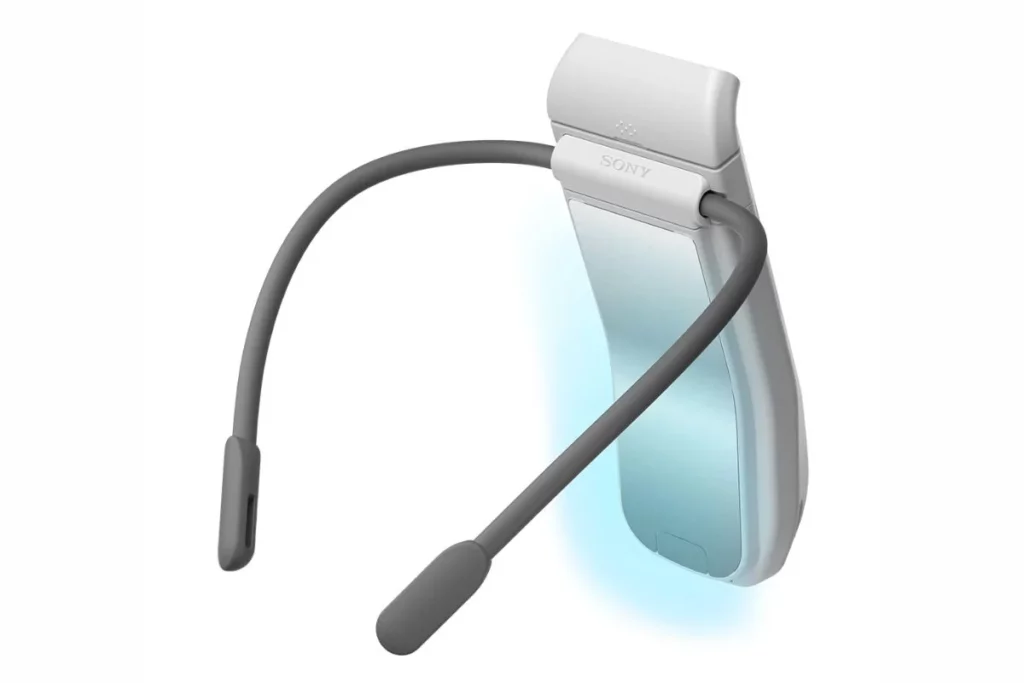
The Sony Reon Pocket Pro is a sleek, minimalist device designed to clip directly onto the back of your shirt collar using a custom flexible neckband. It sits hidden right below your shirt line, making it completely invisible to coworkers or fellow commuters.
It utilizes dual independent thermo modules built with high-grade SUS316L stainless steel contact pads. A built-in triple-sensor array constantly monitors your skin temperature, environmental humidity and motion metrics via an internal accelerometer to automatically modulate cooling intensity in Smart Cool Mode.
This device is the absolute gold standard for office workers and daily city commuters. Because it focuses entirely on conductive contact cooling rather than blowing air into your ears, its internal exhaust fan is exceptionally quiet and completely inaudible in a quiet office meeting.
The battery offers up to 18 hours of continuous operation on Level 3 and up to 34 hours on Level 1. However, it lacks front-facing air vents for an instant face breeze. In extreme outdoor heat, the tiny internal exhaust fan can struggle to throw off heat, causing the cooling plate to periodically throttle down to protect its internal circuitry.
Price: $289.80 USD
Battery: 3,000 mAh
Best Air Flow: Civpower Portable Neck Fan
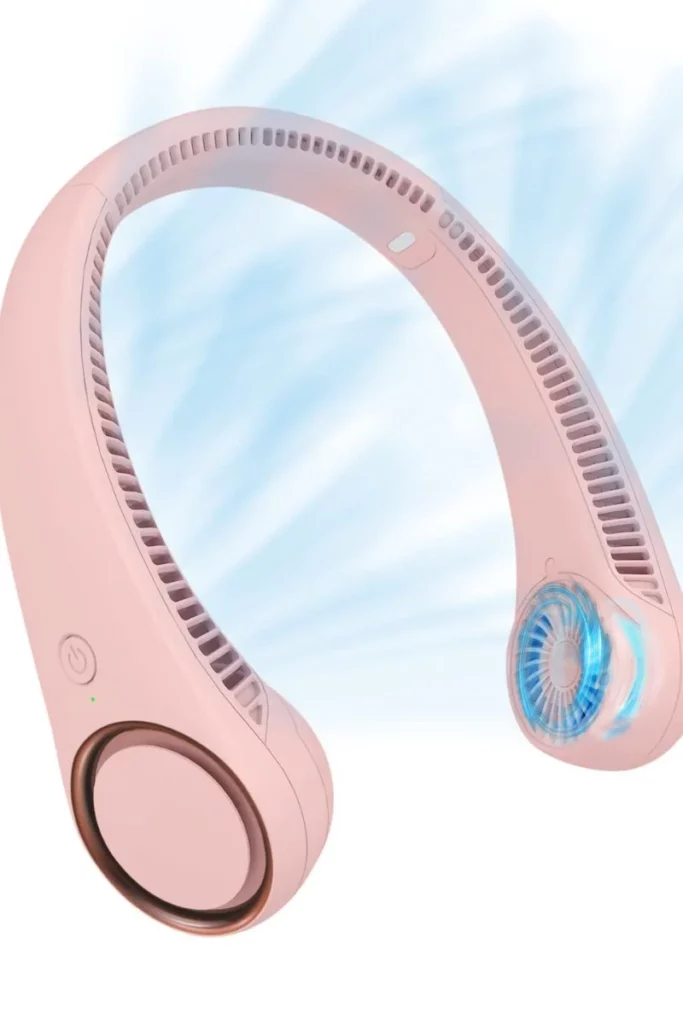
If your main priority is moving massive volumes of air without spending a fortune on complex thermoelectric hardware, the Civpower Portable Neck Fan is an incredibly reliable performer. This device drops heavy thermal plates entirely to focus on high-velocity aerodynamic ventilation.
It features a fully enclosed, bladeless twin-turbine motor design with dual-sided multi-aperture air ducts. High-RPM brushless motors pull air through a 360-degree intake mesh at the base of this band and force it up through dozens of precisely angled micro-vents, creating a uniform curtain of fast-moving air around your neck, jawline and cheeks.
The frame features a flexible, soft-silicone middle section to adjust the airflow angle directly against your sweat points and it weighs an easy 310 grams.
During test walks, the constant air movement accelerated sweat evaporation to cool down the skin via natural convection. However, it does not generate active chill and relies entirely on ambient air. The twin motors also create a noticeable whirring noise right below your ears when clicked into the highest speed setting.
Price: $40.00 USD
Battery: 4,000 mAh
Best for Travel: TORRAS COOLiFY Cyber
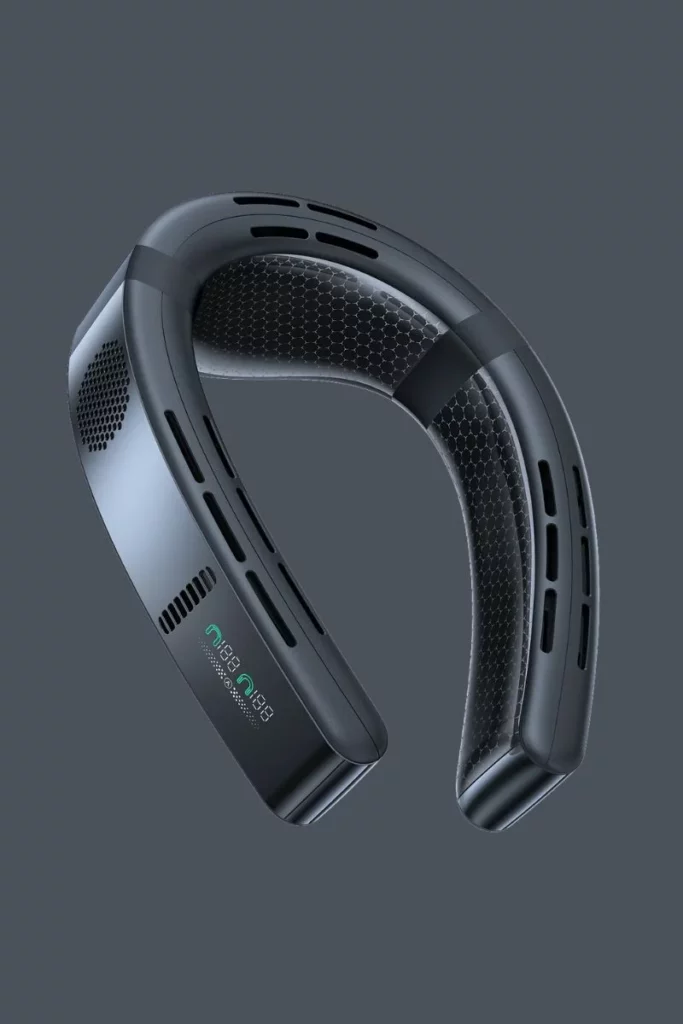
The TORRAS COOLiFY Cyber is an all-in-one personal climate control system built for power users navigating long travel transit, busy airports or hot urban landscapes.
It is powered by an advanced semiconductor setup utilizing three expansive thermoelectric cooling plates covering the sides and back of your neck. A custom 4-motor drive array pumps air through 8 independent air outlets for a 720-degree surround-cooling experience. Internal NTC temperature sensors register an instant temperature drop to 16°C on the metal plates in under two seconds.
It features a robust 6000mAh internal lithium-polymer battery and fully supports 15W USB-C fast charging, charging it from 0% to 80% capacity in exactly 2 hours. An integrated LED screen outputs real-time battery percentages and current mode statuses to eliminate power anxiety.
The main drawbacks are its overall footprint and weight. At roughly 530 grams, it is a substantial piece of hardware that causes physical collarbone presence after three hours of continuous walking. It also commands a premium price tag.
Price: $249.00 USD
Battery: 6,000 mAh
Best for Outdoor Use: Ranvoo AICE Lite Max
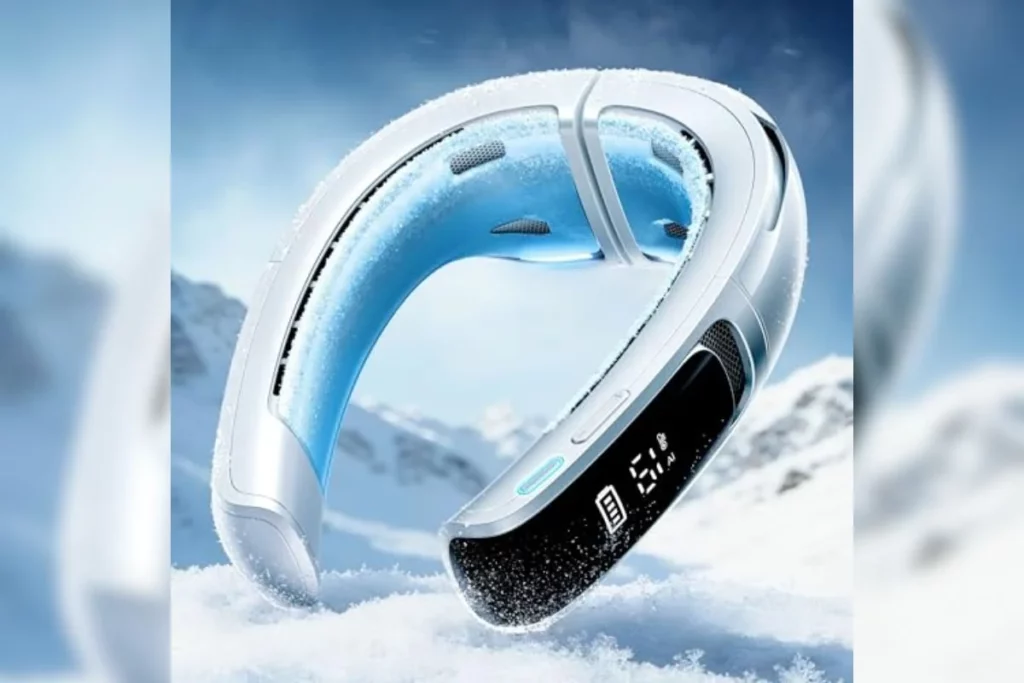
The Ranvoo AICE Lite Max solves heat rejection bottlenecks in active outdoor environments by utilizing a specialized, high-performance heat-rejection infrastructure.
Its structural backbone is a patented ICE MAX technology featuring a 15,020 mm² superconducting aluminum cooling plate that wraps around almost the entire circumference of your neck. It uses self-developed superconducting cooling fins paired with a rear air-circulation chamber to expel internal heat up to 50% faster than standard wearable frames, preventing thermal throttling even in direct sunlight past 38°C.
It features a rugged, sweat-resistant chassis with an IP-rated sealed button layout to protect against moisture intrusion. Downward-facing air vents ensure cool air is driven along your upper back and shoulders, while smart app control lets you activate a “Cooling First” profile to crush incoming heat spikes.
The trade-off for this extreme outdoor cooling power is its physical dimension, the device is wide and rigid and its high-velocity tornado fans generate a sound profile ranging from 32 dB to 58 dB, which feels loud indoors.
Price: $216.10 USD
Battery: 6,000 mAh
Best Budget: OVIFM Neck Fan
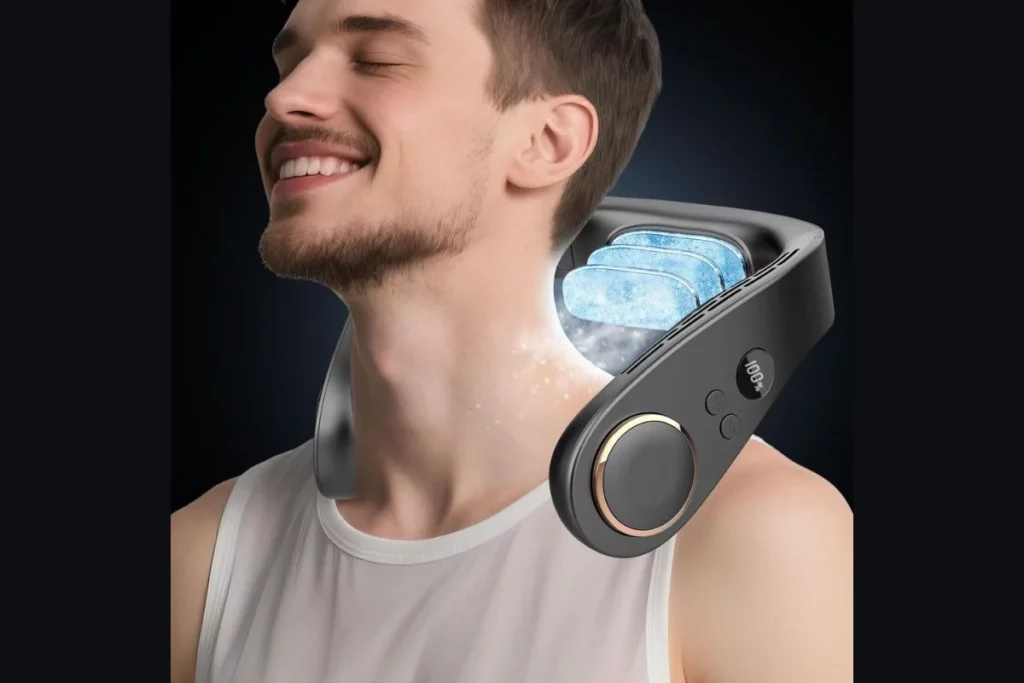
The OVIFM Neck Fan strips away all expensive tech components like Bluetooth apps, NTC sensors and Peltier plates to offer pure, functional airflow relief at a fraction of the cost.
It operates on a straightforward dual-motor system driving a multi-blade internal impeller layout. Weighing a highly comfortable 280 grams, it is one of the lightest neck-worn cooling accessories available. The interior curvature is lined with smooth air channels that direct airflow evenly across your neck line and its 4000mAh battery draws very little current.
The fan blades are completely enclosed within a hair-safe, anti-tangling housing, making it a competent companion for light gardening, watching outdoor sports or managing indoor chores.
However, since there is no active thermoelectric plate, this device provides zero conductive chilling. If you are using it in highly humid, stagnant air, its cooling performance drops significantly because it can only circulate the existing ambient air temperature.
Price: $39.98 USD
Battery: 4,000 mAh
Best Battery Life: TORRAS COOLiFY 2S Lite
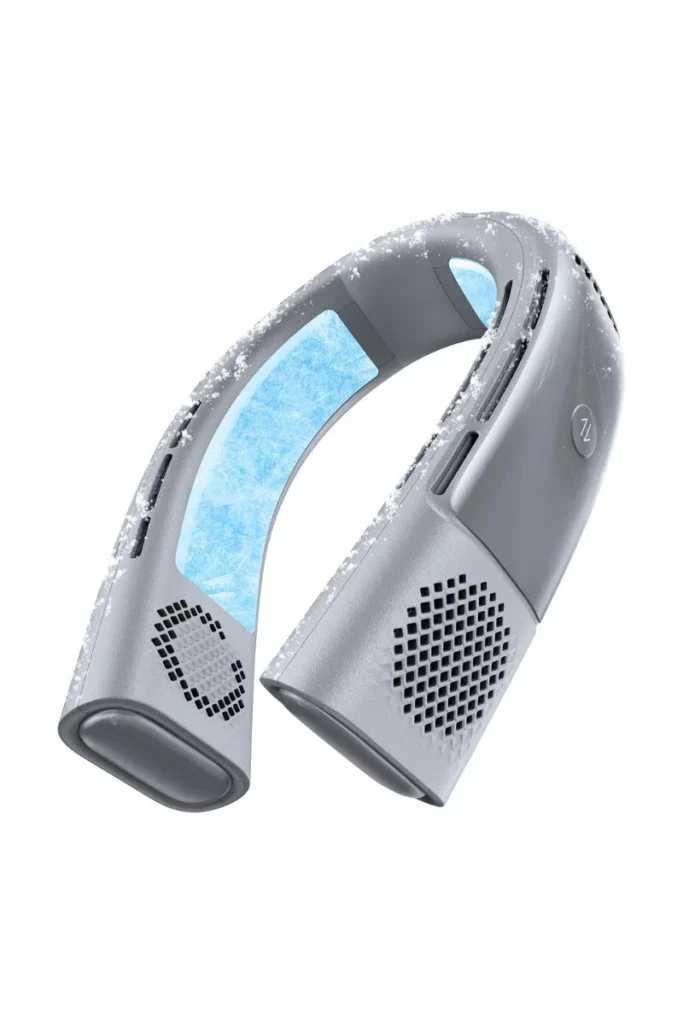
The TORRAS COOLiFY 2S Lite was engineered to address battery drain, striking a flawless balance between raw cooling wattage and extended power efficiency.
It houses a high-density 5000mAh lithium battery pack paired with an optimized power management microchip. It features dual localized TEC contact plates positioned along the primary pulse points of your neck. Its electronic control unit efficiently splits power between the cooling plates and brushless fans to stretch operational windows farther than flagship models.
Real-world battery endurance testing profiles show:
- Fan-Only Mode (Level 1): Lasts up to 28 hours on a single charge.
- Balanced Hybrid Mode (Level 2 Cooling + Medium Fan): Delivers a solid 6.5 to 8 hours of continuous operation.
- Maximum Cooling Mode (Level 3 TEC + Max Fan): Exhausts the cell in roughly 3.5 to 4 hours.
It utilizes a premium silicone memory base that flexes up to 160 degrees, ensuring the cooling plates maintain perfect, pressurized contact with your skin without wasting energy through air gaps. It is the ultimate choice for users who need dependable, long-commute usability without carrying extra battery bricks.
Price: $199.99 USD
Battery: 5,000 mAh
Do Wearable Air Conditioners Actually Work?
This is the question everyone asks and the honest answer is yes, they work, but only if you understand the physics of what they are actually doing to your body.
A true wearable air conditioner relies on Thermoelectric Cooling (TEC). When current passes through the internal Peltier modules, the side touching your neck drops significantly below ambient temperature, often plunging down to 60°F within seconds. This works because the back of your neck is a major thermoregulation zone packed with sensitive blood vessels.
By chilling this specific area, the device tricks your central nervous system into feeling cooler overall, blunting the body’s acute panic response to oppressive environmental heat.
However, kinetic fans work entirely on the principle of evaporative cooling. It means if you are in a high-humidity environment, the air is already saturated with moisture, meaning a standard neck fan cannot efficiently evaporate your sweat. This is where TEC plates shine: they provide conductive cooling that works independently of surrounding humidity levels.
What to Expect in the Real World
- Indoor & Commuting Use: They are phenomenal. If you are sitting on a stuffy subway train, walking through an un-air-conditioned corridor or working in an office where you can’t control the thermostat, a premium TEC wearable completely changes your comfort level.
- Outdoor Limitations: If you are standing in direct, 100°F desert heat, a wearable device will not make you feel like you are walking through a grocery store freezer aisle. The internal heat sinks have to exhaust the hot air somewhere, in extreme ambient conditions, the laws of thermodynamics mean the internal exhaust fans have to work twice as hard to dump heat away from the device, which limits maximum thermal performance. Expect supplemental comfort rather than full climate replacement.
Battery Life and Cooling Performance
When evaluating personal cooling tech, it’s important to understand the direct relationship between cooling intensity and power consumption. A common source of frustration for new users comes from expecting max-level thermoelectric cooling to last all day on a single charge.
- The Thermoelectric Power Drain: Spinning a small fan motor requires very little power (typically 1 to 2 watts). However, driving an electric current through a Peltier semiconductor to actively force heat away from your skin requires significantly more energy (often 5 to 10+ watts).
- Power Bank Compatibility: To extend use beyond these limits, look for devices that feature pass-through charging. Pairing your wearable Air Conditioner with an external power bank that supports 5V/2A or higher delivery allows you to run the cooling elements indefinitely, which is ideal for long outdoor events or full work shifts.
Wearable Air Conditioner vs Neck Fan: What’s the Difference?
While it may be simple to classify all types of neck fans used in summertime, there is actually a massive gap in technology between what is simply a personal fan and what can actually be termed as an air conditioner for your neck.
- Portable Neck Fans rely entirely on convective airflow. They use small electric motors to spin internal impellers, directing moving air across your neck and face. They are cheap, incredibly light and run for ages on a charge. However, their primary limitation is environmental. If you are sitting inside a hot, stagnant space, they simply blow that same warm air at you.
- Wearable Air Conditioners incorporate solid-state thermoelectric cooling modules (Peltier plates). These devices do not just move air, they actively lower the physical temperature of the metal surfaces touching your neck. This provides a direct, conductive thermal transfer that instantly chills the blood vessels beneath your skin, offering deep relief even if the outside air is hot and completely still.
While they provide a far more intense and effective cooling sensation, they require more sophisticated internal components, making them heavier, more expensive and more power-hungry than simple fans.
Biggest Limitations of Wearable Air Conditioners
To ensure a good experience with these devices, it helps to be aware of the inherent engineering limitations wearable air conditioners:
- Limited Cooling Surface Area: These devices are designed to cool the specific areas around your neck, jawline and upper spine. They help lower your perceived heat stress, but they cannot stop your arms or legs from feeling the ambient heat.
- The Noise Factor: Running multiple miniature turbo fans right below your ears at 7,000 RPM generates noticeable wind noise. While premium models use advanced brushless motors to keep noise levels down around 31 to 35 dB on lower settings, cranking them up to max cooling can sound like a loud hum, which might interfere with quiet conversations or phone calls.
- Weight and Ergonomics: Hanging 400 to 500 grams of tech around your neck can lead to shoulder fatigue over extended periods if you are sensitive to weight.
- Environmental Limits: In extreme, humid conditions above 100°F, the physical laws of heat exchange mean these devices will lose efficiency as they struggle to dump waste heat through their small exhaust vents.
Are Wearable Air Conditioners Worth Buying?
For the right person, yes. High-quality personal cooling devices genuinely improve daily comfort during summer heat waves, especially if your routine involves a lot of transit.
The biggest advantage is complete portability, you carry localized cooling comfort anywhere without relying on traditional room air conditioning.
Through extensive testing, I have found they are highly effective for:
- Office commuting and walking through urban heat islands
- Crowded public transport (buses, subways and warm train cars)
- Airports and train stations with stagnant airflow
- Outdoor events like festivals, theme parks and summer barbecues
However, they aren’t a universal necessity. If you spend almost all your time indoors with proper central AC, a personal cooling gadget will likely feel redundant.
Additionally, you get what you pay for. Premium thermoelectric models that use physical, ice-cold plates offer a drastically better experience than cheap, noisy plastic neck fans that just push warm air around. As long as your expectations stay realistic, knowing they cool you and not the room, they are a surprisingly practical summer investment.
Who Should Buy a Wearable Air Conditioner?
Wearable air conditioners are best for people who regularly deal with summer heat while moving around. They are especially useful for:
- commuters
- travelers
- office workers
- hot climate users
- outdoor event visitors
- students using public transport
- people walking frequently during summer
Who Should Avoid Them?
Wearable cooling devices are not ideal for everyone. You should probably avoid them if:
- You expect room AC-level cooling.
- You work in extreme industrial heat.
- You are a heavy athlete training outdoors.
- You dislike wearing gadgets around the neck.
- You are sensitive to device weight.
Final Verdict
If I personally had to choose one wearable air conditioner from this list, I would go with the Sony Reon Pocket Pro. After trying different wearable cooling devices, this one feels the most balanced for everyday use. The thermoelectric cooling actually creates a noticeable cooling sensation on the neck instead of just blowing air and the lightweight design makes it comfortable for commuting, office work and travel.
It is definitely more expensive than normal neck fans and it will not replace a traditional AC in extreme heat, but overall, it feels like the most polished and practical wearable air conditioner for daily comfort. If someone wants the best mix of cooling performance, portability and smart features, this would easily be my personal pick.
FAQs
Decode the Decor
The Smart Jewelry Revolution
A practical guide to wearable tech's future — delivered straight to your inbox.
Author
