

There is something funny about AI. It keeps getting smarter, but we still have to pull out our phones every time we need its help. Want to ask a question? Grab your phone. Need to get something done? Open another app. Apparently, even artificial intelligence still needs us to do a little running around.

That is exactly what Meta wants to change with the Meta Muse Charm, introduced at Meta Connect 2026 on September 23-24. Instead of making us reach for our phones, Meta wants to bring AI a little closer, in the form of a tiny wearable that can stay with us throughout the day.
But here is the interesting part. Do we really need another gadget to carry around or could the Meta Muse Charm make talking to AI as natural as talking to another person?
What Is Meta Muse Charm?
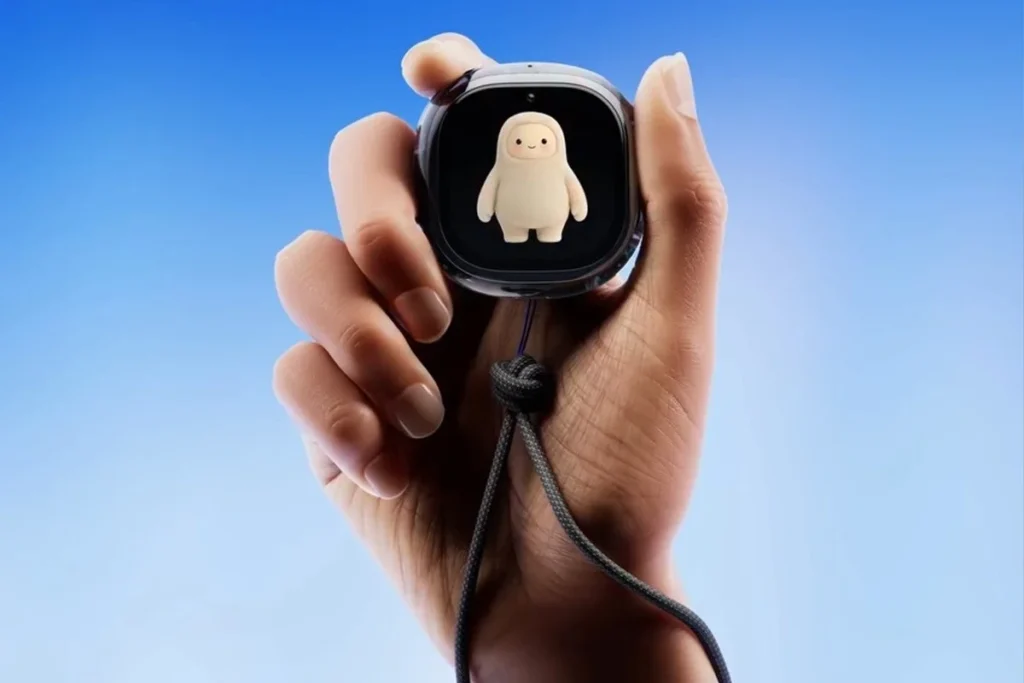
The Meta Muse Charm is a compact AI device, specifically engineered to provide users with instant, frictionless access to their personal assistant named Muse. Officially revealed by Meta in September at the Meta Connect 2026 conference, the Muse Charm is neither a smartwatch nor a fitness tracker. Instead, the Muse Charm is a small AI gadget meant to be worn as a charm on a key ring, as a clip-on to a backpack or even as an accessory to wear around the neck as interactive jewelry.
Decode the Decor
The Smart Jewelry Revolution — a practical guide to wearable tech.
Meta decided to create the Meta Muse Charm to address one distinct issue associated with using AI in the modern tech world: friction. In order to communicate with an artificial intelligence agent via your typical phone, you need to find your way through the menus, lock screen and launch a particular app. The Muse Charm makes all these unnecessary steps disappear. The special feature of this AI gadget is its 2-inch display featuring an animated and anthropomorphized avatar as an interface for talking to Muse AI.
With the integration of advanced technology in a compact and appealing package, the Meta Muse Charm changes the direction of focus from conventional wearable metrics such as heart rate measurement, pedometer or even sleep monitoring and concentrates only on conversational support.
The Muse Charm can be considered a manifestation of the Muse AI software in the physical world. It gives the digital assistant a tangible presence in the real world, allowing users to interact with a physical device that feels more like a helpful companion than a cold, calculating machine.
How Does Meta Muse Charm Work?
© Meta
It will be important to understand how exactly the Meta Muse Charm works by examining its innovative mix of physical elements and sophisticated software algorithms. The basic principle of interaction with the Muse Charm should be as intuitive and natural as having a conversation with your friend standing right beside you. It uses an extremely responsive fingerprint scanner for fast and reliable unlocking to make sure that only the authorized person gains access to their individualized Muse assistant and sensitive data. Once it gets activated, the voice interaction becomes the main and most powerful channel of communication.
The Muse Charm is also designed with an advanced camera system. But unlike the cameras that smart glasses come fitted with, which have been criticized for their conspicuous display, the camera of Muse Charm is designed in such a way that it is used for a totally different psychological function.
In that this particular gadget is carried around on a lanyard or bag, the camera just watches the environment with the user. This makes the function move from being intentional recording to contextual comprehension. This will enable the AI to view what you see, providing context to your voice commands without making others feel like they are the subject of recording.
The user flow for every single day is incredibly easy and effective. You take the device in your hands or touch the fingerprint scanner to switch on the Muse AI. After that, you make your request as usual and in no time at all you get help from the device either via its display or via its audio speaker. The virtual character on the screen responds to your speech in real time, reacting to your requests. As a result, you get help within just a few seconds.
Why Meta Built an AI Pendant Instead of Another Smartwatch
It would have been very easy for such a massive technology company to release a standard smartwatch instead of the Meta Muse Charm. But the reality is that the smartwatch market is already very saturated with competition. The Apple Watch and the Galaxy Watch have practically cornered the market with their advanced health monitoring features, strong notification system and the huge ecosystem of applications. The Muse Charm intentionally steers clear of this extremely competitive environment.
While the Muse Charm does not gauge the physiological processes of your body like most wearables do, it centers its focus on communication, information retention, context awareness and environmental comprehension. It is not the intention of Meta to directly compete with health-focused wearables because the Meta Muse Charm represents a completely new class of wearables where the wearable itself acts as the second brain outside of your head and not your personal trainer. Smartwatches keep you distracted from the present by constantly buzzing and ringing.
Unlike this, however, a smart AI pendant such as Meta Muse Charm is designed to lie dormant in the background and be activated only when there is an active need for it. This device is crafted with an acute understanding that it needs to be able to remember context, help in completing daily tasks and keep up with conversation flow which cannot be achieved by a wrist-mounted device because of the input constraints. With its choice of form factor, Meta is sure that Meta Muse Charm is an add-on to other devices you use.
The Rise of AI Companion Wearables
The launch of the Meta Muse Charm is not just another technological development but represents a huge industrial movement towards wearable companions powered by AI. We are now entering the dawn of a new age in the consumer technology industry where passive monitoring is making way for active monitoring. Wearable devices such as Plaud One, a variety of early AI pins and AI necklaces are redefining the entire concept of wearing technology. The Meta Muse Charm is leading the pack in this accelerated movement.
The old traditional wearables were designed to be self-centered. They were specifically designed to collect data about the human body in an intricate manner that would count steps, analyze sleep patterns and measure heart rate variability. The new AI wearables, which include the Meta Muse Charm device, have been designed to be outward-focused. These are the current devices that have been made to analyze your physical surroundings and enable you to take action on what you are seeing.
They listen to the ambient audio, they see the visual context and they process the world around you in real time to offer relevant insights. The Meta Muse Charm represents this fundamental shift perfectly. It aggressively moves the tech industry away from a paradigm of passive, historical data collection and toward one of active, intelligent and predictive assistance. As artificial intelligence technology continues to mature, ambient devices like the Meta Muse Charm will become increasingly common, eventually paving the way for a future where everyone has a dedicated, wearable AI companion to help navigate the complexities of daily life.
Meta Muse Charm vs AI Glasses: Two Paths to Ambient AI
Alongside this, Meta revealed its groundbreaking innovations in its smart glasses. This kind of announcement implies an interesting internal rivalry between the company’s two new devices, which are Meta Muse Charm and Meta Ray-Ban Gen 3 AI Glasses. The two products are completely different directions towards ambient artificial intelligence that have been well-fund and researched, yet are meant for completely different tasks.
The first of them, AI glasses, can be defined as the device that prioritizes the camera above everything else. This product is meant to be worn on one’s face and will allow capturing and interpreting the visual environment from the same viewpoint as you. Undoubtedly, such an option will be great for point of view recording, video streaming and real-time translation of various menus and signs. However, Meta Muse Charm is conversation-first and it is meant to be either kept in a pocket or worn without covering the face, making it a much more discreet and considerably less intrusive option for daily use.
While smart glasses focus intensely on visual AI processing, the Meta Muse Charm is positioned heavily as a dedicated personal assistant. Many users feel deeply uncomfortable wearing cameras on their faces due to the immense social stigma and the potential to make others uneasy. This social friction makes the Meta Muse Charm a much more approachable, friendly alternative.
Meta is clearly exploring multiple, parallel avenues to make AI constantly available, strategically betting that while some early adopters will flock to smart glasses, a massive portion of the market will strongly prefer the cute, approachable and disarming nature of the Meta Muse Charm.
What Can an AI Pendant Actually Do?
Understanding the physical hardware of the device is one thing, but what can the Meta Muse Charm actually do for a user in standard daily life? The potential real-world applications are vast, centering entirely around its role as a proactive, deeply integrated personal assistant. The Meta Muse Charm is meticulously designed to handle the hundreds of micro-tasks that normally require pulling out a smartphone, unlocking it and staring at a screen.
You can instantly use the Meta Muse Charm to ask quick, complex questions, set immediate, context-aware reminders and access vital information on the fly without breaking your stride. From a pure productivity standpoint, the Meta Muse Charm excels at capturing fleeting ideas before you forget them, seamlessly managing daily task lists and providing quick, accurate summaries of your upcoming schedule.
If you need to instantly book travel arrangements or efficiently handle your weekly food shop, the advanced conversational AI within the Meta Muse Charm can process these complex requests smoothly through simple voice dialogue.
It also offers deeply contextual help based on your precise location and the history of your previous conversations. Because the Meta Muse Charm is always within physical reach, it fundamentally transforms how you manage daily assistance. Rather than typing out a lengthy query on a small digital keyboard, you simply speak naturally to the Meta Muse Charm, allowing the AI software to handle all the heavy lifting while you remain fully focused on your real-world activities and the people around you.
The Biggest Challenge for Meta Muse Charm: Why Would People Wear It?
Despite the incredibly impressive technology packed inside its small design, the Meta Muse Charm faces a significant and daunting uphill battle in the consumer market. The single biggest challenge for the Meta Muse Charm is convincing the general, non tech enthusiast public to actually wear it consistently. Tech history is notoriously littered with highly publicized AI hardware products that failed spectacularly shortly after their initial launch. T
hese devices almost universally suffered from an unclear core purpose, severely limited daily usefulness and the undeniable fact that most users simply prefer using the powerful smartphones they already own and carry.
For the Meta Muse Charm to achieve long-term commercial success, it must definitively answer some incredibly tough consumer questions like: Is using the Meta Muse Charm genuinely, measurably faster than just opening a well-designed app on a flagship phone? Is the Meta Muse Charm consistently useful enough to justify remembering to charge and carry an entirely separate hardware device every single day?
Is there really a relevant problem in the user’s life that the Meta Muse Charm can solve? Or is it just another expensive gimmick used to demonstrate how advanced the artificial intelligence is? It is extremely hard to change the already established habits of consumers and it is for this reason that Meta really hopes that the charm of this product’s unquestionable engineering cuteness and frictionless voice experience would win skeptical consumers over, but only time can tell whether it will become just another forgotten item on the shelf.
Privacy Problem: A Device Built Around AI Access
The biggest challenge for the Meta Muse Charm is privacy. Because it uses built-in microphones and cameras to constantly monitor your environment so it can offer help, it naturally raises concerns about constant surveillance. Meta designed the device to look like a cute, friendly avatar to make it feel less intimidating, but the fact remains that the AI is processing your personal conversations and surroundings.
While Meta claims your data is secure and requires your direct permission to access sensitive things like your emails, users will ultimately have to decide if having a helpful AI companion is worth the trade-off of carrying a camera and microphone everywhere they go.
Wrap Up
The Meta Muse Charm is an interesting attempt to make AI a part of everyday life without adding another screen to stare at. Its charm-like design and conversational assistant offer a different take on wearable technology.
However, its real test will be whether people find it useful enough to carry every day. After all, making AI wearable is one thing giving people a reason to wear it is an entirely different challenge.
FAQs
Decode the Decor
The Smart Jewelry Revolution
A practical guide to wearable tech's future — delivered straight to your inbox.
Author
