

Most of us have had this experience: you wake up, check your sleep tracker and discover that your night apparently wasn’t as peaceful as you thought. Maybe your deep sleep was low. Maybe your recovery score wasn’t great. Maybe your tracker has once again found something to complain about.
But here’s the real question: what happens after the tracker tells you that you slept badly? For years, sleep wearables have focused on watching, measuring and reporting what happens while we sleep. Now, a new device called the DUSQ wearable is exploring a different idea.
Instead of simply telling you what happened overnight, could a wearable eventually do something about it? That’s the question that makes DUSQ interesting and it could point toward a bigger shift in the future of sleep technology.
DUSQ Is Trying to Do Something Most Sleep Trackers Don’t
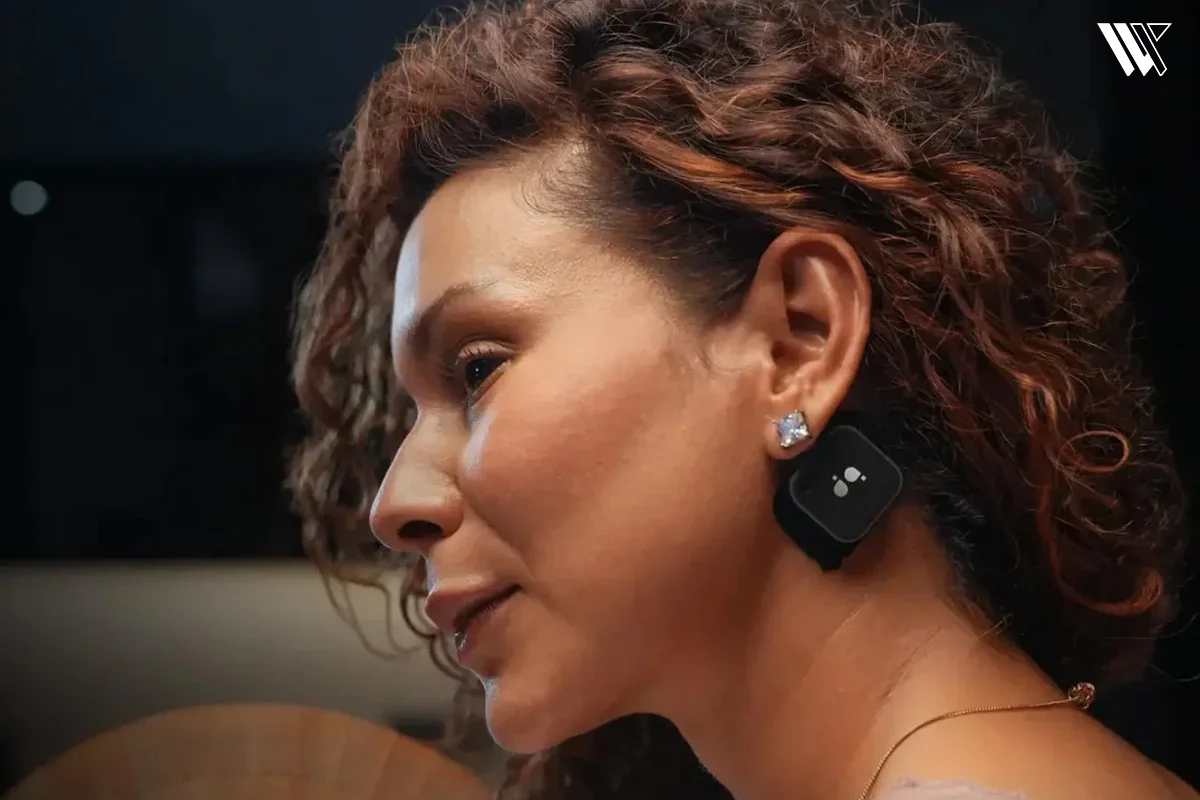
The DUSQ wearable is a behind-the-ear gadget that is meant to be used while sleeping. Traditional wearables basically track and record your sleep data. You wake up and you check your app to find all kinds of information about your resting heart rate and time in REM sleep.
Decode the Decor
The Smart Jewelry Revolution — a practical guide to wearable tech.
The DUSQ wearable is quite the opposite. Its primary proposition is to monitor and respond to disturbances in real time automatically. By using high-end sensing together with non-invasive stimulation, DUSQ hopes to intervene when your sleep is being disturbed. The company currently claims shipping in September or October of 2026 depending on which tier you buy, so the DUSQ sleep technology is coming up right away.
How Does the DUSQ Wearable Work?
© Dusq
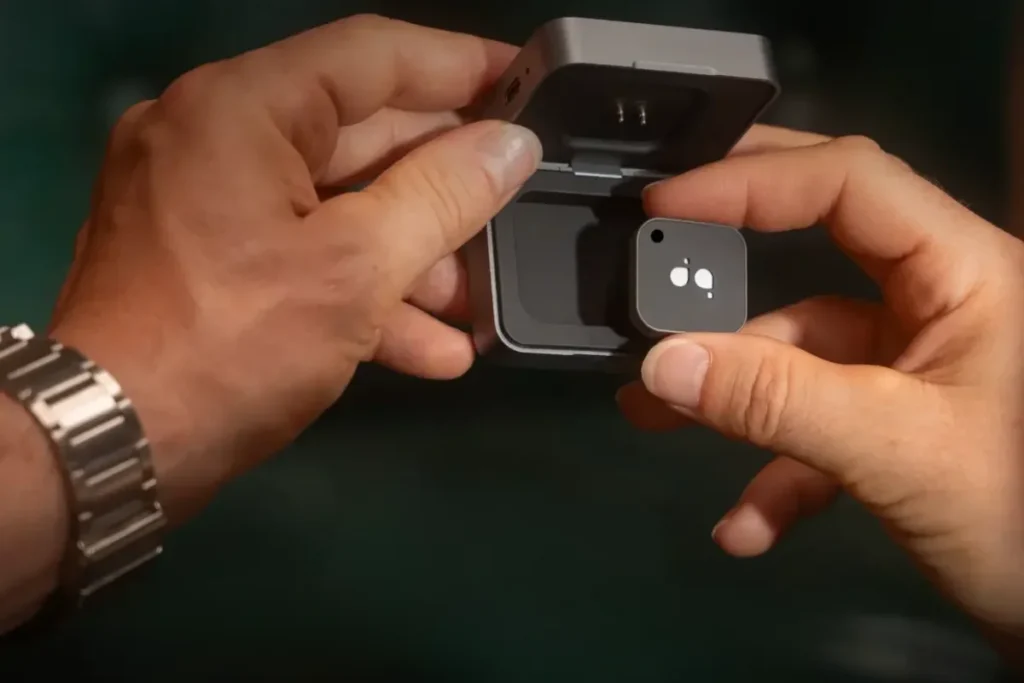
In order to fully understand the DUSQ wearable, one needs to understand its closed loop process. Simply put, the DUSQ will sense how your body is working, process the data and then provide an appropriate response.
It Reads Your Nervous System
© Dusq
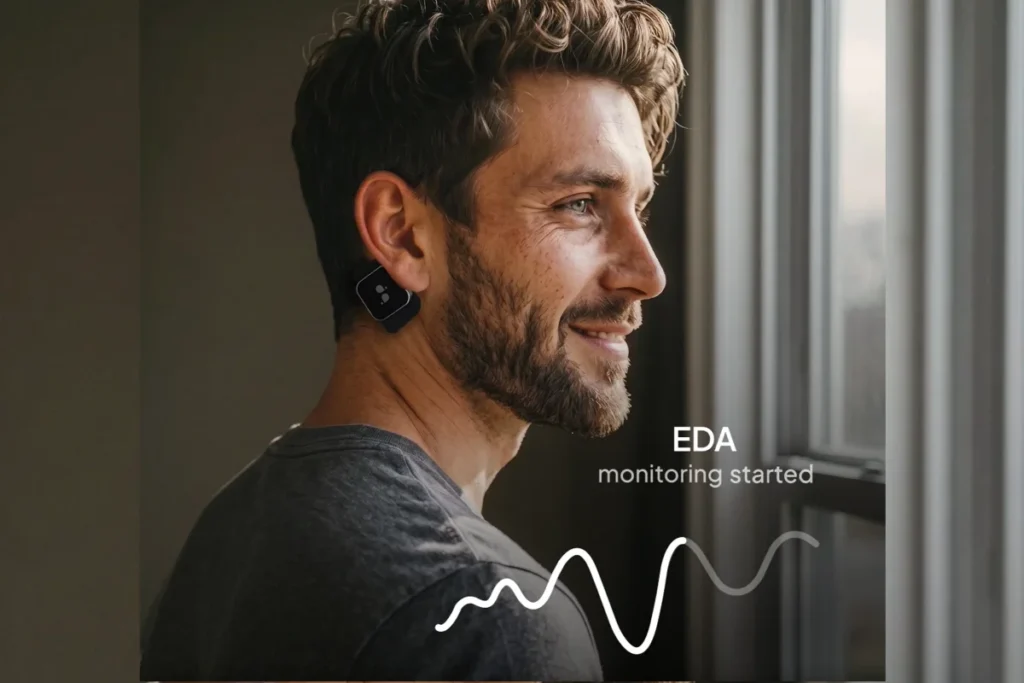
First, the DUSQ wearable utilizes an EDA (Electrodermal Activity) sensor. Electrodermal activity monitors changes in the skin conductance of your body. The sympathetic nervous system responds to any arousal and stress response through changes in the skin conductance of your body. Any interruptions during sleep cause changes in the skin conductance of your body whether or not you wake up.
For better accuracy in determining the health status, the device also contains a PPG sensor that helps monitor your cardiovascular system and heart rate. This device is placed behind your ears as the skin behind your ears is extremely thin for detecting these signals from your body. DUSQ claims that the DUSQ EDA sensor continuously monitors changes in the skin conductance of your body using EDA & PPG signals.
It Responds When It Detects a Disruption
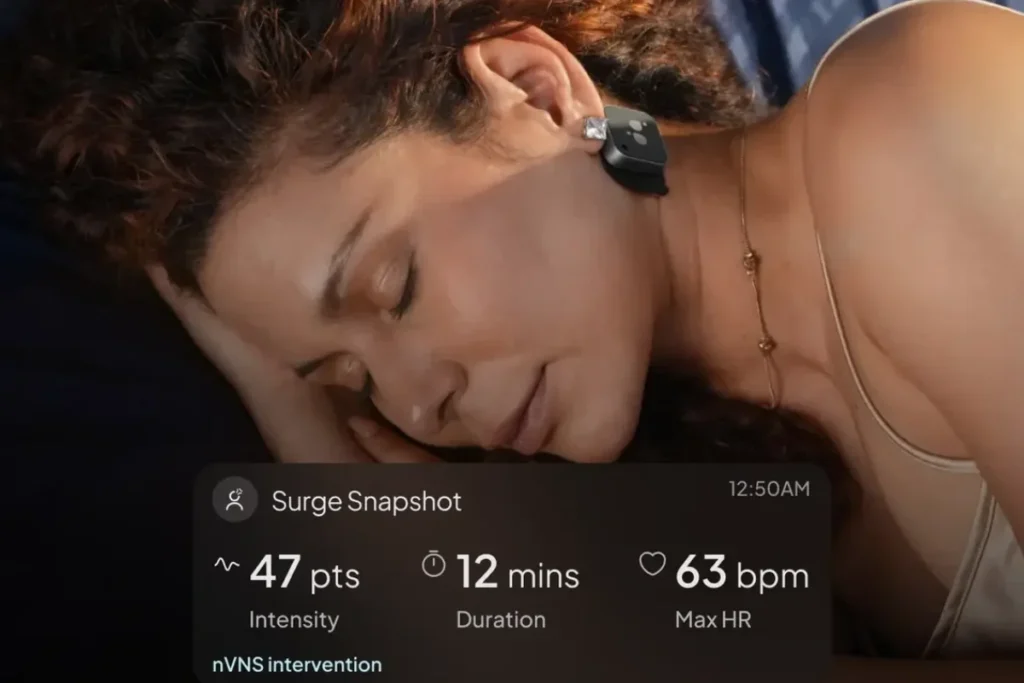
According to DUSQ, its algorithms use EDA and other signals to detect physiological arousal related to sleep disturbance. It responds by stimulating your body via vagus and vestibular stimulation.
As opposed to programmed interventions based on set times, the DUSQ stimulates in an automated way based on your needs in a given moment in time. The manufacturer believes that the sub-perceptual stimulation helps restore your nervous system to a calmer condition.
Why DUSQ Sits Behind the Ear
The majority of fitness wearables are either worn around the wrist or finger. In contrast, the shape of the DUSQ is unique since it fits on your mastoid bone which is located immediately behind your ear.
Its weight is very low, being close to 12 grams and its shape is rather slim, measuring 7.4mm. To make sure that DUSQ will stay in place throughout the night, the magnet is used, connected to a special adhesive patch. The manufacturer has paid particular attention to the possibility of sleeping on one side because the device is specially designed to be comfortable even in such cases. Seven-day adhesive patches are available for use and each kit includes a three-month supply of the device.
DUSQ Doesn’t Just Track Sleep: It Attempts to Regulate It
The thing that should be taken as the key element of the functionality of the DUSQ wearable is that unlike a classic fitness tracker which detects and alerts, the DUSQ wearable detects and responds to what it has detected. This approach is quite popular and well-known in the industry and can be considered a closed-loop wearable.
Once the sensors identify physiological signals for a micro-arousal, the algorithm built into the device identifies the exact time for the action. And then the regulation of sleep by the DUSQ wearable starts and the process of stimulation is automated. From a technical standpoint, it is quite different from a regular wearable which just vibrates in bed time to let the user know it is time to put his/her phone down. The fact is that DUSQ has presented its product as an adaptive tool.
What Does DUSQ Claim It Can Improve?
© Dusq
It is extremely important to take into consideration what the brand states about the success rate of the product itself. As the brand says, the DUSQ wearable allows improving deep sleep, HRV (Heart Rate Variability), sleep latency, sleep continuity and greatly reducing night awakenings.
As the brand states, there are certain numbers provided by users who used DUSQ sleep device. On one of the pages, DUSQ states an increase in deep sleep by 31%, improvement in HRV by 38% and reduction in night awakenings by 22%. Nevertheless, on another page, DUSQ mentions the reduction in night awakenings by 26%. More than 2,000 people have been using the DUSQ wearable device till now. It should be noted that these numbers are only provided by DUSQ.
How is DUSQ Different from Other Sleep Tracking Wearables?
The primary difference between DUSQ vs Oura or DUSQ vs WHOOP can be attributed to passive monitoring as opposed to active intervention. DUSQ describes this difference simply: Your existing device gives you what has already occurred, while DUSQ wants to take care of it.
Whereas other top-of-the-line sleep trackers and smart rings provide you with extremely accurate data that you can review over your coffee, DUSQ works on the spot.
The Charging Case Is Also a Sleep Sensor
It is important to note that the ecosystem that surrounds the DUSQ wearable device is quite developed and features an advanced charging case that serves far beyond the purposes of charging. DUSQ claims that the case constantly monitors the level of sound, light and temperature in the user’s bedroom during nighttime.
The environment is important when talking about your sleep since a sudden temperature drop or a loud truck in the street can easily wake you up from deep sleep. Thus, recording all of the environmental factors helps correlate the information on the physiological disturbances recorded through the wearable device with the changes in the environment.
What We Still Don’t Know About DUSQ
Even with all the amazing potential of the DUSQ wearable, there are still a lot of questions that consumers need to be asking themselves. One of the most obvious holes that currently exist is independent validation. How well does the EDA measure disruptions compared to polysomnography? In addition, independent validation on the absolute accuracy of the sleep-stage detection is necessary.
In addition, long-term effectiveness of automatic stimulation and real battery life have yet to be tested. Long-term comfort and response of the skin to the adhesive properties will differ greatly from person to person. Lastly, while the company does describe their product as a wellness solution, DUSQ clearly specifies in their terms and conditions that the DUSQ wearable is not designed to diagnose, treat, cure or prevent any medical diseases.
Is DUSQ the Next Step for Sleep Wearables?
Traditional wrist-bound trackers have gotten fantastically good at tracking our nights. However, the DUSQ wearable marks the start of something that is decidedly more forward-looking, an effort to actively control the sleeping process. Closed-loop sensing with immediate stimulation might be an absolutely groundbreaking development in terms of future wearables.
The technology behind it certainly requires independent verification. However, the DUSQ wearable is definitely exciting because it makes an attempt to transform the sleep tracking device into something proactive. It will be quite obvious what will determine its success: whether independent research proves its ability to provide us with better rest automatically.
Wrap-Up
Sleep trackers have become great at telling us what happened while we were asleep. The DUSQ wearable is interesting because it is trying to take the next step, moving beyond simply tracking sleep and attempting to respond to disruptions as they happen.
Of course, the technology still needs more independent evidence and real-world testing. But the idea itself is worth watching. If wearables can eventually move from simply showing us that we slept badly to actively helping us during the night, products like DUSQ could represent an interesting new direction for sleep technology.
For now, DUSQ is less about having all the answers and more about asking a very interesting question: Should the future of sleep wearables simply track our sleep or should they try to do something about it?
Decode the Decor
The Smart Jewelry Revolution
A practical guide to wearable tech's future — delivered straight to your inbox.
Author
