

 Add Us On Google
Screenless fitness trackers are becoming popular again, but this time they’re smarter than ever. Instead of filling your wrist with notifications and apps, they focus on what really matters, tracking your health, workouts, sleep and recovery while staying comfortable enough to wear all day. That simple approach is exactly why devices like the Garmin Cirqa and Fitbit Air are getting so much attention.

Although both follow the same screen-free idea, they are designed for different types of users. Fitbit Air focuses more on everyday health and wellness with Google’s growing health ecosystem, whereas Garmin Cirqa is built for people who want deeper fitness insights, structured training metrics and tighter integration with Garmin Connect. So, while they may look similar, the experience they offer is quite different.
If you’re deciding between Garmin Cirqa vs Fitbit Air, the choice ultimately comes down to what matters more to you. One focuses on everyday wellness and simplicity, while the other is built around fitness, training and performance. Let’s see how they compare.
Garmin Cirqa vs Fitbit Air at a Glance
| Feature | Garmin Cirqa | Fitbit Air |
|---|---|---|
| Dimensions | 27 × 47 × 9 mm | 34.9 × 17 × 8.3 mm |
| Weight | 14.8 g | 5.2 g |
| Display | Screenless | Screenless |
| Physical Controls | Side action button with status LED | No physical buttons (haptic feedback) |
| Heart Rate Sensor | Garmin Elevate Gen 4 optical heart rate | Optical heart rate sensor |
| SpO2 Monitoring | Yes | Yes |
| Skin Temperature | Yes | Yes |
| Motion Sensors | Accelerometer | Accelerometer, Gyroscope |
| Water Resistance | 5 ATM (50 meters) | 5 ATM (50 meters) |
| GPS | Connected GPS (via smartphone) | Connected GPS (via smartphone) |
| Sports & Activities | 80+ sports profiles | Automatic workout detection + 40 activity types |
| Battery Life | Up to 10 days | Up to 7 days |
| Companion App | Garmin Connect | Google Health |
| Optional Subscription | Garmin Connect+ ($6.99/month) | Google Health Premium ($9.99/month) |
| Best For | Fitness enthusiasts, runners and structured training | Everyday wellness, sleep tracking and casual fitness |
| Price | $199.99 | $99.99 |
Design and Comfort

© Garmin

© Fitbit
Because screenless wearables are engineered for uninterrupted 24/7 wear, physical design and wrist comfort play a massive role in overall user satisfaction.
Decode the Decor
The Smart Jewelry Revolution — a practical guide to wearable tech.
The Fitbit Air holds an objective advantage when it comes to sheer physical size and total mass. Its core sensor module weighs a tiny 5.2 grams and when paired with the micro-adjustable Performance Loop band, the entire setup weighs just 12 grams. The tracker measures 34.9 × 17.0 × 8.3 mm and features a smooth, rounded casing that sits low against your skin. As a result of this slim profile, the band feels virtually imperceptible during daily wear and overnight sleep.
To support this seamless comfort, the underside of the module uses a custom-curved optical glass array that maintains continuous skin contact without creating uncomfortable pressure points over long periods. Moreover, because the device eliminates physical buttons entirely, it relies on internal accelerometers and localized haptic feedback motors to acknowledge your taps. This buttonless design keeps the exterior completely sealed, allowing the pebble-style chassis to achieve a 5 ATM water resistance rating while seamlessly pairing with moisture-wicking woven loops, sweatproof silicone Active Bands and dressier strap options.
On the other hand, the Garmin CIRQA presents a noticeably larger and more athletic profile that prioritizes hardware durability and physical control. Its core tracker module weighs 14.8 grams, which brings the total weight of the wrist assembly to between 20 and 25 grams depending on your strap selection. Furthermore, the module’s dimensions of 46.9 × 27.5 × 8.7 mm create a broader footprint along your forearm, giving Garmin the space needed to house a larger lithium-polymer battery within a rugged, fiber-polymer casing.
Garmin cleverly takes advantage of this larger surface area by integrating a textured, tactile side button with explicit mechanical click feedback. By including this dedicated button, the CIRQA lets you start, pause or lap workouts instantly without ever opening an app, which offers a reliable advantage during rainy runs, heavy weightlifting sessions or high-sweat training.
To balance this heavier frame with steady sensor performance, the CIRQA comes with breathable, dual-weave elastic fabric bands in two sizes (S/M and L/XL). This specialized elastic weave provides constant spring tension, which holds the optical sensor array firmly against your skin to prevent light leakage and maintain tracking accuracy during explosive movements. Ultimately, while the Fitbit Air wins on lightweight, low-profile comfort that is easy to forget at night, the Garmin CIRQA wins on tactile feedback, structural durability and effortless physical control during high-intensity sports.
Health Sensors and Everyday Wellness
Both devices serve as continuous health monitors, tracking fundamental biometric signals day and night. At their core, both wearables utilize multi-wavelength optical sensor stacks to monitor your pulse, track nightly Heart Rate Variability (HRV), log blood oxygen saturation (SpO2) trends, measure relative skin-temperature variations and assess daily stress levels. However, they analyze and present this underlying biometric data in completely different ways.
Google Fitbit Air
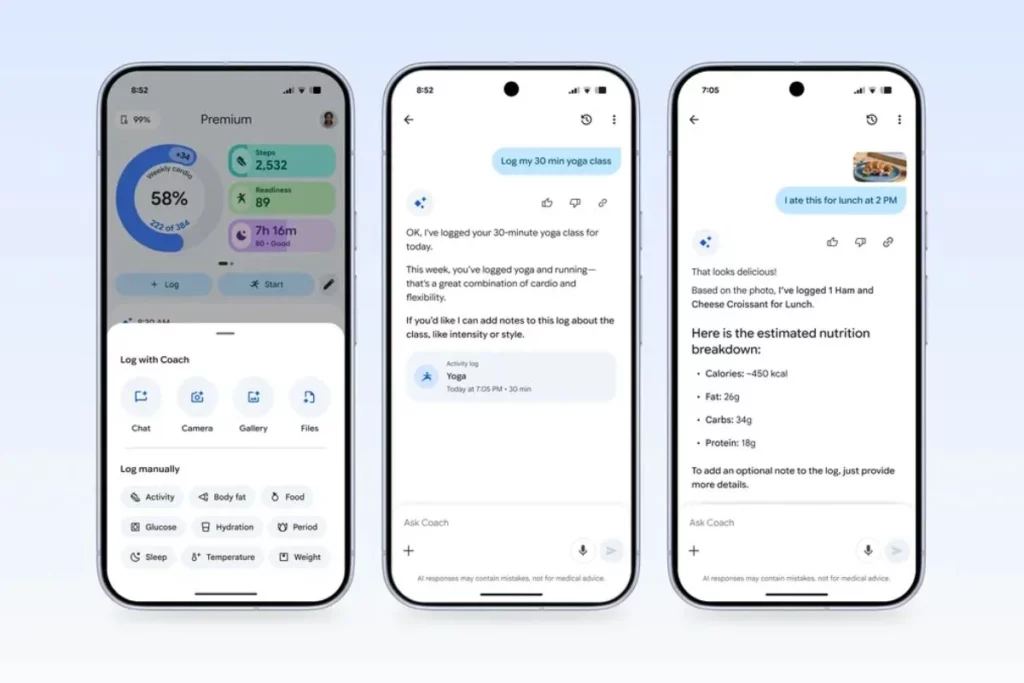
The Google Fitbit Air focuses heavily on passive, health-screening wellness tracking that operates quietly in the background without demanding constant attention.
- Irregular Heart Rhythm Notifications: The Fitbit Air features a PPG-based Atrial Fibrillation (AFib) detection algorithm. This allows the band to scan your heart rhythm while you are at rest or sleeping to flag potential signs of AFib.
- Cardio Load Tracking: Inside the Google Health app, your daily physical exertion and heart-rate zone effort are synthesized into a straightforward Cardio Load score to show total cardiovascular strain.
- Daily Readiness Score: By combining your Cardio Load with recent HRV trends and overnight sleep quality, the Fitbit Air indicates whether your body is ready for exercise or needs an active rest day.
- Wrist Haptics: The band includes an internal haptic motor that provides gentle vibration alerts directly on your wrist for high heart-rate warnings, smart alarms and guided breathing sessions.
Unlike the Garmin CIRQA, the Fitbit Air includes passive AFib irregular rhythm screening and built-in wrist haptics for silent alerts. However, it lacks real-time heart-rate broadcasting, VO2 max estimation, automatic nap detection and advanced athletic training analytics.
Garmin CIRQA

© Garmin
The Garmin CIRQA leverages high-frequency sensor sampling tailored specifically for athletic conditioning, energy management and workout performance.
- Body Battery Energy Monitoring: This feature functions like a real-time gas gauge for your physical energy, scaling from 1 to 100 by tracking HRV, stress levels, sleep quality and daily physical activity.
- Training Readiness & Status: The CIRQA evaluates your acute training load, sleep history, recovery time and HRV status to tell you if your body is ready for an intense workout and whether your recent training is productive.
- VO2 Max & Recovery Time: The tracker calculates your estimated maximal oxygen consumption during cardio sessions and provides precise hours-based recovery advisories after workouts.
- Heart Rate Broadcasting: Using Bluetooth and ANT+ protocols, the CIRQA can stream your live heart-rate data directly to gym treadmills, Peloton bikes and Garmin Edge cycling computers.
Unlike the Fitbit Air, the Garmin CIRQA features live heart-rate broadcasting to external sports equipment, automatic nap detection, VO2 max tracking and dedicated Training Readiness metrics. However, it does not offer passive AFib detection notifications or wrist-based haptic vibration alerts.
Sleep and Recovery Tracking
Sleep tracking is one of the main reasons people choose screenless fitness trackers. Since there is no screen lighting up during the night, they’re generally more comfortable to wear while sleeping. Both Garmin Cirqa and Fitbit Air track your sleep automatically, but they use different metrics and features to explain how well you slept and how recovered your body is.
Google Fitbit Air
©: 512 Pixels
- Ultra-Light Design: Weighing just 12 grams with a slim 8.3mm body, the Fitbit Air is built to feel almost weightless, ensuring it stays comfortable on your wrist all night without disturbing your rest.
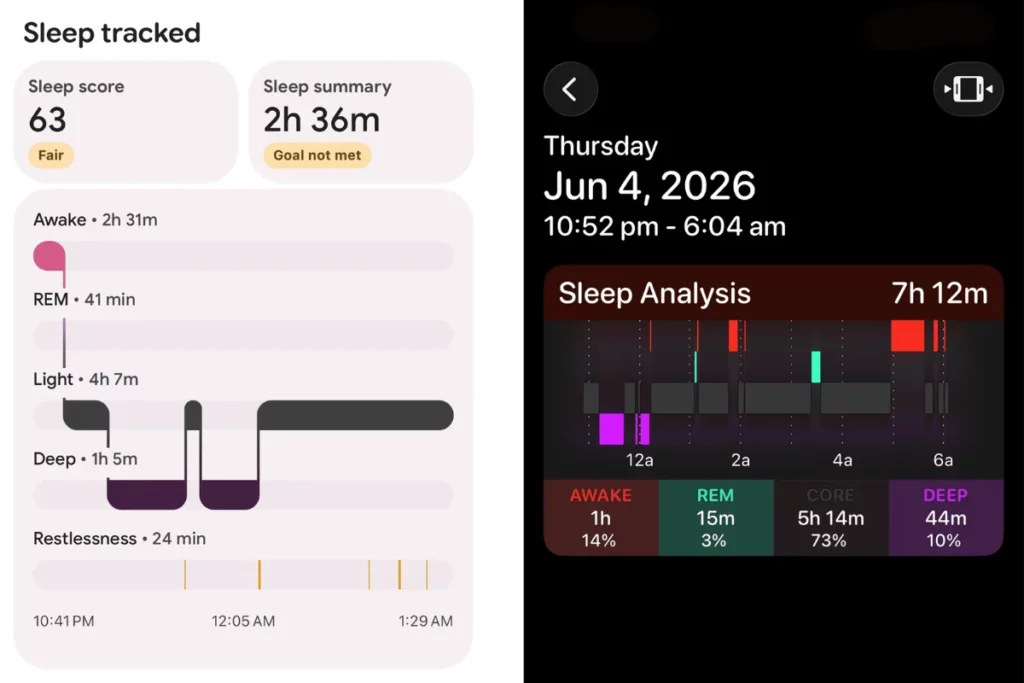
- Smart Sleep Stage Tracking: It uses Google’s latest algorithms to analyze continuous light signals from your wrist, accurately identifying when you move between Light, Deep and REM sleep phases throughout the night.
- Full Nightly Health Metrics: While you sleep, the sensor constantly measures key health indicators, including continuous blood oxygen levels, heart rate variability (HRV), skin temperature changes and your breathing rate.
- Easy Sleep Score: The device combines your total rest time with your sleeping heart rate trends to generate a daily Sleep Score from 1 to 100, making it simple to see how well your body recovered overnight.
- Silent Haptic Alarms: Built-in vibration motors deliver a gentle wake-up nudge during your lightest sleep phase, helping you wake up feeling refreshed instead of groggy.
- Personalized AI Coaching: Inside the Google Health app, built-in Gemini models review your past sleep patterns to offer simple, actionable advice for building better bedtime habits.
Garmin CIRQA

© Garmin
- Body Battery Energy Scores: The CIRQA connects your overnight rest directly to Garmin’s Body Battery feature, converting your sleep quality into an easy-to-read daily energy score from 1 to 100.
- Automatic Nap Detection: Unlike standard trackers that ignore daytime rest, the CIRQA automatically detects short naps and factors their extra energy recharge directly into your daily recovery totals.
- HRV Status Trends: It measures your heart rate variability throughout the night and compares it against your multi-week average, giving you clear insight into your stress levels and nervous system recovery.
- Smart Sleep Coach: The built-in Sleep Coach looks at your daily exercise intensity, stress levels and nap history to tell you exactly how many hours of sleep you need for optimal recovery.
- Circadian Rhythm Support: Beyond tracking sleep length, the tracker monitors how consistent your bedtime schedule is over time, helping you keep your natural body clock balanced.
- Custom Wake-Up Vibrations: Gentle haptic alarms let you set silent morning wake-up alerts directly on the band, so you do not need to rely on a loud phone alarm.
While both screenless bands perform exceptionally well overnight, the Google Fitbit Air is the better choice for dedicated sleep tracking. Its ultra-lightweight 12-gram body offers unmatched comfort, making it far easier to wear night after night without feeling a bulky device on your wrist. Paired with Google’s clean sleep stage tracking and easy-to-understand AI sleep advice, it provides the most comfortable and user-friendly experience for everyday wellness. However, if you want to track how your overnight sleep directly fuels your physical workout readiness, the Garmin CIRQA is the stronger option for athletic recovery.
Fitness and Workout Tracking
Google Fitbit Air
- Automated Activity Recognition: The Fitbit Air utilizes SmartTrack algorithms to automatically detect and log continuous physical movements like walking, running, outdoor cycling and elliptical sessions after 10 to 15 minutes of activity.
- Cardio Load and Active Zone Minutes: Instead of overwhelming users with complex athletic parameters, the tracker translates heart rate intensity into Active Zone Minutes and Cardio Load, ensuring workouts align with World Health Organization guidelines for cardiovascular health.
- Phone-App Dependent Controls: Because the module lacks physical buttons or a touch display, starting or stopping a specific, non-automated workout manually requires opening the Google Health app on a paired smartphone.
- Connected Phone GPS: For outdoor workouts, the band draws location data directly from your smartphone’s GPS antenna to map routes and calculate pace, meaning you must bring your phone along on runs and rides.
- 40+ Guided Sports Profiles: Within the Google Health ecosystem, users can choose from over 40 supported exercise modes to manually log niche activities like yoga, Pilates, strength training and HIIT sessions.
Garmin CIRQA
- Dedicated Physical Action Button: The CIRQA includes a textured tactile side button that allows athletes to manually trigger, pause or lap a workout instantly, even with sweaty hands or while wearing winter gloves.
- Dual Bluetooth & ANT+ HR Broadcasting: The Elevate optical heart-rate sensor can broadcast real-time pulse data over both Bluetooth and ANT+ protocols, transforming the band into a dedicated heart-rate chest-strap alternative for Garmin Edge cycling computers and indoor smart trainers.
- Advanced Athletic Analytics: Following a workout, the band calculates deep performance metrics including VO2 Max estimates, Acute Training Load, Aerobic and Anaerobic Training Effect, Workout Benefit and hours of necessary Recovery Time.
- 80+ Built-In Sport Profiles: The device features built-in support for over 80 specific activity profiles, covering niche disciplines like gravel biking, paddleboarding, trail running, bouldering and specialized wheelchair pushes.
- Connected GPS with LiveTrack: While outdoor route mapping requires a connected smartphone, Garmin integrates its proprietary LiveTrack feature, allowing selected emergency contacts to follow your real-time location during outdoor workouts.
When it comes to exercising and structured workouts, the Garmin CIRQA is the clear winner for fitness tracking. Its physical side button solves the frustration of using a smartphone screen mid-workout, allowing you to start, pause and lap sessions instantly. Coupled with real-time heart rate broadcasting to bike computers, support for over 80 sports and deep training analytics like VO2 Max and Recovery Time, the CIRQA acts as a true athletic training tool. The Fitbit Air remains completely fine for casual walks, light jogging and basic cardio logging, but athletes who train with intent will far prefer the control and analytical depth of the Garmin CIRQA.
Garmin Connect vs Google Health
The companion application dictates how health data is presented and analyzed on your smartphone. In evaluating the Garmin CIRQA vs Fitbit Air, the app experiences reflect opposing software philosophies: Garmin builds for deep, self-directed performance tracking, while Google focuses on simplified, AI-assisted daily wellness.
Google Fitbit Air
- Streamlined Four-Tab Hub: The rebranded Google Health app simplifies navigation into 4 clean tabs: Today, Fitness, Sleep and Health, giving you an uncluttered overview of your daily vitals without burying data in complex menus.
- Gemini-Powered AI Coaching: Integrated with Google Health Coach via Google Health Premium, the app uses natural-language Gemini AI models to analyze your historical metrics, answer specific wellness questions and generate personalized workout and sleep schedules.
- Simplified Health Metrics: Instead of rigid daily step totals, Google Health focuses on flexible weekly Cardio Load targets alongside revised Resilience scores (Optimal, Balanced, Low) to keep stress tracking clear and easy to manage.
- Broad Ecosystem & Records Integration: The app connects smoothly with Health Connect on Android and Apple Health on iOS, allowing you to aggregate metrics from external apps and sync medical records into one centralized dashboard.
- Dual-Wearable Continuity: Google’s software infrastructure allows you to connect a Fitbit Air and a Pixel Watch to the same Google account simultaneously, automatically combining metrics from both devices without fragmenting your daily data.
- Optional Google Health Premium ($9.99/mo or $99.99/yr): While core health, sleep and activity tracking are completely free, upgrading to Premium unlocks advanced Gemini AI coaching through Google Health Coach, deeper sleep profiling and tailored workout plans (includes a 3-month free trial with the Fitbit Air or comes bundled with Google AI Pro/Ultra memberships).
Garmin CIRQA

© Garmin
- Advanced Athletic Analytics: Garmin Connect delivers deep, uncompromised performance tracking, granting full access to long-term HRV status curves, Body Battery trends, Acute Training Load and detailed VO2 max history.
- Zero Core Paywalls: Unlike apps that restrict deep metrics behind subscriptions, Garmin Connect provides all primary health, sleep, recovery and workout analysis completely free of charge.
- Unified Hardware Syncing: The platform acts as a centralized command center that seamlessly synchronizes data across your screenless CIRQA band, Garmin smartwatches, Edge cycling computers and Index smart scales.
- Comprehensive Gear & Course Management: Advanced features let you track mileage on specific running shoes or bike components, automatically log gear usage and construct detailed race course plans with aid-station checkpoints.
- Multi-Platform Data Exporting: Garmin Connect provides robust native integration with major endurance training platforms like Strava, TrainingPeaks and Komoot, automatically uploading structured workout data the moment your session ends.
- Optional Garmin Connect+ ($6.99/mo or $69.99/yr): Garmin keeps all standard training and recovery metrics free, but offers an optional Connect+ tier for users who want extra features like AI-generated daily summary recaps, expanded historical trend reporting and specialized workout modules.
When comparing software platforms, Google Health is the better choice for everyday users seeking simplicity and AI guidance, thanks to its clean layout, Health Connect integration and helpful Gemini coaching insights. However, Garmin Connect is the clear winner for dedicated athletes who require deep, paywall-free performance metrics, precise gear tracking and seamless integration with a broader ecosystem of sports hardware.
Battery Life and Charging
The Garmin CIRQA delivers up to 10 days of continuous battery life on a single full charge. Recharging the device requires plugging its included USB-C cable into Garmin’s standard proprietary magnetic connector.
The Google Fitbit Air provides up to 7 days of battery life per charge. Recharging from 0 to 100 percent takes approximately 90 minutes using its magnetic charging cable. The tracker also features a quick-charge function, where a brief 5-minute charge supplies roughly 1 full day of battery usage.
Compatibility and Ecosystem
Ecosystem compatibility ensures your fitness data flows seamlessly into your daily digital routine. In evaluating the Garmin CIRQA vs Fitbit Air, each brand connects into a distinct software and hardware network.
Google Fitbit Air
- Broad Mobile Compatibility: The Fitbit Air links to mobile devices via Bluetooth Low Energy, requiring a smartphone running Android 11.0+ or iOS 16.4+ alongside a registered Google account.
- Dual-Wearable Device Switching: Google Health allows you to pair both a Fitbit Air and a Pixel Watch to one account. The app automatically merges incoming data into a single continuous profile without duplicating steps or creating gaps in your metrics.
- Unified Health Frameworks: On Android, the app integrates with the Health Connect API, enabling bidirectional data syncing across apps like Strava, Nike Run Club and MyFitnessPal. On iOS, it provides full read-and-write permissions with Apple Health.
- Centralized Health Records: Through the Google Health hub, users can consolidate metrics from third-party smart devices, connected scales and supported medical record systems into one centralized view.
Garmin CIRQA
- Cross-Platform Mobile Support: Operating through the Garmin Connect app, the CIRQA supports Android phones (running OS 7.0 or higher) and iPhones (running iOS 15.0 or higher) using Bluetooth connectivity.
- Garmin Ecosystem Continuity: Existing Garmin users can wear the screenless CIRQA as a secondary band. The TrueUp synchronization engine merges step counts, stress readings and resting heart rates seamlessly when swapping between a primary Garmin watch and the CIRQA band.
- Dual ANT+ and Bluetooth HR Broadcasting: The band can transmit real-time heart-rate data over dual ANT+ and Bluetooth channels directly to external hardware, such as Garmin Edge cycling computers, smart indoor bike trainers and gym treadmills.
- Direct Third-Party Exporting: Garmin Connect automatically syncs completed workouts directly to endurance platforms like Strava, TrainingPeaks and Komoot, bypassing the need for intermediate phone aggregator apps.
When it comes to hardware and software setup, the Google Fitbit Air provides better flexibility for general smartphone users. Its seamless Health Connect and Apple Health integrations, alongside dual-wearable switching with the Pixel Watch, make it remarkably easy to plug into any setup. However, the Garmin CIRQA offers far superior value for dedicated Garmin users and athletes. Its ANT+ heart-rate broadcasting and TrueUp multi-device syncing allow it to work as an integrated tool alongside bike computers and existing sports watches.
Privacy and Health Data
Health wearables continuously track sensitive bodily metrics, making data management an important consideration. In comparing the Garmin CIRQA vs Fitbit Air, both manufacturers provide dedicated privacy controls within their account management portals.
Google allows Fitbit Air users to export their complete health history at any time via Google Takeout. Users can manage granular permissions for data shared with Health Connect and Apple Health or delete their Google Health data directly from their account settings. Furthermore, Google provides explicit controls regarding what personal health metrics are processed by the AI-powered Google Health Coach.
Whereas Garmin maintains a dedicated Garmin Connect privacy policy, allowing users to keep their profile data, activities and wellness metrics private, share them strictly with connections or publish them to public fitness leaderboards. Garmin users can also request full data downloads or account deletion through Garmin’s Account Management Center.
Who Should Choose Garmin CIRQA?
You should consider Garmin Cirqa if:
- You already use Garmin products like a Garmin smartwatch or Garmin Edge cycling computer.
- You regularly run, cycle, go to the gym or follow a structured workout routine.
- You want advanced metrics like Body Battery, Training Readiness, Training Status, Recovery Time and VO₂ Max.
- You prefer having a physical button to start and control workouts.
- You need heart rate broadcasting for compatible fitness equipment and Garmin devices.
You may want to skip Garmin CIRQA if:
- Your main priority is getting the lowest-priced screenless fitness tracker.
- You want the lightest and most compact tracker for all-day comfort.
- You mainly track sleep, steps, heart rate and daily activity.
- You prefer a simpler app experience over detailed training analytics.
- You don’t think you’ll make use of Garmin’s advanced fitness and recovery features.
Who Should Choose Fitbit Air?
You should consider Fitbit Air if:
- You want an affordable screenless fitness tracker.
- Comfort is your top priority, especially for all-day and overnight wear.
- You mainly care about tracking sleep, heart rate, daily activity and overall wellness.
- You prefer a simpler app experience through Google Health.
- You’re interested in AI-powered wellness features through Google Health Coach and the optional Google Health Premium subscription.
- You want the AFib irregular rhythm notifications feature.
You may want to skip Fitbit Air if:
- You regularly run, cycle or follow a structured training plan.
- You want advanced fitness metrics like Training Readiness, Training Status or Recovery Time.
- You need heart rate broadcasting for compatible devices.
- You prefer starting workouts directly from your tracker using a physical button.
- You already use Garmin products and want deeper integration with the Garmin ecosystem.
Final Verdict
If I had to recommend one out of these two, I’d recommend the Garmin CIRQA. The main reason is that it offers a more complete fitness experience. Along with tracking everyday health metrics like sleep, heart rate and activity, it also includes advanced features such as Body Battery, Training Readiness, Training Status, Recovery Time and VO2 Max. It also supports 80+ activity profiles, heart rate broadcasting and works seamlessly with the Garmin Connect ecosystem.
It does cost more, but if I were buying a screenless fitness tracker today, Garmin CIRQA would be my choice because it offers more features that can continue to be useful as your fitness goals grow.
FAQs
Decode the Decor
The Smart Jewelry Revolution
A practical guide to wearable tech's future — delivered straight to your inbox.
Author
