

This question keeps popping up in my mind time and time again: what would be the use of even the best screenless fitness tracker that I can’t even check my stats on?

Isn’t that one of the primary purposes of owning a smartwatch, checking your HR with a quick glance at your wrist? Fair question. But after wearing a screenless band for a week straight, you will begin to understand. No notifications buzzing at you all day, no temptation to check your steps every five minutes and honestly, the battery life alone makes a strong case.
Decode the Decor
The Smart Jewelry Revolution — a practical guide to wearable tech.
Brands like WHOOP, Oura, RingConn, Amazfit and many more have taken the no screen, no distractions concept to its fullest extent and done so successfully. Here is my take on them after using them for the last couple of months.
What Is a Screenless Fitness Tracker?
Exactly how it sounds. A screenless fitness tracker monitors your heart rate, sleep, recovery and activity, but does not have any screen or display to show you the results. All the information is stored within the app rather than being on your wrist.
There are a few reasons why people opt for this type of wearable. The battery life is definitely one of the primary factors. No AMOLED display means longer battery life without frequent charging. Another aspect to consider is comfort while sleeping, especially when using a bulky watch that digs into your wrist all night long. And lastly, people tend to check their phones constantly in case they get notifications. Getting rid of the screen somewhat enforces you to develop a healthy attitude towards the data, avoiding distractions.
Screen-based smartwatches still remain better choices in case you need features like calls and messages, apps and contactless payments.
TL;DR
Fitbit Air is the easiest option to go for if you are looking for affordable, comfortable and Google-ecosystem-friendly product.
Whoop 5.0 is for those who take their recovery seriously and do not mind paying a subscription.
Amazfit Helio Strap would be the best choice among subscription-free devices in case you are willing to get Whoop-like functionality without yearly payment.
Oura Ring 4 or Ring 5 is the device that should be purchased if you value sleep monitoring above everything else and do not mind wearing your smartwatch data on your finger rather than your wrist.
RingConn Gen 3 is another great smart ring without subscription with blood pressure insights.
Polar Loop (Gen 2) is also a screenless fitness band option for those who are determined to avoid subscriptions.
Ultrahuman Ring AIR should be considered in case you are interested in Oura-like experience without subscription and for an affordable price.
Luna Band has not even been released yet, but it is definitely the option I am personally looking forward to the most.
Comparison
| Device | Price | Battery | Subscription | Best For |
|---|---|---|---|---|
| Fitbit Air | $99.99 | Up to 7 days | Optional | Budget buyers, Google ecosystem |
| WHOOP 5.0 | From $199/year | 14+ days | Required | Recovery-focused athletes |
| Amazfit Helio Strap | $99.99 | Up to 10 days | None | No-subscription Whoop alternative |
| Oura Ring 4 | $349 + $5.99/month | Up to 8 days | Required | Sleep and holistic wellness |
| RingConn Gen 3 | $349 | Up to 14 days | None | Smart ring without monthly fees |
| Polar Loop (Gen 2) | $199.99 | Up to 8 days | None | Existing Polar users wanting comfort |
| Ultrahuman Ring AIR | $349 | Up to 6 days | None | Budget-friendly Oura alternative |
| Luna Band | Unannounced | Unannounced | Unconfirmed | Curious early adopters |
Fitbit Air: Best Overall Screenless Fitness Tracker
Fitbit Air is the one I would recommend for most people. It retails for $99.99, which already puts it ahead of most competitors here. Its weight is only 12 grams, even when including the strap, making it hard to notice that you even have it on.
The idea behind it is very straightforward. You wear it and it monitors your sleep, steps, heart rate, recovery, and all that information goes directly into the Fitbit app, where you can analyze it later. There’s a haptic alarm, which you can turn off manually, but there’s no need for anything else. It runs for about a week before requiring a charge.
Fitbit did add an AI health coach as an additional paid feature for $9.99 per month or $99 annually for Google Health Premium. The base experience already covers sleep monitoring, tracking steps, heart rate and workouts.
Pros
- Very affordable
- Ultra-light and comfortable to wear
- Heart-rate monitor accuracy compares well to chest straps
- Google Ecosystem compatibility if you’re already using one
Cons
- Premium coaching available behind a separate paywall
- Not for serious users and athletes
- Works with iOS but doesn’t directly share data with Apple Health
WHOOP 5.0: Best for Recovery

WHOOP has always been the tracker for people who take their recovery seriously and WHOOP 5.0 is no exception. In fact, you do not buy the hardware, you pay subscription fees that give you access to it. Starting at $199 per year, the more expensive WHOOP MG costs $359 per year and includes both ECG and blood pressure monitoring.
Its battery lasts up to 14 days, depending on usage, yet the company solves this problem with a charging puck that charges it while it stays on your wrist. You technically never have to remove the tracker and this helps you record your every step, every heartbeat, no data gaps.
The WHOOP app is where it actually earns its price tag. It gives you tons of information about your training, from strain scores to recovery percentage, from sleep performance to WHOOP Age. Of course, it requires time to learn all of these metrics, but once you start using them as a basis for determining your daily routine, they become quite useful.
The one drawback that I find is the accuracy of the heart rate during intense exercise, which is not always consistent. And of course, paying annually forever is not for everybody.
Pros
- Very detailed information about recovery, strain and sleep
- Charging puck ensures that you almost never have to remove it
- Good app with AI elements
- WHOOP Body clothing line, allowing you to wear it without the strap
Cons
- Subscription model gets expensive over time
- Heart rate readings can be inconsistent during high-intensity workouts
- New 5.0 and MG bands aren’t compatible with older 4.0 accessories
Amazfit Helio Strap: The Subscription-Free Whoop Alternative
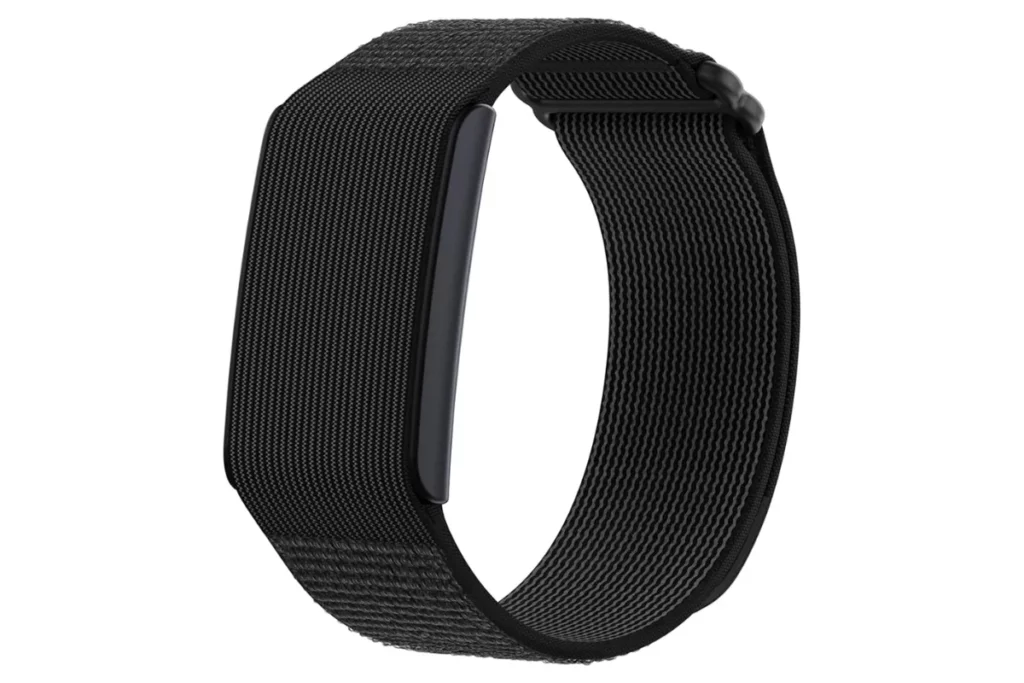
If the annual cost with the Whoop gives you nightmares, then Amazfit Helio Strap is definitely the best solution at the moment. The strap costs only $99.99 and there is no subscription fee attached to it, which makes it one of the most promising options among all other devices of this category.
In terms of hardware, the device weighs only 20 grams and has a battery life of up to 10 days with a single charge. You can use the strap as a traditional wrist tracker or switch to an optional upper arm strap that, in my opinion, is much more effective. During my tests, the upper arm sensor has proved to be almost as accurate as a chest strap from Garmin.
The data goes to Zepp app, which allows you to track VO2 max, recovery time and BioCharge energy level similar to Body Battery in the Garmin app. The interface of the app is sometimes a bit cluttered, automatic workout detection isn’t always reliable, but for the price, these are easy things to forgive.
Pros
- No subscription
- Highly accurate heart rate monitor when used as an arm strap
- 10-day battery life
- Various training parameters, such as VO2 max and BioCharge
Cons
- Cluttered Zepp app when compared to other brands
- Automatic workout detection misses sometimes
- Best accuracy is provided by the arm strap, which must be bought separately
Oura Ring 4: Best for Sleep and Overall Wellness

The Oura Ring 4 is a smart ring and not a band, which technically still counts as screenless since there’s nothing to glance at beyond the ring itself. It starts at $349 upfront and adds a monthly subscription of $5.99, so this one asks for more commitment than anything else on this list.
Battery capacity is estimated to be up to 8 days and even though this design is a tad bulky, I still find it comfortable to wear and sleep with it. But if you’re like me and a chunky gold ring doesn’t fit your dainty jewellery stack, Oura has introduced the Oura Ring 5 which is 40% slimmer than the Ring 4, making it the world’s smallest smart ring.
What makes this device stand out among others is its sleep and cycle tracking features. The information is one of the best and most accurate ones in any wearable I’ve tested. It’s supplemented by the app which includes a tag system allowing you to add events from your day, so if you have a bad sleep after having dinner too late or after a tough working day, you will see the link between those things in the future. But it’s not a great choice if you want to train and track your workouts the way you can with a Garmin.
Pros
- Best in sleep tracking
- Comfortable enough to actually wear all day long
- A tag-based app system gives context to your scores
- Subtle enough to wear with just about anything
Cons
- Needs a monthly $5.99 subscription
- Not best suited for working out
- Pricier upfront than most screenless bands
Polar Loop (Gen 2): The Pick for Existing Polar Users

Polar Loop Gen 2 is a very popular Whoop alternative. It’s positioned as a one-time purchase at $199.99 with zero subscription attached, so you’re not paying for it twice.
This could very well be the most comfortable screenless fitness tracker to wear while sleeping. The knit construction just blends in seamlessly on your wrist unlike any silicone strap ever will.
As far as an app goes, this one may be described as somewhat controversial. First of all, data is collected in Polar Flow app and the Nightly Recharge and SleepWise tools provide you with some great recovery analysis. However, Polar’s app feels a little outdated compared to both Oura and WHOOP apps. The absence of a screen on the tracker requires Polar Flow to provide the whole experience on its own, but right now it doesn’t meet the standards set by the device. Besides, Polar still relies on the old sensor technology that affects heart rate monitoring accuracy during high-intensity exercises.
Pros
- One-time purchase, no subscription
- One of the most comfortable bands to wear while sleeping
- Sleep and recovery data collected through Nightly Recharge
Cons
- Polar Flow app feels outdated compared to others
- Inaccurate heart rate readings when doing intense intervals
- No arm band available as accessory like Whoop or Helio Strap
RingConn Gen 3: The No-Subscription Ring
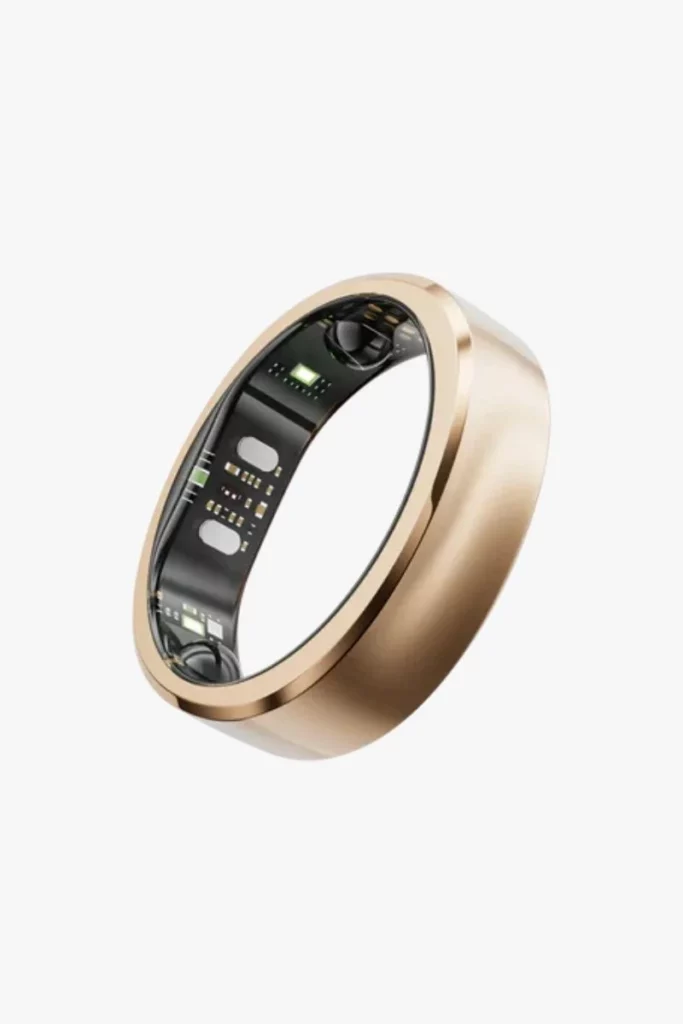
RingConn Gen 3 is priced at $349 and skips the subscription entirely, making it a good Oura alternative. The battery life is the biggest plus point of this device, as it reaches up to 14 days, leaving other devices in this comparison behind.
Something I didn’t expect was the sleep apnea tracking offered by this device. The way it works is by detecting breathing patterns and oxygen levels along with the HRV and movements, all of which can point towards possible breathing problems during the night. I would never recommend relying on this feature for any type of diagnosis, but as an early warning sign for people who suspect something’s off with their breathing at night, it’s a genuinely useful feature to have for free.
The app offers all the basic features such as heart rate, HRV, blood oxygen and sleep stages measurements.
Pros
- Zero subscription
- Lightweight
- Battery lasts up to 12 days
- Built-in sleep apnea tracking feature
Cons
- Fewer ecosystem partnerships as compared to Oura
- App lacks some of the deeper context features
- Sleep apnea tracking isn’t a substitute for medical diagnosis
Ultrahuman Ring Air: The Budget Oura Alternative

If Oura caught your attention but turned you away due to the monthly cost of the subscription, Ultrahuman Ring Air is an excellent choice. Its price tag stands at $349, without any additional fee. Just be aware that Ring Air is discontinued in the US market, but its replacement, the Ultrahuman Ring PRO is the new kid on the block and will be available in the US as well.
The titanium ring weighs only 2.4-3.6 grams, which is the lowest weight among all smart rings, providing up to 6 days worth of battery life. The app concentrates on sleep and circadian rhythms and provides the Sleep Index, which represents several parameters in one single metric. I appreciated personalized caffeine cutoff time and sleep time notifications.
Like most smart rings, though, it’s not ideal for workout tracking. Heart rate accuracy drops during exercise, and the titanium finish can pick up scratches if you lift weights or regularly work with your hands.
Pros
- $349 one-time price, no subscription
- Extremely light weight
- Sleep tracking accuracy comparable to Oura and WHOOP
- Helpful circadian rhythm nudges built into the app
Cons
- Not reliable for workout heart rate tracking
- Prone to scratches during exercise or lifting
Luna Band: The Newcomer

The Luna Band is undoubtedly one of the most intriguing wearable devices to come up lately, despite the fact that it is not yet released into the market. No pricing information is available as well as details about its battery life and performance in real-life situations, which means that this is more of a preview than a recommendation.
Its biggest selling point is LifeOS AI, which is supposed to suggest things for you to do depending on your energy levels and state of recovery, instead of giving you just some numbers on graphs and charts.
Screenless vs Screen-Based Trackers: The Real Trade-Offs
Screenless wins on battery, full stop. Screen-based smartwatches need to be charged at least every other day, while the screenless fitness trackers mentioned above can work for a week or even more. Another thing that speaks in favor of screenless fitness trackers is their lack of distractions. There’s nothing to glance at besides your phone when you actually want to check in.
Screen-based wearables will win when you need immediate access to some information and you don’t want to take your phone out. Things like contactless payments, notifications and maps require a screen to operate properly. So, if you need your watch not just for health and recovery data but for additional daily tasks, a screenless fitness tracker may turn out to be inconvenient.
Who Should Buy a Screenless Fitness Tracker?
Get This If…
- You want to monitor your health information without being constantly notified all day long
- Battery life is more important to you than display
- You want an accessory that you can even wear when sleeping
- Monitoring recovery and sleep is more important to you than real-time information
Pass If…
- You use a smartwatch to get real-time information such as time, messages or map
- You are in need of contactless payment options
- You need real-time information in your workouts
Wrap Up
The best screenless fitness trackers depend greatly on what you want to track. There are some devices made for recovery, while others can be used for monitoring the quality of sleep and then there are those who just strive to provide you with the necessary information without the necessity of having an extra display on your wrist. The good news is that there’s finally enough choice that you don’t have to settle for one approach.
If you are considering purchasing a screenless fitness tracker, try not to pay attention to the number of sensors, but to the overall experience you would like to get from the device. The best screenless fitness tracker will be the one you are going to wear all the time no matter whether it’s a ring, a strap or any other device.
Here are the best screenless fitness trackers without subscription.
FAQs
Decode the Decor
The Smart Jewelry Revolution
A practical guide to wearable tech's future — delivered straight to your inbox.
Author
