

Think about the last time you ate something and told yourself, “I’ll log it later.” Maybe it was breakfast. Maybe a quick snack between work. And by the time you remembered, you had already forgotten what you ate or how much of it was on the plate.

This is where the Odyss N1 Vision gets interesting. Instead of putting another food-tracking app between you and your meal, this small pendant is designed to stay around your neck and quietly watch for eating events. Its AI can then use what it sees, hears and senses to turn those moments into food and nutrition data.
It sounds a little unusual. A necklace that keeps track of what you eat? But that strange idea points to a very practical question: what if food tracking did not need you to remember to do it?
That is exactly the idea behind the Odyss N1 Vision, making nutrition tracking more passive, so you can spend less time logging meals and more time simply eating them.
Decode the Decor
The Smart Jewelry Revolution — a practical guide to wearable tech.
Specifications
| Specification | Odyss N1 |
|---|---|
| Form Factor | AI-powered pendant / wearable dietary necklace |
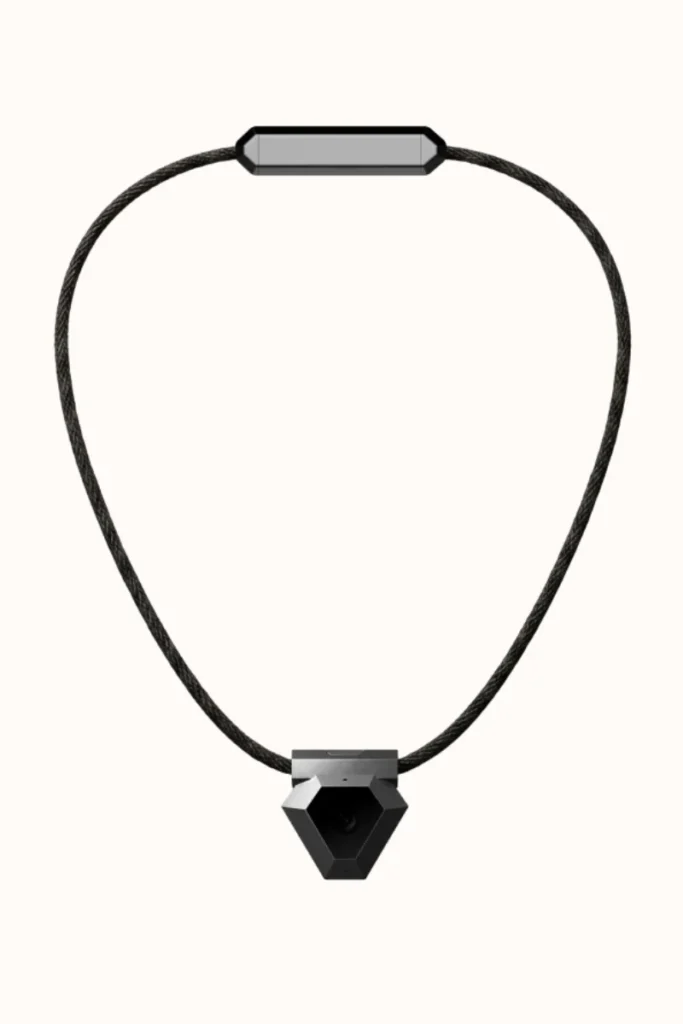
| Placement | Rests at the collarbone for an optimal field of view |
| Camera System | Wide-angle camera for capturing food, packaging and portions |
| Sensor Array | G-sensor (motion tracking), contact sensors and microphones |
| Core AI Technology | Multimodal AI with automatic food recognition and hand-to-mouth detection |
| Privacy Controls | Physical privacy switch to instantly disable the camera and sensors |
| Data Security | On-device processing with automatic face-blurring, raw images are deleted |
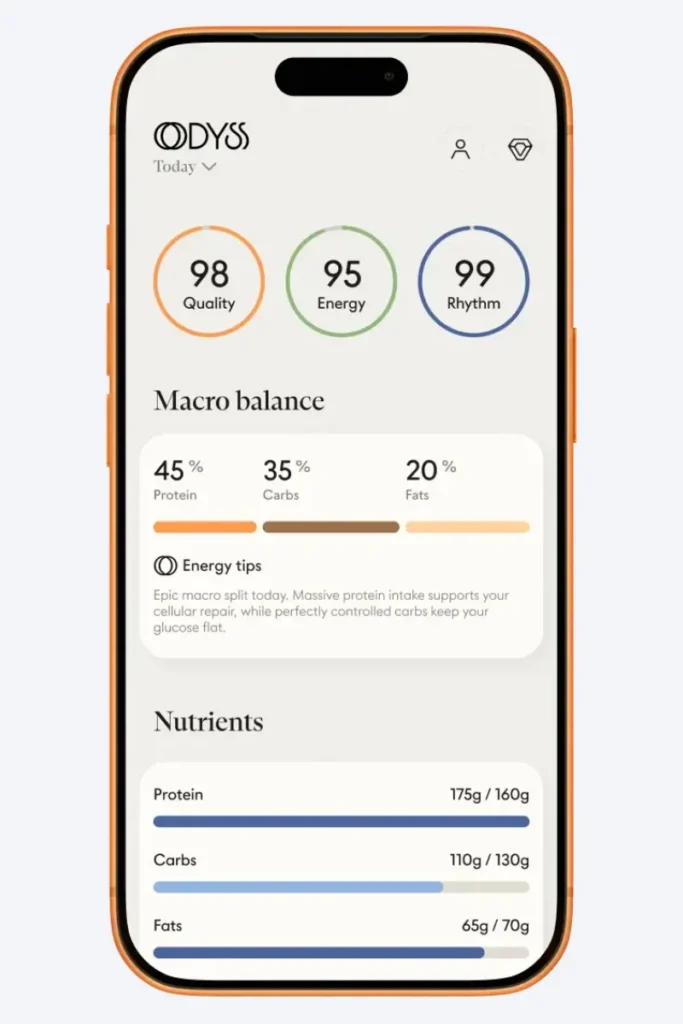
| Dietary Metrics | Generates three core Dietary Scores: Quality, Energy and Rhythm |
| Primary Function | Passive food tracking, portion estimation and automatic meal logging |
| Connectivity | Wi-Fi and Bluetooth smartphone app integration (with Apple Health support) |
Odyss N1 Vision: An AI Necklace Built Around Passive Food Tracking
Odyss N1 Vision is an electronic wearable which is meant to be worn on your chest while monitoring your daily diet. Regular health wearables usually monitor your heart rate or sleep cycles. Odyss N1 Vision, however, is highly focused on automatic food recognition. This smartwear works as a permanent observer for your diet.
Corporations are developing passive health trackers in order to cater to humans’ tendency to be forgetful creatures. We skip our meal recordings, estimate portions incorrectly, and in the end forget about health tracking apps. Odyss N1 Vision makes all that unnecessary. This necklace uses computer vision technology in order to recognize foods that you consume. That means that you will not need to find “grilled chicken breast” in any database anymore.
However, Odyss N1 Vision is not a medical device and does not substitute for registered dietitians. The product is aimed at becoming a lifestyle accessory for people who want to keep food diaries.
What Is Odyss N1 and How Does the AI Necklace Work?
© Odyss
You might be wondering how a necklace can possibly know what you are eating. The Odyss N1 Vision uses a very clever form factor. By sitting on your chest, the Odyss N1 Vision gets a clear view of what is in front of you. The Odyss N1 Vision has a built-in camera and smart sensors. These sensors act as the eyes of the Odyss N1 Vision.
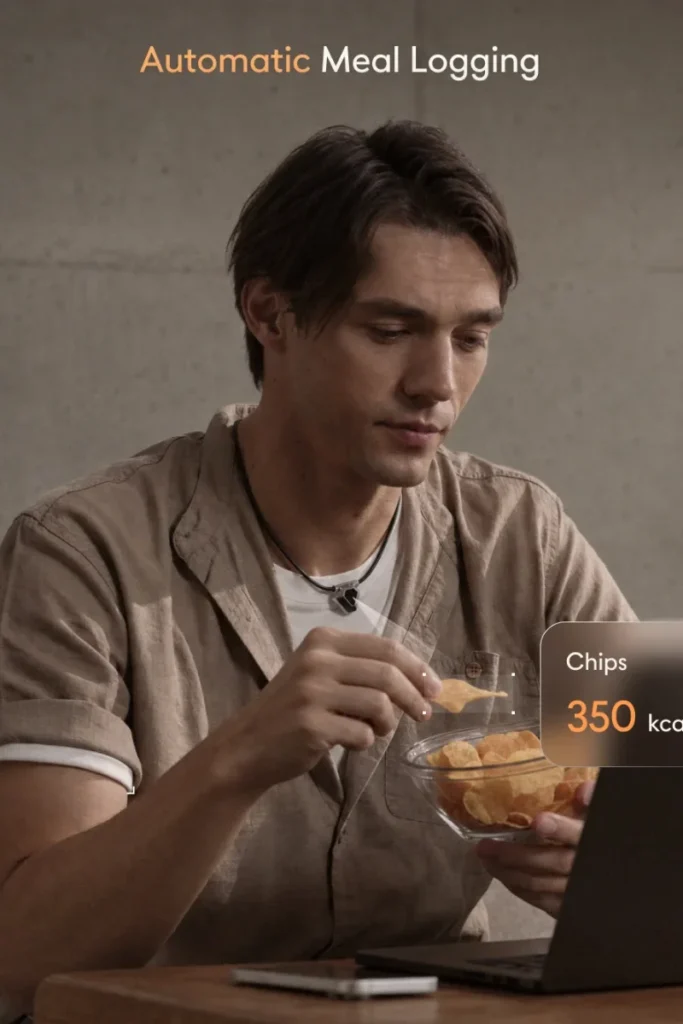
When you sit down to eat, the Odyss N1 Vision looks at your plate. It uses AI-powered food recognition technology to identify the meal. The Odyss N1 Vision takes that visual information and turns it into nutrition data. It estimates the calories, protein and fat in your meal. After the Odyss N1 Vision processes this data, it sends the details directly to a smartphone app. This integration means you can just open your phone and see your logged meals. The Odyss N1 Vision does this to reduce the friction of recording every single snack. We must keep in mind that these are the announced features of the Odyss N1 Vision, but real-world testing will eventually show how perfectly the Odyss N1 Vision captures every bite.
Why Manual Food Tracking Is Still a Problem
© Odyss
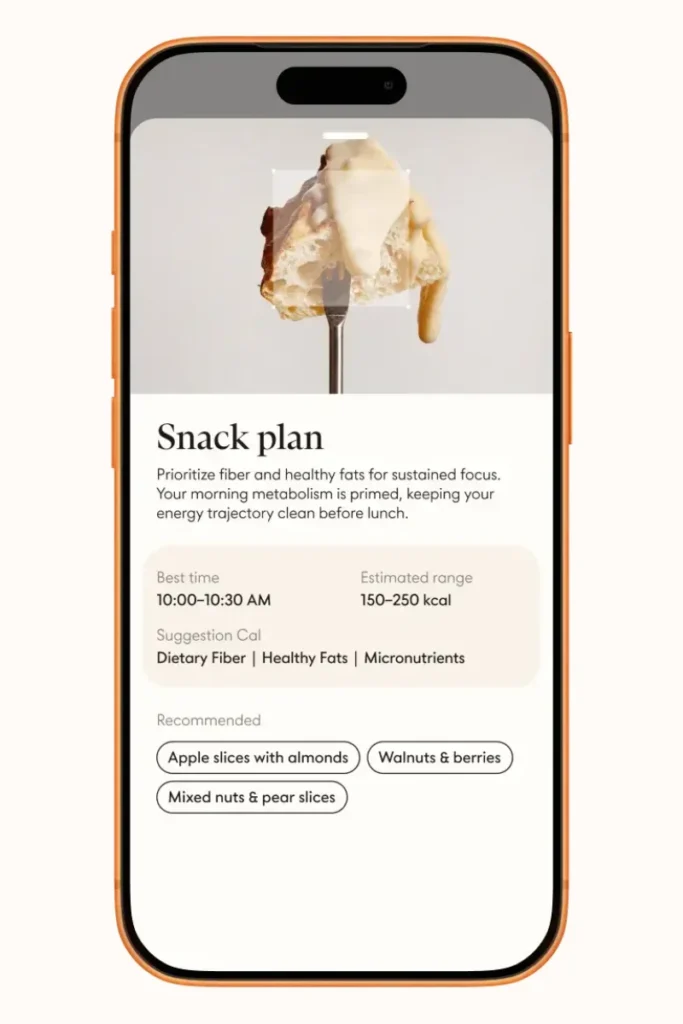
Anyone who has tried to lose weight knows the frustration of a manual food diary. Traditional calorie tracking demands constant, unwavering effort. You need to grab your smartphone, launch an application and find all foods and their portions.
This is such a high-friction process in our lives. It is very easy to remember the breakfast that you should log, but completely forget about almonds that you ate at your desk. The portion size is the problem too. We underestimate it significantly.
That is why people give up using such applications after one-two weeks of usage. The problem is not in gathering nutrition data, the problem is in maintaining this for months and years. We are seeing attempts to solve this problem in the fitness industry already. For example, Oura Ring Food Tracking tries to integrate diet with recovery measurements. And Odyss N1 Vision goes even further, trying to automate this process.
Can AI Really Replace Manual Food Logging?
© Odyss
The first benefit from artificial intelligence tracking is quite impressive. First of all, there is a lack of user activity in it. All the user needs to do is to put the Odyss N1 Vision on their head and continue living. This passivity ensures quicker meal logging, as the user does not spend those five minutes before having dinner pressing buttons on their phone. Such ease of use naturally leads to better consistency as the user will be unlikely to stop.
Nevertheless, artificial intelligence also has certain drawbacks. It is hard to estimate portions using computer vision. While the device can tell that there is a bowl of soup, it will hardly be able to determine how deep this bowl is. Invisible ingredients pose another problem to such devices as well. For example, while the device is able to see a salad, it cannot detect the large amount of oil in the dressing.
There are also natural accuracy concerns and user privacy considerations. AI can drastically reduce the busywork involved in diet tracking. But nutrition tracking still requires human context. You might still need to tell the app that your coffee has sugar in it if the camera couldn’t see you add it.
What Makes an AI Necklace Different From Food Tracking Apps?
© Odyss
Classic food tracking apps require complete active involvement. You will be the only data logger. If you fail to log in your food, the app will think that you haven’t eaten. This kind of active involvement makes you obsessed with every single bite that you make, causing an unhealthy attitude towards food.
Odyss N1 Vision turns this active data gathering to passive one. The AI necklace solution means constant lifestyle logging. Your wearable device will be monitoring every small snack and beverage that you consume without logging it. This kind of less active interaction will transform your attitude towards dieting.
This approach also shows how the smart necklace category is becoming more than a fashion-focused wearable. Newer necklace-style devices are starting to explore health, AI and hands-free interactions, giving the form factor a more practical role in everyday life.
With the elimination of tedious data entry processes, the Odyss N1 Vision lets you concentrate on healthy eating only. You no longer need to deal with the interface of your application five times a day. There have been precedents in the behavior of large tech regarding integrating wearables, for example, Meta Food Logging, the concept of which was tested on the company’s smart glasses via voice commands. Invisible technology is always the aim. And once you eliminate the interface, you change user behavior.
The Bigger Trend: Wearables Are Moving Beyond Fitness Tracking
The Odyss N1 Vision is more than just another experiment. This is a huge step forward in the wearable health tech market. A few years ago, the most advanced wearable device was counting your steps. After some years, they started measuring your heart rate and sleep phases.
Traditional fitness trackers played an important role in this shift by making everyday health data easier to collect. From steps and heart rate to sleep and activity, these devices created the foundation for the more passive health tracking we are seeing today.
Today, modern wearables are shifting aggressively towards nutrition and lifestyle. We are entering the era of behavioral analysis. The Odyss N1 Vision is a great example of this development. Today, it is not enough to measure your activity level. You should understand the fuel behind this activity.
The artificial intelligence-based health assistants will be the center of our body in the future. AI is the only layer that could unite all these data. The Odyss N1 Vision measures the nutrition part, which could finally be connected to your smartwatch’s calorie-burning data.
The Challenges AI Food Tracking Still Needs to Solve
While the idea itself is brilliant in relation to the Odyss N1 Vision, there are plenty of obstacles in its path. The recognition of food in actual settings is the key problem. Capturing an evenly lit plate in a laboratory setting is easy for the camera. However, identifying poorly illuminated meals at the restaurant is a completely different story.
The privacy issue related to the use of outward-facing cameras is still one of the most discussed. By wearing the Odyss N1 Vision, you put a camera on your chest. The companies should ensure that all the information is analyzed safely without being saved with malicious intent.
Battery life also plays a huge part. Capturing images and analyzing them takes tremendous power from the battery. Thus, the Odyss N1 Vision should find the right compromise between its passive observation capabilities and the battery life. The device recording everything should provide reliable results, be safe to use and be accessible.
Who Could Benefit From an AI Food Tracking Necklace?
Odyss N1 Vision was created specifically for one particular consumer type. Those who are trying to change their eating habits and are consistently failing because they simply cannot manage to log everything manually become the main target audience. If you hate typing your food intake into your phone, the mentioned AI necklace eliminates your greatest barrier.
Those who have an active lifestyle and need to track their calories precisely can get a lot of benefit from using the product as well. When you eat five or six times a day, manual data recording turns into a part-time job. With Odyss N1 Vision, you can forget about that.
However, those who are looking for absolute precision and want everything to be calculated in grams will probably prefer conventional scales and manual tracking. Highly private people, concerned about how others view them, will most likely also use traditional apps for food tracking.
Wrap Up
The Odyss N1 Vision is an unusual take on something most of us have learned to do with a phone: track what we eat. Instead of making food logging another daily task, this AI wearable pendant tries to make it happen quietly in the background.
It still has to prove how well that idea works in real life, especially when food, portions and privacy get complicated. But the concept is simple and interesting: what if your food tracker could notice your meal before you even remembered to log it?
FAQs
Decode the Decor
The Smart Jewelry Revolution
A practical guide to wearable tech's future — delivered straight to your inbox.
Author
