

Reebok is making a comeback into the wearable industry and this time it’s with two new smartwatches that are specifically targeting the entry level market. The company has finally launched the Reebok Stride and the Reebok Rush, which are the affordable, fitness focused smartwatches.
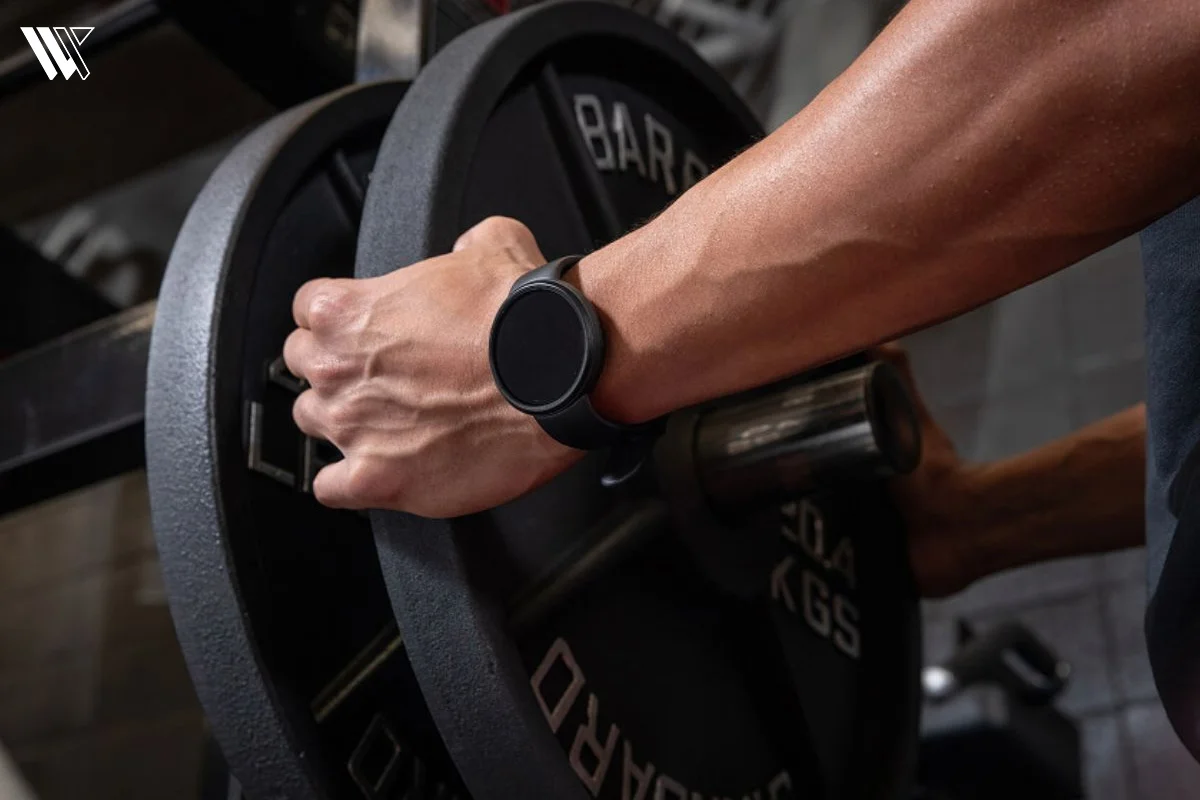
Both the smartwatches come under $100 and this clearly indicates that the launch is making one thing very clear: the Reebok budget smartwatch lineup is all about accessibility and not about beating the current players.
These watches aren’t trying to compete with Apple or Garmin. They’re designed to cover the basics- heart rate tracking, assisted GPS, sleep monitoring and notifications. All this while carrying the credibility of a well-known athletic brand.
Let’s break down what this move means for Reebok, how the Stride and Rush differ and whether either of them is actually worth considering.
Decode the Decor
The Smart Jewelry Revolution — a practical guide to wearable tech.
Reebok’s Entry Into the Smartwatch Market
Reebok is first and foremost a fitness brand. Its DNA is rooted in sports apparel and training shoes, not in sensors and data.
So why enter smartwatches now?
Because wearables are now part of the fitness culture. Consumers are no longer just buying shoes, they are tracking data, recovery metrics and health insights. From smart rings to watches, devices have become lifestyle accessories tied into performance.
In Reebok’s case, its tech products are handled under licensing through CE Brands International. FCC filings for the Stride and Rush confirmed Bluetooth connectivity and signaled a North American launch.
This isn’t Reebok’s first attempt at wearables. The brand already sells the Pulse and Icon smartwatches, along with expanding into smart rings. The Stride and Rush don’t represent a radical pivot but an incremental expansion downward in price.
Strategically, this matters. Instead of chasing premium territory, Reebok is carving out a clearer pricing ladder:
- Rush as entry tier ($69.99)
- Stride as mid-entry ($99.99)
- Icon as upper budget ($119.99)
- Pulse at the top of Reebok’s current smartwatch range ($139.99)
It’s structured, intentional and clearly aimed at casual fitness users.
What Is the Reebok Stride Smartwatch?
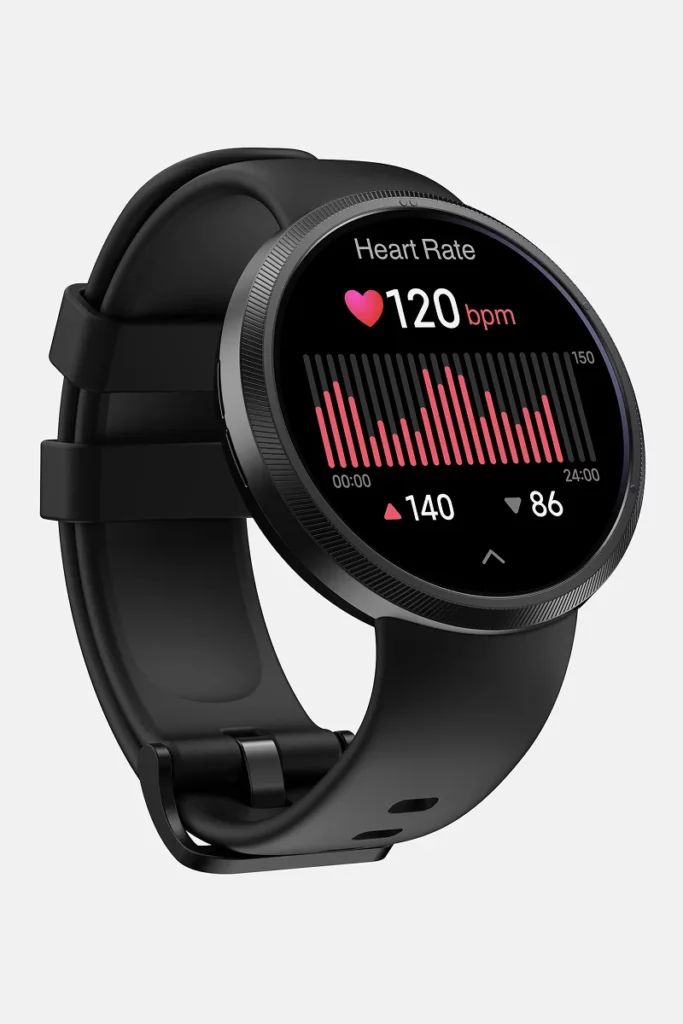
The Reebok Stride is the more capable of the two new releases. At $99.99, it sits in the middle of Reebok’s lineup and offers a few features that separate it from the lower-priced Rush.
Target Audience
- Casual fitness users
- Budget-conscious buyers
- Gym-goers
- First-time smartwatch buyers
This isn’t a hardcore training device. It’s for someone who wants activity tracking, notifications and occasional call handling without spending over $100.
Display and Design
The Reebok Stride comes with a 1.43-inch AMOLED display that has a resolution of 466 × 466 pixels. The Reebok Stride weighs only 41g and has dimensions of 44.5 × 44.5 × 10.8mm, which is lighter than the Reebok Rush.
The two colors available are Midnight Steel and Victory Gold. Additionally, there are more than 100 watch faces to choose from.
Core Features
The Reebok Stride includes:
- 80+ sports modes
- Assisted GPS via smartphone connection
- 24/7 heart rate monitoring
- SpO2 tracking
- Sleep analysis
- Step and calorie tracking
- Smart notifications
- Bluetooth calling with in built speaker and mic
Battery life is rated at up to 10 days with typical usage with a 300mAh battery. It also carries an IP68 rating for water and dust resistance, meaning rain and splashes are fine, but it’s not built for serious swimming sessions.
Price
Priced at $99.99, the Reebok Stride undercuts the Icon and Pulse while maintaining premium-looking hardware like AMOLED and calling support. It’s essentially a trimmed-down Reebok Pulse at a more accessible price.
What Is the Reebok Rush Smartwatch?
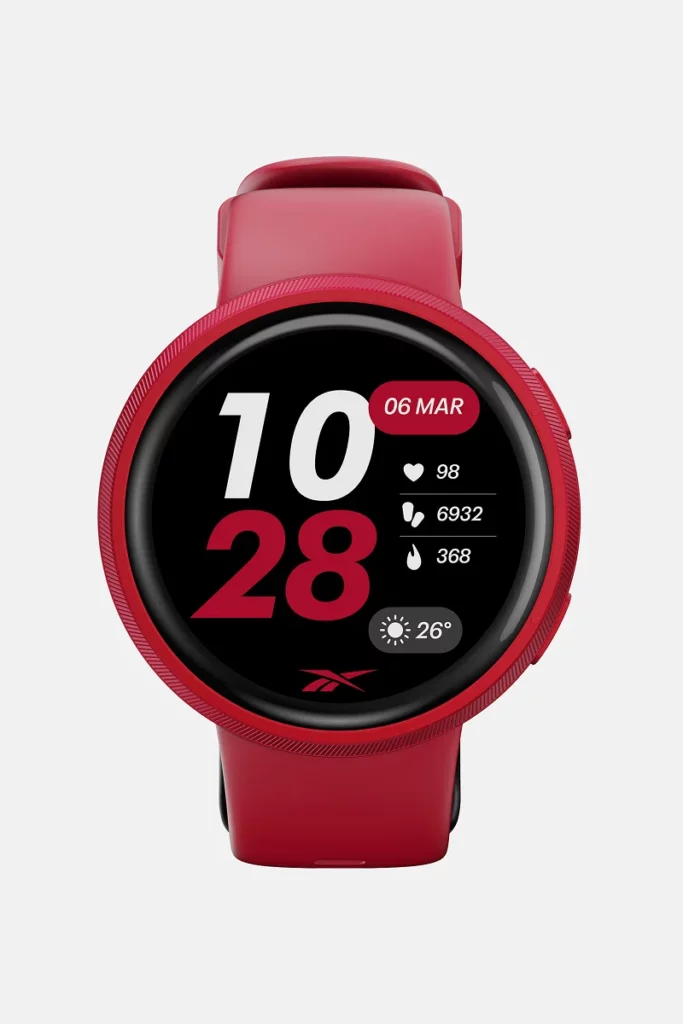
The Reebok Rush is Reebok’s most affordable smartwatch to date, priced at just $69.99. It strips things back intentionally because of its budget positioning.
Target Audience
- Budget shoppers
- Brand-loyal Reebok customers
- Users who don’t care about Bluetooth calling
- Basic fitness trackers upgrading from bands
If you just want steps, heart rate, and notifications, then this is the simpler option.
Display and Build
The Reebok Rush does not have an AMOLED display but instead a 1.39-inch LCD panel with 360 × 360 resolution. It’s functional but lacks the vibrancy of Reebok Stride’s screen.
It’s slightly larger and heavier with 46 × 46 × 11 mm dimensions and weighing 47 g. While the color options have expanded here with three colors– Midnight Steel, Victory Gold and Spectre Red.
Core Features
Reebok Rush still supports:
- 80+ sports modes
- Assisted GPS
- Continuous heart rate monitoring
- SpO₂ measurement
- Sleep tracking
- Notifications
- Music control
- Google Assistant commands
- Bluetooth 5.3 connectivity
However, it does not include:
- Bluetooth calling
- Built-in speaker
Battery life remains the same as Reebok Stride, rated at 10 days, with IP68 water resistance.
Price
At $69.99, Reebok Rush directly competes with lower-end Amazfit models and generic white-label smartwatches that are sold online. The only difference is brand recognition.
Reebok Stride vs Reebok Rush: Key Differences
| Features | Reebok Stride | Reebok Rush |
|---|---|---|
| Display | 1.43″ AMOLED (466×466) | 1.39″ LCD (360×360) |
| Calling Support | Yes (Bluetooth calling) | No |
| Sensors | HR, SpO₂, Sleep, G-sensor | HR, SpO₂, Sleep, G-sensor |
| Battery Life | Up to 10 days | Up to 10 days |
| Water Resistance | IP68 | IP68 |
| Price | $99.99 | $69.99 |
| Best For | Users wanting calling and better display | Budget users needing basics |
The real differences are display quality and calling capability. Everything else is largely similar.
Features and Health Tracking Capabilities
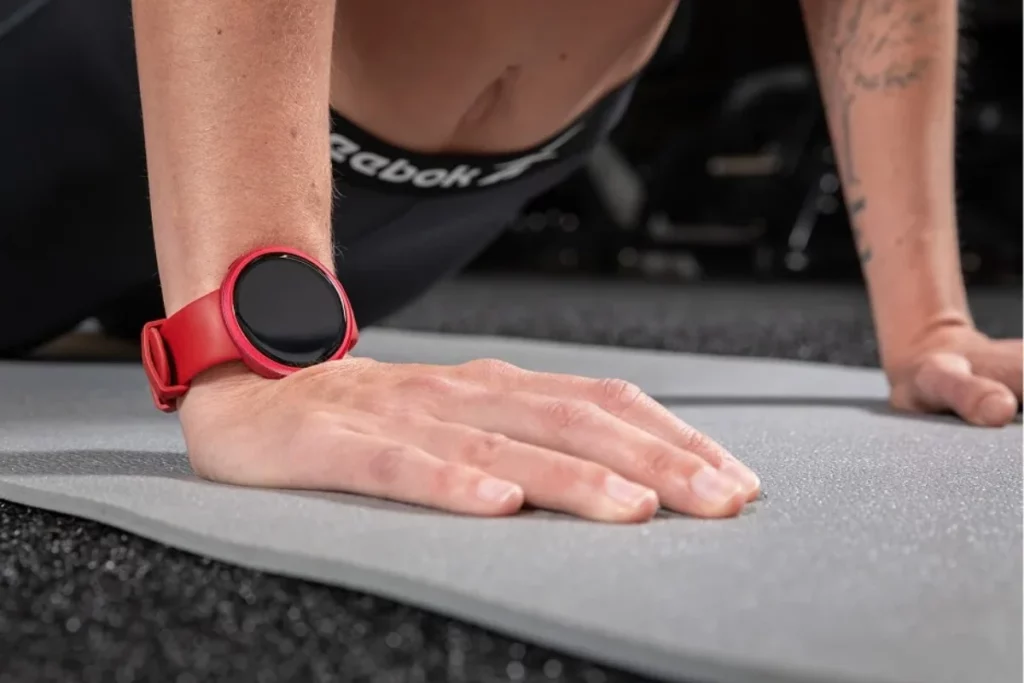
Let’s set the expectations properly.
These are entry-level smartwatches. They track health metrics, but they are not medical-grade or performance-optimized devices like Withings, Fitbit or Garmin.
Heart Rate Monitoring
Both watches offer continuous heart rate tracking throughout the day and during workouts. While I do feel the accuracy might be slightly questionable at this price point, Reebok might just surprise me.
That being said, it is definitely not the watch you should invest in if you are into high-intensity workouts or marathon running.
Blood Oxygen Monitoring
Blood oxygen monitoring is included in both the Reebok Stride and the Reebok Rush. SpO2 tracking is primarily for spot checks rather than continuous tracking.
Sleep Tracking
Sleep data in the Reebok budget smartwatch models includes sleep duration, light and deep sleep stages and overall sleep quality score.
Expect broad trend analysis rather than the advanced sleep science you are probably used to with devices like the Oura Ring 4.
Sports Modes
This is where the Reebok budget smartwatch models surprised me with 80+ activity modes including running, cycling, yoga and swimming. Although I am a bit confused as to why they advertised swimming, even though the IP68 rating suggests limited water exposure.
They also have assisted GPS, which basically means that your phone needs to be connected in order to track routes, and the Reebok budget smartwatch will not be able to do it on its own.
Calling & Notifications
Reebok Stride allows Bluetooth calling on the watch itself, while Reebok Rush does not. However, they both offer basic smartwatch functions such as text alerts, app notifications, music control and reminder alerts.
Companion App & Ecosystem
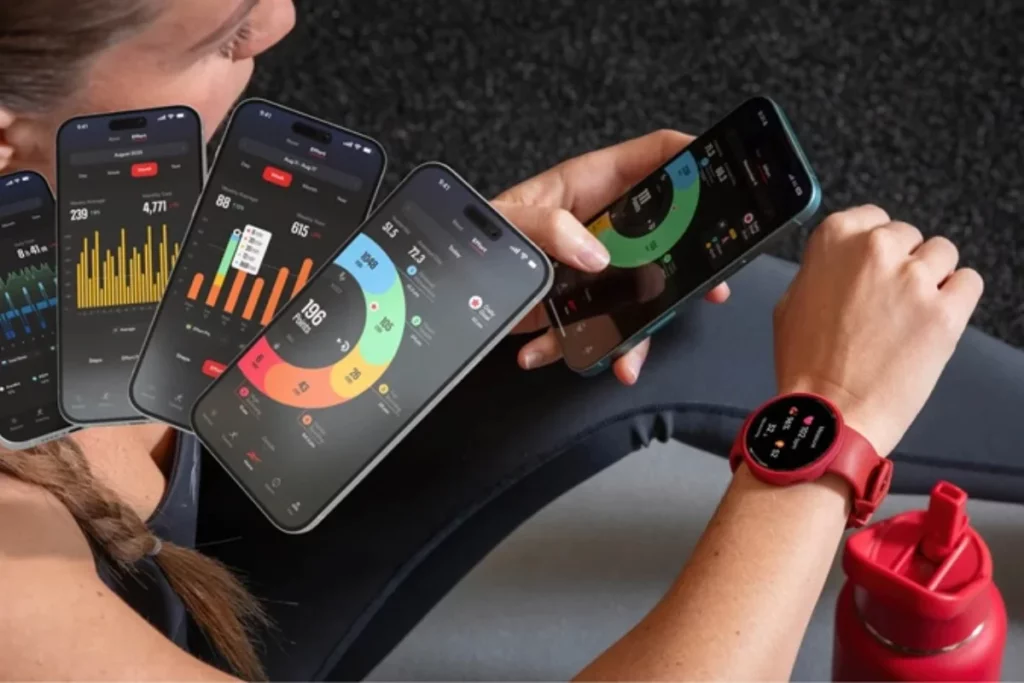
Both Reebok budget smartwatches use the Reebok Connect app to sync their data to your phone. The app supports automatic data syncing and goal settings. It has a basic analytics dashboard with Strava integration, Google Health and Apple Health compatibility. The app is compatible with both iPhone and Android.
Unlike ecosystem-heavy platforms such as Samsung or Apple, Reebok does not control its own OS or advanced app store.
How Reebok Compares to Other Budget Smartwatch Brands
Reebok may be new, but it is entering a crowded field.
Brands like Amazfit have spent years refining affordable smartwatches with stronger app ecosystems and in-house software platforms. Meanwhile, entry-level models from Samsung (such as older Galaxy Watch models) often benefit from deeper Android integration and stronger software longevity. The CMF Watch 3 Pro is another budget GPS smartwatch option.
Then there’s the vast market of generic white-label watches that are often cheaper, but with inconsistent quality control.
Reebok is sort of in between.
It has a better brand recall than white label watches but fewer software experiences than Amazfit. It does not have an ecosystem either like Samsung and Apple.
The only advantage the Reebok budget smartwatch models have is the brand image Reebok has created over the years.
Who Should Consider Reebok Budget Smartwatches
You might consider a Reebok budget smartwatch if you:
- Are a loyal Reebok customer
- Want basic health tracking
- Need GPS but don’t care about carrying your phone along
- Prefer a familiar brand name over unknown manufacturers
- Are buying your first smartwatch
For under $100, Reebok Stride offers a mix of AMOLED and calling. For under $70, Reebok Rush has core tracking in a budget.
Who Should Avoid Reebok Stride or Rush
The Reebok budget smartwatch is not for:
- Athletes who need training metrics
- Users expecting long-term OS updates
- People wanting a tight Apple or Samsung ecosystem integration
- Swimmers needing full waterproof confidence
- Users expecting premium durability
If you want advanced recovery tracking, ECG, onboard music storage or third-party app ecosystems, it might be the best to look elsewhere.
What This Means for the Wearables Market
Fitness brands entering tech isn’t new, but it’s accelerating.
The Reebok Stride and Rush reflect a broader trend: lifestyle brands leveraging licensing partnerships to extend into wearables. The challenge isn’t hardware. It’s software depth and sustained support.
Brand power can bring in early sales. But customer retention depends on:
- App reliability
- Firmware updates
- Data accuracy
- Long-term ecosystem growth
If Reebok continues refining its lineup and improving its software layer, it could maintain a stable niche in entry-level wearables. If not, these products risk becoming short-cycle releases in a saturated market.
Wrap Up
The Reebok budget smartwatch strategy is clear. The Stride and Rush aren’t disruptive, they’re practical. They fill price gaps and make Reebok’s wearable range easier to navigate.
Reebok Stride stands out as the better value with AMOLED and Bluetooth calling at $99.99, while Reebok Rush makes sense if your budget is tight and you only care about fundamentals.
However, neither of the Reebok budget smartwatch will replace premium smartwatches. For people who want simple tracking, a recognizable fitness brand and a price that doesn’t hurt, Reebok’s latest wearables make logical sense.
The bigger question is whether Reebok can build a software experience strong enough to keep users beyond their first purchase. Hardware gets your foot in the door but the user experience is what keeps you there.
FAQs
Decode the Decor
The Smart Jewelry Revolution
A practical guide to wearable tech's future — delivered straight to your inbox.
Author
