

Imagine putting on the Sorting Hat from Harry Potter and instead of choosing your Hogwarts house, it reads your thoughts and turns them into text. While that idea belongs in the wizarding world, the latest Sabi Beanie news suggests we’re getting surprisingly close, as the California-based startup has unveiled a wearable which is designed to translate brain activity into text.

Sabi has stepped out of stealth mode with an ambitious idea, a brain-reading beanie designed to convert thoughts into text. While the concept may sound unbelievable at first, it is based on real brain-computer interface (BCI) technology and non-invasive brain sensing instead of futuristic magic.
Decode the Decor
The Smart Jewelry Revolution — a practical guide to wearable tech.
The company believes this wearable could eventually change how people interact with computers, smartphones and AI assistants. Although the product is still under development, Sabi plans to release its first consumer device by the end of 2026.
What’s Happening: Sabi’s Brain‑Reading Beanie Revealed
The California-based neurotech startup Sabi has officially emerged from stealth mode, shaking up the wearable industry by introducing a consumer-focused brain-computer interface (BCI). Instead of a bulky headset or a medical device, this technology is built directly into a standard, everyday beanie.
This initial launch marks a massive shift in how companies package advanced neural tech. To ensure the technology fits different seasons and style preferences, the company has also confirmed that a baseball-cap variant is currently in active development. By integrating complex electronics into soft apparel, the Sabi startup launch represents a major push toward making mind-controlled tech a mainstream reality.
How It Works: Non‑Invasive Thought‑to‑Text
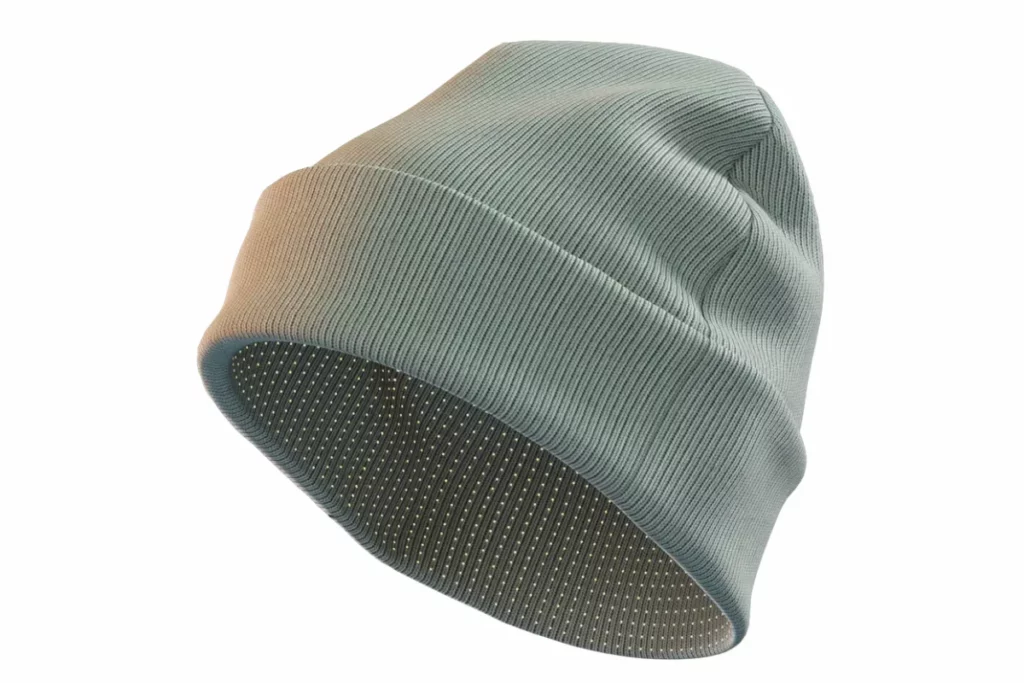
At the core of this device is a complex system that is designed to achieve a simple goal: it translates your inner voice into a digital text. The Sabi brain-reading beanie achieves this by using a specialized, non-invasive electroencephalography (EEG) system. EEG tech reads the tiny electrical signals naturally produced by your brain cells when you think or move.
To capture these signals through hair and skin without surgical intervention, the headwear uses an incredibly dense sensor array. Reports indicate that the fabric holds thousands of microscopic sensors, potentially between 70,000 and 100,000 individual points of contact. This massive grid monitors internal neural activity, focusing heavily on the brain regions responsible for language. When a user visualizes or “speaks” a word internally, the sensors pick up the specific pattern and map it directly onto a screen, completely bypassing the need to talk out loud or use a physical keyboard.
What Makes It Different from Other Brain Interfaces
When most people think of a noninvasive brain-computer interface, they immediately think of high-profile medical projects like Elon Musk’s Neuralink. However, this Sabi BCI device operates in a completely different lane.
- No Surgery Required: Unlike invasive options that require a surgeon to implant microchips directly into brain tissue, this headwear is completely non-invasive. You simply put it on like any normal hat.
- Consumer Focus: While traditional BCIs are strictly built for clinical environments to assist patients with severe paralysis, Sabi is targeting the broader consumer market right out of the gate.
- Launch Speed Targets: Early Sabi Beanie reports suggest that the company is aiming for an initial typing speed of roughly 30 words per minute at launch. While slower than fast thumbs on a smartphone, it represents a historic baseline for an unimplanted consumer device.
Sensor & AI Tech Behind the Beanie
Reading brain waves from outside the skull is historically difficult because the bone and scalp distort electrical signals. To solve this, the specific EEG wearable model relies heavily on high-density engineering, which provides vastly superior spatial resolution compared to the basic consumer EEG headbands used for meditation or sleep tracking.
Here, hardware is only half the battle, the real magic happens in the software. Sabi uses a proprietary “Brain Foundation Model,” an advanced AI system which is trained on massive datasets of human neural activity. This AI acts as a translator that matches the messy, noisy electrical data which is coming from the hat into clean, structured language. “Sabi also states that all collected neural data is fully encrypted before it is processed, ensuring that a user’s private thoughts remain secure”.
Availability & Future Product Plans
As the buzz around this thought-to-text wearable grows, concrete launch logistics are starting to take shape. The first wave of beanies is scheduled to ship to early buyers by the end of 2026.
As noted by industry trackers evaluating the Sabi beanie launch, the company is simultaneously finalizing the design of its summer-friendly baseball cap to maintain year-round utility. Exact retail pricing has not yet been locked in by the company and specific regional shipping dates or global availability timelines are expected to be announced closer to the official release window.
Why This Matters in Wearables
If this Sabi beanie gets successful, then this technology will mark the beginning of a brand-new era for consumer electronics. For years, tech creators have looked for the next paradigm shift in how we interact with machines, moving from keyboards to touchscreens and, recently, to voice commands. A direct thought interface could completely change our relationship with computing.
Apart from the coolness factor for people who love gadgets, the potential impact is tremendous. People with either temporary or permanent difficulties in mobility, extreme cases of arthritis or speech problems may find a way of communicating with their friends and family.
What We Still Don’t Know
Despite the exciting promises surrounding this innovation, several critical details remain unverified. Industry experts urge caution until independent parties can verify the company’s claims. The key missing data points are:
- Peer-Reviewed Metrics: Sabi has not yet published open, peer-reviewed studies detailing their exact accuracy rates or real-world error frequencies.
- Environmental Noise: It is still completely unknown how well the high-density sensors perform in noisy, everyday environments like a busy office, a loud gym or a windy street.
- Final Pricing: Without a clear price tag, it is impossible to know if this will be an affordable accessory or a luxury tech item.
Wrap Up
The Sabi Beanie is one of the most ambitious wearable announcements of 2026. While brain-reading technology still has many hurdles to overcome, the company’s non-invasive approach shows how quickly consumer neurotechnology is advancing.
Whether the beanie ultimately becomes a mainstream wearable or remains an early experiment, it signals a future where interacting with computers may rely less on keyboards and more on our own thoughts.
For now, the Sabi Beanie offers a fascinating glimpse into the future of wearable technology, which is why the tech industry will be watching closely over the coming months to see how this product develops.
FAQs
Decode the Decor
The Smart Jewelry Revolution
A practical guide to wearable tech's future — delivered straight to your inbox.
Author
