 Screenless BandsFitbit Air vs Luna Band: Which Screenless Wearable Is Better for Health Tracking?
Fitbit Air vs Ultrahuman Air: Which Screenless Wearable Is Right for You?
Sometimes, wearing a smartwatch feels like having another person constantly reminding you to move, sleep, exercise and take care of yourself. That's probably why screenless wearables are becoming interesting. They promise to track your health quietly without adding another glowing screen to your daily routine.
Independently tested. We never accept payment for reviews.How we test
What’s inside11 sections · 15 min read
- 01Fitbit Air vs Ultrahuman Air: What Is the Difference?1 min
- 02Fitbit Air vs Ultrahuman Air Comparison Table1 min
- 03Design and Comfort: Two Different Approaches to Screenless Wearables2 min
- 04Health Tracking2 min
- 05Fitness Tracking4 min
- 06Fitbit Air vs Ultrahuman Air Accuracy and Data Insights1 min
- 07App Experience: Fitbit Ecosystem vs Ultrahuman Platform2 min
- 08Battery Life and Charging Compared1 min
- 09Fitbit Air vs Ultrahuman Air: Which One Should You Choose?1 min
- 10Final Verdict1 min
- 11FAQ1 min
Sometimes, wearing a smartwatch feels like having another person constantly reminding you to move, sleep, exercise and take care of yourself. That’s probably why screenless wearables are becoming interesting. They promise to track your health quietly without adding another glowing screen to your daily routine.
While exploring the Fitbit Air and Ultrahuman Ring AIR, I noticed that both take a different approach to health tracking. Fitbit focuses on everyday fitness and health monitoring, whereas Ultrahuman puts more emphasis on sleep, recovery and performance insights. But which one actually makes more sense for everyday use? Let’s take a closer look at the Fitbit Air vs Ultrahuman Air comparison!
Fitbit Air vs Ultrahuman Air: What Is the Difference?#
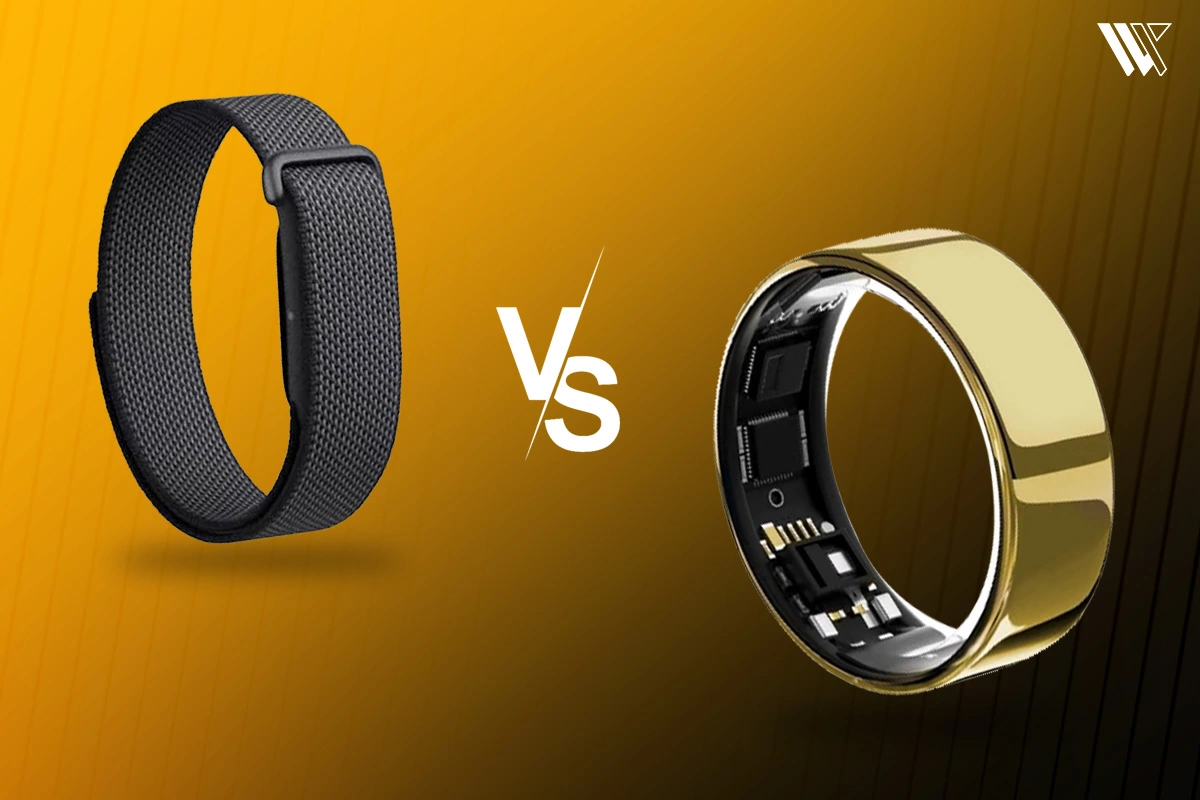
If we talk about the fundamental difference between the Fitbit Air and Ultrahuman Air, the Fitbit Air features an ordinary wristband build with no screen on it, while the Ultrahuman Air features a small-sized ring form factor placed directly on the finger. While the Fitbit Air has a comfortable woven textile strap that fits snugly onto the wrist, the Ultrahuman Air features a durable titanium body made of aerospace-grade material that can withstand all the day-to-day shocks. In addition to that, the Fitbit Air is more about mainstream health monitoring powered by Google Ecosystem, while the Ultrahuman Air is more about advanced biohacking, metabolic health and recovery performance.
Furthermore, the cost of purchasing the Fitbit Air device is quite cheap at a price of about $99.99 compared to the Ultrahuman Air which comes with a premium price of $349. The Fitbit Air device includes optional premium features to provide you with further insight into your health data while the Ultrahuman Air device provides you with a totally free subscription system where you get to have access to all your health data for as long as you need. Hence, the Fitbit Air device appeals to everyday people searching for an affordable health tracking device while the Ultrahuman Air device appeals to athletes and data freaks who require highly accurate recovery data without having to wear anything on their wrists.
Fitbit Air vs Ultrahuman Air Comparison Table#
| Specification | Fitbit Air | Ultrahuman Air |
|---|---|---|
| Form Factor | Screenless Wristband | Smart Ring |
| Dimensions | 34.9 x 17 x 8.3 mm | 2.4 mm thick |
| Weight | 12g with band (5.2g tracker only) | 2.4g |
| Materials | Recycled polycarbonate, woven textile band | Titanium with PVD coating, hypoallergenic inner 0 |
| Color Options | Obsidian, Lavender, Berry, Fog, Rye | Aster Black, Matte Grey, Bionic Gold, Space Silver, Raw Titanium |
| Size Availability | Interchangeable strap sizes | Ring sizes 5 to 14 |
| Size Availability | Interchangeable strap sizes | Ring sizes 5 to 14 |
| Battery Life | Up to 7 days | 4 to 6 days |
| Charging Method & Time | Magnetic USB-C cable (90 mins to full) | Wireless charging pad (180 mins to full) |
| Sensors | Heart rate (PPG), SpO2, Skin Temp, HRV, Gyroscope, Accelerometer | Heart rate (PPG), Skin Temp, HRV, 6-axis IMU (Motion) |
| Connectivity | Bluetooth 5.0 | Bluetooth Low Energy |
| App Ecosystem | Google Health App | Ultrahuman App |
| Subscription | Google Health Premium (optional) | Subscription-Free |
| Water Resistance | 5ATM (50 meters) | 100 meters |
| Price | $99.99 USD | $349.00 USD |
Design and Comfort: Two Different Approaches to Screenless Wearables#
© WearableXP

© Ultrahuman
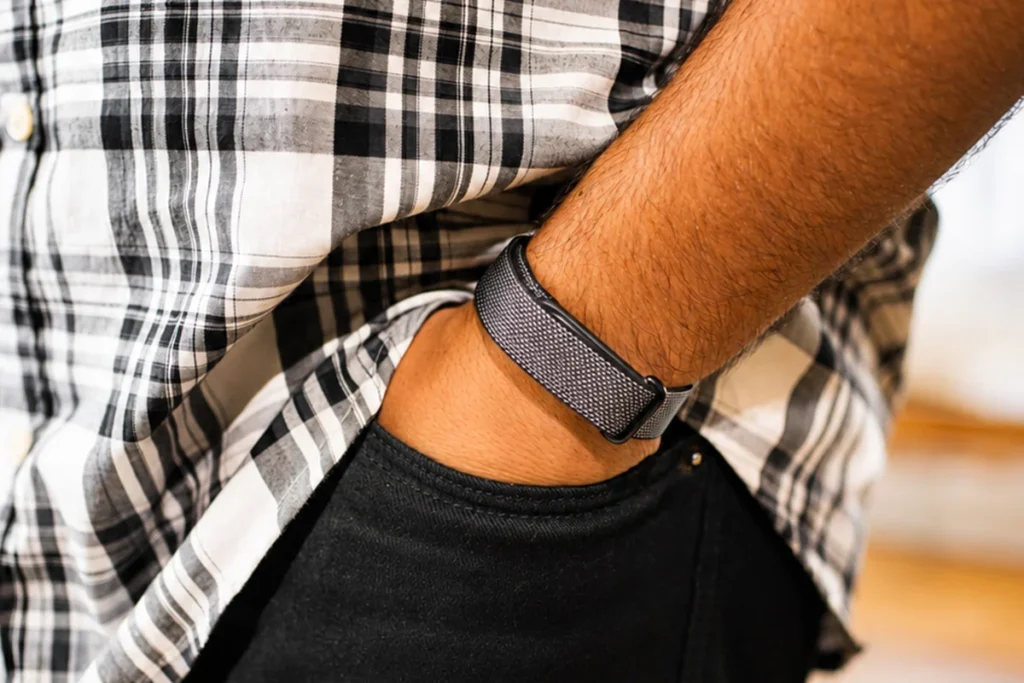
When it comes to day to day comfort, however, I have found in my personal experience that the two products follow exactly opposite routes. Regarding their physical design in the context of Fitbit Air vs Ultrahuman Air, the first device comes with a modular pill-shaped pod with dimensions of 34.9 x 17 x 8.3 mm which can be easily detached from the strap, whereas the latter one comes with a unibody solid metal ring build that is extremely thin, just 2.4 mm thick. The positive aspect of the Fitbit Air is that this device is lightweight and weighs only 12 grams when attached to the band, while the best thing about the Ultrahuman Air is the phenomenal lightweightness and ranges from only 2.4 to 3.6 grams depending on your ring size. Besides, the Fitbit Air comes with the main body of the tracker made from lightweight polycarbonate recycled materials that will not interfere with long sleeves, while the Ultrahuman Air comes with a high-quality aerospace titanium shell with a tungsten carbide coating.
However, both of these designs have their own disadvantages in terms of actual use. For example, the Fitbit Air provides users with interchangeable woven textile bands which can easily be changed according to personal preferences. In turn, the Ultrahuman Air is provided with non-interchangeable metallic bands with different finishes, such as Aster Black or Space Silver. Personally, I also found wearing a ring a little inconvenient while washing my hands, as I often had to remove it to clean my hands properly. Having to take it off repeatedly can become annoying during the day. You will definitely have to choose which one to get during the purchasing process and then there will be no way back.
You will definitely have to choose which one to get during the purchasing process and then there will be no way back. However, what I really appreciate about the Fitbit Air is that it leaves your fingers free for typing on a laptop or lifting up weights in the gym. The only downside about it is that its textile band becomes extremely wet, cold and uncomfortable after a sweaty exercise.
On the other hand, the Ultrahuman Air is offered in an elegant design where there is nothing on your wrist, making it easy to wear traditional mechanical watches, but the product has a serious design flaw if you do weight lifting, since its titanium cover will make a loud screeching noise when rubbing against metal dumbbells. In addition, the Fitbit Air is provided with a fabric-like touch feeling on the skin which is adjustable by means of a loop, whereas the Ultrahuman Air has a metallic feeling which is not adjustable at all.
Verdict: I believe that the Fitbit Air will suit people who enjoy wearing interchangeable wristbands, along with those who like to have their hands free during vigorous workouts at the gym. On the other hand, the Ultrahuman Air would be best suited to people who like to wear the very light and luxurious titanium band around their wrists.
Health Tracking#
Both the Fitbit Air and Ultrahuman Air can be described to work passively when it comes to monitoring one’s general health. The Fitbit Air is known to offer a full set of sensors in one’s wrist while the Ultrahuman Air provides finger-mounted blood pulse sensors that are very sensitive.
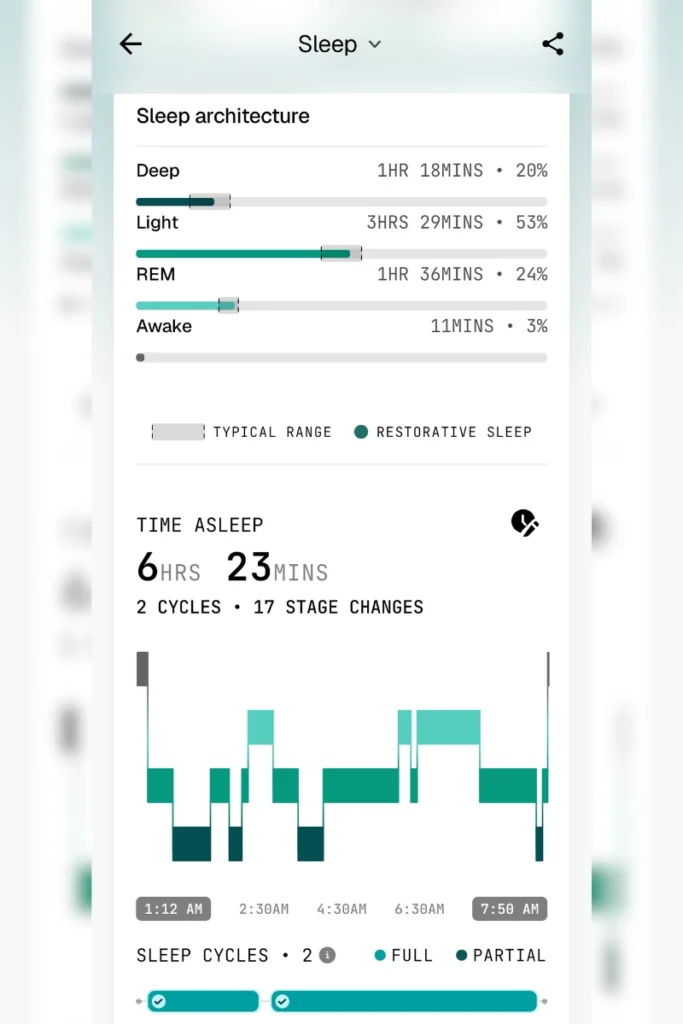
Sleep Tracking and Sleep Quality Insights#
© WearableXP
© WearableXP
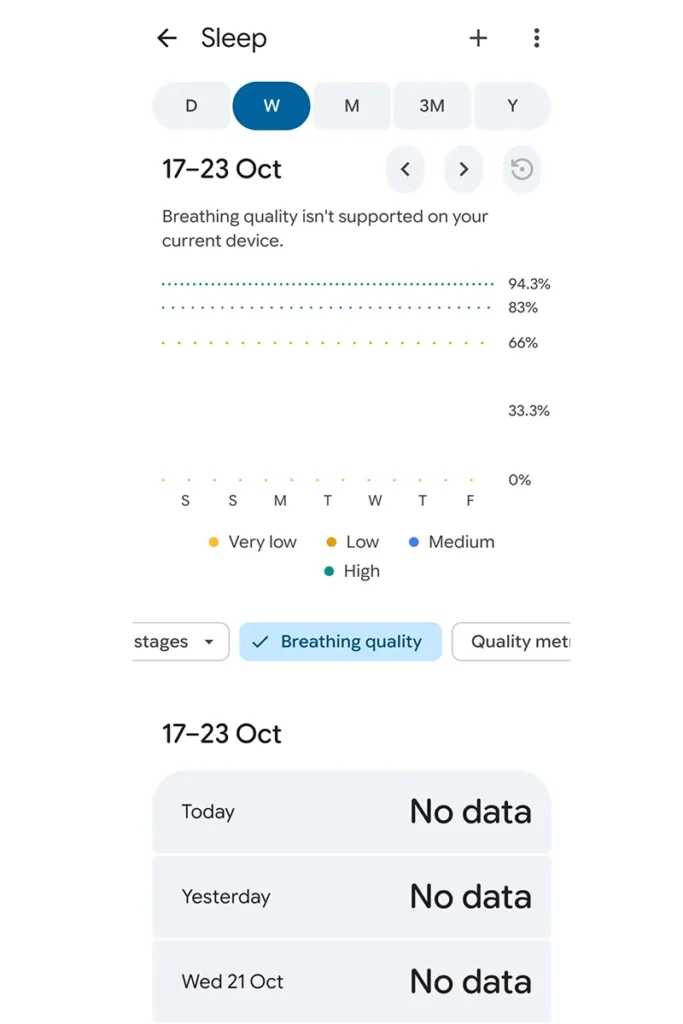
The Fitbit Air is equipped with an Optical Heart Rate Sensor that works all day long, while the Ultrahuman Air is equipped with a PPG sensor that captures your pulse rate efficiently by monitoring the arteries in your fingers. The Fitbit Air is able to track heart rhythms and generate AFib alerts based on where you live, while the Ultrahuman Air is geared towards displaying resting heart rate trends without needing any kind of AFib clearance from the medical perspective. Thus, the Fitbit Air takes a more medical alerting approach, while the Ultrahuman Air takes a performance tracking approach.
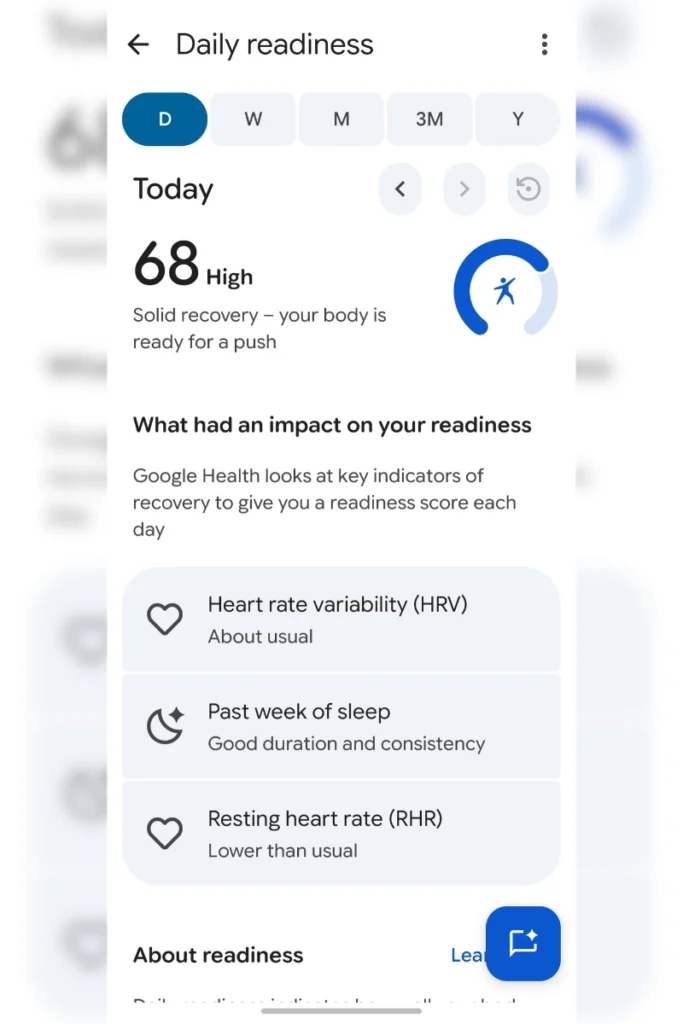
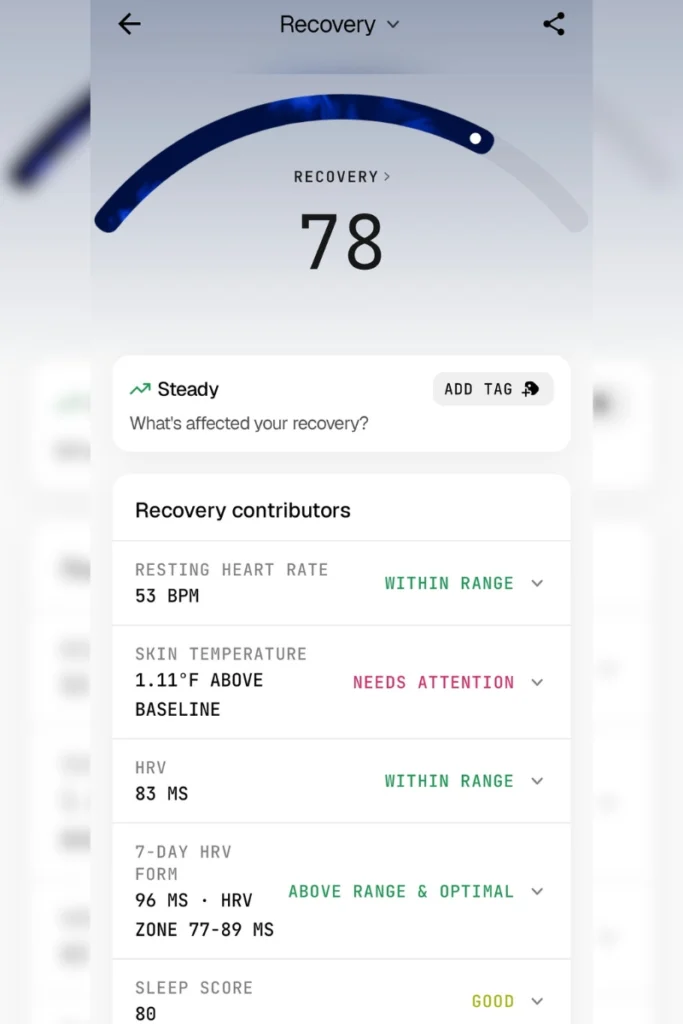
Recovery Tracking and Readiness Insights#
© WearableXP
© WearableXP
The Fitbit Air comes with a Daily Readiness Score that measures the level of your fatigue, whereas the Ultrahuman Air has a dynamic Recovery Score which gets updated right after you wake up. While the Fitbit Air has an algorithm which determines whether you need to rest or engage in exercise depending on your previous activity, the Ultrahuman Air features comprehensive analytics that combine your heart rate variability, resting heart rate and skin temperature and provide you with precise metabolic readiness information. Thus, while the readiness data of the Fitbit Air is restricted by a premium plan subscription, the recovery insights of the Ultrahuman Air are available for free.
Stress Monitoring and General Wellness#
The Fitbit Air offers continuous breathing rate monitoring in sleep mode in case you need to be aware of possible stresses or diseases. On the contrary, the Ultrahuman Air has the ability to track your advanced stress markers by analyzing the way your body’s autonomous nervous system manages its equilibrium. While the Fitbit Air can monitor the baseline skin temperature changes that show possible stress of your organism, the Ultrahuman Air can offer you tips on when to drink coffee or when to enjoy the sun in order to reduce your stress hormones. Additionally, the Fitbit Air offers you an easy to use wellness dashboard while the Ultrahuman Air provides you with deep scientific graphs.
Health History and Long-Term Trends#
The Fitbit Air offers built-in ability to store 30 days of aggregated data within the gadget without the need for a sync process, the Ultrahuman Air features constant cloud synchronization capabilities whenever connected to your phone. The Fitbit Air comes equipped with a lifetime data viewing experience that is embedded into the huge Google Health platform, while the Ultrahuman Air offers you an independent application which will store your whole lifetime health history data without any data walls. Consequently, the Fitbit Air offers easy integration for those using Google, whereas the Ultrahuman Air offers you a dedicated history of your own.
Fitness Tracking#
When it comes to physical activities, the comparison between Fitbit Air vs Ultrahuman Air presents two entirely distinct approaches to exercise. While Fitbit Air is equipped with a conventional activity monitor approach, Ultrahuman Air is equipped with an energy management approach.
Daily Activity Tracking and Step Counting #
The Fitbit Air comes equipped with a basic 3-axis accelerometer and gyroscope that helps you record your daily steps accurately with the help of your wrist, but the Ultrahuman Air comes equipped with an extremely sensitive 6-axis IMU sensor which is placed on your finger. While the Fitbit Air comes with good step tracking software that successfully eliminates all false arm movements, the Ultrahuman Air has a small flaw where it tends to mistake the small movements of typing on the laptop keyboard with real walking. Hence, the Fitbit Air is much more accurate for people who are office goers and type all day as compared to the Ultrahuman Air, since it tends to over report your daily step counts if you type heavily throughout your workday.
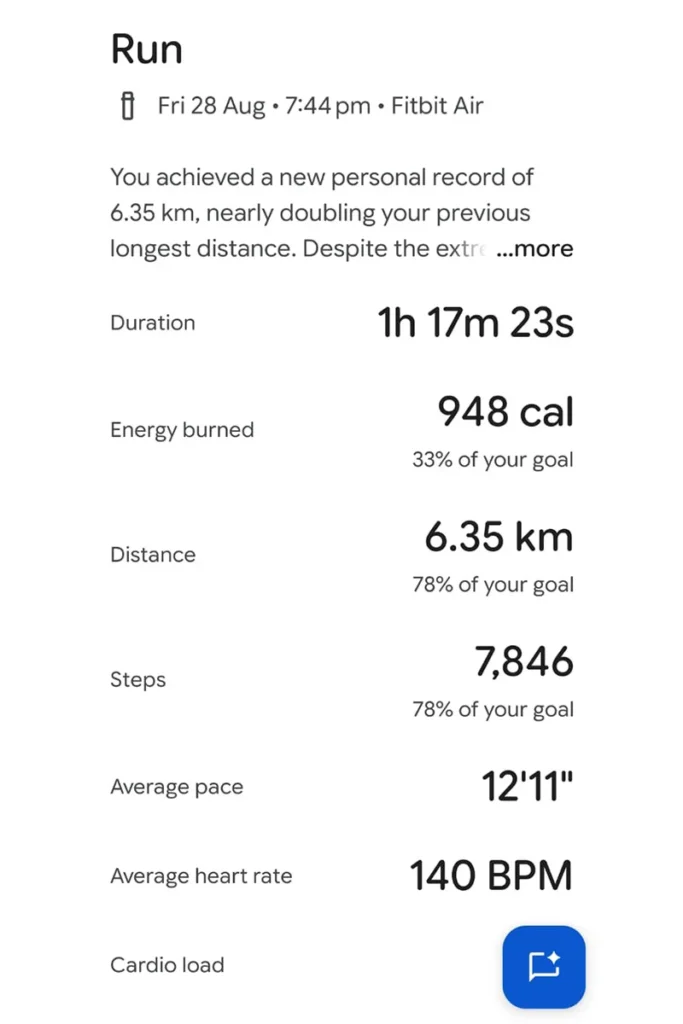
Workout Tracking and Exercise Recognition #
© WearableXP
© WearableXP
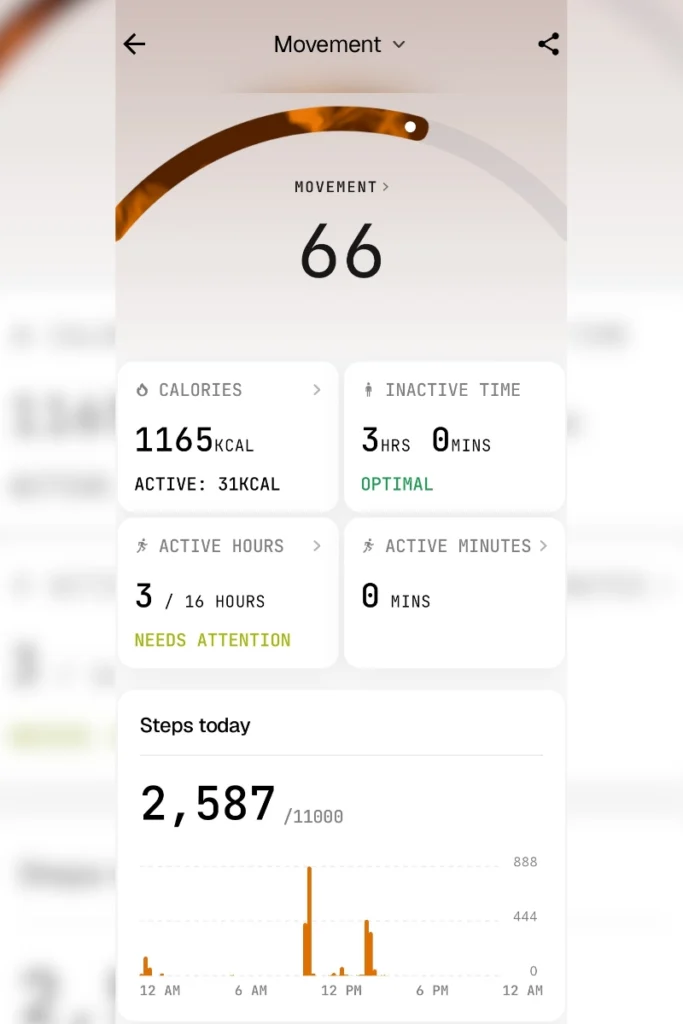
The Fitbit Air features automatic SmartTrack workout recognition functionality with continuous motion polling technology, meaning you never need to worry about starting a workout, as opposed to the Ultrahuman Air, which features a manual workout trigger technology requiring you to log your workouts in the phone app. Nonetheless, there is a notable technological drawback of the Fitbit Air in the form of delayed workout recognition, causing the device not to record the first 5-10 minutes of brisk walking until the algorithm kicks in. In contrast, the Ultrahuman Air features instant and precise tracking from the very moment of activation of your physical activity. Additionally, the Fitbit Air boasts more software recognition of various spontaneous sports activities, whereas the Ultrahuman Air focuses solely on cardiovascular motions detected by its sensors.
Calorie Tracking and Energy Expenditure #
Fitbit Air comes with the conventional basal metabolic rate (BMR) algorithm that provides an estimate of the daily active calories burnt depending on your heart rate profile, whereas Ultrahuman Air comes with the advanced energy expenditure algorithm that incorporates your current recovery state in the analysis process. The Fitbit Air provides you with the simple goal of burning daily calories on your dashboard, whereas Ultrahuman Air comes with the advanced biofeedback that scientifically determines whether you are using up more energy than necessary during days when you have low recovery depending on your body temperature changes. Hence, the Fitbit Air comes with the conventional approach to burning calories, whereas the Ultrahuman Air comes with a holistic science-backed approach to energy balance.
Workout Intensity and Heart Rate Zones #
© WearableXP
© WearableXP
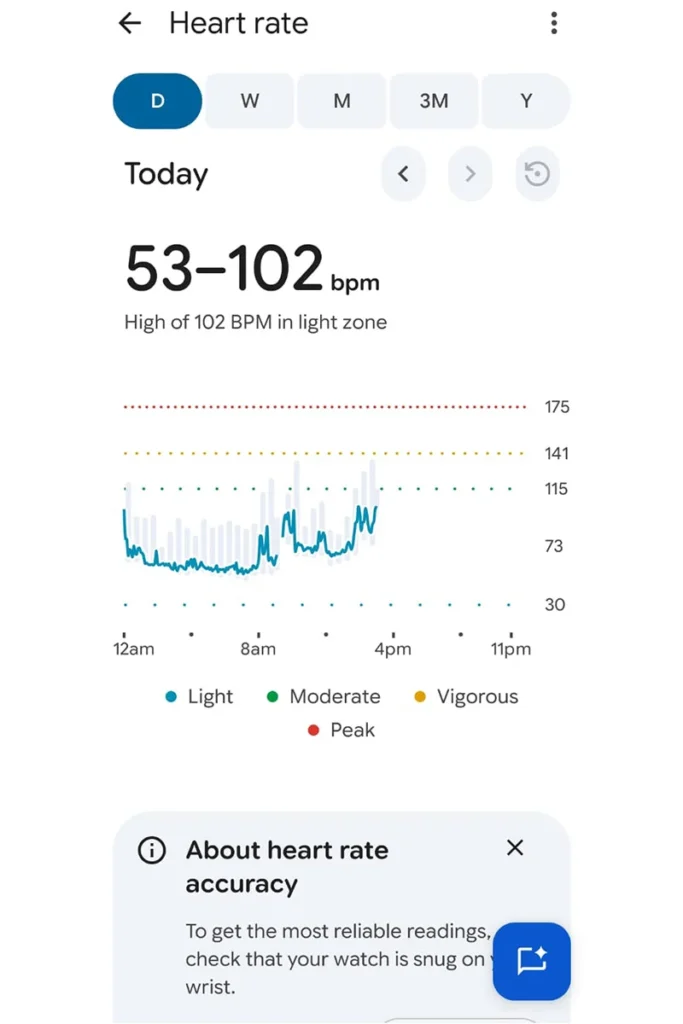
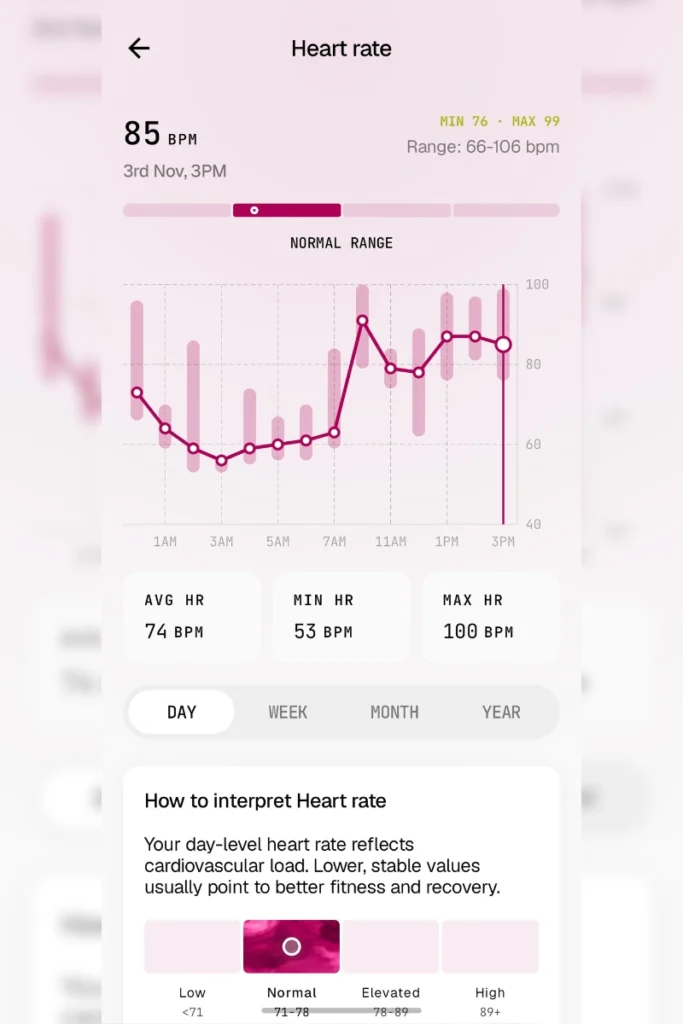
Fitbit Air is equipped with the Active Zone Minutes feature that calculates fat-burn and heart rate zones based on the individual’s resting heart rate, while Ultrahuman Air is equipped with a cardiovascular load index that analyzes how hard the heart works based on pulse waveform. The Fitbit Air comes with a generic system that aims to encourage the user to reach the WHO recommendation of 150 minutes of moderate physical activity per week, while the Ultrahuman Air features a smart system that automatically adjusts the intensity goals for the next day depending on the quality of the previous night’s sleep. Hence, the Fitbit Air features a static weekly goal setting program that is based on heart rate zones, while the Ultrahuman Air comes with an extremely adaptive intensity tracker based on physiological readiness.
Fitness Goals and Activity Insights #
While the Fitbit Air comes with software animations and digital badges on achieving the step target on the app, the Ultrahuman Air comes with a metric called the Movement Index that quantifies the efficiency of distribution of your activities during the day. The Fitbit Air offers a gamified software design with the use of social challenges to encourage you to keep moving, but the Ultrahuman Air offers a more scientific analysis where you are supposed to move at particular moments to regulate the spikes of your glucose and metabolism. In addition, the Fitbit Air offers an external motivational system, whereas the Ultrahuman Air comes with solitary, self-improvement insights driven by raw physiological data.
GPS, Connected Workouts and Fitness App Integration #
The Fitbit Air is equipped with a connected GPS feature using Bluetooth 5.0, so it takes advantage of the smartphone’s GPS location information to properly plot your outdoor runs the Ultrahuman Air is also equipped with the exact same dependence on your smartphone’s BLE technology for geographical data. The Fitbit Air features software integration specially designed to function in the closed ecosystem of Google Health the Ultrahuman Air features open API integrations that will seamlessly transfer technical fitness data between Apple Health, Google Fit, Strava and any other third-party ecosystem. Therefore, the Fitbit Air is characterized by its more closed software ecosystem, while the Ultrahuman Air features extensive compatibility with other platforms.
Fitbit Air vs Ultrahuman Air Accuracy and Data Insights#
The accuracy of the between Fitbit Air and Ultrahuman Air has a lot to do with how the sensors are placed. This is because the sensors on Fitbit Air include red and infrared sensors, which are placed on the relatively thick skin of the wrist in order to detect SpO2, whereas the Ultrahuman Air includes sensors that are placed on the very thin skin of the finger. The accuracy of the accelerometer data on the Fitbit Air is highly reliable when swinging the arms during runs, while the heart rate data on the Ultrahuman Air is highly accurate due to the closeness of blood vessels under the finger skin.
Also, the Fitbit Air has in-built algorithmic smoothing, which ensures that the data is presented in an elegant manner on the app, but the Ultrahuman Air has raw data points, which provide you with all the minute fluctuations of your body temperature. In terms of accuracy, the Fitbit Air is quite accurate in its readings considering that it is a fitness tracker, but the Ultrahuman Air is highly accurate in providing the research-grade measurements of temperature and HRV.
App Experience: Fitbit Ecosystem vs Ultrahuman Platform#
Because both Fitbit Air and Ultrahuman Ring AIR lack display screens, their mobile applications become a very integral part of the user experience. While both gadgets are collecting health and fitness data behind the scenes, their approaches to displaying this information differ. The Fitbit Air uses Google’s Health Ecosystem, while Ultrahuman’s offering is more oriented towards recovery and performance.
Google Health App Experience with Fitbit Air#
© WearableXP
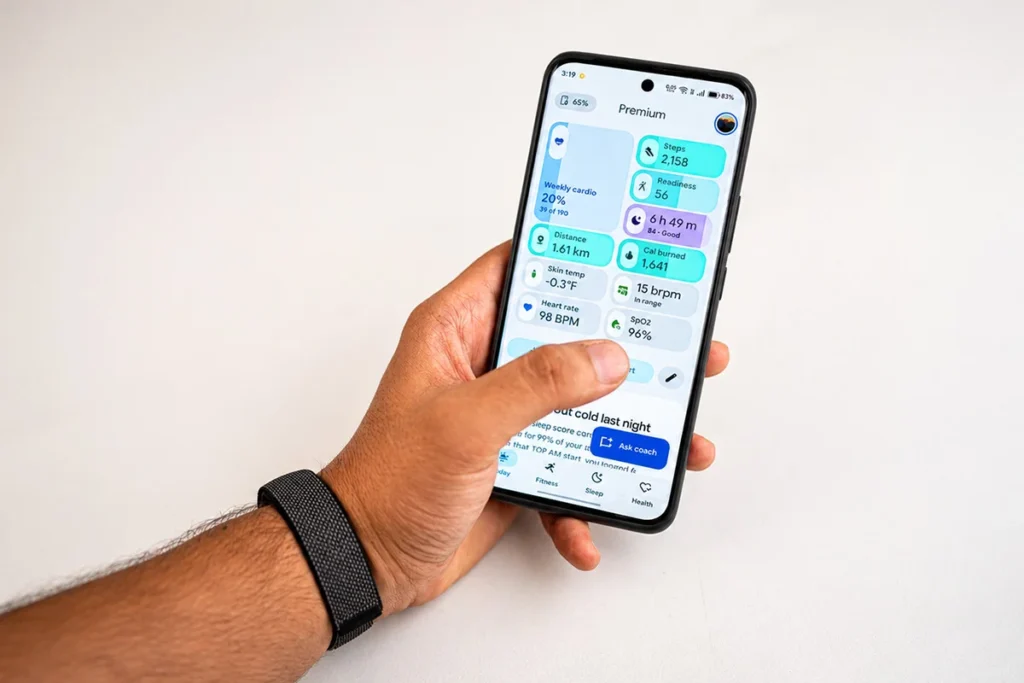
Fitbit Air synchronizes data with Google Health app, in which one can view data about one’s health and physical fitness status on daily basis. When Fitbit Air is paired with a smartphone, the screenless band starts syncing data about steps, heart rate, sleep, calories and other measurements about health.
Google Health app consists of various sections, including Today, Fitness, Sleep and Health. This allows for easy monitoring of activities throughout the day, analysis of sleep patterns and health measurements on a day to day basis.
Google Health Coach, which is driven by Gemini technology, is another useful feature that allows to receive personalized fitness and health plans, as well as advice concerning sleep. Nevertheless, to use Google Health Coach’s services, one should have a subscription in Google Health Premium.
Ultrahuman App Experience with Ring AIR#

Image Courtesy: Digital Trends
The Ultrahuman Ring AIR can connect to the Ultrahuman app that concentrates on sleep, recovery, movement and metabolism. Once the ring gets paired it automatically syncs and collect information which gets displayed in the application.
The user will get several types of measures from the app: Sleep Index, Recovery Score and Movement Index, which summarize the information about heartbeat, HRV, skin temperature and daily activities to get an understanding of bodily reactions to routine.
There is also another cool feature called PowerPlugs, it provides additional information about some aspects of one’s life and body condition. For instance, there is the Caffeine Window feature that gives information on how the time for taking coffee affects one’s sleep. There are also other PowerPlugs providing information on other daily aspects of one’s life and recovery. Some specialized PowerPlugs will cost additionally.
Battery Life and Charging Compared#
© WearableXP

© Ultrahuman
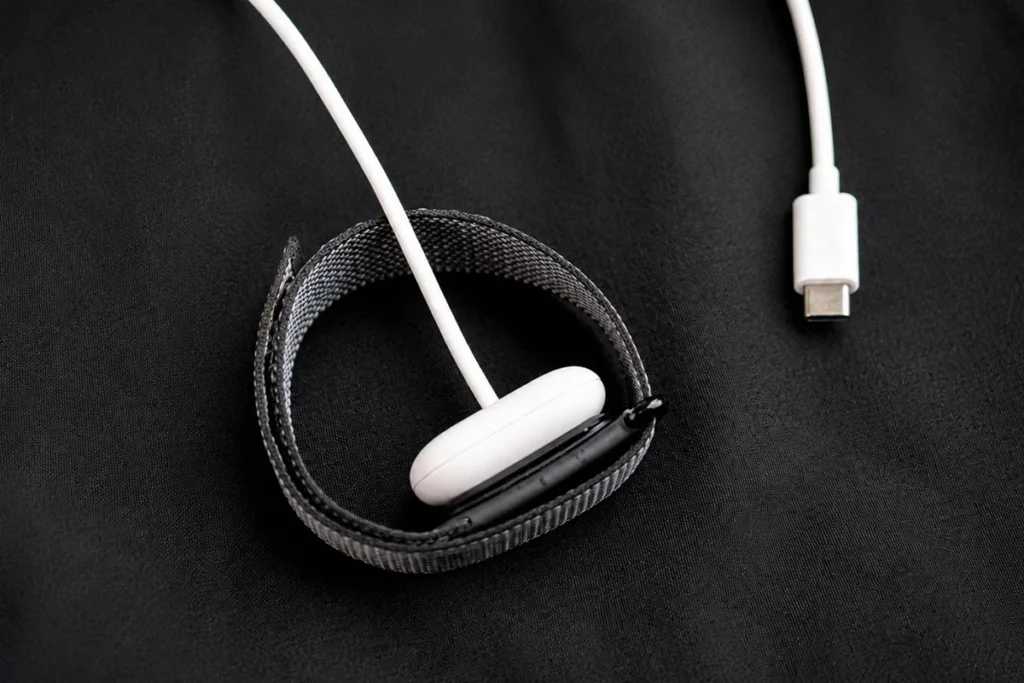
This battery anxiety is for real and when it comes to the Fitbit Air and the Ultrahuman Air comparison, the devices are better than the usual smartwatch devices in terms of battery life. The Fitbit Air device has a battery capacity of up to 7 days on one charge, while the Ultrahuman Air device has a battery life of 4 to 6 days on one charge. The Fitbit Air device has a special magnetic cable for charging purposes that makes charging very easy, while the Ultrahuman Air has a charging stand.
Additionally, the Fitbit Air offers amazing fast charging, which allows a user to enjoy a whole day with the watch by merely charging it for 5 minutes, on the other hand, the Ultrahuman Air takes the usual charge time, which involves plugging it in on the dock for up to 90 minutes to be fully charged. This is because the Fitbit Air is low-power since it only has to synchronize with the wrist, however, the Ultrahuman Air comes with a compact battery within the watch’s tiny 2.4 grams body. In conclusion, while the Fitbit Air has amazing fast charging, the Ultrahuman Air has an amazing battery.
Fitbit Air vs Ultrahuman Air: Which One Should You Choose?#
You should choose Fitbit Air if:#
- You are looking for an inexpensive screenless fitness band.
- You like wearing a light wristband rather than a smart ring.
- Health and activities tracking matter to you.
- You require automatic workout detection.
- You have a Google ecosystem and would like AI coaching.
- You need longer battery life.
You should choose Ultrahuman Air if:#
- You like to wear a smart ring over a wristband.
- You value sleep and recovery tracking.
- You are keen on knowing your HRV and skin temperature.
- You like tracking your stress and metabolism.
- You are looking for a no subscription needed way of accessing tracking data.
- You would like a titanium ring.
Final Verdict#
In case I had to choose between them, I would opt for the Fitbit Air since it provides everything I might need from an average screenless fitness tracker, including its lightness, prolonged battery life, auto-tracking capability and compatibility with Google Health.
I appreciate the simplicity of this product and the availability of health and fitness information in one place. In my opinion, such a device, which does all the work silently and without constant interaction with its user, deserves to be chosen.
FAQ#
01Does the Fitbit Air need a paid subscription?
The Fitbit Air works perfectly fine for free, but the Fitbit Air requires an optional premium subscription if you want deeper health insights.
02Can I swim with the Fitbit Air?
Yes, the Fitbit Air is fully water-resistant up to 50 meters, making the Fitbit Air totally safe for the pool or your morning shower.
03How long does the Fitbit Air battery last?
The Fitbit Air easily lasts up to 7 days and furthermore, the Fitbit Air can get a full day of power from just a quick 5-minute charge.
 RR
Written by
Reetain, with a focus on emerging trends and immersive tech, covers smart wearables and evolving device categories. He explores how sensors, AI, and connectivity come together in modern wearables, helping readers understand how these technologies shape everyday digital experiences and the future of personal computing.
More from Reetain 65 storiesKeep readingmore from Screenless Bands
All storiesScreenless BandsFitbit Air vs Luna Band: Which Screenless Wearable Is Better for Health Tracking? NewsGoogle Confirms Fitbit Air Will Get Sleep Breathing Quality Feature Soon
 Smart RingsBest Hormone Tracking Wearables: Smart Rings and Devices for Cycle, Fertility and Health Insights
What’s inside
- 01Fitbit Air vs Ultrahuman Air: What Is the Difference?1 min
- 02Fitbit Air vs Ultrahuman Air Comparison Table1 min
- 03Design and Comfort: Two Different Approaches to Screenless Wearables2 min
- 04Health Tracking2 min
- 05Fitness Tracking4 min
- 06Fitbit Air vs Ultrahuman Air Accuracy and Data Insights1 min
- 07App Experience: Fitbit Ecosystem vs Ultrahuman Platform2 min
- 08Battery Life and Charging Compared1 min
- 09Fitbit Air vs Ultrahuman Air: Which One Should You Choose?1 min
- 10Final Verdict1 min
- 11FAQ1 min