

I lost count of the number of wearable devices that have passed through my wrists throughout the years. And the one thing that keeps bothering me every single time isn’t battery life or accuracy, it’s the subscription. When you buy a $300 product and find out that the “premium features” are hidden somewhere behind another subscription fee, you definitely feel cheated.
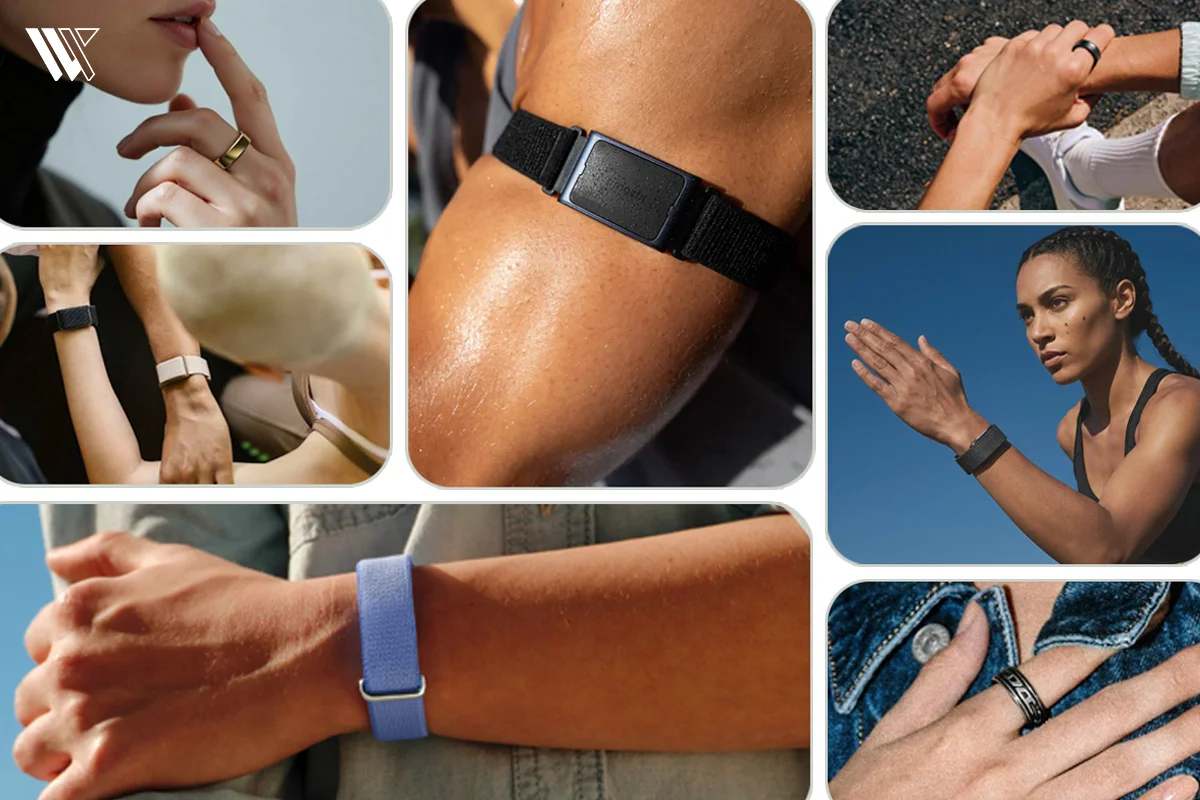
I get the reason why the companies do it because using the AI coaching and prediction features costs a lot. But once I’ve paid a hefty amount in advance, the last thing that I need is to get a second monthly invoice. This is precisely the reason why many people start looking for the best screenless fitness tracker without subscription.
Decode the Decor
The Smart Jewelry Revolution — a practical guide to wearable tech.
This guide is for people who, like me, are tired of subscriptions in the wearable industry. I have chosen screenless fitness trackers whose premium features are not locked away somewhere and there is no screen on the devices because if I needed notifications all day long, I would go with Apple Watch.
What Is a Screenless Fitness Tracker (and Why Choose One?)
A screenless tracker has no screens or displays, only sensors gathering data and transmitting it back to the app on your phone. You will not be tapping anything or swiping through menus on your wrist, all you have to do is wear the device and check your phone if you want your stats.
The reason why these companies are so heavily promoting subscriptions is pretty clear. While the device itself is only sold once, the app generating money on an ongoing basis is a source of the recurring revenue stream. Many of these screenless bands follow such a model where users are not actually buying a device, but rather getting a rental for it. Some of the smart rings work in a similar manner as well.
This is not necessarily a bad thing either. If you require intensive AI coaching, health scores and constant feature updates, then a subscription service is definitely going to provide better value for money in the long run. However, many people would like their heart rate, sleep and recovery stats without paying a yearly fee forever. This is where the screen-less fitness trackers without subscription step in. You give up on all the fancy predictive functions, but retain all of the basic information, save on battery life since there is no need to power a display anymore.
Comparison: Top Screenless Fitness Trackers Without Subscription
| Tracker | Price | Battery Life | Health Tracking | Subscription | Best For |
|---|---|---|---|---|---|
| Fitbit Air | $99.99 | Up to 7 days | HR, sleep, readiness, workouts | No, core features free | Minimalist everyday tracker |
| Hume Band 2.0 | $356 | Up to 14 days | HR, HRV, SpO2, blood pressure trends | No | Sleep and recovery focus |
| Polar Loop (Gen 2) | $199.99 | Up to 8 days | HR (with chest strap), sleep, recovery | No | Existing Polar ecosystem users |
| Amazfit Helio Strap | $99.99 | Up to 10 days | HR, workouts, sleep, BioCharge energy | No | Sports and fusion tracking |
| RingConn Gen 3 | $349 | Up to 14 days | HR, HRV, SpO2, vascular trends, sleep apnea | No | Sleep apnea screening, longest ring battery |
| Ultrahuman Ring Air | $349 | Up to 6 days | Sleep, HRV, recovery, circadian rhythm | No | Sleep focused minimalists |
| Samsung Galaxy Ring | $399.99 | Up to 7 days | Sleep, activity, skin temperature | No | Samsung and Android users |
The Best Screenless Fitness Bands
Fitbit Air
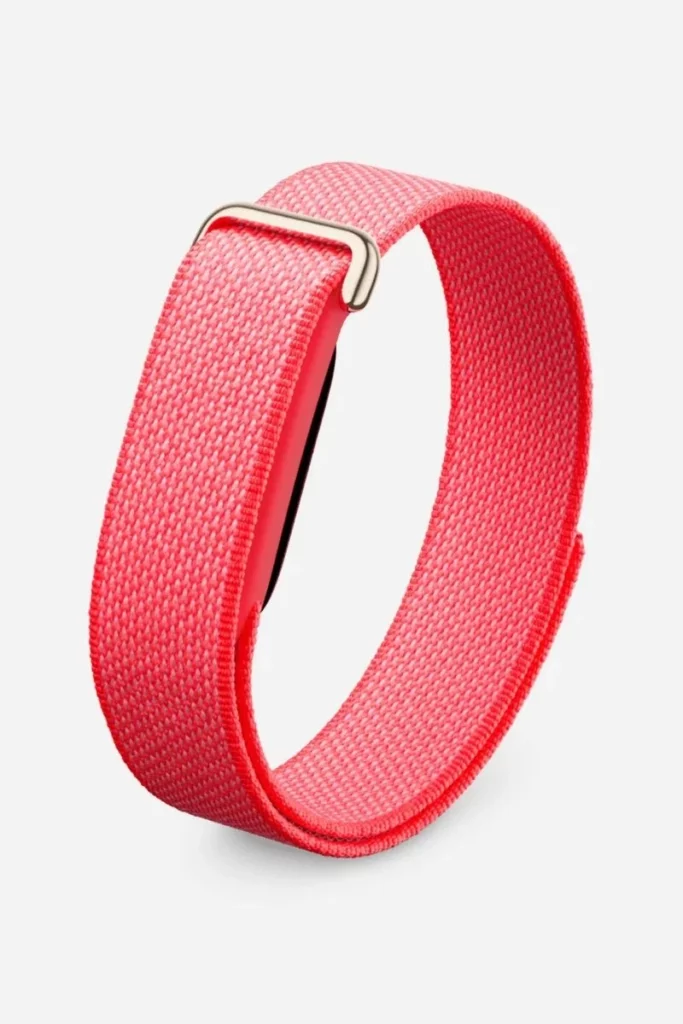
Fitbit Air is the newest wearable on the block and a pretty impressive one. The price starts at $99.99, which already makes it significantly cheaper than its competitors. It weighs about 12 grams along with the strap, which means that it’s very comfortable to wear all day long, even at night. The battery works from 5 to 7 days depending on how much you use it and it charges quickly, going from a 0% to 100% in 90 minutes.
This tracker doesn’t connect to Apple Health but goes through Google Health, which is worth considering if you’re an iPhone owner. The app itself is clean and provides sleep stages analysis, step count, heart rate and readiness score. All of these features come for free, there’s no need to pay for the app. Additionally, you can get an AI coach in Google Health Premium for $9.99 per month to get deeper insights and workout videos, but it’s completely optional.
Pros:
- Budget friendly
- All key metrics work completely for free without any subscription
- Comfortable enough to be worn during sleep
- Quick charging
Cons:
- Shorter battery life compared to some screenless alternatives
- Not able to sync with Apple Health
- AI coach upsell might seem constant although it’s possible to skip it
Hume Band 2.0
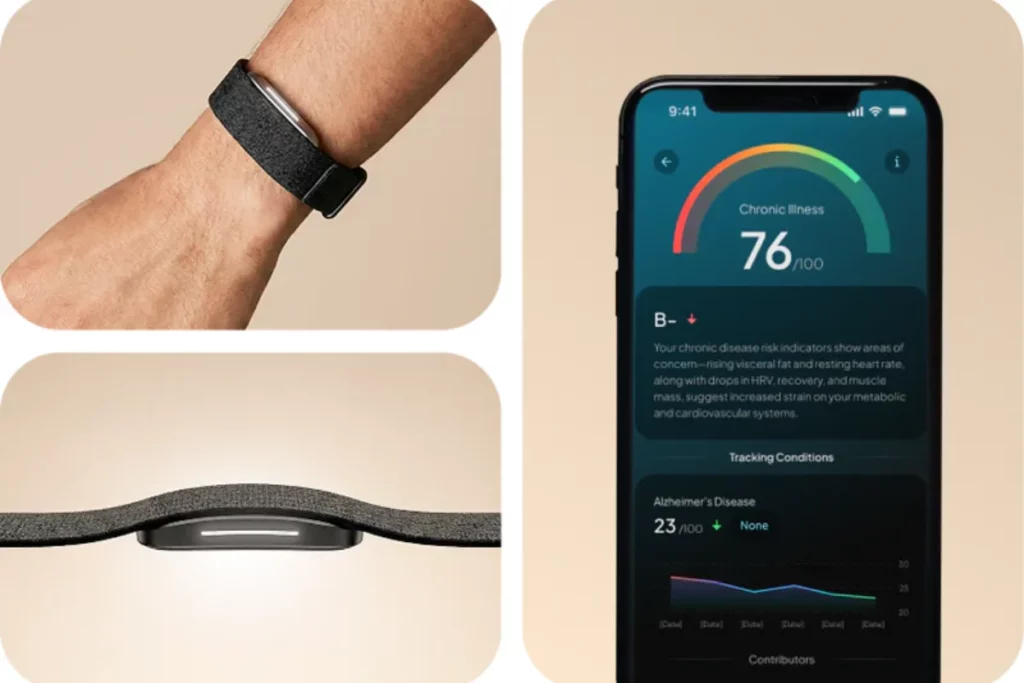
For those who care primarily about sleep and recovery, Hume Band 2.0 may be the right fit. It costs $356 and works with the help of five LEDs and four photodiodes, which measure heart rate, HRV, SpO2 and a blood pressure trend feature, which is actually an advanced feature for a band in this price category.
As far as the battery life is concerned, this band outperforms all other screenless fitness trackers without subscription on this list with up to 14 days. The device uses UltraLux materials which are comfortable, adjustable and water resistant. The app offers an average user interface with a good emphasis on well-being data analysis, rather than performance analytics.
Pros:
- Best battery life with up to 14 days
- Blood pressure trend tracking is rare at this price point
- Comfortable, breathable strap
- No subscription for core features
Cons:
- Step tracking accuracy is noticeably off
- Not built for performance or workout focused users
- Available in only one color
Amazfit Helio Strap
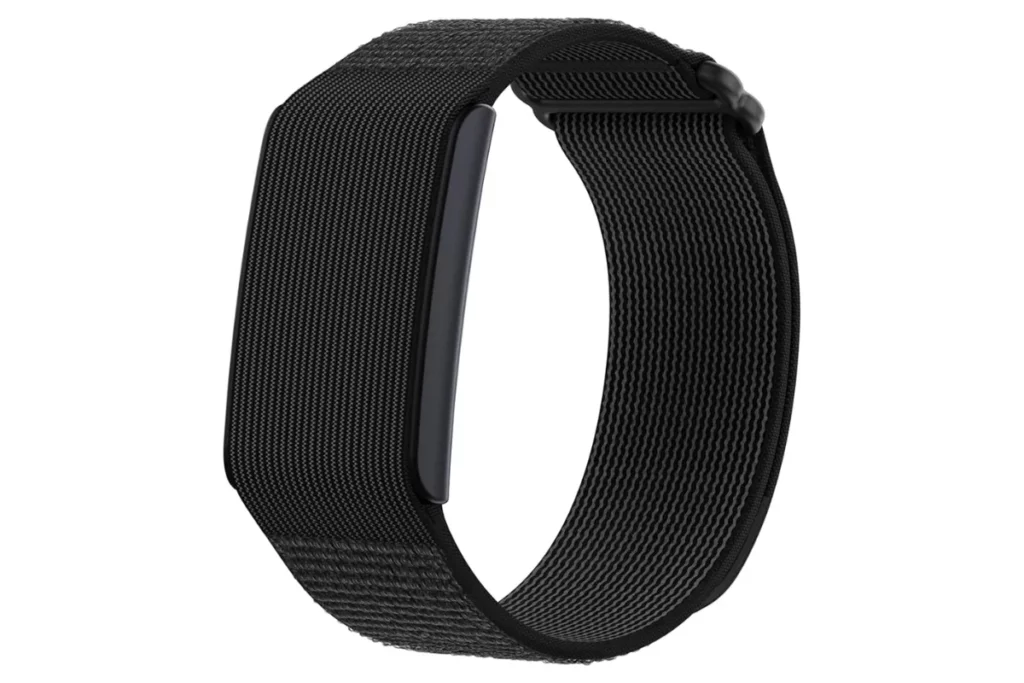
The Helio Strap would be my recommendation for any athlete whose previous experiences with subscription prices from other brands made them shy away. The Helio Strap sells at a price of $99.99 without a subscription. The strap can either be worn on the wrist or be moved up to the upper arm strap in case of increased accuracy. A new version, the Helio Strap Pro, has also just entered the market.
The battery lasts for about 10 days and weighs 20 grams which makes it very lightweight. What surprised me was the accuracy with which the arm-worn sensor can track heart rate, is very close to a Garmin chest strap. All the data is tracked by the Zepp app that calculates VO2 max, recovery time and a BioCharge energy level just like the Garmin Body Battery. The app interface is a bit messy and not very intuitive. Moreover, the automatic workout detection isn’t fully reliable yet. But for a one time $99.99 price tag with this much data depth, it’s hard to complain too much.
Pros:
- Long battery life around 10 days
- Arm strap option gives near chest strap level HR accuracy
- One time purchase, no subscription
- Lightweight and comfortable for daily wear
Cons:
- Zepp app can feel cluttered compared to competitors
- Automatic workout detection is not consistent
- Core wrist sensor alone isn’t as accurate as the arm strap
Polar Loop (Gen 2)

The Polar Loop Gen 2 is priced at $199.99 and is a screenless fitness tracker designed explicitly for people looking for a recovery-oriented experience without having to pay a subscription. The Polar Loop Gen 2 is built using knitted fabric which makes it one of the most comfortable bands I’ve ever worn. It has a battery life of up to 8 days but it may only manage 3 days if you use Smart Notifications.
It relies heavily on Polar’s Nightly Recharge and SleepWise features to analyze information about sleep and recovery. The problem is its app, Polar Flow which simply looks outdated compared to Oura or Hume app. Besides, there is no bicep band attachment either.
Pros:
- No subscription, one time $199.99 cost
- Very comfortable knitted fabric design
- Reliable sleep and recovery data
Cons:
- Polar Flow app feels outdated
- Heart rate accuracy drops during intense workouts
- No bicep band option to improve exercise tracking
The Best Screenless Fitness Trackers- Smart Rings
RingConn Gen 3
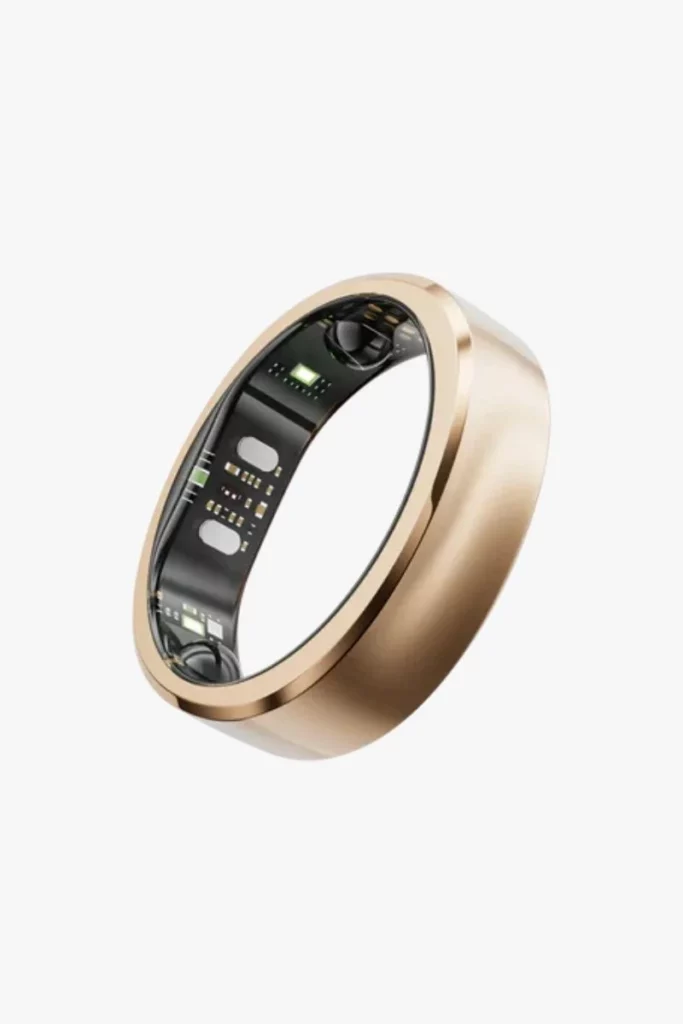
RingConn Gen 3 is $349 and boasts the best battery life of up to 14 days, although real-world experience seems to be between 10 to 13 days on average, depending on whether or not you have vibration alerts turned on. It also supports haptics, so you will receive notifications about a high heart rate or a low battery level, which may sound minor but is really helpful since other smart rings have no such warnings and die silently.
Its key selling point is its capability of conducting a multi-night sleep apnea test to identify any breathing anomalies. It’s not intended for diagnostics but a good early warning sign. In addition, it monitors vascular health trends, HR, HRV and SpO2 via the RingConn app without any subscriptions whatsoever. The app itself is user-friendly and does not hide anything behind paid features. The blood pressure trend feature requires you to measure your BP manually using a cuff to calibrate.
Pros:
- Long battery life
- Genuinely useful sleep apnea screening
- No subscription
- Haptic alerts for low battery and heart rate spikes
Cons:
- Blood pressure calibration requires manual measurement
- Slightly bulkier
- Vascular trend data needs time to become meaningful
Ultrahuman Ring Air

If Oura’s subscription is what’s stopping you, Ultrahuman Ring Air is the obvious alternative. This ring costs $349, is made of titanium and weighs just 2.4 grams with a strong focus on sleeping thanks to the Sleep Index that utilizes various factors.
The battery life lasts about 6 days. In addition, it monitors the recovery process, heart rate variability, resting heart rate, body temperature, and assists in maintaining your circadian rhythm, vitamin D and caffeine window. The app itself is easy to use, though do not expect it to perform well during workouts since, like many other rings it is prone to scratches and not very comfortable while holding dumbbells.
Although the Ring AIR is not available in the US, the Ring Pro is the newer version which will be available.
Pros:
- Ultra-lightweight
- No subscription
- Sleep and circadian rhythm tracking is great
- Easy-to-navigate app
Cons:
- Not reliable for tracking active workouts
- Prone to scratches with regular wear
- Not available in the US
Samsung Galaxy Ring

Samsung Galaxy Ring costs $399.99 and it is the most expensive option on our list. However, it operates completely subscription-free. It monitors sleep time, sleep stages and skin temperature and recognizes walking and running automatically, providing detailed statistics for both activities. It has a good battery life of 6 – 7 days at least.
However, there is a big drawback for those who use iPhones, the ring is not compatible with iOS. It has no problem working with the majority of Android phones but only a Samsung phone can activate Galaxy AI functions and double pinch gestures control. For Samsung users, the choice is obvious and this product will perfectly fit in the ecosystem.
Pros:
- No subscription needed for any feature
- Good battery life of 6 plus days
- Easy integration with Samsung Health
Cons:
- Cannot be used with iPhones
- Needs a Samsung phone for Galaxy AI and gestures
Who Should and Shouldn’t Buy Screenless Fitness Trackers Without Subscription
Buy If:
- You do not want to subscribe to a monthly plan after purchasing the device.
- You prefer battery life that lasts a week or longer.
- You value simplicity and are not bothered by the constant need to look at the screen.
- You are okay with looking at your results through an app rather than on your wrist.
Avoid If:
- You require AI-based coaching, predictions and insights, which usually have a subscription fee.
- You use the notifications function on your smartwatch regularly, including for receiving phone calls and messages.
- You prefer seeing your results right on the watch itself and not opening your phone.
Wrap Up
What’s great is that you don’t have to decide whether to pay the monthly fee or not to get any useful information about your health. The best screenless fitness tracker without subscription is the one that will be perfect for your lifestyle regardless of the metrics you are interested in: sleep, recovery, heart rate or just activity without paying any additional amount.
Since most brands are creating simpler wearables nowadays, finding the best screenless fitness tracker without subscription has never been so easy. And for those who value battery life, minimalism and no need to pay additional fees, this category is only going to get more compelling over the next few years.
FAQs
Decode the Decor
The Smart Jewelry Revolution
A practical guide to wearable tech's future — delivered straight to your inbox.
Author
