

If you have ever worn a WHOOP strap, you know the drill. You proudly display that screenless fabric band on your wrist and when people ask, “What does that watch do?” you reply, “Oh, it doesn’t have a screen. It just tracks my health metrics and the hardware is completely free but I pay a subscription every year.” Well, if you live in Australia or Spain, you might want to practice a new pitch.

The fitness tracker giant is shaking things up and nobody is thrilled. For years, WHOOP stood out in a crowded market by bundling its tracking device into its monthly or yearly plan. You did not buy the tracker, you bought access to your data. However, a major WHOOP pricing update has quietly rolled out and it flips this entire ownership model on its head.
Decode the Decor
The Smart Jewelry Revolution — a practical guide to wearable tech.
Let’s dive into exactly what is changing, how much it will cost you and why the fitness community on Reddit is currently losing its collective mind.
What Changed in WHOOP Pricing?
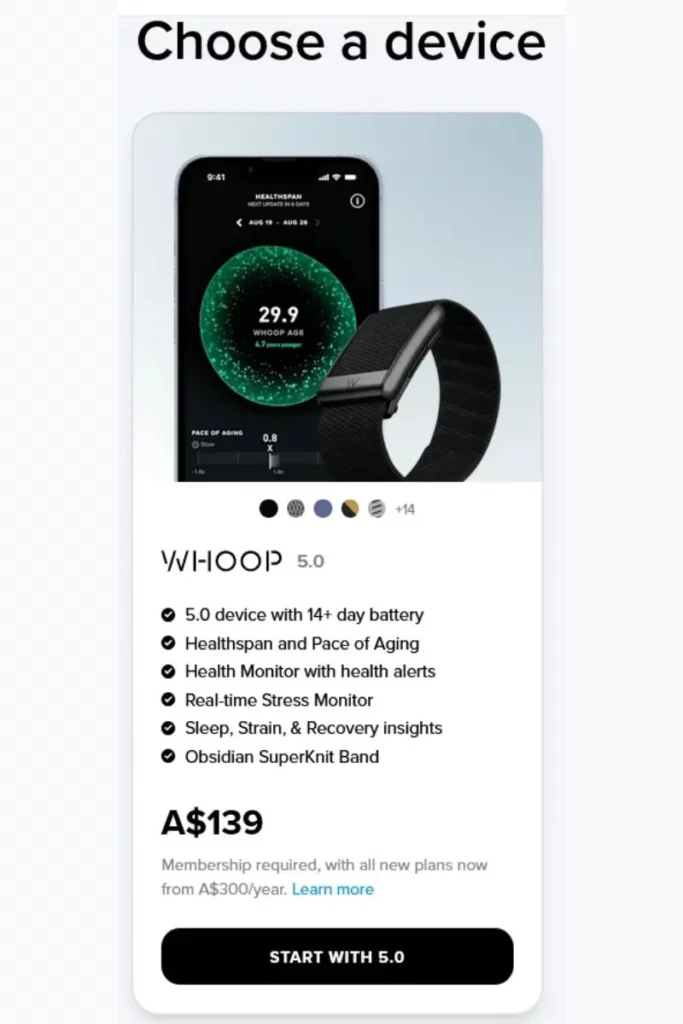
For the longest time, WHOOP’s entire brand identity revolved around a subscription-first model. You paid an annual or monthly fee and the company threw in the screenless tracking strap for free. However, a major WHOOP pricing update has disrupted this familiar setup. In specific regions, the device is now an entirely separate upfront purchase.
According to WHOOP customer support, this new structure is part of an ongoing, limited-time trial in select markets. WHOOP is testing this format to see how new members respond to separating the physical hardware from the digital service.
Currently, this WHOOP pricing is live for new members accessing the localized storefronts in Australia and Spain. For now, core markets like the United States remain unaffected, with standard bundled pricing still in effect. However, this regional experiment signals a potential long-term pivot for the brand’s global sales strategy.
WHOOP’s New Pricing Structure Explained
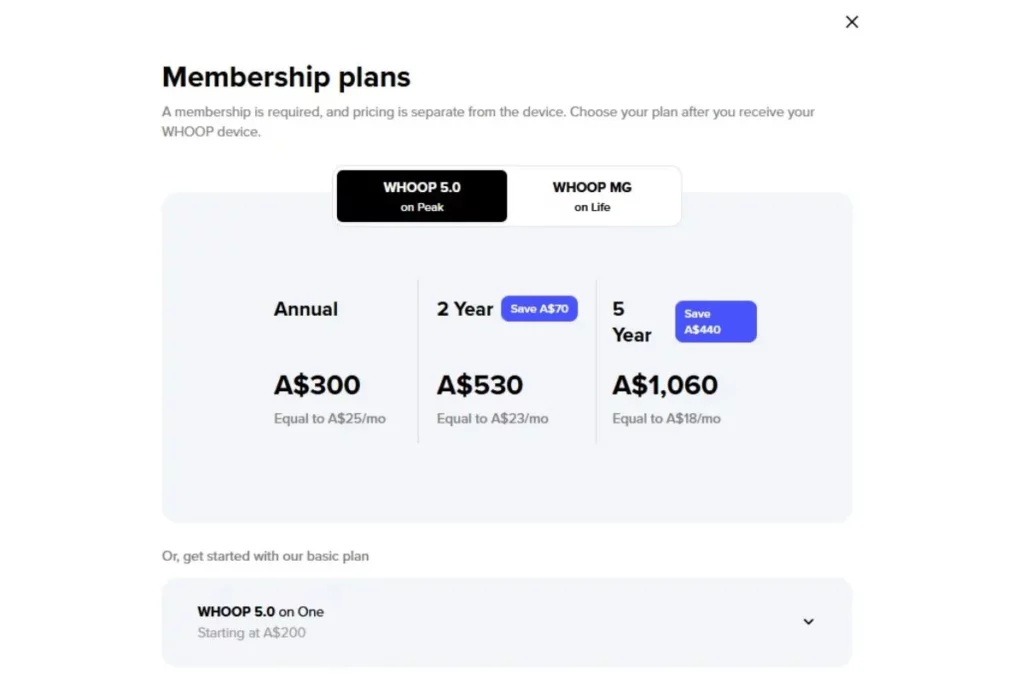
To truly understand how this impacts your wallet, we have to look closely at the math. The core change is simple: the base entry cost has gone up, while the ongoing annual subscription price has been lowered for those who buy the hardware.
| Region | Device/Tier | Device Upfront Cost | Annual Membership Cost | Total Year 1 Cost |
|---|---|---|---|---|
| Australia | WHOOP 5.0 (Standard) | AUD 99 – AUD 139 | AUD 300 / year | AUD 399 – AUD 439 |
| Australia | WHOOP MG (Premium ECG) | AUD 249 | AUD 300 / year | AUD 549 |
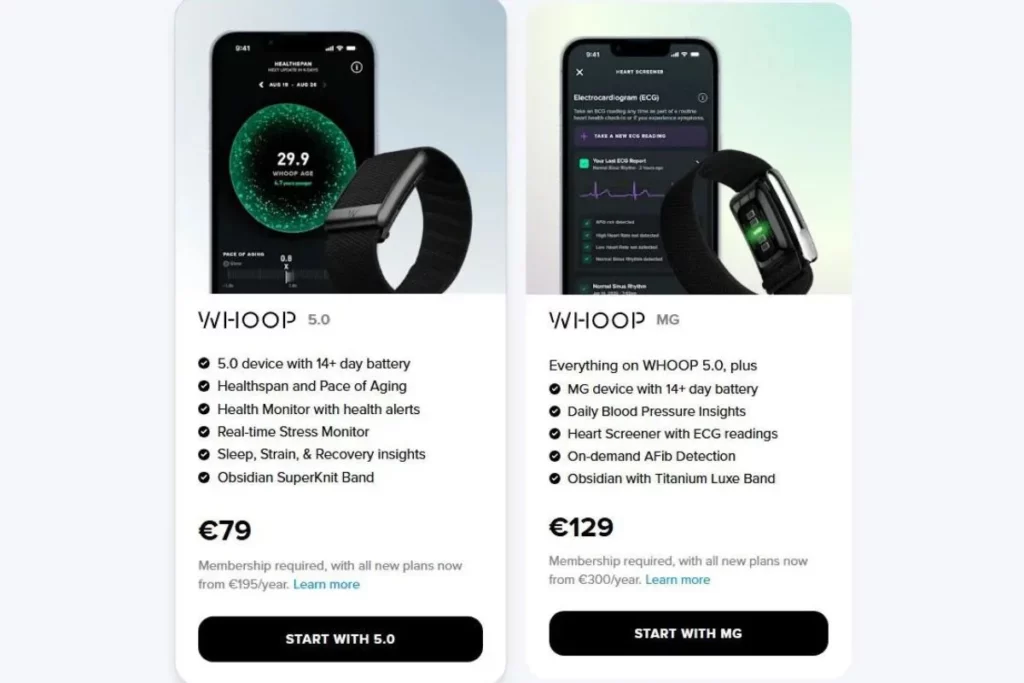
| Spain | WHOOP 5.0 (Standard) | €69 | €199 / year | €268 |
| Spain | WHOOP MG (Premium ECG) | €149 | €199 / year | €348 |
In Australia, the pricing structure appears to be undergoing live A/B testing. Reported Australian pricing examples from Reddit discussions highlight some highly inconsistent numbers. Multiple users noted that the standard WHOOP 5.0 hardware initially showed an upfront fee of AUD 139 on their home computers. However, when returning to the site on different devices or after clearing cookies, the price dynamically shifted down to an AUD 99 device fee.
On top of the hardware fee, the standalone annual membership plan costs AUD 300 per year for new sign-ups. For those looking at premium tiers, the medical-grade WHOOP Life membership (which includes advanced features like an on-demand ECG) requires a separate AUD 149 hardware fee combined with an annual subscription plan of AUD 450.
While paying an upfront device fee sounds painful, the mathematics reveal a surprising twist for long-term users. Previously, an annual WHOOP subscription in Australia cost a flat AUD 399 per year with the device included. Under the unbundled trial pricing:
- Year 1: You pay AUD 99 (hardware) + AUD 300 (membership) = AUD 399 total.
- Year 2 and beyond: If you keep the same hardware, your renewal drops to AUD 300 per year.
This means that if you do not upgrade your device every twelve months, the new system actually saves you AUD 99 annually over time.
Why Users Are Frustrated
The backlash over the new pricing changes goes far deeper than just a simple price hike. For many long-time members, this shift feels like a broken promise.
For years, the main reason people chose this tracker was its unique setup. The deal was simple: you pay a regular membership fee and in return, you always get the latest technology. Users felt comfortable paying year after year because they believed that when the next-generation device came out, they would automatically get the upgrade. Now that the hardware is sold separately, many feel like the rules were changed without warning.
The main reasons behind this frustration come down to a few key issues:
- The Broken Upgrade Promise: Many loyal users stayed subscribed for years specifically because they thought future devices, like the WHOOP 5.0, would be included in their plan. Being forced to pay an extra upfront fee for the tracker itself feels like a penalty for being a loyal customer.
- Paying for hardware: Usually, when you pay an upfront price for a device, you own it. But with this model, if you stop paying your subscription, your physical tracker completely stops working. Paying a premium for hardware that turns into a useless piece of plastic without an active plan is a major point of anger.
- Confusing Global Rules: Testing this new system in only a few countries has created a confusing, unequal setup. Seeing people in other parts of the world get different pricing or lower renewal rates makes local members feel left out and unappreciated.
- The Calculation: When you add up the costs over two or three years, the value starts to fade. For the price of a few years of data access, a user could simply buy a high-end sports watch from another brand and actually own both the watch and their health data forever.
What happens to people with ongoing subscriptions?
If you already have a WHOOP strapped to your wrist and an active membership, you are probably wondering: Do I suddenly have to pay more for my data?
The short answer is no, but there is a massive catch. WHOOP has confirmed that this pricing is strictly a “limited-time trial,” which is aimed at new members who are joining from Australia and Spain. If you are an existing user in the middle of a prepaid annual or monthly plan, your service will keep running exactly as it is. However, the real headache begins when your current plan comes up for renewal.
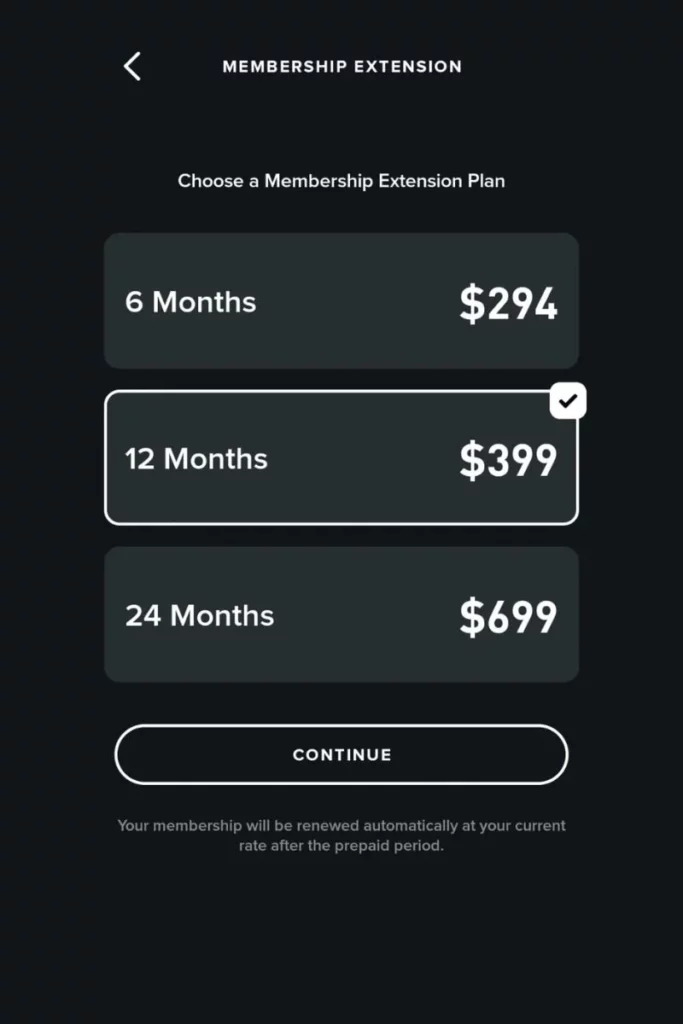
Right now, many long-time users are opening their apps only to face a frustrating “loyalty penalty.” Even though the base subscription rate on the website has dropped to AUD 300 (or €199) for people buying the hardware, existing users are still being asked to pay the old, higher price of AUD 399 to renew. Essentially, WHOOP is continuing to charge loyal members the premium device-included subscription fee, without giving them a clear, cheap way to buy out their current tracker and switch to the new, lower ongoing rate.
Why WHOOP Is Changing Pricing Now
Why would WHOOP risk alienating its users by changing its pricing model? The answer lies in the fierce competition that is expected to hit the market in 2026. For years, WHOOP dominated the space of screenless, recovery-focused wearable devices. Now, that monopoly has officially come to an end.
The biggest external pressure comes from the recent launch of the Google Fitbit Air, a screenless health tracker that retails for just $99. The Fitbit Air measures heart rate, blood oxygen levels and skin temperature without requiring a mandatory monthly subscription to access your basic biometric data.
Additionally, alternative screenless options like the Amazfit Helio Strap, the Polar Loop and the highly anticipated, subscription-free Luna Band are flooding the market. Even Garmin is rumored to enter the smart ring market soon, with leaks pointing toward a premium tracker called the Garmin CIRQA.
By separating the hardware cost, WHOOP can advertise a lower annual membership rate (like AUD 300 instead of AUD 399). This makes their ongoing pricing look much more competitive on paper next to emerging rivals, even if the total initial financial buy-in remains incredibly high.
Could This Hurt WHOOP’s Reputation?
A business model change like this risks alienating potential buyers, but it is unlikely to damage the brand overnight. WHOOP still has an incredibly loyal user base, especially among dedicated athletes, runners, cyclists and fitness enthusiasts who rely heavily on tracking their recovery metrics. A large portion of their customers genuinely love the platform’s detailed insights into sleep quality, daily body strain and overall physical readiness.
However, premium pricing only works over the long haul when users firmly believe that the value matches the high cost. That is exactly where WHOOP faces a brand-new challenge. The wearable market has quickly become crowded with capable, screenless competitors that offer:
- Significantly longer battery life
- Zero monthly or annual subscriptions
- Highly comparable health and fitness tracking features
- Substantially lower total costs of ownership over time.
Whether this will make the WHOOP’s subscription worth it or not is a debate that is getting louder because people are increasingly comparing total ownership costs over several years.
If customers begin feeling locked into expensive memberships while also paying separately for hardware, the brand’s premium image could weaken.
Still, WHOOP likely understands this risk. That is probably why the company is testing these changes only in select regions first instead of launching them globally immediately.
Could WHOOP Eventually Move Away From Subscriptions?
While a total abandonment of the subscription model is highly unlikely, this regional test suggests that WHOOP is preparing for a hybrid future.
The company’s long-term survival against hardware giants may require them to offer an optional, tiered subscription framework. For example, a future model could involve a standard hardware purchase that unlocks a free, basic tier of foundational metrics (like steps, basic sleep duration and heart rate tracking), while reserving hyper-granular algorithmic data, like daily recovery scores, strain metrics and advanced coaching insights, behind a premium subscription. This compromise would protect their recurring revenue while eliminating the consumer backlash associated with brickable hardware.
Final Thoughts: WHOOP’s Biggest Pricing Shift Yet
The latest WHOOP pricing update may look like a regional experiment on the surface, but it could end up becoming one of the company’s biggest strategic shifts ever. For years, WHOOP positioned itself differently from traditional fitness trackers by bundling hardware into memberships and focusing heavily on recovery insights rather than flashy smartwatch features. Now that the model is starting to change.
And honestly, this feels like one of those moments where the wearable industry is quietly entering a new phase. Companies are realizing users are becoming more careful about subscriptions, especially when cheaper or simpler alternatives continue improving every year. WHOOP still has a strong product, loyal fans and some of the best recovery tracking in the industry. But the company is also learning that users pay close attention when pricing changes affect long-standing expectations.
Whether this new pricing strategy succeeds or backfires will probably depend on one thing: whether users still believe the experience is worth the ongoing cost. And in today’s wearable market, that question matters more than ever.
You can also get discounts on WHOOP during cyber sales!
FAQs
Decode the Decor
The Smart Jewelry Revolution
A practical guide to wearable tech's future — delivered straight to your inbox.
Author
