

It honestly feels like wearable companies have decided screens are suddenly the problem.

For years, smartwatches kept getting bigger, brighter and more distracting. One moment you check your heart rate and the next moment your wrist is buzzing about emails, memes, weather alerts and someone liking your Instagram post from 2019. At some point, wearables stopped feeling calming and started feeling like tiny smartphones glued to our wrists.
Now the industry seems to be changing direction. Just days after Google introduced the screenless Fitbit Air, the new Luna Band launch is adding even more momentum to the growing trend of minimalist AI wearables. Instead of focusing on flashy displays and endless apps, Luna Band wants to become a quieter health companion that works mostly in the background.
With the Luna Band launch arriving so soon after the Fitbit Air, it is becoming clear that screenless wearables are quickly turning into one of the biggest new trends in fitness tech, with WHOOP leading the way.
Decode the Decor
The Smart Jewelry Revolution — a practical guide to wearable tech.
What Is the Luna Band?

The Luna Band is a minimalist, screenless wearable focused entirely on passive health tracking, recovery and daily wellness guidance. Following the success of the Luna Ring Gen 2, the company is expanding its hardware lineup into screenless fitness bands. Because it has no display, it does not show app alerts, text messages or battery icons on your wrist. Instead, it sits quietly on your body, tracking your health metrics in the background.
The core philosophy of the Luna Band revolves around a voice-first approach. It relies heavily on Luna’s specialized LifeOS AI system, which acts as an intelligence engine for your health data. Rather than just collecting stats and leaving you to figure them out, LifeOS connects your continuous biometric data, like your heart rate, sleep stages and skin temperature, with external lifestyle context. You can feed it information about your blood markers, medical habits and food intake to get a complete picture of your health.
One of the biggest selling points of the Luna Band is its commitment to a subscription-free ownership model. With WHOOP testing new pricing in certain regions, this positioning makes the Luna band even stronger.
Priced at £115/$149 with no subscription fees, the Luna Band is expected to launch by the end of July 2026. Unlike competitors that lock deep biometric data behind a monthly paywall, this screenless fitness tracker offers all its advanced metrics, lifestyle logging and AI wellness guidance for a single upfront price. It is designed to interpret your numbers and transform raw biometric data into clear, hour-by-hour physical guidance. Another WHOOP alternative? I think so.
Why the Timing of the Luna Band Launch Matters
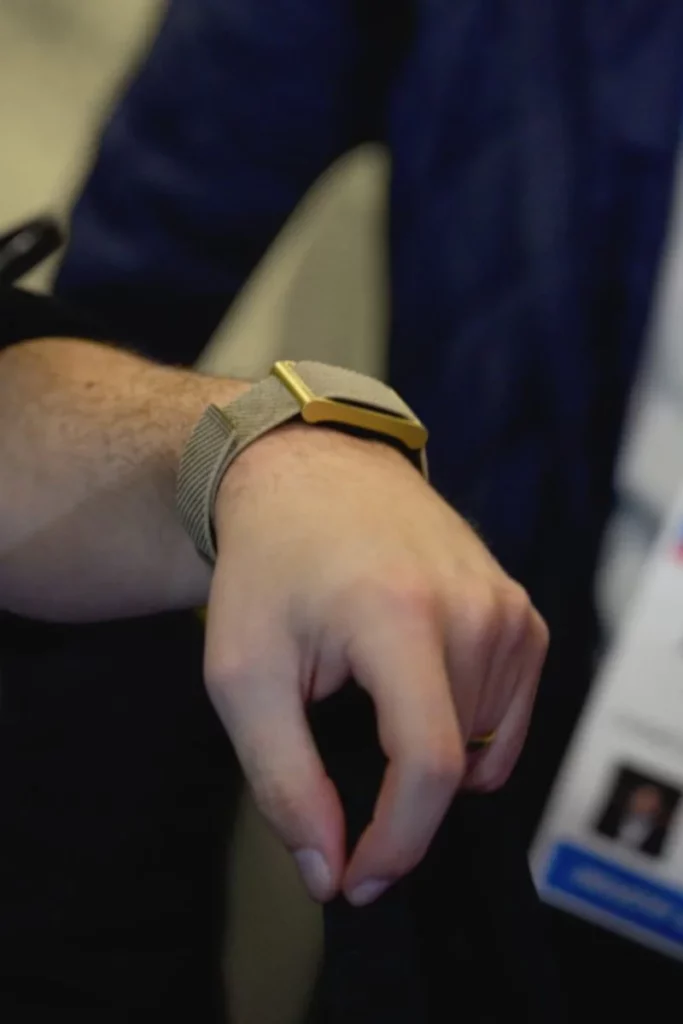
The timing of the Luna Band launch is incredibly strategic. It arrived just days after Google officially revealed the Fitbit Air, capturing the attention of tech enthusiasts who are looking for a reliable Fitbit Air rival. The concurrent timing shows a massive industry-wide shift toward low-distraction fitness trackers and minimalist screenless wearables.
For years, smartwatches tried to put an entire smartphone on our wrists. But consumers are now facing major notification fatigue. People are tired of their wrists buzzing every time an email arrives, especially during a workout or a peaceful night of sleep. By launching right now, the Luna Band capitalizes on a growing consumer desire to decouple health monitoring from digital screen time.
Additionally, this launch puts direct pressure on mainstream tech giants. When a prominent brand like Google introduces a screenless fitness tracker in the 2026 model, it validates the entire product category. The Luna Band benefits from that mainstream push, positioning itself as a fast-moving independent competitor ready to offer an alternative philosophy to Google’s software ecosystem.
Luna Band Features Explained
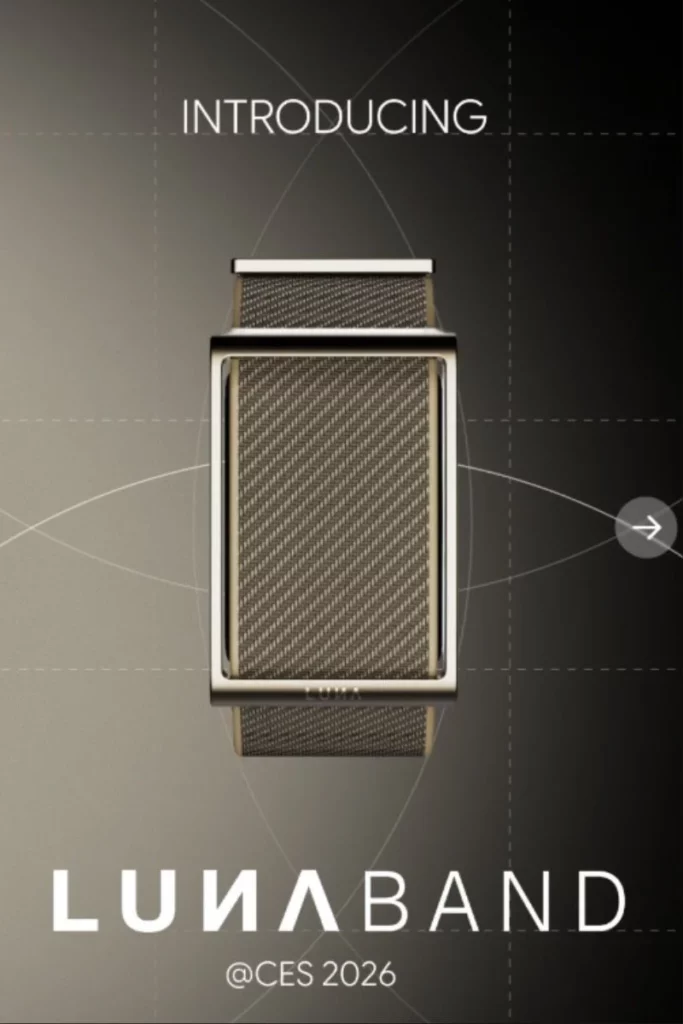
Even without a screen, the Luna Band is packed with advanced internal hardware and unique software features. The standout feature is its voice-led logging system. Because there is no display to tap, you interact with the band using simple voice commands. You can verbally log your meals, track water intake or record how you feel after a workout and the LifeOS AI will process that data instantly.
Here is a breakdown of the core features included in the Luna Band:
- Voice-Led Logging: Talk directly to your tracker to log daily habits, food and emotional states.
- Stress Tracking & Recovery Monitoring: Continuous biometric scanning measures physical stress and tells you when your body needs rest.
- Calendar Integration: The LifeOS AI syncs with your daily schedule to suggest the best times for a workout or a mindfulness break based on your current energy levels.
- Haptic Guidance: Gentle vibrations on your wrist provide quiet alerts, guiding you through breathing exercises or notifying you of urgent schedule changes without a screen.
It is worth noting that the voice features will offer deep Siri support on iPhone, making it highly integrated for iOS users. However, there will be some initial Android limitations regarding deep system-level voice automation at launch, though standard app connectivity remains fully cross-platform.
Luna Band vs Fitbit Air: What’s Different?
The Luna Band vs Fitbit Air comparison is already becoming one of the biggest discussions in the wearable space.
Although both devices follow the screenless wearable philosophy, they approach the market differently.
| Feature | Luna Band | Fitbit Air |
|---|---|---|
| Screen | ✕ | ✕ |
| AI Coaching | ✓ | ✓ |
| Voice Features | Strong focus (Voice-to-text logging) | Limited (Standard voice commands) |
| Subscription | No | Optional (Fitbit Premium tier) |
| Ecosystem | Platform-agnostic (LifeOS App) | Deep Google Health integration |
| Focus | Wellness guidance + planning | Passive fitness tracking |
| Interaction Style | Voice-first | App-focused |
| Price | £115/ $149 | $99.99 |
The core difference lies in their operational philosophy. The Fitbit Air is designed to be an extension of the Google Health ecosystem, acting as a quiet sensor that feeds data into your existing Google apps. Fitbit also continues to offer Fitbit Premium, a $10/month subscription service that unlocks advanced wellness insights and additional health features.
The Luna Band, on the other hand, wants to be an active daily planner. By prioritizing voice-led interactions and a subscription-free model, the Luna Band positions itself as a more independent, privacy-focused alternative for users who want to own their data outright.
Why Screenless Wearables Are Suddenly Trending
The sudden rise of the Luna Band and Fitbit Air points to a larger cultural shift: wearable fatigue. Many users are tired of notification overload. Our wrists buzz when we get an email, when someone likes a photo or when a news alert drops. A screenless fitness tracker model removes that digital noise entirely, returning the wearable to its original purpose: health monitoring.
We also cannot ignore the heavy WHOOP-style influence in this space. WHOOP proved that high-income fitness enthusiasts are willing to wear a screenless strap if the data quality is excellent. Now, devices like the Luna Band are taking that minimalist health tracking concept and making it more affordable and approachable.
By combining the screen-free aesthetic with modern generative AI, these new devices do not feel primitive, they feel futuristic. They offer a way to stay connected to your body’s metrics without staying glued to another digital interface.
The Biggest Questions Around Luna Band
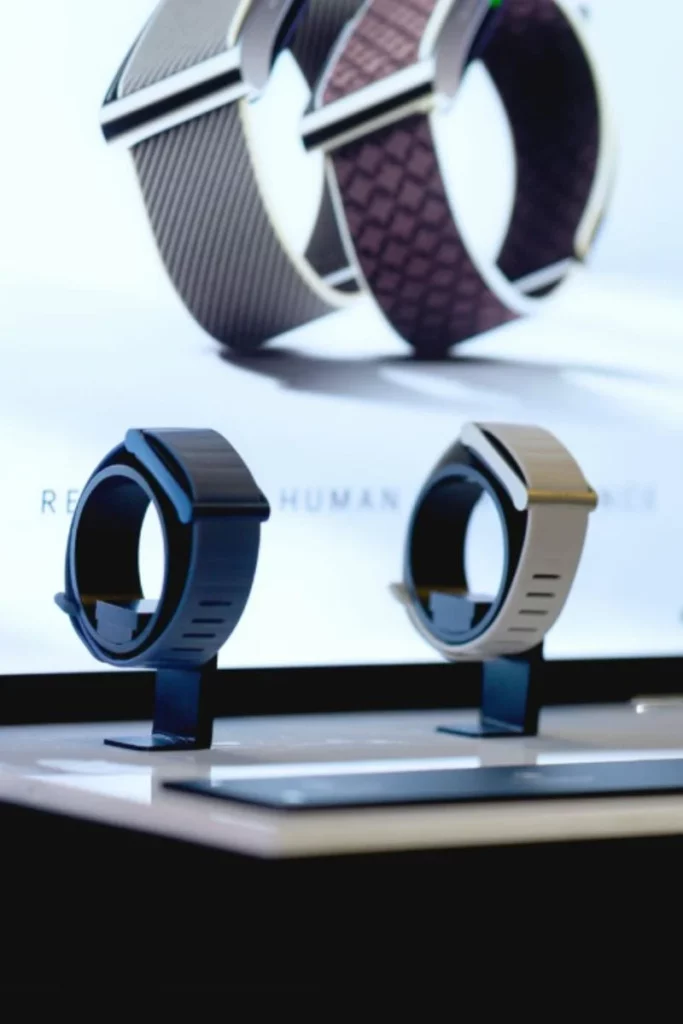
While the Luna Band launch is exciting, there are several practical questions that potential buyers should keep in mind before jumping on the waitlist:
- Ecosystem Maturity: Luna is an agile company compared to Google, but its software ecosystem is still growing. The real-world accuracy of its advanced trend analysis will need to hold up under daily scrutiny.
- Voice Usability Consistencies: Because the band lacks a built-in microphone, you have to speak into your phone. If you are halfway through a sweaty running session and your phone is tucked away in a zipper pocket, voice-led logging becomes much harder to do.
- Android Support Limitations: The fact that Android users lose out on the seamless voice-logging features is a clear drawback. If you do not use an iPhone, the band essentially acts as a standard passive tracker, missing its headline voice-first functionality.
- Invite-Only Rollout: The initial release, known as Drop 1, is invite-only. This means it will take some time before the general public can easily purchase and test the hardware at scale.
Wrap Up
The Luna Band represents a bold step forward for screenless wearables. By combining deep biometric tracking with a voice-first, subscription-free approach, it offers a refreshing alternative to mainstream smartwatches and ecosystem-locked fitness brands like WHOOP.
While it is still in its early launch stages, its ability to turn raw physiological numbers into a real-time daily planner makes it incredibly distinct. If you are looking for a low-distraction way to track your fitness, monitor your recovery and optimize your daily routine without another screen in your life, the Luna Band is absolutely a wearable worth watching as it rolls out later this year.
FAQs
Decode the Decor
The Smart Jewelry Revolution
A practical guide to wearable tech's future — delivered straight to your inbox.
Author
