

To be clear upfront, this is not one of those “10 best” lists where the category needs to be bent to fit the numbers. Earbuds with built-in heart rate monitors are fairly few and most of the products found in such searches are either discontinued or just using a heart rate sensor in your watch. So instead of padding this out, here’s which earbuds with heart rate monitoring are actually worth your money right now.
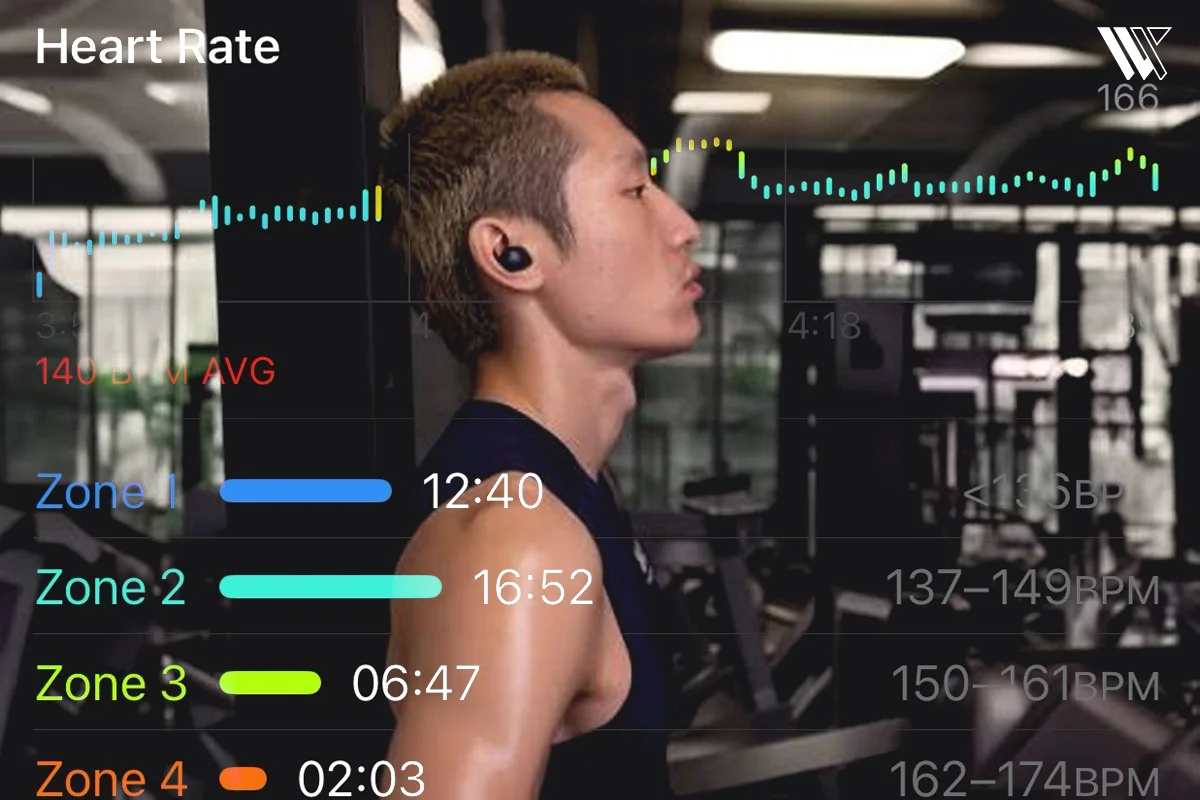
Short version for those of you who don’t want to read too much. Best overall choice among heart rate earbuds for iPhone is Apple AirPods Pro 3, which right now boasts the best independent verification of HR readings among all true wireless earbuds. Best option for sports is Beats PowerBeats Pro 2, which have ear hooks that won’t come off and can use the HR sensor on Android as well. You may consider Sennheiser Momentum Sport if you’re a part of the Polar Ecosystem, but the accuracy of the readings is hit and miss, so I can’t call them a default recommendation.
Best Heart Rate Earbuds
| Product | AirPods Pro 3 | Powerbeats Pro 2 | Sennheiser Momentum Sport |
|---|---|---|---|
| Best for | iPhone users | Runners, Android | Polar users |
| Price | $249 | $249.99 | $329.95 |
| HR sensor | Yes | Yes | Yes |
| iPhone | Yes | Yes | Yes |
| Android HR | No | Yes | Yes |
| Secure fit | Decent | Best in class | Okay |
| ANC | Yes | Yes | Yes |
| Water resistance | IP57 | IPX4 | Not rated for rain-heavy runs |
| Battery | Up to 8 hrs | Up to 10 hrs | Up to 6 hrs |
Best for iPhone: AirPods Pro 3
© Apple
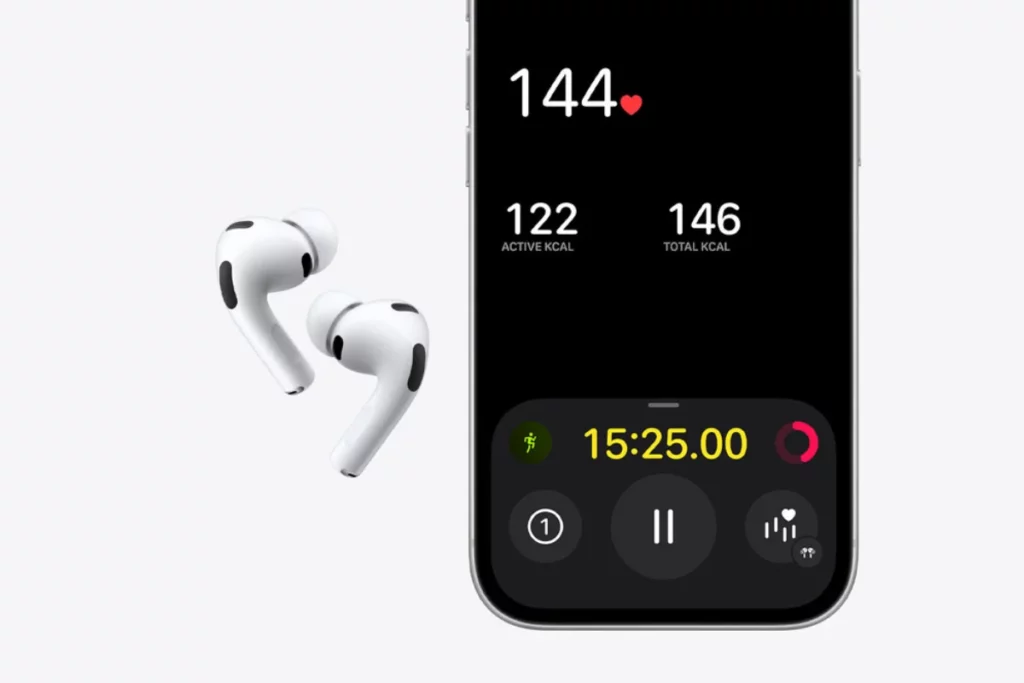
Assuming that you’re already in the Apple ecosystem, the AirPods Pro 3 are the best choice for heart rate monitoring earbuds. The AirPods Pro 3 will cost $249 and feature an in-built PPG sensor capable of sending data straight to the Fitness app. Hence, your calories burned and workout metrics will be displayed right where the rest of your health statistics can be seen.
You get five sizes of ear tips included in the package, which does matter for a sensor with such demands to contact your skin, as well as the IP57 protection and noise cancellation that is actually one of the best among all workout earbuds.
Decode the Decor
The Smart Jewelry Revolution — a practical guide to wearable tech.
As for the battery, however, you will have to give up a little due to HR measurement. While the AirPods can work for up to 8 hours without HR monitoring, this figure is reduced to about 6.5 hours in the case of active heart rate measurement.
The accuracy of measurements is quite intriguing. As reported in the study in PLOS Digital Health in 2026, 40 adults underwent a graded treadmill test using a Polar H10 chest strap as a reference device. From there, the researchers extracted over 16,700 pairs of five-second samples from AirPods. On average, the error was 2.08 bpm with a mean error percentage of 2.02%, which is impressive for an earbud. Naturally, the measurements were less accurate at higher heart rates, and this happens to be rather typical of any PPG sensors, so don’t expect that the earbuds will measure equally well in all situations.
Another nice feature is that if you have an Apple Watch, this pair of devices will automatically switch to the data that has higher confidence at the moment of the workout.
There is, however, one catch, these earbuds will provide such functionality only if you are on an iPhone. If you are on Android, you will miss most of the HR measurement and features of AirPods. And even if you have an iPhone, the heart rate will be measured only during workouts, not throughout the day.
Pros:
- Incredible independent HR accuracy data
- Seamless Apple Health and Fitness app integration
- Five ear tip sizes to ensure a perfect fit
- Rated IP57
- Has great ANC
- Smart handoff with Apple Watch if you use both to track HR
Cons:
- HR feature only works with iPhone
- The battery lasts about 6.5 hours with the HR feature on
- Not built for continuous medical monitoring
- The accuracy starts to deteriorate at higher heart rates
Best for Running: Powerbeats Pro 2
© Beats
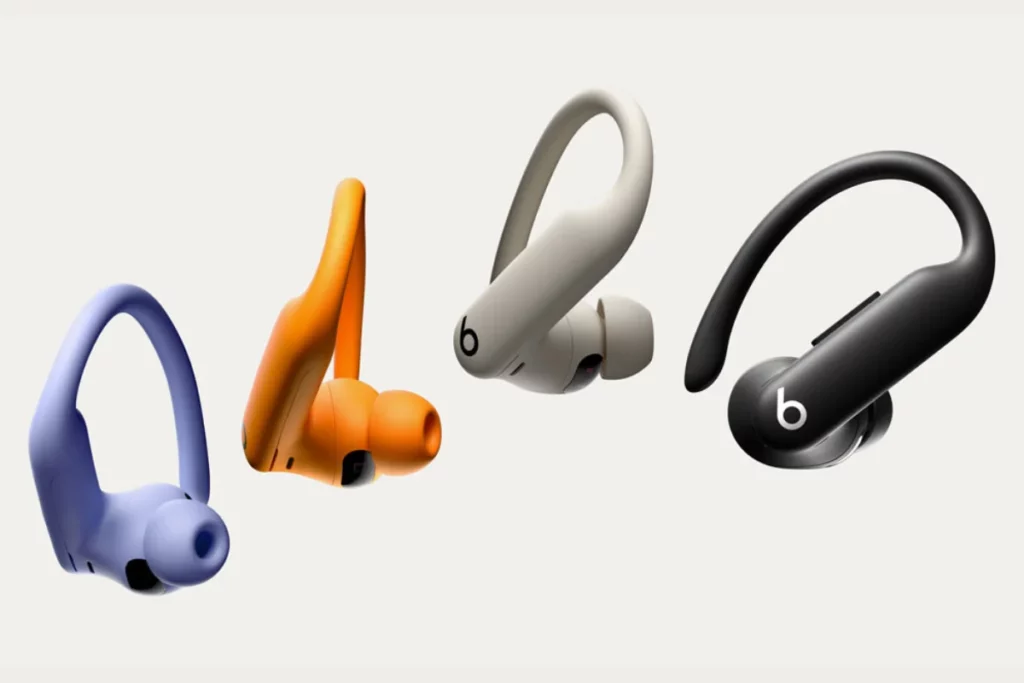
If you have a problem with earbuds falling out while running, this is the model for you. Powerbeats Pro 2 retails at $249.99 and has newly designed ear hooks, five ear tip sizes, ANC, Transparency mode and an IPX4 rating that protects from sweat and rain. The battery lasts up to 10 hours in earbuds and up to 45 hours with the charging case included, which is an absolutely amazing number for this kind of product.
What really distinguishes Powerbeats Pro 2 from other products in this category is that HR functionality can be used with Android phones too. Beats developed its own app that allows you to measure HR on any Android device, so you get to choose between an iPhone and an Android phone with no loss of functionality, which makes Powerbeats Pro 2 the clear choice.
Of course, I want to mention the accuracy of these measurements without repeating the marketing of the company. In spite of independent testing, occasional issues with the HR function were spotted during actual runs, like the sensor may start measuring the user’s cadence instead of their heart rate, there may be dropouts and the readings may start spiking. Thus, the bottom line about Powerbeats Pro 2 is that they excel at fitting well and working across platforms, but not necessarily accuracy. If you train according to HR zones, please pay attention to this issue.
Pros:
- Stays in place during intense training
- Works with both iPhones and Android using the Beats app
- Great battery life, up to 10 hours on buds, 45 hours total
- IPX4 rating, solid noise canceling and transparency mode
Cons:
- Has had accuracy issues
- Doesn’t provide the most precise HR measurement compared to AirPods Pro 3
- More bulky design than in-ear devices
Best for Polar Users: Sennheiser Momentum Sport

© Sennheiser
I can’t give a straight-out recommendation here, since it’s more of a conditional choice. The Momentum Sport costs around $329.95 and stands out because they not only track heart rate but also your body temperature and is able to send this data to Polar Flow or compatible sports watches through a Bluetooth connection. This is something that is unique among all options in this list if you use Polar.
The battery provides up to 6 hours of listening time on the buds and up to 24 hours total with the case included, which is shorter in comparison to the others.
Accuracy is a mixed bag. Some people managed to find results close to those of other wearable devices when doing cardio in steady state, but some faced inaccuracies and even dropouts after some changes in intensity or running. That’s why I can’t recommend these earbuds as being the most accurate, since the information is conflicting in some way.
Pros:
- Heart rate and body temperature tracking
- Integration with Polar Flow and compatible sports watches
- Sending HR measurements as a Bluetooth sensor to other fitness equipment
Cons:
- Inaccurate and inconsistent measurements reported by some testers
- Less battery life than other options
- Expensive for the same functionality provided by Powerbeats Pro 2
Which Heart Rate Earbuds Are Most Accurate?
Based on research and testing performed so far, AirPods Pro 3 are by far the best earbuds in terms of independently proven accuracy because of the PLOS Digital Health study. It needs to be understood that no earbuds in this category can be considered the most accurate option because the shape and size of ears, blood flow, the kind of exercise, sweat and the actual seal inside an ear matter greatly. Apple mentions this as well and notes that loose fit, cold conditions, earwax, or moisture may affect the readings, but it’s applicable to each of these recommendations.
Are Earbuds Better Than a Watch for Heart Rate?
They aren’t really any better than smartwatches but different. The ear moves less compared to the wrist when running or lifting and therefore provides fewer chances for flexion that may ruin the signal. In addition, since you’ll be wearing earbuds anyway while exercising, you’ll avoid the need to add one more piece of equipment to a list of things to wear. However, fit varies from person to person and from time to time, much greater for ears compared to wrist. Sweat and earwax may ruin the contact between the skin and a sensor, and people tend to remove earbuds in the middle of a training for talking or adjusting.
Can Heart Rate Earbuds Replace a Chest Strap?
No, if you’re relying on HR data and use this information for your exercises, a heart rate earbud is not better than a chest strap. If you’re performing structured zones, interval training, or thresholds, you’d better take your chest strap. Where heart rate earbuds make sense is casual running, gym training, recording exercise in the Fitness app and tracking calories without adding one more device.
Which Are Best Earbuds With Heart Rate Monitoring for Android?
The Powerbeats Pro 2 wins this comparison hands down since the HR functionality works through the Beats app available on Android and the fit remains stable enough during workouts. If your workouts require you to use a Polar product, then the second best choice would be the Sennheiser Momentum Sport, which offers HR sending through Bluetooth to other devices. The AirPods Pro 3 is really not a viable option for Android users since most of its value lies in the iOS ecosystem.
Which Are Best Earbuds With Heart Rate Monitoring for iPhone?
The AirPods Pro 3 would win here due to its integration into Apple Health, Fitness app and Apple Watch ecosystem, along with great ANC and the best data I have seen regarding HR accuracy. However, if you have problems with AirPods Pro 3 falling off during your workouts, are training on intervals, or plan to use them with Android in the future, then the Powerbeats Pro 2 would be a better choice.
Heart Rate Earbuds vs Fitness Watch vs Chest Strap
Choose earbuds if you wear them during workouts, do not wish to have too many devices on you and do not require advanced HR measurements.
Pick a fitness watch if you need 24/7 HR, sleep monitoring, recovery metrics, GPS, pace and navigation.
Choose a chest strap if you prioritize HR accuracy, zone-based training and doing interval training when having a fitness watch or a cycling computer.
Who Should Buy Heart Rate Earbuds?
- Casual runners
- Regular gym goers
- iPhone owners wishing to track Fitness app data without an Apple Watch
- People already working out with the help of earbuds and don’t want additional gadgets to wear
Who Should Avoid Heart Rate Earbuds?
- People needing clinical-quality measurements
- Athletes following their heart rate zones in training sessions
- Anyone interested in accuracy while interval training
- Anyone seeking 24/7 heart rate tracking
- Anyone requiring sleep and recovery tracking
Wrap Up
Heart rate tracking is becoming a useful feature of workout earphones, rather than just another spec on the box. With the sensor placed in the ear, these earbuds will be able to track your heart rate and, at the same time, handle the music, calls and other things you’d normally use them for.
What is the drawback? The thing is that there are still significant differences in accuracy and monitoring capabilities of different products. Heart rate monitoring earbuds will be great for regular training, although they cannot replace the fitness tracker completely yet.
Currently, heart rate earbuds can be considered a product between regular wireless earbuds and fitness devices.
Decode the Decor
The Smart Jewelry Revolution
A practical guide to wearable tech's future — delivered straight to your inbox.
Author
