

I used to believe my Apple Watch knew almost everything about me. Almost. My sleep pattern, my activity levels, my schedule for the day, even my most frequently visited locations (yes, creepy, I know). But some days it had no idea I was running on fumes. I’d wake up from a 4hr sleep having done a brutal HIIT workout the previous day and it would greet me with the same cheerful message of “time of move” every morning. All it wanted was the closed rings.
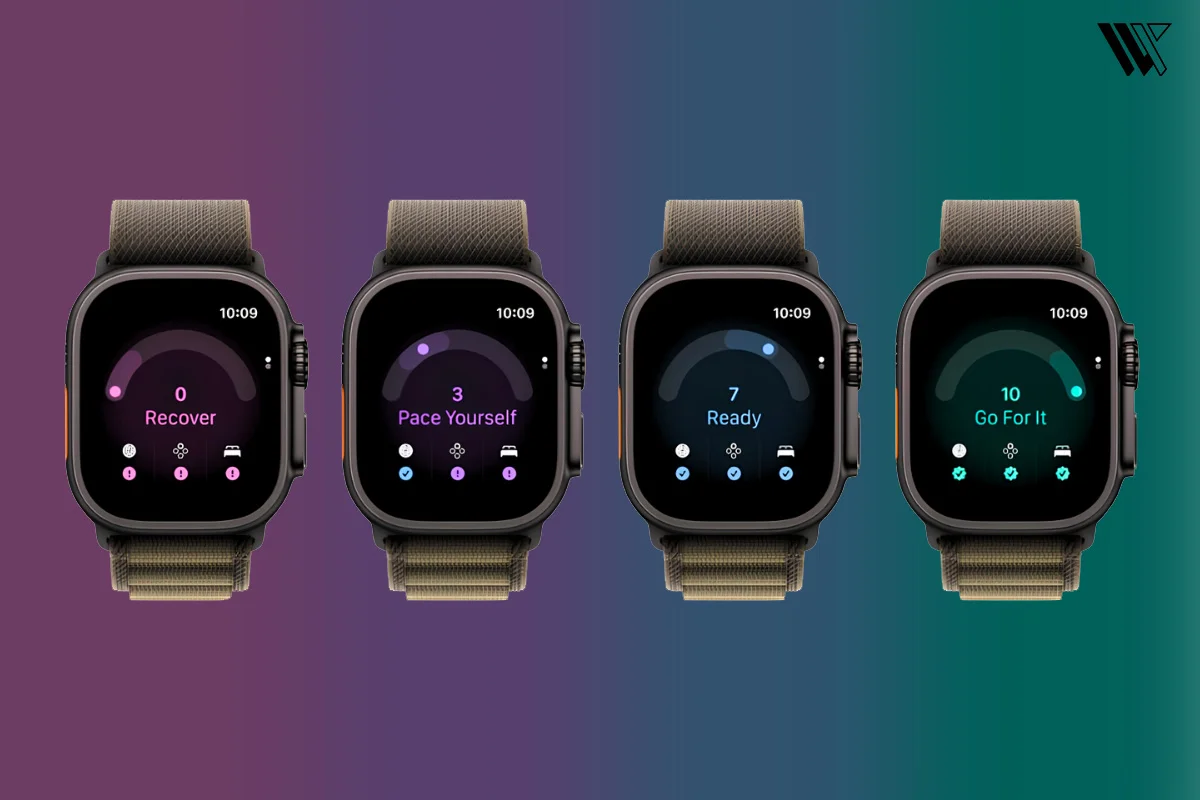
And for the longest time, even I was chasing those closed rings all day, everyday. But with the new Apple Watch Readiness Score, it feels less like a coach screaming at you to do your best. The Readiness Score will make its way to the Apple Watch Series 12 and Ultra 4 with watchOS 27. Not only will it tell you how much you moved, it will also take into consideration your sleep and put together a number of how you should perform today based on your previous day’s activity and sleep.
So What is Apple Watch Readiness, really?
© Apple
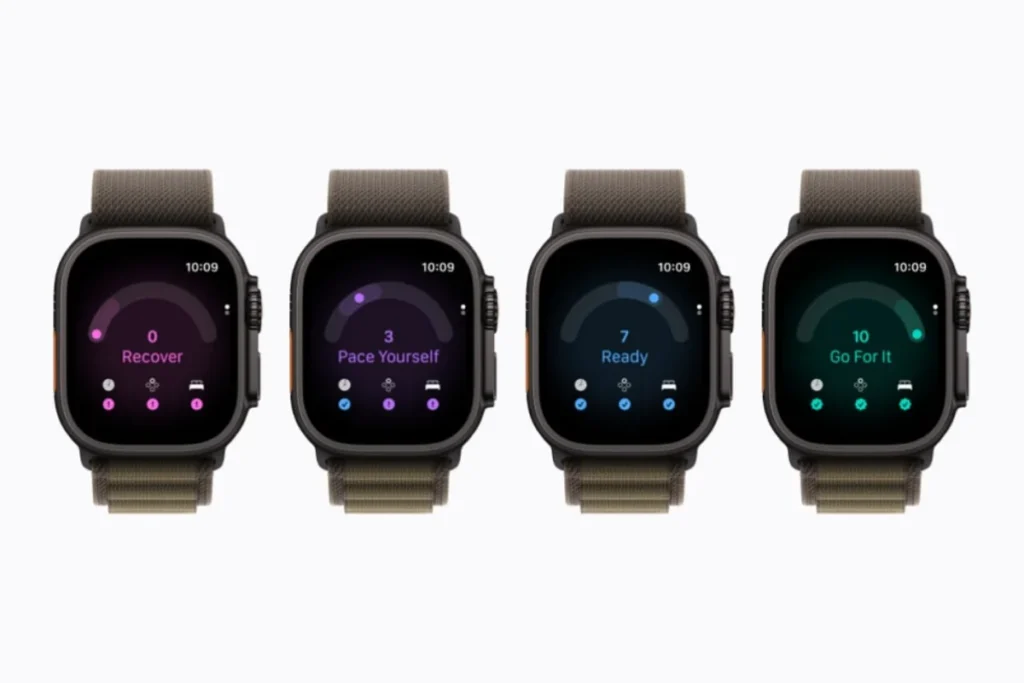
The readiness score on Apple Watch is a simple number from 0 to 10 appearing daily with a recommendation: Recover, Pace Yourself, Ready and Go For It. According to Apple, the rating reflects the results of an aggregation of your recent exercise and training sessions, vitals and your sleep, giving you a daily indication of how much work your body can take.
This is not really the conversation that your activity rings have been having with you for the past decade. Activity Rings on Apple Watch measure the output of your activities. They want to know what you did. Readiness is a very different story, which is basically asking whether you should do anything at all.
Decode the Decor
The Smart Jewelry Revolution — a practical guide to wearable tech.
Unlike all metrics on a wearable, this is just the advice rather than any diagnosis. It is not going to tell you that you are getting sick. It is more about a friend who is aware of your sleep and resting heart rate and gently suggests skipping leg day.
How Apple Watch Readiness Score Works
© Apple
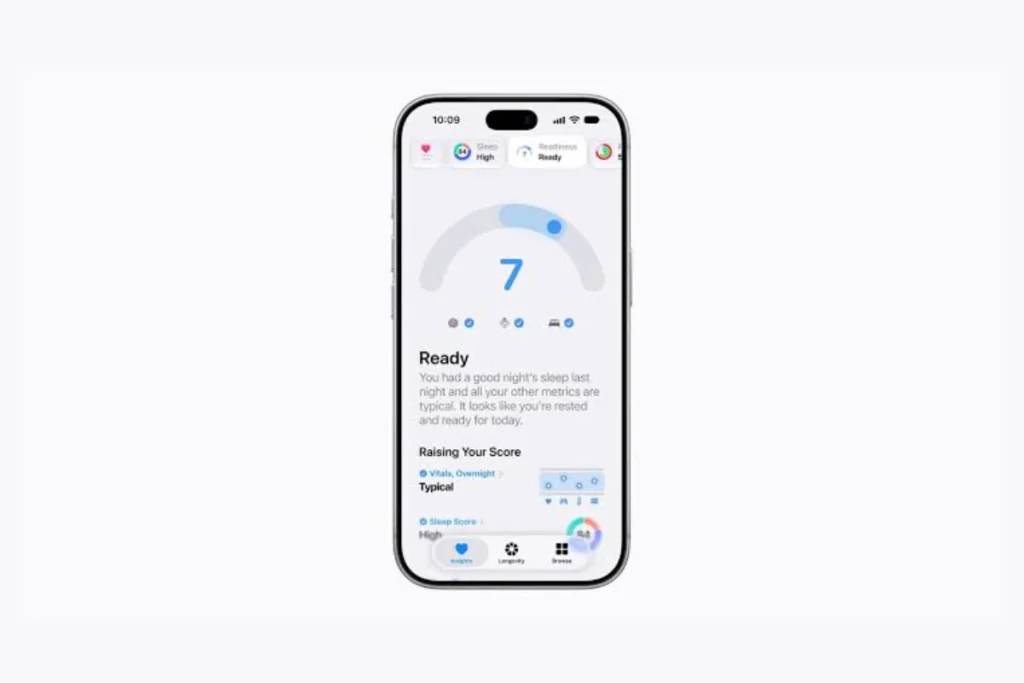
Apple has revealed the four metrics– recent activity, training load, vitals and sleep, that contribute to the calculation of the Recovery score, but there is no published breakdown of how much each one counts. This feature was developed based on the data collected within Apple’s Heart and Movement study with the help of experts from the exercise science and medicine fields.
© Apple
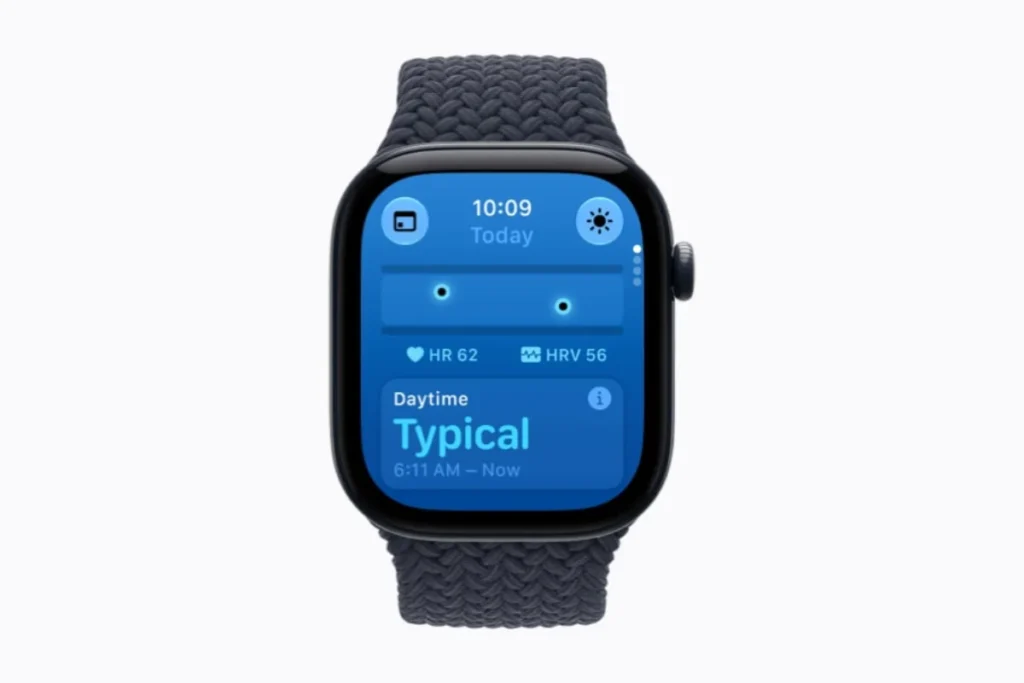
All I know for sure is that overnight HRV is compared to your own individual reference range, not some general average value, which is great since the standard values differ for different people. Sleep is important as well, not just how much sleep you got, but also how consistently you have been sleeping. Trends in resting heart rate provide insight into one’s cardiovascular baseline. Also, your training history is significant.
Your daytime vitals are evaluated as well. Apple added a switch in the app interface that allows users to switch between the night and day vitals data and see how your body behaves throughout the day.
Your number is not final when you look at it in the morning. It changes throughout the day as new data becomes available. In case you train really hard in the evening or experience spikes in your resting heart rate, your number will change before you go to bed.
What Does a 0–10 Apple Watch Readiness Score Tell You?
If you get a low score, it means that your body is still recovering from something like an insufficient amount of rest last night or a difficult training sessions in general, or even a combination of the two. A high number shows that your body has basically recovered as much as it can and is ready for some serious training.
It categorizes them as:
- Around 0: Recover
- Around 3: Pace Yourself
- Around 7: Ready
- Around 10: Go For It
A Readiness Score of 3 doesn’t mean you did something wrong. What it means is that recovery needs to come before anything else. And it is important information indeed, if you actually listen to it, which, if you’re anything like me, is easier said than done when a good run is calling your name.
Why Apple Is Adding Recovery Tracking Now
If you are familiar with wearables like Garmin or Oura or WHOOP, readiness score is not something new. Frankly, Apple might be a little bit behind here and honestly, I had been craving an Apple Watch Readiness Score for years. WHOOP created its brand based on recovery score. Oura has a Readiness score and there is Body Battery for Garmin. For several years, if you needed a score that would tell you either to continue or relax, you had to wear an additional sensor in addition to your Apple Watch. That was kind of redundant.
But the main thing in all this story is not the introduction of a new number but rather the fact that Apple Watch is moving from being just a tracking tool to being the one that factors in your recovery as well. The story about steps and calories is gone. Now the focus is on recovery, stress and longevity, and every wearable company is racing to be the one that tells you something you couldn’t have figured out on your own.
Can Apple Watch Readiness Replace a Coach?
No, the Apple Watch, with all its redesigned features, can spot trends. It will be able to push you towards a more relaxed day knowing your body is in need of one. However, what it won’t be able to know is you had a lousy sleep because your dog was sick or you’re stressed out because you have a deadline approaching, which isn’t at all related to your training routine. It doesn’t know your life, it only knows your biometrics.
The Watches That Actually Get It and What You’re Paying For
And now for the part that’s really going to tick a lot of people off. Readiness only works with the Apple Watch Series 12 and Apple Watch Ultra 4. If you purchased Series 11 or Ultra 3 last year, which both include heart rate, HRV, sleep tracking and training load, you’re out of luck. Apple says the Health Sensing System is ties to the hardware, not software but that’s cold comfort if you just spent more than $399 last year.
Apple Watch Series 12 starts at $399 for the 42mm GPS model, with the newly designed Health Sensing System and S11 chip providing the power for all this magic. Battery life is rated at up to 24 hours while using the always-on display, or 38 hours in Low Power Mode. Good enough for everyday use, but if you’re one of those people that forgets to charge your device every night, you could be missing out on some of the overnight vitals that will go into scoring this metric.
Apple Watch Ultra 4 retails from $799, but it is worth purchasing, especially for people who train seriously, because according to Apple, Ultra 4 Readiness considers more training data. Battery life is the true hero here with 50-hour standard use and 84 hours in Low Power Mode, so you can forget about the problem of gaps in overnight or daytime readings. Also, satellite Emergency SOS and 100-meter water resistance are new features that can be useful for you. As drawbacks, we note a high cost and larger and heavier design of the watch. The watch does not provide you with any fundamentally different experience of Readiness use compared to Series 12 users.
Wrap Up
Collecting information about our activity through sensors has been Apple’s specialty for a while. Interpreting collected information and suggesting things to do with it was something the company has struggled with until now. Readiness seems to be the beginning of this process, and, if my bet on this one is correct, it won’t be the only solution that Apple develops. Combined with Health Age, which was introduced this year along with a new way to measure VO2 max, all these features are meant to turn into personal training coaches and advice without the need to be data analysts.
FAQs
Decode the Decor
The Smart Jewelry Revolution
A practical guide to wearable tech's future — delivered straight to your inbox.
Author

The readiness score requires wrist temperature readings which are done while in sleep mode and if you replaced a series 7 or older watch those didn’t have wrist temperature readings so it looks like it will take 5 full nights of readings before you can get your readiness score as the temperature info won’t be ready until then.
Exactly, Troy. If you’re upgrading from a Series 7 or older, you’ll need about five full nights of wrist temperature readings in sleep mode before the Readiness Score becomes available.