

Choosing a fitness tracker nowadays is not as simple as it used to be. A few years ago, most fitness bands focused on counting steps, tracking workouts and showing notifications. Today, they monitor sleep quality, heart rate trends, stress levels, recovery metrics, blood oxygen and much more. That is exactly why many people find themselves comparing the Huawei Band 11 Pro vs Fitbit Charge 6.
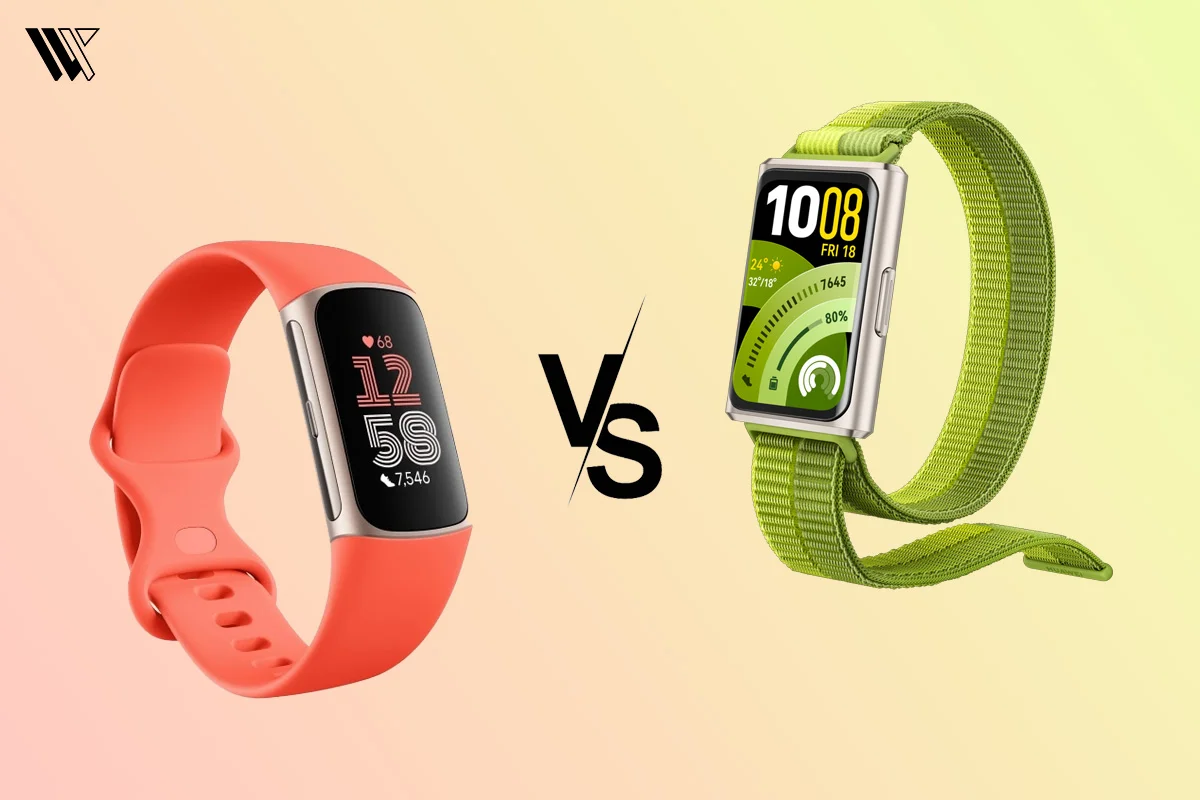
Over the past few weeks, I spent time using both trackers in daily life. I wore them during walks, workouts, workdays and even while sleeping. While both devices aim to help you understand your health better, they approach the experience very differently.
If you’re wondering which one is the better choice for your needs, here’s what my experience revealed.
Decode the Decor
The Smart Jewelry Revolution — a practical guide to wearable tech.
Huawei Band 11 Pro vs Fitbit Charge 6: Quick Comparison
| Feature | Huawei Band 11 Pro | Fitbit Charge 6 |
|---|---|---|
| Display | 1.62-inch Color AMOLED (2,000 nits) | 1.04-inch Color AMOLED |
| Health Metrics | HR, SpO₂, Sleep, Emotional Wellbeing, Arrhythmia | HR, SpO₂, ECG, Skin Temp, EDA Stress |
| Sleep Tracking | Advanced (Sleep Apnea & Breathing Risk) | Fitbit Sleep Stages & Sleep Profile |
| Activity Tracking | 100+ Workouts, Onboard GNSS | 40+ Workouts, Onboard GPS |
| Battery Life | 7-14 days (300mAh battery) | 5-7 days |
| App Ecosystem | Huawei Health | Fitbit App + Fitbit Premium |
| Notifications | Yes (System alerts, no quick replies on iOS) | Yes (Google Maps, Wallet, YouTube Music) |
| Price Positioning | £59.99 | $159 |
| Best For | Extreme battery, bright screen, platform freedom | Advanced clinical data, Google app integration |
Design, Display & Comfort
When you wear a fitness band 24 hours a day, 7 days a week, the physical design becomes just as important as the underlying code. The moment you unbox these two trackers, the physical contrast becomes instantly noticeable.
Huawei Band 11 Pro: The Display Masterclass
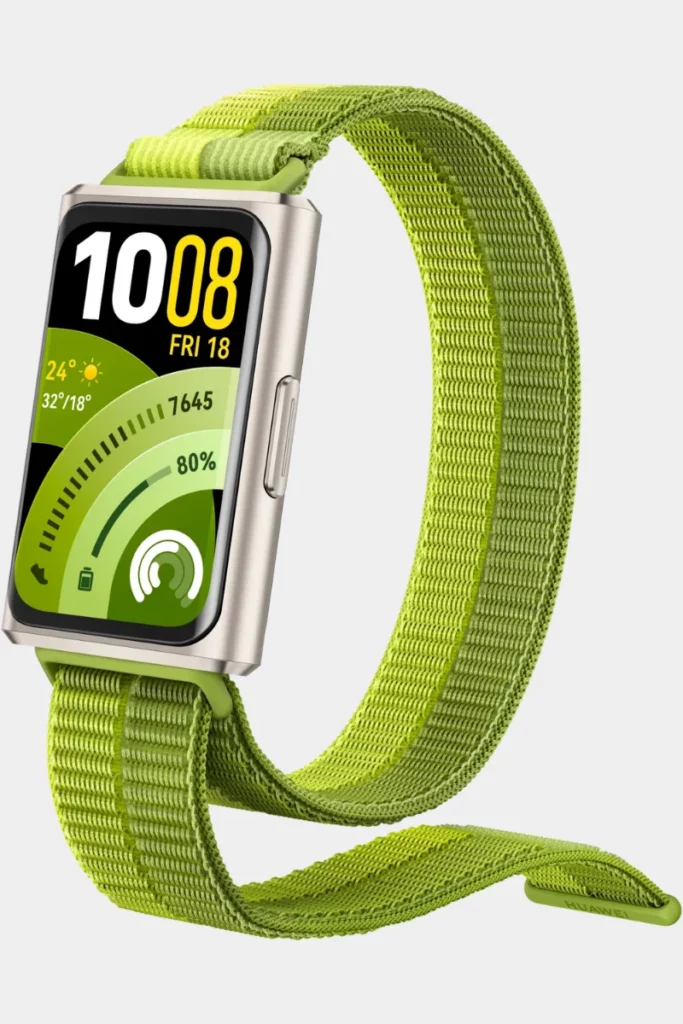
The Huawei Band 11 Pro features an expansive, beautiful 1.62-inch AMOLED touchscreen. Boasting a crisp resolution of 286 × 482 pixels and a pixel density of 347 PPI, this screen feels remarkably expansive for a tracker. Navigating the software feels fluid thanks to a 60 Hz refresh rate that eliminates the visual stutter common in budget wearables.
The standout feature of this screen is its blinding peak brightness of up to 2,000 nits. Coupled with a responsive ambient light sensor, the display remains clear even when running outside under intense, direct afternoon sunlight.
Huawei has put this large display inside a premium CNC-cut aluminum alloy case that measures just 8.99 mm thin at its thinnest point. Weighing only 18 grams without the strap, the device is incredibly easy to wear. I tested the green model with the double-toned woven nylon strap, which breathes incredibly well during sweaty high-intensity intervals. If you prefer classic setups, the black or blue variants come with soft fluoroelastomer bands that handle water effortlessly. A dedicated, flush side button sits on the right edge to act as a physical home key or workout pause button.
Fitbit Charge 6: Compact and Purpose-Built
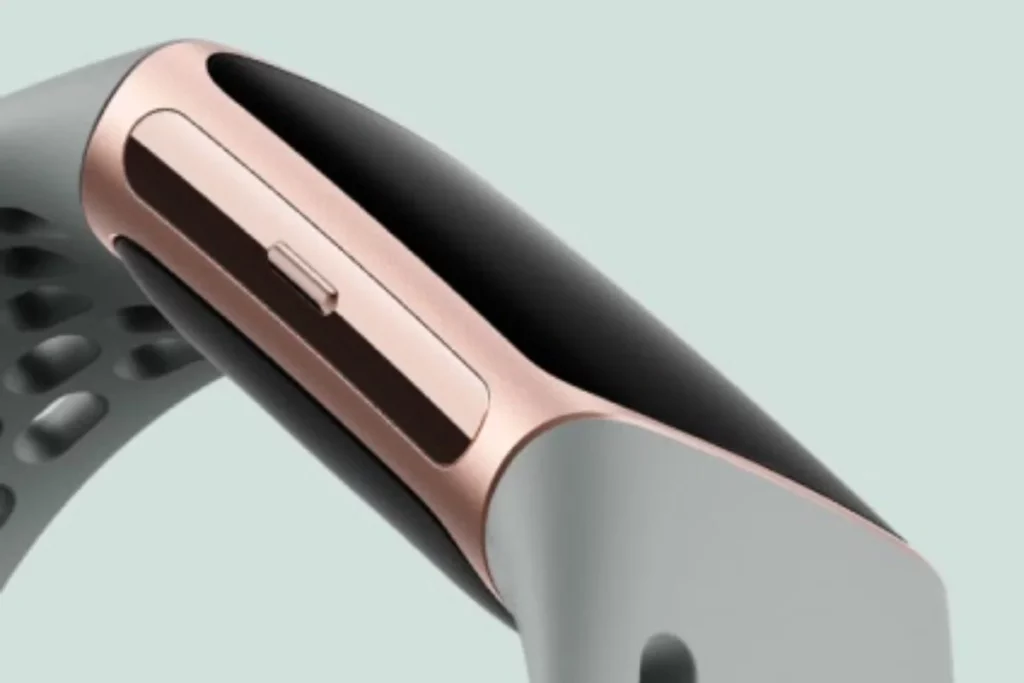
The Fitbit Charge 6 follows a narrower, more traditional tracker silhouette. It features a smaller 1.04-inch AMOLED display. While the screen color and detail are quite good, the overall surface area is noticeably tighter than the expansive display on the Huawei Band 11 Pro. Spacing can feel cramped when trying to read long incoming text notifications and its brightness maxes out around 450 nits. This brightness works fine for indoor gym sessions, but it can require squinting or cupping your hand over the screen when tracking outdoor routes on clear days.
The build quality remains top-tier, using a blend of aluminum, glass and resin that fits snugly on different wrists. Fitbit uses a clever haptic induction button on the left side of the casing. It provides a vibrating kick when squeezed to help you back out of menus.
The tracker fits cleanly against the arm, making it less likely to snag on tight jacket sleeves during workouts than the wider Huawei casing. The bundled silicone band is smooth, though it can trap sweat underneath during heavy cardio sessions, making a quick post-workout rinse a necessity.
Health Tracking
This is where the true fitness tracker comparison gets interesting. While both devices record daily metrics like steps, calories and active minutes, their internal tracking architectures serve completely different types of users. After putting them through their paces side-by-side, it is clear that they read your body’s signals in entirely distinct ways.
Heart Rate Monitoring
Accuracy during dynamic workouts is the true test of any optical tracking array. During side-by-side treadmill and outdoor running sessions, both trackers performed admirably, but they exhibited distinct tracking behaviors.
Huawei Band 11 Pro: Utilizing its upgraded HUAWEI TruSeen™ 6.0 optical heart rate sensor, the Band 11 Pro tracks real-time heart rate rapidly. It uses a multi-channel signal enhancement algorithm that reduces data “noise” caused by arm movements. During rapid-fire functional fitness sets or sudden sprint intervals, the sensor can take a few seconds to register rapid spikes or drops in your pulse. It features an automated sampling rate that updates every single second during active workouts, ensuring you don’t miss the peak of a cardio push.
Fitbit Charge 6: The Charge 6 leverages Google’s advanced machine learning algorithms to process raw data from its multi-path optical heart rate array. It handles rapid heart rate changes with impressive agility, updating almost instantly when moving from a heavy lifting set into a brief rest window. It tracks your continuous heart rate at 1 Hz (once per second) during exercise and changes to a battery-saving 5-second interval during resting hours. If your training relies heavily on staying within specific target heart zones (like fat burn or cardio peak), the Charge 6 handles those sudden micro-shifts with superior real-time responsiveness.
Here is what the signs and symbols mean on the Fitbit.
Sleep Tracking Comparison
Analyzing recovery metrics is vital if you want to optimize your training. Both wearables track your night, but they package your rest data using very different approaches.
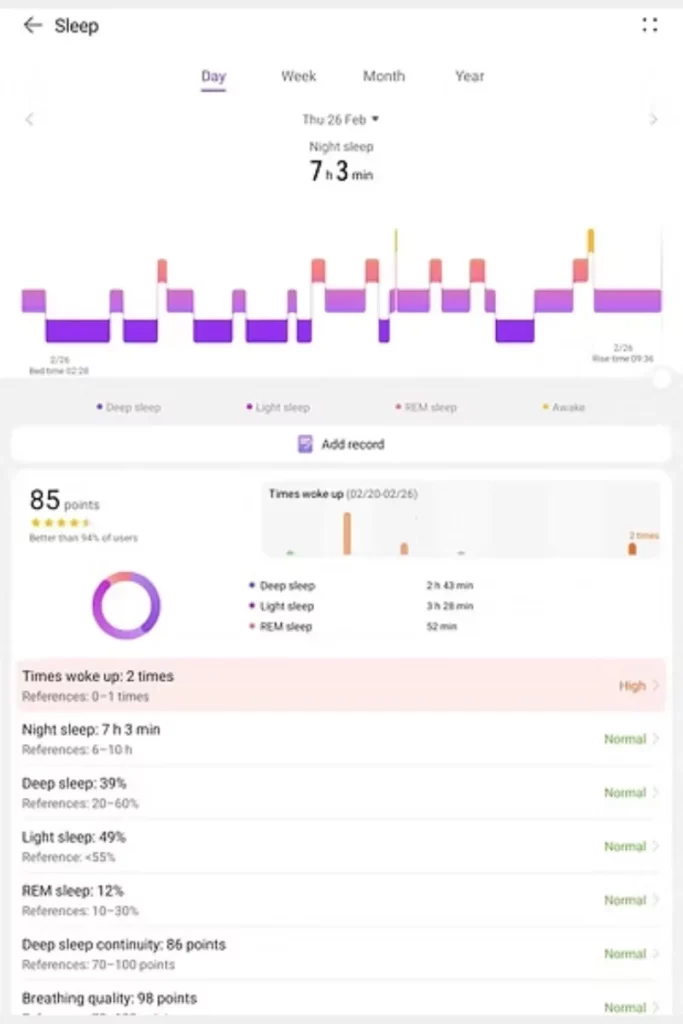
Huawei Band 11 Pro: Powered by HUAWEI TruSleep™ 4.0 technology, the band automatically monitors sleep phases, nighttime heart rate, blood oxygen levels and continuous sleep Heart Rate Variability (HRV). The device provides a detailed breakdown of deep, light, REM and awake states directly on your wrist the moment you wake up. It uses high-precision infrared light sensors to track your vitals at night, avoiding the annoying bright green flashing lights that can disturb light sleepers. It even features a dedicated Nap Summary tool that detects brief afternoon recovery sessions (as short as 20 minutes) with precise accuracy, breaking down how your nap affected your daily energy levels.
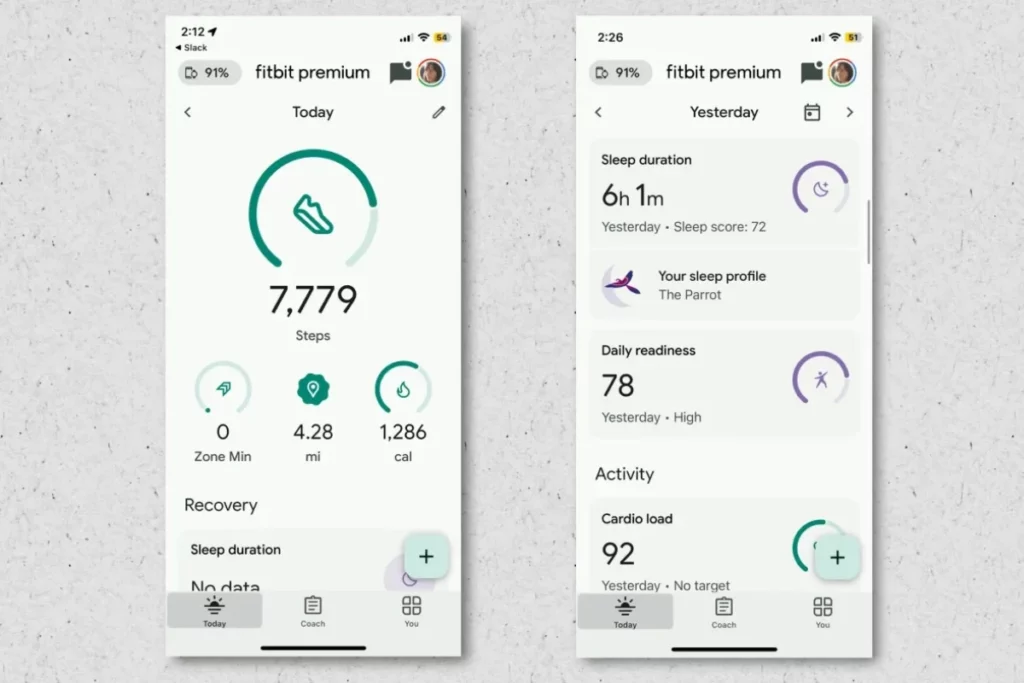
Fitbit Charge 6: Fitbit’s sleep tracking remains a benchmark for consumer wearables, utilizing a combination of its 3-axis accelerometer and relative SpO₂ optical sensors to calculate a comprehensive Sleep Score out of 100. It tracks your respiratory rate (breathing speed) and estimates oxygen variation throughout the night to flag potential breathing disturbances. If you are deeply invested in Charge 6 sleep tracking, you will love the long-term trends, such as the monthly Sleep Profile that assigns you a specific sleep animal based on your behavioral habits.
Note: There is an important catch with Fitbit. While basic sleep duration and scores are free, deep metrics, like your long-term sleep heart rate trends, restorative rest data, sleep restlessness logs and full Sleep Profile details, are locked behind a paid Fitbit Premium subscription fee. Huawei, by contrast, gives you complete access to your entire data breakdown for free.
Here are some of the best Fitbits on the market!
Additional Metrics & Advanced Sensors
If you want to look deeper into your cardiovascular health, the sensor packages show clear engineering differences.
- Pulse Wave Arrhythmia Analysis (Huawei): The Band 11 Pro features Pulse Wave Arrhythmia Analysis powered by its high-precision PPG sensor. This system works quietly in the background when you are resting, examining the shape of your individual pulse waves to look for irregular heartbeat rhythms. It provides timely A-fib (Atrial Fibrillation) and premature beat risk alerts. While it is not a medical diagnostic tool, it serves as a helpful, proactive health check that doesn’t require you to manually trigger a test.
- Medical-Grade ECG App (Fitbit): The Fitbit Charge 6 pulls ahead if you need clinical-grade hardware validation. It features physical, electrical stainless-steel strips built right into the side casing. By opening the ECG app and placing your thumb and index finger on the metallic sides for 30 seconds, the tracker completes an electrical circuit across your chest to measure your heart’s rhythm directly. This process generates a formal ECG waveform report that can be exported as a PDF to share with your doctor.
- Stress Management: Fitbit utilizes an EDA (Electrodermal Activity) sensor to check for small electrical changes on your skin caused by microscopic sweat glands reacting to emotional or physical stress. It pairs this with a daily Stress Management Score from 1 to 100 based on your heart rate, sleep quality and activity levels. Huawei approaches this with its HUAWEI TruRelax™ algorithm, which uses real-time HRV data to track your stress levels throughout the day. It feeds this data into its Emotional Wellbeing Assistant, which correlates your physiological state into an easy-to-understand overview visualized as 12 distinct floral emotional states.
Fitness Tracking
When it’s time to lace up your shoes and sweat, both bands transition into dedicated sport computers, though their internal tracking styles remain quite distinct. The choice here comes down to whether you want a deep dive into your athletic performance data or a supportive, highly rewarding everyday movement guide.
Huawei Band 11 Pro: The Athletic Data Hub
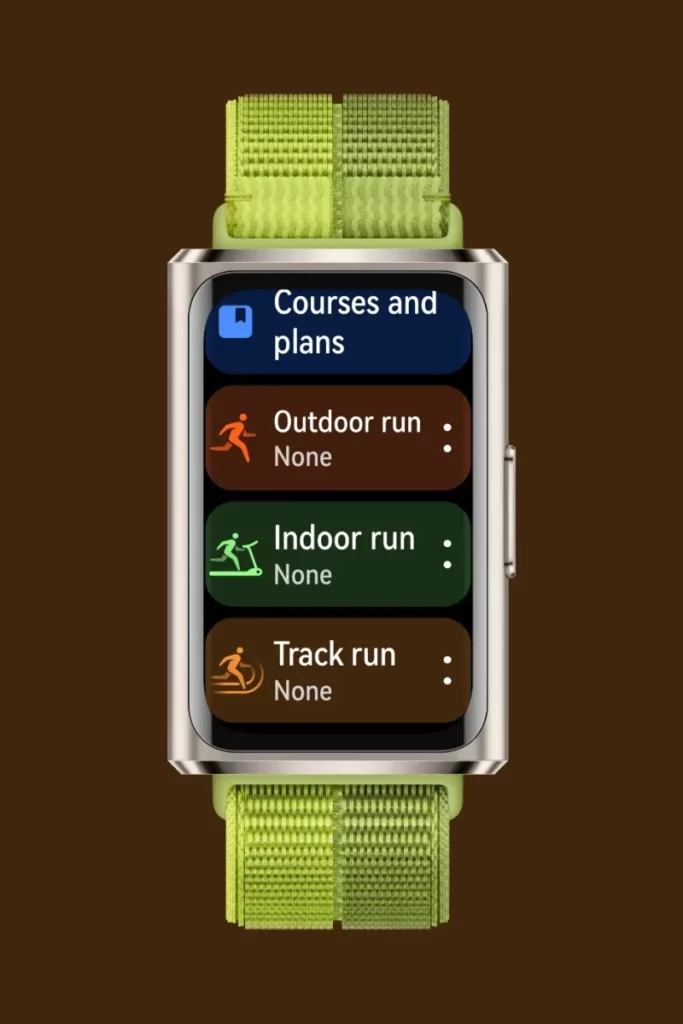
The Band 11 Pro is an absolute powerhouse for tracking stats, featuring over 100 workout modes that range from basic gym routines to professional-grade sports metrics.
- Autonomous GNSS (Onboard GPS): A standout hardware upgrade for this model is its built-in satellite positioning system. It supports independent GPS tracking, meaning you can leave your smartphone at home during a run or bike ride. The band records your exact route, distance and real-time pace entirely on its own.
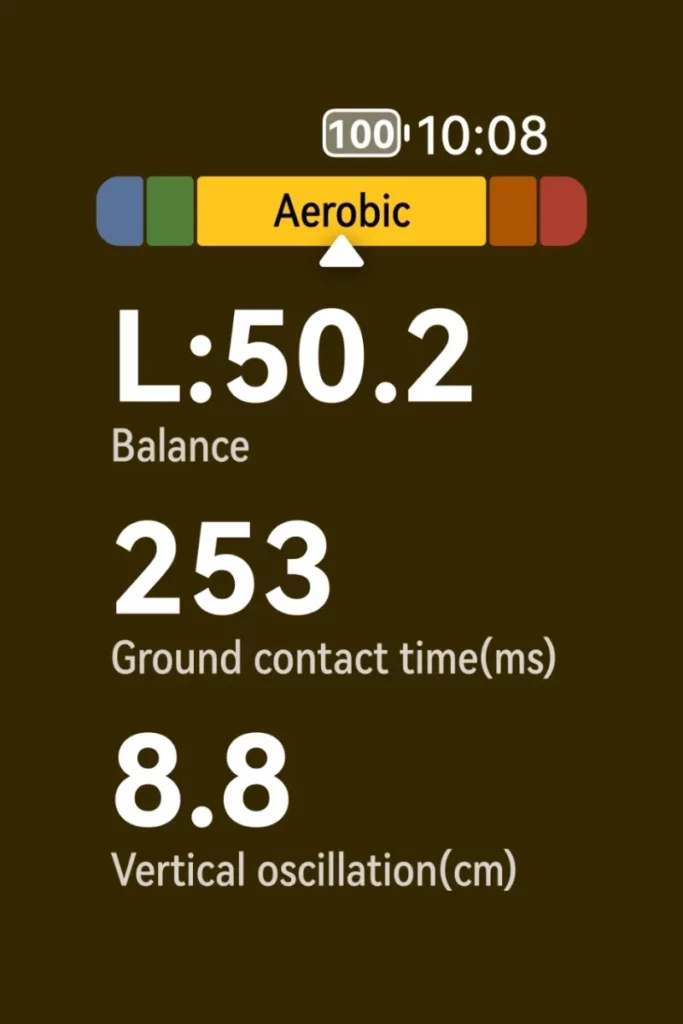
- Running Form Analysis: This feature acts like a tiny running coach on your wrist. Thanks to the highly responsive 9-axis IMU (Inertial Measurement Unit) sensor package, which combines an accelerometer, gyroscope and magnetometer, the band measures advanced spatial physics like your contact time balance. It flags whether your left foot is striking the ground longer than your right, helping you adjust your posture mid-run to improve efficiency and avoid injuries.
- Professional Performance Metrics: It calculates your VO2 Max (how efficiently your body uses oxygen during peak exertion), estimates your aerobic and anaerobic training impact and uses your personal heart rate recovery speed to calculate an exact recovery time window so you know exactly when your muscles are ready for another intense training session.
- Advanced Swim Tracking: With a hardware rating of 5 ATM water resistance, the band can handle continuous swimming in pools or open shallow coastal waters. The 9-axis sensor identifies your exact swimming stroke style, logs your lap counts, tracks your pace and computes your SWOLF score (a key metric that scores your swimming efficiency by adding your lap time to the number of strokes it took to cross the pool).
Fitbit Charge 6: The Smart Wellness Companion

Instead of overloading you with raw data, the Fitbit Charge 6 focuses on a highly encouraging, behavioral approach to fitness, packing over 40 dedicated exercise modes into its system.
- Connected & Built-in GPS: The Charge 6 also features on-board GPS to map out your outdoor workouts. However, it takes a bit longer to lock onto satellite signals compared to the newer GNSS chip in the Huawei band. To save battery, it can automatically bridge over to your smartphone’s GPS if you carry your device along with you.
- Active Zone Minutes (AZM): Rather than just counting standard steps, Fitbit prioritizes how hard your heart is working. The AZM framework calculates your personal metabolic thresholds based on your resting vitals. When you are in the “Fat Burn” zone, you earn one active minute for every physical minute on the clock. The moment your effort spikes into the “Cardio” or “Peak” heart rate zones, the system awards you double points. This makes it incredibly rewarding for high-intensity interval training (HIIT) or strength training, where step counts don’t reflect your actual effort.
- Gym Equipment Pairing: A brilliant tech advantage of the Charge 6 is its ability to pair via encrypted Bluetooth Low Energy (BLE) directly with compatible, connected gym equipment. You can broadcast your live, machine-learning-refined heart rate data directly onto the digital screens of Peloton bikes, Concept2 rowers, Tonal system and NordicTrack treadmills, keeping your eyes on your machine’s screen rather than constantly twisting your wrist during a hard push.
Battery Life & Charging Experience
Huawei Band 11 Pro Battery Performance
The structural design of the Huawei Band 11 Pro allows it to dominate when it comes to longevity.
- Light Usage: If you toggle off power-heavy features, the device can stretch up to 14 days on a single charge.
- Typical Real-World Usage: With 24/7 heart rate monitoring active, TruSleep™ enabled, automated SpO₂ tracking turned on and a few GPS workouts mixed in across the week, the tracker consistently delivers 8 days of continuous battery life.
- Always-On Display (AOD): Activating the ambient clock face drains power faster, but the tracker still manages a solid 3 days of run time before demanding a power outlet.
The device charges via a standard magnetic charging port that snaps securely to the base of the aluminum case. Going from a dead battery to a full charge takes just over an hour.
Fitbit Charge 6 Battery Performance
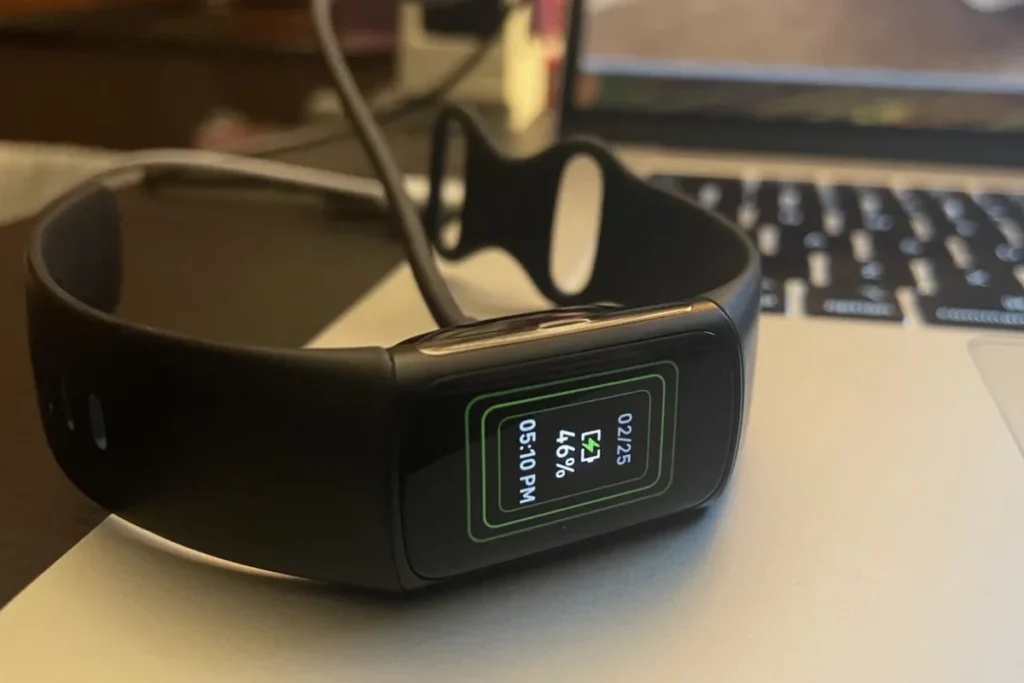
The smaller footprint of the Fitbit Charge 6 limits its physical battery capacity.
- Typical Real-World Usage: Under normal conditions with standard notification sync and sleep monitoring active, you can expect around 5 to 7 days of battery life.
- Heavy Usage & GPS: If you track long outdoor runs using the built-in GPS array or choose to turn on the Always-On Display mode, the battery life drops quickly, often requiring a recharge every 2 to 3 days.
Charging is handled via a proprietary magnetic cradle with click pins. It works efficiently, though you will need to keep track of its specific cable since it is not cross-compatible with older Fitbit generations.
App Experience & Ecosystem
The Huawei Health App Experience
The companion app for the Band 11 Pro is the Huawei Health App, which is compatible with Android 9.0+ and iOS 13.0+. It functions as a centralized, clean dashboard that presents your health analytics without forcing you into hidden subscription tiers. Because the app cannot be downloaded directly from the standard Google Play Store due to regional restrictions, Android users must install it via a quick QR code scan from the retail box to fetch the application package (APK) directly from Huawei’s secure servers. iOS users can download it normally from the Apple App Store.
The data presentation is structured beautifully, allowing you to dive into running form metrics, track distance, check speed and evaluate independent GNSS route accuracy. For runners, the app offers advanced features like pre-race performance predictions based on your historical training logs. It also supports Running Form Analysis to track real-time contact time balance, helping you improve your posture and reduce injury risks.
Behind the scenes, the app utilizes low-energy Bluetooth 5.2 to sync your metrics to a local database on your phone. If you want to share your stats, the software includes built-in data integration hooks that let you export raw files directly into Apple HealthKit, Strava and Komoot. Best of all, there are no hidden fees; every line of code, historical charts covering up to a full year of trends and training insights are unlocked right out of the box.
The Fitbit App + Premium Ecosystem
The Fitbit Charge 6 relies heavily on the Fitbit App. To unlock the tracker, you must sign in using a valid Google Account. This integration means your physical activity data is managed within Google’s secure, global cloud architecture. This ecosystem connection comes with great benefits if you use Google products regularly. The tracker links up with Google Maps for turn-by-turn navigation alerts on your wrist and utilizes Google Wallet for swift contactless payments.
The user interface looks clean, organizing your vitals across four intuitive tabs: Today, Fitness, Sleep and Health. The app uses Bluetooth Low Energy to passively sync stats throughout the day. It also features a useful 90-day health metrics trend dashboard that tracks your ambient breathing rates, baseline skin temperature variations and overnight blood oxygen levels for free.
However, you will hit subscription barriers if you want to maximize your Huawei vs Fitbit health tracking insights. Crucial training data, like your Daily Readiness Score (which tells you if your body is recovered enough to handle a heavy workout) and deep behavioral analytics, is locked away behind a Fitbit Premium subscription fee.
Furthermore, advanced features are separated by a sharp line: the free app gives you the raw tracking data, but the paid tier provides the interpretation through an integrated Gemini-powered AI Coach. This AI layer reviews your active training loads and sleep patterns to build custom, week-to-week workout routines. If you choose not to pay the monthly or yearly subscription, the app can feel limited compared to Huawei’s fully unlocked, fee-free software dashboard.
Notifications & Smart Features
Huawei Band 11 Pro
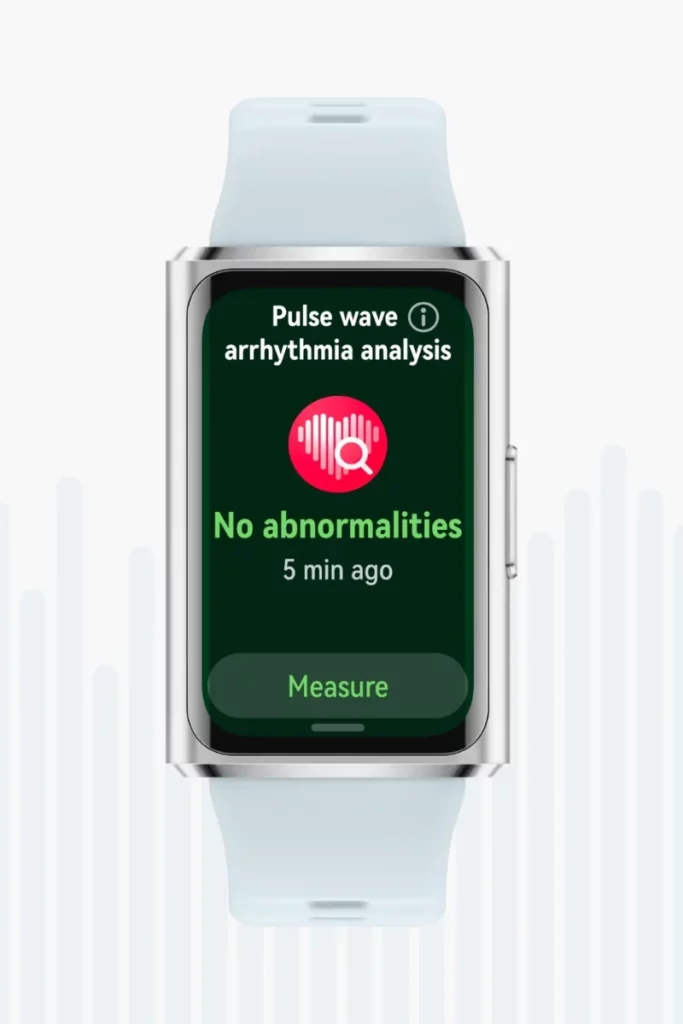
The large, 60 Hz screen makes handling notifications feel efficient. When text notifications or incoming call alerts hit your wrist, you can read the text clearly without needing to scroll endlessly.
- Compatibility: If you are connected to an Android device, you can fire off quick replies using customizable text presets or decline calls with a quick tap.
- Tools: The UI includes useful utilities, featuring a built-in calculator, a responsive digital compass, live weather dashboards and a remote camera shutter trigger to help you snap group photos from a distance.
Fitbit Charge 6
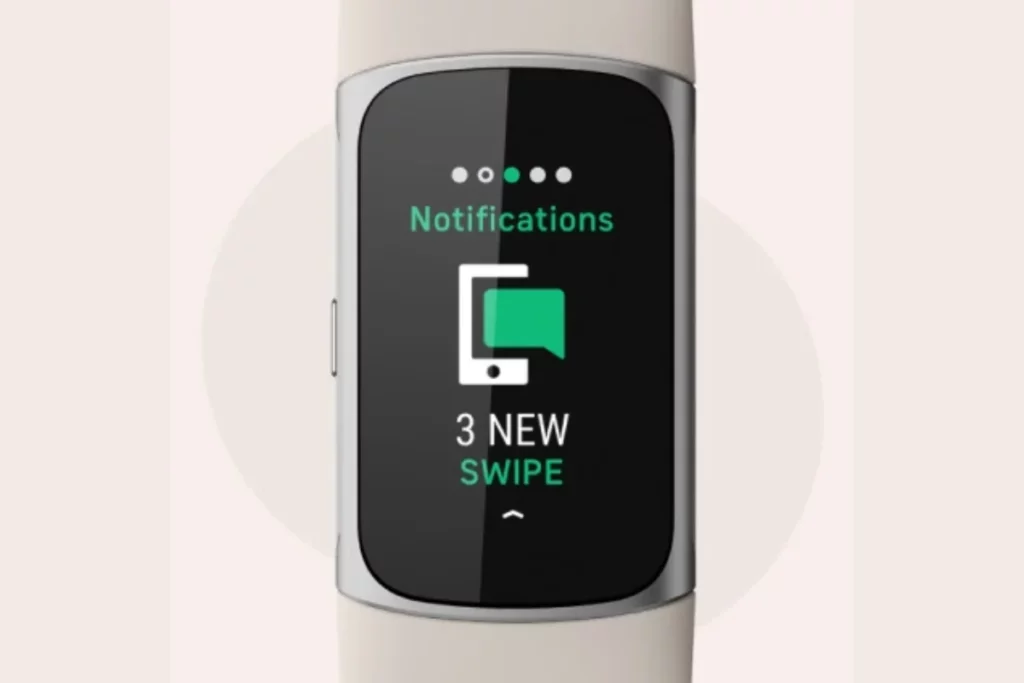
The smart integration on the Charge 6 focuses on deep platform tools rather than generic on-device utilities.
- Google Integration: The inclusion of Google Wallet makes tap-to-pay transactions incredibly convenient during morning runs. Google Maps integration sends vibration turns to your wrist, making it easy to navigate city streets without pulling out your phone.
- Media Control: It offers native YouTube Music controls right on the screen, allowing you to jump tracks or pause playlists while working out.
- Drawbacks: The smaller display means text strings wrap tightly, making long emails or chats a bit tedious to read. Quick reply presets work well with Android but remain restricted when paired with iOS due to Apple’s ecosystem limitations.
Which Tracker Should You Buy?
Buy the Huawei Band 11 Pro If…
- Battery life is your priority
- You want a premium screen
- You dislike subscription paywalls
- You want independent route tracking
Buy the Fitbit Charge 6 If…
- You want advanced clinical insights
- You are integrated into the Google ecosystem
- You love guided workout platforms
Who Should Avoid Both These Bands?
- If you need calling, third-party apps and a larger display.
- If you require advanced training metrics and top-tier GPS accuracy.
- If premium materials and classic watch aesthetics are a priority.
- If you rely on detailed offline maps for hiking or trekking.
- If you want features like LTE connectivity, voice assistants or full app support.
- If you need extended GPS battery life for long outdoor expeditions.
Final Verdict
After using both fitness trackers, my pick is the Fitbit Charge 6. While the Huawei Band 11 Pro impressed me with its battery life and comfortable design, the Charge 6 consistently provided more useful health and fitness insights throughout my daily routine. From detailed sleep analysis and ECG support to Fitbit’s excellent health ecosystem, it simply offers a more complete fitness tracking experience.
What ultimately makes the Fitbit Charge 6 the better choice is its ability to turn health data into meaningful information. Whether you’re tracking workouts, monitoring recovery, improving sleep habits or keeping a closer eye on your overall wellness, the Charge 6 gives you deeper insights that can actually help you make better health decisions. For most people looking for a fitness tracker in 2026, this is the one I would confidently recommend.
FAQs
Decode the Decor
The Smart Jewelry Revolution
A practical guide to wearable tech's future — delivered straight to your inbox.
Author
