

Chest straps are still the category runners reach for when a smartwatch just isn’t cutting it. Interval training, tempo runs, races, everything involving sudden changes in heart rate and this is when chest straps for running truly earn their right to be on the market. Yes, modern smartwatches get better every year in measuring the intensity of your efforts. But they do it on the basis of an approximation, as they detect how light bounces from your wrist and interpret the data.
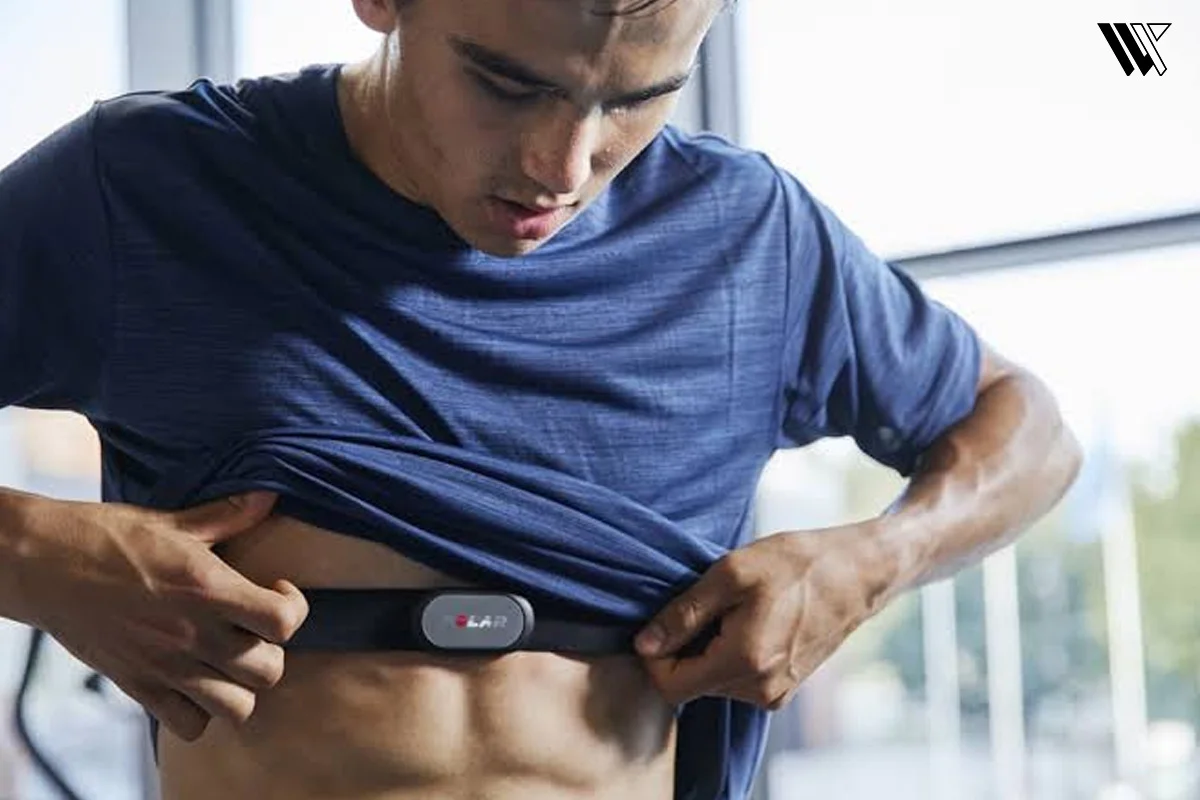
A chest strap measures the electrical signal produced by your heart directly, which means that even in the case of intense physical activity, it does not lag several seconds behind or lock onto the rhythm of your steps rather than your heartbeats. If you train according to heart rate zones, the importance of that difference is greater than you might imagine. So here are the best chest straps for running you can buy in 2026!
The Best Chest Strap Heart Rate Monitors at a Glance
- Best overall: Polar H10
- Best for advanced Garmin runners: Garmin HRM 600
- Best rechargeable: Wahoo TRACKR
- Best value: Polar H9
- Best for sports-bra wearers: Garmin HRM-Fit
| Strap | Price | Battery | Connectivity | Memory |
|---|---|---|---|---|
| Polar H10 | $89.95 | ~400 hrs, replaceable coin cell | Bluetooth (x2), ANT+, 5kHz | One session |
| Garmin HRM 600 | $169.99 | ~2 months rechargeable | Bluetooth (x3), ANT+ | Full standalone recording |
| Wahoo TRACKR | $89.99 | 100+ hrs rechargeable | Bluetooth (x3), ANT+ | None |
| Polar H9 | $69.90 | ~400 hrs, replaceable coin cell | Bluetooth, ANT+, 5kHz | None |
| Garmin HRM-Fit | $149.99 | ~1 year, replaceable coin cell | Bluetooth (x3), ANT+ | Steps, calories, all-day HR |
Polar H10- Best Overall
© Polar
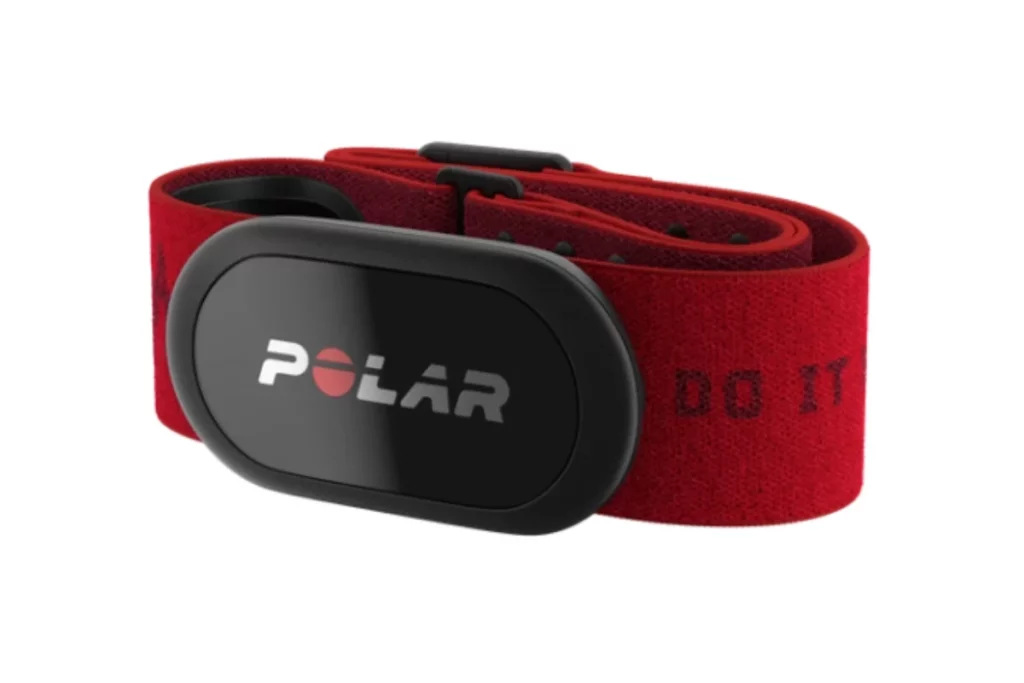
In terms of performance, the Polar H10 is already becoming the industry benchmark. Although it’s not a new model but Polar hasn’t needed to reinvent it because it still does the one job well: give you a clean, reliable heart rate number without drama.
H10 employs electrical sensing technology (just as an ECG does, only not certified by a medical body), which can be connected over Bluetooth, ANT+ and Polar’s proprietary 5kHz protocol for old gym equipment. What’s more important, you can use up to two Bluetooth connections simultaneously, meaning that you can connect the strap to your watch and gym machine, for example, at the same time. There is an additional space in the strap for saving your session data too in case you don’t have a phone with you.
Decode the Decor
The Smart Jewelry Revolution — a practical guide to wearable tech.
Its battery is replaceable and lasts for around 400 hours on average, so you’re not thinking about charging it every week. The price is set at $89.95 and is water resistant up to 30 meters, thus covering all kinds of training including swimming.
And the fact that it continues to serve as a reference device in independent research of wearables is not an attempt at marketing from Polar but just recognition of its reliability. That said, there is a need to separate the independently verified qualities of this device from what Polar states in its own documentation.
Pros:
- Compatibility with various watches, apps and gym equipment
- Two Bluetooth connections
- Long battery life
- On-device storage for one training session
- Trusted as a reference device in independent testing
Cons:
- No HRV or running dynamics data
- App (Polar Beat/Flow) looks basic compared to modern solutions
- More expensive than H9 without any necessary additional features
Garmin HRM 600- Best for Advanced Garmin Runners
© Garmin
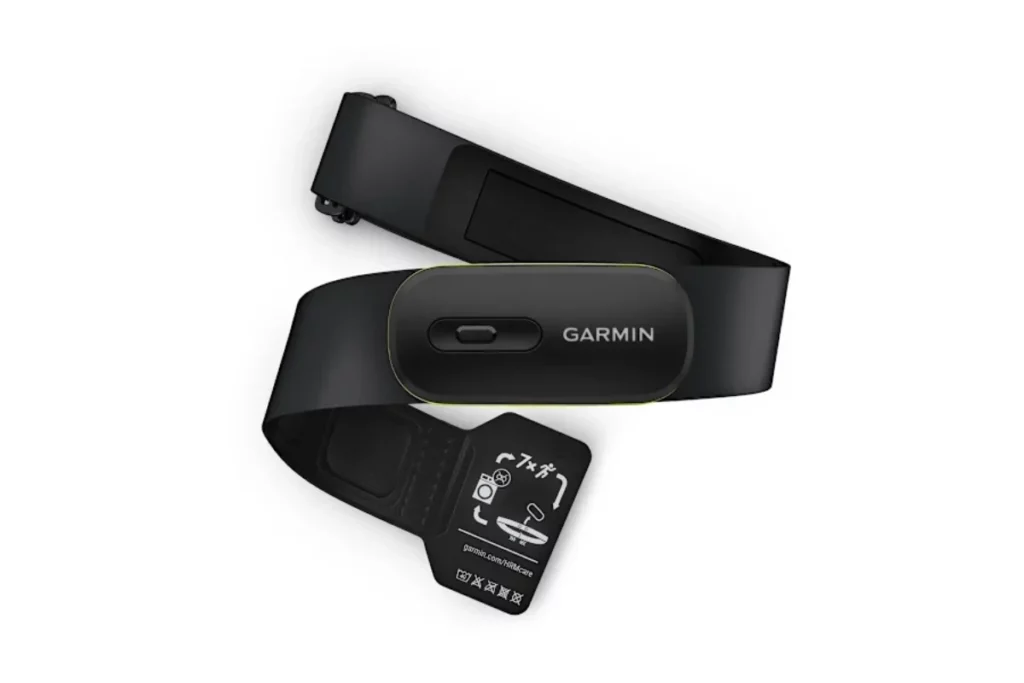
This is currently Garmin’s flagship model and replaces the previous HRM-Pro Plus. You end up here if you’re deep into the Garmin ecosystem and want to do more than BPM.
Apart from the usual heart rate and HRV monitoring, it tracks the running dynamics such as cadence, vertical oscillation, ground contact time and even a new metric called step speed loss that measures how much you slow down with every strike of your foot to the ground. It can also monitor a full workout independently of your watch, which actually comes in handy if you play any kind of team sport or something where using a watch is not practical.
It uses a rechargeable battery that will last you around two months assuming you use it one hour per day. So, no more fiddling in the drawer to find a coin battery for it. Supports three Bluetooth connections and ANT+ as well and has a 5 ATM waterproof rating. At $169.99, it is almost twice as expensive as H10 and while it’s important to mention that the vast majority of the cost goes into Garmin features, rather than improvements in heart rate monitoring accuracy itself. If all you need is BPM on your wrist, you’re definitely overspending here.
Pros:
- Recording activities independently of the watch
- Various running dynamics metrics for Garmin watches
- Long-lasting rechargeable battery
- Three simultaneous Bluetooth connections
Cons:
- Expensive
- Running dynamics not useful with other watches
- Rechargeable means one more thing to charge
Wahoo TRACKR Heart Rate- Best Rechargeable
© Wahoo
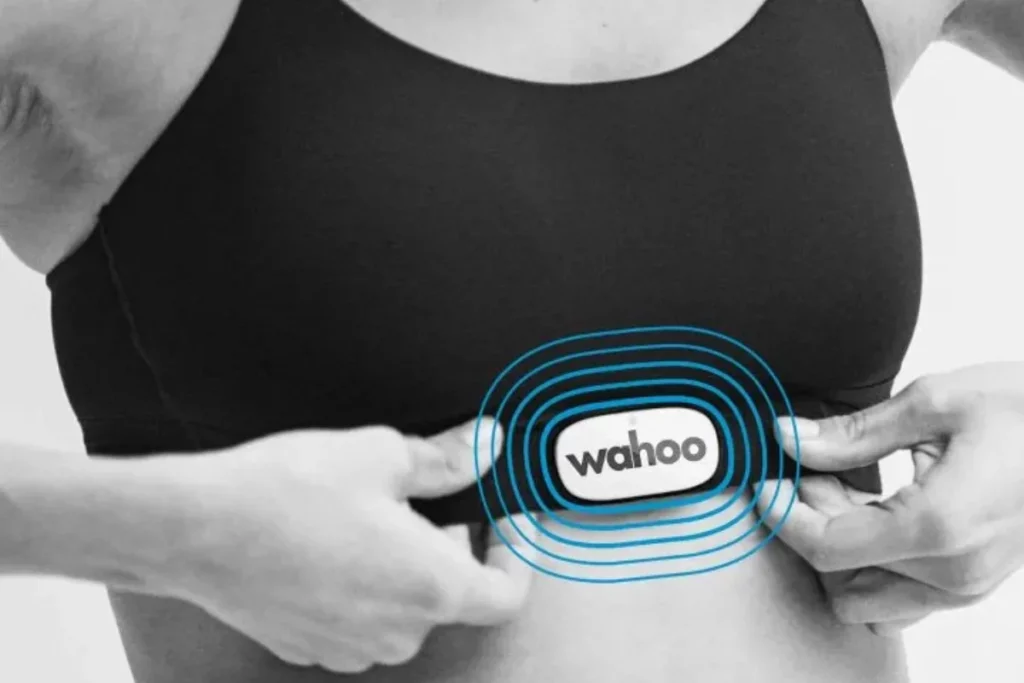
For people frustrated with having to fiddle around with coin cell batteries, the Wahoo TRACKR heart rate monitor is Wahoo’s answer. No more coin cell batteries, as it relies on an internal rechargeable lithium-ion battery that will keep going for 100+ hours on the go. While it sounds impressive, it’s nothing compared to the 400 hours a coin cell strap will provide.
Connects to devices using the ANT+ standard and has support for up to three simultaneous Bluetooth connections so you can pair it with a watch, a bike computer and Zwift. Compatible with pretty much any major training app out there. Weighing just 39 grams, it’s light.
But the main drawback is the lack of its ability to store data internally. It can only transmit live data, meaning you’ll always have to have an active device connected to it. If your phone fails mid-race while you don’t have a watch on you, bye-bye data. It’s also rated IPX7, but according to Wahoo, it’s not intended for swim tracking due to the lack of onboard memory.
At $89.99, it costs about as much as H10 does, though the reviews state that H9 will give you similar performance but for slightly less money.
Pros:
- Rechargeable, no coin cells to buy or replace
- Three simultaneous Bluetooth connections and ANT+
- Lightweight at 39g
- Great app compatibility
Cons:
- No onboard memory, always has to be connected
- Not suitable for swim tracking
- Costs as much as the H10 but doesn’t have its proven reliability
Polar H9- Best Value

© Polar
In case you do not require any internal memory and simultaneously use two Bluetooth connections, then the Polar H9 will provide you with comparable accuracy to H10 for significantly reduced costs. The H9 uses the same electrical sensing technology, Bluetooth, ANT+ and 5kHz and lasts about 400 hours on an easily replaceable coin cell.
Features that H9 lacks in comparison with H10 include a lack of onboard workout storage, meaning you will have to connect either your phone or watch permanently and no second simultaneous Bluetooth connection. There is also no accelerometer to track the cadence from the strap itself. For somebody just looking for a steady heart rate feed to a single receiver, all this is not really important.
The price is $69.90 and it undercuts the H10 by a solid $20-30 and reviewers consistently call it out as a smart pick if you don’t need the extras.
Pros:
- Comparable accuracy to H10, but for lower price
- Very long-lasting battery, easily replaceable cell
- Comfortable, adjustable, washable strap
Cons:
- Lacks internal memory, no option to leave the strap without connecting it to anything
- Single Bluetooth connection at a time
- No HRV or cadence data
Garmin HRM-Fit- Best for Sports-Bra Wearers
© Garmin
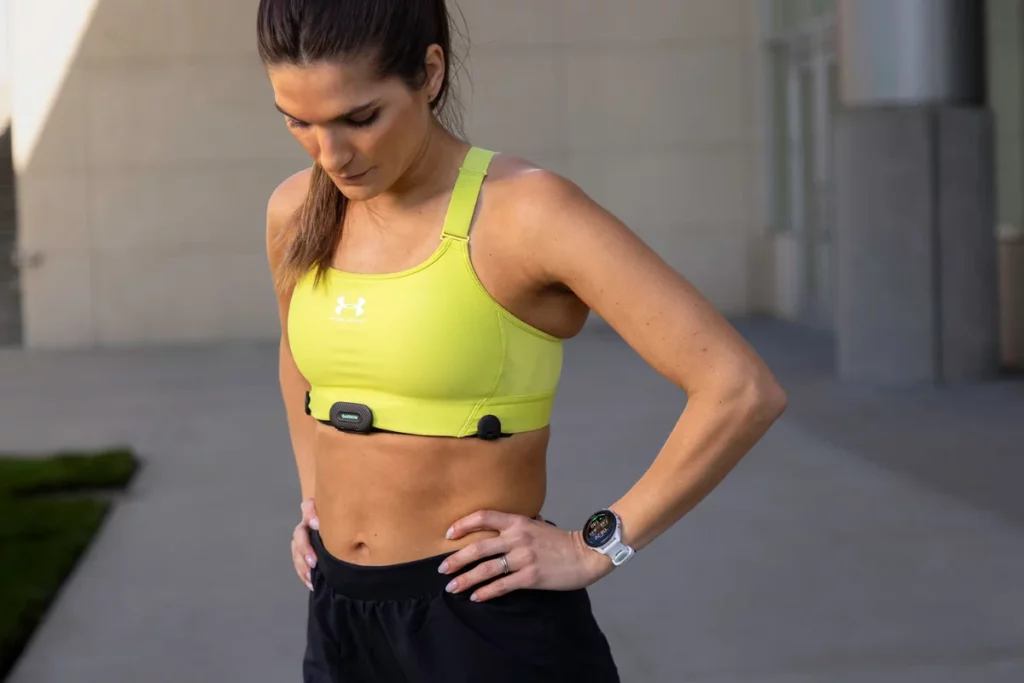
This one actually addresses an irritating issue. There are many women who use sports bras who find that a regular chest wrap strap digs into the underband or simply fails to properly fit underneath it. Instead of attaching to the rear strap like most other HRM straps, the HRM-Fit clips to the band of a sports bra through three attachment points.
This one is not compatible with all sports bras. According to Garmin, it works with medium-high support sports bras that feature a flat band, have no bulky seams, no zippers or other decorations in the front that could interfere with the clips. It means that if your favorite sports bra does not fall into this category, this HRM will be of no use to you.
When it comes to features, it is quite similar to more expensive Garmin straps and it provides real-time heart rate data, activity tracking and even running dynamics when connected to a compatible Garmin device. Battery life is amazing at one year on a replaceable coin cell, so you will not be replacing batteries every couple of months. This HRM will cost you $149.99, which is more expensive than most straps mentioned in this list of best chest straps for running.
Pros:
- Solves the problem of irritation under a sports bra
- Battery life of one year
- Running dynamics on compatible devices
- Three simultaneous Bluetooth connections
Cons:
- Compatible with certain sports bras only
- Pricier than a regular chest strap
- Compatibility with the Garmin ecosystem
Chest Strap vs Wrist Heart Rate: When Does a Strap Actually Matter?
The chest strap reads the electrical signal that your heart emits on every beat. Modern smartwatches rely on shining light through your skin to detect heart rate based on blood flow, which is a very different approach to getting this information.
In case of continuous, relatively moderate runs, a modern watch is quite enough for most users. Wrist-based sensors can struggle while running fast (e.g., interval training), during hard exercises, in cold conditions, or when you move your hands a lot because of something called cadence lock, when your watch mistakes running cadence for heart rate and makes the HR monitor readings incorrect. If you ever saw your heart rate readings on your watch become a perfect line during sprinting, you experienced the cadence lock yourself.
The chest strap and the watch are not competitors anyway and your watch takes care of the GPS, display and connection with the training platform. The chest strap only provides more accurate data in workouts when you need it. All independent running guides conclude about the same thing in relation to workout-specific accuracy: use both your watch and chest strap.
What to Look for in a Running Chest Strap
Accuracy and Signal Stability. Try to ignore marketing language and focus on independent testing when available. Consistent electrode contact matters more than any spec sheet claim.
ANT+ vs Bluetooth. It doesn’t really matter if you only wear one watch without anything else. But if you need to connect to a watch, a treadmill and an app, make sure you can actually do it.
Type of battery. Coin cell batteries will last longer between replacements, but require replacement. On the other hand, rechargeable batteries will save your wallet from a constant need to buy batteries but require remembering to charge them.
Fit and comfort. Proper chest size and good contact with electrodes are much more important than people usually think. A loose fit is not a problem but noisy readings are.
Internal memory. Matters only if you sometimes train without a phone and watch nearby.
Running metrics. Cadence, vertical oscillation and ground contact time only make sense if your watch is capable of reading them. Don’t spend money on useless data.
Which Chest Strap Should You Buy?
If you need a safe choice with wide compatibility but don’t want any specific functions provided by a brand, choose the Polar H10. If you are part of the Garmin family and need running dynamics and independent recording features badly enough to invest in it, then choose the Garmin HRM 600. If you have had enough of coin cells and are interested in a battery-operated sensor, go for the Wahoo TRACKR. If all you want is reliable heart rate data and don’t want to pay for extra functions you will not use, choose the Polar H9. And if a regular strap keeps messing with your sports bra, try Garmin HRM-Fit.
One Thing Worth Remembering Before You Buy
A chest strap is one of the few pieces of running gear where the expensive option doesn’t automatically win. The heart rate tracking capabilities of a $60 chest strap and a $170 one will be virtually the same, the price difference covers what happens afterward: HRV, running form analysis, independent recording, bra-compatible clip. In other words, instead of choosing “the better chest strap”, it’s important to consider “the extra feature I will bother opening my app for”.
Be honest with yourself here. If you have never once analyzed the ground contact time on a past run, there’s no way that adding running dynamics to your arsenal will make you do that, regardless of how nice the strap looks. Also, if you already know that you would be obsessing over any HRV trend lines, then it’s less expensive to pay more initially than twice as much later.
Last but certainly not least, whatever the choice, always wet the electrode strip before putting the strap on. Dry skin accounts for most cases of “broken and inaccurate strap”.
FAQs
Decode the Decor
The Smart Jewelry Revolution
A practical guide to wearable tech's future — delivered straight to your inbox.
Author
