

If you search “Can my smartwatch detect sleep apnea” on Google, there are about a dozen contradictory responses on the first page. Some claim that they can do it, some claim that “sort of” while all of them avoid saying how serious the term “detect” is. There is a huge gap between the wearables for sleep apnea that detect any abnormalities and those that can be used to diagnose your problems. The screening and the diagnosis are two absolutely different things, although the marketing claims the opposite.
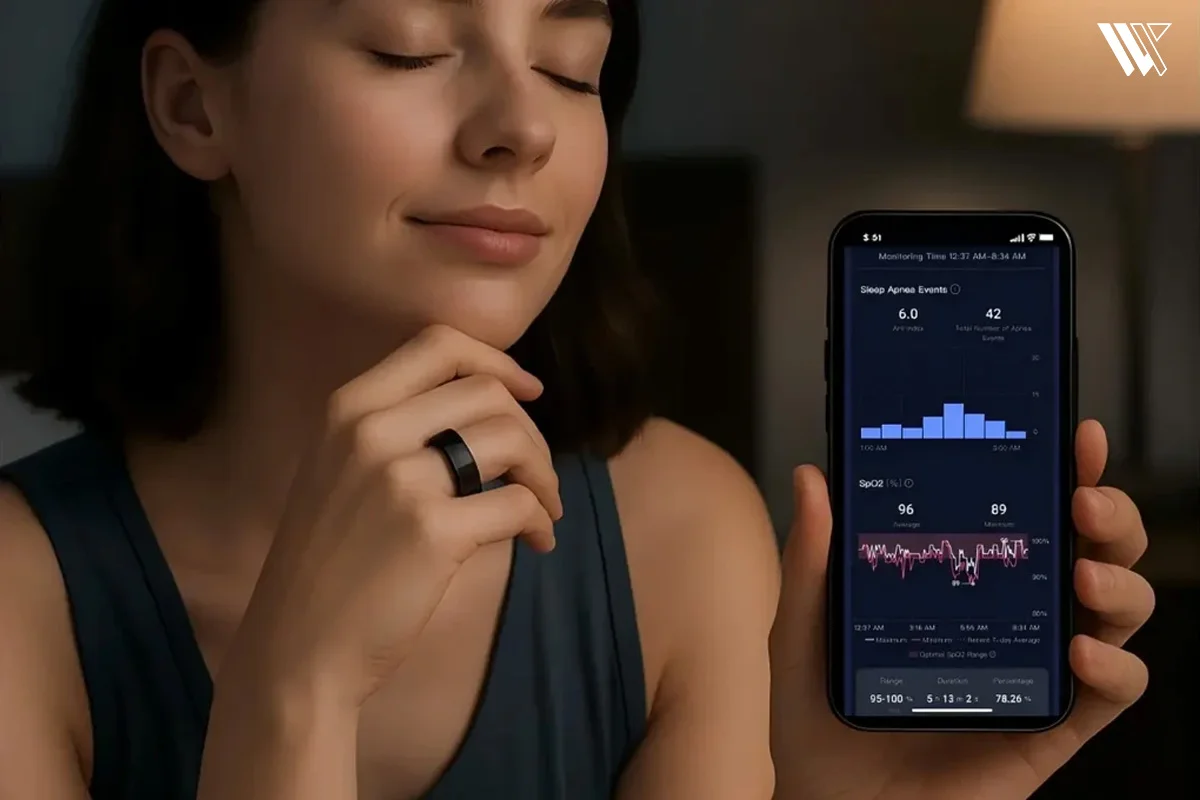
Best Sleep Apnea Wearables at a Glance
- Best for an actual diagnosis: Happy Ring
- Best affordable FDA-cleared screening for iPhone: Apple Watch SE 3
- Best for Android: Samsung Galaxy Watch 9
- Best ring you can buy today for apnea-focused tracking: RingConn Gen 2
- FDA-cleared ring to wait for: Samsung Galaxy Ring
What Counts as a Sleep Apnea Wearable?
A sleep apnea wearable device is one that does either one of two things. First, if it offers a risk assessment by alerting users to indicators of sleep apnea and encouraging them to take a diagnostic test. Second, if it actually diagnoses and alerts users to the presence of sleep apnea, insomnia and other related conditions.
The former applies to most of the devices on the market. Even though they’re FDA-approved, that doesn’t make them diagnostic devices.
That’s where the Happy Ring differs from other devices. This ring is approved by the FDA to aid the diagnosis of obstructive sleep apnea, insomnia and other conditions at home with a clear care pathway of a sleep physician reviewing your data.
Decode the Decor
The Smart Jewelry Revolution — a practical guide to wearable tech.
Best for an Actual Diagnosis: Happy Ring
© Happy Ring
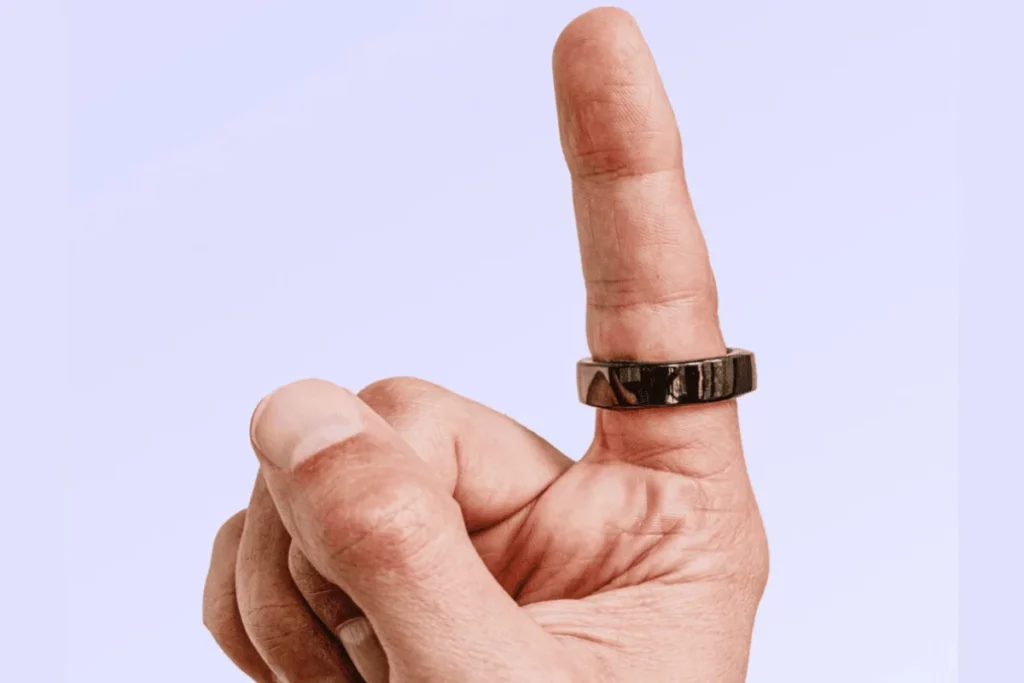
The Happy Ring is new to the game and it deserves some attention. It costs $396 and includes the ring itself, a year of tracking and virtual consultations with a board-certified sleep physician. Many insurance plans cover the cost of the device as well.
These are what make the Happy Ring different from others on the list. Happy Health received FDA clearance in late 2024 to track various biometric measurements including blood oxygen levels, pulse rate, skin temperature and even brain activity using a ceramic ring worn on the finger. In mid-2025, it was granted its second FDA clearance, this time to diagnose obstructive sleep apnea and insomnia. Together, those two clearances make the Happy Ring the only smart ring available that is cleared for diagnosing both conditions.
The testing procedure is done through the Happy Health platform itself.
One orders a sleep test online, wears the ring for a few nights and then gets remote review by a physician. According to the company, it is 98% accurate in detecting sleep apnea. In case sleep apnea is diagnosed using the Happy Ring, the patient may get connected to further treatment, including a CPAP prescription within the Happy Health platform.
The battery life is not specified in terms of days, the company only states that it lasts long enough. It’s frustrating if you prefer hard specs while shopping. Also, this is not a substitute for a general-purpose smartwatch and does not include any notifications or workout tracking features.
Pros:
- FDA-cleared to diagnose sleep apnea, not just alerting to the risk
- 97% concordance with in-lab polysomnography
- Entire care pathway covered, including physician review and treatment options
- Comfortable ceramic ring, no wires or electrodes like in a regular sleep study
Cons:
- $396 upfront cost, more expensive than any other watch on the list
- Battery life is not specified in days
- Not a general-purpose smartwatch or fitness tracker
- It’s buying into the platform and process, not just the device itself
Best FDA-Cleared Screening for iPhone: Apple Watch SE 3
© Apple
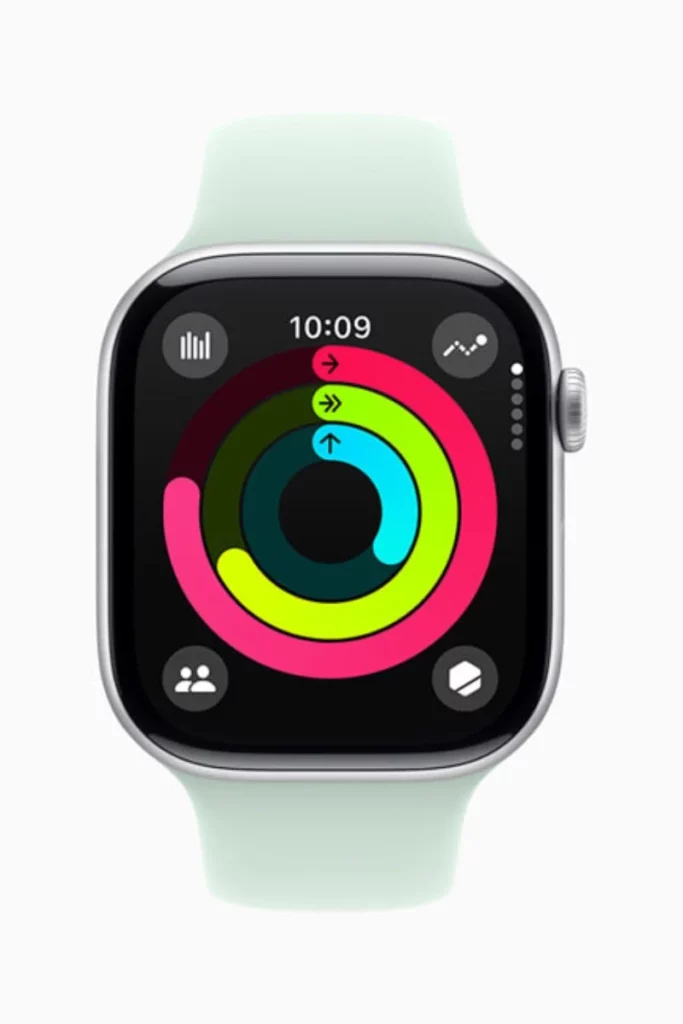
And if you only want the screening version but you’re on iPhone, you do not need to spend more than you have to. The Apple Watch SE 3 starts at $249 and comes with the same Sleep Apnea Notifications feature that the expensive models of Apple Watches have: Series 9 and newer, Ultra 2 and newer and SE 3 itself.
The technology behind it is rather interesting, as Apple relies on your wrist’s accelerometer to produce something called Breathing Disturbances data instead of relying only on the blood oxygen readings. In order to get any sort of notification from this feature, you will need to have at least 10 nights’ worth of this data in 30 days time period. That’s a slow process.
As per the battery life, we are talking about the usual all-day 18 hours’ period of battery use and, again, it charges pretty fast, getting you 8 hours of sleep monitoring with just an 8-minute top-up.
As for the app performance, it will be precisely what you’d expect; all of the data is automatically added to the Health app. And, finally, in order to use the device for apnea notifications, you’ll need an iPhone 11 or newer with iOS 26. That rules out Android users.
Pros:
- The cheapest way to get FDA-cleared apnea screening from Apple Watches
- Same detection algorithm as Ultra models
- Fast charging, which means you will not be stuck with missing a night of data collection
- Data is automatically collected into the Health app
Cons:
- Up to 30 days to actually receive any notification
- iPhone only
- It’s a risk notification, not a diagnosis, meaning the flag does not mean anything but visiting the sleep clinic for a real sleep test
- 18-hour battery life means you should take care of your battery discipline if you wear it at night
Should You Buy Series 11 Instead?
You might be wondering, why not buy a Series 11 instead? The features are better, of course, but if you’re buying an Apple Watch solely for sleep apnea, I wouldn’t recommend it. The Series 11 starts at $399 and offers the very same sleep apnea notification algorithm as SE 3. You are not paying the additional $150 for a better screening algorithm but for a better screen, for advanced sensors and for the rest of the features that make Series 11 great to use.
Best for Android: Samsung Galaxy Watch 9

© Samsung
Samsung has a very strong case here, no doubt about it. The Galaxy Watch 9 starts at $379.99 for the Bluetooth 40mm version, which comes with an FDA-cleared Sleep Apnea feature, which was cleared around the same time as the release of the watch, which was July 2026. While Apple still takes 30 days for its feature, Samsung requires only two nights of data over a period of 10 days.
It sports a 390mAh battery capacity, which is about 20% larger than the previous model’s. The feature requires the use of the Samsung Health application and a compatible Galaxy phone that uses Android 12 or later, so it’s a Samsung ecosystem play, not a general Android one, so pairing it with a Pixel or OnePlus phone won’t get you the same experience.
Pros:
- FDA-cleared
- Requires only 2 nights of data compared to 30 days for Apple
- A larger battery compared to the last generation of the watch
- Simple interface in the Samsung Health app after setup
Cons:
- Limited to the Samsung ecosystem, a Galaxy phone is required
- More expensive starting price at $379.99 compared to the Apple Watch SE 3
- A risk flag like Apple’s, this does not diagnose Sleep Apnea
- Requires 4+ hours of sleep each night to count for two nights
Best Smart Ring You Can Buy Today for Apnea Tracking: RingConn Gen 2
© RingConn
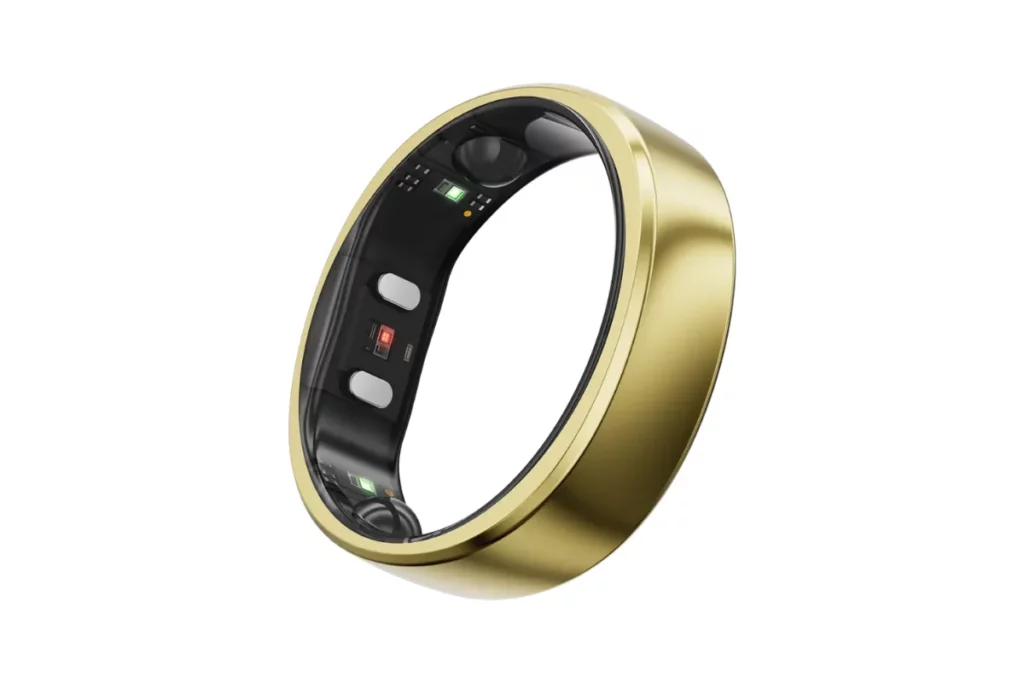
The RingConn Gen 2 is one of the few smart rings on the market that actually offers a dedicated apnea monitoring mode if you struggle to get into sleep tracking on a smartwatch. At $299, this ring works without any subscription and has an impressive 12-day battery life, which is quite the perk compared to all devices that need to be charged each night.
You will have to activate this feature manually and it will track your breathing, heart rate, SpO2 and sleep data for 3 nights in a row after activation. The company’s marketing emphasizes the high internal accuracy of their feature, but it’s important to note that it is not FDA-cleared.
The app offers all of its functionality for free and there’s no subscription for accessing your sleep data, unlike many competitors.
Pros:
- Dedicated 3 night apnea monitoring workflow, not just passive sleep tracking
- No subscription required
- Battery lasts for 12 days
- Comfortable
Cons:
- Not FDA-cleared for apnea risk assessment
- Accuracy claims are based on internal testing, not regulatory study
- Activation of the feature is required each time manually
- Expensive
What About RingConn Gen 3?
The RingConn Gen 3 starts at a price of $349, which is about $50 more expensive than Gen 2 and includes an interesting new feature called Sleep Apnea Pattern Insights based on a three-night baseline. While the latest generation should be the first recommendation for sleep apnea wearables, the actual documentation from RingConn itself suggests that the sleep apnea monitoring feature is still part of Gen 2, while Gen 3 has more of a pattern-detecting function integrated within its health dashboard, along with some of the new ones such as vascular health trends insights. Also, the battery life is improved in Gen 3 to 14 days compared to Gen 2’s 12 days, so you should be fine with the newer device if money isn’t an issue.
The FDA-Cleared Smart Ring: Samsung Galaxy Ring

© Samsung
Samsung announced at its Unpacked event in July 2026 that the Sleep Apnea function available on its watches will be added to its smart ring as well and claiming that when it launches, it will become the “first FDA-cleared” over-the-counter smart ring for detecting the risk of sleep apnea. No new hardware is needed, it will come to the market as a software update of the current version.
Currently, the price of the existing hardware of the Galaxy Ring is $399.99, battery life is estimated at up to 7 days and there’s no subscription fee applicable. Currently, when buying it, you purchase it with the sleep tracking function only because the apnea function is not active yet. Samsung announced the launch of this function for fall 2026, without specifying the exact date.
Pros:
- First FDA-cleared over-the-counter smart ring for apnea risk detection
- No subscription needed
- Can connect to the entire Samsung Health ecosystem (in case you use a Galaxy Watch)
- No additional hardware purchase needed if you already own one
Cons:
- Apnea detection function is not yet available, it’s expected to launch in fall 2026
- At $399.99, the price is higher than that of RingConn Gen 2 for a ring without this function
- Battery life of 7 days is shorter than that of RingConn (about 12 days)
- Needs a Galaxy phone to work fully
Trackers That Don’t Make This List
There are a few names that keep repeating themselves throughout this search and while they are great products for sleep tracking, they’re just not designed for sleep apnea in particular.
Oura Ring 5 provides great sleep and recovery tracking, but no dedicated sleep apnea alert function.
Withings ScanWatch 2 actually has FDA clearance for detecting nighttime breathing disturbances. Withings has been doing this with its ScanWatch series since 2021. It’s not marketed as a sleep apnea detector, it’s a breathing disturbances tracker, a related but more narrow claim.
Fitbit Air, Garmin CIRQA and WHOOP all provide some great SpO2, breathing, or sleep stage tracking, which is very useful information, but not really designed for apnea detection specifically.
Google Pixel Watch has some nice emergency and general respiratory capabilities but those cannot be used for apnea detection either.
Which One Should You Actually Buy?
If you seek an actual diagnosis and are willing to spend a bit more, the Happy Ring will provide you with the most accurate results without visiting a lab. If you want a device that serves as a screening tool and you use an iPhone, the Apple Watch SE 3 is the right choice for you. For those who use Samsung phones, the Galaxy Watch9 will be the best value pick.
If you want a ring and are ready to get it now, the RingConn Gen 2 will be the choice for you, but keep in mind that it is not FDA-cleared. Waiting for the software update of the Galaxy Ring this fall will be a good choice if you seek an FDA-cleared device specifically.
And in case you already have a compatible Apple or Galaxy Watch, you probably will not need to purchase a new device at all, the screening function will be available for you to activate once its update arrives.
Also read: Can The Apple Watch Detect Seizures?
What Should You Do If a Wearable Flags Sleep Apnea?
A flag from any of these devices, whether it is a smartwatch or a smart ring, is the trigger to visit a doctor rather than the diagnosis in itself, unless you use Happy Ring’s diagnostic method, which involves a consultation with a physician as part of the process. For everyone else, the next step in this situation will be a traditional one: conducting a home sleep apnea test or a polysomnography study.
Even if the test results show no sign of this disorder, do not forget that these wearables cannot detect the less serious cases of sleep apnea. Therefore, in case you experience snoring, morning headaches and exhaustion even after plenty of sleep, consult your physician about this problem.
None of these wearables aims at replacing a consultation with a doctor. The good devices only prompt the user to conduct it as soon as possible.
Also read: Can Smart Rings Detect AFib?
Wrap Up
What’s really intriguing about this particular innovation isn’t some device, but how quickly the entire field went from wellness to the point when your insurance starts covering the costs of some medical products. Just two years ago, the story was about Apple and Samsung, who did the same thing, tracked your wrist and sent you to the doctor if there was something wrong with your health. Now there is a ring capable of evaluating your sleep and flagging an issue without even visiting a doctor. This is not a simple entry in the existing race but a completely new kind of product.
That’s why this field will keep developing quite rapidly. Samsung’s activation of the Galaxy Ring this fall will cause a significant shift in the field of smart rings, and if everything works according to the plans of Happy Health, you shouldn’t be surprised by Apple or Samsung moving on the same path to receive this higher-level clearance instead of keeping their devices in the screening mode. It wouldn’t hurt to check out this issue in six months, honestly.
For now, the real choice you have to make isn’t between the brands. It’s whether you prefer being reminded of the appointment with the doctor or getting through this procedure faster.
FAQs
Decode the Decor
The Smart Jewelry Revolution
A practical guide to wearable tech's future — delivered straight to your inbox.
Author
