

You know that moment when someone tells you something important and you confidently think, “I’ll remember that.” Then, a few hours later, your brain quietly decides that information never existed.

That is where the idea behind the Plaud One gets interesting. Instead of pulling out your phone and trying to type everything down while still pretending to listen, this AI wearable is designed to remember the conversation for you.
It is not quite the AI pin you might expect, either. The Plaud One comes as a pair of half-in-ear earbuds with a charging case, bringing a different take on the idea of an AI memory assistant. It is currently available through a waitlist, so there is still plenty to discover about what this little device can actually do. So, let’s take a closer look at the Plaud One and what it brings to the table.
Plaud One Explained: A Different Kind of AI Wearable
When we hear the word “wearable,” most of us immediately picture a smartwatch tracking our heart rate or counting our daily steps. The Plaud One represents a completely different direction for the wearable tech industry. Instead of tracking your physical body, the Plaud One is designed to track your information.
Decode the Decor
The Smart Jewelry Revolution — a practical guide to wearable tech.
This AI pin acts as a personal memory assistant that captures your spoken words seamlessly. AI wearables are expanding far beyond basic health tracking because our daily problems have shifted. We no longer just need to know how many calories we burned we need to know what our boss said at the end of a chaotic hour-long meeting. The Plaud One focuses strictly on capturing information rather than measuring your physical activity.
It is completely normal to feel a bit skeptical about wearing a microphone all day and honestly, you have every right to feel that way. You might think this sounds like an attempt to replace human memory entirely. However, the goal of the Plaud One is not to replace your brain. Instead, this device simply catches the overflow of information so your mind can focus on thinking rather than storing.
What Is Plaud One and How Does It Work?
© Plaud
© Plaud
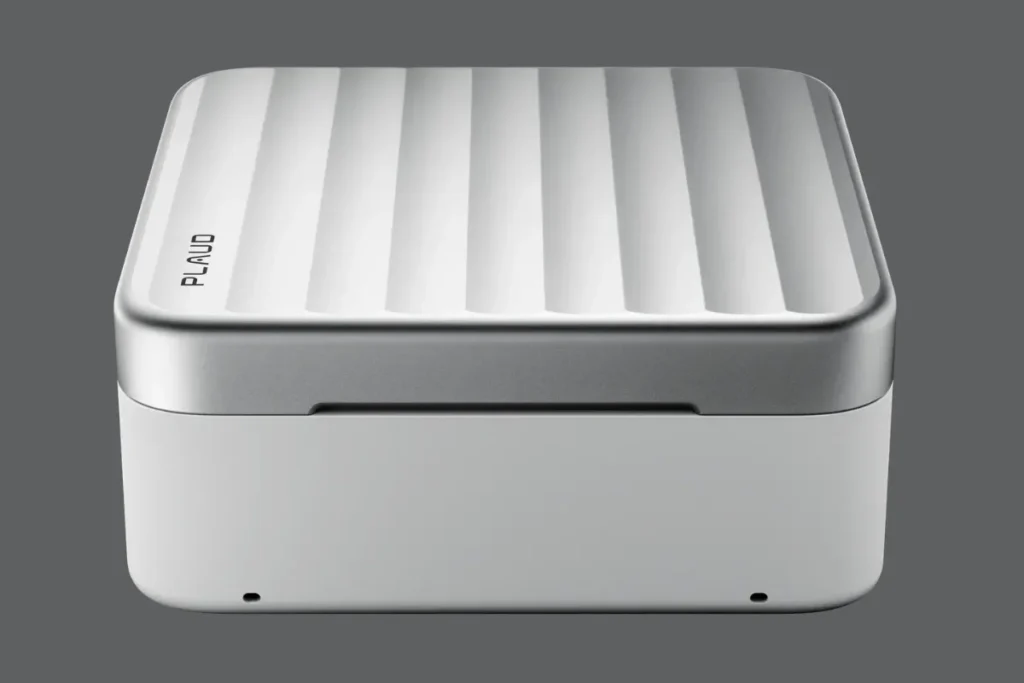
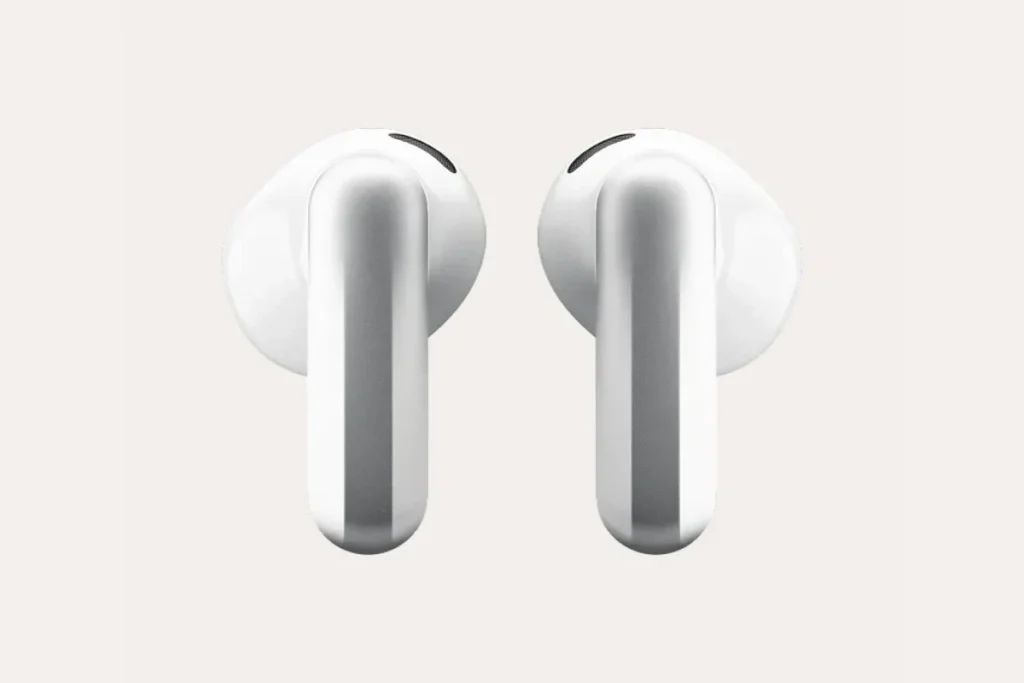
Initially, the design of the Plaud One seems to be conventional. However, its structure is completely new compared to other audio devices. It has two components that work together: a small pair of half-in-ear buds and an intelligent pocket aluminum case for charging them.
They can be worn while making calls or video conferences, but the charging case can be placed on a conference table as well. The buds have voice pick-up sensors built into them, whereas the charging case contains four special beamforming microphones that are able to capture voices up to sixteen feet away from the room.
It works on a very simple principle consisting of four steps:
- Capture: You press a specialized physical button on the case or use the earbuds to capture your conversation, call or random idea.
- Transcription: Your recording is uploaded to the cloud directly, either via your phone or independently using the 4G cellular eSIM embedded in the case itself and is transcribed to text by speech recognition software in over one hundred languages.
- Summarize: The software filters out filler words, distinguishes between the speakers and summarizes the conversation in bullet points, action items or mind maps, utilizing large language models.
- Organize: The mobile application that accompanies the device keeps your transcript organizes your notes and drafts your follow-up emails or Notion pages or any other task lists from the discussion.
As the charging case has its own 4G LTE cellular capability, the Plaud One does not require your smartphone for syncing your recording or for interacting with the AI assistant at all. Therefore, you do not even have to take your smartphone with you to an interview or a boardroom meeting.
Specifications
| Specification | Plaud One |
|---|---|
| Design | Half-in-ear earbuds with an aluminum charging case |
| Microphones | 3 per earbud, 4-mic beamforming array on the case |
| Audio Range | Up to 6.6 ft (earbuds) / 16.4 ft (case) |
| Connectivity | Bluetooth 5.4, independent 4G LTE eSIM |
| Battery Life | Up to 6 hrs continuous (36 hrs total with case) |
| Local Storage | 16 MB per earbud / 512 MB in case |
| Capabilities | 112+ languages, automatic speaker diarization |
| Durability | IP54 water resistance (earbuds) / IP52 (case) |
| Price | $249.99 |
Why AI Recording Devices Are Becoming Popular
© Plaud
We are now living in the age of excessive information overload. On a daily basis, people are constantly getting involved in back-to-back meetings and casual hallway talks, as well as endless amounts of data. It is quite hard to manage all of these pieces of information by hand.
This fatigue is precisely why AI recording devices such as the Plaud One have become so popular nowadays. People have grown tired of making perfectly accurate notes. In the process of furiously scribbling down what people say, one misses out on understanding the context and meaning of those words.
Thus, the real benefit of the Plaud One is that it gives a person permission to stop using his pen. What the Plaud One brings to people is not the possibility of recording every minute of their life. The real benefit of the device is the ability to easily access needed information.
How Plaud One Fits Into the Rise of AI Memory Assistants
To truly appreciate the Plaud One, you have to look at the broader shift happening in consumer technology. We are slowly moving away from traditional wearable technology and stepping into an era where devices actively help us think.
You could see this wider shift at IFA, Berlin, where AI-powered wearables and smart devices are increasingly becoming part of the conversation around what comes next for personal technology.
Traditional wearables, like your standard smartwatch, were built to measure health metrics like steps, sleep and heart rate. AI wearables, on the other hand, are built to understand context. They capture the world around you, interpret the information and provide active assistance based on that data.
The Plaud One fits perfectly into this emerging category of AI memory assistants. It sits right alongside other futuristic gadgets like smart pins, AI pendants and even smart glasses. All of these new devices share a common goal: they want to seamlessly blend into your life and handle digital tasks without requiring you to stare at a glowing screen.
The Biggest Challenge for AI Wearables: Privacy and Trust
Of course, it would be impossible to discuss the Plaud One without talking about privacy and trust. Using an AI recorder that captures everything on its way naturally creates concerns about privacy.
It is totally understandable that people get nervous when using an AI recorder that records all of your conversations in public or even in private places. The issue of consent plays a significant role in such cases since people record the voice of other individuals. Moreover, it is crucial for people to know how exactly their audio recordings are stored.
In order to become popular in the future, such devices should gain the trust of consumers. Only in this case, people will be ready to wear AI wearables.
Can AI Really Replace Traditional Note-Taking?
This brings us to the ultimate question: can the Plaud One actually replace your trusty notebook? The answer is a bit complicated.
There are undeniable benefits to using AI for documentation. The Plaud One offers significantly faster note-taking, far better recall of exact quotes and the ability to search through months of conversations in seconds. It frees your hands and your mind to focus entirely on the present moment.
However, AI does have genuine limitations. Even the smartest algorithms can miss the emotional context of a conversation. A generated summary might skip over a subtle joke or misunderstand a sarcastic comment. Furthermore, the accuracy of the transcription heavily depends on the recording quality, a noisy coffee shop can easily confuse the software. Therefore, human judgment is still absolutely required. The Plaud One is a powerful tool, but it still needs you to guide it.
Plaud One vs Traditional AI Pins
Over the past two years, the technology world has watched several high-profile AI pins and wearable badges struggle to gain traction. Those standalone pins attempted to replace your smartphone by projecting laser screens onto your hand, relying on cameras and answering complex questions out loud.
The Plaud One takes a much more practical approach by comparing favorably against those earlier hardware attempts:
- No Clumsy Projectors or Cameras: The first AI pins attempted to remove screens using small laser projectors that washed out when used outdoors in the sunshine. The Plaud One completely skips the visual tricks and focuses exclusively on sound capture and text creation.
- Zero Social Awkwardness: Putting a pin with an obvious camera lens right on your chest will make your friends and co-workers feel like they are being spied on. The Plaud One is designed with a standard earbud/case look that easily blends in at any coffee shop or office.
- Battery Endurance That Makes Sense: Complicated pins filled with large processors and projection screens powered by batteries kept overheating and dying in a matter of hours. The Plaud One uses the battery for sound capture and provides up to twenty-five hours of recording time from the case alone.
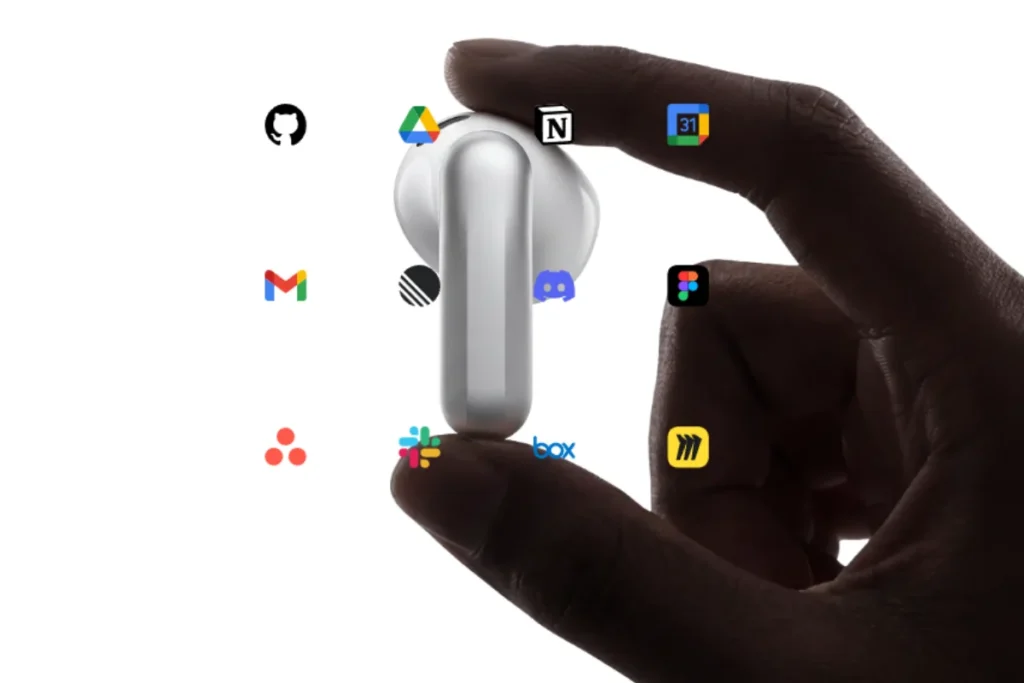
- Working With Your Ecosystem, Not Fighting It: Unlike other solutions that try to convince you to drop your smartphone altogether, the Plaud One works in synergy with your smartphone and integrates seamlessly into your ecosystem including Google Calendar, Slack and Notion.
By prioritizing audio capture over ambitious science-fiction interfaces, the Plaud One delivers a focused tool that solves an actual daily problem.
The Future of AI Wearables Beyond Health Tracking
Looking ahead, the Plaud One is clearly just the beginning of a massive technological wave. AI assistants are rapidly becoming more personal, more proactive and deeply integrated into our daily routines.
We are watching wearables transition from simple measurement tools into intelligent interpretation engines. As we move closer to the reality of future ambient computing, we will likely see these memory assistant features integrated directly into our smart glasses, watches and maybe even our clothing. The next generation of wearable technology will focus just as much on managing our overwhelming digital lives as it does on tracking our physical well-being.
Wrap Up
The Plaud One is a unique approach to designing wearables that can help you do something entirely new. The device does not have anything to do with counting steps and measuring your sleep. Its job is to record what you are saying when you don’t even have enough time for a conversation.
This concept may be quite simple, but there are many issues related to privacy, reliability and trustworthiness. Nevertheless, considering that the Plaud One is already available for pre-order, this wearable allows us to get a glimpse of what is coming next in the field of artificial intelligence wearables.
FAQs
Decode the Decor
The Smart Jewelry Revolution
A practical guide to wearable tech's future — delivered straight to your inbox.
Author
