

Most runners spend a lot of time watching their wrist during a run. Pace, heart rate, distance, recovery, you know the routine. But there is one thing your watch cannot really see: what your feet are doing.

Every step creates pressure, movement and force, yet we rarely get to see any of it. That is where STRIV smart insoles get interesting. Instead of adding another gadget to your wrist, they put sensors inside your shoes and track your run from underneath your feet. Turns out, your feet have a lot more to say than just “ouch.”
STRIV Is a Running Wearable That Goes Under Your Feet
© STRIV
© STRIV
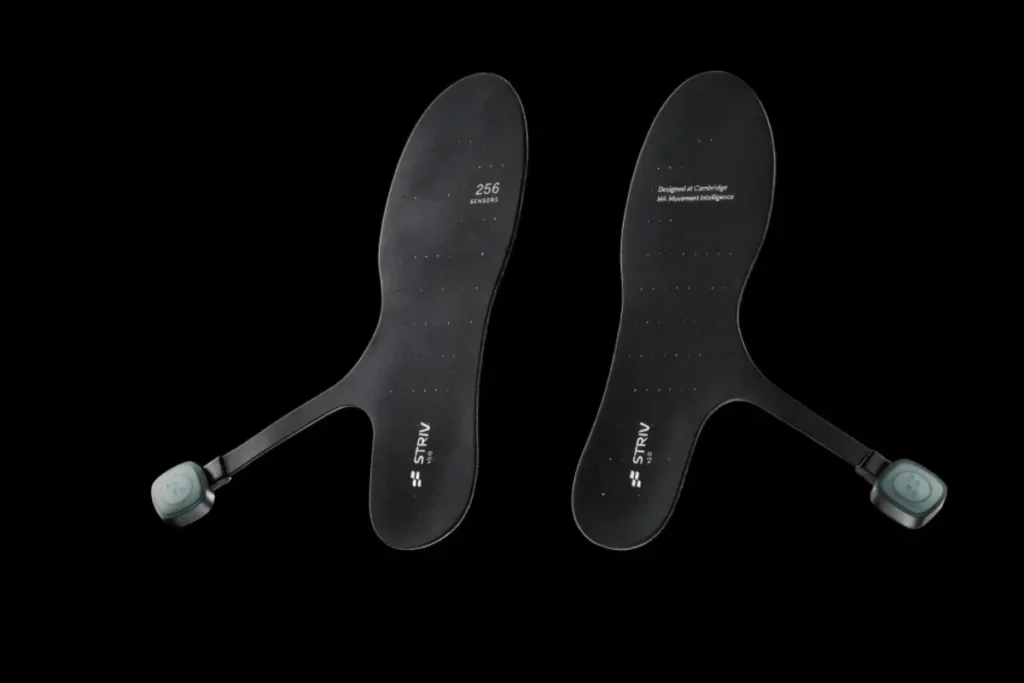
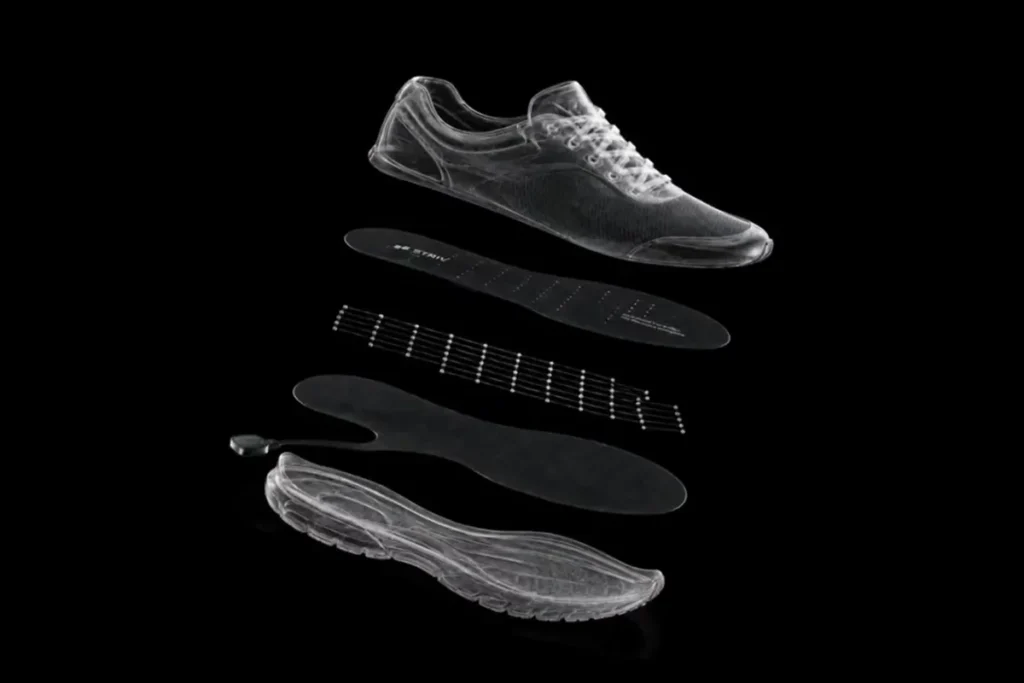
STRIV is a smart insole designed specifically for runners. Rather than clamping yet another gadget to your wrist, the sensing layer lies hidden beneath your shoe insole. It is a dedicated STRIV running wearable that is all about your feet.
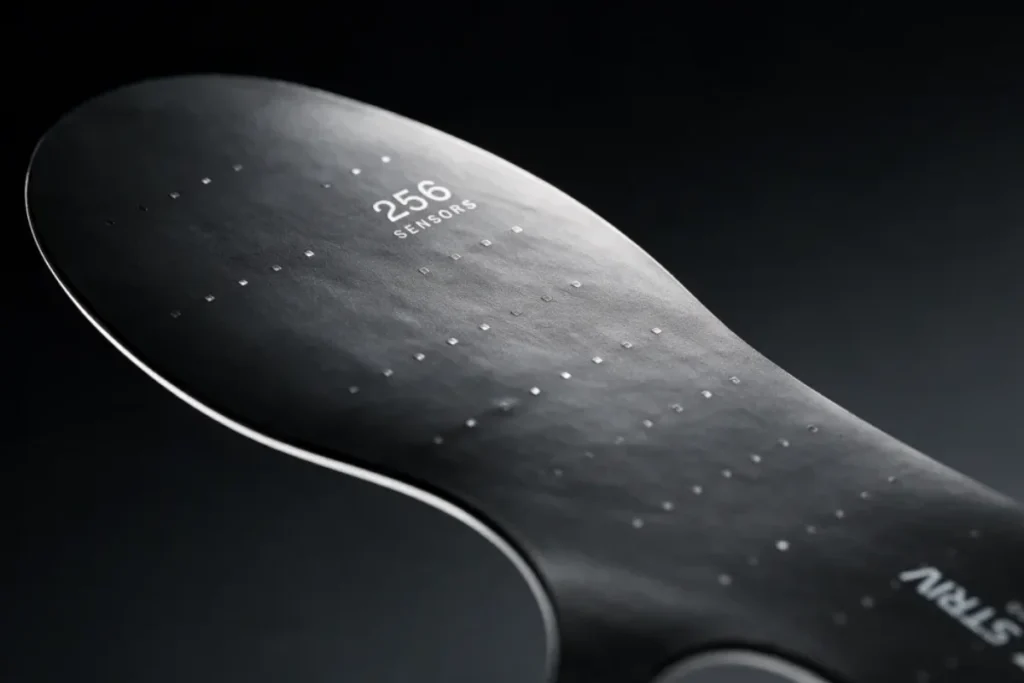
The technology uses 256 pressure sensors, divided equally with 128 sensors beneath each foot. They are complemented by motion sensors embedded in foot pods. Since the information is captured precisely from where your foot touches the surface, the STRIV smart insoles can capture data that a wrist-based wearable cannot directly measure.
Decode the Decor
The Smart Jewelry Revolution — a practical guide to wearable tech.
The company anticipates the first commercial version of this STRIV running technology to go into production in late September 2026. It is necessary to emphasize that STRIV is not competing with your Garmin or Apple Watch. It is developing an entirely new generation of information gathering.
How Does the STRIV Smart Insole Work?
The technology inside the STRIV insole is broken down into two main components. These systems work together to map exactly how you move.
256 Pressure Sensors
© STRIV
There are 128 individual pressure sensors resting beneath each foot. These sensors create a detailed pressure map that shows exactly where and when force is applied during your stride.
This means the STRIV smart insoles track the exact moment of your landing, the transition through midstance and the final push-off. Because the sensors cover both feet, the system can also identify differences between your left and right sides.
Motion Sensors
© STRIV
The pods have a 6-axis IMU, which functions as a very sensitive movement tracker. Pressure sensors indicate how forcefully you hit the ground while the motion sensors measure how you move your feet in the air.
It is important to combine the information about pressure and movement as the combination will be much more valuable than each of them separately. According to STRIV, their technology combines information about pressure, force, timing and movement during each step you take. It means that the complete picture of STRIV running biomechanics will be obtained without any focus on technical specifications of sensors that do not mean anything for a common runner.
What Does STRIV Actually Measure?
The biggest question with any running technology is: what do I actually get out of wearing this? STRIV says it provides 26 measurements per step. Here are the most important things it actually measures:
- Pressure distribution: Exactly where your weight sits on the sole of your foot.
- Center-of-pressure progression: How your balance shifts from the moment your heel or midfoot strikes to the moment your toes leave the ground.
- Landing characteristics: Whether you are a heel striker, midfoot striker or forefoot striker.
- Foot roll and pronation-related movement: How much your foot rolls inward or outward as it absorbs shock.
- Ground reaction force (GRF): The amount of physical force the ground pushes back into your body when you land.
- Ground contact time: Exactly how many milliseconds your foot stays on the ground.
- Loading rate: How fast that impact force hits your body.
- Cadence: Your total steps per minute.
- Left/right asymmetry: How balanced your left leg is compared to your right leg.
When you look at this list, the value comes down to understanding your specific running biomechanics. Knowing your ground contact time is nice, but knowing that your left foot rolls inward significantly more than your right foot is the kind of data that can actually change how you pick out your next pair of shoes.
STRIV Wants to Show How Your Running Form Changes During a Run
One of the most practical uses for STRIV smart insoles is tracking fatigue. When you are fresh at mile one, your running form is probably great. By mile ten, your form likely falls apart.
Because the insoles provide continuous underfoot data, they can reveal subtle changes that a wrist-based wearable simply cannot see directly. As you get tired, your landing might change. You might start landing heavier on your heels. The pressure redistribution might show you relying more on one leg than the other. Your push-off might become sluggish.
STRIV says its system actually learns your personal baseline. Once it knows how you run when you are fresh, it can identify these fatigue-related changes as your movement shifts over time. This helps you spot patterns over multiple runs, letting you know exactly when your mechanics break down.
STRIV’s AI Coach Turns Biomechanics Into Running Advice
© STRIV
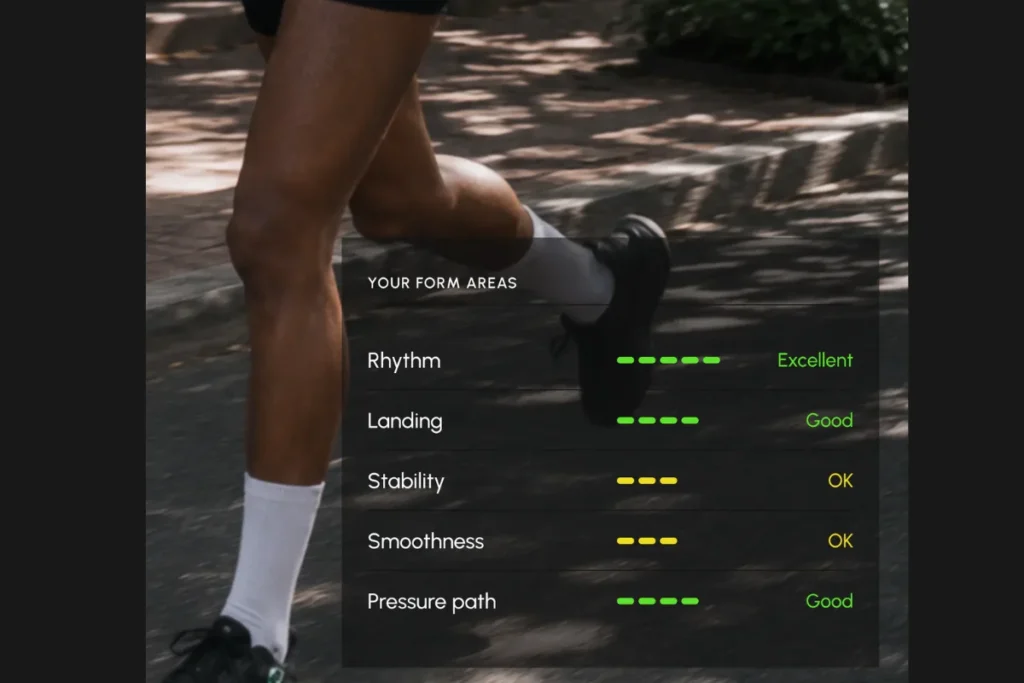
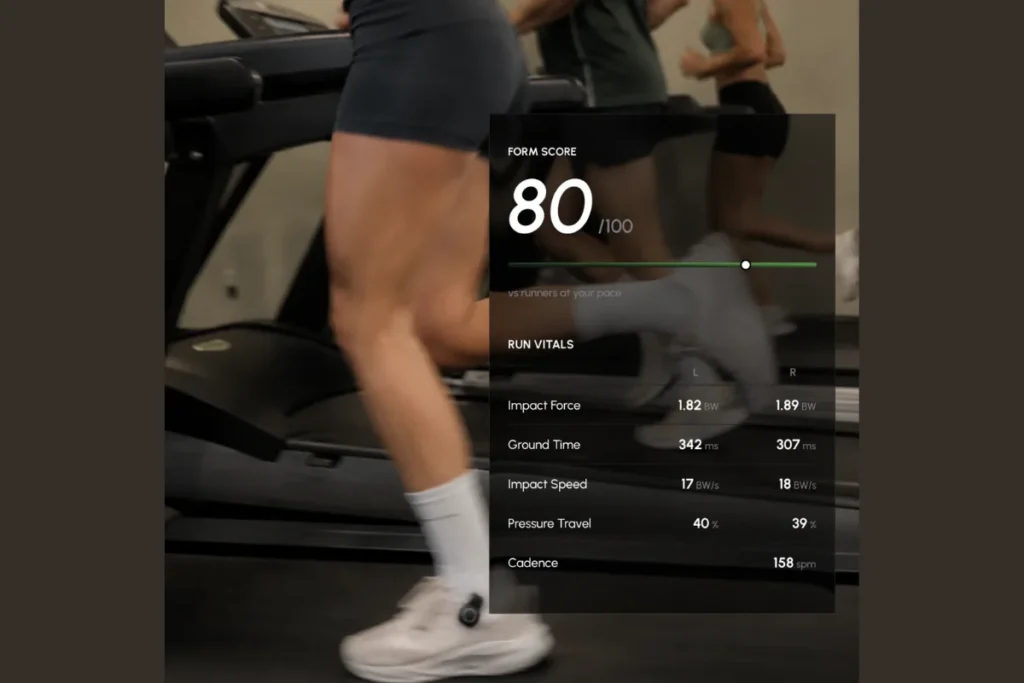
Collecting dozens of biomechanical metrics is useless if you do not know how to read them. This is exactly where the STRIV smart insoles shine by using an AI running coach named Ace. Under the hood, Ace is constantly crunching the raw data from all 256 pressure sensors and the 6-axis motion tracker in the foot pods. STRIV’s goal is to instantly turn heavy technical data, like your exact center of pressure and impact force, into simple, actionable running advice.
The Ace AI coach is designed to give you real-time audio coaching cues while you are out on the road. Because the system processes data locally on the pods, there is almost zero lag between your footfall and the feedback. It takes precise movement data, like your ground contact time and peak vertical force and cross-references it with your training history and goals. According to STRIV, if the system detects changes in metrics such as loading rate, Ace can provide real-time cues intended to help runners adjust their form.
Once you finish your run, the app uses machine learning to build personalized training plans based on your true baseline. The software tracks your exact left-to-right symmetry and shows how your form holds up over weeks of training. The STRIV smart insoles connect via Bluetooth to your phone for these voice cues or they can beam the live data directly to compatible Garmin watches using custom data fields. This is a massive leap from just giving you a dashboard full of complicated biomechanics graphs and leaving you to figure it out yourself. Actionable feedback always beats raw data.
How Accurate Is STRIV?
When any company mentions advanced running gait analysis, one needs to focus on the validation process of the claims made by the company. STRIV mentions that its technology has been validated against Bertec force-plate treadmills. The sports science researchers consider force plates to be the ultimate form of technology for quantifying running forces. Force plates are highly calibrated laboratory-based machines that quantify the exact ground reaction force, which basically means the exact force exerted on your body by the ground with each stride you make. STRIV states that it has conducted tests using the insoles through 40,000 steps and 24 runners to see exactly how closely the insoles match the multi-thousand-dollar lab equipment.
Here are the current reported correlations from STRIV:
- Peak vertical GRF (r = 0.965): The maximum physical force hitting your foot.
- Ground contact time (r = 0.956): Exactly how long your foot stays physically planted on the ground.
- Duty factor (r = 0.894): The percentage of time your foot is on the ground versus flying through the air.
- VALR or Vertical Average Loading Rate (r = 0.860): How fast that sudden impact force actually hits your body.
- Loading time (r = 0.847): The exact amount of time it takes your foot to reach that maximum impact force.
These r-values indicate mathematical correlation. If the value is 1.0, then the two data points move together perfectly. A correlation of 0.965 indicates a very strong relationship between the STRIV and reference measurements, but correlation alone does not establish that the two measurements have the same absolute values.
STRIV Price, Battery and Compatibility
If you are looking at a STRIV insole price tag, the founding-member total price is currently $399. You secure this with a $49 reservation, which is fully refundable before shipping. The company expects these to ship at the end of September 2026.
The current product page lists a battery life of 1 to 2 weeks per charge. The system is compatible with both iOS and Android phones. If heart-rate tracking is also part of your setup, a chest strap for running can give you more focused heart-rate data during training. When you order, you select your specific shoe and insole sizing to make sure the sensors line up correctly with your anatomy.
What We Still Don’t Know About STRIV
Because this is a new piece of technology, there are a few unknowns that only time and heavy miles will solve. If you also mix running with strength and functional workouts, our guide to best wearables for HYROX covers what to look for in a wearable for that kind of training.
- Independent real-world accuracy: Lab treadmills are flat and controlled. We need to see how the sensors handle cracked pavement, mud and uneven trails.
- Shoe compatibility: How do the sensors perform when placed inside highly cushioned max-stack shoes versus minimalist racing flats?
- Long-term durability: Insoles take a brutal beating. It remains to be seen how well the internal wiring holds up over a full year of training.
- Comfort on long runs: The insoles have to be completely unnoticeable during marathon or ultra distances.
- Actionable value: We need to see if runners actually act on the AI coaching cues or if the novelty of the Ace coach wears off after a few months.
Wrap Up
STRIV smart insoles take a simple idea and make it surprisingly interesting: what if we could understand running from the feet up?
With pressure sensors, motion tracking and AI coaching, STRIV is part of a wider shift in wearable technology, where sensors are moving beyond watches and into new parts of our everyday lives. It is still early and the $399 price is not exactly pocket change, but the idea is hard to ignore. Sometimes, the best place to understand your run isn’t your wrist. It’s your shoes.
FAQs
Decode the Decor
The Smart Jewelry Revolution
A practical guide to wearable tech's future — delivered straight to your inbox.
Author
