

 Add Us On Google
HYROX is all over social media right now. Might even be bigger than the Chloe Ting challenge during COVID. Whether you’re doing it to challenge yourself or have a friend who is pushing you to do it with them, the first thing you’ll discover if you’ve begun your HYROX training is that the main problem here isn’t even the sled, the main problem is knowing how to actually track the damn thing.

Running watches are designed for roads, gym trackers are designed for rep counting and HYROX combines both tasks 8 times in a row, so most wearable devices simply weren’t made with this in mind. Luckily, some brands are starting to catch up on the latest fitness trends, so I went through which wearable for HYROX is actually worth strapping on for race day and what’s better left for recovery.
What Actually Matters for a HYROX Wearable
Before diving into the products, let me first tell you what I was specifically looking for. HYROX consists of eight 1 km runs and eight functional stations, so your smartwatch should be able to handle all that shifting without falling apart on you.
Indoor GPS tracking is much more important than what people think. Most HYROX races happen inside convention centres with a ton of metal around which is basically a GPS’s worst nightmare. A smart watch with the GPS only by satellites will give you really poor paste data.
Decode the Decor
The Smart Jewelry Revolution — a practical guide to wearable tech.
Next is grip. Whether it is sled pushes, farmer carries or wall balls, you need to grip something and hold it for quite some time which affects the wrist based heart rate monitoring. This is precisely why a chest strap earns its place into the list of best wearables for HYROX, not because I’m trying to make you buy more equipment.
You also want physical buttons which is important due to the excessive sweating during the competition, which makes the touchscreen almost impossible to operate. And last but not the least, having a HYROX or hybrid mode, although as you will see below, not all of these brands have developed such a feature yet, some are simply allowing you to adjust multisport profile.
Smartwatches for HYROX
| Watch | Price | Battery | Native HYROX Mode | Best For |
|---|---|---|---|---|
| Amazfit Cheetah 2 Pro | $449.99 | 20 days Typical usage 69 hrs GPS (Power Saving Mode) | Yes | Best pick with real HYROX mode |
| Amazfit Balance 3 | $369.99 | 21 days | Yes, Race/Training/PFT/Simulation | Serious HYROX training |
| COROS PACE 4 | $249 | 9 days / 41 hrs GPS | Hybrid Fitness, auto transition | Lightweight, automatic tracking |
| Garmin Forerunner 265 | $449.99 | Up to 13 days | No, needs ROXFIT | Running focused athletes |
| Garmin Forerunner 965 | $599.99 | Up to 23 days smartwatch | No, needs ROXFIT | Running focus with maps and titanium |
| Apple Watch Series 11 | Starts at $399 | Up to 24 hrs normal use | No, needs ROXFIT | iPhone users, lighter build |
| Apple Watch Ultra 3 | Starts at $799 | Up to 42 hrs / 72 hrs low power | No, needs ROXFIT | iPhone users who want the Action button |
| Garmin Fenix 7 Pro | $799.99 -$999.99 | 22 days with solar | No, needs ROXFIT | Rugged build, best if discounted |
Amazfit Cheetah 2 Pro: Best Pick With an Actual HYROX Mode
© Amazfit
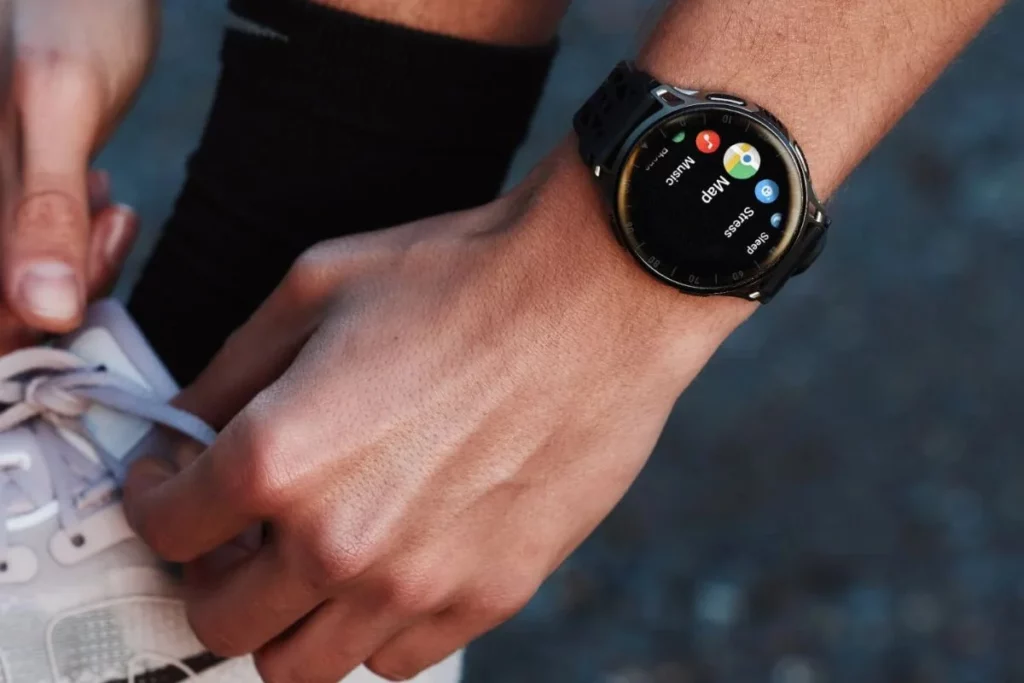
Amazfit teamed up with HYROX back in 2024 and Cheetah Pro was among the first watches to receive a special HYROX race workout mode, allowing you to choose Single, Double or Team Relay race format along with eight HYROX stations. The newer version, Cheetah 2 Pro costs about $449.99 and has a 540 mAh battery which lasts for 20 days on average and up to 69 hours in GPS mode with power saving mode, along with a 48mm case with Grade 5 titanium and Aluminum alloy buttons and a plastic bezel resistant to sled handles.
The Zepp app is decent too, since it syncs data with Strava and Adidas Running and allows you to make predictions of your races based on your training. But there are some drawbacks, such as the lack of smartwatch polish, an interface somewhat less established compared to Apple and Garmin and run tracking accuracy is good, but not flawlessly accurate
Pros:
- HYROX race mode is built-in next.
- 20 day battery life with up to 69 hours in GPS mode.
- The body survives being in touch with equipment.
- Zepp Coach provides structured AI training plans.
Cons:
- The interface is less polished than Apple and Garmin.
- Not the most accurate run tracking.
- No offline maps available.
Amazfit Balance 3: Best Overall for Serious HYROX Training
© Amazfit
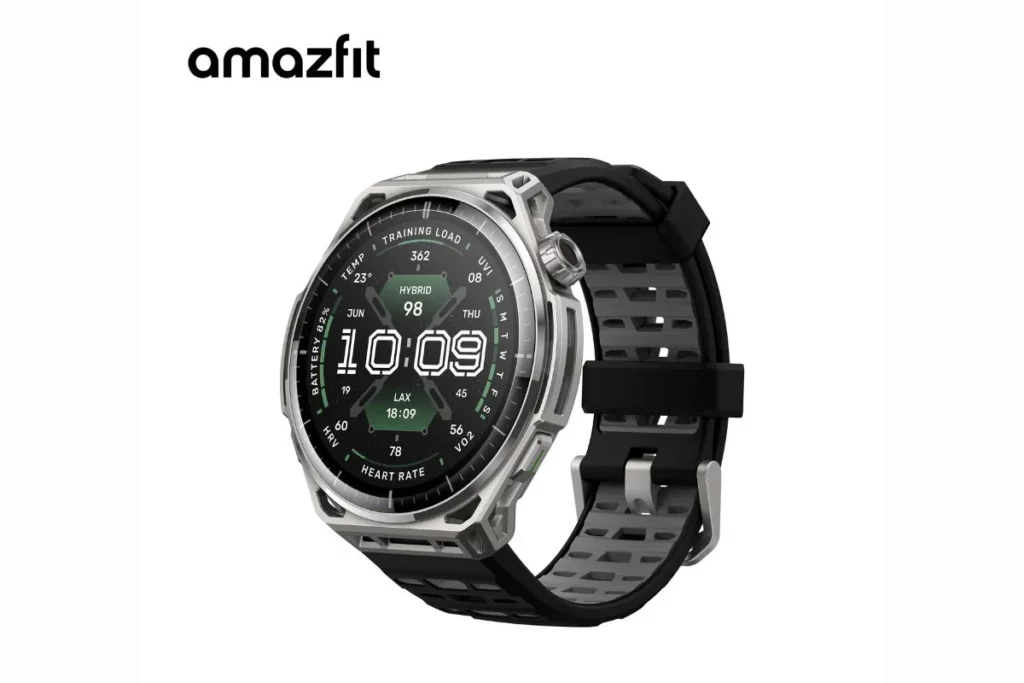
For those seeking the best HYROX specific hardware available right now, this is the one. Launched in June 2026 and priced at $369.99 in the stainless steel version, the Balance 3 features special HYROX training, PFT and Simulation modes, along with a race strategy and post race analysis included right in the hybrid training system.
This system combines BioCharge for recovery, LifeLoad for daily stress and Training Load for workout intensity, all into one dashboard and that is actually more than most competing products usually offer. A 21 day battery life with a large 51.4mm case and 1.5 inch AMOLED screen reaching 3000 nits, which means readability indoors, even when there is terrible lighting in the convention hall and Stryd footpod if you want more accurate indoor pace.
Pros:
- HYROX Race, Training, PFT and Simulation modes.
- 21 day battery.
- 3000 nits display readable indoors.
- The hybrid training system brings all the metrics together.
- Supports Stryd for more accurate indoor pace tracking.
Cons:
- Zepp OS takes more time to set up than Garmin or Apple.
- Large case, which is less suitable for smaller wrist sizes.
COROS PACE 4: Best for Automatic Run to Station Switching

© Coros
Although COROS doesn’t label the mode as HYROX, rather use it uses the name Hybrid Fitness, mostly because Amazfit locked down the actual HYROX name through their partnership. But it does everything that is needed to be done in this mode and does it well. It tracks all eight stations, including SkiErg, sled push, sled pull, burpee broad jumps, rowing, farmers carry, sandbag lunges and wall balls, as well as it supports auto transition that will help detect your transition from running into the next station without any extra clicks.
The COROS Pace 4, priced at $249, is a smartwatch that is very lightweight at 32 g and it has an AMOLED display and a good battery life of 9 days in daily use, 41 hours in GPS mode and 31 hours in GPS dual frequency mode. This watch can also track running mileage while working out in a hybrid mode, which not every watch in this list is capable of.
Pros:
- Auto transition will track your transition to the station by itself.
- Running mileage is calculated correctly during hybrid workouts.
- Battery life is great.
- Affordable at $249.
Cons:
- Not an official HYROX mode.
- No offline maps.
- GPS accuracy is good, but not a flagship quality.
Garmin Forerunner 265 or 965: Best for Runners Who Also Do HYROX
© Garmin
© Garmin
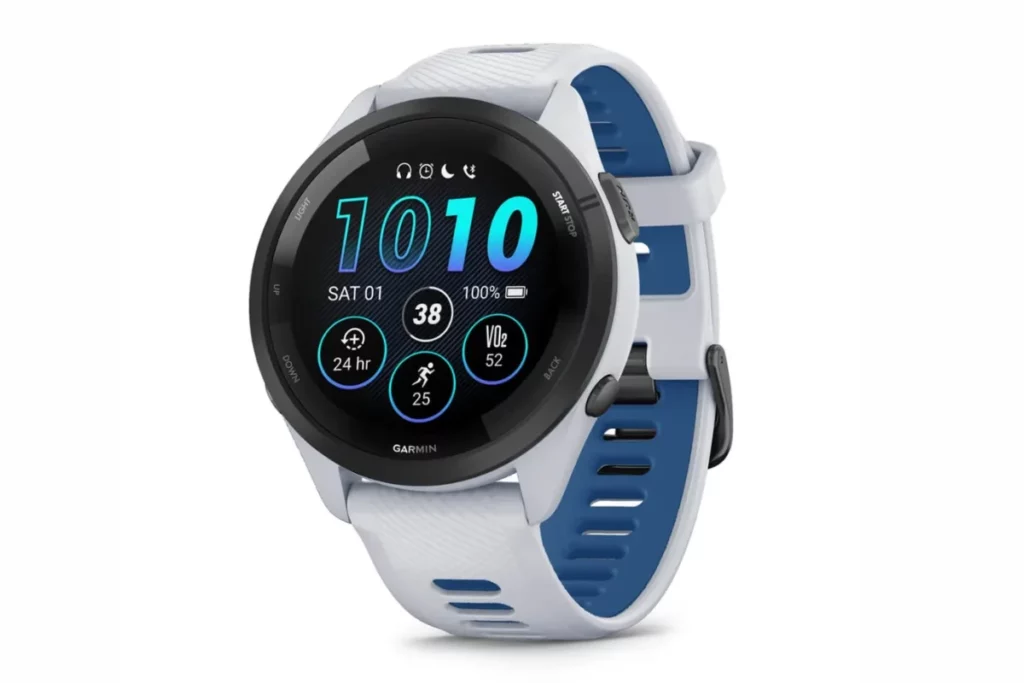
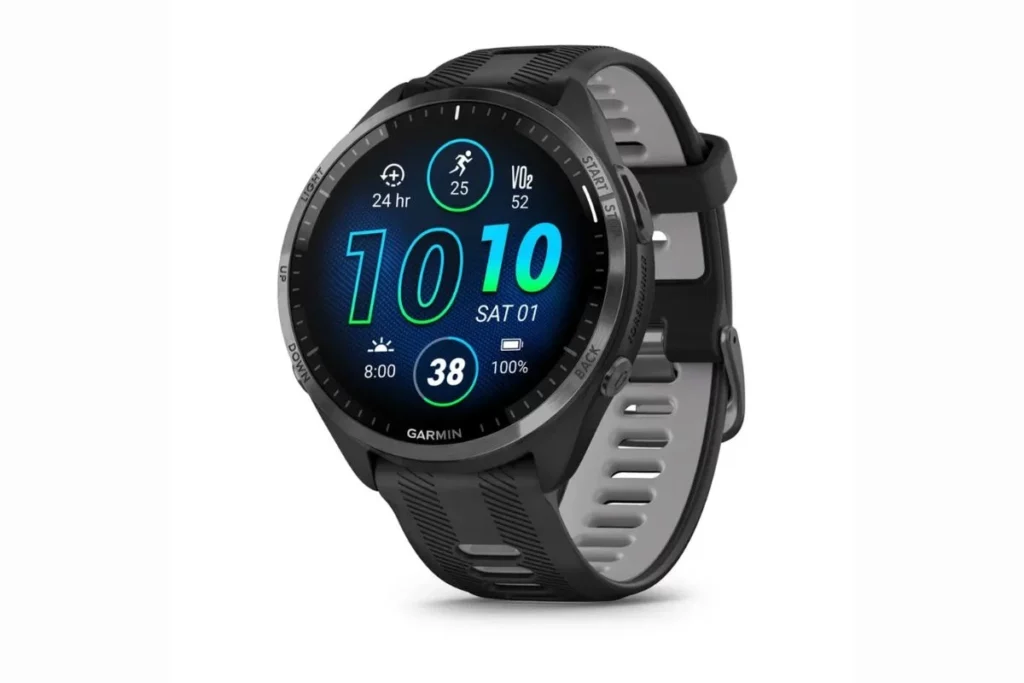
Even without the race data and training load functionality, being the top priorities, the Garmin Forerunner series still makes the best choice for HYROX wearables, especially once you pair it with the ROXFIT app, which turns Garmin into a proper HYROX tool through its data field and racing feature.
The Forerunner 265 costs $499.99, weighs only 47 g and provides up to 13 days of battery for smartwatch usage or 20 hours of battery for GPS activity. It is enough for a regular workout but insufficient for an overloaded race weekend.
The Forerunner 965, on the other hand, is 47mm and weighs 53g and costs $599.99 and features a titanium bezel, offline maps, 32GB of storage and up to 23 days of battery life. This may be the right choice for those who plan to use maps while traveling or simply prefer a bigger AMOLED display.
Both offer advanced and accurate Training Readiness, Body Battery and Recovery tracking features which actually prevent you from overtraining during a HYROX block. But there is no native HYROX mode in the smartwatch and you will have to create your own profile within the multisport mode, either manually or using the ROXFIT app.
Pros:
- Integration with ROXFIT allows getting great HYROX tracking.
- Strong training load, recovery and readiness metrics.
- Forerunner 965 has a titanium bezel, offline maps and better battery.
- Mature and reliable Garmin Connect ecosystem.
Cons:
- No native HYROX mode.
- Training requires a set up or an additional app.
- Short battery life of Forerunner 265 for race weekend.
- A little expensive.
Apple Watch Series 11 or Ultra 3: Best for iPhone Users

© Apple

© Apple
If your whole life runs through an iPhone already, this is a natural choice for a HYROX watch, specifically the Ultra 3. The Action button is the feature to look for here, as it allows you to mark laps or segments with just one press even when your hands are completely soaked in sweat, something a touchscreen just can’t do. The Ultra 3 will run you $799, is made of titanium with Sapphire crystal and offers up to 42 hours of battery in normal use or 72 hours on Low power mode, which is plenty to cover a whole race day with additional warm-up.
The Series 11 is available starting at $399 and gives you almost all health sensors, including ECG and blood oxygen, in a much lighter and smaller design, but lacks an Action button and the battery is noticeably smaller, with up to 24 hours.
For people with bigger wrists, the Ultra 3 is the perfect choice in the Apple ecosystem and for people with smaller wrists, the Apple Watch Series 11 is a no-brainer.
Although the Apple Watch isn’t specifically made for HYROX, combined with the ROXFIT app that supports full Apple Watch workouts, it fills that gap, allowing you to build and sync HYROX workouts to your wrist directly. The main issue is indoor GPS since Apple Watch relies mainly on satellite signals, which are not very effective indoors, especially in convention centers packed with metal constructions.
Pros:
- The Action button on the Ultra 3 provides reliable one-press lap management with wet hands.
- Good battery life of Ultra 3 with 42 hours in normal use.
- ROXFIT supports HYROX-compatible workout tracking.
- Familiar polished ecosystem of Apple Health.
Cons:
- Indoor GPS is not great.
- Ultra 3 is very expensive for HYROX-specific usage.
- Needs ROXFIT to feel HYROX ready at all.
Garmin Fenix 7 Pro: Best If You Already Own One or Want a Bargain
© Garmin
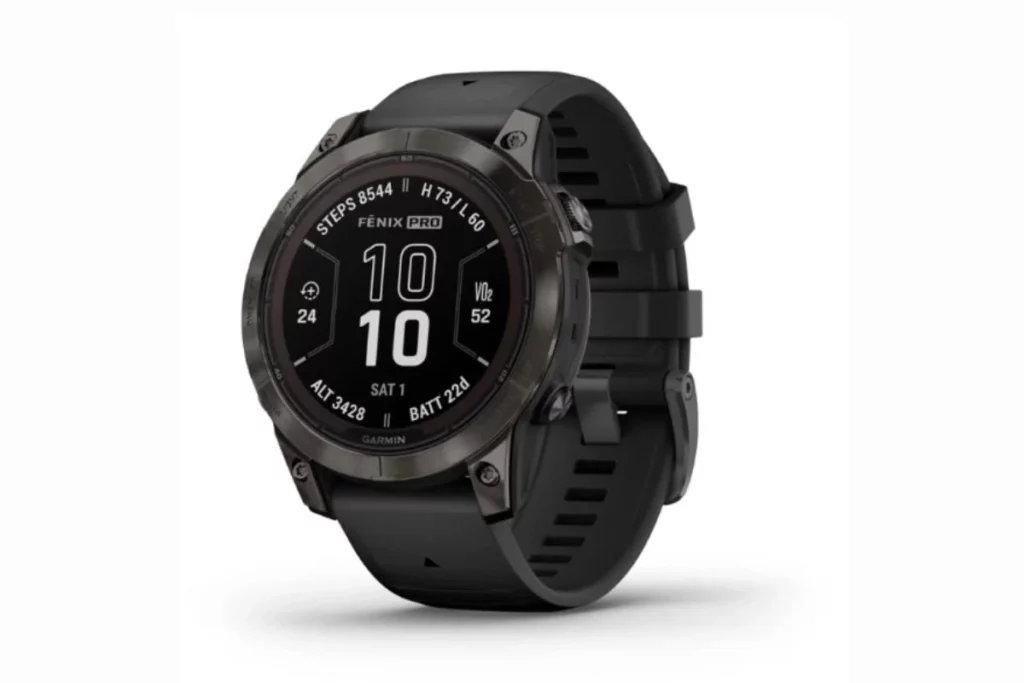
I’ll be honest, if you’re buying a new wearable for HYROX, I would point you to Garmin Fenix 8. But if you already own a Fenix 7 Pro, it is a great HYROX watch with its current prices being dropped meaningfully in sales as opposed to its launch price of $799.99 to $999.99.
The features and specs are great, with up to 22 days of battery life with solar charging, either a titanium or DLC-coated case resistant to kettlebell swings, multi-band GNSS and offline maps that don’t need any subscriptions. Training data such as Endurance and Hill Scores are useful for HYROX and trail running combinations. Just as with the Forerunner series, you will need a ROXFIT app or a customized multisport profile for accurate HYROX segments.
Pros:
- Great value for money when purchased at discounted prices.
- Up to 22 hours of battery life with solar charging.
- Durable.
- Offline maps available.
- Doesn’t require a subscription.
Cons:
- No native HYROX mode.
- Bulky and heavy.
- Not the latest model in the Fenix lineup.
Screenless Fitness Bands for HYROX
| Band | Price | Battery | Subscription | Best For |
|---|---|---|---|---|
| Amazfit Helio Strap | $99.99 | Up to 10 days | No | Budget recovery tracking |
| Amazfit Helio Strap Pro | $199.99 | Up to 11 days | No | Deep, per-station HYROX recovery data |
| WHOOP 5.0 | $199–$359/yr | 14 days | Yes, required | Recovery and training load nerds |
| Luna Band | $149 | 8-10 days | No | Voice-led recovery coaching, no subscription |
Amazfit Helio Strap: Best Budget Recovery Band
© Amazfit
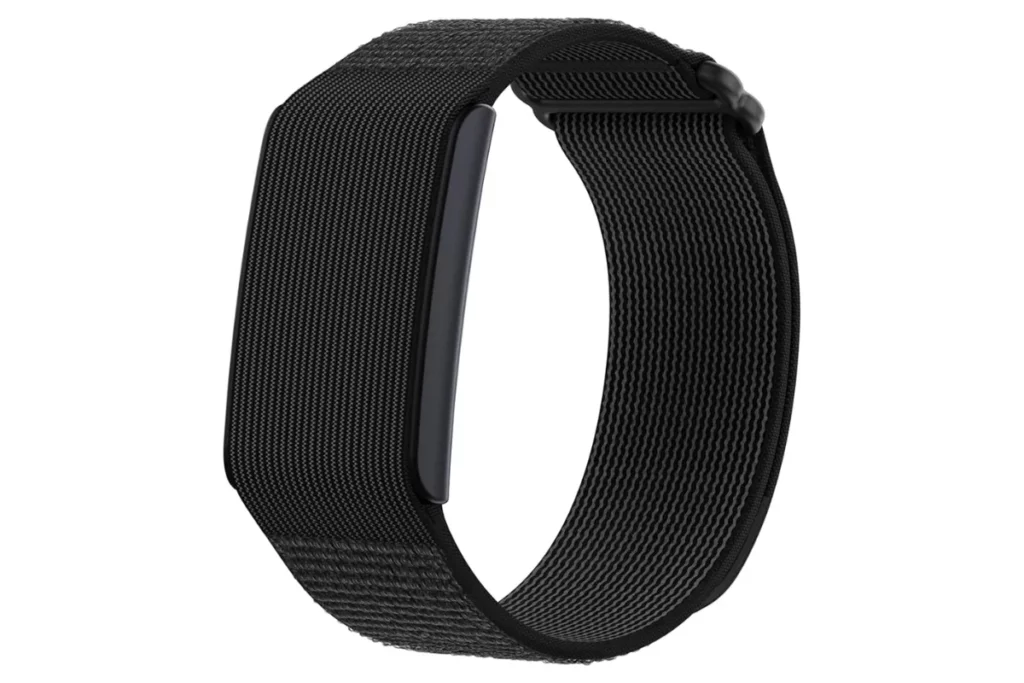
With a price tag of $99.99, the Helio Strap becomes one of the most budget friendly options for getting access to constant recovery monitoring and there’s no need to pay a subscription fee either. The Helio Strap can provide you with continuous heart rate monitoring, sleep and stress monitoring and also a BioCharge energy scoring feature.
If you use it in your training sessions, you’ll get the HYROX Race mode and the PFT training mode. The battery life is 10 days and the Helio Strap is compatible with the same Zepp app as Amazfit watches, so if you use them, you won’t face any difficulties integrating the strap.
Pros:
- Subscription free option
- 10-day battery life
- Easy to integrate with Amazfit watches and the Zepp app
- Includes HYROX and PFT modes
Cons:
- Doesn’t have live pace and race day features
- It’s the best value for money only in case of being in the Amazfit ecosystem
- Basic design compared to WHOOP fabric options
Amazfit Helio Strap Pro: Best for Deep HYROX Recovery Data
The Amazfit Helio Strap Pro was released in June 2026 and comes at a price of $199.99 but is much more interesting than just an update. What it actually is is a two-piece setup, heart rate monitor for your wrist or upper arm, plus a new waist-mounted 9-axis motion sensor that provides you with muscular load tracking per station, which none of the competitors can offer right now.
The battery of this setup lasts for up to 40 days, no subscription again and it works openly via Bluetooth with third-party watches and gym equipment and not only Amazfit devices. If you don’t use the HYROX program specifically, then the Amazfit team themselves noted that the wrist part hardly differs from the Gen 1 version, so this upgrade is made precisely for the HYROX intended audience.
Pros:
- Muscular load tracking per station, unique in this category
- Battery lasts up to 40 days, no subscription
- Works with third-party watches, not limited to Amazfit
- Waist-mounted sensor provides additional information
Cons:
- $199.99 price is double that of Helio Strap’s
- It’s worth it only if you train for HYROX
- The product itself is rather new and has less feedback
WHOOP 5.0: Best for Recovery and Training Load, If You Don’t Mind the Subscription

© WHOOP
It is important to know that WHOOP has always been synonymous with recovery, strain and sleep and the same is true for WHOOP 5.0 with its battery upgrade offering 14 days instead of around 5 days for 4.0. It doesn’t have any initial costs related to the hardware purchase but forces the user to get a subscription, starting at $199 per year for One version and reaching up to $359 per year for Life version, WHOOP MG, with additional ECG, Advance Labs and blood pressure monitoring.
For HYROX, it can be best utilized as a recovery tool, indicating when the body is capable of performing another hard session of training. The accuracy of sleep and HRV is really high, comparable to other devices that I’ve tried.
Pros:
- 14-day battery
- Highly accurate sleep, HRV and recovery measurements
- No upfront device cost
- In-depth insights into the training load over time
Cons:
- Subscription required, $199-$359 every year
- No display means no live race day metrics
- Useless without a subscription
Luna Band: Best Subscription-Free Alternative to WHOOP

© Luna
Luna Band is the newer of these options, making an appearance at CES 2026 and only becoming available towards the end of July, so there’s not much feedback out there for this one yet, but if it’s the subscription on WHOOP that’s holding you back, this could be an option. A WHOOP alternative, if you will.
It has no screen, just like WHOOP does, but it goes further, completely doing away with it in favor of voice, using your assistant on your phone, whether that be Siri or Gemini, to enter meals, symptoms or how you’re feeling, then their proprietary LifeOS will take care of translating all that plus heart rate, HRV, respiration and skin temperature into daily coaching. It costs $149 and never requires a subscription and you get about 8-10 days on a single charge.
For HYROX training specifically, think of it as identical to the Helio Strap or WHOOP, it’s meant for use between sessions rather than to track sessions or individual stations or times. It doesn’t have any mode for HYROX, doesn’t do stations or splits and actually the lack of a screen means you can’t even just look at your numbers quickly. If you’re looking to get the WHOOP recovery experience but without the yearly fee, then Luna might be worth keeping an eye on, but you won’t be getting any HYROX tracking with it.
Pros:
- No subscription required, just one time payment
- Voice logging system makes entering data easy and low effort
- Reads heart rate, HRV, respiration and skin temperature
- Cheaper to purchase than a year of WHOOP
Cons:
- Very new device, not many reviews out there yet
- No screen, so no way to check your data quickly
- Doesn’t have any HYROX tracking modes
- Dependent on phone assistant for most features
Smart Rings for HYROX
I won’t suggest using a smart ring to train or race HYROX, not because they are not good devices (quite the contrary, they do a terrific job), but because of their form factor. Let’s think about it, half of the HYROX stations involve you gripping something heavy and cumbersome for a prolonged period, be it sled handles, SkiErg, a sandbag or farmers carry handles. And now imagine a metal ring sitting right there on your finger during all of this.
At best, it will be uncomfortable, but at worst you’re risking a bent ring, a damaged sensor or even injuring your finger. All smart ring companies themselves warn about caution while gripping or lifting weights and this is pretty much what HYROX stations are.
Instead, what I would recommend is this: wear your smartwatch or fitness band during the race and training, and use the ring for what it’s designed for, which is sleep and recovery. Put it on at bedtime, get your recovery score in the morning and simply avoid it during the race and remove it prior to training in case you’ll be using any equipment. So that’s a watch to track your workouts and a smart ring to track your sleep and recovery.
Now, if you’re considering getting a ring purely for sleep and recovery purposes, these are the three best options for you to consider:
- Oura Ring 5– still the best device when it comes to sleep and recovery tracking, with really good HRV and readiness scoring. However, it’s a subscription based device without which it’s basically just a paperweight.
- RingConn Gen 3– a decent subscription-free alternative to Oura in case the thought of additional monthly fees just doesn’t make you happy.
- Amazfit Helio Ring– makes perfect sense if you’re already using an Amazfit watch, since the ring pairs with it and provides you with a unified dashboard.
Chest Straps for HYROX
A wrist-mounted optical sensor struggles the minute you are holding onto something during HYROX, but a chest strap gets around this issue with its readings being taken right from your chest.
Garmin HRM 600: Best If You’re Already in the Garmin Ecosystem
© Garmin
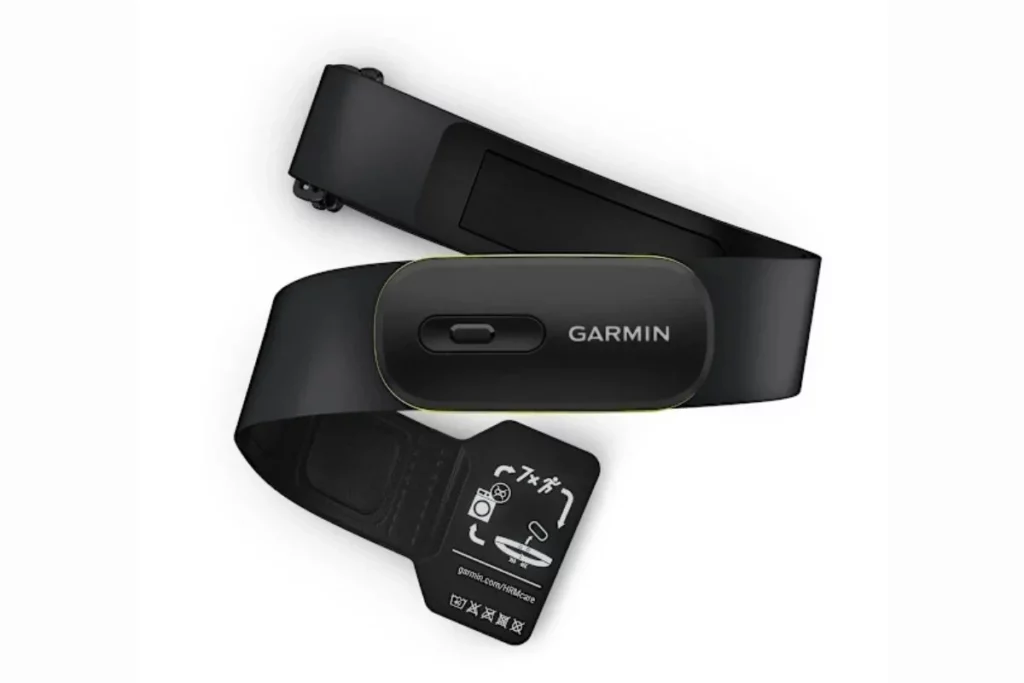
For $169.99, the Garmin HRM 600 is easily integrated into your Garmin Forerunner and Fenix devices while offering additional running metrics like ground contact times and vertical oscillations apart from heart rate readings. It also works simultaneously through ANT+ and Bluetooth, meaning that you can have it connected to your watch and exercise equipment like a rower at the same time, actually handy for HYROX workstations.
The battery is replaceable, it uses a rechargeable battery and lasts up to 2 months, meaning that you do not have to worry about charging it. It can also record heart rate and activities without your watch and sync once you are back in range with your smartwatch. The only real issue is that it is optimized for Garmin, meaning that you will not get that deep integration if you are an Apple user or using Amazfit devices.
Pros:
- Rechargeable battery with up to months of battery life
- Can be connected to watch and gym equipment at once
- Running metrics in addition to heart rate
- Deep integration with Garmin ecosystem
Cons:
- The best value is really only offered by Garmin smartwatches
- Price is more expensive than Polar’s alternative
- Does not feature a standalone display
Polar H10: Best Standalone Accuracy Pick
© Polar
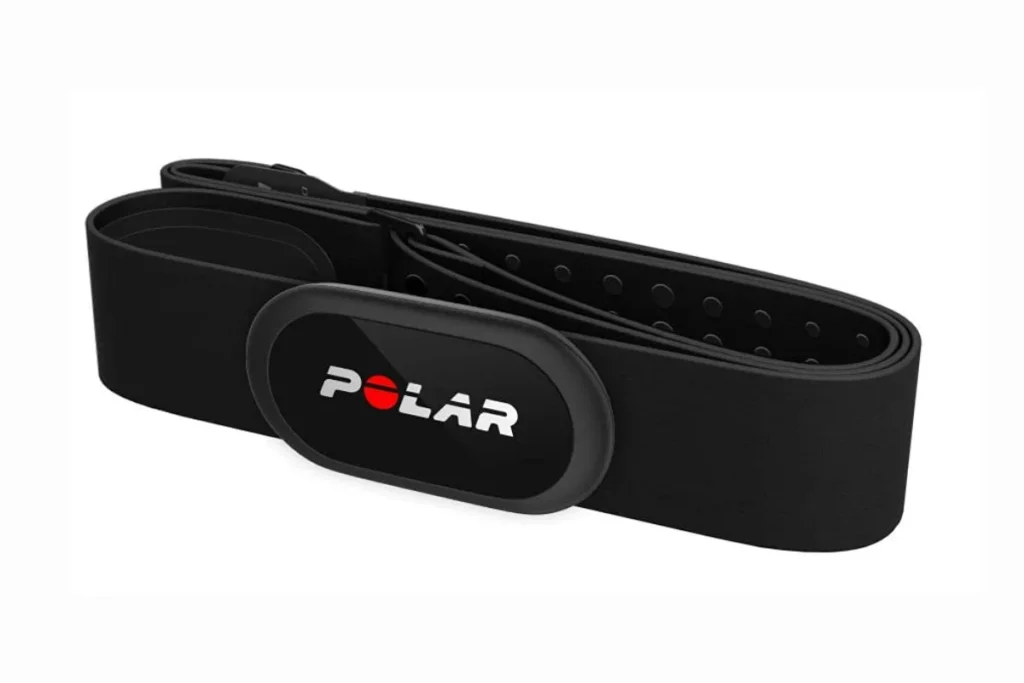
If you’re looking for the most accurate heart rate tracking and don’t care what ecosystem the sensor belongs to, the H10 is still the go-to solution, utilizing genuine ECG electrical measurements versus optical technology.
The price point is close to $104.95, the sensor connects to watches and apps and equipment using Bluetooth, ANT 2.1 and 5kHz frequency, so it’s compatible with basically anything, has a coin cell battery that will last up to 400 hours, is water resistant up to 30m, machine washable strap and even has internal memory to record one training session if your watch doesn’t happen to be on your wrist.
Even Polar mentions that it excels in situations where there are quick and high intensity changes in heart rate, such as HYROX stations create. Some users have issues connecting through multiple apps at once, but the performance accuracy justifies the hassle.
Pros:
- ECG accuracy, considered the industry gold standard
- Compatibility across brands and various apps, no limitations
- Up to 400 hours battery life on one coin cell
- Full waterproofing and machine washable
Cons:
- Some connectivity problems through apps reported by users
- No running dynamics that the Garmin strap provides
- Non-rechargeable battery, requires replacement manually
Apps for HYROX
ROXFIT: Best HYROX Specific App
This is the only app on the list actually made for HYROX from scratch and this is what makes an otherwise generic Garmin or Apple Watch, none of which have native HYROX support, into something race-ready. It provides you with a race predictor tool called PaceMe, that predicts your splits and syncs them directly to your watch so you can race based on the splits using an AI-generated training plan and station-by-station analysis of the race after it’s all done.
It also syncs with Garmin Connect, Apple Health and Strava, and is continuing to expand its watch integrations. The core app is free to use, and quite frankly, if you own an Apple or Garmin watch and train for HYROX, this should be installed on yours.
Pros:
- Designed specifically for HYROX, race pacing and station analytics
- Direct synchronization with Garmin and Apple Watches
- AI-based workout generation through Hype assistant
- Free core app, no subscription needed for basic features
Cons:
- Supported only by Garmin and Apple watches at the moment, Amazfit and COROS not yet supported
- Provides the best mobile experience, limited watch app
- New platform, continues to develop functionality
Bevel: Best for Making Sense of Your Recovery Data
Bevel is not HYROX specific, it is more of an AI health coach that uses all the information available through your fitness tracker, including sleep, strain, heart rate and others and makes it useful in terms of taking action.
The thing I really like about Bevel when it comes to HYROX training is that if you’re using a smartwatch or a fitness band for HYROX and a smart ring to measure your sleep and recovery, it combines all that data into one single dashboard so you don’t have to look at different apps to make sense of it.
It works well layered on top of a Garmin or an Apple Watch and the free version covers most of what you need with the Bevel Pro adding deeper AI insights if you want. So if you are using multiple wearables for HYROX and want your data combined into one dashboard, this is the one.
Pros:
- Good at interpreting recovery and strain data automatically
- Great as an additional layer to smartwatches
- Free version is good enough, no subscription required
- Good food and macros tracking along with training one
Cons:
- Not HYROX specific, no race day or station tracking
- Best performance on Apple ecosystem
- Additional AI features are in Bevel Pro
Which Setup Should You Actually Go With?
It really depends on where you are at. For the easiest setup and the most pre-configured race day mode for HYROX, go with Amazfit Cheetah 2 Pro or Balance 3 if you want the complete training solution.
In case your main priority is running but HYROX is a secondary part of your training routine, Garmin Forerunner combined with ROXFIT will do the trick for you.
If you are an Apple ecosystem user, the Ultra 3 with ROXFIT will do well enough for you.
Whatever watch you choose, an additional chest strap to measure heart rate accurately on race day makes a difference, more than you would expect.
Don’t waste your money on a smart ring for your training and use it for what it does best: sleep tracking.
Decode the Decor
The Smart Jewelry Revolution
A practical guide to wearable tech's future — delivered straight to your inbox.
Author
