

Choosing a wearable is no longer as simple as picking the device with the longest feature list. The smartwatch lets you to track live data from your workouts, get the directions through GPS, read notifications and do many other tasks. A smart ring discreetly monitors the indicators like sleep, heart rate, recovery and the fitness band combines all of these into a decent compromise.
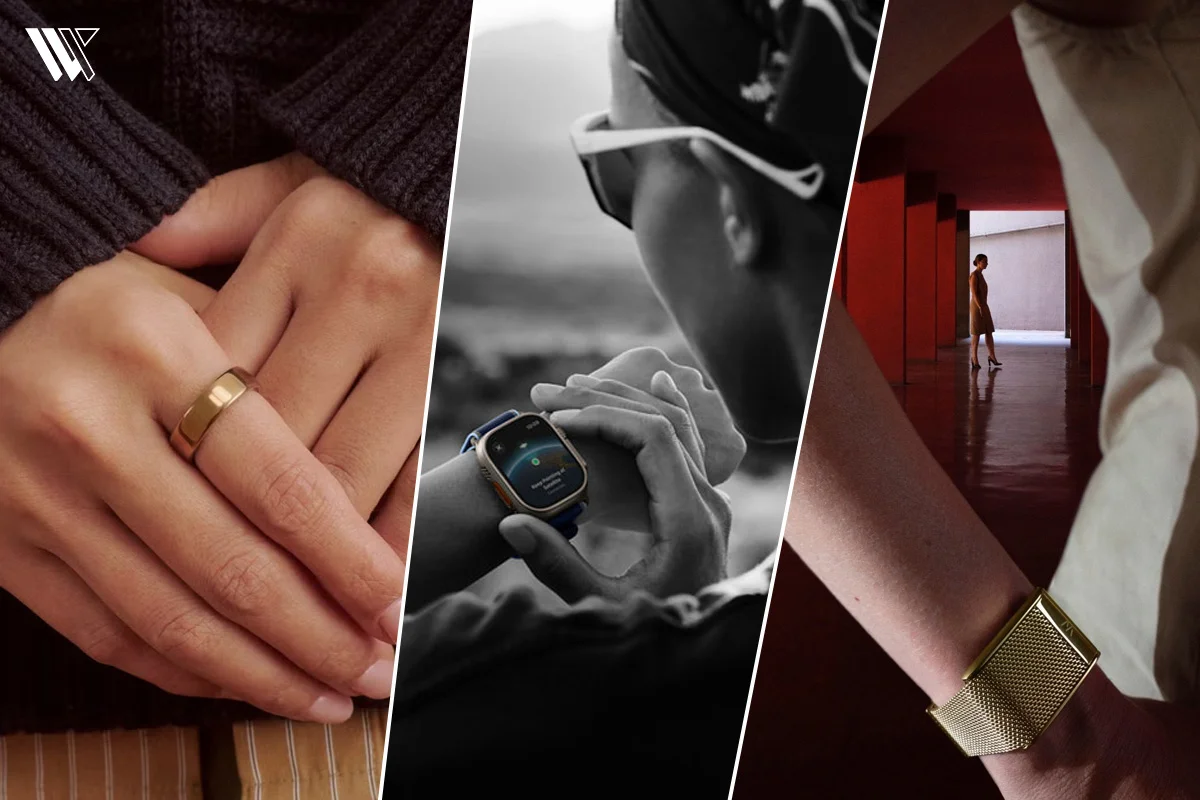
Therefore, when it comes to choosing between a fitness band, a smart ring or a smartwatch, there is no definite winner for everybody. Your needs and preferences should be taken into account while deciding what form factor to select.
Despite the overlap in features, there is a difference in the purposes of these gadgets. The smart ring is ideal for passive tracking of your health and recovery, fitness band provides a good compromise and a smartwatch is best for tracking live workouts, directions and other connected features.
Fitness Band vs Smart Ring vs Smartwatch: The Short Answer
There is no universal victor when it comes to modern wearable devices since each type is designed based on fundamentally different physical limitations and usage scenarios.
Decode the Decor
The Smart Jewelry Revolution — a practical guide to wearable tech.
- Smart Ring: Ideal for discreet round-the-clock tracking of your health, sleep and recovery. Works without a lit display at all, allowing one to use it comfortably at night time.
- Fitness Band: Ideal for lightweight, budget-friendly tracking of physical activity, where battery life lasting several days and device simplicity are way more important than running any third-party apps.
- Smartwatch: Ideal for training sessions and receiving immediate feedback on exercises, GPS tracking and interactive connection with your phone.
Since specific devices within each type vary from one another in materials, operating systems and prices, it becomes clear why such differences are so obvious when compared according to their form factors.
| Feature | Smart Ring | Fitness Band | Smartwatch |
|---|---|---|---|
| Primary Focus | Passive recovery & sleep tracking | Everyday fitness & activity tracking | Live training, metrics & smart convenience |
| Interface | Screenless (companion app only) | Narrow, small touch display | Full-color interactive touchscreen |
| Typical Battery Life | Typically 4–9 days | Typically 6–14 days | 18 hrs to several days |
| Form Factor Weight | Featherweight (approx. 3–6 g) | Lightweight (approx. 15–30 g) | Moderate (approx. 30–75 g) |
| Workout Utility | Low (passive recording, no screen) | Moderate (live HR, simple pacing) | High (live zones, GPS maps, rich telemetry) |
| Sleep Comfort | Exceptional (no wrist bulk/light) | Good (compact, slim wrist profile) | Variable (bulkier casing, screen glow) |
| Sensors & Location | PPG, temperature, accelerometer | Wrist PPG, accelerometer, optional GPS | Wrist PPG, ECG, multi-band GPS, altimeter |
| Smart Features | None (passive background sync) | Basic mirrored notifications | Calls, messages, apps, NFC payments |
What Is the Real Difference Between a Fitness Band, Smart Ring and Smartwatch?

© Oura
© WHOOP
© Apple
To appreciate how these gadgets differ from each other in terms of everyday functionality, it is worth understanding their primary design concept.
A fitness band represents a sleek wristband designed to collect basic health and activity data in the lightest manner possible. Modern fitness bands such as the Fitbit Charge 6 or Samsung Galaxy Fit3 have sensors that calculate the number of steps taken, measure calories burned while being active, track hours slept and buzz when a user receives an alert on his or her phone. Their screens are relatively small and narrow, which makes them very lightweight to wear.
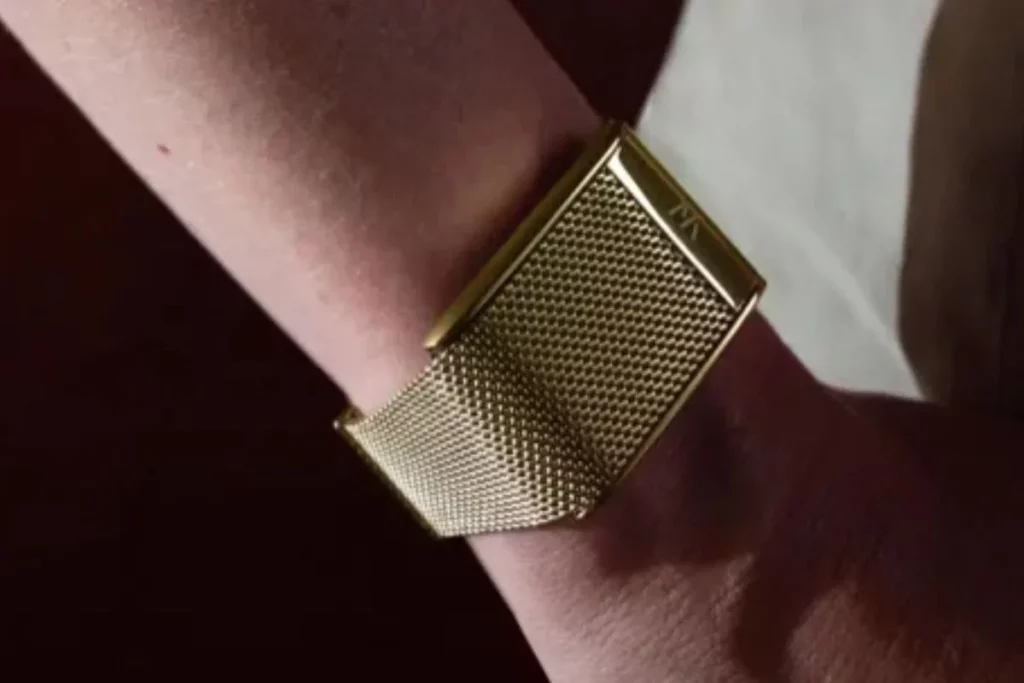
Within this wrist-worn category, it is worth distinguishing traditional bands from screenless performance straps like WHOOP 5.0 or Garmin Cirqa. While a conventional fitness band provides a digital clock face and basic step totals directly on your arm, screenless athletic straps abandon the screen entirely to devote all battery power and processing to continuous physiological sensing and athletic load modeling. Both fit the broader band category, but their interaction models appeal to different audiences.
A smart ring on the other hand removes the screen completely and relocates the visual interaction to a phone screen. The Oura Ring 5, Ultrahuman Ring Pro and the RingConn Gen 2 and Gen 3 rings are equipped with miniature photoplethysmography (PPG) sensors, skin temperature sensors and accelerometers embedded into an imperceptible ring around the finger. Since there is nothing to light up and make social notifications sound, the smart ring is inherently designed for background health monitoring and gathering biological data silently and syncing with an application whenever it is opened by the user.
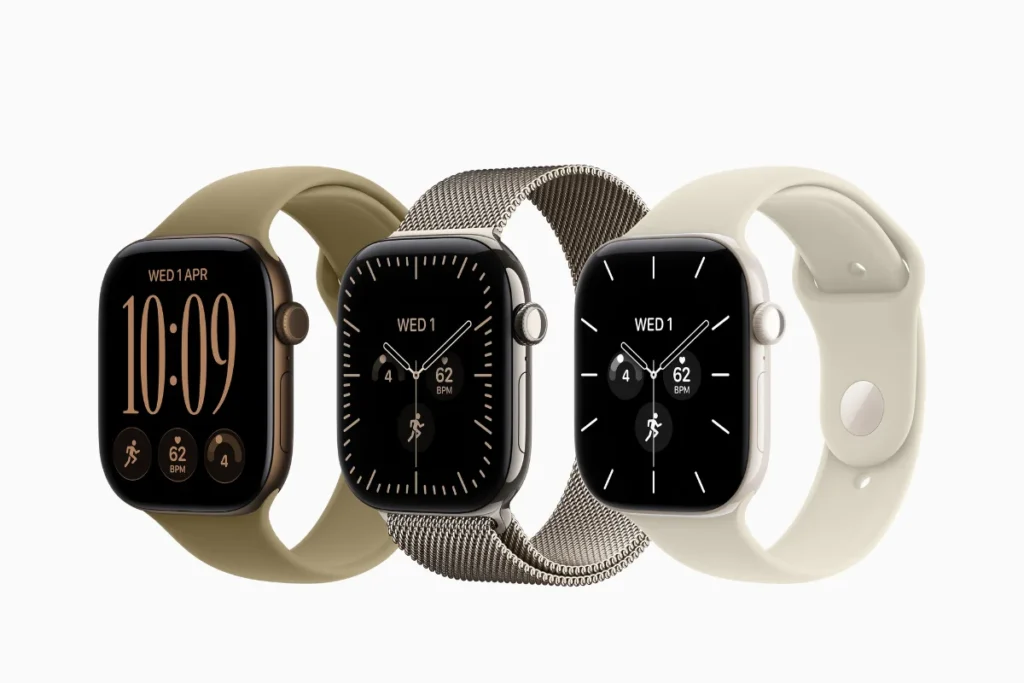
The combination of comprehensive biometric tracking and the functionality of a sophisticated wrist-based computer is achieved through a smartwatch. The devices like Apple Watch Series 11 and the Garmin multisport bands are fitted with high-resolution touchscreen displays powered by robust operating systems. The units have advanced features such as multi-frequency GPS modules, music storage, NFC chip and a speaker-microphone assembly that enables voice calls.
Given the convergence of categories, where smartwatches are getting enhanced recovery functions and the fitness bands are acquiring AMOLED displays, the two become easily interchanged in terms of function. However, their bodywork sets the limits to their respective functionality a ring cannot help in pacing at split seconds while running and a fully-featured smartwatch cannot beat the days-long battery life and lightweight nature of a screenless device.
Health and Fitness Tracking

© DC Rainmaker

© DC Rainmaker

The entire basis of modern wearable tracking lies in the use of photoplethysmography (PPG) sensors. These sensors use light to detect changes in blood volume in the tissue beneath the sensor, allowing wearables to estimate metrics such as heart rate, resting heart rate (RHR) and heart rate variability (HRV). Although all three form factors can use PPG technology, the main difference lies in where the sensors collect these signals.
The ring measures the optical signals from the digital arteries present in the palmar surface of the fingers where the blood vessels are located near the skin’s surface without any intervening muscle or bone structure. On the other hand, the fitness band or smartwatch collects information from the dorsal side of the wrist where the arteries are placed under the skin, tendons, fat tissues and forearm muscles.
The variations in their anatomies affect how clean the obtained data would be in different circumstances. A study evaluating optical heart rate sensing across different anatomical sites found that while resting measurements perform well on both sites, mechanical motion artifacts degrade signal quality differently depending on whether the movement involves muscle contraction, wrist flexion or loose contact.
HRV is an effective approach to assessing the balance of the autonomic nervous system. As natural autonomic baselines are taken at consistent conditions, the most accurate way of taking HRV is when the body is still in the sleep state. Smart rings can take this resting baseline overnight very effectively, since the position of the finger does not change while sleeping. Nevertheless, having the same metric listed on the spec sheets does not necessarily mean that each wearable measures it in the same way.
Which Is Better for Everyday Activity Tracking?
In terms of measuring steps throughout the day, estimating caloric expenditure and meeting step targets, a fitness tracker or a smartwatch takes the lead.
Wrist-worn wearables can use motion sensors to detect movement patterns associated with walking and running, making them well suited to tracking daily steps and activity. Their built-in displays also make this information immediately accessible, so you can glance at your wrist to check your step count, activity progress or calories burned without reaching for your phone. A smart ring can collect similar activity data, but you typically need to open its companion app on your phone to view it.
Which Is Better for Passive Health Tracking?
When it comes to discreet physiological monitoring over the long term, the smart rings have a strong advantage because of their form factor.
The smart ring is worn unobtrusively on your finger, recording changes in baseline skin temperature, pulse and cardiac measures overnight, without requiring any interaction from you. There are no alerts that disturb your train of thought and no strap rubbing against hairs on your forearms when your sleeves get wet. If you find wearables overwhelming or distracting, the ring provides physiological insights unobtrusively through technology.
Which Is Better for Sleep and Recovery?

© DC Rainmaker

© WHOOP
© Apple
Sleep tracking is one of the key factor why users go for a smart ring rather than a wrist band or a smartwatch. As soon as you are sleeping, the form factor of the wearable device becomes significantly more apparent compared to daytime.
Full-size smartwatches, especially sport-oriented models tend to be relatively bulky. They can catch on blankets, press uncomfortably against your face if you sleep with your arm under your pillow or inadvertently light up a dark bedroom with an accidental wrist turn. Fitness bands cut down on this bulk significantly due to their slim, low-profile designs. Smart rings take this comfort a step further, integrating into your nightly routine just like a standard piece of jewelry
For sleep parameters, all three form factors measure total sleep time, sleep efficiency and time spent in light, deep and REM sleep phases. These are estimated based on proprietary algorithms analyzing the motion, heart rate and autonomic activity. The comparative studies performed to check the ability of consumer sleep tracking devices when tested against the clinical gold standard PSG reveal that although consumer wearables can reliably distinguish sleep from awake state, the detection of specific sleep phases is difficult for all wearables.
Rings are not inherently medical-grade devices simply because they sit on a finger. Rather, their strength lies in wearable compliance. A tracker cannot gather recovery data if it is sitting on a nightstand charger or if you take it off because it feels uncomfortable to sleep with. Because rings feel natural to wear 24/7, they tend to capture more consistent multi-week baseline trends.
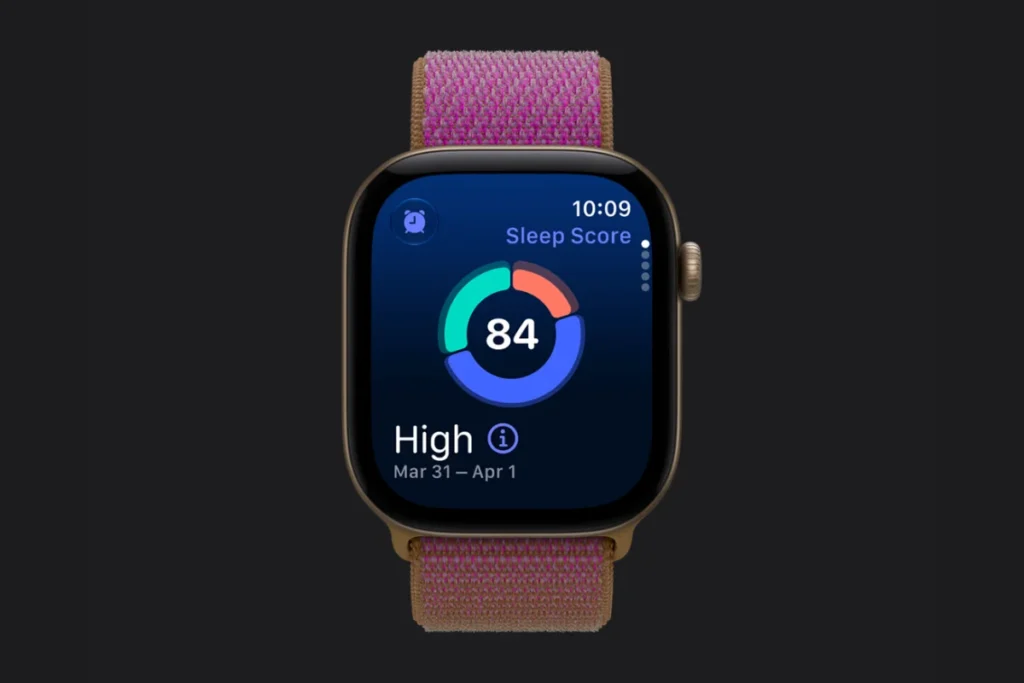
Changes in baseline metrics, including resting heart rate and nocturnal temperature, can provide useful insights into recovery and physical strain. In our dedicated guide to the best sleep trackers, we highlight how the companion software interprets this data: Oura, RingConn and Ultrahuman turn these baseline metrics into easy to read “Readiness” or “Recovery” scores that help you decide whether to train hard or take a rest day.
A major practical hurdle for wrist-based sleep tracking is the daily charging routine. If a smartwatch has an 18 to 24-hour battery life, users often end up charging it overnight by default. Forgetting to charge it during the day leaves you with an empty battery at bedtime, creating gaps in your long-term sleep and recovery history. Because fitness bands and smart rings run for multiple days on a single charge, they are far easier to keep on your body through the night. If you want to explore the category further, take a look at our breakdown of the best smart rings for sleep tracking.
Which Is Better for Workouts, Running and the Gym?
As you step out for an interval training session, clip into a bike or head to the squat rack, the functional gap between the two gadgets is immediately clear.
Live Metrics vs. Retrospective Data
The biggest problem with using a smart ring while exercising is the lack of immediate sensory feedback.
Running intervals according to your targeted heart rate zone, tracking pacing per a rolling mile or timing resting period between sets of strength training requires some kind of device you can use without taking your phone from your pocket. It would be impossible to take a quick look at your finger during running to determine your cadence.
A smartwatch will be a dynamic dashboard where you can see your current heart rate zone, split notifications, pace chart, power output and even timer.
Even the simplest fitness trackers have a glanceable display that shows you your heart rate or time spent on exercising just by turning your wrist. A smart ring is a purely retrospective device for measuring your performance: you are going to work out without any information about your body and then analyze it.
Satellite Navigation: Built-in vs Connected GPS
Spatial tracking accuracy is vital for runners, cyclists and hikers:
- Standalone Smartwatches: State-of-the-art sport watches by Garmin, Apple and Suunto feature dual-frequency multi-band GNSS (Global Navigation Satellite System) chip. Their antennas establish connection with several satellite constellations (GPS, GLONASS, Galileo, BeiDou) to enable accurate tracking of the route, paces and elevations even under the dense canopy or between the skyscrapers. You can take your phone with you and still keep track of your positions accurately.
- Fitness Bands: Basic fitness bands usually work with “Connected GPS,” which implies that there’s no satellite antenna integrated into the fitness band and its position is derived from the paired smartphone’s GPS radio through Bluetooth connection. In case you don’t have your phone with you while running, the fitness band will be able to estimate only your pace and distance with the help of the internal accelerometer.
- Smart Rings: There is no built-in GPS in the smart ring. Due to the ring’s small conductive titanium shell and battery capacity, it is difficult to put in built-in GPS or to use satellite receivers.
Strength Training and Gym Workouts
For resistance training, smart rings present both physical and mechanical hurdles:
The pressure of lifting a barbell, a kettlebell or dumbbells causes high metal-on-metal friction with the casing of the smart ring. It damages the surface coating and may crack the resin windows with sensors inside the smart ring, causing uncomfortable pinching or friction blisters on the proximal finger joint.
Moreover, heavy gripping can create a safety concern when wearing a smart ring. Ring avulsion refers to a serious traumatic injury that can occur when a ring catches on equipment or another object and forcefully pulls the finger, potentially causing severe tissue damage. For this reason, manufacturers commonly advise removing rings during activities such as heavy lifting, pull-ups and climbing, where the ring could catch or become trapped.
Wristbands and smartwatches allow keeping palms and fingers open. Even though wrist extension during exercise such as front squats or kettlebell cleans sometimes presses the watch crowns, it is enough to move the device just an inch up the forearm.
For the complete analysis of how finger sensors can withstand the strain of sports training, please refer to our review: Smart Rings for Fitness Tracking- Are They Finally Good Enough?
Comfort, Size and 24/7 Wear
The most advanced biosensors in the world are useless if you routinely take your wearable off because it feels uncomfortable.
The choice of wearing is based on the interaction between the design of wearable tech and the body. Wrist-based wearables take up a lot of physical space. Large watch casings can get wet due to sweat during hot afternoons, catch on tightly fit shirt sleeves and even clash with wrist rests while working on laptops. The silicone strap can develop contact dermatitis due to infrequent cleaning and force the user to abandon the gadget for several days.
Smart rings have very little physical presence and weigh only 3 to 6 grams, whereas modern smartwatches typically weigh from 30 to 75 grams. For those who wear regular jewelry or mechanical wristwatches, the smart ring is a discreet way to monitor one’s health.
However, smart rings present their own sizing and ergonomic considerations:
- Inflexible sizing: Wristbands can be adjusted with buckles and straps and thus comfortably worn through fluctuating body weight or any other changes during the day. Rings are inflexible and cannot be adjusted to suit the owner’s size. They need a thorough process involving the use of plastic sizing kits for all rings.
- Swelling Fingers: The fingers swell naturally due to changing temperatures, sodium and hydration levels in the body. One might wear the ring comfortably in the morning, but later in the evening after some workouts, it becomes too tight.
- Restrictions in Weight Training: As earlier stated, when one grabs metal objects such as kettlebells and barbells, it leads to friction and thus people prefer removing their rings before training.
- Job Risks: People who work with machines in their jobs need to wear tight medical gloves and metallic rings are not suitable.
Battery Life and Charging
© Lifehacker

© WHOOP
© Apple
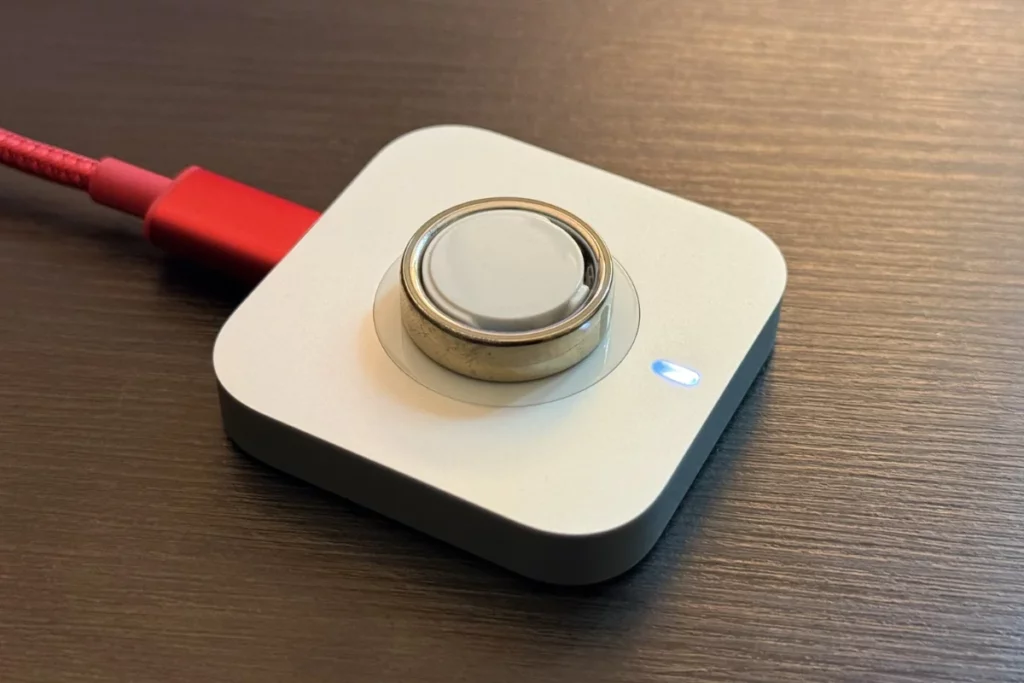
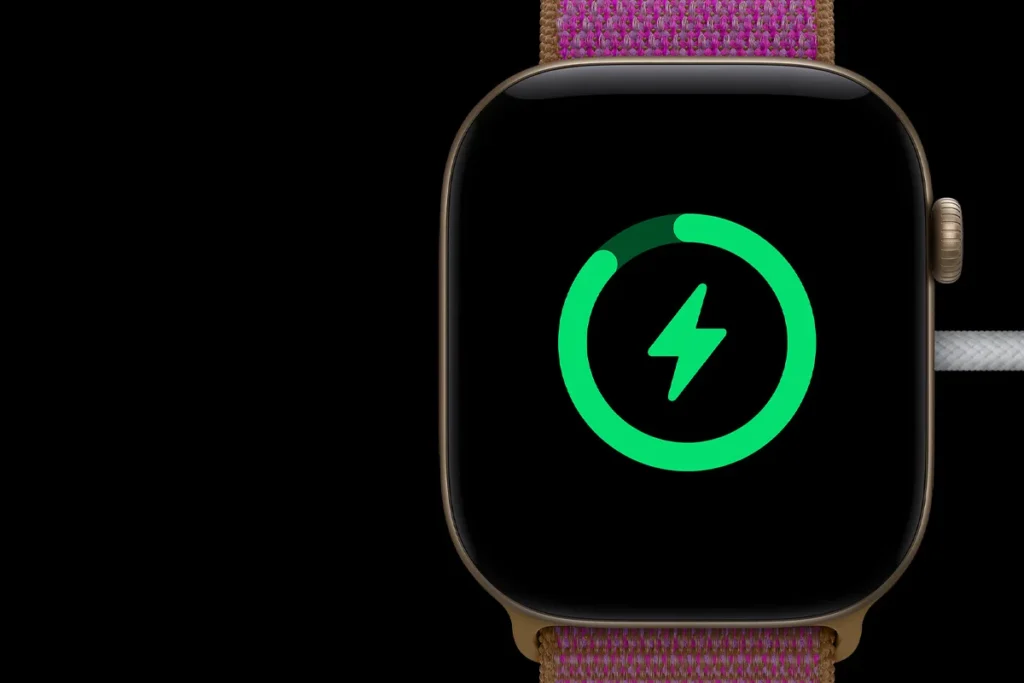
Battery longevity is not just an arbitrary technical specification it directly shapes how you interact with your device and dictates whether your baseline data remains continuous.
Operating Cycles and Maintenance Friction
- Regular Smartwatches: Full-fledged operating systems like watchOS and Wear OS are associated with numerous background operations, bright display usage and regular connections via Wi-Fi, Bluetooth and cellular network. Hence, advanced models like Apple Watch Series 11 or Samsung Galaxy Watch need a charge virtually every day. In order to keep that kind of battery life, it is necessary to develop a special charging routine, including charging while working at your desk or getting ready in the bathroom.
- Fitness Bands (6 to 14 Days): As fitness bands are equipped with lightweight proprietary operating microkernels running on energy-saving processors, battery drainage from them is low. Such gadgets as Samsung Galaxy Fit3 can work more than a week without recharging under usual circumstances and charging maintenance is limited to two or three times a month.
- Smart Rings (4 to 9 Days): Screenless rings use little energy and therefore they can work non-stop for several days on tiny 15 to 25 mAh batteries of lithium-polymer type.
- Endurance Multi-Sport GPS Watches (7 to 20+ days): Multi-sport GPS watches, such as Garmin Forerunner or Fenix series, typically use larger batteries and power-efficient displays to extend battery life. Many endurance-focused GPS watches offer substantially longer battery life than conventional smartwatches, with some Garmin models lasting multiple weeks in smartwatch mode.
Smart Ecosystems, Cellular Freedom and Phone Independence
If your goal is minimizing the time you spend reaching for your smartphone, wearable form factors diverge dramatically in their software capabilities.
The Phone Extension: Smartwatches
Smartwatches act as peripheral computer terminals. When you configure the smartwatch with a cellular eSIM, you do not need to carry the phone around when shopping or even working out outdoors because connectivity will not be interrupted.
You are able to make phone calls using the inbuilt microphones, dictate responses to text messages, look up map directions, play music via Bluetooth speakers and pay for groceries via the NFC terminal.
Runners and other athletes wishing to use their smartwatches for calling emergency services without having to carry a phone will find them particularly useful.
Notification Mirror: Fitness Bands
For the most part, fitness bands offer basic notifications that can only be read. If there’s an alert, the band will vibrate and the text or the caller ID will be displayed on the tiny screen of the band.
But it’s unlikely that you will have enough screen real estate and an OS capable of letting you type out messages or conduct phone calls. Instead, the band acts as a basic tool for triaging alerts and deciding which one requires you to take out your phone from your pocket.
The Silent Companion: Smart Ring
A smart ring does not contain many smart features for interactivity. There are no notifications shown, preview text or vibration that indicates an incoming call.
Though certain rings have started using tap gesture technology to take pictures remotely or mute the alarm on your smartphone, a ring acts as an input sensor and not an output display screen. In case you need a gadget to help you control smartphone notifications, a smart ring is not a solution for you.
Which Should You Choose?
Consider a Fitness Tracker if:
- You desire something simple, small and effective for tracking your steps, heart rate and activities.
- You do not like charging your device every day and would like to have a battery that lasts up to a week or even more.
- You want a sleek device on your wrist that remains comfortable whether you exercise or sleep.
- You require access to simple activity stats for the day without paying $100s for a smartwatch.
- You do not require two-way communication, app ecosystems or cellular freedom.
Choose a Smart Ring If:
- Sleep quality, autonomic recovery metrics and HRV measurements are your key fitness concerns.
- You feel wearing a watch screen or band is disturbing and uncomfortable during your sleeping hours.
- You like having a gadget that does not have any screen and silently tracks your metrics without constantly alerting you.
- You already own a standard mechanical or high-end analog watch that you use every day and don’t want to “double-wrist.”
Choose a Smartwatch If:
- You are an active runner, cyclist, swimmer or endurance athlete requiring live pace guidance, personalized interval notifications and GPS monitoring for multiple bands.
- You prefer not carrying your mobile device when training outdoors but wish to maintain cellular voice capability, texting capabilities and emergency SOS features.
- You work out using barbells, kettlebells or cross-training exercises where there is a potential risk of a finger-worn gadget getting scratched.
- You appreciate the convenience of operating from your wrist, such as responding to phone alerts, voice commands, music streaming and contactless payment.
- You do not mind the interactive interface and are ready for a daily or every other day charge.
Final Verdict
There is no single wearable that works best for everyone, but if I had to choose one, I would personally go with a smartwatch. It offers the most complete experience, especially if you want to track workouts, see your data in real time, use GPS and have useful features like notifications and payments on your wrist.
That said, the right choice still depends on what you expect from a wearable. But for me, having fitness tracking, health features and everyday smart functions in one device makes a smartwatch the most practical option.
Decode the Decor
The Smart Jewelry Revolution
A practical guide to wearable tech's future — delivered straight to your inbox.
Author
