

I was out on a busy Saturday night at a rooftop restaurant with some friends I hadn’t met since college. The music was loud enough that I could feel it in my ribs. Plates were clattering. A group behind us was laughing at full volume. I caught myself nodding along in conversations because I simply couldn’t process the words fast enough.

By the time I got home, my ears were ringing. I realised my millennial self has outgrown partying. Then it hit me, I’ve tried foam earplugs before and while they worked technically, they also made everything sound like I was underwater. My own voice boomed inside my head. But I needed something to sustain my social life.
So I ordered three pairs of Loop earplugs- Quiet 2, Engage 2 and Experience 2 and decided to test them in situations where I actually struggle: sleep, social gatherings, flights and concerts.
Here’s what happened. But first…
Decode the Decor
The Smart Jewelry Revolution — a practical guide to wearable tech.
What Are Loop Earplugs?

Loop Earplugs are reusable earplugs designed for controlled sound reduction, not total isolation.
Unlike foam plugs that expand inside your ear canal and broadly muffle everything, Loop uses a structured acoustic channel and filter system in most of its models to reduce volume more evenly.
You might confuse them with active noise-canceling (ANC) earbuds, but they’re completely different. ANC earbuds use microphones and electronic processing to cancel low-frequency sound in real time, require charging and often play audio. Loop earplugs come with no batteries, no Bluetooth and no sound playback. They just lower the volume of the world around you.
The design of Loop earplugs is distinct. A small circular “loop” sits in your outer ear while silicone ear tips create the seal. Each pair comes in a compact carry case and many colours and finishes.
They look more like an accessory than safety equipment and that’s part of why I ordered these. Compared to foam plugs, here’s how I see it:
| Loop | Foam Earplugs |
|---|---|
| Reusable | Disposable |
| Controlled filtering | Broad blocking |
| Lower maximum attenuation | Higher max protection (often 30+ NRR) |
| More natural sound | Heavy muffling |
Loop is about sound management, not silence.
How Do Loop Earplugs Work?
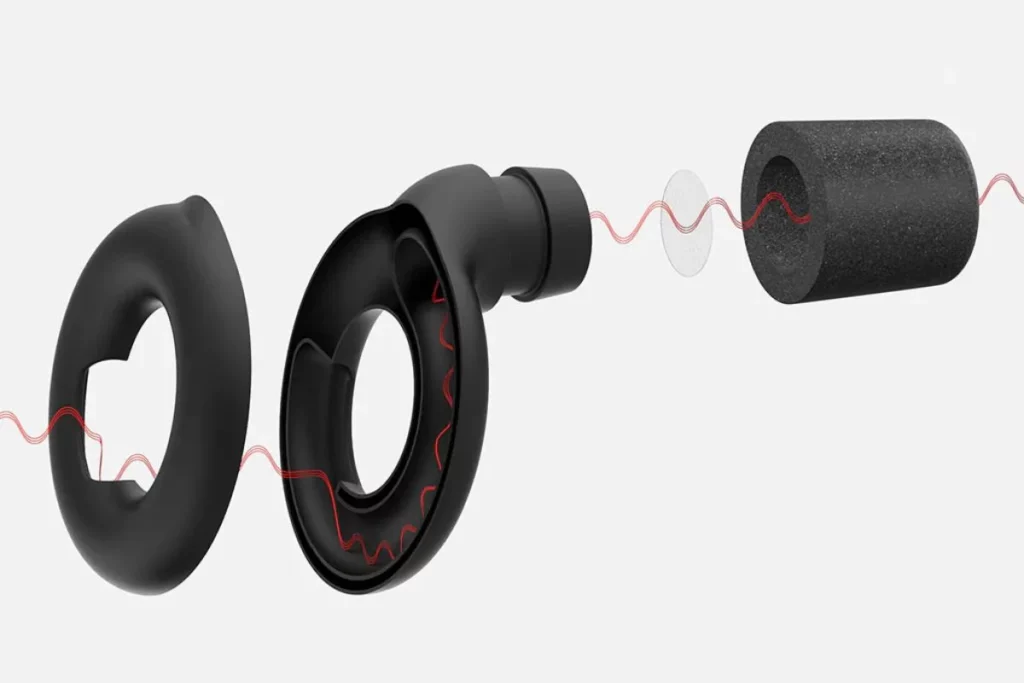
Loop earplugs are passive hearing protection. There’s no battery, no electronics, no active noise cancellation.
Passive Noise Reduction
They physically reduce the amount of sound energy entering your ear. That reduction depends on:
- The seal from the silicone tip
- The acoustic filter (in Loop Engage and Loop Experience)
- The mode selected (in Loop Switch)
If the seal isn’t good, performance drops dramatically. I’ve noticed that even a slight fit issue changes both sound quality and protection.
Filtering vs Blocking
Loop Engage and Loop Experience don’t just block the sound, they filter it. In concerts, Loop Experience keeps music recognizable. It still sounds loud and feels like a live show, but it’s just brought down to a safer decibel.
The Loop Quiet, on the other hand, blocks more broadly. It’s closer to a traditional plug.
If you want more earplugs fit for studying or working, check out our guide here!
NRR vs SNR
Loop lists ratings in both:
- SNR (Single Number Rating), used in Europe
- NRR (Noise Reduction Rating), used in the US
For context:
- Loop Engage 2: 16 dB SNR
- Loop Experience 2: 17 dB SNR
- Loop Quiet 2: 24 dB SNR
- Loop Switch 2: 17–25 dB SNR
One thing I want to be clear about is that Loop earplugs do not eliminate sound, they reduce it. If you need heavy-duty industrial protection or ANC, these aren’t built for that.
The Different Loop Earplug Models Explained
Loop Quiet 2: My Sleep Test

I used the Loop Quiet 2 in my apartment bedroom, facing a busy road, on nights sleeping next to a snorer and one fine afternoon nap when there was construction outside my window.
What I Noticed
Priced at $24.95, the Loop Quiet 2 reduces noise the most out of the three. Traffic became a low hum. Snoring dropped from “impossible to ignore” to “background vibration.” But here’s the important part- it does not create silence.
If someone slammed a door, I still heard it. It was softened, not erased. Because they’re fully silicone with no acoustic filter, they block more broadly than the other models. They also create the strongest occlusion effect. My own breathing sounded louder and chewing felt amplified. And while that’s normal for sealed earplugs, it’s worth mentioning.
Comfort
As a side sleeper, I was surprised. They’re soft enough that I didn’t feel pressure against the pillow. After about 6-7 hours, when I woke up in the middle of the night because of my dog, I did notice slight canal fatigue but nothing painful.
If your goal is sleep, this is the one I’d pick again.
Who It’s Designed For and Best Use Cases
The Loop Quiet 2 is designed for sleep, studying, travel and general noise dampening. Some of the use cases are:
- Sleeping next to a snorer
- Apartment noise
- Subway commuting
- Loud kitchen appliances
- Focus sessions
Noise Reduction Level
The Loop Quiet 2 has a noise reduction level of 24 dB SNR.
Limitations
This is the simplest of the Loop earplugs. It is made of soft silicone and has no acoustic filter. For sleeping, I actually like this one best. It’s softer than the others and more comfortable for side sleeping. It won’t make a snorer disappear entirely, but it takes the edge off enough to make sleep possible.
But there are some limitations.
- Speech becomes heavily muffled
- Not designed for music fidelity
- Not industrial-grade
Loop Experience 2: Concert and Event Test

Priced at $34.95, Experience 2 is marketed for music, so I tested it where the volume was genuinely high.
The difference in these Loop earplugs was immediate. The music lost harshness without losing shape, the bass still hit and the vocals were clear. It didn’t sound like foam-muffled distortion.
I glanced at my watch once during the DJ performance and peak levels were above 95 dB. With the Loop Experience inside, it felt managed rather than harsh.
People were able to talk, but it was a bit muffled. I had to lean in a little bit.
What It Does Well
- Takes the edge off loud music
- Preserves more sound detail than foam
- Doesn’t distort bass badly
What It Doesn’t Do
- It doesn’t give you “studio clarity”
- It doesn’t block as much as industrial plugs
- You still hear crowd noise
For casual concerts and events, I’d absolutely use these Loop earplugs again. For standing next to a speaker stack all night? I’d want stronger protection.
Who It’s Designed For and Best Use Cases
- Concerts
- Blues bars
- Clubs
- Moderate public transport
Noise Reduction Level
The Loop Experience 2 has a noise reduction level of 17 dB SNR. The Plus version adds 3 dB with Mute.
Limitations
These are the Loop earplugs I wore most often to concerts. I wore them to the Coldplay concert, and I hardly realized I was wearing earplugs. The music was still rich and didn’t sound muted. It just felt safer.
That said, they don’t reduce as much as high-NRR foam or some adjustable musician plugs. If you’re standing next to the speaker stack every weekend, you may need more protection. But for occasional live music, they hit a strong balance.
However, a few of its limitations are:
- Some occlusion, like you hear yourself chewing
- Not as natural as some premium musician plugs
- Less attenuation than foam
Loop Engage 2: The Restaurant and Work Test
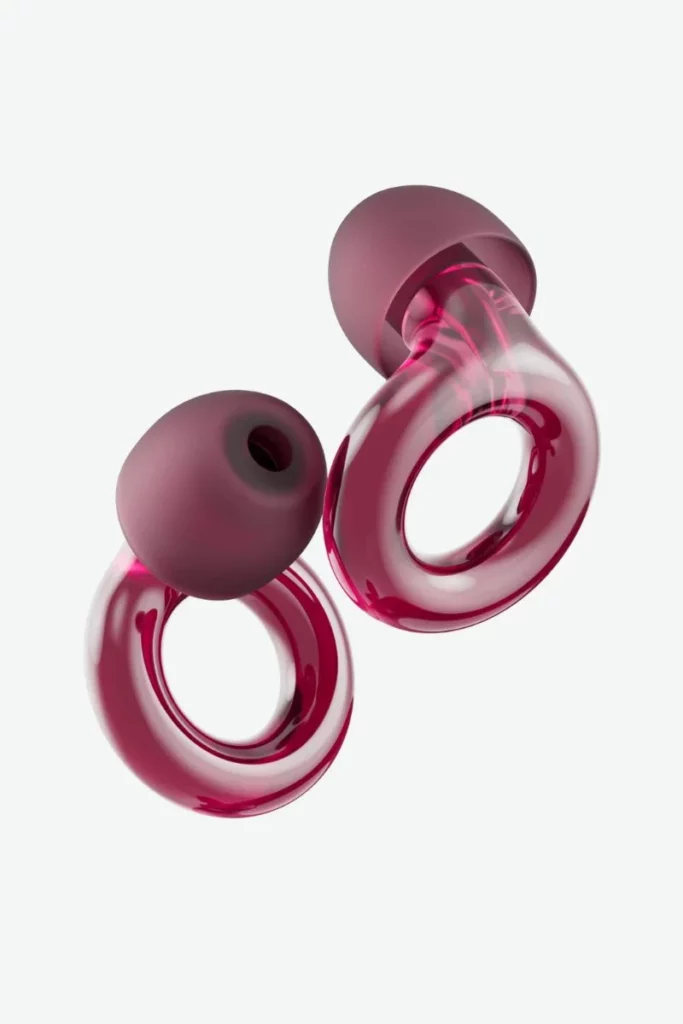
This was the one I was most curious about. Priced at $34.95, the Loop Engage 2 reduces noise less aggressively than the Loop Quiet. It is intended to reduce background noise, such as chatter, while still being able to hear speech.
And these Loop earplugs actually do. In the cafe, the noise of dishes and muffled conversations receded into the background. But when my name was called, I heard it clearly. I didn’t feel cut off.
However, in very loud environments, it doesn’t do enough. But for overstimulation? It made a noticeable difference. My brain felt less tense after two hours.
Who It’s Designed For and Best Use Cases
- Busy restaurants
- Grocery stores
- Working in cafes
- Toddler play dates
- Mild sensory overload
Noise Reduction Level
The Loop Engage 2 has a noise reduction level of 16 dB SNR. The Plus version adds 9 dB with Mute.
Limitations
I was skeptical about the Loop Engage 2, but when I wore them in a cafe while writing, they softened the background chatter just enough that I couldn’t make out conversations but I could still order my coffee without taking them off.
What I liked was that they don’t isolate you, they just smooth things. For sensory management, they’re practical, but for serious hearing protection, they’re not enough. A few other limitations are:
- Lower attenuation overall
- Slight cut in speech frequencies
- Not suitable for loud concerts
Loop Quiet vs Experience vs Engage — Quick Comparison
| Model | Best For | Noise Reduction | Conversation Clarity | Sleep Suitability |
|---|---|---|---|---|
| Quiet 2 | Sleep, flights | High 24 dB SNR | Low | High |
| Experience 2 | Concerts, movies | Moderate 17 dB SNR | Moderate | Low |
| Engage 2 | Social settings, cafes, family gatherings | Light-moderate 16 dB SNR | Higher | Moderate |
Real-World Use Cases
- Sleep: The Loop Quiet 2 works best here. It reduces traffic and snoring but won’t create complete silence.
- Concerts & Festivals: The Loop Experience 2 is my go-to for concerts and live music shows.
- Studying or Focus: The Loop Engage reduces background conversation noise well and the Loop Quiet reduces it even more. For heavy background noise, I still use earplugs with white noise or headphones.
- Travel & Flights: The Loop Quiet is good at reducing engine noise. The Loop Experience 2 is also good for the subway.
- Sensory Sensitivity / ADHD: The Loop Engage is very popular for its ability to reduce overstimulation without complete isolation. Not medical-grade equipment, but useful environmental control.
Comfort, Fit and Long-Term Wear

With earplugs, the fit is everything. The Loop earplugs come with multiple tips, so when I rushed the first fitting, the performance was subpar.
The Loop Quiet is softer for sleep, especially for my fellow side sleepers but the Loop Switch 2 is bulkier and less sleep-friendly.
As far as maintenance goes, they’re easy to maintain. That’s part of the reason I still use them. I can just wipe them down with a microfiber cloth and replace the tips every 3-6 months. The storage case is also awesome so I don’t end up losing them in my bag.
Are Loop Earplugs Better Than Foam Earplugs?
It depends on your goal. For reusability and comfort, Loop wins.
For maximum attenuation, foam wins. Many reach NRR 30+.
Foam is also cheaper upfront, which gives a bang for your buck. Loop is cheaper over the years if you actually use them.
I wouldn’t use Loop earplugs in heavy construction, though. I would use them at a concert, at a cafe, while sleeping or on the subway.
Who Should Buy Loop Earplugs?
- People who enjoy concerts
- Office workers
- Students
- Light sleepers
- People managing sensory overload
Who Should Avoid Loop Earplugs?
- People needing total silence
- Heavy industrial workers
- Musicians who are exposed to extreme sound daily
- Anyone expecting ANC level cancellation
- Budget buyers who are satisfied with disposable foam
Wrap Up
Loop earplugs block sound without cutting you off from the world. They’re also comfortable enough that I actually wear them. And it matters because the best earplugs are the ones you’ll consistently use.
They are not the strongest hearing protection on the market, nor are they magic silence tools. But for concerts, cafes, commuting, focus and sleep, they’re a practical, well-designed solution. These are similar to the Sony LinkBuds Clip but if you want noise cancellation features, you can check out the Google Pixel Buds 2a.
Some attenuation is always better than none and for many people, Loop is enough to make hearing protection realistic instead of theoretical. Have you tried the Loop earplugs? Let me know which ones you use and what you use them for in the comments!
FAQs
Decode the Decor
The Smart Jewelry Revolution
A practical guide to wearable tech's future — delivered straight to your inbox.
Author
