

Smart glasses started with a pretty simple idea: put a camera, speakers and some smart features into a pair of glasses and see what happens.

Now, AI is making that idea a lot more interesting. Instead of just playing music or showing notifications, newer AI glasses are trying to understand what is happening around you. The BleeQUp Rover is one example of this shift.
Launched at IFA Berlin 2026, it combines a camera, open-ear audio, voice controls and AI features with a sports-focused design. So, what exactly can these glasses do? Let’s see.
BleeQUp Rover Represents the Next Phase of AI Glasses
For years, smart glasses served as little more than a notification ticker sitting on the bridge of your nose. Older models buzzed with alerts, let you skip a music track or maybe answered a quick call. But the BleeQUp Rover changes that formula entirely.
Decode the Decor
The Smart Jewelry Revolution — a practical guide to wearable tech.
AI glasses are gaining attention right now because they are shifting from connected displays to AI-powered assistance. Modern smart glasses are becoming context-aware devices. They use artificial intelligence to understand your surroundings. Instead of just showing a text message, the BleeQUp Rover focuses on answering questions, providing assistance and recording exactly what you see. It is moving beyond the basic connectivity of the past.
These glasses are not replacing your smartphone just yet. But they are making it so you do not have to pull your phone out every five minutes. The real shift is moving from passive notifications to active understanding.
What Is BleeQUp Rover?
© BleeqUp
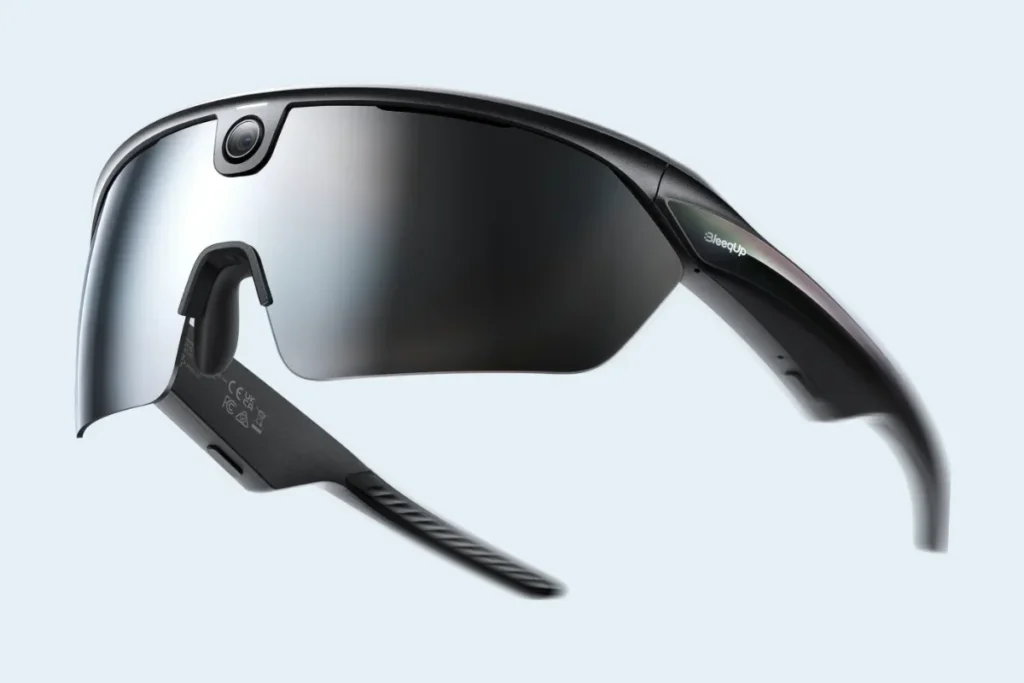
BleeQUp Rover is the world’s first AI sports companion built right into a pair of eyewear. It looks like a sleek pair of sports sunglasses, but it packs some serious hardware inside that lightweight frame.
The BleeQUp Rover was launched at IFA Berlin 2026, where BleeQUp introduced it as an AI-powered sports companion designed to bring hands-free assistance, recording and activity-focused features into everyday outdoor use.
© BleeqUp
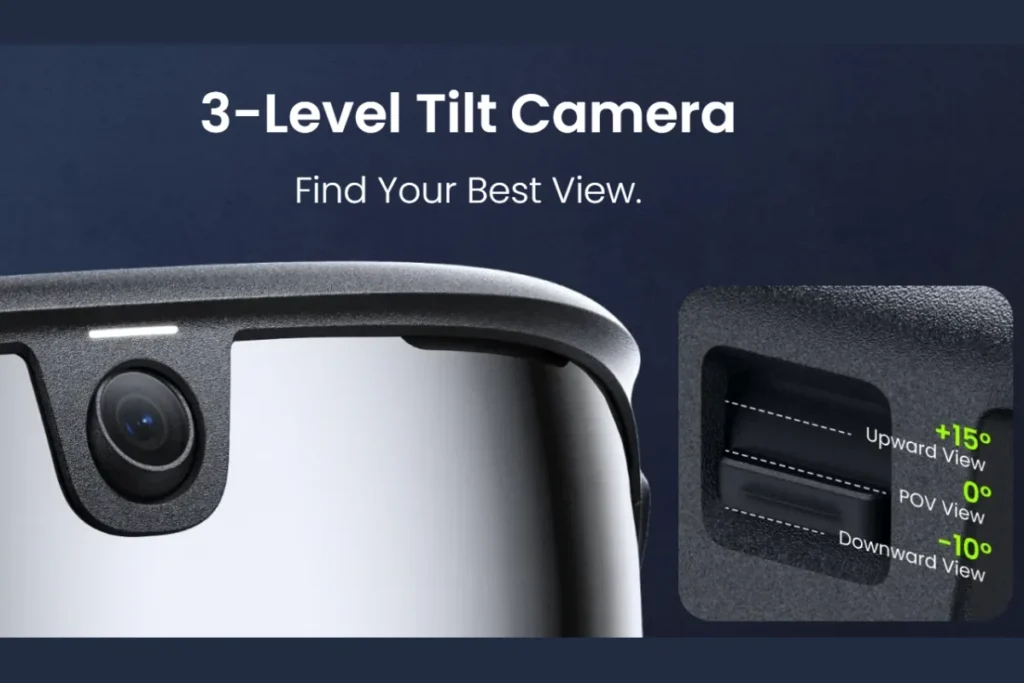
These glasses features 16 megapixel Sony sensor that records videos of a professional quality with 3K HDR at 60 frames per second and photos in 4K quality. They also come with an eye-level 120-degree field of view. The large field of view guarantees you recording of all the surroundings and electronic image stabilization (EIS) ensures smoothness of the recorded videos even when on rough terrain. One of the greatest things about this camera system is hardware versatility. It comes with a 3-level tilt camera lens. This lens can be adjusted to -10, 0 or +15° manually depending on your riding posture or activity.

© BleeqUp
© BleeqUp
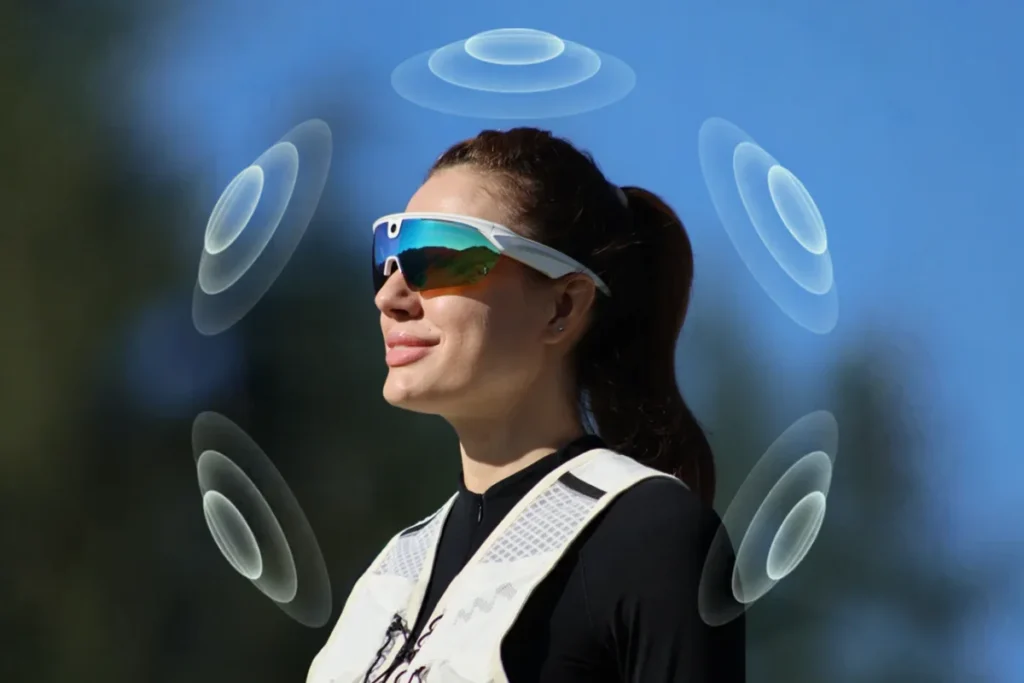
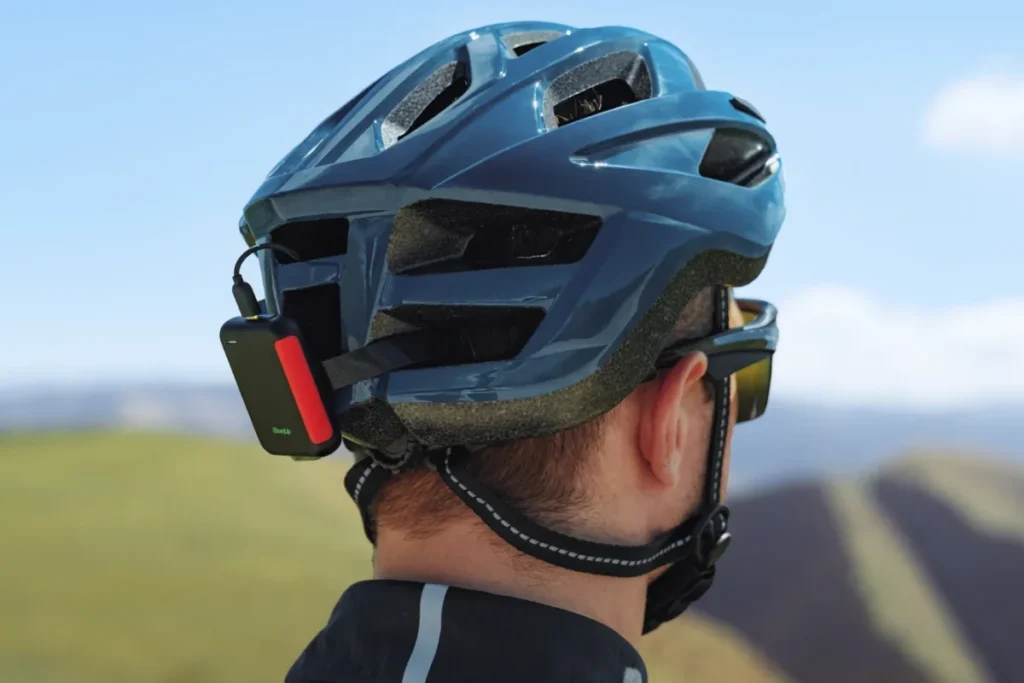
These glasses are also equipped with open-ear audio that is driven by dual full-range speakers. They come together with a 5-microphone system which utilizes sophisticated wind noise cancellation technologies that allow making clear phone calls and voice control. All these innovations do not make the gadget heavier than 53 grams. Also, it provides you with 64GB of on-board storage capacity. Moreover, it gives you an option to quickly change the aspect ratio, allowing switching from one format to another. By default, the lenses are ZEISS UV400, but you can always replace them with photochromic or polarized ones depending on weather conditions. In case you need to record a whole day without any pauses, you can connect the gadget with a 1600mAh Power Plus magnetic battery pack. This IP56 water-resistant power bank extends your continuous recording time up to 5 hours.
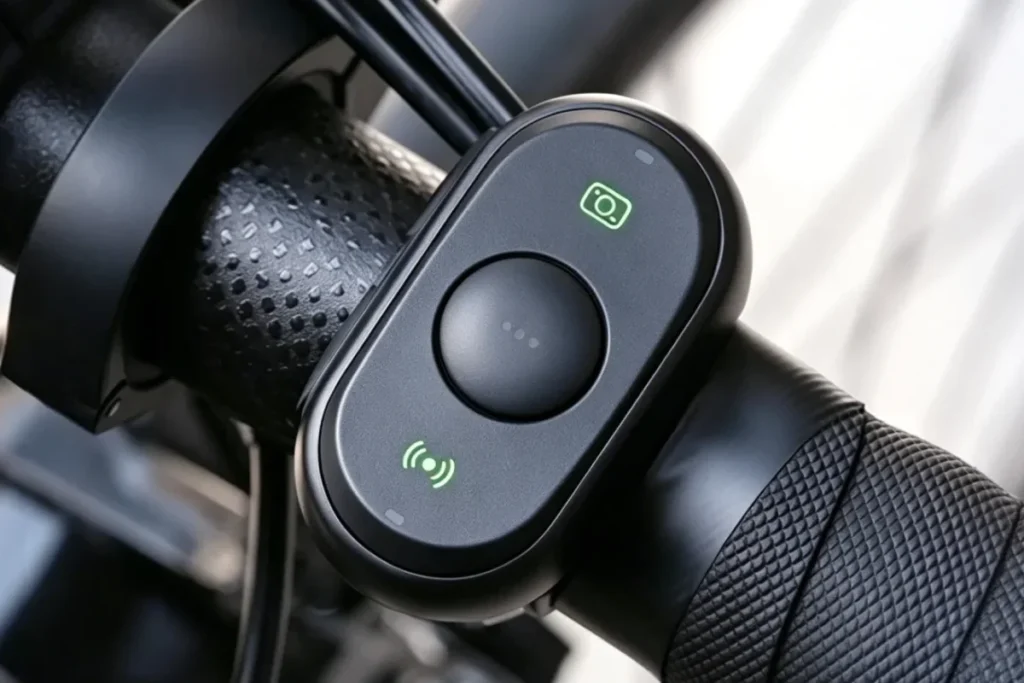
The goal here is simple. BleeQUp wants to make an AI assistant available through a natural wearable interface. You interact with it using voice commands and a built-in real-time walkie-talkie feature. You just talk to it and the BleeQUp app on your smartphone handles the heavy processing.
Specifications
| Specification | BleeQUp Rover |
|---|---|
| Weight | 53g |
| Camera Sensor | 16MP Sony Sensor |
| Video Resolution | 3K (60FPS / 30FPS) HDR, 1080p (60FPS / 30FPS) |
| Photo Resolution | 4656 x 3496 pixels (16MP) |
| Field of View (FOV) | 120° Eye-Level |
| Camera Tilt Adjustment | 3-Level Manual Tilt (-10°, 0°, +15°) |
| Image Stabilization | Electronic Image Stabilization (EIS) |
| Video Aspect Ratios | 16:9 (Landscape) and 9:16 (Portrait) |
| Audio System | Dual full-range open-ear speakers |
| Microphone System | 5-mic array with wind noise reduction |
| Storage Capacity | 64GB onboard memory |
| Durability | IP65 Water & Dust Resistance |
| Lenses | Interchangeable ZEISS UV400 (Photochromic and Polarized options available) |
| AI Capabilities | AI Sports Assistant, AI Highlights, AI Clip Search, AI Video Roadbook |
| Communication | Real-Time Walkie-Talkie |
| Extended Battery Support | Compatible with Power Plus 1600mAh Magnetic Pack (IP56) |
| Price | $459 USD |
How AI Glasses Are Moving Beyond Notifications
The biggest change in this category is not the glasses themselves. It is the intelligence behind them.
Traditional smart glasses were essentially phone accessories. They displayed notifications, controlled music and handled calls. That was about it.
AI glasses like the BleeQUp Rover do a lot more. They can recognise objects. They can answer questions about your environment. They provide contextual information based on what the camera sees. This is a huge leap forward for AI-powered wearable devices. The BleeQUp Rover has an AI Hazard Detection feature. It can recognise climbs, descents, sharp turns and changing weather conditions to give you advance alerts while riding. That is a massive step up from a simple text alert.
What Can BleeQUp Rover AI Glasses Do?
The BleeQUp Rover AI Glasses will be really useful when they help you get rid of all the effort of reaching for your phone all the time. The combination of the sophisticated camera system and advanced software allows the glasses to function as a voice-operated intelligent companion that helps during the workouts.
© BleeqUp
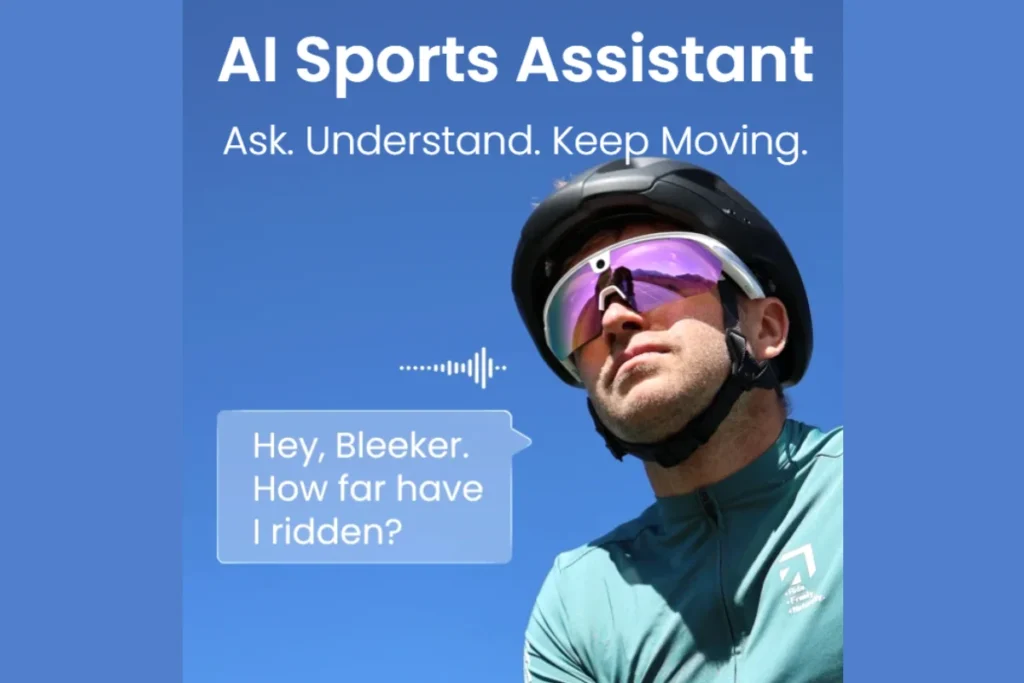
First of all, the device offers an incredibly responsive AI Sports Assistant. One may ask the voice assistant questions about his or her workout right in the middle of the exercise. Due to the fact that the glasses include a 5-mic array with the wind noise reduction feature, the AI assistant can listen to your voice, even when you are riding at high speeds. This setup gives you completely hands-free information access exactly when you need it.
Another technical aspect that should be highlighted is AI Video Roadbook. In contrast to storing only raw videos on your device, the companion application employs artificial intelligence in order to create the route story from your drive. While looking back at your footage, you will not have to spend hours analyzing hundreds of megabytes of heavy 3K 60FPS videos in order to catch one perfect jump. With the help of AI Clip Search functionality, you will only have to tell the app what you need and it will instantly detect the corresponding clip. The software automatically detects your best action moments and edits them together, completely removing the burden of manual video editing.

© BleeqUp
But these visual effects take on an entirely new dimension through AI Master Motion. This groundbreaking technology helps you convert regular first-person point of view shots into third-person shots. It can create follow shots, wheel shots and rear tracking shots to make you feel as though someone else is riding and filming you. In case you wish to upload your videos instantly, there is an auto aspect ratio adjustment feature in these glasses too. You can switch between regular 16:9 landscape video and a 9:16 portrait video made exclusively for social media stories.
In addition to being a video recording function, BleeQUp Rover goes beyond to connect with your physical activity. The glasses are capable of overlaying live data due to their integration with Garmin cadence and heart rate sensors. As such, you will be able to put stamps with real-time ride telemetry on your video recording to track your physical effort in a more tangible way. Through the tracking of your physical activities, the system can provide warnings about fatigue and strain, which may help you in reacting to potential dangers at an early stage. At the end of your activity, the app creates an AI Activity Recap for you.
Why Cameras Are Becoming Essential for AI Wearables
Cameras are the secret ingredient driving this entire wearable category forward. Without them, smart glasses are essentially just Bluetooth speakers sitting on your face. With them, AI glasses can actually understand your surroundings in real time.
The reason for this change is that the camera acts as an active part of the multi-modal AI processing. The visual data plays an important role in helping the AI respond and creating a common understanding of the visual world between you and the AI program. When your glasses are capable of recognizing objects, reading trail markers and mapping out your physical surroundings, the AI ceases to be a mere voice assistant and becomes a real companion for you. For instance, the camera sees where you need to go without telling the digital assistant about your location.
In the case of the BleeQUp Rover, the use of this camera with 16 megapixels will not be limited to recording your bike ride on weekends. The camera serves as a safety system that feeds information to the AI in real time. Thanks to this process of receiving information, the glasses are able to detect any dangerous situations that may arise, such as close passing of vehicles, imminent collision or even a sudden braking ahead. If an emergency situation occurs, the system will record the last ten seconds of the video automatically without any effort from your side. Apart from emergencies, the camera will help the AI detect sharp turns, inclines and weather changes, providing you with spoken warnings.
Of course, real-world visual recognition is not always perfect. Bright sun glare, heavy mud and the fast motion of intense sports can occasionally trip up even the best sensors. However, the deep integration of computer vision and AI is exactly what makes these glasses a completely different tool than previous generations. It is the technological bridge that lets wearable devices finally see the world exactly how you do.
The Bigger AI Glasses Race
The BleeQUp Rover is part of a much larger trend. The AI glasses market is heating up. We are seeing major players enter this space, like the Ray-Ban Meta smart glasses, which also push heavily into AI territory.
Companies are competing to make AI more accessible and more natural. The goal of ambient computing is to make technology less dependent on screens. The BleeQUp Rover targets the sports and outdoor niche beautifully, but it reflects a broader industry race. Everyone wants to build the ultimate wearable AI assistant. They want a device that sees what you see and helps you navigate life hands-free.
The Challenges AI Glasses Still Need to Solve
Even with all these impressive advancements, it is completely reasonable to take a step back and look at the practical limitations. Despite the growing excitement around this category, AI glasses still face several hurdles before they become an effortless part of daily life.
First, there are ongoing privacy concerns regarding integrated cameras. Wearing a continuous recording device on your face naturally raises eyebrows in public spaces, meaning social acceptance will take time to catch up with the technology.
© BleeqUp
© BleeqUp
Then comes the physical constraint of battery life. The BleeQUp Rover packs a compact 260mAh battery into its lightweight frame, which yields around an hour of continuous video recording. While BleeQUp offers an optional 1600mAh Power Plus magnetic pack to extend runtimes for longer outings, running high-resolution video sensors alongside AI algorithms drains power quickly.
AI reliability presents another crucial challenge. Proactive features like AI Hazard Detection must achieve near-flawless accuracy if athletes are expected to trust real-time safety warnings during a high-speed descent. Finally, these devices remain heavily tethered to cloud connectivity and your smartphone’s processing power to handle heavier computational tasks. For AI glasses to achieve mainstream adoption, manufacturers need to earn user trust just as much as they deliver functional hardware.
Are AI Glasses Becoming the Next Smartphone Interface?
A smartphone requires interaction. You have to pause, take it out, unlock it and start typing. On the other hand, AI glasses try to achieve passive assistance. They help you whenever required without needing to draw your whole attention towards them.
Future smart glasses will always incorporate vision, voice and artificial intelligence. The biggest challenge for the industry will be to develop a technology which provides assistance without being distracting. This is well depicted through the example of BleeQUp Rover, which has been designed specifically for sports, yet shows where all wearables are going in future.
At the end of the day, whether you are trying to analyze your cycling data or just looking to capture some smooth 3K footage while playing sports, the BleeQUp Rover smart glasses offer a compelling package. They take the hassle out of recording and editing and they bring an intelligent assistant right to your eye line. They are a massive step forward from the notification-heavy glasses of the past, proving that the future of wearables is about understanding the world, not just displaying it.
Wrap Up
The BleeQUp Rover is an interesting take on where smart glasses are heading. With a camera, open-ear audio, voice controls and AI-powered sports features, it tries to make technology feel more useful without constantly asking you to pull out your phone.
It still has the usual questions around battery life, privacy and AI accuracy, but the idea is pretty simple: let the glasses help while you stay focused on what you’re doing. And honestly, that sounds like a pretty good direction for AI glasses.
FAQs
Decode the Decor
The Smart Jewelry Revolution
A practical guide to wearable tech's future — delivered straight to your inbox.
Author
