

A few years ago, smart glasses sounded like science fiction. Most people imagined bulky headsets, awkward designs or something that only worked inside tech demo. But devices like Rokid are changing that idea completely.
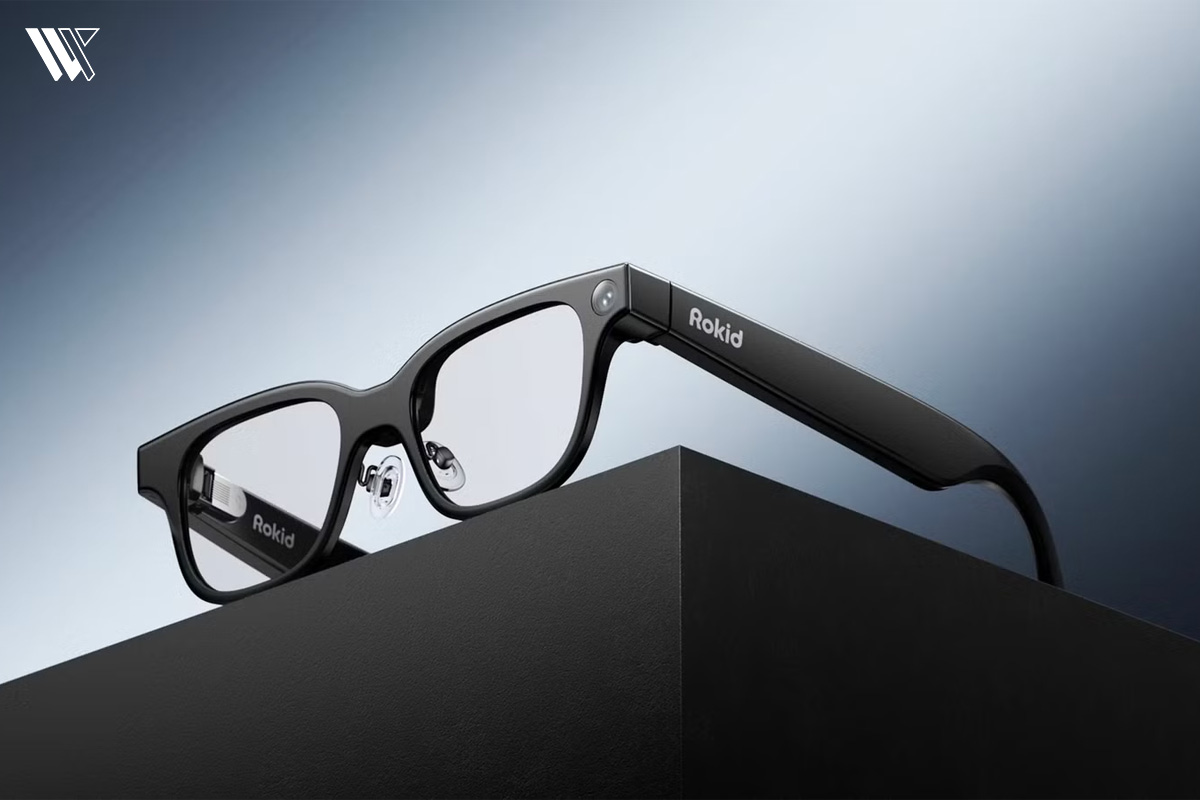
Rokid AI Glasses are trying to mix three things into one wearable: AI assistance, AR visuals and everyday glasses-style portability. And that is exactly why people are confused about what these glasses actually are.
Are they smart glasses like Ray-Ban Meta Smart Glasses? Are they AR glasses like XREAL Air? Or are they something completely different?
The truth is that Rokid AI Glasses sit somewhere in the middle. They are more advanced than simple AI camera glasses, but they are also not fully immersive AR headsets. That hybrid approach is what makes them interesting and also a little difficult to explain. In many ways, that’s exactly what “Rokid AI Glasses explained” comes down to: understanding where these smart glasses fit between AI wearables and true augmented reality devices.
Decode the Decor
The Smart Jewelry Revolution — a practical guide to wearable tech.
What Are Rokid AI Glasses?

The Rokid AI Glasses represent a new shift in wearable technology. For years, we had to choose between “smart glasses” that only took photos and “AR glasses” that were too heavy to wear in public. Rokid has created a hybrid positioning that sits right in the middle.
While they look like standard high-end eyewear, these are not traditional smart glasses. They are built on a dual-chip architecture using the Qualcomm AR1 for AI tasks and the NXP RT600 for low-power management. This allows the Rokid AI Glasses to stay lightweight (around 38.5 grams) while still providing a heads-up display and a first-person camera.
Unlike other brands that lock you into one software ecosystem, Rokid offers an open AI platform. This means you can switch between models like ChatGPT and Gemini depending on what you need in that moment.
What Rokid AI Glasses Actually Do
When people ask what Rokid AI Glasses actually do, the answer is a mix of visual help and audio intelligence. They are designed to be a “digital layer” over your real life.
AI Assistance
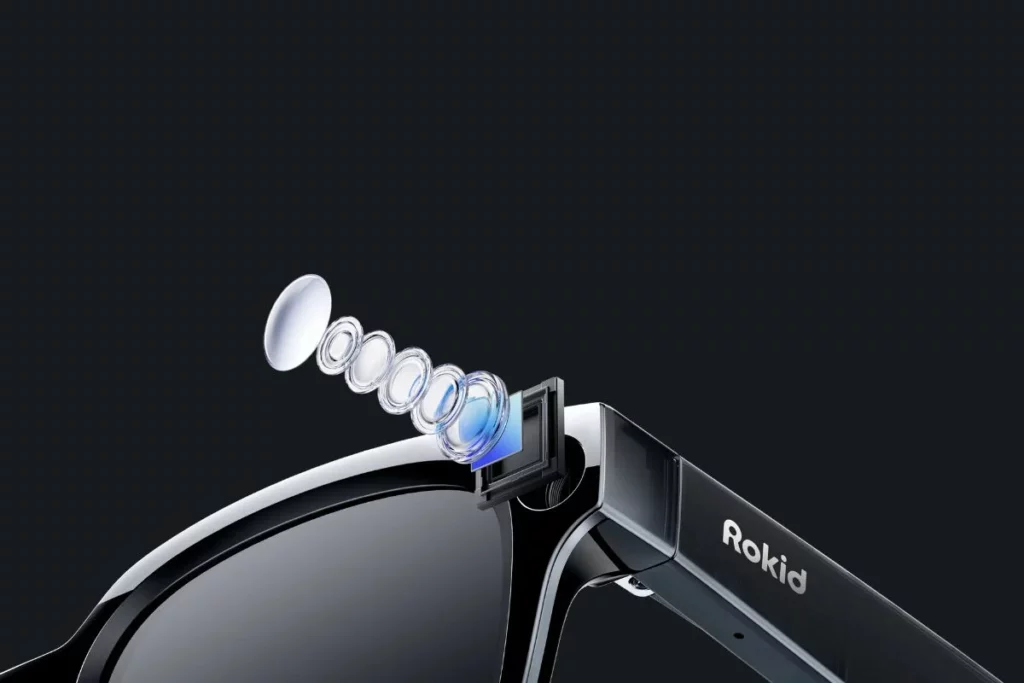
You can ask the glasses questions about what you are seeing. Powered by the Snapdragon AR1 Gen 1 chipset and supported by an NXP RT600 low-power chip, the AI uses the 12MP Sony IMX681 sensor to identify landmarks or menus in real-time and provide context-aware explanations.
Visual Overlays
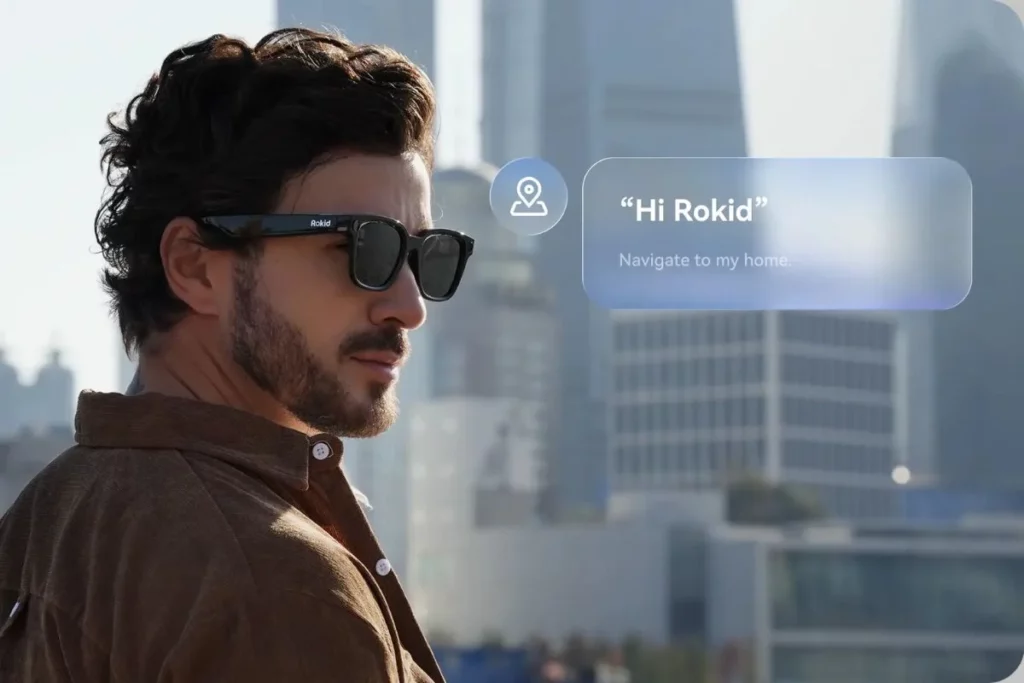
Since these are display glasses, using a dual-eye monochrome Micro LED waveguide display, the glasses project information like turn-by-turn navigation or text notifications directly into your line of sight. This display offers 1,500 nits of peak brightness and a 480 x 398 resolution per eye, ensuring high visibility even in bright daylight.
Media Consumption
While they aren’t meant for 4K movies, you can watch short clips or view photos through the lenses. The visual experience is delivered through a 23° Field of View (FOV), making it a “heads-up” style interface rather than a full-screen theatre.
Translation

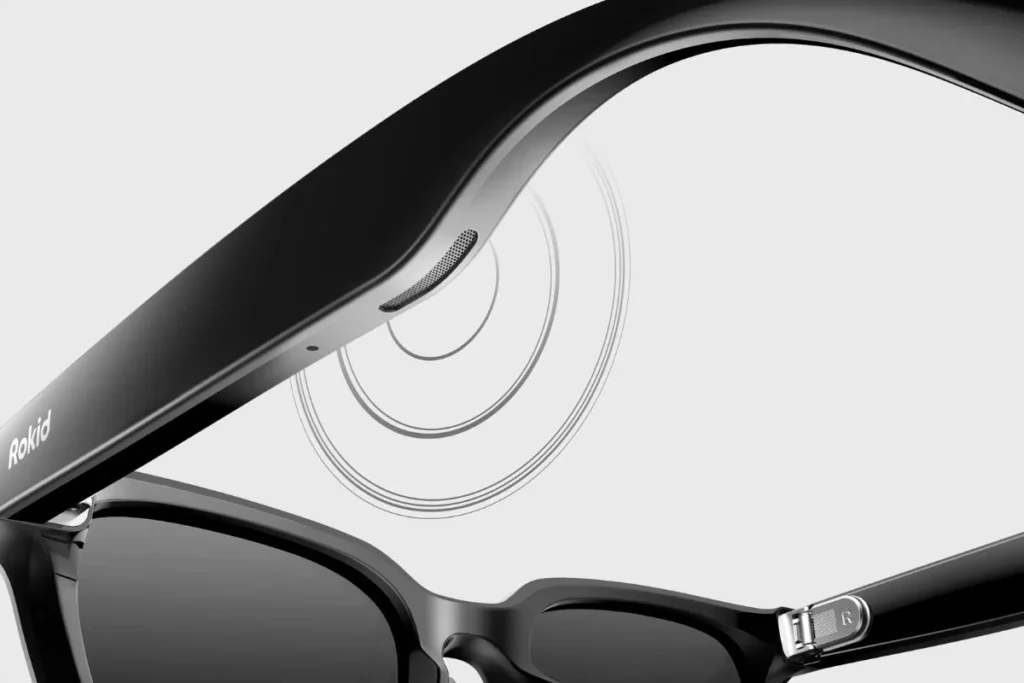
This is perhaps their best feature. They can perform real-time translation, showing you subtitles of what a person is saying in over 80 different languages. The four-microphone array captures audio while the waveguide display renders text instantly, allowing for seamless two-way communication.
Productivity
They include a built-in teleprompter for public speakers and the ability to record 4K video (3024 x 4032) hands-free. With 2GB RAM and 32GB of internal storage, you can record long sessions or store important documents for on-the-go viewing.
What Rokid AI Glasses DON’T Do
They include a built-in teleprompter for public speakers and the ability to record 4K video (3024 x 4032) hands-free. With 2GB RAM and 32GB of internal storage, you can record long sessions or store important documents for on-the-go viewing.
It is important to manage expectations because no piece of tech is perfect. To be honest, the Rokid AI Glasses are not a replacement for your laptop or your phone.
You need to keep this thing in mind while choosing these: they are not fully immersive AR glasses. You won’t be seeing giant 3D dragons flying around your living room. The field of view (FOV) is 23 degrees, which means the “screen” is a small window in your vision, not a total takeover.
They are also heavily dependent on our phones. Most of the AI processing happens in the cloud, so if you don’t have a stable internet connection, the glasses become much less smart. Finally, they aren’t meant for heavy gaming. If you want a device strictly for playing video games on a virtual 200-inch screen, Rokid has other models (like the Max 2) for that, but these specific Rokid AI Glasses focus on daily utility.
How the AI Features Actually Work

The AI in these glasses isn’t just marketing hype, it’s a functional tool that uses the 12MP Sony IMX681 sensor to “see.” When you trigger the voice assistant with a wake word like “Hi Rokid,” the glasses take a snapshot or listen to your voice and send that data to the cloud for processing.
Because of the dual-chip setup, the Rokid AI Glasses can handle what is known as multimodal AI. This means the system doesn’t just process text or just process images, it combines them.
- Dual-Chip Efficiency: While the Qualcomm AR1 handles the heavy AI and imaging workloads, the NXP RT600 chip acts as a low-power co-processor. This chip stays “always-on” to detect your voice or head gestures without draining the battery, allowing the main processor to kick in only when needed.
- Contextual Object Recognition: If you’re looking at a plant and ask, “How much water does this need?”, the glasses use the camera to identify the object and then route that visual data through an OpenAI ecosystem. Since Rokid isn’t locked into one model, it can use the best tool for the job, whether that’s ChatGPT-4o for general questions or Gemini for visual analysis to give you a real-time answer.
- Real-Time Translation & Latency: The translation feature is powered by a four-microphone array that uses beamforming technology to focus on the person speaking while filtering out background noise. The audio is sent to the cloud, translated and sent back to your waveguide display with less than 1 second of latency. It feels like having a personal translator whisper into your ear while reading their words on a screen.
- Cloud vs. Local Processing: To keep the glasses lightweight (only 38.5g), most “thinking” happens in the cloud. However, for basic tasks like taking a photo or local voice commands, the glasses can process information locally to save data and time.
AR Experience and Display Quality
The Rokid AI Glasses use a Micro LED waveguide system, which is a fancy way of saying they pipe light through the lens like a tiny, invisible projector. Here is the quick breakdown:
- Micro LED Tech: These light engines are about the size of a grain of rice (0.15cc). Because they are so small, the glasses stay slim and lightweight at just 38.5g.
- Monochrome Green Display: The text is green because the human eye is most sensitive to this color. This allows the display to stay sharp while using very little power.
- High Brightness: With up to 1,500 nits, you can easily read your notifications or maps even in direct, bright sunlight.
- Sharp Resolution: The 480 x 398 resolution sounds small, but since it’s right in front of your eye, the text looks crisp and clear without any “screen door” effect.
- Heads-Up Display (HUD): With a 23-degree Field of View, the info stays in a small corner of your vision. It’s enough to be helpful without blocking your view of the person standing in front of you.
- 10-Level Dimming: A built-in sensor automatically adjusts the brightness so you’re never blinded in a dark room or struggling to see outside.
While it isn’t a full-color theater experience, it is the perfect digital layer for your everyday life, giving you the data you need without the bulk.
Rokid vs Ray-Ban Meta: What’s the Difference?
This is the biggest question most buyers have when they are planning to buy smartglasses- Rokid or Ray-Ban Meta?
The Ray-Ban Meta Gen 2 glasses are designed to feel like everyday smart glasses with AI features that are built into them. They focus mainly on voice controls, photos, videos, music, calls and quick access to Meta AI. The newer generation, Gen 2, also includes a small built-in display for basic visual information and notifications, but the overall experience is still more audio-focused than AR-focused. They are meant to blend naturally into daily life without looking too futuristic.
Rokid AI Glasses take a very different approach. Instead of treating the display as a small extra feature, Rokid makes the visual experience the centre of the product. The glasses are built around AR-style displays that can show larger virtual screens, media content, translations, navigation prompts and productivity tools directly in front of your eyes. This makes Rokid feel much closer to a true AR wearable than a standard pair of smart glasses.
The difference becomes very obvious in real-world use. Ray-Ban Meta Gen 2 works best for casual everyday tasks like listening to music, recording videos or quickly talking to an AI assistant while walking around. Rokid smart glasses are better suited for people who actually want to view information, watch content on a virtual screen or experiment with AR productivity features without constantly checking a phone.
There is also a noticeable price difference between the two. The Ray-Ban Meta Gen 2 glasses are priced at $499 USD, while Rokid AI Glasses cost $399 USD. That makes Rokid slightly more affordable despite offering a much more display-focused AR experience.
If you want smart glasses that look stylish, simple and natural for daily wear, Ray-Ban Meta Gen 2 makes more sense. But if you are more interested in wearable displays, AR experiences and futuristic visual features, Rokid AI Glasses are the more advanced option.
Rokid vs XREAL: Which AR Glasses Make More Sense?
Devices like the XREAL Air are designed for “tethered” entertainment. They usually require a wire to be plugged into your phone or laptop. They offer a massive, full-color virtual screen that is perfect for watching movies on a plane or playing games.
Rokid AI Glasses focus on portability and productivity. They are wireless and designed for “all-day” wear. While XREAL is better for sitting down and watching a movie, Rokid is better for walking around, getting directions and using AI assistance on the go.
There is also a noticeable price difference between the two. Most XREAL Air models in the US are priced between $449 and $599, depending on the version, while Rokid AI smart glasses are priced at around $399 USD, making Rokid the more affordable option for users who want AI features combined with AR-style visuals.
Battery Life and Charging
The Rokid AI Glasses are designed to be light, which means the built-in 210 mAh battery is small. However, they use a clever “backup” system to keep you powered up.
How long does the battery last?
- Normal Use: About 12 hours if you are just checking notifications or asking the AI quick questions.
- Music/Calls: Around 5-6 hours of continuous audio.
- Screen On: About 2 hours if you keep the visual display on for things like navigation.
- Recording Video: Roughly 45 minutes of non-stop 4K video.
Charging
To keep you going all day, Rokid uses a Power Capsule system. These are tiny magnetic battery packs that snap onto the side of the glasses to give them an instant boost. When you aren’t wearing the glasses, you can pop them into their charging case, which holds enough power to recharge the glasses about 6 times. If you’re in a rush, a quick 20-45 minute charge will get you back to 80% power.
Who Should Buy Rokid AI Glasses?
You should consider the Rokid AI Glasses if you fall into one of these groups:
- Early Adopters: If you love having the latest tech before everyone else, these are the most “futuristic” glasses available right now.
- Frequent Travelers: The real-time translation and Google Maps integration are genuine lifesavers in new countries with language barriers.
- Content Creators: The ability to record 10 minutes of POV video in social-media-friendly formats is a huge advantage over the 3-minute recording limit in 3K on Meta glasses.
- Productivity Hackers: Using the glasses as a teleprompter or for quick voice-to-text notes can speed up your workflow.
Who Should Avoid Rokid Glasses
These glasses aren’t for everyone. You should probably skip them if:
- You want a simple experience: If you just want to listen to music and take the occasional photo, Rokid AI Glasses may feel unnecessarily advanced and complicated for everyday use.
- You expect “Iron Man” visuals: The small, green monochrome display might disappoint you if you are expecting high-end gaming visuals.
- You have a very tight budget: At around $299 to $499 (depending on the model and sales), they are a significant investment for a first-generation product.
Price and Availability
The Rokid Ai smart glasses are priced at $399 USD and they are available to purchase from Rokid Online/ offline stores as well as from Amazon.
Are Rokid AI Glasses Actually Worth It?
At the end of the day, the biggest question is whether Rokid AI Glasses are actually worth buying right now. The answer depends heavily on what you expect from them.
If you are expecting a perfect replacement for your smartphone or fully immersive AR glasses, you may end up disappointed. The technology is still evolving and some features still feel experimental in real-world use.
However, if you are interested in wearable AI, AR displays, real-time translation and futuristic productivity tools, Rokid AI Glasses are one of the most advanced options currently available. The lightweight design, built-in display and open AI ecosystem make them feel more practical than many early smart glasses concepts.
A big advantage is that Rokid is not locked into just one AI platform, the glasses will get smarter as companies like OpenAI and Google release new updates over time.
Right now, Rokid AI Glasses feel less like a finished mainstream product and more like an early look at where wearable computing is heading. For tech enthusiasts and early adopters, that alone may make them worth the investment.
Wrap Up
The Rokid AI Glasses are more capable than Meta’s version because of the built-in screen. While they aren’t perfect, they are the best example of “smart” eyewear that you can actually wear all day.
The Rokid AI Glasses are a major leap for anyone who wants their tech to be helpful without being in the way. They take the brain of a smartphone and put it right in your line of sight, making everything from traveling to content creation feel much more natural. While the world of AI wearables is still growing, Rokid has built something that feels less like a prototype and more like a tool you’d actually use every day.
FAQs
Decode the Decor
The Smart Jewelry Revolution
A practical guide to wearable tech's future — delivered straight to your inbox.
Author
