

Have you ever bought a smartwatch thinking you’ll use all its fancy features, only to end up checking your steps, sleep score and a few notifications? Guilty? You’re not alone. Most of us do. The rest of those features usually sit there untouched while we’re busy charging the watch every couple of days. That’s exactly why fitness bands still make sense.

A lot of people want better sleep tracking, reliable fitness monitoring and a simple way to keep an eye on their health without wearing a bulky smartwatch. That’s where the Huawei Band 11 Pro comes in. Unlike a full-featured smartwatch, it isn’t designed to replace your phone. It can display incoming call notifications and let you mute or reject calls, but you can’t answer calls directly from the band because it lacks a built-in microphone, speaker and eSIM connectivity. Most users don’t need app stores, voice assistants or LTE connectivity. They just want a lightweight wearable that does its job quietly in the background.
Decode the Decor
The Smart Jewelry Revolution — a practical guide to wearable tech.
The Huawei Band 11 Pro focuses on health tracking, fitness monitoring, sleep insights and long battery life while keeping the design slim and comfortable. In this Huawei Band 11 Pro guide, I’ll walk you through its features, health tracking tools, battery performance, design and how it compares to other fitness bands available in 2026.
What Is Huawei Band 11 Pro?
The Huawei Band 11 Pro is the latest fitness band from Huawei, hitting the market as a dedicated Huawei fitness band model. It positions itself strictly as a fitness-first wearable rather than a bloated, expensive smartwatch. This means it targets people who want deep health insights and accurate workout metrics without a heavy chunk of metal on their wrist or a massive dent in their bank account.
Within the broader Huawei wearable lineup, this tracker serves as a bridge. It sits above entry-level step counters but remains more streamlined and affordable than full-scale smartwatches like the Huawei Watch series. By focusing on essential metrics like independent location tracking, heart monitoring and advanced sleep analysis, it gives budget-conscious buyers premium fitness tech. It is built for everyday users, runners, gym enthusiasts and anyone who wants data-driven wellness coaching without the distraction of constant smartwatch notifications.
Specifications
| Specifications | Huawei Band 11 Pro |
|---|---|
| Dimensions | 43.5 mm × 28.2 mm × 8.99 mm |
| Weight | Approximately 18 grams (without the strap) |
| Display Casing | Aluminium alloy case |
| Display Screen | 1.62-inch AMOLED touchscreen |
| Screen Resolution | 286 × 482 pixels (347 PPI density) |
| Available Colors | Green, Blue, Black |
| Strap Material Options | Green Nylon Woven Strap, Blue Fluoroelastomer StrapBlack Fluoroelastomer Strap |
| Wrist Size Fit | Black and Green straps: 130–210 mmBlue strap: 120–190 mm |
| Built-in Sensors | 9-axis IMU sensor (Accelerometer, Gyroscope, Magnetometer)Optical heart rate sensorAmbient light sensor |
| Physical Controls | Full-screen touch + 1 physical side button |
| Water Resistance | 5 ATM (up to 50 meters static water pressure resistance) |
| Wireless Connectivity | Bluetooth 6.0, BR/BLE and 2.4 GHz bands |
| System Compatibility | Android 9.0 or lateriOS 13.0 or later |
| Charging | Magnetic charging port |
| Battery Capacity | 300 mAh |
| Battery Life | Maximum: Up to 14 days (light usage)Typical: Up to 8 days (regular tracking active)Always-On Display: Up to 3 days (AOD mode on) |
| Price | £59.99 |
Design and Display
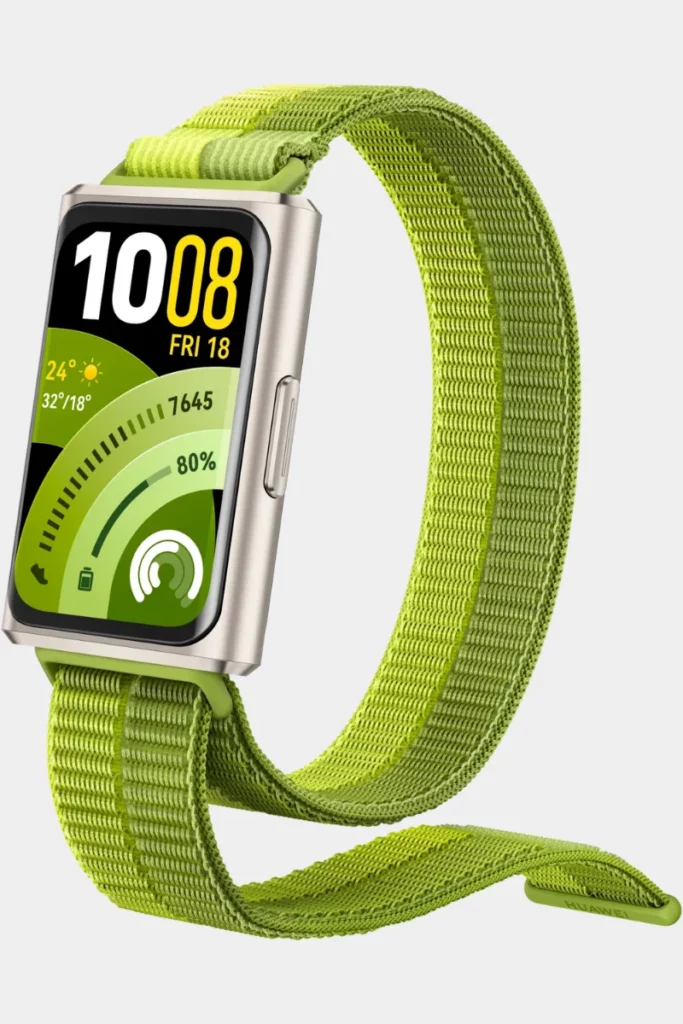
Huawei has significantly improved the visual experience on this iteration. The tracker boasts a bright 1.62-inch AMOLED touchscreen with a smooth 60 Hz refresh rate. One of the biggest upgrades in the Huawei Band 11 Pro vs Band 11 comparison is the display. The Band 11 Pro features a screen that is 27% larger than its predecessor’s and can reach a peak brightness of up to 2000 nits. This high brightness means you can easily read your workout stats mid-run, even under direct, glaring afternoon sunlight. The screen has a crisp resolution of 286 by 482 pixels, yielding a sharp 347 PPI (Pixels Per Inch) density.
The screen also features an integrated ambient light sensor. This means it automatically dims itself in a dark movie theater or brightens up when you step outdoors, saving you from digging into settings to change it manually.
The case itself is sleek, featuring a CNC-cut aluminum alloy case that measures just 43.5 mm long, 28.2 mm wide and 8.99 mm at its thinnest point (excluding the raised sensor area). Without the strap, the band weighs 18 grams, making it comfortable enough to wear to bed without noticing it. For controls, it pairs a responsive touchscreen with a single physical side button for menus.
The device comes in three distinct color paths:
- Green: Paired with a breathable, double-toned nylon woven strap.
- Blue: Paired with a durable, sweat-resistant fluoroelastomer strap.
- Black: Paired with a traditional black fluoroelastomer strap.
The straps accommodate wrist circumferences ranging from 130 mm up to 210 mm and the entire build features a 5 ATM water resistance rating. This means it handles swimming pools, shallow open water and sweat easily, meaning it will help you track pool laps down to 50 meters of static water pressure, though it should not be worn during deep diving or hot, high-pressure showers.
Health and Fitness Tracking
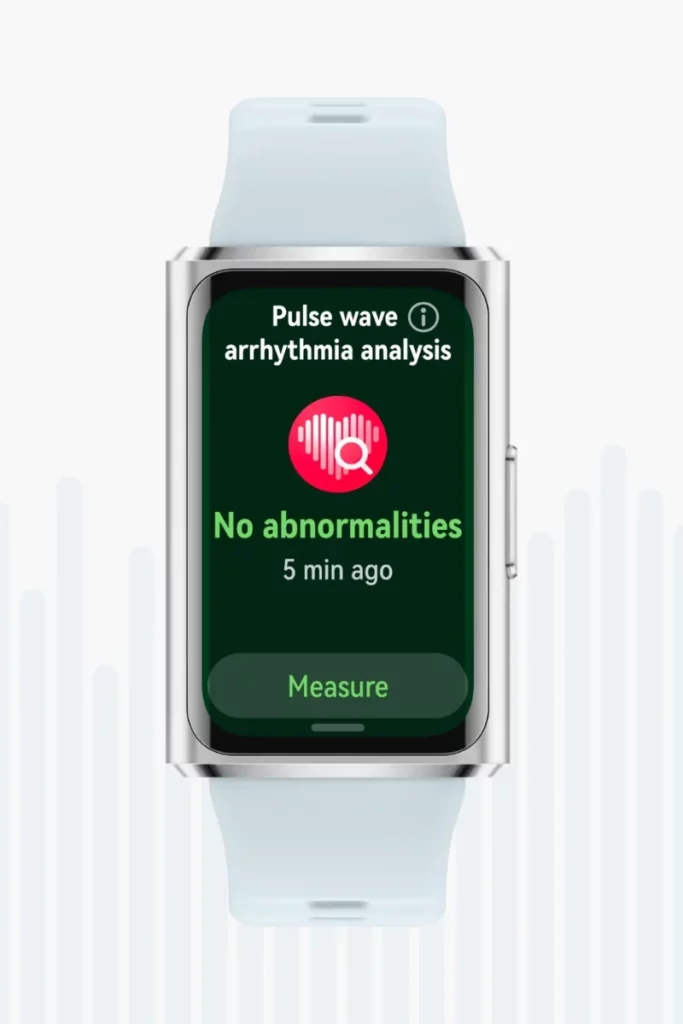
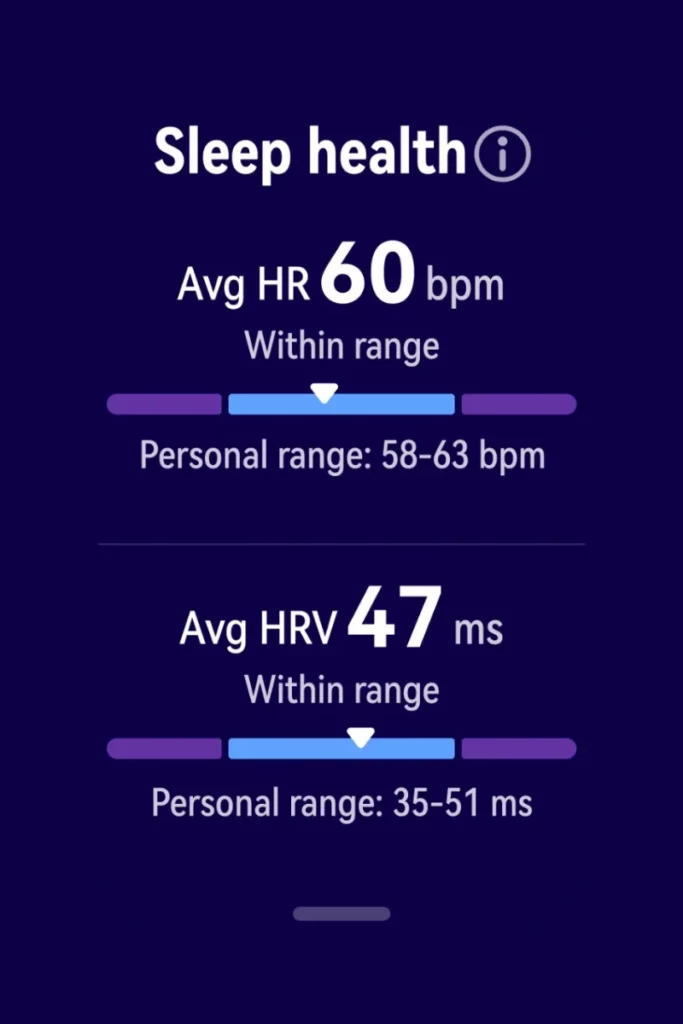
The heart of the Huawei Band 11 Pro health tracking suite is its updated optical sensor system. For daily health, the band features continuous heart rate monitoring and automatic SpO2 (blood oxygen) measurement. If your oxygen levels or heart rate drop outside your normal personal baseline, the tracker sends a quick vibration alert to your wrist.
A major inclusion for heart safety is the Pulse Wave Arrhythmia Analysis tool. This system uses the built-in PPG (photoplethysmography) sensor to check your heart rhythm for irregularities, providing timely A-fib (Atrial Fibrillation) prompts. This feature has even obtained the TUV Rheinland CE MDR certification, meaning the underlying technology meets strict European regional standards for data consistency. This means it helps you stay ahead of potential cardiovascular issues with certified technology instead of a generic sensor that just guesses.
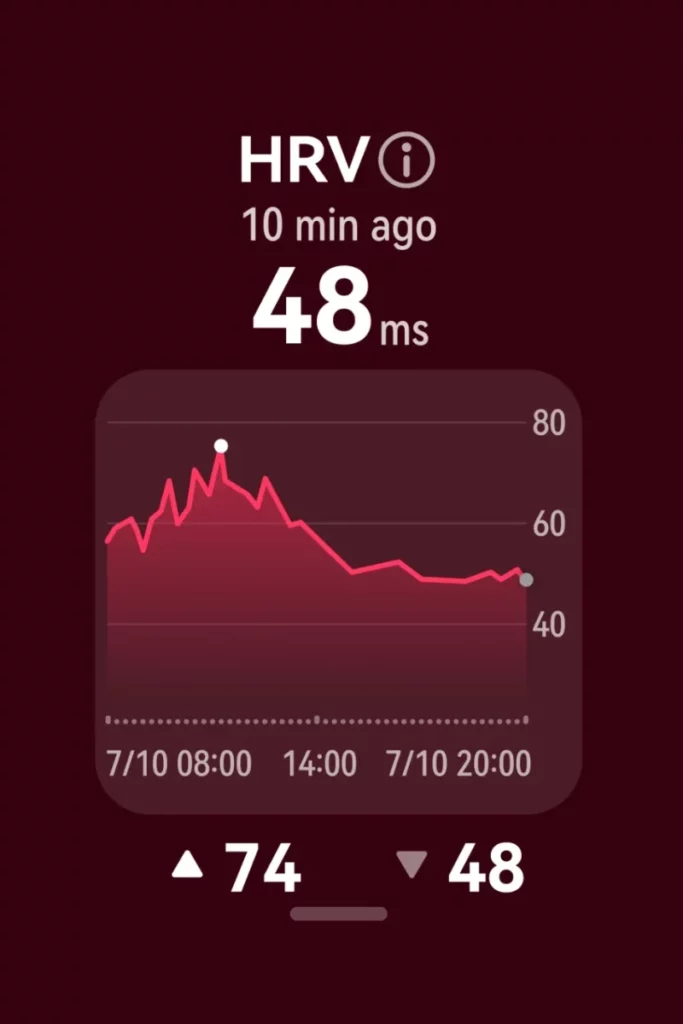
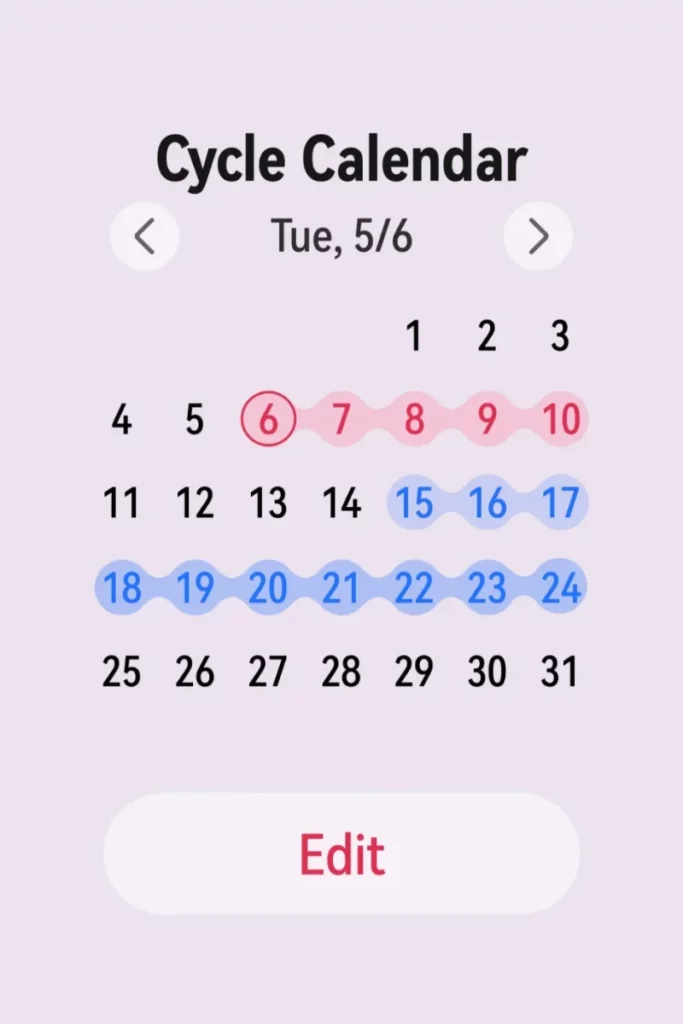
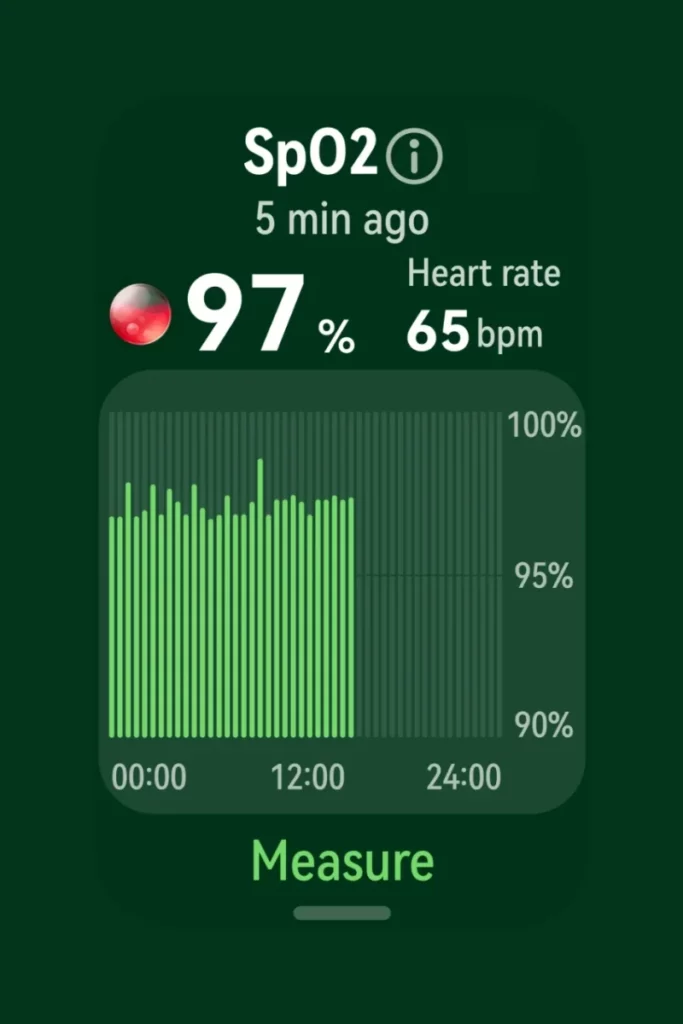
For recovery, the Huawei Band 11 Pro sleep tracking system utilizes proprietary TruSleep technology to analyze your rest cycles. It breaks down your light sleep, deep sleep, REM phases and waking moments. You can view your deep sleep metrics right on your wrist by lifting your arm. The band also calculates your average sleep and Heart Rate Variability (HRV), giving you an exact look at how well your nervous system recovered during the night.
To round out your rest analysis, Sleep Breathing Awareness checks for sudden breathing disruptions while you sleep. If you have stressful days, the device includes a 24/7 HRV stress tracker alongside an Emotion Assistant that visualizes your mood status using 12 floral states and pet-themed interactive watch faces. For female health tracking, an editable cycle calendar sends timely period reminders.
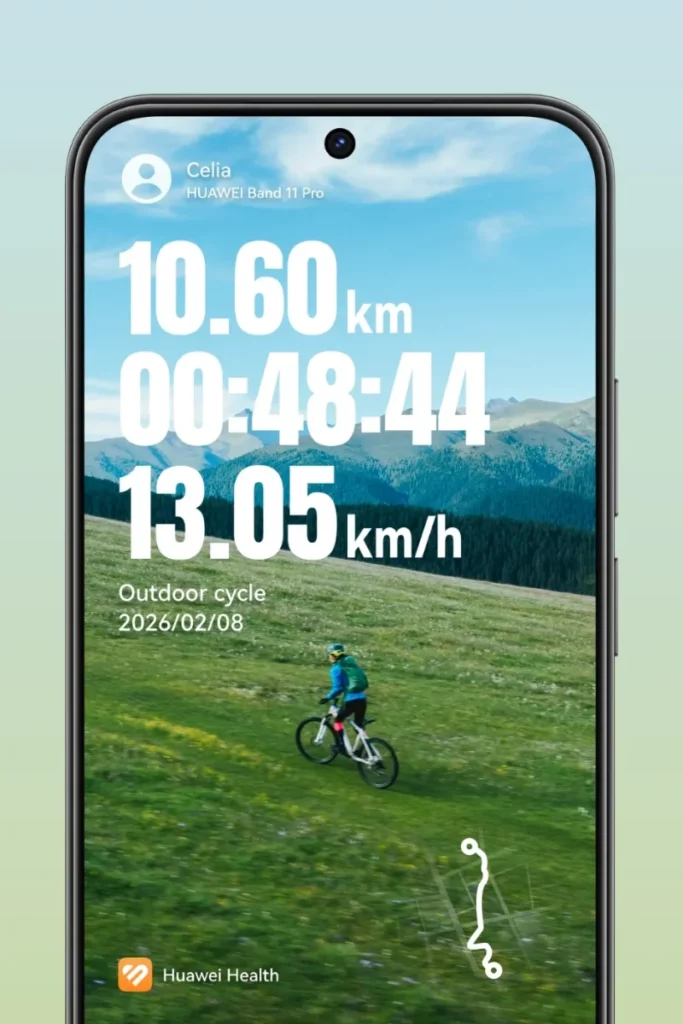
On the fitness side, the band supports over 100 workout modes, including yoga, strength training and rope skipping. A standout addition is the inclusion of an Autonomous GNSS Positioning chip. This means the band tracks your outdoor running, cycling and walking routes independently without needing a Bluetooth connection to your phone.
To make this movement data precise, Huawei built in a comprehensive 9-axis IMU sensor system, which bundles an accelerometer sensor, a gyroscope sensor and a geomagnetic magnetometer sensor together. This setup means it measures your exact rotational angle, speed and directional changes in real time.
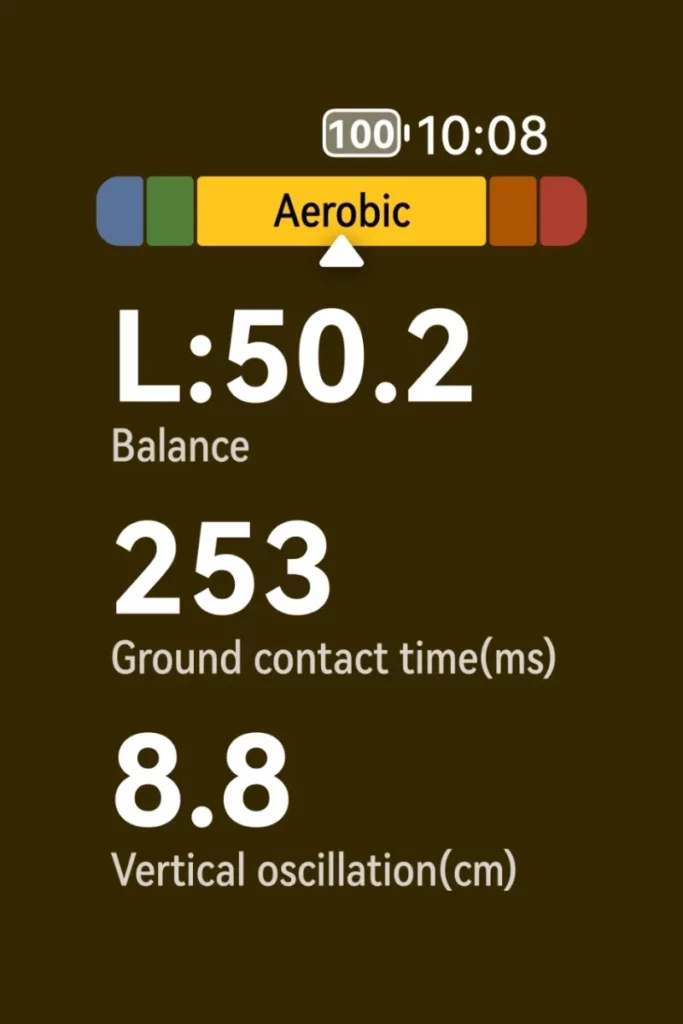
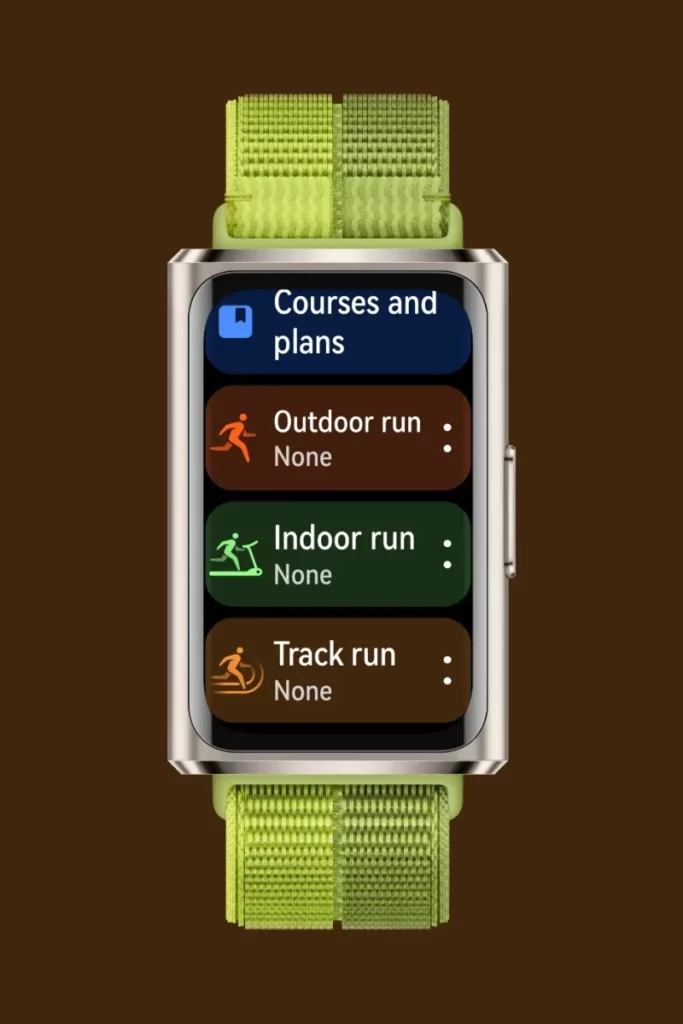
For runners, a built-in Running Form Analysis tool measures advanced metrics like your contact time balance, helping you correct your posture on the go to prevent injuries. The band also estimates pre-race performance predictions across different distances based on your historical training logs. If you cycle, the Cycling Mode automatically detects when you stop at a red light, pausing data collection instantly so your average speed metrics stay clean.
Battery Life & Charging
The Huawei Band 11 Pro battery is powered by a 300 mAh lithium-polymer battery. You do not need to worry about charging it every night, but how long it lasts depends entirely on the features you turn on.
- Maximum Battery Life (Up to 14 Days): This lasts for two weeks under light use. For this setup, heart rate tracking is turned on, but HUAWEI TruSleep™ is turned off at night. It assumes you check the screen 200 times a day, get 50 messages, 6 calls and 3 alarms every 24 hours and work out for 30 minutes a week.
- Typical Battery Life (Up to 8 Days): This gives you over a week of power under normal, everyday use. This keeps heart rate tracking always on, TruSleep™ on at night, continuous SpO2 tracking on and the Emotion/Stress Assistant active. It accounts for 60 minutes of weekly exercise, 50 messages, 6 calls, 3 alarms a day and the screen turning on 500 times daily.
- Always-On Display Battery Life (Up to 3 Days): If you turn on the Always-On Display (AOD) so the screen never goes black, the battery drops down to 3 days. This timeline uses the exact same heavy tracking setup as the typical usage mode above.
Charging is handled via a dedicated magnetic charging port on the bottom cover. It plugs into any standard 5V/1A USB power brick using the supplied cable, snapping securely into place to top up the battery in a short sitting.
App Integration and Ecosystem
To sync your metrics, you will use the Huawei Health app. The app compiles your steps, sleep stages and workout routes into clean, easy-to-read graphs. It also includes a Health Community feature, which allows you to link up to 10 family accounts. This lets you monitor the heart rate, steps and blood oxygen levels of elderly family members or children remotely.
For phone connectivity, the band operates on a robust radio setup containing Bluetooth 6.0, BR/BLE (Bluetooth Low Energy) and independent 2.4 GHz wireless bands. This upgraded network chip means your connection remains stable over longer distances and syncs data much faster to your smartphone without draining your phone’s battery.
It offers wide compatibility, requiring devices running Android 9.0 or later or iOS 13.0 or later. When paired, you can receive incoming call notifications, reject calls with a tap, send preset quick text replies, sync your calendar schedules, check local weather updates and use a built-in compass or calculator. However, while you can receive and manage call notifications, you cannot make or answer calls directly from the band because it lacks a built-in microphone, speaker and eSIM connectivity.
It even functions as a remote camera shutter button for your smartphone, though this specific camera feature requires a phone running Android 11 or newer, EMUI 8.1, HarmonyOS 2 or iOS 13.
Price and Availability
The Huawei Band 11 Pro is priced at £59.99 (approx $79.76 USD). It is available across the UK and Europe through official retail channels.
However, the device is not available in the US due to the ongoing trade restrictions and sanctions against Huawei.
Huawei Band 11 Pro vs Competitors
To see how the Huawei Band 11 Pro features hold up in the wild, it helps to look at them alongside other popular options in the fitness tracking market like Xiaomi, Amazfit and Fitbit.
The biggest win for Huawei over entry-level Xiaomi and Amazfit options is the independent GNSS chip. Most budget trackers force you to carry your smartphone on a run if you want a map of your route. The Band 11 Pro handles this completely on its own. Furthermore, its 2000-nit screen is significantly brighter than the competition, making it much easier to read outdoors than older panels.
While Fitbit offers similar built-in GPS capabilities, it often locks advanced historical health trends behind a monthly premium subscription. Huawei keeps all your sleep data, running metrics and heart analysis completely free inside the app. This makes the Band 11 Pro an ideal choice for outdoor runners and cross-trainers who want full ownership of their health data without recurring monthly costs.
Limitations to Consider
While there is a lot to love here, let’s be realistic: no tracker is absolutely perfect. The Huawei Band 11 Pro has some notable boundaries that you should know before buying:
- No Standalone Cellular Connectivity: There is no LTE or eSIM support inside this band. You cannot stream music or take phone calls directly through the wristband without your phone nearby.
- Minimal Third-Party App Support: Because it runs a lightweight, battery-efficient operating system, you cannot download popular third-party tools like Spotify, Strava or Google Maps directly onto the band itself.
- Limited Customization and Smart Features: You will not find advanced smartwatch perks like NFC mobile payments in all regional models, voice assistants or deep message typing interfaces. It is a tracker, not a smartphone replacement.
Who Should and Shouldn’t Buy the Huawei Band 11 Pro?
You should buy it if:
- You care about health tracking
- You want reliable sleep monitoring
- Battery life matters
- You exercise regularly
- You prefer lightweight wearables
- You want a built-in GPS without buying a smartwatch
You may skip it if:
- You need LTE connectivity
- You want an app store
- You frequently use smartwatch apps
- You need advanced productivity tools
- You want a premium smartwatch experience
Wrap Up
When I look at the Huawei Band 11 Pro, I don’t see a device trying to be everything at once. It feels more focused than that.
The Huawei Band 11 Pro focuses on the things most people actually use every day: sleep tracking, health monitoring, workout tracking and long battery life. It skips many of the distractions that often come with larger smartwatches and puts its attention on fitness and wellness instead.
If your goal is to better understand your sleep, keep an eye on your health and track workouts without charging a device every night, the Huawei Band 11 Pro is one of the most practical fitness bands available in the market. It may not replace a premium smartwatch, but for many people, it doesn’t need to.
FAQs
Decode the Decor
The Smart Jewelry Revolution
A practical guide to wearable tech's future — delivered straight to your inbox.
Author
