

When Huawei launched the Band 11 series, I was curious about one thing: is the Pro model actually worth paying extra for?
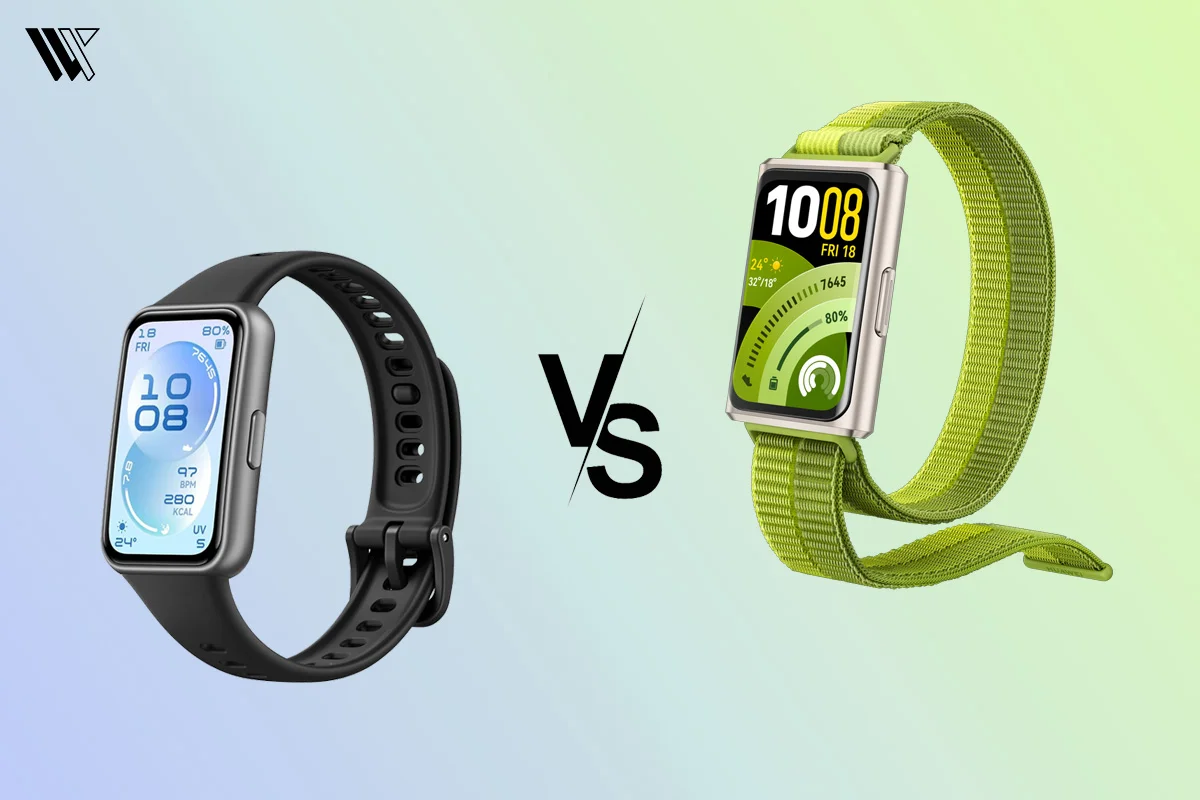
On paper, the Huawei Band 11 vs Band 11 Pro comparison looks straightforward. Both fitness bands share a similar design language, AMOLED displays, Huawei Health integration and core health tracking features. But after spending time with both devices, I realized that the differences become more noticeable in everyday use than they do on the back of their boxes.
Decode the Decor
The Smart Jewelry Revolution — a practical guide to wearable tech.
The standard Huawei Band 11 is clearly designed for people who want a lightweight and affordable fitness tracker for daily activity tracking. The Huawei Band 11 Pro, on the other hand, feels like Huawei’s attempt to blur the line between a fitness band and a smartwatch. It offers built-in GNSS positioning, more advanced sleep analysis, recovery metrics and a more premium build.
If you’re trying to decide which model deserves a place on your wrist, this detailed Huawei Band 11 vs Band 11 Pro comparison will help you understand the real-world differences in display quality, health tracking, battery life, comfort and overall value.
Huawei Band 11 vs Band 11 Pro: Quick Comparison
| Feature | Huawei Band 11 Pro | Huawei Band 11 |
|---|---|---|
| Display | 1.62-inch AMOLED (2000 nits peak brightness) | 1.62-inch AMOLED (1500 nits peak brightness) |
| Resolution | 286 × 482 pixels (347 PPI) | 286 × 482 pixels (347 PPI) |
| Case Material | Premium Aluminum Alloy | Fiber-reinforced Polymer / Aluminum Option |
| Weight (Without Strap) | 18g | 16g |
| GPS / Positioning | Built-in GNSS Multi-system Positioning | Connected GPS (Requires smartphone connection) |
| Battery Life | Up to 14 days max / 8 days typical use | Up to 14 days max / 8 days typical use |
| Sleep Tracking | Advanced TruSleep™ + Sleep HRV Recovery Metrics | TruSleep™ + Standard Sleep Monitoring |
| Activity Tracking | HR, SpO₂, Advanced Recovery, 100+ Workout Modes | HR, SpO₂, Activity Rings, 100+ Workout Modes |
| Connectivity | Bluetooth 6.0, BLE, 2.4 GHz | Bluetooth 6.0, BLE, 2.4 GHz |
| App Ecosystem | Huawei Health | Huawei Health |
| Price | £59.99 | £49.99 |
| Best For | Independent outdoor runners, deep data lovers | Casual gym-goers, everyday budget tracking |
Display & Design
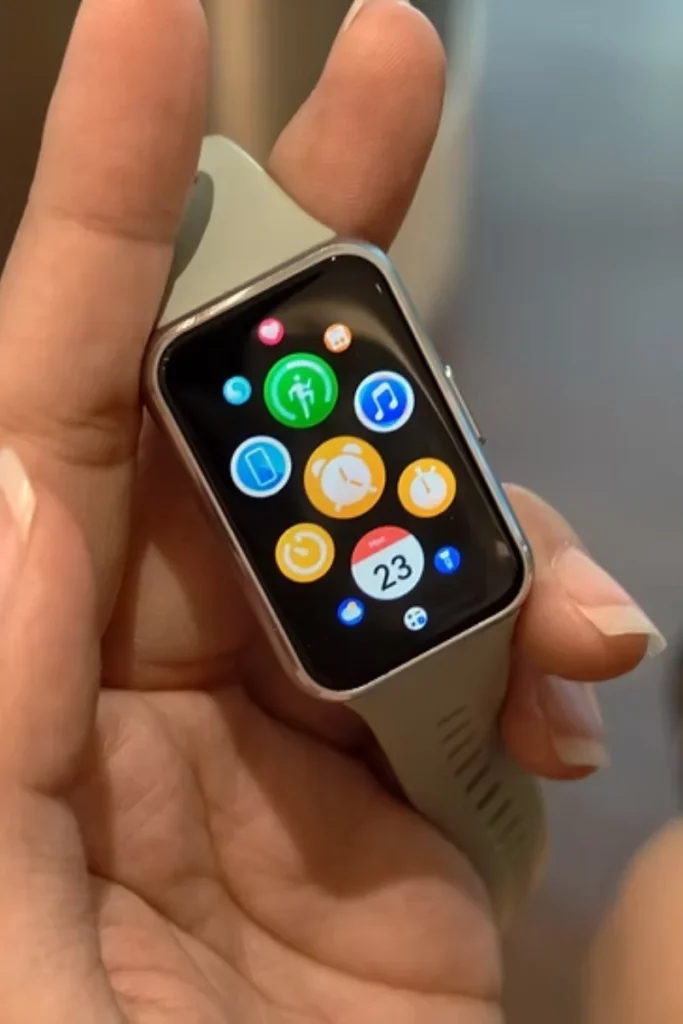
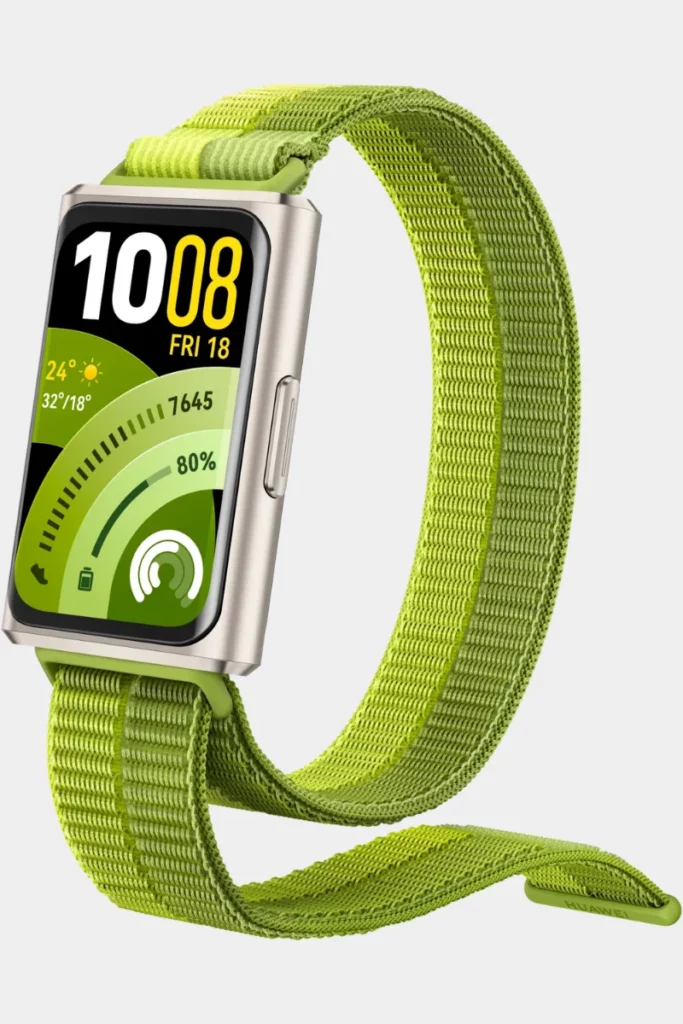
When you look at these two trackers side-by-side, they seem identical at first glance because both feature a gorgeous, sharp 1.62-inch AMOLED touch display with a crisp resolution of 286 × 482 pixels (347 PPI). However, the real differences lie in their screen brightness, case materials and dimensions.
Here is exactly how they differ when you put them to work:
- Screen Brightness: The standard Huawei Band 11 comes with a peak brightness of 1500 nits, which is perfectly readable for everyday indoor and outdoor use. Whereas the Huawei Band 11 Pro steps things up to a blistering 2000 nits, making it much easier to read split-second running stats under direct, harsh afternoon sunlight. Both feature an ambient light sensor for automatic brightness adjustments.
- Dimensions: The Huawei Band 11 comes with a slightly more compact footprint measuring 42.6 mm in height, whereas the Huawei Band 11 Pro comes with a slightly taller case measuring 43.5 mm. Both share the exact same width of 28.2 mm and a remarkably slim thickness of just 8.99 mm.
- Case Materials & Weight: The standard Huawei Band 11 comes primarily in a featherlight, fiber-reinforced polymer (durable plastic) case weighing just 16 grams, which feels practically invisible on your wrist. Whereas the Huawei Band 11 Pro comes exclusively with a premium Aluminum Alloy case that weighs 18 grams, giving it the robust, metallic weight and feel of a high-end smartwatch.
- Strap & Color Options: The standard Huawei Band 11 comes with highly flexible, sweat-resistant fluoroelastomer bands available in a variety of vibrant colors like Beige, Green, Purple, White and Black. Whereas the Huawei Band 11 Pro comes with more premium styling options, including a breathable Green Nylon Woven strap alongside the standard fluoroelastomer options.
- Water Resistance: Both trackers come with a certified 5 ATM water resistance rating. This means both are perfectly safe to wear while swimming laps in a pool or tracking a rainy outdoor run, though you should avoid hot, high-pressure showers.
Health And Fitness Tracking
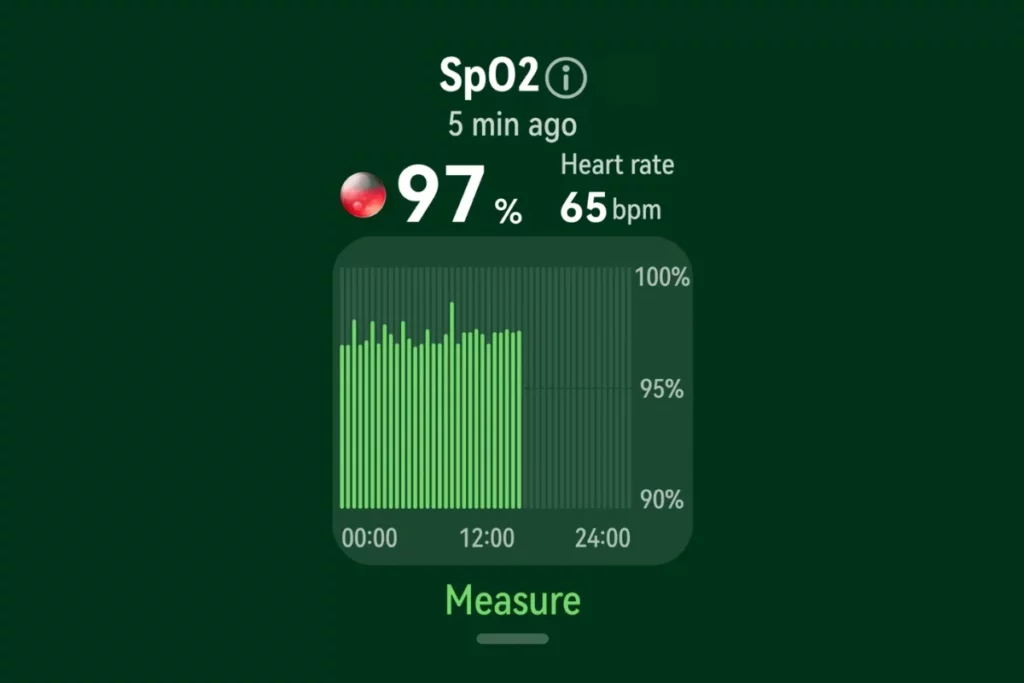
This is where the difference between Huawei Band 11 vs Band 11 Pro becomes incredibly relevant for data-focused users. On paper, both trackers share an identical baseline of core health tracking hardware. They both feature an updated optical heart rate sensor paired with a highly precise 9-axis IMU sensor (which bundles together an accelerometer, gyroscope and a geomagnetic magnetometer sensor).
Because of this shared foundation, both bands provide continuous, 2.4 GHz all-day heart rate tracking, automatic blood oxygen (SpO₂) monitoring and real-time stress tracking powered by Huawei’s updated Emotion and Stress Assistant, which visually maps your daily mood shifts using 12 different evolving flower patterns.
However, the metrics provided by the Pro model are far more robust for serious fitness enthusiasts. Let’s break down exactly how their tracking capabilities are split across specific, real-world health and training categories.
GPS & Route Tracking
The absolute biggest functional divide between these two trackers comes down to how they map your outdoor activities.
- The Huawei Band 11 Pro features built-in, independent GNSS Multi-system Positioning hardware directly inside the chassis. This means the Pro can lock onto satellite networks entirely on its own. If you want to track an outdoor running or cycling route with precise pace and real-time distance data, you can leave your smartphone completely at home.
- Whereas the standard Huawei Band 11 lacks a standalone GPS chip. Instead, it relies entirely on Connected GPS, meaning it must pull location data from your smartphone over Bluetooth 6.0 BLE. If you step out for a run without your phone tucked into your pocket, the standard band will still calculate your steps and estimated distance using its motion sensors, but it won’t map your actual route or provide pinpoint pace splits.
Sleep & Recovery Analysis
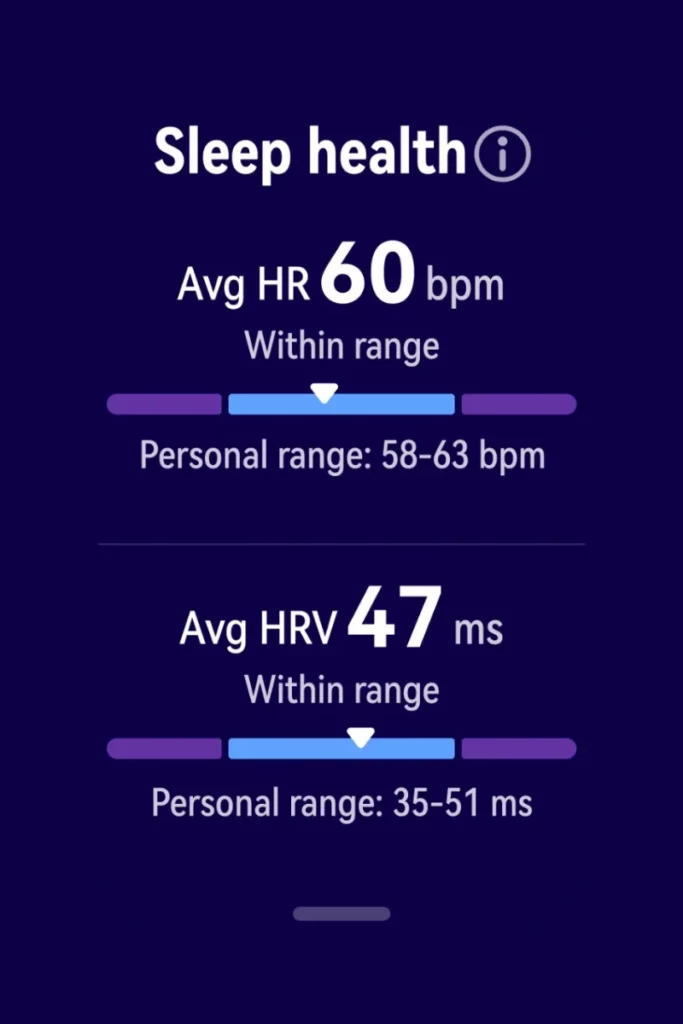
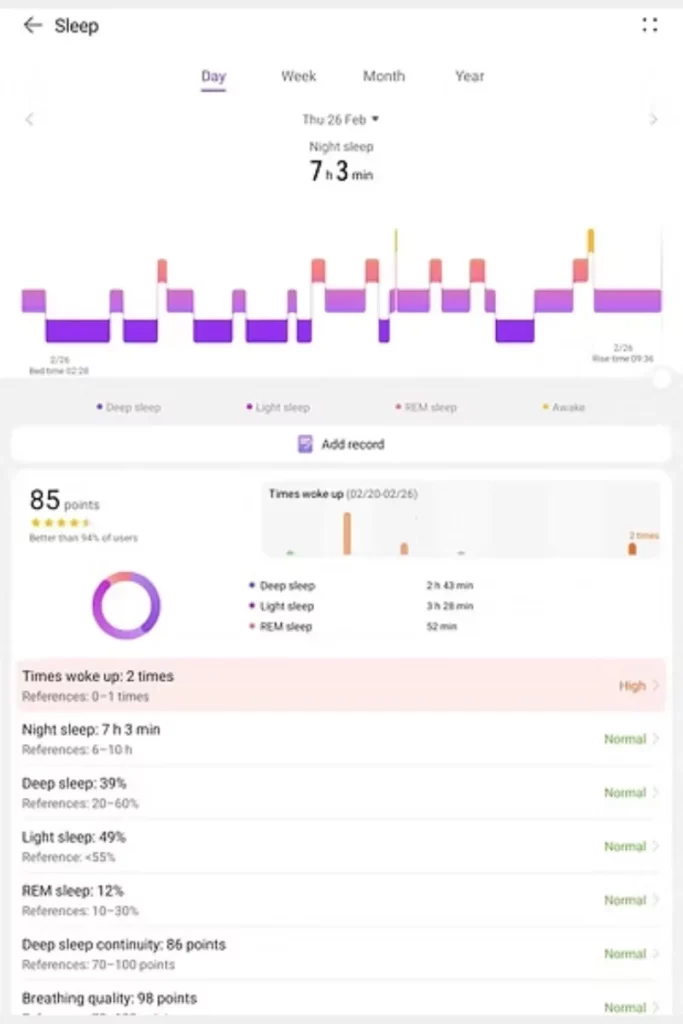
When it comes to overnight tracking, both bands utilize Huawei’s proprietary TruSleep™ architecture to automatically record your light, deep and REM sleep phases while flagging midnight awakenings with high precision. However, the depth of the data they deliver after you wake up is completely different.
The Huawei Band 11 Pro delivers advanced, deep-dive cardiovascular sleep recovery insights. It actively monitors your autonomic nervous system by analyzing your Sleep Heart Rate Variability (HRV). This gives you a clear window into how your body is handling physical strain, showing you a definitive recovery score that flags whether you are ready for a tough workout or on the verge of overtraining.
While the standard Huawei Band 11 also tracks sleep HRV patterns, its native data reporting on the wrist leans closer to standard sleep phase mapping and basic respiratory analysis. It provides an excellent, easy-to-understand breakdown of your sleep quality, but it doesn’t give you the same advanced readiness metrics found on the Pro.
Workout Modes & Performance Metrics

For gym and sports tracking, both wearables support over 100 workout modes, which include 11 professional training types such as indoor/outdoor running, cycling, pool swimming, rope skipping and elliptical training. They even support automatic identification for 6 common workout types, meaning they will prompt you to start recording if you forget to open the workout app manually.
The Huawei Band 11 Pro takes these sports modes a step further by using its independent GPS and advanced data processing to compute complex performance insights, such as your Running Ability Index (RAI), VO2 Max, training load and precise post-workout recovery times.
Whereas the standard Huawei Band 11 relies primarily on the classic Activity Rings ecosystem to track your movement, calories, standing hours and active minutes. It is perfectly optimized for casual gym-goers and daily step-counting, while the Pro functions more like an independent training tool built for data-hungry athletes.
Battery Life & Charging
Battery longevity is a historic hallmark of Huawei wearables and I am incredibly happy to report that neither model drops the ball here. Both the Huawei Band 11 vs Band 11 Pro are powered by a 300mAh battery. Because they share the same internal capacity, their maximum runtime profiles look very similar on paper, though your actual mileage will depend heavily on which features you leave turned on.
During my real-world testing, where I kept continuous heart rate monitoring enabled, TruSleep™ active at night, automatic SpO₂ scanning turned on and tracked roughly three to four workouts a week, the standard model consistently lasted between 7 and 8 days before demanding a charge. The Pro model, despite running its brighter screen and independent GPS, hit a very similar 7 days of typical usage. If you utilize the independent GNSS tracking on the Pro for long outdoor runs every single day, you will naturally see the battery drain faster, as satellite tracking is an absolute power hog.
Both models support an Always-On Display (AOD) mode, allowing you to see the time and basic metrics at a simple glance without lifting your wrist. Activating AOD drops the battery life down to roughly 3 days on both units. When it does come time to charge them up, both devices utilize a simple, proprietary magnetic charging port on the back cover that snaps firmly into place and tops the battery up from zero to full in just under an hour.
App Integration & Ecosystem

As we know, no hardware tracker is complete without its digital partner and both devices sync seamlessly through the Huawei Health app. Think of the app as your central control tower: it consolidates your daily steps, active calorie burn, stress timelines and sleep metrics into beautiful, interactive charts.
The software works smoothly on both Android (running 8.0 or later) and iOS (running 13.0 or later). However, because Huawei runs its own independent ecosystem architecture, setting up the app on Android requires a quick download either directly from Huawei’s official website or via the Huawei AppGallery, rather than the standard Google Play Store. Whereas iPhone users can simply find and download it straight from the Apple App Store with zero extra steps.
Once you open the companion application, you will notice distinct feature variations based on which band you are tracking with:
- Workout History Mapping: The standard Huawei Band 11 relies on your phone’s location permissions to populate a map route in the app afterward. Whereas the Huawei Band 11 Pro transmits its independently collected satellite data straight to the application, creating high-fidelity, dynamic route videos complete with integrated background music that you can instantly share to your social platforms.
- Advanced Heart & Posture Analysis: The standard Huawei Band 11 tracks your standard workout parameters, Activity Rings goals and basic daily stats. Whereas, the Huawei Band 11 Pro feeds the app with specialized medical-grade and athletic metrics. It syncs with a TUV Rheinland-certified Pulse Wave Arrhythmia Analysis app to send proactive A-fib (irregular heart rhythm) alerts. Furthermore, it records advanced running analytics like contact time balance to grade your running form and calculate your precise Running Ability Index (RAI).
- Lifestyle & Family Sharing: The standard Huawei Band 11 leans into casual fun, offering a special pet-themed interactive watch face where animated, fluffy virtual buddies wiggle and dance to match your mood state. Whereas the Pro uses its interface purely for deep health dashboards. Both bands take full advantage of the app’s Health Community feature, which lets you securely add family members so you can monitor your aging parents’ or partner’s heart rate, blood oxygen levels and daily step counts remotely from your own device.
Data Sharing Tip: While the app serves as a brilliant self-contained fitness ecosystem by offering guided workouts, running courses and meditation tools, it does require specialized third-party bridging apps if you want to automatically push your activity data out to external platforms like Strava, Apple Health or Google Fit.
Huawei Band 11 vs Band 11 Pro: Real-World Usability
When I was testing these two bands side-by-side, it revealed that while they appear incredibly similar on a spec sheet, they cater to entirely different user mindsets throughout the day.
During my quiet office hours, both trackers sit comfortably under a long-sleeve shirt without catching on your cuff. The notification engine is snappy, text messages, calendar alerts and incoming calls flash instantly on the 1.62-inch panels. The standard model’s 16-gram polymer body is so remarkably light that you completely forget you are wearing it within five minutes. If your primary goal is a low-profile tracker that acts as a silent assistant throughout the workday while subtly monitoring your physical baselines, the standard model excels without feeling intrusive.
The dynamic shifts dramatically the second you step onto a treadmill or pick up a barbell for a sweaty gym session. During high-intensity functional training, heart rate spikes can cause cheaper optical sensors to lose tracking completely. Both bands hold their lock impressively well, but the Pro model shines when transitioning to outdoor work.
Heading outside for an afternoon run highlights the massive utility of the Pro’s 2000-nit screen and built-in GPS. Not having to carry a bulky smartphone just to see an accurate map of your real-time pace is a total luxury for an ultra-slim band. Furthermore, waking up the next morning and checking the Pro’s advanced sleep HRV scores gives you an instant, clear indicator of your true recovery level. The standard model gives you an excellent breakdown of your sleep stages, but it leaves you to guess how those stages correlate to your actual physical preparedness.
Price and Availability
The Huawei Band 11 Pro is priced at £59.99 (approx $79.76 USD). Whereas the Huawei Band 11 is priced at £49.99 (approx $66.08 USD). Both Smart bands are available across the UK and Europe through official retail channels.
However, the device is not available in the US due to the ongoing trade restrictions and sanctions against Huawei.
Who Should Buy Which Model
You should choose the Huawei Band 11 Pro if:
- You want a built-in GPS
- Sleep quality matters to you
- Recovery tracking is important
- You run outdoors frequently
- You want a more premium design
- You enjoy detailed health insights
You should choose the Huawei Band 11 if:
- You mainly track steps and workouts
- You want the lower-priced option
- You don’t need a built-in GPS
- Basic sleep tracking is enough
- You prefer a lighter wearable
Who Shouldn’t Buy Either
You may want to look elsewhere if:
- You need a full smartwatch experience
- You want downloadable apps
- You frequently reply to messages from your wrist
- You require medical-grade health accuracy
- You need ECG functionality
Final Verdict
After using both fitness trackers, I would choose the Huawei Band 11 Pro. While both devices cover the basics well, the Pro model offers a more complete experience with its brighter display, built-in GNSS, advanced sleep tracking, HRV monitoring and recovery insights.
These extra features make a noticeable difference in daily use, especially if you actively track your health and workouts. If you’re deciding between the two, the Huawei Band 11 Pro is the better long-term investment and the one I would personally recommend.
FAQs
Decode the Decor
The Smart Jewelry Revolution
A practical guide to wearable tech's future — delivered straight to your inbox.
Author
