

When we talk about the leading bands in the market right now, the Huawei Band 11 Pro vs Xiaomi 10 Pro sounds like a simple comparison at first. Both fitness trackers promise accurate health monitoring, detailed sleep tracking, built-in GPS, AMOLED displays and battery life that can last for days. On paper, they look so similar that choosing between them can feel harder than it should.
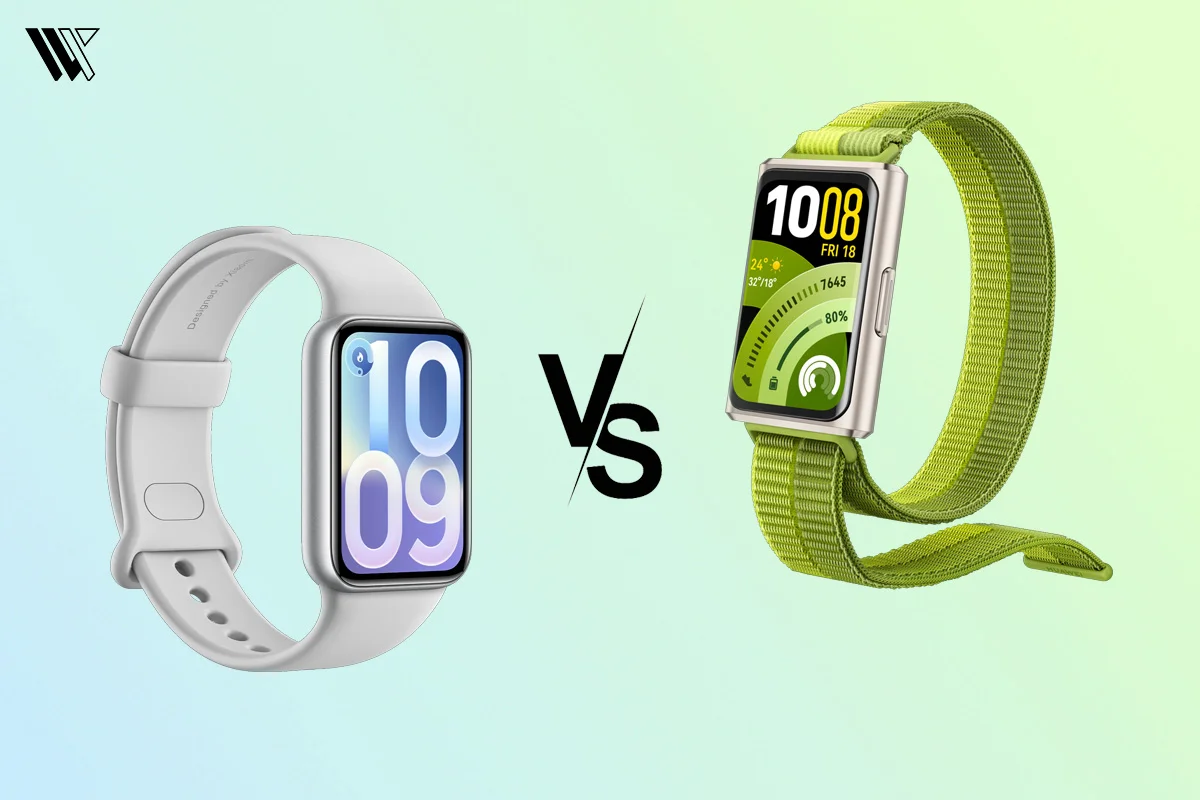
After spending time with both wearables in everyday use, I realized the real differences don’t show up on the spec sheet. Having used both extensively, I can tell you that the Huawei Band 11 Pro focuses more on deep health insights, sleep analysis and recovery tracking, while the Xiaomi Smart Band 10 Pro puts its strengths into battery life, sports tracking and overall value.
Decode the Decor
The Smart Jewelry Revolution — a practical guide to wearable tech.
So, if you’re wondering which fitness tracker deserves a spot on your wrist in 2026, this Huawei Band 11 Pro vs Xiaomi Smart Band 10 Pro comparison breaks down everything that actually matters in daily use.
Huawei Band 11 Pro vs Xiaomi Smart Band 10 Pro: Quick Comparison
| Feature | Huawei Band 11 Pro | Xiaomi Smart Band 10 Pro |
|---|---|---|
| Display Type | AMOLED Color Touchscreen | AMOLED Color Touchscreen |
| Screen Size & Shape | 1.62-inch Rectangular | 1.74-inch Rectangular |
| Resolution & Density | 286 x 482 pixels (347 PPI) | 480 x 336 pixels (336 PPI) |
| Refresh Rate | 60Hz | 60Hz |
| Peak Brightness | Up to 2,000 nits | Up to 2,000 nits (1500 nits High Brightness Mode) |
| Case Material | Premium High-Strength Aluminum Alloy | High-Strength Aluminum Alloy / Optional Ceramic |
| Weight | Ultra-light 18 grams | 21.6 grams (Standard) / 28.7 grams (Ceramic) |
| Thickness | 8.99 mm ultra-slim profile | 9.7 mm slim profile |
| Physical Controls | Dedicated physical side button + touchscreen | Pure full touchscreen interface |
| Water Resistance | 5 ATM | 5 ATM |
| Satellite Positioning | Built-in Multi-GNSS | Built-in Independent 5-Satellite GNSS |
| Strap Material | Soft Fluoroelastomer | TPU (Standard) / Fluororubber (Ceramic) |
| Battery Capacity | 300 mAh | 350 mAh |
| Typical Battery Life | 8 days | 15 days |
| Always-On Display | 3 days of continuous use | 8 days of continuous use |
| Heart Rate Sensor | Optical Heart Rate Module | Upgraded Dual-Light PPG Module |
| Advanced Health | Emotional Well-being, SpO₂, Sleep | HRV (Heart Rate Variability), SpO₂, Sleep 2.0 |
| Companion App | Huawei Health App | Mi Fitness App |
| Ecosystem Sync | Single Device | Dual-Device Message Sync (Xiaomi + iOS) |
| Price | £59.99 | £69.99 |
Display & Design
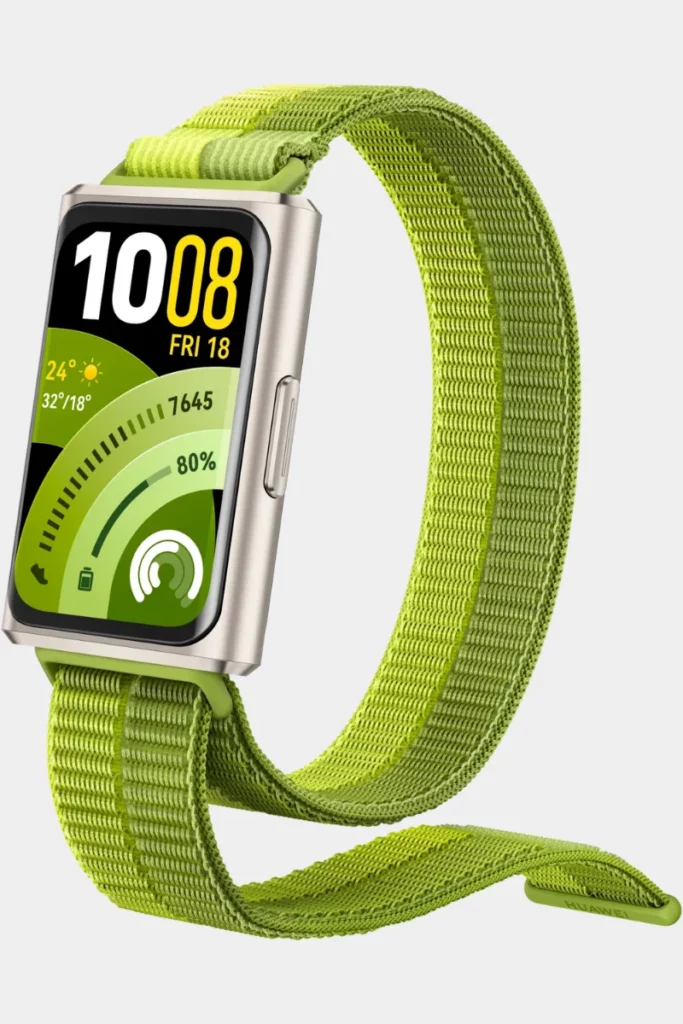
At first glance, both trackers look similar, but their design philosophies are surprisingly different. The Huawei Band 11 Pro feels like a refined, ultra-slim health instrument. Huawei managed to shrink the body thickness down to just 8.99 mm, making it one of the slimmest fitness bands I have ever tested. Weighing in at 18 grams without the strap, it practically disappears on your wrist.
The case is made from a premium aluminum alloy that feels incredibly smooth to the touch and it features a dedicated physical side button. During outdoor workouts, the physical button proved especially useful when sweaty fingers made touchscreen controls less reliable. Having a mechanical button to instantly pause a workout or jump back to the home screen provides tactile reassurance that a pure touchscreen simply cannot match.
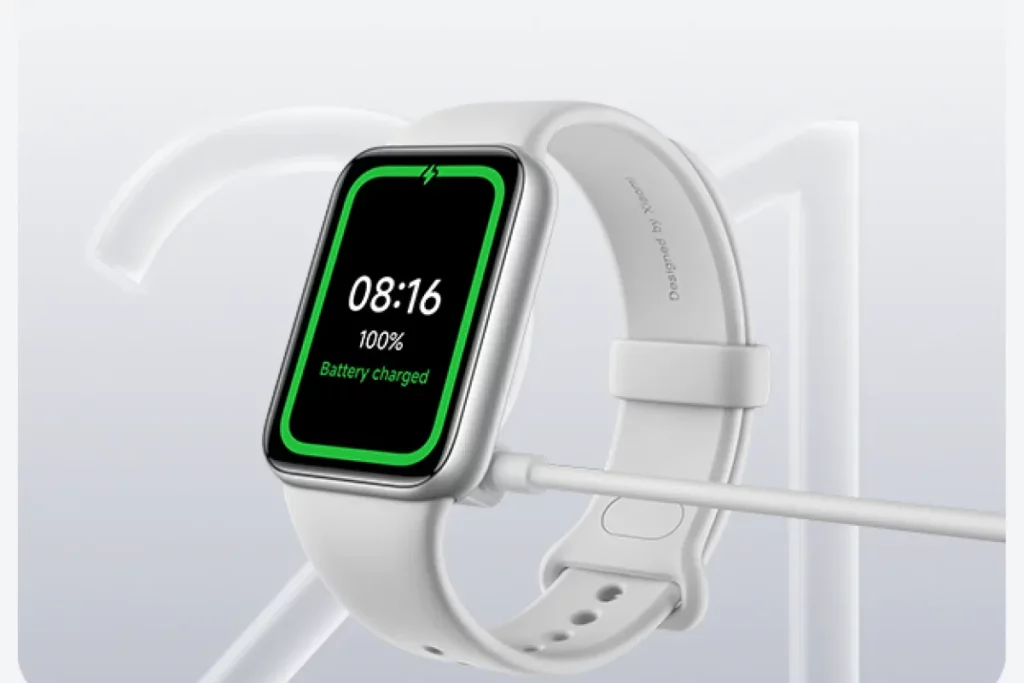
The Xiaomi Smart Band 10 Pro leans more toward a smartwatch-style design with its larger 1.74-inch display. It features a larger, broader 1.74-inch AMOLED display surrounded by beautiful, vacuum-encapsulated symmetrical bezels. The extra screen real estate is immediately noticeable when you are reading text messages or glancing at your real-world health charts.
Xiaomi has also updated its hardware materials, utilizing a high-strength aluminum alloy frame that is 9.7 mm thick and weighs 21.6 grams for the standard edition. It also comes in a ceramic edition for those who prefer a more premium finish. Unlike the Huawei option, the Xiaomi tracker relies entirely on its touchscreen interface, omitting any physical buttons for a completely seamless, minimalist look.
When it comes to screen quality, both displays are excellent. Each tracker features a bright AMOLED panel with a 60Hz refresh rate and a peak brightness of up to 2,000 nits, making them easy to read even under direct sunlight. In day-to-day use, neither struggles with visibility, but Huawei has a slight edge in overall sharpness, all thanks to its higher pixel density of 347 PPI compared to Xiaomi’s 336 PPI.
Since both trackers refresh at 60Hz, scrolling and animations feel equally smooth. Huawei’s higher pixel density makes text, icons and watch faces appear a little crisper, while Xiaomi’s larger 1.74-inch display provides more screen space, making notifications and health data easier to read at a glance.
For long-term wearability and 24/7 comfort, the Huawei Band 11 Pro wins on pure ergonomics. It’s incredibly low weight, ultra-slim 8.99 mm profile and curved backing plate map perfectly to the natural contours of the wrist. The Xiaomi Smart Band 10 Pro, while still very comfortable, feels substantially wider and stiffer on the wrist. The Xiaomi band feels bulkier, especially on smaller wrists.
Health & Fitness Tracking

This is where the true battle lines are drawn. Both companies have poured massive algorithmic resources into their biometrics modules, turning these budget trackers into genuine health monitors.
Heart Rate and Blood Oxygen Accuracy
Huawei utilizes its highly reliable optical heart rate sensor array, paired with deep software optimization, to deliver continuous blood oxygen (SpO₂) and heart rate tracking. During my high-intensity interval training (HIIT) sessions, where my heart rate spikes and drops rapidly, the Huawei tracker proved to be incredibly stable. It filters out movement noise efficiently, preventing the random data drops or sudden artificial spikes that plague cheaper wearables.
Xiaomi has counter-attacked by upgrading its biometric stack to an all-new PPG (photoplethysmography) module that features dual light sources and dual photodiode sensors. Xiaomi claims this hardware revision boosts heart rate tracking accuracy to 98.2%. In my side-by-side training comparisons against a dedicated chest strap, the Xiaomi Smart Band 10 Pro matched the chest strap beat-for-beat during steady-state cardio like cycling and running. However, during rapid transitions from rest to full sprint, Xiaomi’s algorithm took a few seconds longer than Huawei’s to register the sudden spike in heart rate.
Sleep Monitoring and Recovery Analysis
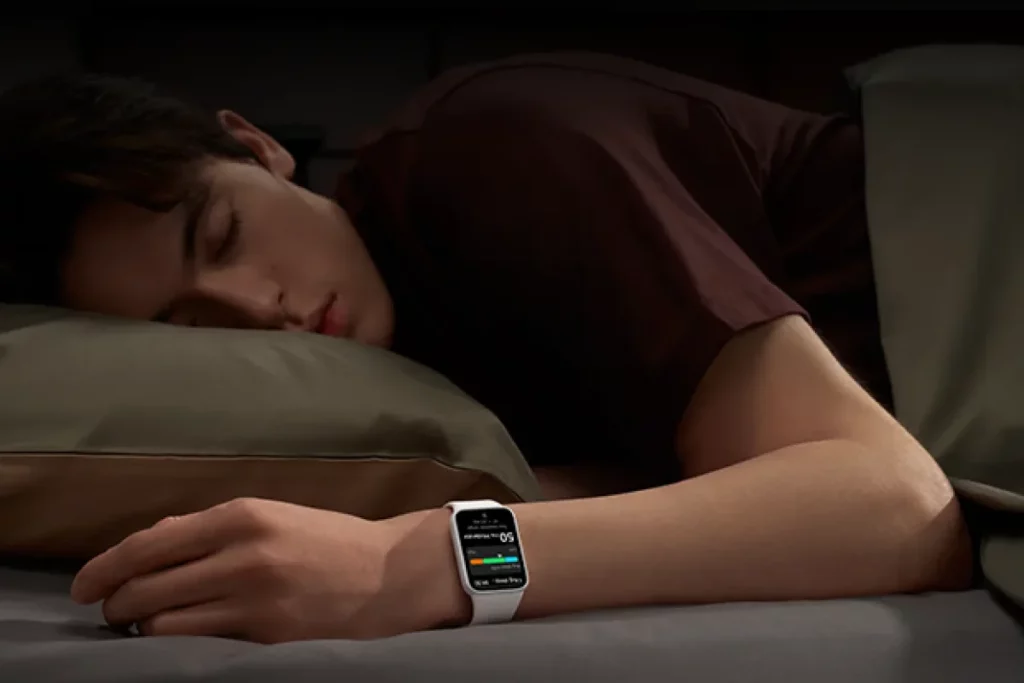
Sleep tracking is a major highlight for both devices, but their execution targets different user needs:
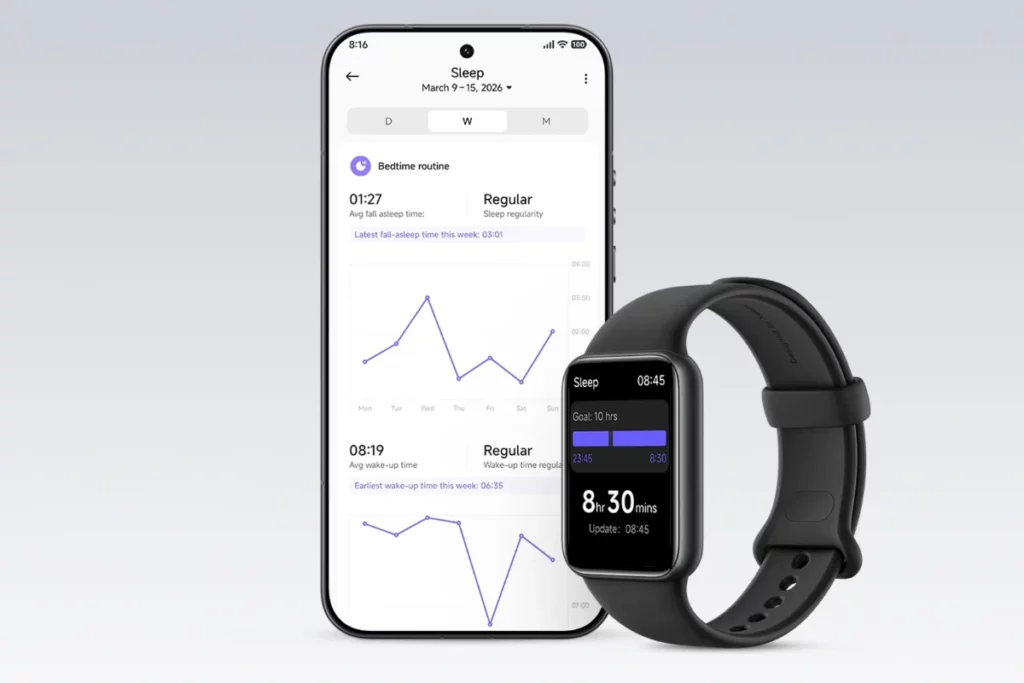
- Xiaomi Smart Band 10 Pro: Features the newly developed Sleep Algorithm 2.0, built in close collaboration with professional global medical bodies like the World Sleep Society. It introduces dedicated Heart Rate Variability (HRV) monitoring during your sleep cycles to evaluate your autonomic nervous system recovery. The algorithm is incredibly precise, showing an 11% improvement in pinpointing exactly when you fall asleep and wake up compared to last year’s model. Every morning, the Mi Fitness app assigns you a “Sleep Animal” that represents your behavioral trends, alongside exhaustive weekly and monthly trend reports that analyze your sleep efficiency and regularity.
- Huawei Band 11 Pro: Takes a deeper wellness-centric approach. Beyond standard REM, light and deep sleep phase mapping, it introduces an emotional well-being management system. It continuously assesses your baseline physiological stress markers throughout the day and combines this data with your sleep architecture to provide a holistic view of your mental and physical recovery. If you struggle with stress or irregular sleep schedules, Huawei’s app offers highly actionable, personalized breathing interventions and lifestyle adjustments that feel more like a wellness coach than a raw data dump.
Workout Tracking and Satellite Navigation
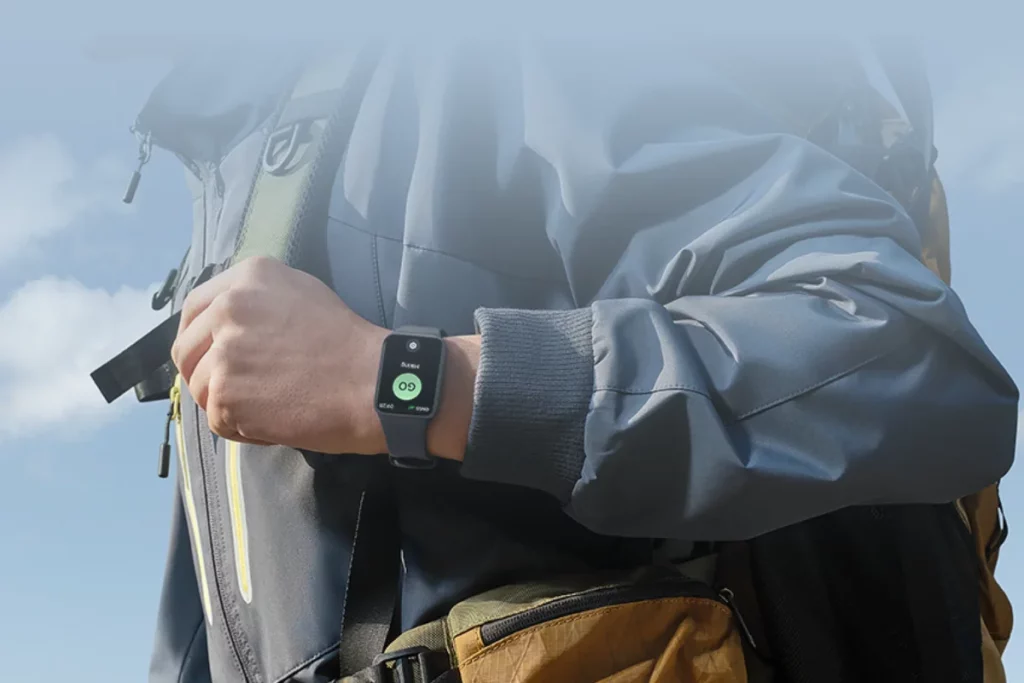
For outdoor fitness enthusiasts, both bands include built-in, independent GNSS (Global Navigation Satellite System) positioning chips. This means you can leave your heavy smartphone at home when going out for a run or a bicycle ride and the bands will map your route entirely on their own.
Xiaomi’s chip utilizes a five-satellite positioning system that locks onto signals remarkably fast, even when surrounded by dense tree cover or suburban buildings. The Mi Fitness companion app pairs this with 3D animated warm-up and cool-down guides directly on the screen, acting like a virtual personal trainer on your wrist. It supports over 150 sports modes and includes smart pacing metrics to keep you on target during long runs.
Huawei’s positioning system is equally accurate, but it stands out by providing far more detailed post-workout metrics. Once your workout syncs to the app, Huawei provides comprehensive breakdown data regarding your running form, training load, aerobic/anaerobic training effect and exact recovery time requirements. For serious runners who want to optimize their training cycles and prevent overtraining injuries, Huawei’s analytical software remains the industry benchmark.
Battery Life & Charging
The Huawei Band 11 Pro is packed with a 300 mAh battery. Huawei claims it can last up to 14 days if you barely use it, or about 8 days under normal, everyday conditions. To see what it was really made of, I put it through a heavy testing phase. I turned on continuous heart rate monitoring (tracking every single minute), kept advanced sleep tracking and all-day stress testing active, turned on automatic blood oxygen (SpO2) monitoring and went for a 30-minute outdoor run using the built-in GPS every other day. Under this heavy load, the Huawei Band consistently lasted between 6 and 7 full days before it needed to be plugged in. If you decide to turn on the Always-On Display (AOD), which keeps the time visible on the screen all the time so you don’t have to lift your wrist, the battery life takes a major hit and drops down to about 3 days.
The Xiaomi Smart Band 10 Pro crams a larger 350 mAh battery into its wider case and the power management optimization inside HyperOS 3 is nothing short of wizardry. Xiaomi claims a maximum light-use runtime of up to 21 days and a normal usage cycle of 15 days. Under the exact same intense testing conditions that I subjected the Huawei band to, the Xiaomi Smart Band 10 Pro blew past the one-week mark and made it all the way to 12 days before hitting the 5% warning mark.
Even more impressive is its efficiency when using the Always-On Display. Thanks to a specialized low-power display mode that drops the refresh rate down to just 5Hz when idle, the Xiaomi band can maintain an AOD runtime of a full 8 days. That completely eliminates the battery anxiety typically associated with keeping a screen continuously active.
Both devices utilize standard proprietary magnetic charging cables that snap securely onto the back pins of the tracker bodies. A full charge from absolute zero to 100% takes roughly 60 minutes for the Huawei Band 11 Pro, while the larger battery inside the Xiaomi Smart Band 10 Pro takes about 75 minutes to top off completely.
App Ecosystem & Software
A fitness tracker is only as good as the software ecosystem that supports it. The companion apps are where you will be spending a significant amount of time analyzing your long-term health trends and customizing your hardware preferences.
Huawei Health: Huawei Band 11 Pro

The Huawei Band 11 Pro syncs via the Huawei Health app, which remains one of the most mature, beautifully designed fitness applications on the market. The dashboard is highly intuitive, using clean, color-coded cards to display your daily step counts, active calories, heart rate zones and stress levels.
Where Huawei Health truly excels is in its deep dive data visualization. When you click into your sleep or workout logs, the graphs are fully interactive, allowing you to pinch-to-zoom and see your exact biometrics at any given minute of the day. The app also integrates beautifully with system-level health frameworks across mobile operating systems, ensuring your steps and workout records transfer reliably.
The downside? If you are an Android user, installing the Huawei Health app requires downloading it directly via Huawei’s AppGallery or via a direct APK installer from their official website, as it is not natively available on the Google Play Store due to ongoing regulatory restrictions. For iOS users, the installation is seamless via the Apple App Store.
Mi Fitness & HyperOS 3: Xiaomi Smart Band 10 Pro
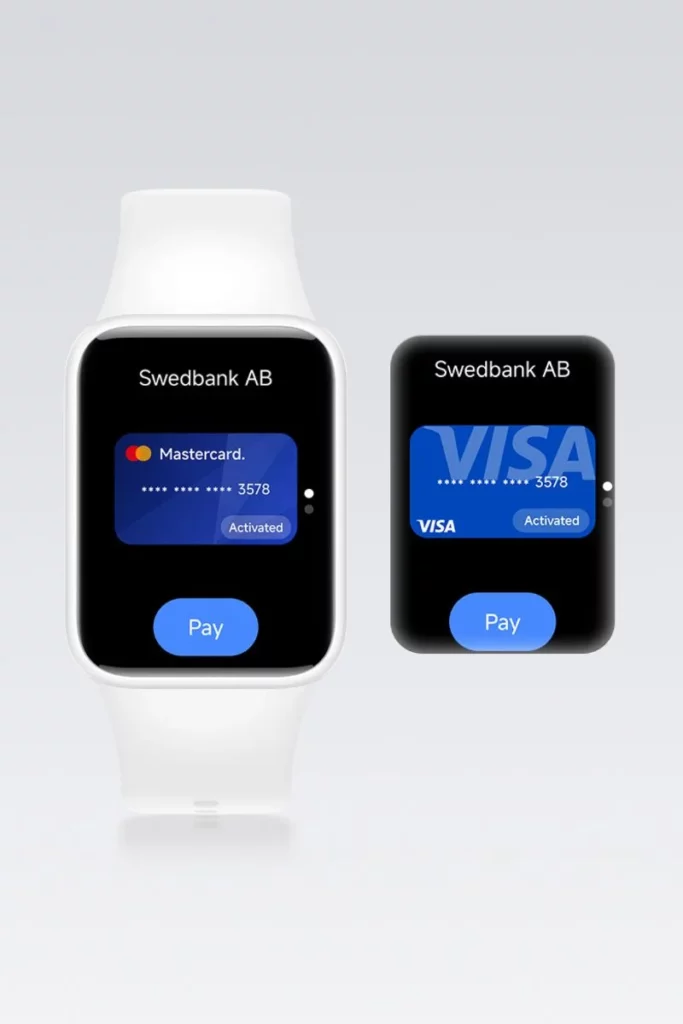
The Xiaomi Smart Band 10 Pro utilizes the Mi Fitness app, which is readily available on both the Google Play Store and the Apple App Store. The interface is clean, playful and incredibly straightforward to use, though it feels slightly more casual and less clinically rigorous than Huawei’s offering.
However, Xiaomi runs circles around Huawei when it comes to smart ecosystem integration and daily notification handling. Running on HyperOS 3, the Xiaomi band feels like a genuine extension of your smartphone rather than a detached accessory. It features a revolutionary Dual-Device Message Sync system designed explicitly for people who carry two phones, such as a personal iPhone and a work-focused Xiaomi device. You can pair the band to both phones simultaneously, allowing you to receive real-time notifications, incoming call alerts and app pings from both devices right on your wrist without having to constantly switch Bluetooth profiles.
Furthermore, the widget system inside HyperOS 3 is completely customizable. Swiping left or right from the main watch face lets you build multi-metric custom screens, combining weather forecasts, music playback controls and heart rate graphs onto a single swipeable panel that reacts instantly thanks to that gorgeous 60Hz display panel.
Real-World Usability Comparison
Comfort and Ergonomics
When it comes to how they feel on your wrist all day long, a clear divide emerged between these two devices.
The Huawei Band 11 Pro is the undisputed champion for anyone who dislikes a bulky watch. Because Huawei managed to keep the body under 9 mm thick and very slim, it sits perfectly flat against your skin. The soft fluoroelastomer strap feels silky smooth and has a slight stretch to it, which means it moves naturally with your wrist. It never snags on tight jacket sleeves or backpack straps and it is so light that you genuinely forget you are wearing it after a few minutes.
The Xiaomi Smart Band 10 Pro feels much more substantial. Because it bridges the gap between a fitness band and a full-size smartwatch, the wider 1.74-inch display takes up a lot of real estate on your arm. While the high-strength aluminum frame looks incredibly high-end, the standard TPU strap that comes in the box is quite stiff. If you spend your day typing on a laptop, you will definitely feel the thickness of the Xiaomi band pressing against the desk. However, if you have larger wrists or like the look of a bolder watch, Xiaomi’s design looks much more modern and fashionable.
Accuracy of Sleep, HR and Recovery Metrics
To see how well these trackers actually count your data, I tested them against dedicated health monitors during my everyday routines.
For heart rate tracking, both are highly accurate during steady cardio like walking or riding a stationary bike. However, during fast-paced workouts where your pulse jumps quickly, like doing sprints or lifting heavy weights, the Huawei Band 11 Pro responds just a little bit faster. Xiaomi’s dual-light sensor is incredibly accurate once it locks onto your pulse, but it sometimes takes a few seconds longer to catch up when your heart rate suddenly spikes.
When it comes to counting steps, both bands handle movement data very well but use slightly different tuning. The Huawei Band 11 Pro is highly sensitive and catches almost every physical stride, making it incredibly precise during continuous walks. On the other hand, Xiaomi’s system tends to be a bit more conservative. It is designed to ignore small, accidental hand movements, like reaching for a cup of coffee or gesturing while talking, which means its daily step count might look a tiny bit lower, but it does an excellent job of keeping your data clean from fake steps.
For sleep tracking, both perfectly capture exactly how long you sleep, but they handle small details differently. On nights with brief disruptions, like waking up for a quick glass of water before heading straight back to bed, Xiaomi’s Sleep 2.0 system is incredibly quick at logging that exact awake window. Huawei’s software tends to smooth over those tiny gaps, sometimes marking them down as light sleep instead of a brief wake-up. However, Huawei wins when it comes to overall recovery feedback. The Huawei Health app does a fantastic job of explaining exactly how your daily stress and sleep quality combine to impact your body’s energy levels the next day.
Daily Usability and Activity Tracking
Using these bands every day highlights how much software changes the experience. Thanks to its 60Hz screen refresh rate, the Xiaomi Smart Band 10 Pro feels incredibly fast and smooth. Swiping through your widgets or reading a long text message feels exactly like using a modern smartphone. Plus, the extra screen space means you can read full text notifications without having to scroll endlessly.
Huawei delivers slightly crisper visuals with its 347 PPI display, while overall navigation feels equally smooth on both devices. Where Huawei catches up, though, is its physical side button. When you are working out and your fingers are covered in sweat, swiping a touchscreen can be incredibly annoying. Having a real, physical button on the Huawei band to instantly pause a workout or go back to the home screen is a massive convenience that the pure touchscreen Xiaomi band lacks.
Price and Availability
The Huawei Band 11 Pro is priced at £59.99. It is widely available across the UK, Europe and other major global markets through official retail channels and Amazon.
The Xiaomi Smart Band 10 Pro, meanwhile, is priced at £69.99 and is available from offline and online stores, including Amazon.
Who Should Buy Which Band
You should buy Huawei Band 11 Pro if:
- Sleep tracking is important to you
- You want better recovery insights
- You like detailed health reports
- You prefer a premium aluminum design
- You use fitness data to improve wellness habits
You should buy Xiaomi Smart Band 10 Pro if:
- Battery life is your top priority
- You want more sports modes
- You prefer a larger display
- You are shopping on a budget
- You want maximum value for money
Who Should Avoid These Bands
You should avoid these bands if:
- You need third-party app support
- You want LTE connectivity
- You need smartwatch-level functionality
- You regularly answer calls from your wrist
- You want an Apple Watch or Galaxy Watch replacement
Final Verdict
After using both fitness trackers for several weeks, I would choose the Huawei Band 11 Pro. While in the Huawei Band 11 Pro vs Xiaomi 10 Pro comparison, Xiaomi offers great battery life and solid value for money, I found Huawei’s health and sleep tracking experience more useful in everyday life. The sleep reports, recovery insights and wellness data felt easier to understand and helped me get more from the information the band collected.
For me, a fitness tracker should do more than count steps and track workouts. It should help me understand my overall health and that is where the Huawei Band 11 Pro stands out. If I had to pick just one device to wear every day, the Huawei Band 11 Pro would be my choice because it delivers a more complete health-tracking experience.
FAQs
Decode the Decor
The Smart Jewelry Revolution
A practical guide to wearable tech's future — delivered straight to your inbox.
Author
