

When I first saw a smart band, I thought it was just a tiny device for tracking steps. But tech moves fast. Today, wearables like the Xiaomi Smart Band 10 Pro look so advanced that it becomes difficult to tell when a fitness band stops being a fitness tracker and starts turning into a smartwatch.
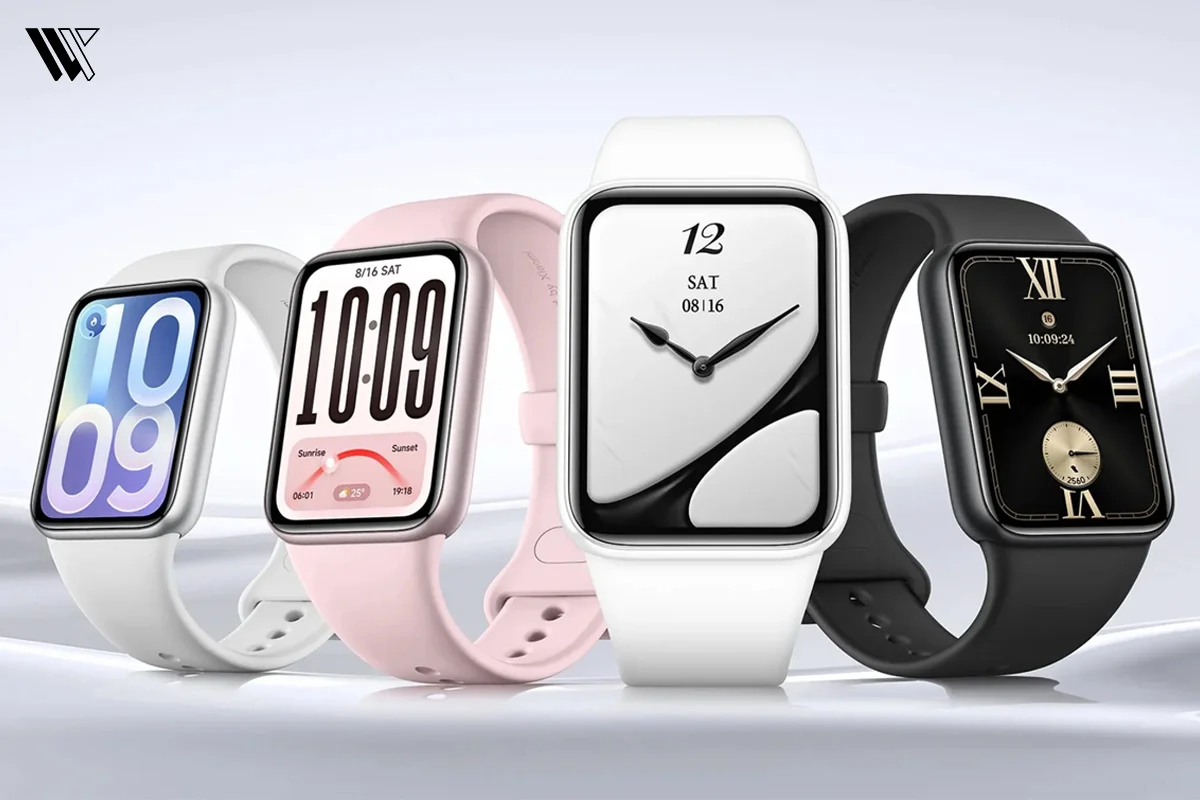
That is exactly what Xiaomi is trying to do with the Xiaomi Smart Band 10 Pro. It has a large AMOLED display, built-in GPS, advanced health tracking, premium materials and smart features that were once available only on expensive smartwatches.
So the big question is simple: Is the Xiaomi Smart Band 10 Pro still a fitness band or has it quietly become a budget smartwatch? Let’s break it down.
Decode the Decor
The Smart Jewelry Revolution — a practical guide to wearable tech.
What Exactly Is the Xiaomi Smart Band 10 Pro?
The Xiaomi Smart Band 10 Pro is Xiaomi’s latest premium fitness tracker, specifically designed for users who want advanced health features without spending smartwatch-level money. Sitting comfortably above the standard Xiaomi Smart Band 10 in the brand’s wearable lineup, this upgraded model offers several noticeable improvements, such as a larger AMOLED display, a built-in GNSS/GPS system and better build materials. Additionally, it provides improved health tracking and a much more premium overall feel right out of the box.
Because of these targeted upgrades, the Xiaomi Smart Band 10 Pro is aimed directly at people who mainly care about fitness, workouts, sleep tracking and long battery life, but who still want a wearable that looks modern and smart. What makes this device truly interesting is its price category. While most modern budget smartwatches now cost much more, the Xiaomi Smart Band 10 Pro tries to deliver many smartwatch-like features at a fraction of the cost.
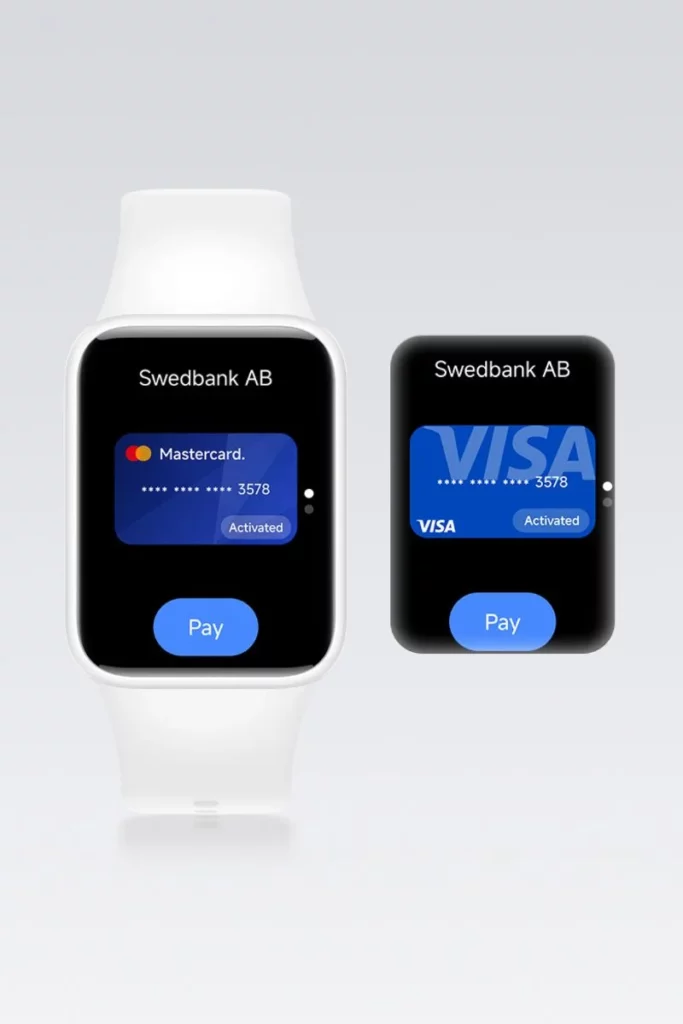
Xiaomi also offers an NFC version of the Smart Band 10 Pro in selected markets. This variant supports contactless payments directly from your wrist, making everyday purchases quicker and more convenient. If payment features are important to you, check out our guide to the best smartwatches for payments to see how they compare with other wearable payment options.
However, even with all these premium hardware upgrades, Xiaomi still markets it as a fitness band first and honestly, that makes a lot of sense. At its core, the Xiaomi Smart Band 10 Pro is still built entirely around health tracking and simplicity rather than complex apps or heavy productivity features.
Specifications
| Specifications | Xiaomi Smart Band 10 Pro |
|---|---|
| Display | 1.74 AMOLED display |
| Resolution | 480×336 pixels |
| Peak Brightness | 2000 nits peak brightness and 1500 nits HBM |
| Refresh Rate | 60Hz |
| Water Resistance | 5ATM |
| Battery Capacity | 350mAh |
| Battery life | Up to 21 days with Light mode |
| Charging Type | Magnetic Charging |
| Sensors | Heart rate sensor (with blood oxygen sensor), Accelerometer, Gyroscope, Electric Compass, Ambient Light Sensor |
| Connectivity App | Mi Fitness app |
| Bluetooth | Bluetooth 5.4 |
| Price | £69.99 |
How Fitness Bands and Smartwatches Used to Be Different
To understand why the Xiaomi Smart Band 10 Pro is causing so much debate, it helps to look at how these 2 product categories used to be entirely separate.
Traditional Fitness Bands
Years ago, choosing a fitness tracker meant accepting a highly specific set of limitations. These devices were built purely for health tracking, focusing on basic step tracking to count daily movement and simple sleep tracking to monitor rest overnight.
To keep production costs low and maximize efficiency, they featured very small screens, often narrow, monochrome or low-resolution panels that displayed only a few lines of text. However, this minimalist approach allowed for incredibly long battery life, often stretching for weeks on a single charge. They lacked independent sensors, meaning you could not track a run accurately without keeping your mobile phone physically close by.
Traditional Smartwatches
On the other side of the spectrum, traditional smartwatches were built to act as secondary computers on the wrist. They prioritized interactive features, offering dedicated app ecosystems, rich notifications that allowed for quick replies and phone calling or local media controls.
They also came equipped with large displays and built-in GPS tracking for independent navigation. The major trade-off was power efficiency. Because running a heavy desktop-class operating system requires significant power, traditional smartwatches historically suffered from poor battery performance, frequently requiring daily charging.
Features That Make Smart Band 10 Pro Feel Like a Smartwatch
The Xiaomi Smart Band 10 Pro actively blurs these old boundaries by adopting multiple premium features that were once exclusive to high-end smartwatches.
Large AMOLED Display
The most striking element of the Xiaomi Smart Band 10 Pro is its massive 1.74-inch AMOLED display. This screen uses a modern vacuum encapsulation process (also known as LIPO packaging technology) to achieve ultra-narrow, 2.2mm symmetrical bezels. This design creates a very high screen-to-body ratio, giving you a clean, expansive viewing area.
With a smooth 60Hz refresh rate and a crisp 336×480 pixel resolution (resulting in a sharp 336 PPI or pixels per inch density), scrolling through menus feels fluid and responsive. Furthermore, the display hits a staggering peak brightness of 2,000 nits and 1,500 nits of full-screen global brightness (High Brightness Mode). This means the screen, which supports 16.8 million colors behind a sleek 2.5D curved glass cover, remains perfectly visible even under direct, harsh afternoon sunlight. It also includes an ambient light sensor that automatically adjusts screen brightness based on your surroundings.
Built-in GNSS for Outdoor Workouts
Unlike basic trackers that rely on your smartphone for location data, the Xiaomi Smart Band 10 Pro features independent GNSS five-satellite positioning. By supporting five major global satellite systems: GPS, GLONASS, BeiDou, Galileo and QZSS, the band records precise outdoor workout paths entirely on its own.
This means you can leave your phone at home during outdoor runs or bike rides. The system also includes an optimized Track Mode. This feature provides automatic 400-meter running track correction to reduce corner drift, ensuring your lap times and distances are recorded accurately.
Notifications and Phone Controls
Staying connected is easy thanks to advanced communication features powered by upgraded Bluetooth 5.4 connectivity. The Xiaomi Smart Band 10 Pro supports a unique dual-device message sync feature. If you carry two phones, such as a primary Xiaomi device running HyperOS 3 and an Apple iPhone running iOS 14 or later (or any Android device on Android 8.0 and above), you can log into the same Xiaomi account on both and receive real-time notifications from both phones simultaneously on a single wristband.
It features Xiaomi Super Island notifications for quick glance alerts and serves as a remote control for your smartphone, allowing you to manage incoming calls, view calendar alerts, handle remote camera controls and manage media playback directly from your wrist. It even supports Mijia smart home automation scenes and NFC tap-to-pay for quick wireless payments.
Advanced Health and Recovery Tracking
Biometric monitoring receives a major hardware upgrade here. The Xiaomi Smart Band 10 Pro features a redesigned PPG module utilizing dual light sources and dual PD (photodiode) sensors. This upgraded hardware architecture works alongside proprietary algorithms to deliver a 98.2% heart rate monitoring accuracy, alongside continuous, all-day blood oxygen (SpO2) tracking and stress monitoring.
For nighttime recovery, the upgraded Sleep Algorithm 2.0 provides precise analysis. It is developed in collaboration with professional sleep organizations like the World Sleep Society, the Asian Society of Sleep Medicine and the Chinese Sleep Research Society. It delivers an 11% improvement in sleep onset/wake detection accuracy and a 14% improvement in sleep stage tracking over older models.
It tracks average Heart Rate Variability (HRV) during sleep to measure physical recovery, screens for sleep apnea risks, assigns fun “sleep animals” based on your habits and generates structured weekly or monthly sleep trend reports. It even includes specialized tools like menstrual health tracking, which comes with 3 months of Clue Plus for free.
Premium Materials and Design
The physical construction of the wearable moves away from cheap plastics. The Xiaomi Smart Band 10 Pro utilizes a high-strength 6M46 aviation-grade aluminum alloy frame that undergoes precision thinning to achieve an ultra-slim 9.7mm profile (with body dimensions measuring 42.84 × 32.16 × 9.7mm). Weighing just 21.6 grams (without the comfortable TPU strap), it feels remarkably lightweight while offering a 40% increase in yield strength and a 20% increase in Vickers hardness over standard materials.
For users seeking an extra touch of sophistication, Xiaomi offers a premium Ceramic Edition (measuring 43.97 × 33.35 × 9.7mm) that weighs 28.7 grams and features a polished, luxury finish paired with a smooth fluoro rubber strap. Both models feature an advanced high-voltage linear motor for stronger haptic vibrations and carry a certified 5ATM water resistance rating, making the device safe for shallow-water swimming down to 50 meters with dedicated underwater heart rate monitoring.
Features That Keep It in the Fitness Band Category
While the hardware looks and feels like a modern smartwatch, the internal software architecture keeps the Xiaomi Smart Band 10 Pro firmly grounded in the fitness band family.
No Wear OS / App Ecosystem
The biggest differentiator is the lack of a true, open operating system like Wear OS or watchOS. Instead, the device runs on a lightweight, specialized version of Xiaomi HyperOS 3. Because it uses closed-source firmware, you cannot open a digital storefront like the Google Play Store to download popular third-party tools, standalone navigation apps or independent music streaming services.
While it does offer native support for roughly 20+ built-in mini-apps and basic games, the user experience is strictly limited to the pre-installed tools and widgets built directly into the device’s 350mAh battery-optimized flash memory at the factory.
Limited Third-Party Integrations
Because there is no open application ecosystem, integrating the wearable with outside digital platforms requires specific software workarounds. The device features a low-energy Bluetooth 5.4 chip that supports a useful Bluetooth heart rate broadcast feature. This allows the band to act as a wireless heart rate strap, streaming real-time biometric data directly to compatible BLE-enabled cycling computers or supported smart gym equipment.
However, you cannot sync your metrics directly with a vast library of independent fitness communities like Strava, TrainingPeaks or MyFitnessPal from the wrist. To move your data anywhere else, you must rely entirely on the official Mi Fitness smartphone companion application (available for Android 8.0+ and iOS 14+) to bridge the gap and export your files.
Simpler User Experience
The custom software environment is streamlined to be highly efficient, which is exactly how it achieves up to 21 days of battery life on a single charge. The user interface does not support advanced smartwatch behaviors like multi-window workflows, true background multitasking or interactive text-input keyboards.
Instead, navigation relies entirely on standard swipes, taps and pre-configured quick-access widgets. While this lightweight system lacks the advanced computing versatility of a full smartwatch, it drastically reduces the processing load on the internal chipset, ensuring the interface remains fast, intuitive and completely free of lag.
Fitness-First Approach
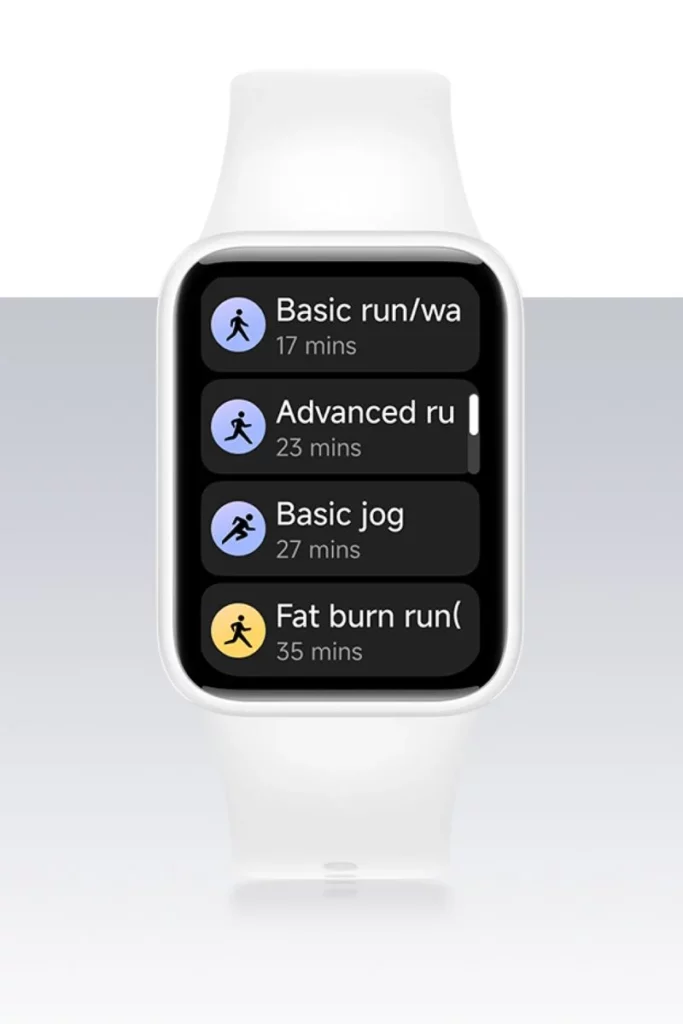
Every core menu option, data screen and internal sensor framework points directly toward athletic tracking. The device comes equipped with a high-precision 9-axis motion sensor (combining a 3-axis accelerometer, a 3-axis gyroscope and a 3-axis electronic compass) to power over 150+ sports modes.
This includes an enhanced swimming mode backed by an AI-driven stroke recognition algorithm that achieves 96% accuracy in tracking lap counts, alongside real-time underwater heart rate monitoring. Rather than handling office productivity, the software acts as an automated trainer, delivering interactive 3D warm-up and cool-down guides directly on the screen, tracking your VO2 max, calculating your overall training load, monitoring recovery times and generating a 7-day rolling Vitality Score to evaluate your physical activity level.
Xiaomi Smart Band 10 Pro vs Xiaomi Smart Band 10
Choosing between the standard and Pro versions comes down to identifying which physical upgrades matter most to your daily routine.
| Specifications | Xiaomi Smart Band 10 Pro | Xiaomi Smart Band 10 |
|---|---|---|
| Display Size & Type | 1.74-inch AMOLED (60Hz, 2,000 nits) | 1.72-inch AMOLED Touch Display |
| Frame Material | High-Strength Aluminum / Ceramic Edition | High-Gloss Polycarbonate / Basic Metal plating |
| GPS Capabilities | Independent GNSS (5-Satellite Positioning) | Connected GPS |
| Battery Capacity | 350mAh | 233mAh |
| Advanced Health Features | Sleep HRV Tracking, Sleep Algorithm 2.0 | Standard Sleep and Heart Rate Tracking |
| Water Resistance | 5ATM (with Underwater HR Tracking) | 5ATM (Standard Tracking) |
The regular Xiaomi Smart Band 10 is the ultimate fit for people who prefer a light and inconspicuous wearable device for counting steps, monitoring health statistics and receiving alerts, all at the cheapest price range.
Whereas, the Xiaomi Smart Band 10 Pro is the clear choice for outdoor runners, cyclists and fitness enthusiasts who want a large, bright screen to view data mid-workout, independent GPS mapping and premium frame materials without making the massive financial jump to a full smartwatch.
Xiaomi Smart Band 10 Pro vs Huawei Watch Fit 5
When looking outside of Xiaomi’s ecosystem, the closest rival in this hybrid category is the Huawei Watch Fit 5. Both devices try to blend tracking efficiency with watch-like aesthetics.
- Design and Screen Comfort: The Xiaomi Smart Band 10 Pro opts for an ultra-slim, elongated rectangular profile measuring just 9.7mm thick, offering a very streamlined silhouette on the wrist. The Huawei Watch Fit 5 leans into a wider, more square aesthetic that looks closer to a traditional square timepiece but feels slightly bulkier during sleep or intense workouts.
- GPS and Tracking Accuracy: Both wearables contain built-in satellite sensors for mapping outdoor activities without a phone. However, the Xiaomi Smart Band 10 Pro offers a slight edge for runners due to its specialized Track Mode, which actively corrects position data on a standard 400m running track to eliminate erratic route lines.
- Battery Management: Xiaomi pulls ahead significantly in raw energy efficiency. The Xiaomi Smart Band 10 Pro offers up to 21 days of light use or up to 15 days of normal, continuous tracking. Even with the Always-On Display (AOD) active, it lasts up to 8 days. The Huawei Watch Fit 5 typically requires a recharge every 7 to 10 days under standard operational loads.
- Software and Device Ecosystem: The Huawei alternative provides a highly polished fitness interface, but its companion software can occasionally require manual sideloading steps on certain Android platforms. The Xiaomi Smart Band 10 Pro integrates seamlessly out of the box with Android and iOS alike, offering the unique dual-device message sync feature for users who manage two mobile phones at once.
Why Xiaomi Is Blurring the Line Between Fitness Bands and Smartwatches
You might wonder why companies are making these hybrid devices. The answer comes down to changing consumer trends in 2026.
First, traditional smartwatch prices have been rising steadily every year. Premium watches from major brands now cost hundreds of dollars, which prices out a huge number of everyday consumers. By creating a hybrid device like the Xiaomi Smart Band 10 Pro, Xiaomi can offer 80% of the features people actually use at a fraction of the cost.
Second, there is a massive consumer demand for better battery life. People are getting tired of charging a large smartwatch every single night. A hybrid device gives you a gorgeous screen and GPS tracking, but it can run for up to two weeks on a single charge because it does not have to power a heavy app ecosystem.
Finally, many users are moving toward minimalist wearable experiences. They do not want their wrists constantly buzzing with distracting apps, emails and notifications. They want a quiet, helpful companion that tracks their health automatically and stays out of the way. These factors have caused a massive growth of hybrid devices, changing our definition of the best fitness band in 2026.
Who Should Buy the Xiaomi Smart Band 10 Pro?
You should buy it if:
- You want GPS without smartwatch pricing: You love running, walking or cycling outdoors and want accurate route maps without shelling out big bucks for a dedicated sports watch.
- Battery life matters to you: You want a gorgeous, colorful screen but absolutely refuse to charge your wearable device every single night.
- Fitness tracking is your core priority: You want to monitor your steps, sleep quality, heart rate and daily recovery with precise, highly optimized internal sensors.
- You prefer a lightweight fit: You want a device that looks elegant during work hours but feels completely weightless and unobtrusive when you are working out or sleeping.
You should skip it if:
- You want a true app ecosystem: If you need to install third-party apps, check live navigation maps or use specialized apps directly on your wrist, you need a full smartwatch.
- You want to type out custom text replies: If you need an on-screen keyboard to compose full text responses or emails from your wrist, this band’s quick-reply system will feel too restrictive.
- You need advanced voice productivity tools: If you want an internal speaker to answer voice calls directly through your wrist or use complex voice assistants offline, you should invest in a premium smartwatch.
Is the Xiaomi Smart Band 10 Pro the Future of Fitness Bands?
The fitness band category is evolving rapidly and devices like the Xiaomi Smart Band 10 Pro may very well represent the future of what we wear on our wrists. Traditional fitness bands were once incredibly basic devices, but modern versions have completely transformed to include large AMOLED displays, independent GPS tracking, advanced health sensors, premium designs and clever smart features.
At the same time, many users are starting to question whether they actually need fully featured, expensive smartwatches anymore. For the average casual user, hybrid devices like this one may actually be the smarter, more practical option. The Xiaomi Smart Band 10 Pro proves that modern fitness bands can easily offer most of the features people use daily while successfully keeping a much better battery life, lower prices, simpler software and a more comfortable fit on the wrist.
This specific combination of premium features and everyday practicality could become increasingly popular over the next few years. Xiaomi is clearly betting on a future where users prefer lightweight, long-lasting trackers over bulky, battery-draining watches and honestly, they may be right.
Wrap Up
Reviewing the Xiaomi Smart Band 10 Pro has been an eye-opening experience. At its core, this device is still technically a fitness band because it uses a simple, closed operating system without an app store. However, with its large AMOLED screen, built-in GNSS tracking and premium metal-style design, it provides an incredible smartwatch-like experience that will completely satisfy anyone looking for an affordable, high-tech wearable.
It perfectly bridges the gap between simplicity and advanced tracking, showing us that you do not need to spend a thousand of dollars to get incredible health insights right on your wrist.
FAQs
Decode the Decor
The Smart Jewelry Revolution
A practical guide to wearable tech's future — delivered straight to your inbox.
Author
