

Imagine walking into a coffee shop and recording a video, checking directions or seeing digital information without taking your phone out of your pocket. It sounds like something from a sci-fi movie, but companies are working hard to make it a reality. Snap is one of them.

The company behind Snapchat has officially unveiled Specs, its first fully standalone augmented reality (AR) glasses. These upcoming smart glasses aim to combine augmented reality, AI, hands-free cameras and interactive digital experiences into a single wearable device. While they are not available for consumers just yet, they offer a glimpse of how we may interact with technology in the coming years.
Decode the Decor
The Smart Jewelry Revolution — a practical guide to wearable tech.
While the glasses are still on the way, Snap has officially introduced Specs AR glasses and shared its vision, hardware and software capabilities.
What Are Snap AR Glasses?
The new Snap AR Glasses are Snap’s first true standalone consumer augmented reality glasses. While previous generations under the “Spectacles” branding focused primarily on capturing first-person video for Snapchat, this latest iteration is an entirely different beast. These are full-fledged facial computers designed to overlay digital graphics directly onto your environment.
Unlike traditional virtual reality headsets that completely isolate you from your surroundings, these use an optical see-through display. This means you look through real glass at the real world, while micro-projectors paint digital elements on top of your view. Snap is aiming these glasses at creators, tech enthusiasts and anyone who wants hands-free access to AI assistance and interactive social experiences without being tethered to a physical computer or a mobile puck.
Specifications
| Specifications | Snapchat SPECS AR Glasses |
|---|---|
| Operating System | Snap OS |
| Display Technology | Liquid Crystal on Silicon (LCoS) with Waveguide Optics |
| Field of View (FoV) | 51° Diagonal |
| Processors | Dual Qualcomm Snapdragon Processors |
| Cameras | Dual RGB Cameras + Dual Infrared (IR) Cameras |
| AI Features | Multimodal AI, Object Recognition, Text Translation, AI-powered AR Experiences |
| Spatial Tracking | 6DoF Tracking with IMU Sensors |
| Microphones | 6-Microphone Array |
| Frame Material | Swiss TR90 Polymer |
| Lens Technology | Electrochromic Adaptive Tint Lenses |
| Price | Unannounced |
Design & Comfort
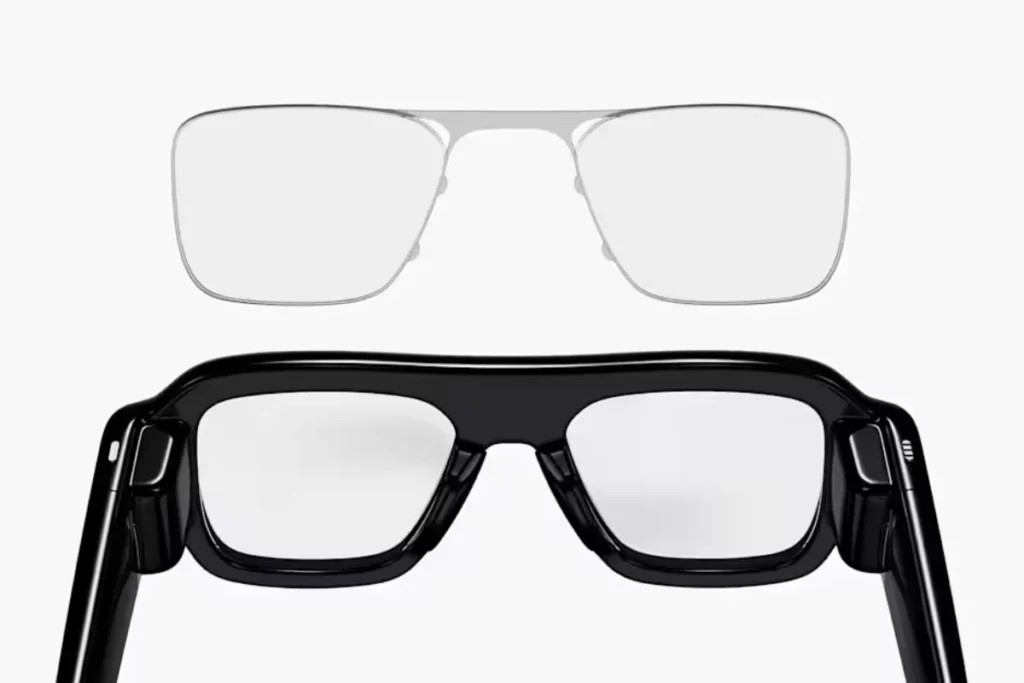
Previous augmented reality prototypes were notoriously bulky, often looking like heavy scuba goggles or massive plastic helmets. With SPECS, Snap has moved closer to making standalone AR glasses practical for everyday use. For this generation, Snap opted for a premium, lightweight design using high-end materials that look and feel much closer to everyday eyewear.
The frames are constructed from Swiss TR90 polymer, a material often referred to in engineering circles as “plastic titanium” because it is exceptionally durable, flexible and light. This specialized polymer is highly resistant to sweat, body oils and temperature changes, meaning the frame won’t deform or warp even if you leave them inside a hot car. Because the material naturally bends under pressure instead of snapping, it protects the delicate internal technology and displays hidden inside the arms.
To fit different face shapes and nose bridges comfortably, Snap is offering the glasses in two distinct sizes. The smaller 47 mm size weighs just 132 grams, while the larger 52 mm size comes in at 136 grams. While they are still a bit chunkier than a standard pair of prescription reading glasses, keeping a fully independent computer under 140 grams is an incredible engineering feat. For comparison, it cuts down massive weight compared to earlier 226-gram developer prototypes, making it light enough to wear comfortably for hours without straining your ears or nose bridge.
The glass lenses feature advanced electrochromic technology, which uses a tiny, low-voltage electrical current to change how dark the glass gets. If you step outside into bright sunlight, built-in light sensors detect the glare and cause the lenses to automatically transition from perfectly clear to a dark sunglass tint in just 10 seconds. This instant shading blocks out blinding external light, keeping the projected 3D graphics crisp, colorful and fully readable even in bright outdoor environments.
For daily glasses wearers, you don’t have to worry about squeezing these over your current frames. The device fully supports vision correction via custom, removable prescription inserts. These magnetic lenses easily snap onto the inside of the frame, allowing you to quickly swap them out if you want to share the glasses with friends or family members.
AR & AI Capabilities
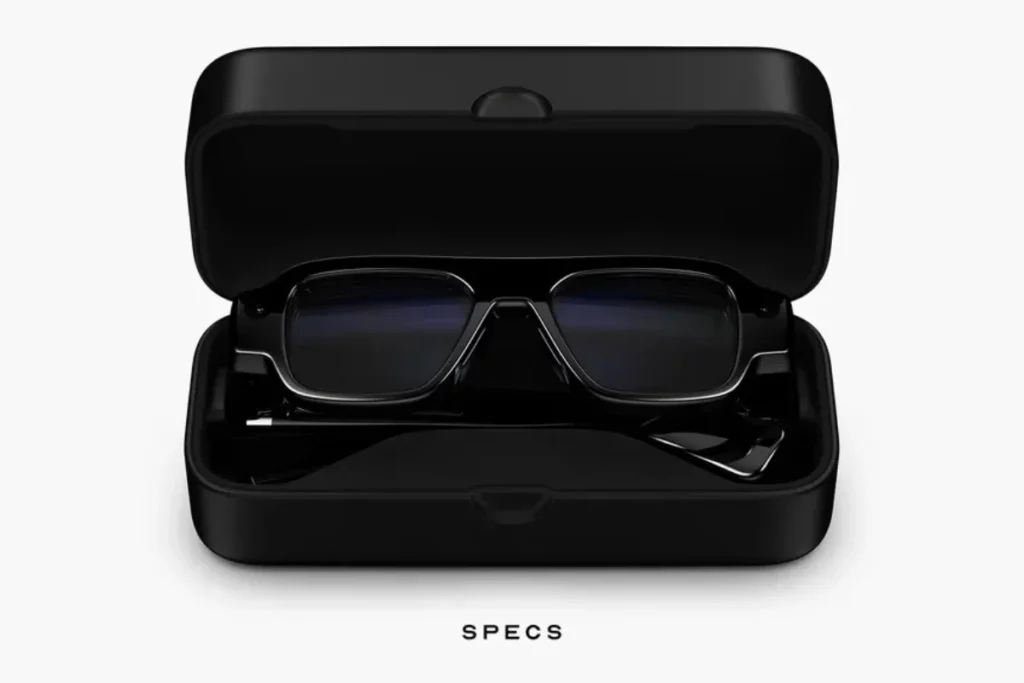
The core magic of the Snap’s SPECS AR Glasses lies in the custom-built Snap OS and its real-time spatial tracking engine.
Real-World Overlays
The glasses utilize advanced liquid crystal on silicon (LCoS) display technology coupled with an updated waveguide design. This system projects sharp, vibrant 3D elements into your field of view with an impressive 51-degree diagonal field of view (FoV).
To put that into perspective, looking through these glasses feels like having a 24-inch desktop monitor hovering right in front of your desk or a massive 115-inch home cinema screen parked 10 feet away in your living room.
Ultra-Low Latency Spatial Tracking
When you move your head, the digital objects need to stay pinned to the real world without lag or you’ll get instant motion sickness. To prevent this, Snap engineered an ultra-low 7-millisecond motion-to-photon latency. It tracks your environment and updates the graphics nearly instantly, keeping your digital filters, workspace screens and games perfectly anchored to your physical table or floor.
Multi-Modal AI Integration
Built directly into the software ecosystem is Snap’s multi-modal generative AI assistant. Because the glasses feature outward-facing cameras, the AI can literally see what you are looking at. You can ask it to identify real-world objects, translate text on a sign or generate custom 3D images that instantly materialize in your physical room.
Because SPECS are fully standalone AR glasses, users can access these AI-powered experiences directly from the wearable without relying on a connected smartphone or external computing device. This allows AI assistance and augmented reality content to remain available wherever the glasses are used.
Camera & Media
Even though SPECS are designed primarily for augmented reality and AI experiences, they haven’t forgotten their content-creation roots. They function as premium, hands-free tools for capturing your life as you live it.
First-Person Capture
High-resolution cameras mounted right at the eyeline allow you to record high-frame-rate video and photos exactly from your perspective. The dual RGB (red, green and blue) sensor setup features an impressive 115-degree ultra-wide field of view, which perfectly mirrors how the human eye perceives peripheral vision. This wide angle makes it incredibly easy to film cooking tutorials, workout clips or travel vlogs without holding a smartphone, as everything in your field of vision stays perfectly inside the frame.
Advanced Sensor Array & Spatial Tracking
Under the hood, Snap uses a cluster of four distinct hardware cameras working together in perfect sync:
- Dual Color Cameras: These handle your high-definition first-person video recordings, photos and live color-matching for real-world objects.
- Dual Infrared (IR) Cameras: Hidden subtly on the frame, these sensors track your hand gestures and map the 3D depth of the room around you. Because they use infrared light, they can read your hand movements accurately even in low-light environments.
- Inertial Measurement Units (IMUs): A built-in 6-axis IMU tracking chip measures the exact speed and tilt of your head movements. This feeds data directly into the hardware engine to ensure your video recordings stay smooth and shake-free.
Pro-Grade Spatial Audio
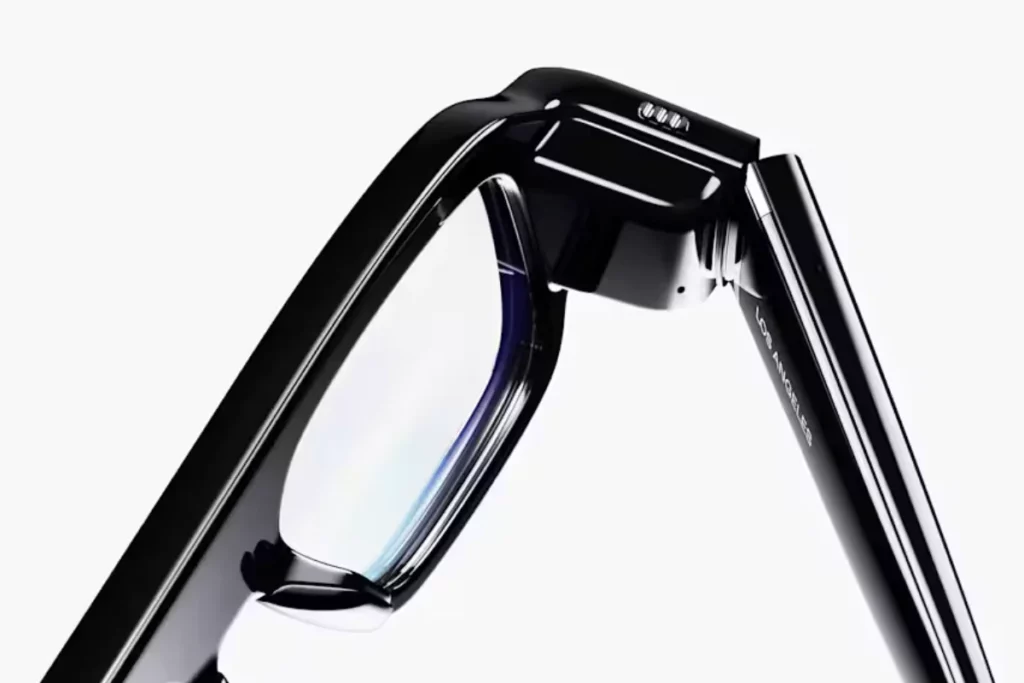
A great video is nothing without great audio. Snap integrated a 6-microphone array into the frame architecture. Instead of just picking up generic sound, this system uses advanced background suppression and echo cancellation to block out wind or traffic noise.
More importantly, it records spatial audio. When you play a recorded video back, the sound feels directional, if a dog was barking to your left while you were filming, the audio will actually sound like it is coming from the left side.
Privacy-First Design
To avoid the “creepy camera” problem, Snap built a noticeable on-device recording indicator LED. When you are capturing media, the light clearly alerts people around you that the camera is active.
On-Device Processing
Media captures, hand tracking data and computer vision tasks are handled locally across the dual processors, ensuring your visual data isn’t constantly floating around on cloud servers while you record.
Battery Life & Charging
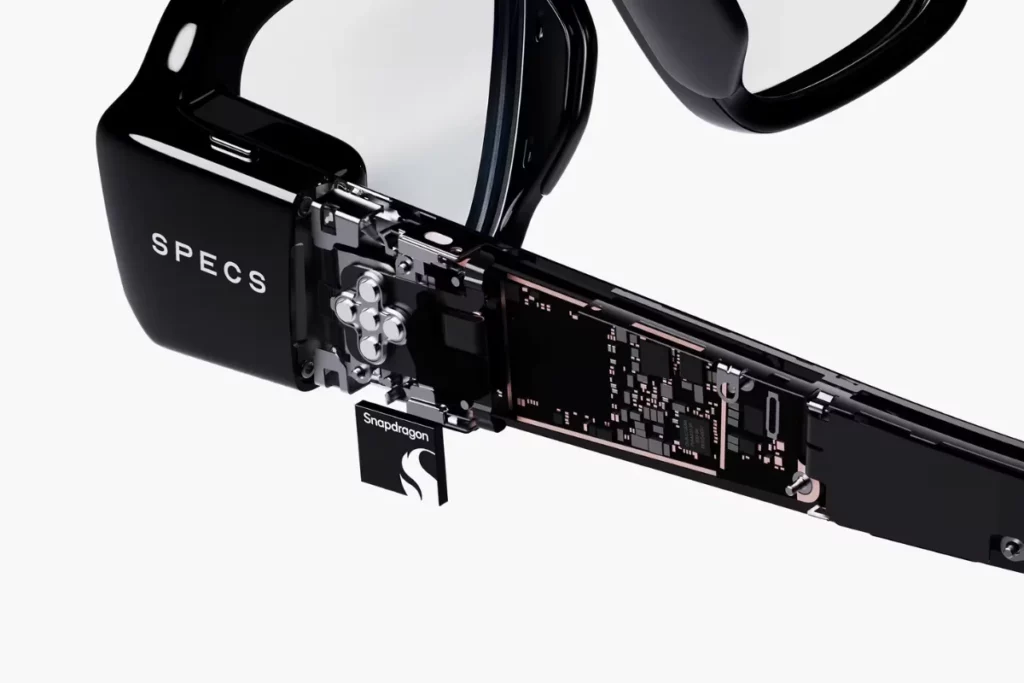
Battery performance has always been the priority of wearable AR tech, but Snap has made massive strides here by separating structural tasks across its silicon. As Snap’s first fully standalone AR glasses, SPECS balance performance and portability by distributing workloads across two processors.
The internal power system is optimized by dual Qualcomm Snapdragon processors. One chip is entirely dedicated to low-power computer vision and sensor tracking, while the second processor runs the heavy graphics rendering and interactive “Lenses.” This efficient distribution allows the glasses to achieve up to 4 hours of continuous mixed-use battery life on a single charge. This includes running interactive AR applications, streaming audio, recording video clips and using AI assistance.
When the battery runs down, the glasses snap into a custom, compact charging case. The protective case holds enough internal power to deliver four complete recharges, giving you up to 20 total hours of mobile use before you ever need to look for a wall outlet.
Real-World Use Cases
As a standalone AR platform, SPECS are designed to support immersive experiences without requiring users to constantly interact with a smartphone. Even though the hardware is still rolling out, the software ecosystem gives us a very clear picture of how these glasses will change daily routines.
- Immersive Content Creation: Creators can record videos that mix real-world actions with digital animations. This allows for unique, first-person storytelling that stands out on platforms like Snapchat, TikTok and YouTube.
- Social Media & Snapchat Integration: Unsurprisingly, the integration with Snapchat is incredibly deep. Users will be able to interact with friends via shared AR spaces, send hands-free video snaps and use custom face and environmental filters in real-time.
- Interactive AR Experiences: Developers have already built unique programs for the platform. For example, an AR app called Drum Kit overlays digital drum pieces onto your real environment, letting you practice playing the drums anywhere without owning a physical drum set. Other apps include education tools that visually map out invisible magnetic or vector fields right in front of your eyes.
- Hands-Free Interaction: From following a floating digital recipe in the kitchen without wiping your dirty hands on your phone screen, to viewing step-by-step repair guides while fixing a piece of machinery, the utility of hands-free data delivery is vast.
Price and Availability
Snap has not officially introduced SPECS as its first fully standalone AR glasses. While the company has confirmed a consumer launch in 2026, it has not yet announced an official release date.
Limitations of Snap AR Glasses
While the technology is a massive step forward, I must highlight the boundaries of this first-generation hardware, even from its first look.
- Not a Full VR Headset: It is vital to remember that these are AR glasses, not virtual reality (VR) headsets. They do not wrap around your head to block out your surroundings or place you inside a fully artificial 3D video game. The focus here is on lightweight overlays, not total immersion.
- Battery Constraints: While 4 hours of standalone mixed-use battery life is impressive for a 132-gram device, it means these glasses are not meant to be worn continuously from sunrise to sunset without utilizing the charging case during breaks.
- Ecosystem Focus: The primary software environment is built around Snap OS and Snap’s developer tools. If you are looking for deep, native integration with productivity suites like Microsoft Office or Apple iCloud right out of the box, you may find the platform heavily weighted toward Snap’s own creative ecosystem.
Who Should and Shouldn’t Buy Snap AR Glasses
You Should Buy Snap AR Glasses If:
- You enjoy creating hands-free photos and videos.
- You want to experience augmented reality in everyday life.
- You regularly use Snapchat and its AR Lenses.
- You like trying the latest wearable technology.
You Shouldn’t Buy Snap AR Glasses If:
- You need all-day battery life.
- You want a fully immersive VR headset.
- You rely on a wide range of productivity apps.
- You’re looking for an affordable smart glasses option.
Wrap Up
Snap AR Glasses represent Snap’s biggest step toward making augmented reality part of everyday life. While these smart glasses not available for consumers yet, the combination of AR, AI and hands-free content creation makes them one of the most exciting wearable devices to watch.
If Snap delivers on its vision, these smart glasses could play an important role in shaping the future of wearable technology.
FAQs
Decode the Decor
The Smart Jewelry Revolution
A practical guide to wearable tech's future — delivered straight to your inbox.
Author
