

You can track how many steps you take, how well you sleep and even how your heart behaves throughout the day using a smartwatch. However, understanding whether your diet is providing enough nutrients has always been a different challenge. This is where the Samsung Antioxidant Index gets interesting.
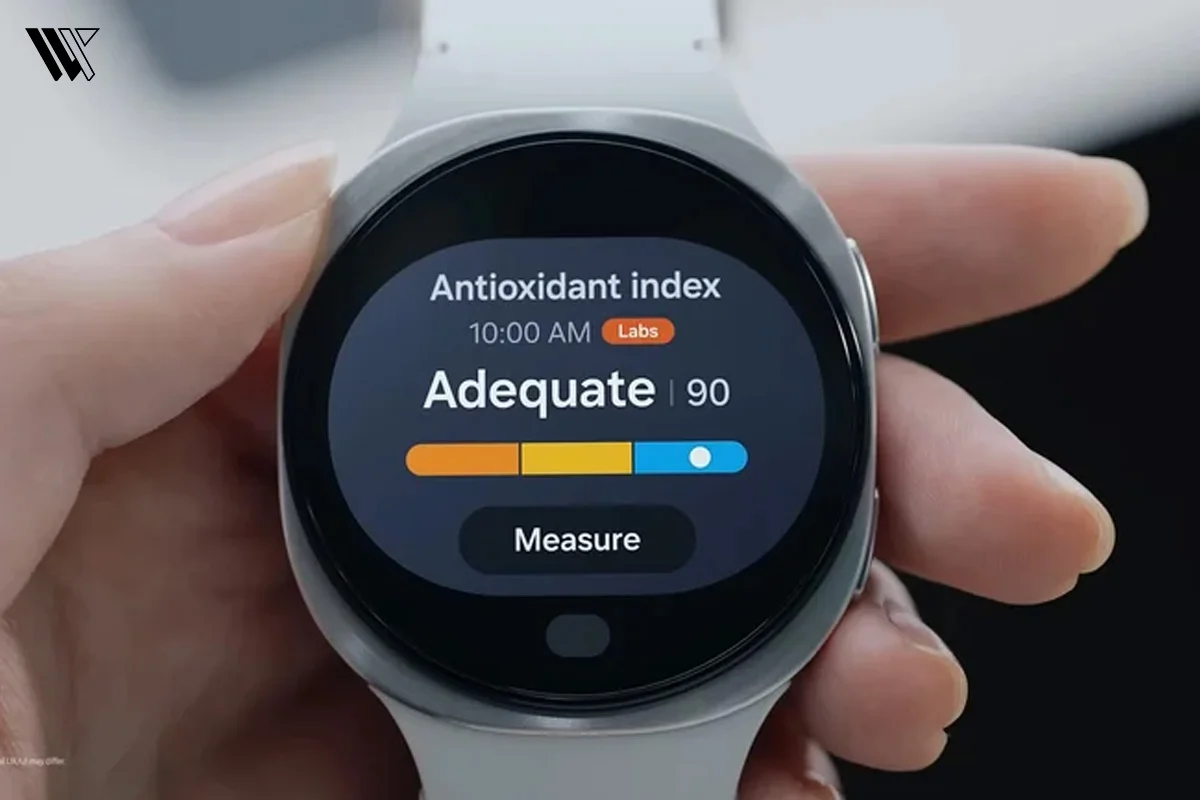
Introduced with the Galaxy Watch 8 series, this feature takes wearable health tracking in a new direction by estimating carotenoid levels in your skin. But can a smartwatch really tell you something meaningful about your nutritional health or is it simply another health score? To understand that, we first need to look at how the feature works and what it actually measures.
What Is Samsung Galaxy Watch Antioxidant Index?
To answer this question, we must first define what this new technology actually entails. Essentially, the Samsung Antioxidant Index is a newly developed feature designed to estimate the quality of your dietary habits directly from your wrist. By integrating this capability, the company is attempting to shift the focus from mere fitness tracking to holistic health monitoring.
Specifically, this advanced metric is available to users who own the newest generation of their wearables. Regarding which Galaxy Watch supports it, this dietary feature is exclusively integrated into the Galaxy Watch 8 series, utilizing its heavily upgraded sensor array.
Decode the Decor
The Smart Jewelry Revolution — a practical guide to wearable tech.
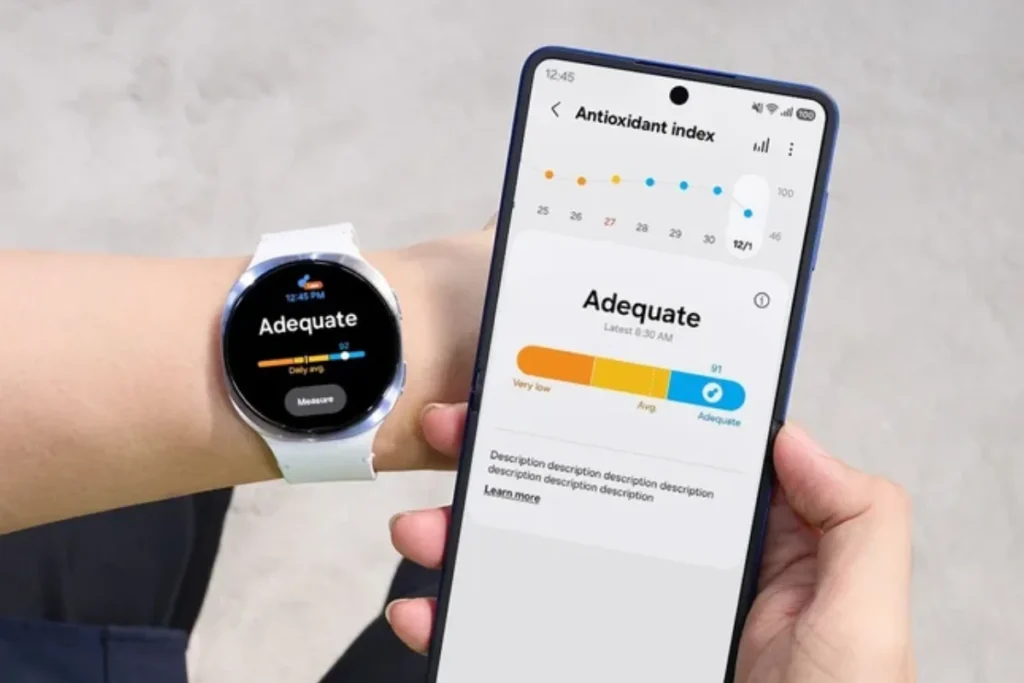
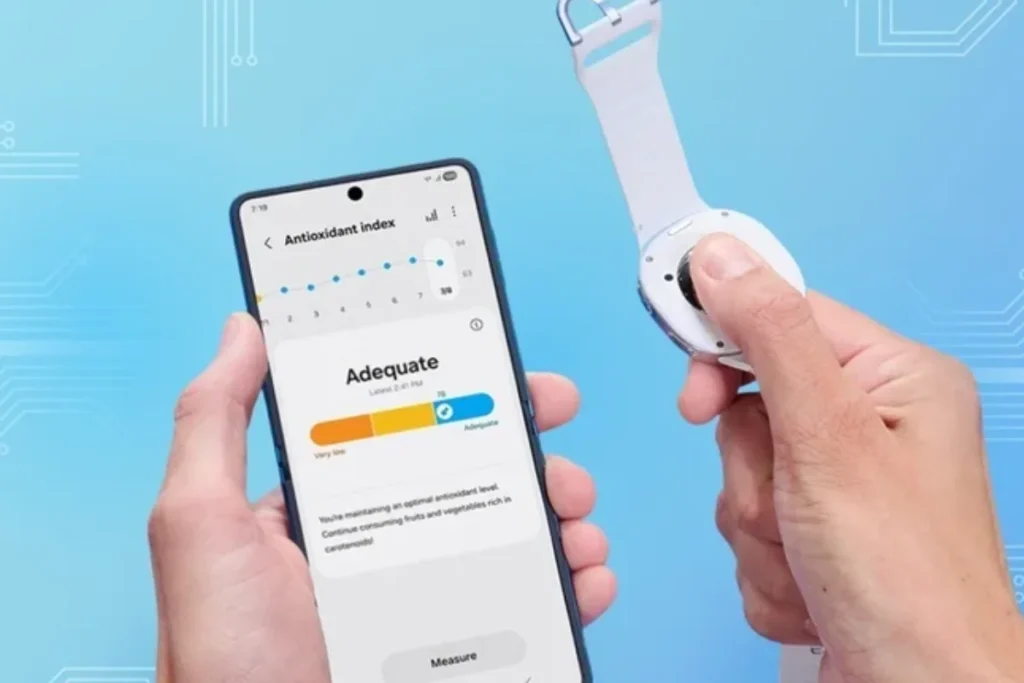
Furthermore, accessing this feature is incredibly straightforward for the everyday user. Users simply need to navigate to the designated health application on their watch and press a thumb against the back of the device for about 5 seconds. Following this brief interaction, the watch calculates and displays a numerical score on the screen.
The primary reason Samsung introduced this feature is to help users visualize the often-invisible benefits of eating healthy foods. However, an important clarification must be made right away to prevent any misunderstandings about its capabilities. The Samsung Antioxidant Index does not measure “all antioxidants” floating around in your bloodstream. Instead, it specifically and uniquely estimates your skin carotenoid levels, which act as a reliable indicator of a nutrient-rich diet.
How Does Samsung Antioxidant Index Work?
© Samsung
You can better understand the underlying principles of this function by examining the relationship between biological processes and hardware engineering. In order to accomplish this innovation, the engineers involved needed to think far beyond the usual realm of medical technology. The Samsung Galaxy Watch Antioxidant Index makes heavy use of advanced light technology rather than fluid samples.
Sensor Technology
Right at the core of this system is the BioActive Sensor, which is an advanced version of this technology. This specific sensor makes use of multi-wavelength LED sensors to do a scientific technique called absorption spectroscopy. What this implies in a practical sense is that this sensor releases a certain spectrum of light into your skin. In simple terms, the sensor sends yellow, blue, purple and green LED light into your finger skin. This is followed by the reflection of this light by the sensor.
The end result of this whole lighting process is the detection of carotenoids. Simply put, the watch sends light inside the skin and determines how certain wavelengths of light are absorbed or reflected. Due to the fact that carotenoids are organic compounds that absorb blue light very efficiently, the sensor can easily determine their concentration according to how much of this blue light reflects on the watch.
Moreover, in order to make sure that the sensor operates correctly, one has to put some pressure on the area during scanning. The process causes the temporary cessation of blood flow and thus considerably reduces the impact of the hemoglobin found in the blood. Along with that, the finger is used as the measurement area in order to minimize the interference of melanin.
What Does Antioxidant Index Actually Measure?
© Samsung
This particular point is possibly the most important part to understand when asking about Antioxidant Index. The name may suggest a total medical examination, but the truth is quite different. Thus, it is essential to understand what exactly the watch measures when providing you with the score.
First and foremost, it is important to know that it measures carotenoids in the skin. Carotenoids are pigments that occur naturally and provide many fruits and vegetables with their colorful yellow, orange and green appearance. By consuming food items such as carrots, sweet potatoes and spinach, you enable carotenoids to be absorbed into your body and stored in your skin over time. This means that when measured, these carotenoids will provide a very accurate depiction of your fruit and vegetable consumption.
On the other hand, it is just as important to consider what the Samsung Antioxidant Index does NOT measure directly. Firstly, this index does not measure your total antioxidant capacity, since there are numerous other substances that you have in your body that are beneficial to your well-being apart from carotenoids. Moreover, this tool will not measure your individual vitamin intake, such as Vitamin C and Vitamin D in particular. This index will not predict any specific risk of developing a certain disease either.
Finally, this index must never be used as a general indicator of your overall health or even be considered a formal medical diagnosis. The Samsung Antioxidant Index is rather a proxy metric. The fact is that skin carotenoid levels are highly associated with the intake of fruits and vegetables, tracking them offers a reliable glimpse into the overall quality of your daily nutrition.
How Accurate Is Samsung Antioxidant Index?
Whenever a brand-new health metric comes into the market, it is normal for people to be skeptical about it. It is thus vital that we analyze the accuracy of the Samsung Antioxidant Index. In order for us to do so, we need to look into the validation procedure as well as the challenges that come with wearing technology on a daily basis.
What Samsung Says
According to the technical teams behind the Galaxy Watch 8 Antioxidant Index, immense scientific rigor went into its creation. During the initial sensor development phases, engineers faced the daunting task of miniaturizing laboratory-grade equipment to fit onto a wrist. To ensure the highest level of Samsung Antioxidant Index accuracy, the development team cross-checked their tiny sensors against Raman spectroscopy.
This laser-based technique is widely utilized in research laboratories to measure molecular vibrations and detect skin carotenoids with extreme precision. Furthermore, to validate these findings on actual humans, the company engaged in extensive clinical collaborations. They partnered with university researchers and medical centers to compare the smartwatch readings with actual blood tests.
During these trials, clinical participants carefully photographed and logged every meal for a week. By comparing these detailed food logs against the sensor data, researchers scientifically verified the performance of the sensors across hundreds of diverse participants.
What It Means in Real Life
Despite these impressive laboratory achievements, the daily application of this metric requires a specific mindset. In a real-world setting, this feature is intended to be a wellness indicator rather than a diagnostic medical device. Consequently, observing long-term trends matters significantly more than stressing over single readings.
Because it typically takes two to three weeks for dietary carotenoids to accumulate in the skin tissue as your cells naturally replace themselves, checking your score every few hours will not yield meaningful insights. Therefore, measurement consistency matters immensely. For the best results, users are advised to maintain consistent eating habits and measure their levels once or twice a day at the exact same time.
Limitations
Even with its advanced engineering, this technology possesses inherent limitations that users must understand. First of all, physical skin contact during the scan is absolutely crucial. If the finger is placed incorrectly or the pressure is uneven, the light readings will be distorted, directly impacting the final score.
Secondly, there are massive individual differences in human biology. Everyone metabolizes and stores nutrients at different rates based on their unique genetics. Additionally, intense physical exertion or high stress can cause a sudden spike in free radicals, which heavily deplete carotenoids and cause a temporary drop in your readings.
Finally, there is the undeniable issue of diet complexity. Because the sensor only detects one specific type of compound, it completely misses other vital nutritional elements like lean proteins, healthy fats and hydration levels.
Can Samsung Watch Really Understand Your Diet?
A wearable device, no matter how advanced, simply cannot know the exact foods consumed during your lunch break. Furthermore, the watch has no possible way of calculating the precise portion sizes on your plate. It also cannot distinguish the specific cooking methods you employed, which can drastically alter the nutritional value of your meal. Ultimately, a single optical sensor cannot evaluate your overall diet quality with perfect, flawless precision.
However, while it is not a magical dietician, it can potentially provide immense value in alternative ways. Primarily, it excels at providing continuous behavioral feedback. If a user notices their score steadily dropping over a month, it serves as a gentle, undeniable reminder to eat more greens. This continuous feedback loop naturally generates motivation to improve daily habits. By increasing a user’s awareness of their own nutritional patterns, the Samsung Antioxidant Index effectively functions as a supportive accountability tool right on the wrist.
Why Samsung Is Investing in Nutrition and Metabolic Health
To fully appreciate the significance of this feature, we have to look at the broader trajectory of the technology industry. Currently, wearable companies are aggressively moving toward holistic health ecosystems. The days of simply counting steps are long gone. Instead, the focus has shifted toward advanced glucose tracking, comprehensive metabolic health analysis, continuous stress monitoring and detailed recovery scores. In this rapidly evolving landscape, deeply personalized nutrition insights are considered the next logical frontier.
By developing this index, the company is strategically positioning itself at the forefront of this movement. This approach becomes especially clear when comparing Samsung health features to their main competitors. For instance, the Apple health ecosystem has heavily prioritized cardiovascular safety and emergency detection features. Meanwhile, the Oura ring has built its reputation almost entirely around a specialized readiness and recovery approach based on sleep tracking.
Similarly, Fitbit wellness features have traditionally focused on daily stress management and basic activity tracking. By actively pioneering smartwatch nutrition tracking through the Galaxy Watch 8 Antioxidant Index, Samsung is attempting to carve out a highly unique identity. They are aiming to be the premier brand that connects the critical dots between dietary choices and physical well-being.
The Problem With Adding More Health Scores
While the technology at the heart of this innovation undoubtedly holds some appeal, it also brings to light an increasingly prevalent issue within the realm of wearables technology. Today’s wearables offer people a deluge of data on a daily basis. Each and every morning, users are greeted with scores for their sleep, readiness, stress and recovery.
In light of the appearance of one more metric, it is only fair to ask whether the user needs even more metrics to be concerned about. The main problem for all tech producers at the moment is how to convert all this information flow into something that could be used in action. If the watch just tells the user that his score is low, without giving any hints on what to do next, it can provoke unnecessary stress.
In order to stay helpful, Samsung Health features should not only provide the user with data, but also give him the ability to solve the problem. It is worth mentioning that Samsung is trying to address this issue by introducing artificial intelligence into its ecosystem. Thus, the watch will be able to tell the user about nearby restaurants that can offer antioxidant meals.
Wrap Up
The Samsung Antioxidant Index shows how smartwatches are slowly moving beyond counting steps and tracking sleep. While it cannot tell you everything about your diet, it can give you a useful idea of your fruit and vegetable intake. I think the interesting part is that your smartwatch can now offer a small clue about your eating habits, although understanding your overall health still takes more than a single score.
FAQs
Decode the Decor
The Smart Jewelry Revolution
A practical guide to wearable tech's future — delivered straight to your inbox.
Author
