

You know that time when you’ve got grocery bags in both hands and your phone is buzzing in your pocket and you have to pause just to see if it’s something important. Or you’re trying to go somewhere new and the entire journey you have your phone in your hand to find directions.
That is the scenario which Meta aimed to solve with Meta Connect 2026. In fact, there were three such solutions from the brand. A keychain which talks back. Ray-Bans in two variants– one with and another without a camera. Then there are VR glasses that weigh as much as a deck of cards. All of this uses the brand’s new AI agent, Muse, to allow people to reach their AI without reaching for their phones.
Some of these devices are available right now, while some aren’t arriving till spring next year. So, here’s my breakdown of Meta Connect 2026 announcements.
Meta’s New Wearables at a Glance
| Device | US price | Battery | Availability |
|---|---|---|---|
| Ray-Ban Meta (Gen 3) | From $449 | Up to 9 hours | On sale now |
| Ray-Ban Meta Audio | From $349 | Up to 12 hours, plus 48 from the case | Preorder, ships Oct 13 |
| Meta Ray-Ban Display | $799 with Neural Band | Up to 6 hours, plus 24 from the case | On sale now, online ordering open |
| Meta Quest 3S | From $349.99 | Up to 2.5 hours | On sale now |
| Muse Charm | Not announced | Not announced | Planned for December |
| Meta VR Glasses | $1,299.99 | Up to 3 hours (puck) | Spring 2027 |
Meta’s AI Wearable Strategy, Explained
Meta doesn’t make smartphones, but Apple and Google do. Hence, in order to get their AI into people’s lives, Meta needs to implement it somewhere else and it showed where during the Meta Connect 2026: on people’s faces, phones and key chains.
Decode the Decor
The Smart Jewelry Revolution — a practical guide to wearable tech.
In all these gadgets there is the AI named Muse which was launched by Meta on September 8 and which can be used in the USA through iOS, Android and muse.ai. The AI is a personal agent that performs different tasks for users such as sending emails or booking travels and always asks for confirmation before sending something or making any purchases. The AI is free to use for most of the tasks and the price for subscription plans is reported to be $20 and $100 per month. During Connect, Meta announced that Muse would soon come to their AI glasses and could be called by calling out its name. Moreover, it is embedded into the OS of the new VR glasses.
Hence, each of the devices represents another means of communication with the same AI assistant. There are also going to be more than 100 glasses styles by the end of 2026.
Muse Charm
© Meta
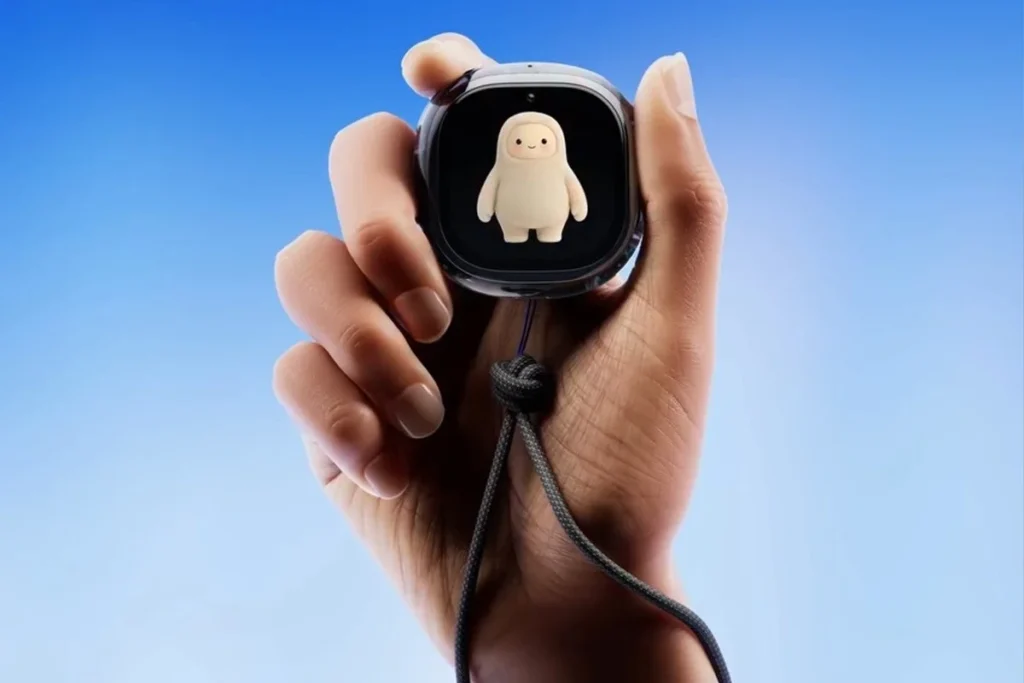
Let’s begin with the odd one, which is definitely the one everyone is talking about. Muse Charm is a small device which has a screen featuring an animated version of the Muse avatar and a fingerprint scanner you press to activate conversation. Zuckerberg presented it as the final surprise of his keynote and of course, the internet went on calling it Tamagotchi.
Price: not announced. According to a report from Bloomberg, it is expected to cost roughly the same as a smartwatch.
Battery life: not announced. It is said that the device has a screen measuring roughly 2 inches in size, has its own 5G and is somewhere around the size of AirPods cases, but we have no confirmation from Meta.
App experience: you interact with the Muse assistant in the same way you do in its app or in WhatsApp. In order to be useful, Muse needs access to your email, calendars and payments. Meta claims that it will ask for permission before performing any sensitive actions and keep track of everything it does.
If you’re wondering what the future holds for AI pendants and keychains compared to glasses, check out AI Pendants vs Smart Glasses.
Ray-Ban Meta Gen 3
© Ray-Ban
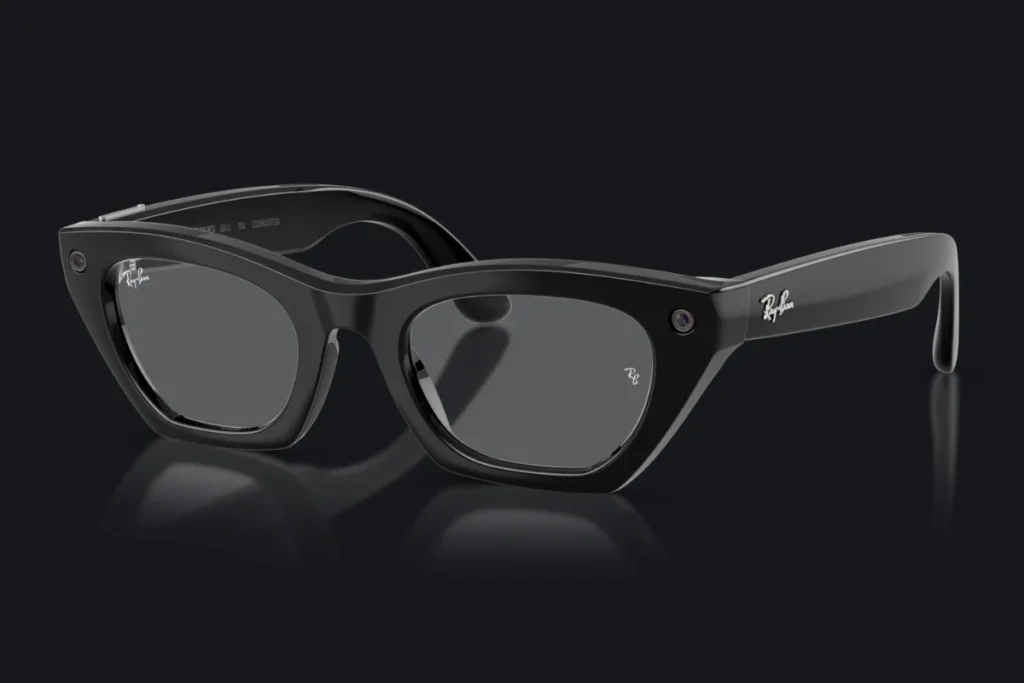
This is the version you can purchase now. Ray-Ban Meta Gen 3 costs $449, which is $70 higher than Gen 2. Gen 2 is available for $379 if you prefer to save some money. Three different models are available: Wayfarer, Aviator and a new model named Zena. These come in 27 combinations of lenses and colors. An Aviator with Transitions lenses costs $579 in a limited edition.
The battery has a maximum lifespan of 9 hours, which is 1 hour more than the previous model. Take this information with a grain of salt because, in one of the reviews, the reviewer only managed to get more than 5 hours of battery life from Gen 2 while listening to music nonstop, so a day of filming videos is shorter. The camera remains 12MP with 3K videos. There is also a new 6-microphone setup which cuts more than 90% of all the background noises. Besides, there is a programmable action button which allows launching Meta AI and capture modes.
Meta App Experience: Everything happens via the Meta AI app on the smartphone. It is via this that you can set up the glasses, configure the pictures, videos and adjust settings. Muse will soon be available on the glasses within the next few months. Additionally, Meta is going to offer an option of hearing enhancement, an FDA-certified feature, on eligible glasses in the US in the coming months for $149.99 or via Meta One subscription.
With the current information available, my recommendation is that if you already have the Gen 2 glasses, it is not worth upgrading. The camera and core functionalities remain identical. If it is your first purchase, the additional $70 is worth it, giving you more battery and microphone performance. Go for the Gen 3 glasses.
Ray-Ban Meta Audio
© Meta
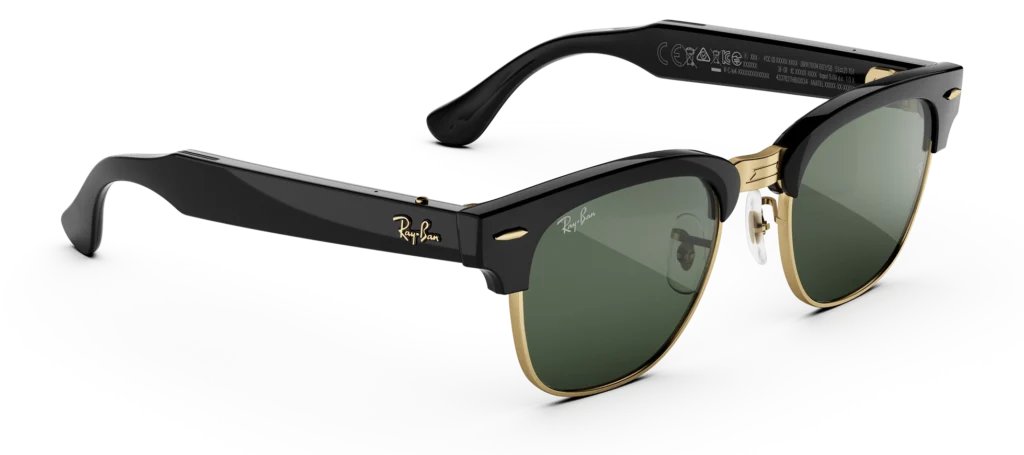
Meta took the camera out. Ray-Ban Meta Audio are pretty much just regular open-ear earbuds placed inside the Ray-Ban frame in Clubmaster and Burbank designs for 23 different color and lens combinations and they all fit prescriptions. They cost $349, are available to pre-order starting today and ship on October 13, 2026.
They weigh 43 grams and Meta claims that they are good for 12 hours, which adds up to 48 extra hours from the charging case. You can make calls, listen to music and podcasts and interact with Meta AI. Nothing has been revealed by Meta about their functionality from the app perspective, but I expect that every set of Ray-Ban Meta Audio works within the Meta AI app.
The privacy aspect here is everything there is to say. Since there’s no camera in them, the person you’re speaking to knows exactly what she/he’s looking at. The problem here is that they still have microphones in them and still transmit your questions to Meta AI cloud-based service.
Meta Ray-Ban Display

© Meta
If you are looking for the most advanced version of Meta glasses you could get in the US right now, then this is the one. It’s priced at $799 and it comes with Neural Band which is a wristband that captures small hand movements for gesture-based control of glasses. It’s got the display only in the right lens. They weigh 69 grams and, according to Meta, should last up to 6 hours of mixed usage, with an additional 24 hours from the case. The Neural Band can operate up to 18 hours.
Meta Connect 2026 launched quite a few innovations. Cycling directions and real-time departures of public transport will become available in the US and Canada later this month. Directions in walking mode will point to landmarks, so you won’t hear turn left at Third Street but rather at the yellow house (I believe this was the most human thing I’ve read this week). Video holograms will be made available in early access via WhatsApp this fall and mirrored phone notifications are coming soon. Also, online ordering for the US has been initiated at Connect.
App Experience: setup and configuration are done via the Meta AI app. The new “Explore” experiences for glasses will also be found here.
Meta VR Glasses
© Meta
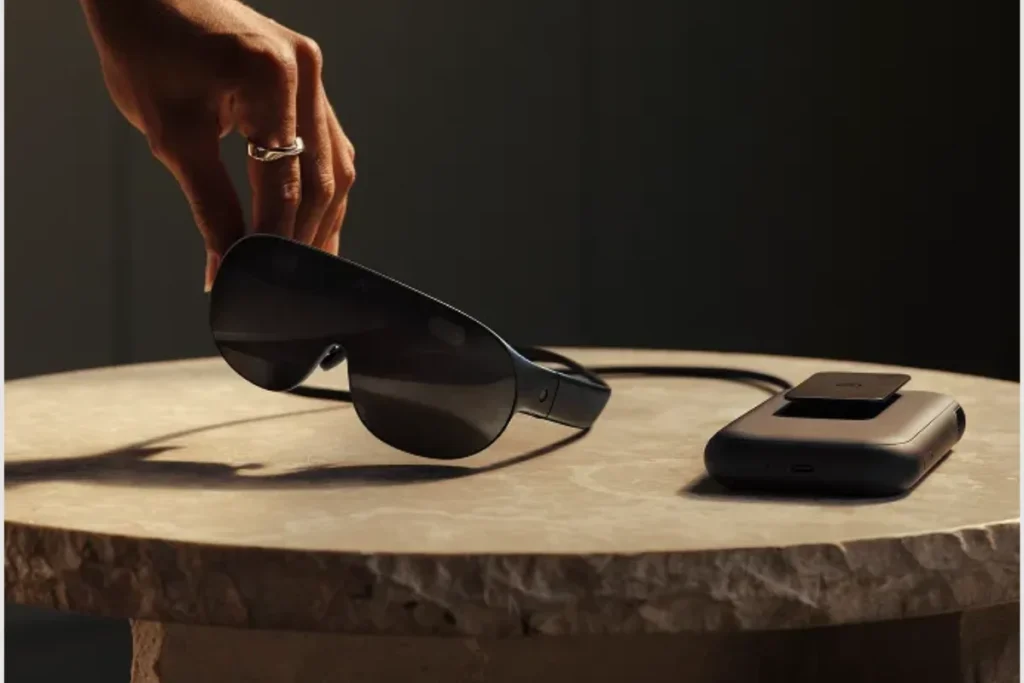
Not released yet, the Meta VR Glasses cost $1,299.99 and hit stores in Spring 2027. There aren’t any pre-orders available yet either.
They weigh around 100 grams and according to Meta, that is five times less than Quest 3. It’s possible since it is a two-part device. While the glasses contain the sensors and screen, the puck connected through an optical tether contains the processing, power and storage units. You simply clip the puck to your pocket or bag.
The puck’s battery provides up to 3 hours of continuous HD media, with fast 45W charging. The display is a 5K micro-OLED screen and Meta claims that it is the first IMAX Enhanced certified VR gadget.
App experience: Meta hasn’t announced a companion app yet. What is known so far is that your Meta AI assistant is part of the operating system, so you communicate with it using voice commands, eye movements or hand gestures without controllers. It’s also possible to use any surface as a touchpad and keyboard.
There are 75+ games that use only hand gestures and that work when the gadget is launched. Also, it is capable of running Quest games with controller support.
If You Want VR Today: Meta Quest 3S and Quest 3
There are Quest models currently available on shelves, so this is what you should go for if you don’t want to wait. The prices start at $349.99 for Quest 3S and $599.99 for Quest 3 (512GB). The 3S has a maximum battery time of 2.5 hours while the Quest 3 battery time is up to 2.2 hours. Both come with the Meta Horizon app installed on your phone to set up the devices.
The Quest 3 comes with a better 4K+ screen, while the 3S is an affordable way to get into VR. They both have the full-color passthrough feature and access to the extensive Meta games’ collection.
However, the main disadvantage is the battery life and weight of the device. Both of them have around 2.2 to 2.5 hours of battery life, which makes them unsuitable for an entire day of wear and rather heavy in comparison to new glasses. The Quest 3 is also priced higher at $599.99, thus making the 3S the cheaper option.
Muse Charm vs Ray-Ban Meta vs VR Glasses
The Meta AI, Muse, runs across all three products.
| Device | Its job | Where the AI shows up |
|---|---|---|
| Muse Charm | Quick chats with your agent, no phone | Voice and a small avatar screen |
| Ray-Ban Meta | Everyday help while you go about your day | Voice, camera and open-ear audio (Display adds a screen) |
| Meta VR Glasses | Private cinema, workspace and games | Built into the OS, controlled by voice, eyes and hands |
Why Meta Is Betting on Multiple Wearable Categories
There doesn’t seem to be one killer product and Meta clearly knows this. Glasses address awareness and calls. The Charm is intended for people who would never wear glasses. VR glasses are for settling in with a movie or a working day.
The prices prove the same. Glasses start at $249 for the new Meta Adventurer (available for preorder, release October 23) and go up to $799 for the Display. The Kylie Jenner Ivory and LISA collection, starting from $399, show that Meta intends to make these a fashion statement first and technology second. With 100+ styles by the year’s end, you can tell they mean to have something for everyone.
The Biggest Challenge: Privacy
This is where the problem goes beyond the spec sheet. The camera glasses have been having a pretty bad year for Meta. The company has disabled the cameras on many pairs of camera glasses because of people tampering with the recording LED. In a lawsuit filed in March, contractors were allegedly watching private videos captured by the glasses. Moreover, per LA Times, over 70 lawsuits have been filed about private videos captured of them and their family members.
For this problem, at the Connect event, the solution offered by Meta was Private Processing, wherein the heavy processing of AI takes place in private VMs that Meta cannot access, along with a choice to opt-out from the training of its models using the visual data from the glasses. Great moves. However, as pointed out by Digital Trends, the Private Processing feature is not live in the glasses.
There’s also Muse itself. Muse requires access to your email, calendar, payments and health apps and that gives Meta far more than just your camera feed. With a $5 billion FTC fine against them for privacy issues, it’s no wonder people are asking questions.
Secondly, is it useful enough to actually wear or carry every day? I feel like searching with Google is easier than asking your AI assistant. Although Muse’s functionality in reacting to what you’re viewing could be game-changing, it’s not yet available in the glasses.
Wrap Up
Meta’s glasses continue to use the smartphone, the Meta AI app and the Charm, which requires signing up for Muse and uses VR glasses that pass some of their computations to the puck in one’s pocket. Essentially, what Meta wants to test is our desire to talk to the AI agents more often than tap the screens. If you find yourself looking at your smartphone all the time because of having your hands occupied with something else, the glasses might be a good choice. Otherwise, there is not much point in rushing into it.
Right now, the Gen 3 is for the cameras only, Audio does not have cameras and Display adds the screen. What is important now is what will come next, particularly with the Charm being announced in December and VR glasses coming in spring of 2027. While October 13, the date when Audio will ship, is an important date to track, it is the price of the Charm that matters the most.
FAQs
Decode the Decor
The Smart Jewelry Revolution
A practical guide to wearable tech's future — delivered straight to your inbox.
Author
