

An outdoor smartwatch is easy to appreciate when everything goes as planned. But when you are miles into a hike, trying to find your way through an unfamiliar trail or pushing through an adventure that takes longer than expected, you start to realise what really matters. Reliable navigation, dependable performance and software that makes your journey easier can matter far more than a long list of features.
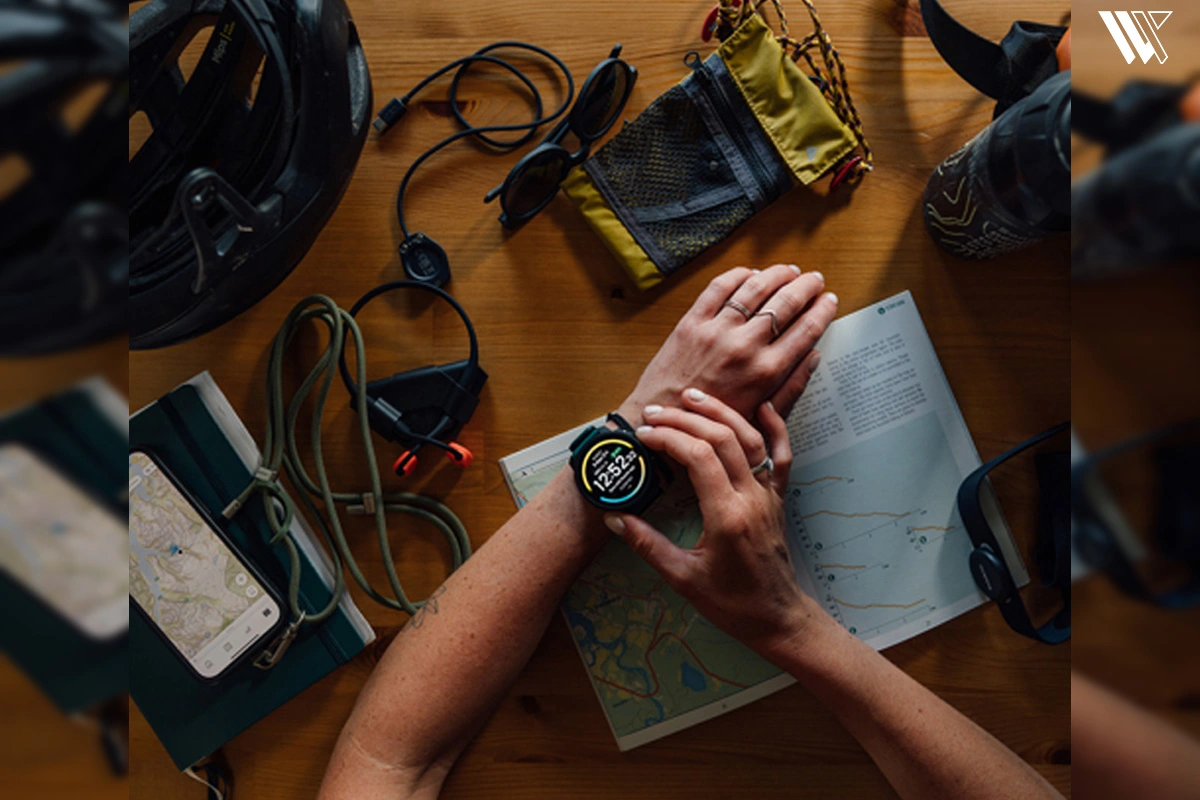
That is what makes the Suunto Vertical 2 an interesting contender in the outdoor smartwatch market. Suunto is challenging Garmin in a category where reliability and endurance can make all the difference. However, matching a competitor on paper does not necessarily mean delivering the same overall experience. The quality of its navigation, the usefulness of its training insights and the way its software handles everyday tasks all play a role in determining whether this watch is worth your money.
So, can the Suunto Vertical 2 offer a genuinely worthwhile alternative to Garmin or do its limitations make the decision more complicated? Let’s take a closer look at what it does well, where Suunto could have done better and whether this outdoor watch deserves your attention.
Specifications
| Specifications | Suunto Vertical 2 |
|---|---|
| Display Size | 1.5 inches |
| Display Type | LTPO AMOLED (Active Matrix Organic Light-Emitting Diode) |
| Display Brightness | Up to 2,000 nits |
| Refresh Rate | Variable 1–120 Hz (Saves battery when the screen is static) |
| Lens Material | Sapphire Crystal (Highly scratch-resistant) |
| Case Size | 49mm |
| Weight | 87g (Stainless Steel) / 74g (Titanium) |
| Bezel Material | Stainless Steel or Titanium |
| Processor | Ambiq Apollo510 SoC |
| Advanced Training Metrics | TrainingPeaks algorithms, HRV, blood oxygen, training load |
| Sports Modes | 115+ supported activities |
| Flashlight | Built-in LED |
| GPS Technology | Dual-band (L1 + L5) multi-GNSS (Sony chipset) |
| Mapping | Free offline topographic maps (Wi-Fi download required) |
| Battery Life | 20 days in smartwatch mode |
| Storage | 32GB internal memory |
| Price | $599 (Stainless Steel) / $699 (Titanium) |
Suunto Vertical 2: A Serious Garmin Alternative?
The outdoor smartwatch segment has been somewhat monopolized for a very long time. The go-to brands in terms of outdoor activities such as hiking, ultra running and mountaineering have always been Garmin’s Fenix and Epix ranges of products. This is until Suunto launched their new product, the Vertical 2, which proves otherwise.
Decode the Decor
The Smart Jewelry Revolution — a practical guide to wearable tech.
Now let’s move on to hardware and value. The price of the Suunto Vertical 2 starts from $599 for the stainless steel version and reaches up to $699 for the titanium one. Compared to a Garmin Fenix device, which can cost up to $1,000 depending on the version, it is a really bold move by Suunto.
© Suunto
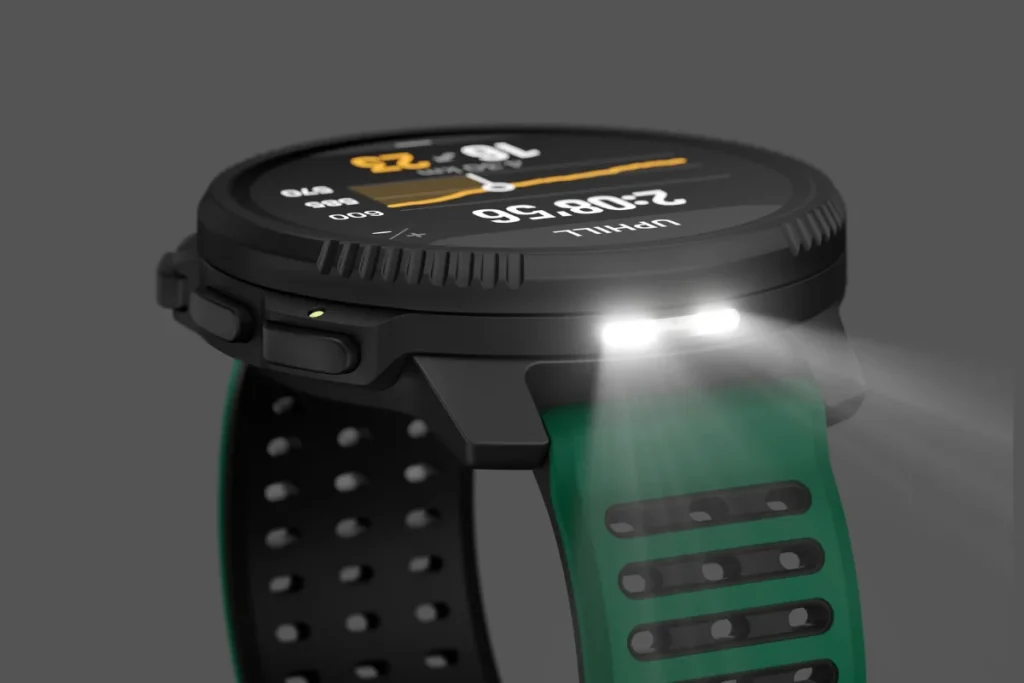
But you might now be thinking: what deal are you getting in return for your money? The Suunto Vertical 2 has a sharp 1.5-inch AMOLED screen that can get up to 2,000 nits of brightness. It has the topographical map offline and 32 GB of memory, a dual-band GPS for more accurate GPS tracking in tough conditions and even an integrated LED flashlight. But the most amazing thing is the claimed 65 hours of battery life when using dual-band GPS for maximum accuracy.
These features are not just nice to haves they are the core pillars of a serious outdoor watch. The flashlight alone is something that Garmin users have raved about for years and seeing Suunto adopt it, complete with two white LEDs and one red LED, is a massive win for consumers. Personally, I think this combination of features at this price point forces Garmin to look over its shoulder. The Suunto Vertical 2 is not just a budget smartwatch because it is a highly specialized tool that prioritizes navigation and endurance. But as we will explore later, reaching this price point means that Suunto had to make some compromises, particularly in the software and deep training analytics where Garmin still reigns supreme.
Design and Display: Built for Long Days Outdoors
© Suunto
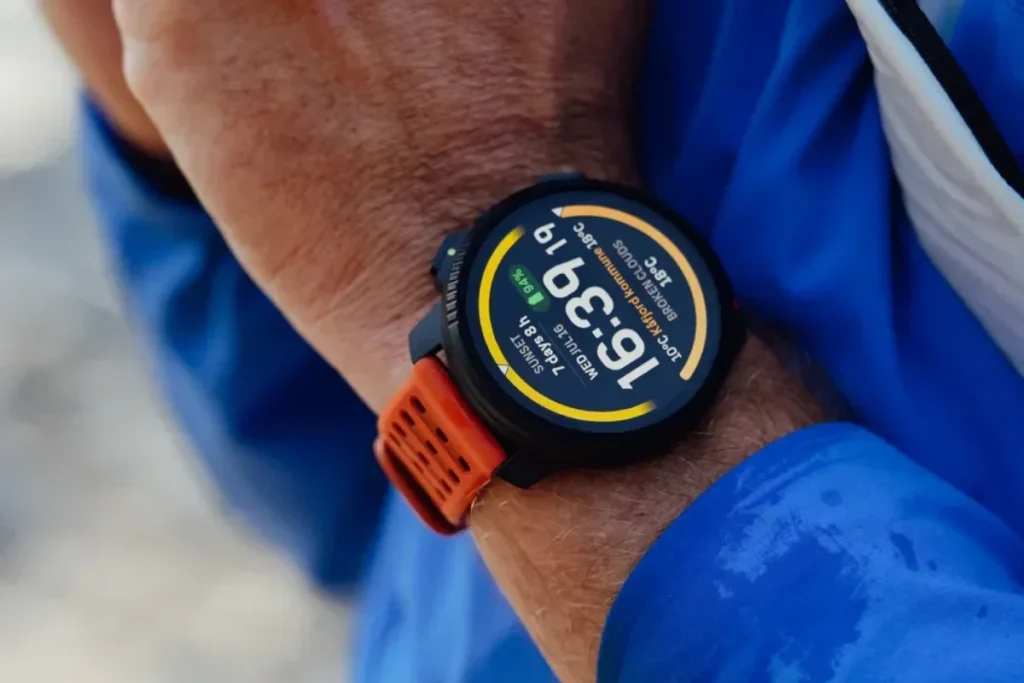
When you take a look at an adventure watch, you would like it to be tough as nails and this is precisely what the Suunto Vertical 2 delivers in abundance. This watch sports a hefty 49mm case constructed out of glass fiber reinforced polyamide, protected by a sapphire crystal glass lens. As for your options with regards to the bezel, you can opt for either stainless steel, adding up to 87 grams of weight, or titanium, reducing it to a mere 74 grams.
This watch measures 49mm in width, which makes it undeniably large. You will certainly notice its presence on your wrist if you have small hands. However, there is a reason why it is so large: it is because of the enormous battery and the screen that is big enough to allow for easy reading of the map. In my testing i find the provided 22mm silicone strap is much softer than any other Suunto strap.
© Suunto
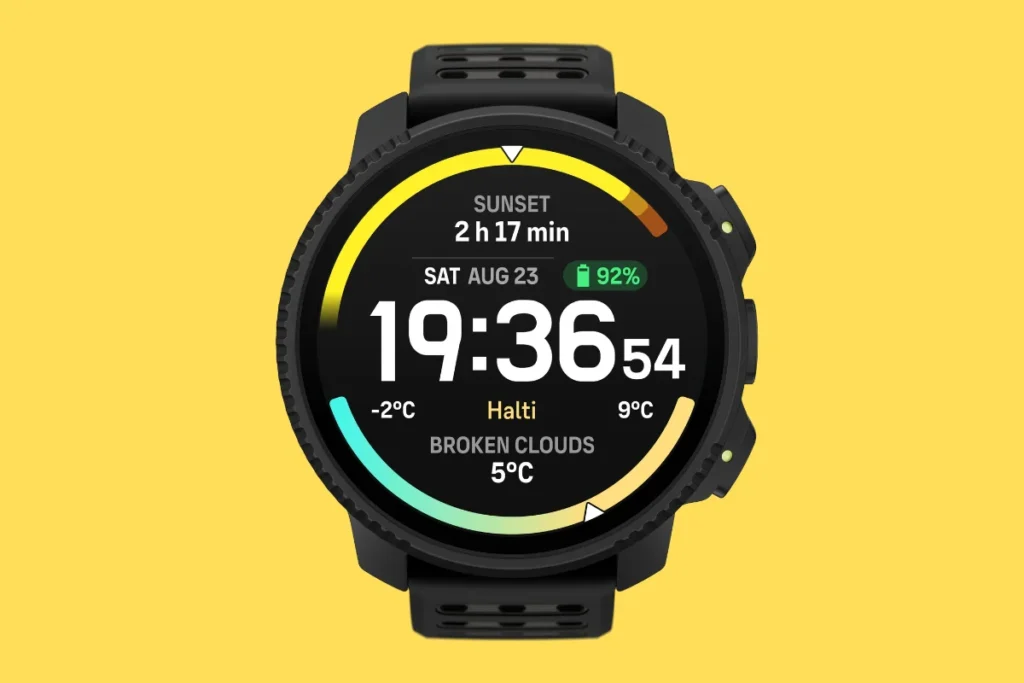
But the important part of this product is its screen. Transitioning from Memory in Pixel (MIP) screens to the AMOLED display is a major philosophy change for Suunto. The 1.5-inch LTPO AMOLED screen has 466 x 466 pixels resolution and an adaptive refresh rate between 1 Hz and 120 Hz. Achieving the brightness of 2,000 nits, the screen is crystal clear to read the most detailed topographic maps, no matter whether it is a noon sun or forest canopy overhead.
The navigation on the watch is handled through a combination of a responsive touchscreen and 3 physical buttons on the side. Personally, I have never believed that an outdoor watch should not feature any buttons, as touchscreens will be rendered during times where one might be wearing heavy winter gloves and also during heavy rainfall. Fortunately, Suunto has understood this very well.
We should also not forget about the integrated LED flashlight. It may look like an additional thing to have on the watch until you realize its importance one day. It can be helpful when you are trying to find your way in the dark at the beginning of a trail or in the middle of the night in your tent or during an aid station of an ultramarathon.
GPS Accuracy and Offline Maps: Suunto’s Biggest Strength
© Suunto
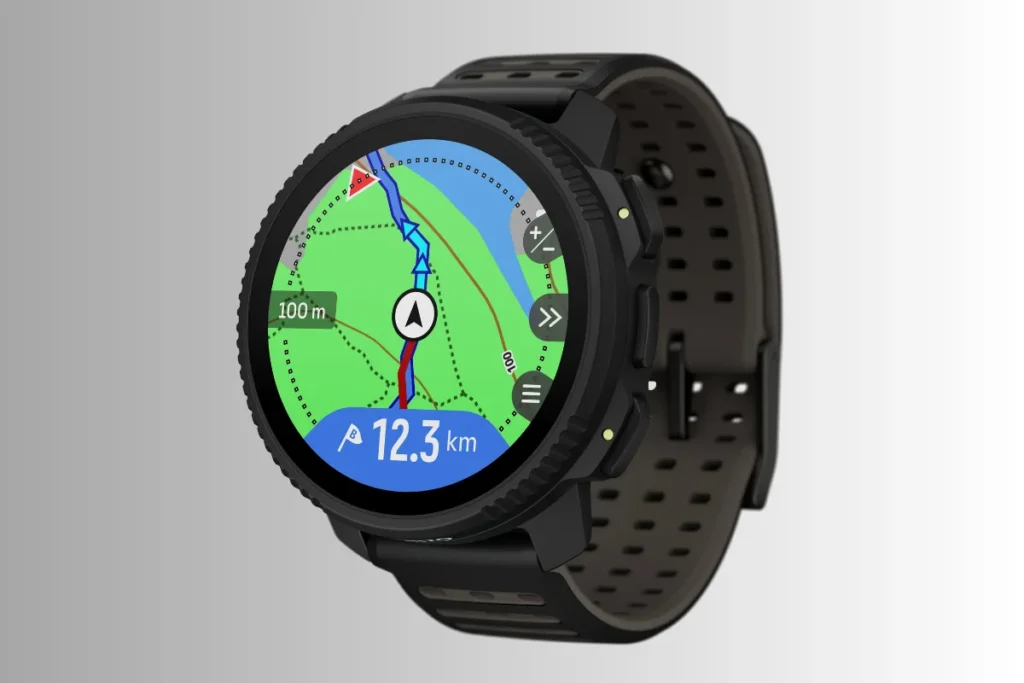
If there is one area where the Suunto Vertical 2 truly shines, it is in its navigation and tracking capabilities. For those heading out for the trekking, a watch is only as good as its map and its ability to lock on GPS.
The Suunto Vertical 2 watch utilizes a dual-frequency Sony GNSS chipset, supporting multiple satellite systems including GPS, GLONASS, GALILEO, QZSS and BEIDOU. It can connect to up to 32 satellites simultaneously. But what does that mean in practical terms? Dual band GPS significantly reduces errors caused by signal reflection in difficult environments, such as deep canyons or dense forests.
However, accurate GPS is only half the equation you also need to know where you are going. The Suunto Vertical 2 comes with 32GB of onboard storage for free global topographic maps. You can download these maps via a Wi-Fi connection through the Suunto app and importantly, you can now download them without needing the watch to be connected to a charger. The maps themselves are highly detailed, offering different layers like high-contrast and dark modes, which look fantastic on the AMOLED display.
Also, the route planning ecosystem is robust as the Suunto app allows you to easily plot routes, utilizing global heatmaps across 20 different sports to find popular paths or snapping your route to known trails. Once on the watch, you get features like turn by turn navigation, waypoint guidance and an incredibly useful Climb Guidance feature that shows a color-coded elevation profile of the hills ahead of you.
But here is where my personal point of view comes in and where I think Suunto still has room for improvement. The Suunto Vertical 2 lacks onboard map intelligence for automatic off-route rerouting. If you take a wrong turn, the watch will show that you are off the route on the map, but it won’t automatically calculate a new path to get you back on track natively on the device that rerouting intelligence requires communication with the Suunto phone app. In contrast, premium Garmin watch like Garmin fenix 9 have the maps fully routable on the watch itself. If I am in an area with absolutely no cell service and my phone is dead, I would prefer my watch to possess the intelligence to navigate me to a specific point of interest dynamically. For most users, following a pre-planned breadcrumb trail on a topo map is more than enough, but it is a limitation you should be aware of.
Battery Life: Where Suunto Challenges Garmin
© Suunto
The fear of running out of battery during extended hikes is very real. Traditionally, AMOLED panels have been known for draining batteries like nobody’s business, leaving outdoor enthusiasts to either enjoy their screen or reach the end of the race safely. This is where the Suunto Vertical 2 comes into play.
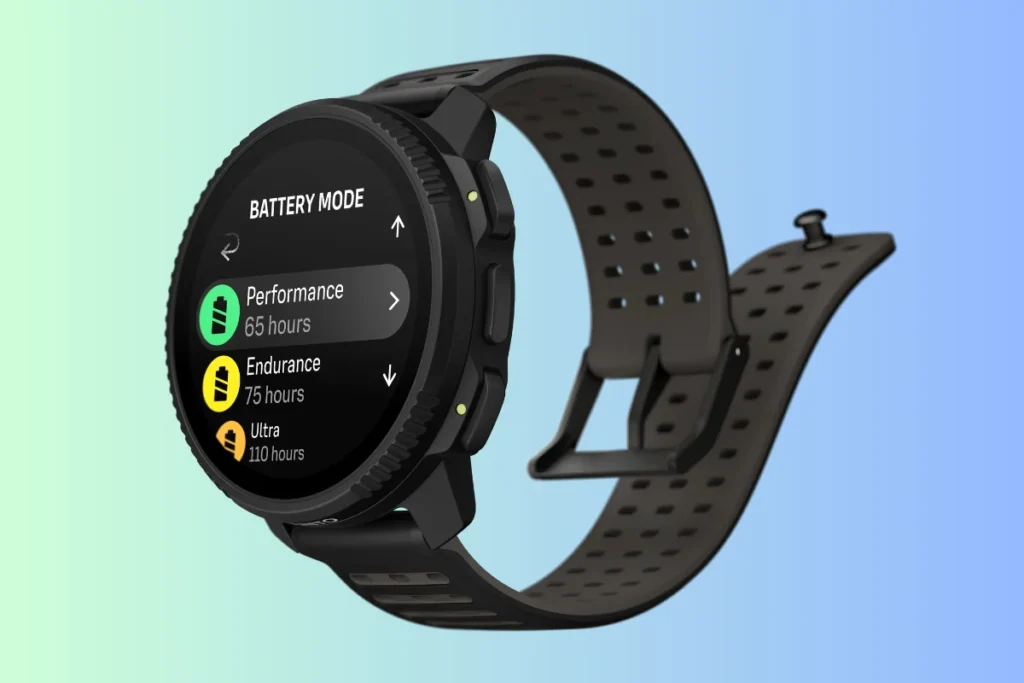
Suunto Vertical 2 is capable of providing up to 65 hours of continuous tracking in the most precise “Performance” mode using the dual-band GPS and heart rate monitoring via an optical sensor. In terms of everyday smartwatch use, it will last for up to 20 days from one full charge.
So let’s stop and take a minute to appreciate all of that. 65 hours of multi band GPS is simply incredible on an AMOLED smartwatch. This means you can complete an ultra-marathon over one hundred miles long, lasting several days at least, with the most precise GPS tracking switched on and still have some battery left. It’s the adaptive refresh rate technology of the LTPO screen that makes it possible without a large battery pack.
If 65 hours somehow isn’t enough, you can dive into the intelligent battery modes. Endurance mode stretches life to 75 hours, Ultra mode to 110 hours and Tour mode (which drops the heart rate monitor and logs GPS points far less frequently) pushes the battery to an absurd 250 hours.
Everyday Health and Recovery Tracking
The Suunto Vertical 2 is designed for use in the mountainous areas, but it is also a device that you should wear all day long to measure your health levels. Suunto has done much work in this health field, however, some differences can be seen in this device.
Sleep and Heart Rate Variability (HRV)
© Suunto
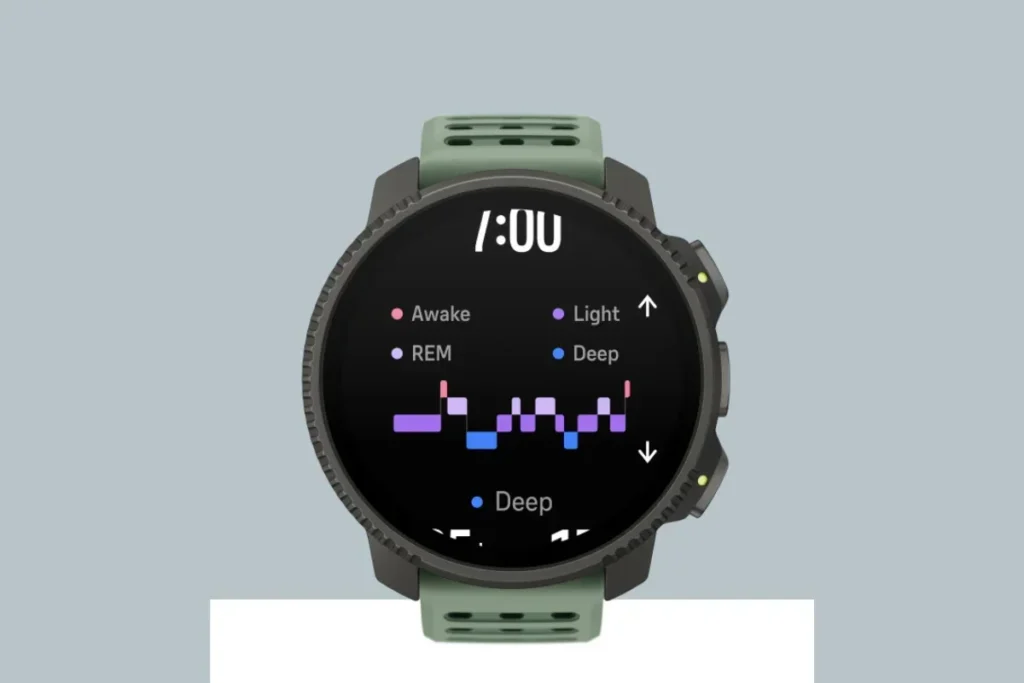
One of the Vertical 2’s best health features is HRV monitoring. HRV is one of the most essential biomarkers that shows the state of your autonomic nervous system high values mean that your body is recovering well, while low numbers mean that there are some accumulated stresses or even overtraining.
The watch will track not only your sleep time, the times when you were awake and different types of sleep (light, deep and REM sleep) but, most importantly, it will measure your HRV and create your own personal baseline. The Suunto app will show you the average HRV during 7 days and compare it with the normal values using colored bars. This feature is extremely helpful in determining if you should have a recovery day or go to the trail.
Stress and Daily Resources
Throughout the day, the watch monitors your physiological stress and calculates your “Daily Resource level”. This feature uses your heart rate data to estimate how much energy you have left in the watch, acting as Suunto’s direct equivalent to Garmin’s “Body Battery.”
While having this metric is helpful for understanding how your workday stress affects your energy levels, I personally find Garmin’s Body Battery algorithm to be slightly more responsive to subtle lifestyle changes. Suunto gives you the necessary raw data, but it doesn’t always translate that data into the highly predictive, conversational coaching insights that Garmin provides.
Blood Oxygen and Altitude Acclimation
For high-altitude adventurers, the Vertical 2 includes a blood oxygen (SpO2) sensor. While many smartwatches offer this feature now, its primary utility on an outdoor watch is monitoring your altitude acclimation. If you are tackling a steep ascent over several days, checking your SpO2 can give you a rough idea of how your body is handling the thinner air. Just keep in mind that leaving the SpO2 tracking on continuously will take a noticeable bite out of that otherwise stellar battery life.
Daily Activity Tracking
As you would expect from a premium smartwatch, the Vertical 2 covers all the foundational activity tracking metrics effortlessly. It logs your daily steps, calculates active versus resting calorie burn and continuously tracks your heart rate to establish your daily minimum resting heart rate.
Ultimately, the Suunto Vertical 2 captures all the essential health metrics you need. The main trade-off is the presentation: Garmin weaves your sleep, HRV and stress into an integrated “Training Readiness” score every morning, telling you exactly what to do. Suunto provides excellent, accurate data, but leaves a bit more of the daily interpretation up to you.
Fitness and Training Features: Is Garmin Still Ahead?
© Suunto
Although the Suunto Vertical 2 watch is designed primarily as an adventure and navigational device, it is also an excellent multi-sport tracking device. Nevertheless, upon closer inspection of the hardware capacities and software ecosystem, it becomes apparent that the approach of the two manufacturers towards your workout data is fundamentally different.
Sport Modes and the SuuntoPlus Ecosystem
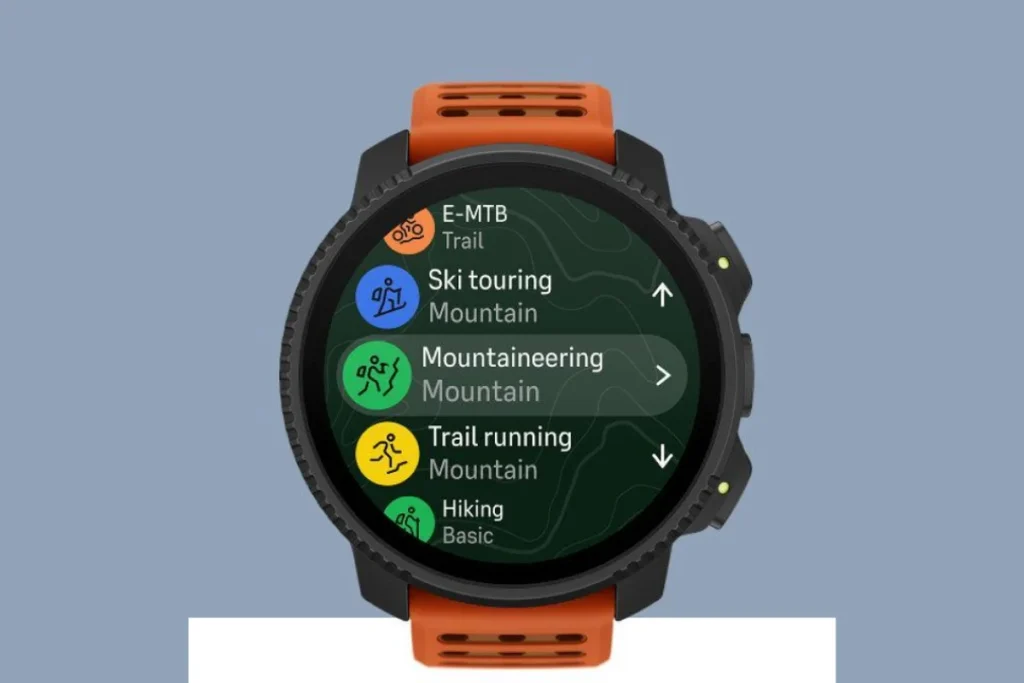
Out of the box, the Vertical 2 comes loaded with more than 115 dedicated sport modes, covering everything from trail running and backcountry skiing to open water swimming and gravel cycling. For most athletes, the native data screens cover all the bases, but Suunto’s real flexibility lies in the SuuntoPlus ecosystem.
The watch allows you to run up to three third party SuuntoPlus “mini-apps” simultaneously during an activity. This means you can add highly specialized tools to your display, such as Strava Relative Effort, CORE body temperature integration or real-time TrainingPeaks metrics like Normalized Power (NP) and Intensity Factor (IF).
Personally, I love this modular approach. It allows data nerds to customize their watch exactly how they want it. However, this is also where Garmin maintains an edge for the average user. Garmin deeply integrates predictive coaching natively into the watch, such as its dynamic “Daily Suggested Workouts” that adapt based on your recent sleep and training load. Suunto relies more heavily on you (or your coach) to build the plan and push it to the watch via SuuntoPlus Guides.
Training Analytics: Suunto vs. Garmin
When your workout is over, the watch needs to make sense of the data. To do this, Suunto has heavily integrated TrainingPeaks algorithms to power its onboard training load and recovery widgets. You get clean, easily readable graphs right on your wrist showing your Chronic Training Load (CTL) and fatigue levels. Suunto has also introduced ZoneSense technology, which uses real-time Heart Rate Variability (HRV) to measure “Heart Stress” during activities, acting as a live pacing coach to show you when you are redlining.
But is Garmin still ahead in this department? Honestly, yes. While the Suunto Vertical 2 gives you all the essential data and the proven TrainingPeaks framework to train effectively, Garmin’s ecosystem provides a much deeper, more cohesive analysis of your physiological state.
Features like Garmin’s “Training Readiness” score and “Body Battery” offer a level of synthesized, predictive coaching that Suunto hasn’t quite matched yet. Furthermore, Suunto’s post-workout “feeling” tracker focuses more on subjective emotional well-being (asking if you felt “excellent” or “poor”) rather than deep physiological interpretation.
If you are a person who wants your watch to act as a virtual coach, analyzing every heartbeat to tell you exactly how hard to push today, Garmin is still the king. But if you just want a rugged tool to log your miles, monitor your long-term fatigue trends and execute a training plan you built yourself, the Suunto Vertical 2 has more than enough firepower.
Suunto Vertical 2 vs Garmin Fenix: Which Should You Buy?
When we look at the price tag, the choice starts to lean heavily in one direction. The Suunto Vertical 2 starts at $599, which is incredibly aggressive for what it packs. A comparable Garmin Fenix 8 will typically cost you significantly more. Because of that, if budget is a major concern, Suunto wins the value proposition hands down by offering top-tier hardware for much less money.
But hardware isn’t just about the price it is about what you actually get on your wrist. Both of these watches offer stunning AMOLED displays, incredibly durable builds and those lifesaver built-in LED flashlights. Garmin definitely introduced the flashlight feature earlier and has refined how it integrates into the watch interface. However, Suunto fires back with a massive, gorgeous 1.5-inch screen that makes reading topographic maps an absolute joy when you are out in the wild.
Moving on to maps, both smartwatches provide amazing dual-band GPS accuracy to ensure your safety along the way. The real difference starts when it comes to navigation and here Garmin has a decisive lead in terms of mapping smarts. For example, its smartwatches are able to re-plan routes independently using their onboard navigation, without any help from the mobile phone. Moreover, these devices come preloaded with an enormous database of points of interest and maps of ski resorts. In contrast, the Suunto maps are very impressive and quite useful for navigating along the pre-set path, yet they cannot re-plan a route autonomously if something goes wrong.
Finally, we have to talk about the software experience. If I am being completely honest, Garmin is the clear winner when it comes to the training ecosystem. The sheer depth of Garmin Connect, its daily health metrics and its recovery analytics are unmatched in the industry right now. Suunto provides excellent, reliable data for your workouts, but Garmin actually turns that data into actionable coaching advice much more effectively.
Who Should Buy Suunto Vertical 2
You should buy the Suunto Vertical 2 if:
- You regularly go hiking, trail running or mountaineering and need reliable navigation.
- You want long GPS battery life for extended outdoor adventures.
- You prefer offline maps for exploring unfamiliar trails.
- You want a bright AMOLED display and a built in flashlight for outdoor use.
- You need a premium outdoor watch at a lower starting price than the Garmin fenix 8.
Who Should Avoid Suunto Vertical 2
You should avoid the Suunto Vertical 2 if:
- You want advanced training analytics, detailed recovery insights and personalised coaching.
- You prefer a lightweight smartwatch that feels comfortable on smaller wrists.
- You need built in music storage, contactless payments and broader smartwatch features.
- You want a more extensive app ecosystem and stronger smartphone integration.
- You mainly need everyday fitness tracking and would prefer a more affordable watch.
Wrap Up
The Suunto Vertical 2 proves that Garmin isn’t the only best smartwatch that is worth considering for serious outdoor adventures. Its navigation, impressive GPS endurance and practical design make it a strong alternative, but its software and training insights still leave room for improvement. Personally, I’d choose it for long days on the trail, but if smarter training tools matter more than outdoor endurance, Garmin still has the upper hand. In the end, the Vertical 2 is a solid choice, provided you value what it does best rather than expecting it to do everything.
FAQs
Decode the Decor
The Smart Jewelry Revolution
A practical guide to wearable tech's future — delivered straight to your inbox.
Author
