

If you have ever tried to go easy and have found yourself gasping for breath by mile two, you already know why monitoring your heart rate is important. Your legs might lie to you, but your heart rate won’t. Heart rate is the only number that tells you exactly how hard your body is working, be it marathon base training or simply trying not to accidentally turn your regular Tuesday jog into a tempo run.
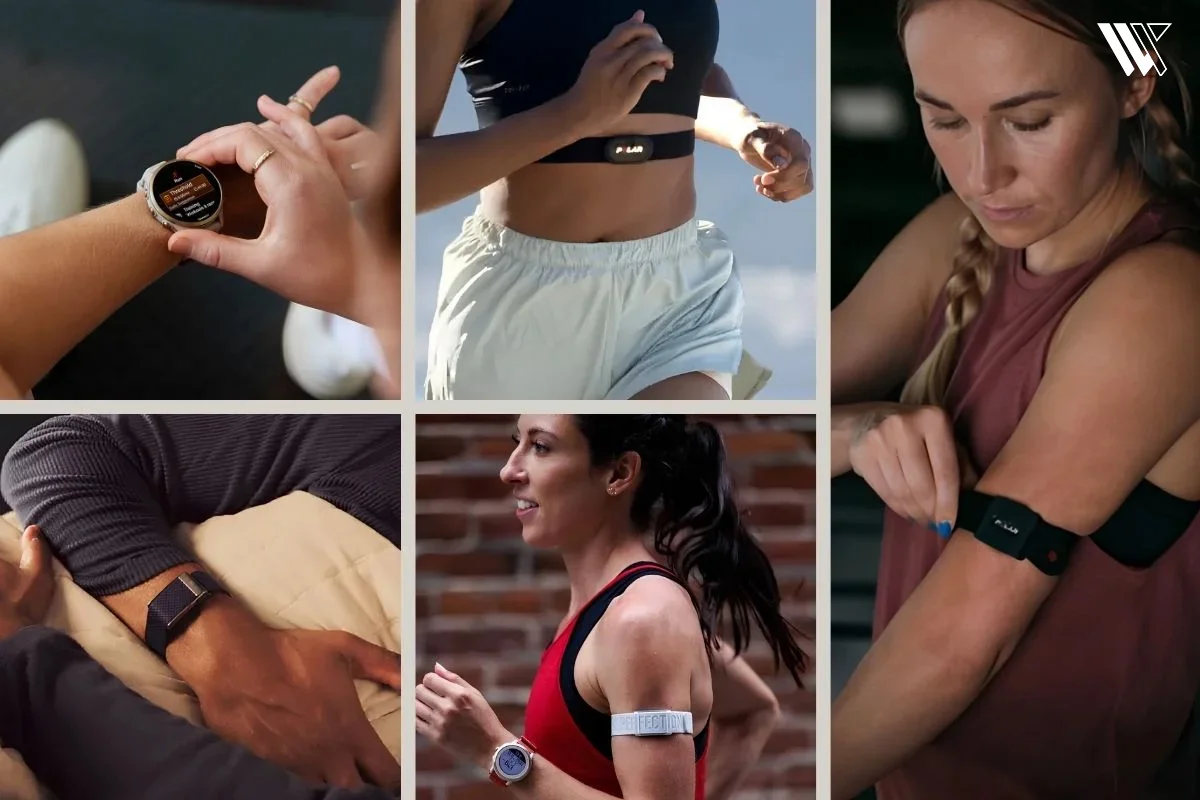
Where it gets a bit complicated is that not all heart rate monitors will tell you the same story. Chest strap gives you the electrical signal from your heart, as close to a medical-grade EKG as you can get out of a doctor’s office, an armband monitor uses light to measure blood flow in your biceps while the wrist-based smartwatches work exactly the same way, except there is a bit of interference because of bones, tendons and the fact that your wrist is constantly moving while you run. None of them are “bad”, they simply have different uses and you choose which is right for you depending on how seriously you treat your training information and how much are you willing to strap on yourself.
Best Heart Rate Monitors for Running at a Glance
| Monitor | Type | Price | Battery | Best For |
|---|---|---|---|---|
| Polar H10 | Chest strap | $89.95 | ~400 hrs (replaceable coin cell) | Pure accuracy, intervals |
| Garmin HRM 600 | Chest strap | $169.99 | ~2 months rechargeable | Garmin ecosystem, running dynamics |
| Polar Verity Sense | Armband | $104.95 | ~30 hrs (rechargeable) | Chest strap alternative, comfort |
| COROS Heart Rate Monitor | Armband | $79 | ~38 hrs (rechargeable) | Budget-friendly comfort pick |
| WHOOP 5.0 | Screenless band | $199+/yr membership | 14+ days | Recovery and training load |
| Garmin Forerunner 970 | Smartwatch | $749.99 | Up to 15 days (smartwatch mode) | All-in-one, no extra device |
| Apple Watch Series 11 | Smartwatch | Starts at $399 | Up to 24 hours | iPhone users who want one device |
Best for Marathon Training: Polar H10 or Garmin HRM-Pro Plus
Best for Garmin Users: Garmin HRM-Pro Plus
Decode the Decor
The Smart Jewelry Revolution — a practical guide to wearable tech.
Best Chest Strap Alternative: Polar Verity Sense
Best Budget Pick: COROS Heart Rate Monitor
Best Recovery Tracking: WHOOP 5.0
Best No-Extra-Device Option: Garmin Forerunner 970 or Apple Watch Series 11
Polar H10 — Best for Pure Accuracy
© Polar
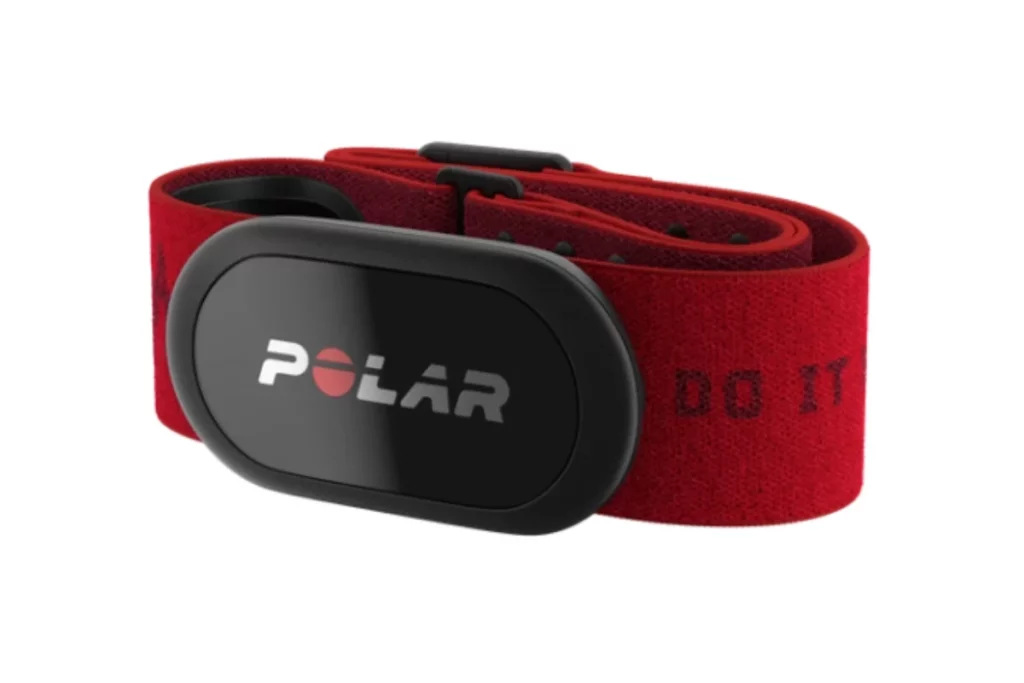
The Polar H10 is the gold standard chest strap and honestly, nothing much has come along to knock it off yet. The H10 uses an ECG sensor and therefore measures the electrical output from your heart and in testing against medical-grade reference standards, it reliably ranks right up there in accuracy, particularly in interval and high-intensity efforts when wrist sensors get unreliable.
The price point sits at about $89.95, which seems expensive for a chest strap until you consider that it will probably outlast three pairs of running shoes. It has a replaceable CR2025 battery that lasts roughly 400 hours, meaning that it should last several months before needing to be changed. It works simultaneously over Bluetooth and ANT+, making it compatible with almost any watch, bike computer or application software, including Zwift and Strava and has onboard memory to store an entire session should it ever happen that your phone or watch wasn’t available.
The app used to sync all of this data is Polar Flow, which is uncluttered and does its job well without overwhelming you with information that you won’t ever use.
Garmin HRM 600 — Best for Garmin Runners
© Garmin
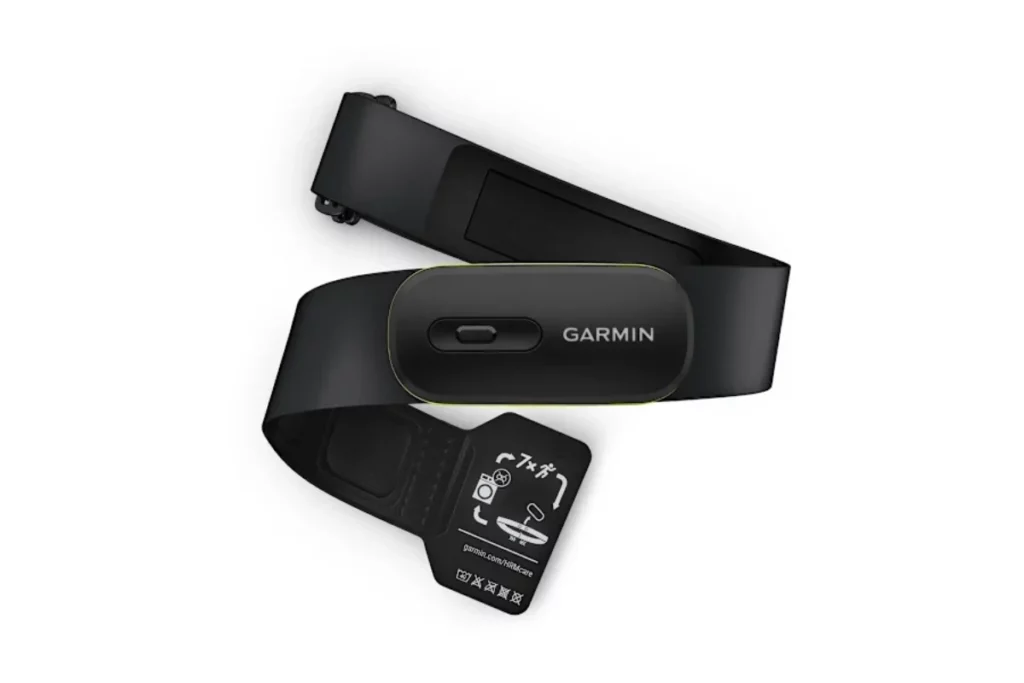
For those who have Garmin watches, the HRM 600 is the chest strap designed specifically for you. In addition to common heart rate and HRV tracking, it monitors running dynamics including cadence, vertical oscillation, ground contact time and even introduces an innovative metric called step speed loss, which tracks how much slower you become with each foot-strike to the ground. Also, it allows monitoring the whole training session independently from your watch, which can be useful if you are playing any kind of team sports or simply have a training routine when it is not comfortable to use a watch.
It uses a rechargeable battery with an average lifespan of about 2 months with daily usage of 1 hour. So you won’t have to search for a coin battery for it in your drawer anymore. Compatible with up to three Bluetooth connections and supports the ANT+ protocol too and has 5 ATM water resistance. With the price of $169.99, it is almost twice as expensive as H10. It is crucial to note that a major share of the cost is spent on Garmin proprietary features and not the heart rate monitoring improvements themselves. If all you need is BPM on your wrist, you are definitely paying too much.
Polar Verity Sense — Best Chest Strap Alternative
© Polar
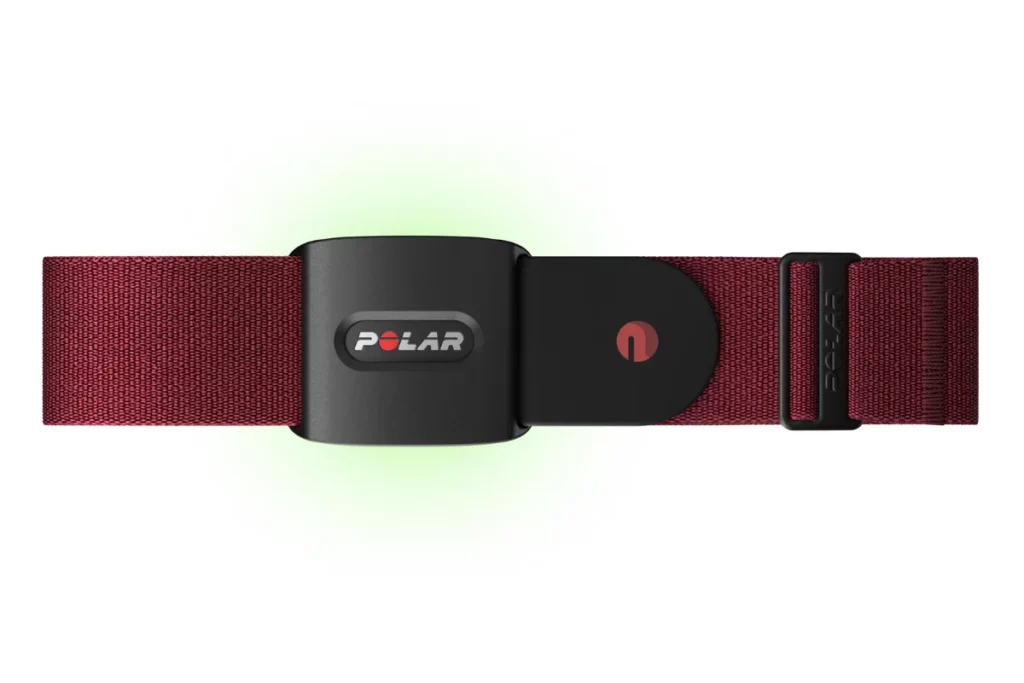
If you have ever worn a chest strap and did not like it, then the Verity Sense will be perfect for you. This is an optical armband worn on the upper arm and as it is placed much higher than the wrist and has a steady blood flow and fewer movements there, it is more accurate than an optical heart rate monitor can be.
In terms of price, the band costs $104.95, while the battery is rechargeable, providing up to 30 hours of continuous use (for most athletes, it means recharging the device once in one or two weeks). There is built-in memory able to store up to 600 hours of training sessions, so you are able to store the session on your device even if you do not have your smartphone during running. Also, there is a swim clip and thus you can attach the device to your temple during swimming, which can be useful in case of cross-training.
Everything is managed through the Polar Flow app just as with the H10.
COROS Heart Rate Monitor — Best Budget Armband
© Coros
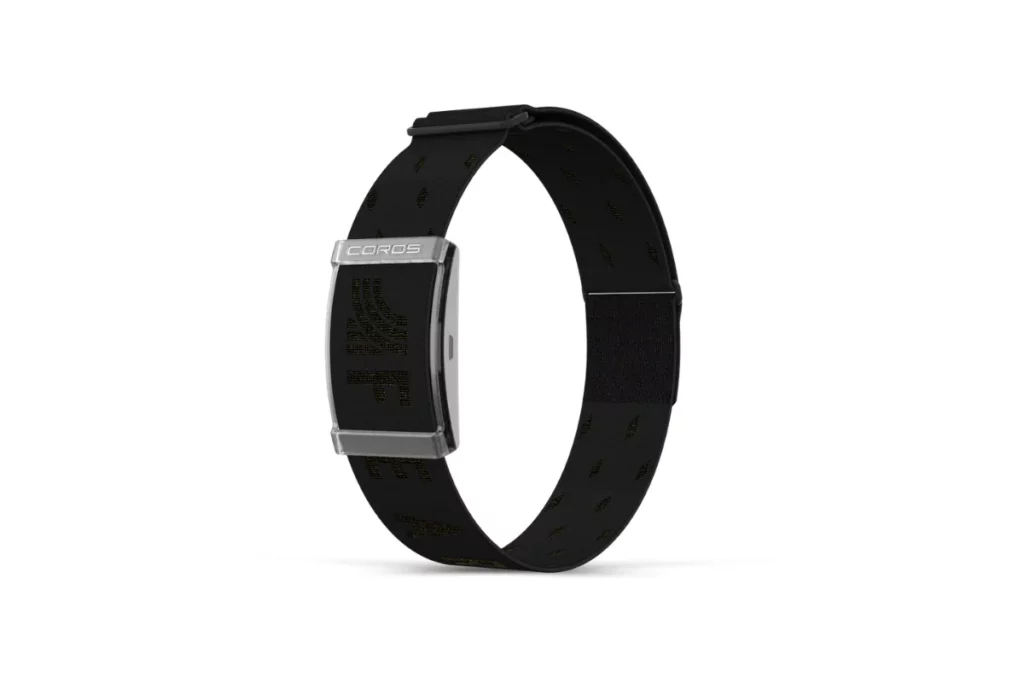
Priced at $79, COROS HRM beats the Verity Sense while coming in a similar comfort level. It is worn on the upper arm and is capable of turning itself on or off depending on whether the armband is worn on or removed from the body without the need for pressing any buttons. Its battery life is impressive for an optical heart rate monitor, with a capacity of lasting up to 38 hours when in active use and 80 days in its sleep mode.
But what makes it different from other brands is the lack of ANT+ technology. In its place is Bluetooth technology that may turn out to be a turn-off for those who own a very old Garmin watch or a bike computer that depends on ANT+ technology. But it is compatible with a maximum of three devices at a go. This will cover a situation where one is using a watch, phone and maybe a bike computer.
Apart from COROS watches, it is compatible with other brand watches such as Garmin and Apple watches, among other leading training applications.
WHOOP 5.0 — Best for Recovery-Focused Runners

© WHOOP
WHOOP is not an attempt to become another chest strap competitor. This device is a screenless wearable that tracks heart rate 24/7 and provides strain, recovery and sleep scores which help the user determine when it is time to work harder and when they need to take it easy. In the case of endurance athletes who are trying to monitor their training load for weeks or months but not for one session, this information may matter even more than heart rate during each exercise.
However, the main flaw in this description of the product is that it is impossible to “buy” WHOOP. The device is purchased together with a subscription and its cost starts at $199 a year for the WHOOP One, which comes with WHOOP 5.0 and goes up to $359 a year if a person chooses the Life package with WHOOP MG and wants access to all health metrics offered by the brand. One of the strongest sides of WHOOP is its battery, which lasts for 14+ days and can be charged wirelessly by attaching a special pack over the band without removing it from the wrist.
The major flaw of screenless fitness bands in terms of tracking runs and training sessions is the absence of features like real-time navigation and pacing because this device does not have a GPS and screen.
Smartwatches With Heart Rate Tracking — Best All-in-One Option
If wearing a strap or a separate armband over your wristwatch is something you want to avoid, a smartwatch that has a good wrist sensor is a good choice but expect chest strap-level accuracy only at the hardest moments when you wear it.

© Garmin
Garmin Forerunner 970 can be recommended to runners because it has the Garmin Elevate optical sensor, which is the newest model, just like the one you will find in the Fenix 8. The sensor performs exceptionally even during very hard workouts and races. In fact, it is closer to the chest strap-level performance than any other wrist sensor on the market. Of course, the cost is high, around $749.99, but you receive all the necessary features for your money: GPS, training readiness, ECG sensor and all the running metrics from Garmin.

© Apple
Apple Watch Series 11 can be recommended to those who are in the Apple ecosystem but don’t need a specialized running watch. Starting at $399, you get a very reliable heart rate monitor based on a third-generation optical sensor that can track your HR through spinning classes and runs without any problems. Though the sensor won’t beat the chest strap accuracy during hard interval workouts, it will do well in everyday use and provide you with Apple’s whole health system in addition to the watch features.
Chest Strap vs Armband vs Smartwatch — Which Is Best for Running?
| Feature | Chest Strap | Armband | Smartwatch |
|---|---|---|---|
| Accuracy | Highest | High | Good |
| Comfort | Depends on the person | High | High |
| Live running data | Needs a paired device | Needs a paired device | Built in |
| Battery | Excellent | Excellent | Medium |
| Best for | Training precision | Comfort without sacrificing much accuracy | All-in-one convenience |
How to Choose a Heart Rate Monitor for Running
- Accuracy depends on effort level: Almost all heart rate monitors perform great in easy and steady runs. The differences appear when running interval training, doing hill repeats and other exercises when the change in heart rate is fast.
- Think of the sensor type:
- ECG sensors: Are installed inside the chest strap and read the heart activity through the ECG.
- PPG sensors: Measure changes in the bloodstream with the help of light. Upper-arm sensors can be considered more reliable than the wrist sensors because they face fewer movements.
- Think of the comfort: Chest straps may be comfortable for some runners, while for others they may not be.
- Check the battery life: You do not want to be without a sensor during your run. Find out how long the battery will last for you.
- Check the compatibility: While the Bluetooth technology is compatible with almost any device, the ANT+ technology is necessary for some applications like the bike computer, Zwift and some old Garmin devices.
- Don’t assume the most expensive option is best: The most expensive product, like a watch for $750, may be better for some people than a chest strap for $130 which is too uncomfortable to wear.
Are Wrist Heart Rate Monitors Accurate Enough for Running?
This depends on what exactly you are doing. In case of a simple running session, most modern smartwatches perform pretty well. Heart rate changes slowly, and the sensors have enough time to pick the right rhythm and start working properly.
The problem starts with intervals and sprints where heart rate fluctuates pretty quickly. There will be some kind of delay between actual heart rate change and when the optical sensor registers it, and that gap gets worse the faster things change. Even your hand movements while sprinting won’t make any difference since this motion also becomes the noise that the sensors need to filter.
So if you’re doing casual runs or everyday health monitoring, your watch can be used. If you train with intervals or you just need precise results, it is better to use a chest strap or armband.
Heart Rate Monitor Features That Matter for Runners
A few important things to consider during comparison:
- Accuracy and type of sensor. ECG chest straps usually outperform optical heart rate monitors, particularly in high-intensity situations. Armbands worn around the upper arm narrow the difference between the two more than wristbands.
- Connectivity. Bluetooth connectivity applies to almost all current heart rate monitors. ANT+ is relevant in case you are planning to connect the monitor to your bike computer, Zwift or an old Garmin watch using it.
- Type of battery. Rechargeable coin cell batteries (H10, HRM-Pro Plus) will last you several months up to a year but require occasional purchase of new batteries. Rechargeable batteries (Verity Sense, COROS, WHOOP) have shorter life, but you won’t need to go to a drugstore for CR2025.
- Ecosystem. Consider whether the product you want to buy is compatible with Garmin Connect, Apple Health, Strava or TrainingPeaks if you are using them.
Wrap Up
Honestly, when it comes to which heart rate monitor should you buy, it’s difficult to give a definitive answer, as it all depends on your personal training requirements and willingness to lug extra equipment around with you. The Polar H10 if you need pinpoint accuracy and can cope with wearing the chest strap. The HRM-Pro Plus if you are already a loyal user of the Garmin app and, in addition to heart rate tracking, you need information about running form. Verity Sense or the COROS armband will suit those who cannot tolerate chest straps but still need heart rate tracking, the COROS is the cheaper choice.
If your goal is not the precise heart rate zone, but recovery and avoiding excessive load, then WHOOP is a good option, just take into account the subscription fee. And if the combination of several devices makes you feel uncomfortable and you prefer to use only one thing during training, the Garmin Forerunner and Apple Watch will be suitable for the majority of runners, especially if their intense days do not involve interval training.
No matter which one of the devices you choose, the key here is not to use the equipment itself, but to apply the information from the data obtained from it.
Feature Image © WearableXP
Decode the Decor
The Smart Jewelry Revolution
A practical guide to wearable tech's future — delivered straight to your inbox.
Author
