

Turn around and you will see that everyone is suddenly talking about hormone tracking wearables. Oura has a women’s health AI model, WHOOP has hormonal insights and startups keep raising millions to promise a wristband that reads your estrogen. Awesome. But let me save you some scrolling: none of the available solutions really tracks your hormones. Instead, they use your skin temperature, heart rate, HRV and sleep data to make a pretty accurate assumption about your place in your cycle. Very handy, but still not sorcery.
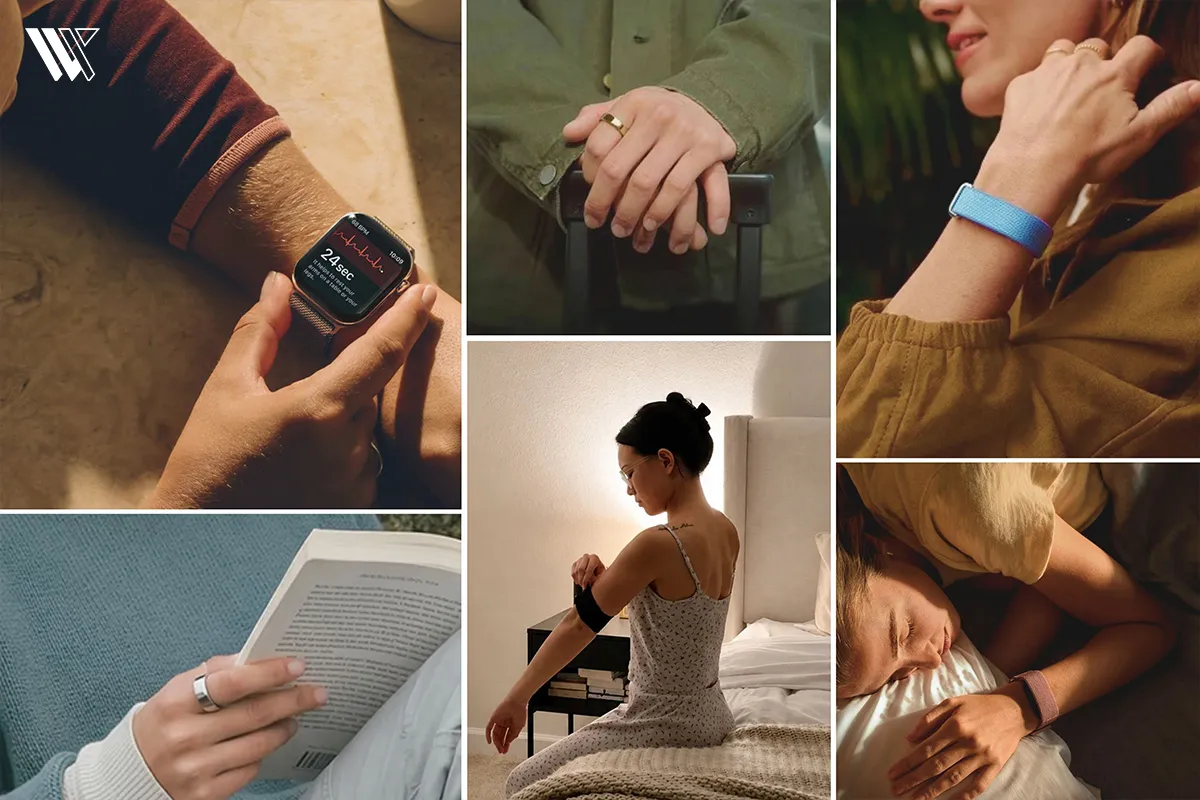
I tested all of these gadgets by four criteria: sensors used, information provided in the application, ecosystem (whether it supports iPhone and/or Android, subscription plans, Natural Cycles and others) and limitations of the technology. All the devices mentioned are available on the US market at the moment.
Here’s what you should look for if you’re looking to track your hormones with your wearables and find the best hormone tracking wearables for your needs.
What Are Hormone Tracking Wearables?
Hormone Tracking is really just a marketing gimmick. After ovulation, progesterone goes up and nudges your temperature higher by roughly 0.2 to 0.5°C. Your resting heart rate creeps up by a few beats too and HRV tends to dip in the luteal phase. The wearables detect this during the night and an algorithm determines which phase you are likely in.
Decode the Decor
The Smart Jewelry Revolution — a practical guide to wearable tech.
So what you get is a pattern. If you want real hormone numbers like LH, estrogen or PdG, you need a blood test or a urine test.
How Do Wearables Track Hormone-Related Changes?
Almost all of them work similarly. They record the temperature of your skin while sleeping, establish the baseline in a couple of nights and then alert you if they go up or down from the baseline. Your resting heart rate, HRV, sleep and period dates get added to the list.
Two things to be aware of. First, skin temperature is different from basal body temperature (BBT). That’s why there will be more noise with the ring or watch than with the BBT chart. Second, your temperature only goes up after ovulation, that is, the app confirms ovulation post-factum. So use whatever you choose for at least three months before you can get reliable data.
Hormone Tracking Wearables Comparison Table
| Wearable | Price | Best for | Tracks direct hormones? | Key insights | Best user |
|---|---|---|---|---|---|
| Oura Ring 5 | From $399 + $5.99/mo | All-round cycle and recovery | No | Phases, period predictions, readiness, Natural Cycles | Anyone who wants a ring and doesn’t mind a membership |
| Apple Watch Series 12 | From $399 | iPhone users | No | Period predictions, fertile window and ovulation estimates | iPhone owners who already live in the Health app |
| Fitbit Air | $99.99 | Budget tracking | No | Skin temp trends, cycle logging, predictions | Anyone on a budget, iPhone or Android |
| Tempdrop 2.0 | $175 to $219 | BBT charting | No | Overnight temperature curve | Fertility awareness method users, shift workers, new parents |
| NC° Band | $129.99 or free with annual plan | Natural Cycles users | No | Temperature for fertility status | People using Natural Cycles |
| WHOOP 5.0 / MG | From $199/yr | Training and cycle phase | No | Hormonal insights tied to recovery and strain | Gym people |
| Garmin CIRQA | $199.99 | No-subscription band | No | Period predictions, past ovulation estimates | Garmin users, runners |
| Ultrahuman Ring Pro | $479 | Long battery ring | No | Cycle and ovulation plugin | Anyone who hates charging |
Oura Ring 5: Best Smart Ring for Hormone and Cycle Insights

© Oura
The Oura Ring 5 starts at $399 for black and silver and $499 for the stealth, brushed silver, gold and deep rose finishes. That’s a $50 to $100 bump on some finishes compared to the Ring 4. On top of that, there’s the membership at $5.99 a month or $69.99 a year, with the first month free. The battery lasts a week and it’s 40% smaller than Ring 4, meaning you need a new sizing kit even if you’re wearing an Oura Ring before.
It’s on the Oura app where Oura wins in tracking my menstrual cycles. It uses the Cycle Insights feature to show the user their current phase, average cycle duration and period length. The user is able to share the report with their physician. The readiness is also cycle–aware. That is, low readiness score in the luteal phase is not interpreted as poor recovery. Additionally, there’s pregnancy insights and perimenopause check-in features.
It connects to Natural Cycles for fertility predictions, but you need an Oura membership and a Natural Cycles subscription for that. It works on iPhone and Android. I wore the Gen 4 for a year and the phase predictions were almost always right for me and the smart rings I’ve covered since haven’t changed my mind.
Pros
- Cycle Insights with phases, cycle length and a shareable doctor report
- Cycle-aware readiness score
- Natural Cycles integration
- Pregnancy and perimenopause support in the same app
- Small, doesn’t look like a gadget
Cons
- $399 to $499 plus a membership that you more or less need
- New sizing, so the old kit won’t do
- Skin temperature from the finger, not BBT
- Natural Cycles needs its own subscription on top
Apple Watch: Best Smartwatch for Menstrual Health Tracking
© Apple
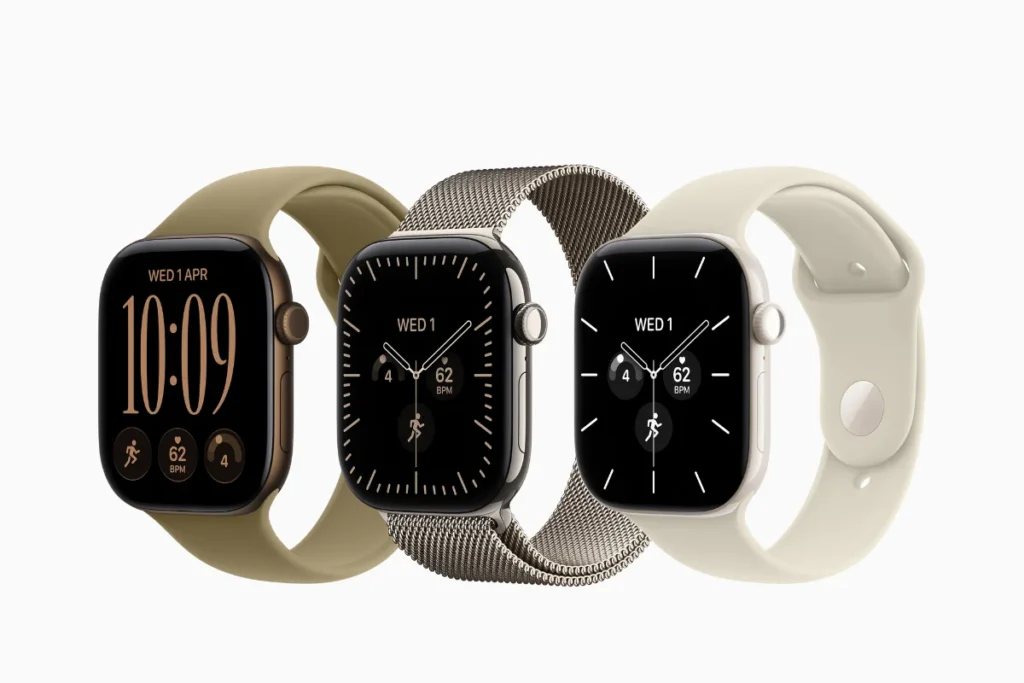
Apple Watch Series 12 was released on September 18 and starts at $399. If that seems steep to you, then the SE 3 costs $249 but still has the temperature sensor for Cycle Tracking. The Series 12 is rated for up to 24 hours of battery, 38 hours of Low Power Mode and 15 minutes of charging equals approximately 12 hours. SE 3 has a rating of up to 18 hours.
Cycle Tracking is found in the Health app and requires no subscription. You will get period predictions, fertile window predictions, retrospective ovulation prediction and alerts if your cycle patterns seem to indicate premenopause. It works on iPhones only.
Natural Cycles can be used in conjunction with Apple Watch if you choose the FDA-approved contraception option and Apple states explicitly that Cycle Tracking must not be used as birth control.
The problem is that I have hardly ever worn my Apple Watch to sleep and for temperature tracking, you need to wear your watch to bed. In other words, if you charge it at night and forget to wear it, then you will not have any ovulation predictions. The fast charger helps, but it’s a habit you have to build. I wrote about sleep data on Apple Watch if you want to try.
Pros
- No subscription for cycle features
- Period, fertile window and retrospective ovulation estimates
- Perimenopause and menopause support
- Works with Natural Cycles
- SE 3 gets you the same temperature feature for $249
Cons
- iPhone only
- Daily charging makes overnight wear awkward
- Ovulation estimates only show up after the fact
- Bulky to sleep in for a lot of people
Fitbit Air: Best for Accessible Women’s Health Tracking
© WearableXP
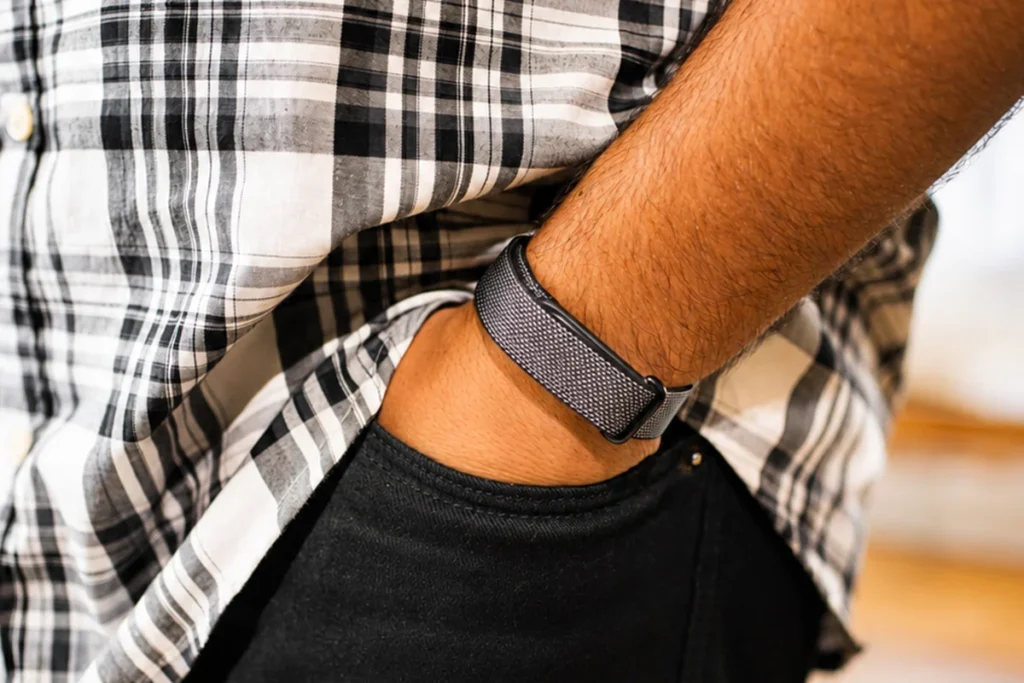
Fitbit’s best pick for this right now is the Fitbit Air at $99.99. It’s a screen-less band that weighs around 12 grams and can last up to 7 days. It measures skin temperature variation overnight alongside with heart rate, HRV, SpO2 and sleep tracking and it works on iPhone and Android. If you need a screen, the Pixel Watch 5 costs $399.99.
The app is now called Google Health (it replaced the Fitbit app in May). Core tracking, including cycle logging and period predictions, is free. The premium version that includes Gemini coach costs $9.99 per month and $99.99 per year, while Air users get 3 months free. Here’s the honest part. You log your periods and ovulation tests yourself and the temperature graph is there for context. It won’t give you the kind of ovulation estimate Oura or Apple does.
Pros
- $99.99 with no required subscription
- Skin temperature trends and cycle logging in the free app
- Works with iPhone and Android
- 7 day battery and light enough to sleep in
Cons
- Ovulation is mostly manual logging
- Premium coaching is $9.99 a month
- No ECG and connected GPS only
- App hides some core numbers
WHOOP 5.0 and MG

© WHOOP
WHOOP has no upfront price for the band. You pay for membership if you want a period tracker. The subscription plans include the Plan ($199), Peak ($239) and Life ($359). Life has a WHOOP MG sensor which includes ECG and blood pressure tracking along with a band. Battery life is about 14 days or more.
Women’s Hormonal Insights is present in each plan and connects your menstrual phase to recovery, sleep and strain. WHOOP mentions that its technology should not be used for pregnancy planning or contraception and all phases are estimated. New Natural Cycles users can get a year free through WHOOP.
Pros:
- Cycle phase tied to recovery and strain
- 14 plus day battery
- Free year of Natural Cycles for new users
Cons:
- Membership required, no way around it
- Not for conception or contraception
- No screen
Garmin CIRQA

© Garmin
Garmin’s screenless band, CIRQA, launched on July 24 at $199.99 with no subscription. Battery life is up to 10 days. Overnight skin temperature improves period predictions and gives retrospective ovulation estimates in Garmin Connect and it syncs with Natural Cycles if you pay for that subscription. It works with iPhone and Android. If you already own a Garmin, this is an easy add.
Pros:
- $199.99 and no subscription for Garmin features
- 10 day battery
- Past ovulation estimates and Natural Cycles support
Cons:
- No built-in GPS, it uses your phone
- Natural Cycles is a separate subscription
- Skin temperature only
Ultrahuman Ring Pro

© Ultrahuman
The Ultrahuman Ring Air is out of the question for the US market due to the patent lawsuit with Oura. Now, the new model, the Ring Pro, is available for purchase at the price of $479, including the charging case. The battery life is now 15 days and there are no subscriptions needed for core tracking features.
The basic features of the Cycle and Ovulation plugin are available free of charge, but the Cycle and Ovulation Pro, designed for users with irregular menstrual cycles, costs $3.99 per month or $39.99 per year.
Pros:
- Up to 15 days of battery
- No subscription for core tracking
- Free basic cycle tracking and a Pro option for irregular cycles
Cons:
- $479 is the most expensive ring here
- Pro cycle tracking costs extra
- A bit bulky on the finger
Dedicated Fertility Wearables
If you only plan to purchase wearables for fertility reasons, there is no need to consider smartwatches. There are devices you can consider that are dedicated for hormone tracking.
Tempdrop 2.0
© Tempdrop
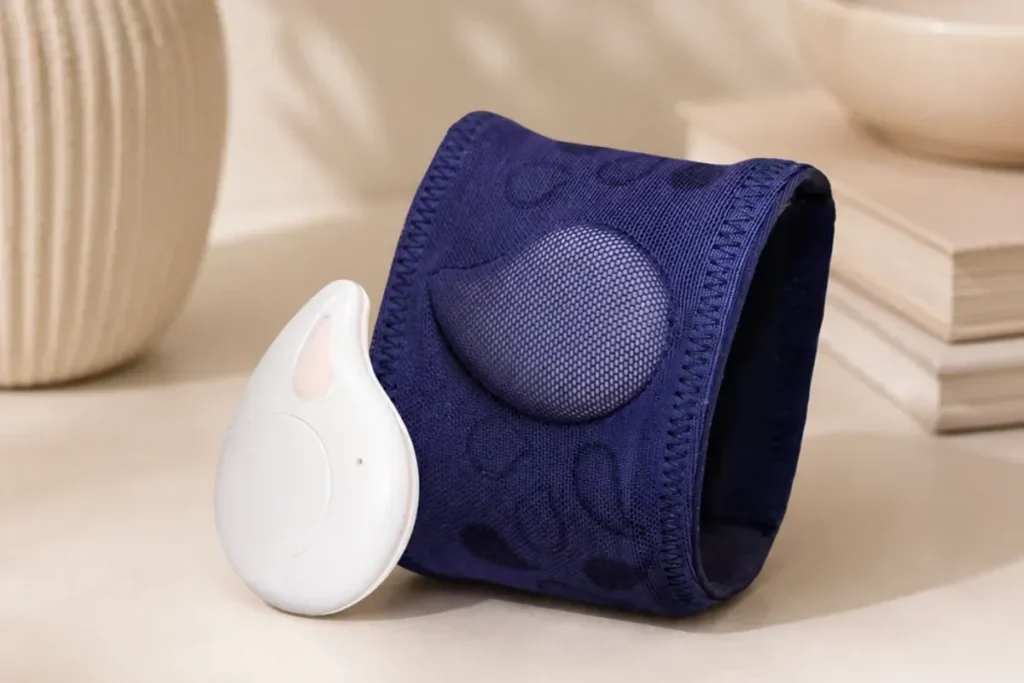
Tempdrop goes on your upper arm overnight and is the closest thing to a BBT chart without a thermometer in your mouth at 6 am. The price is $189. The battery is not rechargeable, it is replaceable and lasts up to a year. There is a free app that provides the chart with the temperature readings and manual charting.
The premium version costs $6 per month or $48 a year and two months of this service come for free. It syncs to Apple Health and plays nice with charting apps, which fertility awareness method users like. The algorithm needs a few cycles to learn you, though.
Pros:
- Arm placement gives a cleaner temperature curve than a finger or wrist
- Good for night waking, shift work and newborn nights
- Charts you can export to third-party apps
Cons:
- $189 for a single-purpose device
- Premium app costs extra
- Not FDA cleared
- Reports of a delayed temperature shift and skin irritation from the band
NC° Band
© Natural Cycles°
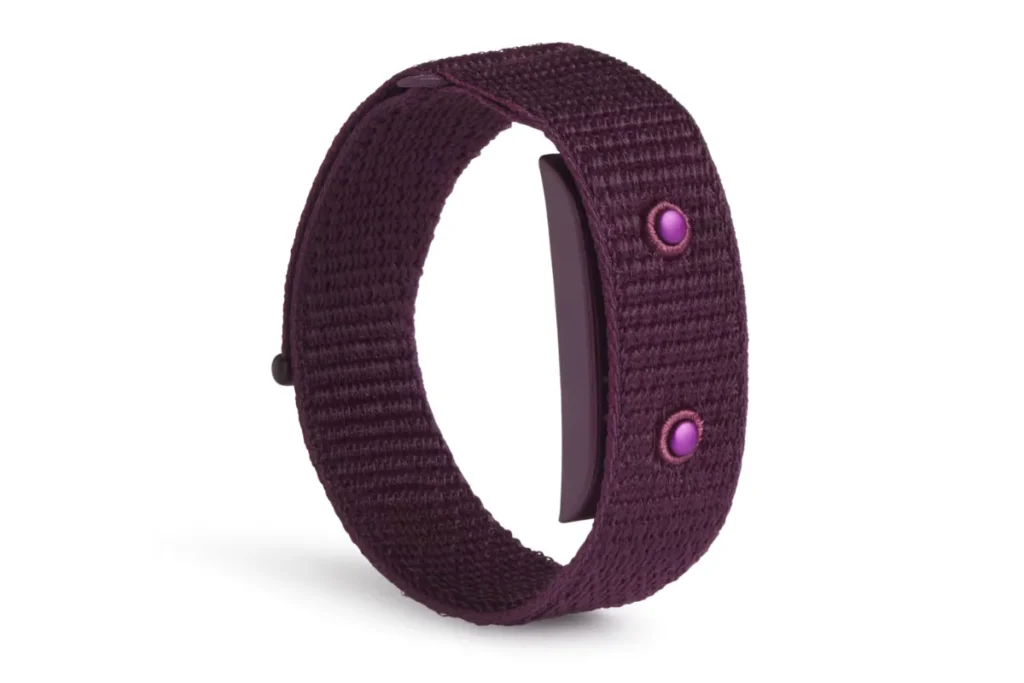
The NC° Band is made by Natural Cycles. It’s $129.99 on its own or free if you sign up for the $149.99 annual plan. The battery lasts up to 14 nights. It’s splash-resistant, but don’t shower or swim with it. You wear it on your wrist overnight, open the app in the morning and it syncs.
Natural Cycles is the only FDA-cleared birth control app and the company says it’s 93% effective with typical use and 98% with perfect use. The plan is FSA and HSA eligible and Natural Cycles says most major US insurers cover it.
Pros:
- Free with the annual plan
- 14 night battery
- Built for the only FDA-cleared birth control app
Cons:
- Pointless outside Natural Cycles
- Wrist skin temperature, not BBT
- Not for showering or swimming
Clair

© Clair
Clair Hormone Tracking wearable is a wrist wearable that promises to be able to measure estrogen, progesterone, LH and FSH levels without any blood or urine samples. The company is set to release in November as a wellness product with future FDA certification in the works.
This wearable seems to cater to women with irregular cycles, PCOS or perimenopause who might not be well represented by temperature tracking wearables. We have not tested this device out ourselves yet. Its hormone measurement claims come straight from the company’s marketing efforts rather than independent testing. But this product is definitely on my radar as something groundbreaking if it does what it claims.
Phira
© Phira
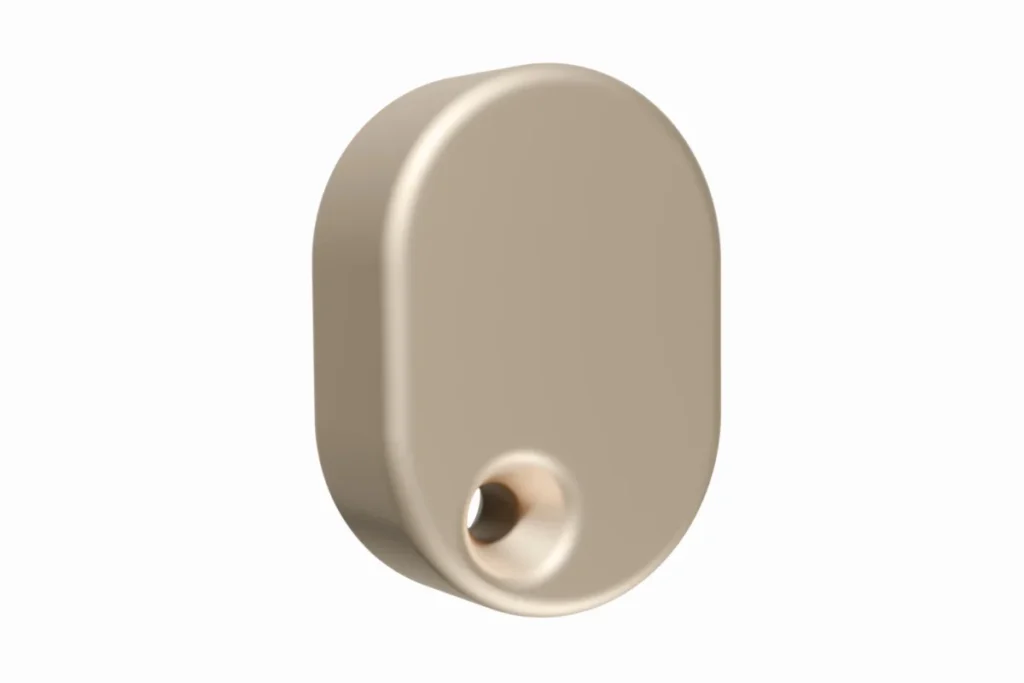
Phira uses a completely different method: a small wearable that replaces an earring back. This device measures thermoregulation signals from behind the ear and does not measure hormone concentrations in any way. Instead, it uses inference from patterns associated with estrogen, LH and progesterone.
It is based on a pilot study of only 31 menstrual cycles in 12 women. It is due to launch commercially in 2027. It is yet another wearable we have not tested personally. At this point, it is not yet on our list but definitely worth keeping an eye on.
Can Wearables Actually Measure Hormones?
No. Well, not yet. What they measure are signals that move with your hormones, like temperature and heart rate. If you want actual hormone concentrations, you need urine monitors that measure LH, estrogen and PdG levels.
I’m not recommending something I can’t test or read data on. Earring-back devices like Phira are still on waitlists. Ask me again when there’s a study.
Hormone Tracking Wearables for Fertility: What You Should Know
The device can help you understand your cycle, when your fertile days will be and when ovulation may occur. This is particularly helpful if you have irregular periods, since an app cannot see this. An app does not know whether you will get pregnant or whether you will not. The Natural Cycles app is the only one listed here that is approved as contraception. Apple, WHOOP and Garmin insist that their devices are not.
Are Hormone Tracking Wearables Accurate?
Sort of. Alcohol, illness, travel, bad sleep and a hot bedroom all push temperature around. Birth control pills and pregnancy will make you more regulated and therefore your cycle characteristics won’t be able to detect that pattern. The temperature reading from your skin is not as stable as BBT or your core temperature. A lot of validation tests have been done by the manufacturers of the product.
Which Hormone Tracking Wearable Should You Buy?
Choose Oura Ring 5 if you want the best cycle app in a ring and you’re fine with a membership.
Choose Apple Watch if you have an iPhone and will wear it to bed. Get the SE 3 at $249 if you just want the temperature feature.
Choose Fitbit Air if you want the cheapest way in at $99.99 and you’re happy logging your own cycle.
Choose Tempdrop 2.0 if fertility charting is the whole point and you want something close to BBT.
Choose NC° Band if you’re already using Natural Cycles. Get it free with the annual plan.
Choose Garmin CIRQA or WHOOP if you train a lot. CIRQA has no subscription. WHOOP is the better coaching app.
Choose Ultrahuman Ring Pro if charging every week annoys you.
Wrap Up
If I had to pick one for most people, it’s the Oura Ring 5 for the app or the Apple Watch if you’re already on iPhone and sleeping with it is no issue. If fertility is the goal, a dedicated option like Tempdrop or the NC° Band is worth the extra device. Pick the one you’ll actually wear every night, give it three cycles and take it to your doctor when something looks off.
Decode the Decor
The Smart Jewelry Revolution
A practical guide to wearable tech's future — delivered straight to your inbox.
Author
