

 Add Us On Google
Smart rings have gone from interesting gadgets to serious health wearables in just a few years. And honestly, Oura played a huge role in that shift. What started as a small wellness ring is now one of the most recognized health trackers in the wearable world.
I have personally used the Oura Ring 4 and one thing I genuinely liked about it was how invisible it felt during daily use. It quietly tracked sleep, recovery, heart rate and readiness without demanding constant attention. For me, it felt more like a health companion than a piece of technology.
Decode the Decor
The Smart Jewelry Revolution — a practical guide to wearable tech.
That was until the Oura Ring 5 arrived, claiming to be the world’s smallest smart ring. Along with a slimmer design, Oura is promising better sensors, longer battery life and smarter health insights. Naturally, the Oura Ring 5 vs Oura Ring 4 debate is already underway. Are these upgrades enough to justify choosing the Oura Ring 5 over the already impressive Oura Ring 4?
Oura Ring 5 vs Oura Ring 4: Quick Comparison
| Feature | Oura Ring 4 | Oura Ring 5 |
|---|---|---|
| Sensors | Heart rate, HRV, SpO2, skin temperature | Improved heart rate, HRV, temperature, newer sensors |
| Sleep Tracking | Excellent sleep analysis | Improved sleep algorithms |
| Readiness | ✓ | More advanced recovery Insights |
| Stress Tracking | Basic daytime stress | Expanded AI-based wellness tracking |
| Battery Life | Up to 7 days | Around 7-10 days |
| Design | 7.9mm wide, 2.88mm thick, flat inner ring | 6.09mm wide, 2.28mm thick, 40% smaller overall volume |
| App Experience | Standard Oura App ecosystem | Updated with Live Activity Tracking and Locate |
| Workout Tracking | Basic compared to watches | Improved activity insights |
| Price | Starts at $349 | Pre-order starts at $399 |
What’s New in Oura Ring 5

The biggest thing to understand in this Oura Ring 5 vs Oura Ring 4 comparison is that Oura is not trying to reinvent the smart ring. Instead, the company seems focused on improving accuracy, comfort and long-term health insights.
That means the Oura Ring 5 does not suddenly become a smartwatch replacement. It still focuses heavily on recovery, sleep tracking, readiness and passive wellness tracking.
However, there are some meaningful upgrades.
Improved Sensors
The Oura Ring 4 already offered some of the best health sensors in smart rings. Heart rate tracking during sleep was especially reliable in my experience and nighttime HRV data felt surprisingly consistent.
Within the Oura Ring 5, Oura is reportedly improving sensor accuracy further. The company is focusing on:
- Better heart rate sampling
- Improved temperature readings
- More accurate HRV tracking
- Enhanced motion sensing
In practical use, this likely means more reliable wellness insights, especially during workouts, stress tracking and recovery analysis.
Better Sleep & Recovery Algorithms
Oura’s strongest feature has always been sleep tracking. Even with the Oura Ring 4, the sleep breakdowns felt more detailed than many smartwatches I’ve tested. The Oura Ring 5 reportedly improves:
- Sleep stage detection
- Sleep timing recommendations
- Recovery analysis
- Stress interpretation
This matters because raw data alone is not useful. Most users do not care about seeing numbers unless the app explains what they actually mean. Oura has always been good at simplifying wellness data and the Ring 5 seems focused on improving that even more.
AI-Powered Health Insights
One of the biggest software-focused upgrades in the Oura Ring 5 is expected to be smarter health interpretation. Instead of simply showing trends, the newer app experience may provide:
- Personalized wellness recommendations
- Recovery coaching
- Trend forecasting
- Smarter readiness suggestions
This is where Oura is trying to differentiate itself from competitors like RingConn and Samsung Galaxy Ring.
Refined Comfort & Fit

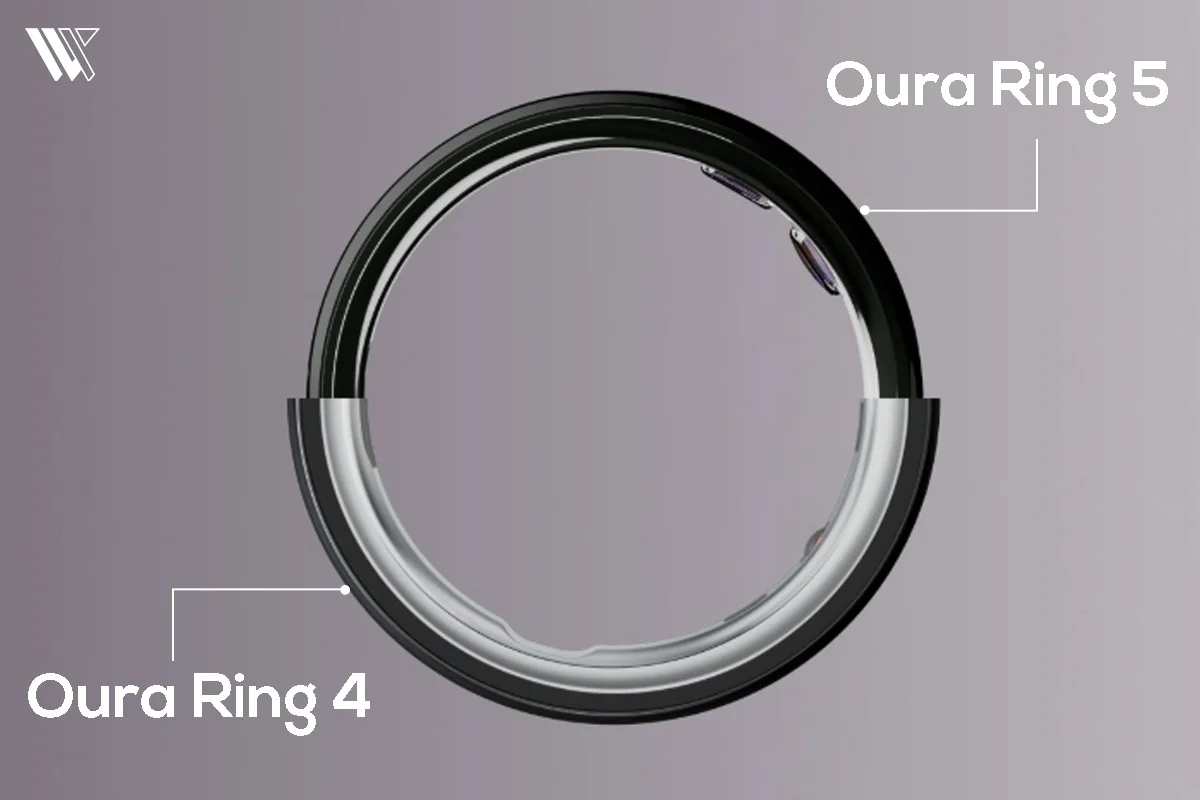
The Oura Ring 4 was already extremely comfortable. Personally, after a few days, I almost forgot I was wearing it. One of the biggest design upgrades in the Oura Ring 5 is its slimmer design. Oura claims the new ring is around 40% smaller in overall volume than the Oura Ring 4, making it feel less bulky and more natural to wear throughout the day.
The Oura Ring 5 is available in sizes 6 to 13, giving most users a more restricted sizing range than the Oura Ring 4. The Oura Ring 5 improves:
- Internal sensor placement
- Ring balance
- Fit consistency
- Weight distribution
These sound like small upgrades, but with smart rings, comfort matters more than almost anything else because you wear them all day and night.
Design and Comfort

A smart ring has to disappear on your finger. If it constantly feels bulky or uncomfortable when you make a fist or rest your hand on a desk, you will eventually leave it sitting on your nightstand. While the aesthetic and design look very similar across the Oura Ring generations, comparing how these rings actually feel reveals a major engineering shift.
The Oura Ring 4 already feels like a premium piece of jewelry, which is built with lightweight titanium. It also features a completely flat, smooth interior wall that sits flush against the skin without any annoying pressure points. It is incredibly minimalist and looks great, making it vastly less distracting to wear at night compared to a bulky smartwatch.
However, from a physical standpoint, the Ring 4 is still noticeably wide. Measuring 7.90 mm in width and 2.88 mm in thickness, it occupies a decent amount of real estate on your finger. Depending on your finger size, it can range from 3.3 to 5.2 grams. While it is very comfortable, it still looks and feels like a thick piece of tech armor, especially when you carry groceries or grip a dumbbell at the gym.
The newly launched Oura Ring 5 represents a massive design milestone, specifically focusing on trimming away that technology bulk. Oura managed to pull off a dramatic 40% reduction in overall physical volume.
By squeezing the electronic circuitry closer together, Oura narrowed the width to just 6.09 mm and shaved the thickness down to a lean 2.28 mm. The ring drops its starting weight to a featherlight 2.0 grams. This structural update drastically changes how the ring sits against your neighboring fingers, making it much less noticeable during everyday hand movements.
Domes, Durability and Finishes
To fit the battery and components into this smaller frame, Oura had to change the shape of the ring’s interior.
- Low-profile sensor domes: Unlike the completely smooth interior of the Ring 4, the Oura Ring 5 reintroduces three low-profile sensor domes on the inner band. These tiny bumps stick out by 0.7 mm. While they are much smaller and smoother than the harsh nodes found on the older Gen 3 ring, they are designed to press slightly into your skin to ensure the sensors don’t lose contact when your hand moves.
- Upgraded Durability: Both rings feature an industrial-grade titanium build that is water-resistant up to 100 meters, making them perfectly safe for swimming or relaxing in a sauna. However, the Oura Ring 5 adds a certified IP68 dust and water resistance rating and utilizes an extra-strong Physical Vapor Deposition (PVD) coating. This updated finish provides significantly better scratch resistance than the Ring 4, which is known to scuff easily over months of heavy daily wear.
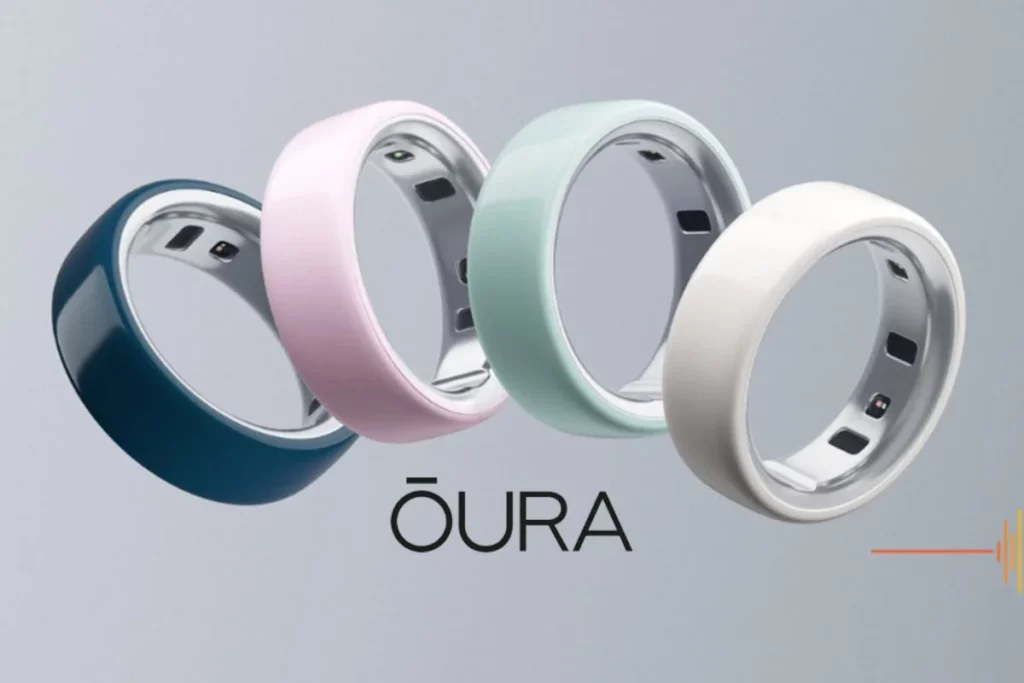
- Refined Finishes: The Ring 5 comes in six finishes: Silver, Black, Brushed Silver and Stealth. It replaces the old, traditional gold colors with a lighter, truer Gold alloy tone, alongside a copper-like Deep Rose finish.
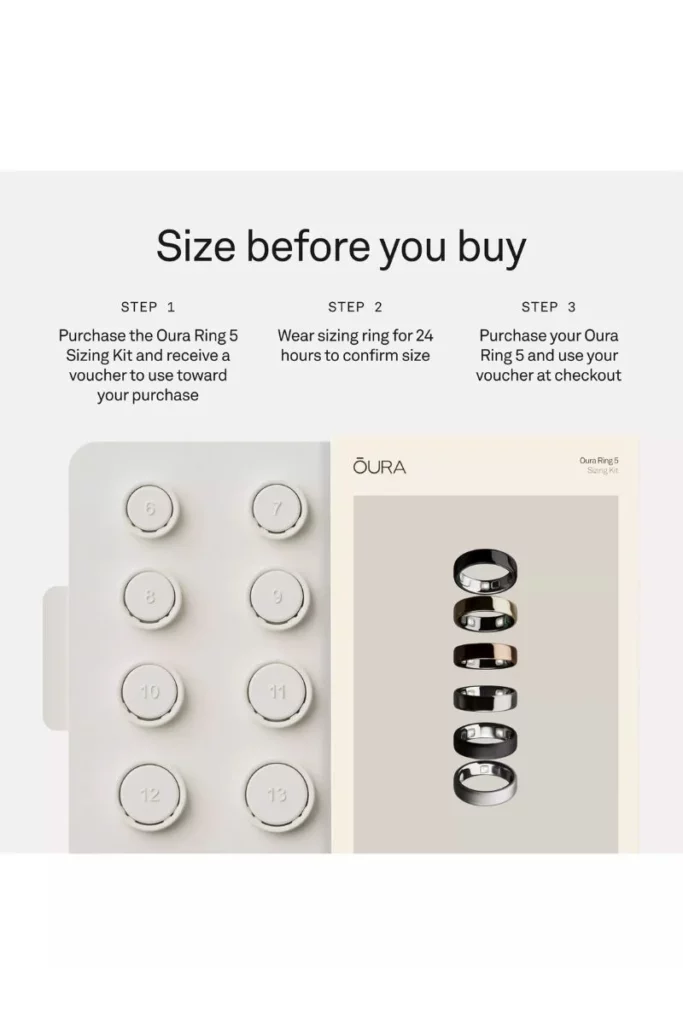
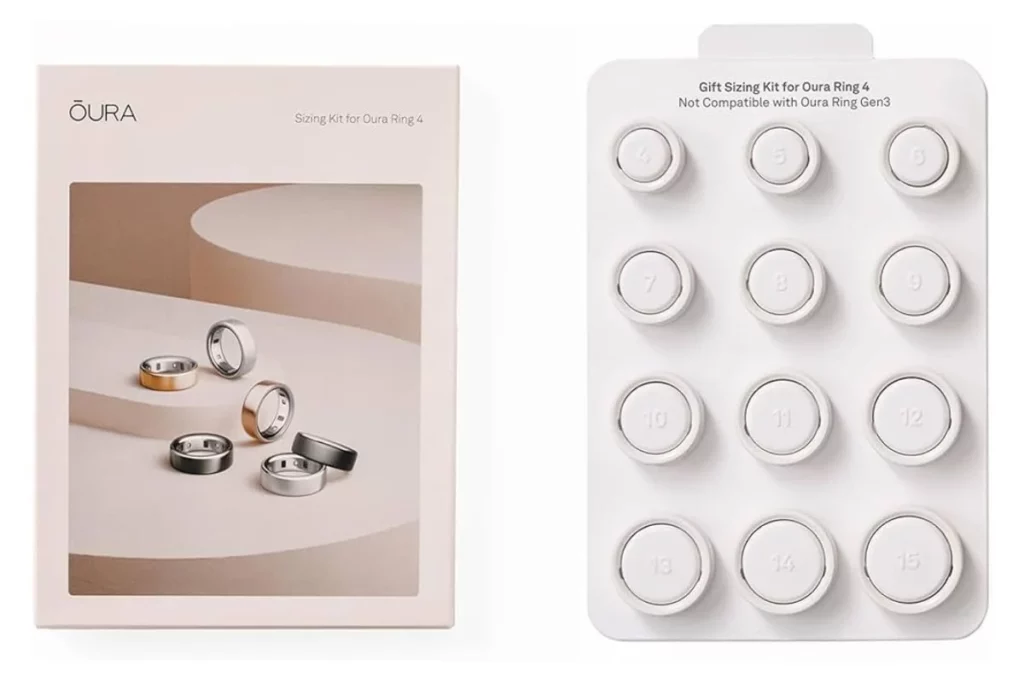
Because the Ring 5 is significantly thinner and features interior domes, it will feel completely different on your finger than previous models. Because of this, Oura recommends that everyone, even existing Ring 4 owners, use a new Oura Ring 5 sizing kit before ordering.
Furthermore, to maintain this ultra-slim frame, the Ring 5 is strictly limited to sizes 6 through 13. If your hands require the wider size range of the Oura Ring 4, which spans from size 4 all the way up to 15, the previous generation remains your necessary choice for a proper, secure fit.
Health Tracking and Sensing Differences
When looking at how these two devices monitor your body, the contrast between their internal architectures is fascinating.
With the Oura Ring 4, the big engineering success was the Smart Sensing platform. My Ring 4 maps out a total of 18 distinct signal pathways. The philosophy behind this design is brute force consistency: if the ring rotates on your finger while you are asleep or working out, the app can seamlessly switch between those 18 pathways to find a clear reading. It has provided me with incredibly stable, gap-free graphs for my overnight heart rate and heart rate variability (HRV).
The Oura Ring 5 takes the opposite approach. Instead of using more pathways, it pares them down to 12 optimized paths. To make up for having fewer channels, Oura reintroduced those low-profile interior sensor domes. By physically pushing the sensors slightly into the skin, the Ring 5 minimizes the tiny gaps caused by skin slippage when you move.
It is combined with those higher-output LEDs, so that the Ring 5 aims to deliver better data fidelity during high-exertion movement. If you’ve ever noticed your wearable dropping heart rate data during a sweaty workout or a walk, this hardware adjustment is designed to solve exactly that. And here is how the new parts work, so it will give you cleaner data:
- Flipped Light Sensors: Inside the Ring 5, Oura physically turned the light sensors 180 degrees. This lets the light take a shorter, straighter path through your finger. They paired this with a much larger receiver to catch that light. Even though it has 12 light paths instead of the Ring 4’s 18, this new setup actually increases workout heart rate quality by 24% and overnight tracking accuracy by 12%. It also reads much more accurately across different skin tones.
- Smarter Movement Tracker: While my Ring 4 uses a standard movement tracker to count steps, the Ring 5 upgrades to a High-Fidelity 3D Accelerometer. This part’s upgrade makes the ring way better at Automatic Activity Detection. It is sensitive enough to catch low-motion, micro-movements like Yoga or Pilates that my Ring 4 sometimes misses.
- Weather-Proof Temperature Sensor: A thinner ring means outside weather can easily mess with temperature readings. To fix this, the Ring 5 features a precision temperature array. This setup automatically filters out the ambient room air temperature, making sure the heat it records is coming purely from your actual blood flow and not from your wearable air conditioner.
Battery Life: Real‑World Usage
The Oura Ring 4 usually lasted me around 5-6 days with sleep tracking every night, continuous heart rate monitoring, regular syncing and notifications from the app. On the other hand, the Oura Ring 5 aims to deliver around 7-10 days of battery life depending on usage.
That improvement likely comes from better power efficiency, newer internal components and improved battery optimization. However, real-world battery life will still depend on workout tracking frequency, sync frequency, background sensing and temperature monitoring.
Software & App Experience
The Oura app is honestly one of the biggest reasons people buy into this ecosystem. Even with the Oura Ring 4, the software experience feels polished, clean and incredibly easy to navigate. Unlike fitness apps that overload you with a confusing wall of dense charts, Oura shapes its interface around simple, actionable scores. Because smart rings succeed or fail mainly through software rather than hardware alone, understanding how these two generations interact with the app is critical.
Oura Ring 4 Dashboard Experience
On my Oura Ring 4, the app relies on a clean, three-tab layout: Today, Vitals and My Health. Instead of just throwing raw numbers at you, it takes your body’s signals and packages them into three daily scores from 1 to 100:
- Sleep Score: Tracks deep sleep, REM sleep, light sleep and overnight breathing.
- Readiness Score: Looks at resting heart rate, heart rate variability (HRV) and body temperature to tell you how energized you are.
- Activity Score: Balances daily movement and workout consistency against your needed recovery time.
Personally, I love how the app explains the “why” behind your data. If your Readiness score drops, the app will explicitly tell you if it is because your resting heart rate stabilized too late in the night, rather than forcing you to guess.
Oura Ring 5 App Enhancements and New Tech
While the layout remains beautifully familiar, the launch of the Oura Ring 5 brings several massive, highly technical software layers into the ecosystem.
The absolute biggest technical leap is a background monitoring engine called Health Radar (Tracks Blood Pressure Trends & 30-Day Breathing Cycles). Inside this radar, you get two groundbreaking tools:
- Blood Pressure Signals: This feature tracks your overnight blood pressure patterns to detect arterial stiffness and cardiovascular strain. The engineering triumph here is that it does not require calibration with a physical arm cuff to flag trends, though you can manually log cuff data to build a complete profile.
- Nighttime Breathing Overview: This maps out a rolling 30-day view of your respiration to spot escalating breathing disturbances or signs of chronic fatigue.
Beyond background tracking, the app introduces Live Activity Tracking. For the first time, you can tap “Start Workout” for running, cycling or strength training and the app will broadcast your live pace, distance and intensity directly to your phone screen or lock-screen widgets.
To manage your daily stress, a new Cumulative Stress (Calculates Chronic Burnout through Micromotions & Temperature) metric calculates chronic, long-term burnout risk by analyzing five distinct vectors: sleep continuity, heart stress-response, nighttime body micromotions, temperature regulation and activity impact. Read here to see how the Oura Ring measures stress.
Furthermore, if you are tracking metabolic health, a new GLP-1 Insights (Syncs Weight-Loss Medications with Sleep, Readiness, & Energy Scores) dashboard allows you to log medication dosages, side effects and weight changes directly alongside your sleep and readiness scores.
The AI Engine: Oura Advisor
To tie all of this technical data together, Oura expanded its advanced AI assistant, Oura Advisor. This is a sophisticated, clinically backed health coach built directly into the app. Because the Oura Ring 5 captures higher-fidelity raw data, Oura Advisor can dig deeper into your habits. You can actively text the Advisor to analyze your weekly metrics, ask it to build a personalized plan to improve your deep sleep or have it explain how a late-night meal impacted your recovery score the next morning.
It is incredibly important to note that Oura is not locking these massive software upgrades exclusively to the newest ring. Because these tools live in the cloud and within the app itself, features like Health Radar, Cumulative Stress, Live Activity Tracking and Oura Advisor are rolling out to the Oura Ring 4 as well.
It is worth noting that previous Oura generations already offered a basic ring-finding feature through the Oura app by showing the ring’s last synced location.
The only software feature strictly exclusive to the Oura Ring 5 is the Bluetooth-powered Locate tool, which uses the fifth-gen ring’s updated proximity hardware to help you find your ring if you misplace it.
Price and Availability
When it comes to purchasing options, both rings can be found on Oura’s official website, Amazon and Best Buy. Both models also tie into the exact same membership plan, which costs $5.99/month or $69.99 annually to fully unlock your data dashboards. The pricing tiers for the hardware break down by finish:
- Oura Ring 4: Costs $349 for basic finishes (Silver/Black), $399 for Stealth and $499 for Gold.
- Oura Ring 5: Available for pre-order at $399 for basic finishes (Silver/Black) and $499 for premium finishes (Stealth, Brushed Silver, Gold and Deep Rose).
But the Oura Ring frequently has deals and discounts running if you wanna save some bucks! Additionally, Oura has introduced a new accessory specifically alongside the fifth-generation launch. If you travel frequently or find yourself working away from a wall outlet, you can buy a dedicated portable aluminum charging case for $99. This pocket-sized case holds up to 5 full ring recharges on the go and features built-in Bluetooth pairing support alongside multi-colored battery status lights.
Who Should Upgrade to Oura Ring 5
You should consider upgrading to the Oura Ring 5 if:
- You want more advanced health and recovery insights.
- Better sleep tracking accuracy matters to you.
- You care about improved HRV and heart rate sensing.
- You want longer battery life in daily use.
- You like having the latest wellness features and AI-powered insights.
- You are using Oura Ring 3 or an older generation and battery health has started declining.
- You want a more refined and comfortable fit.
- You track stress, recovery and wellness trends regularly.
- You are heavily focused on fitness recovery and performance tracking.
- You plan to keep your smart ring for several years and want longer software support.
Who Shouldn’t Bother Upgrading
You probably do not need to upgrade to the Oura Ring 5 if:
- You are using 4 and it’s working perfectly fine
- You mainly use the ring only for sleep tracking
- You are happy with the current readiness and recovery insights
- Battery life on your Oura Ring 4 is still good enough for daily use
- You do not care much about AI-powered wellness features
- You want better value instead of the newest features
- You are on a tight budget and do not want to spend extra
- You only use basic health tracking features
- You prefer simple wellness tracking without too much data analysis
- You are expecting smartwatch-level workout tracking and notifications
Final Verdict: Small Upgrade or Worth It?
After using the Oura Ring 4 for quite some time, I honestly still think it is one of the best smart rings for everyday health tracking. The sleep tracking is accurate, the app is easy to understand and the ring itself feels so comfortable that you almost forget you are wearing it. Even now, the Oura Ring 4 does not feel outdated to me.
At the same time, the Oura Ring 5 clearly looks like a smarter and more polished version with better sensors, improved wellness insights and longer battery life. But personally, if I were not getting paid to review new tech, I would not rush to upgrade from my Oura Ring 4 to the Ring 5 immediately.
FAQs
Decode the Decor
The Smart Jewelry Revolution
A practical guide to wearable tech's future — delivered straight to your inbox.
Author
