

Wearables have become surprisingly good at keeping an eye on our bodies. Our watches track our sleep, our rings measure recovery and some devices probably know we’re stressed before we admit it ourselves.
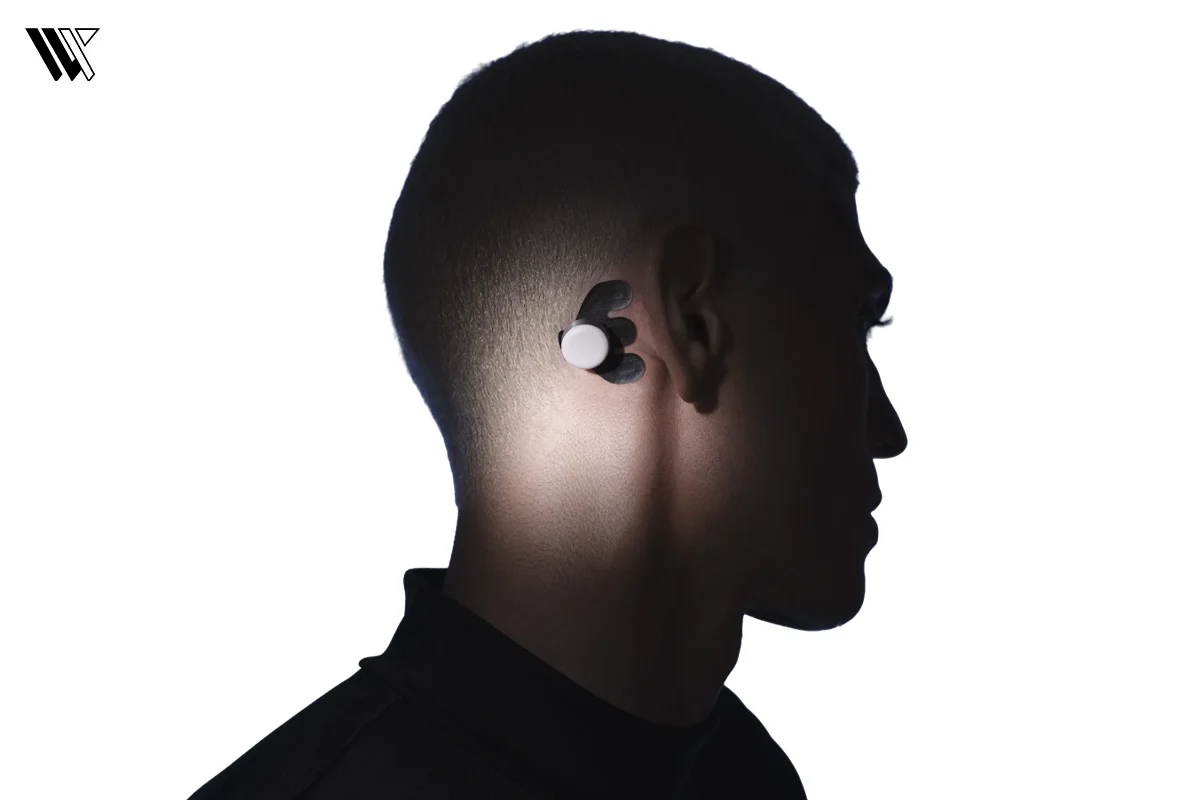
But there has always been one thing wearable technology has mostly left alone: our brain. That is what makes the new Atlas brain wearable interesting.
Instead of tracking steps, heart rate or calories, Atlas is trying to bring brain activity into everyday wearable technology. The idea sounds futuristic, but Atlas 1.0 is designed for something surprisingly ordinary: understanding what happens in your brain while you simply go about your day.
Of course, that raises an important question: can a small wearable really measure useful brain activity outside a laboratory? That’s where Atlas gets interesting.
Decode the Decor
The Smart Jewelry Revolution — a practical guide to wearable tech.
Atlas 1.0 Is a Wearable for Your Brain
At its very basic level, the Atlas brain wearable is simply a compact gadget, designed exclusively to monitor your brain activity during the course of your day. Instead of using the regular heart rate sensors, like those used in any typical smartwatch, the entire system works on the principles of EEG.
Atlas Mankind clearly specifies that this is not a medical gadget but is more of a consumer wellness product. According to Atlas, the device records electrical brain activity through EEG while you walk, exercise, talk and go about your day.
Pre-orders of the Atlas brain tracking gadget opened officially on September 1, 2026. The cost of the hardware is $499 and the user also needs a $29.99 per month membership fee to continue using it along with new supplies. Presently, Atlas has a U.S only Pioneer Edition and it ships somewhere in Q1 2027.
How Does Atlas Measure Brain Activity?
© ATLAS
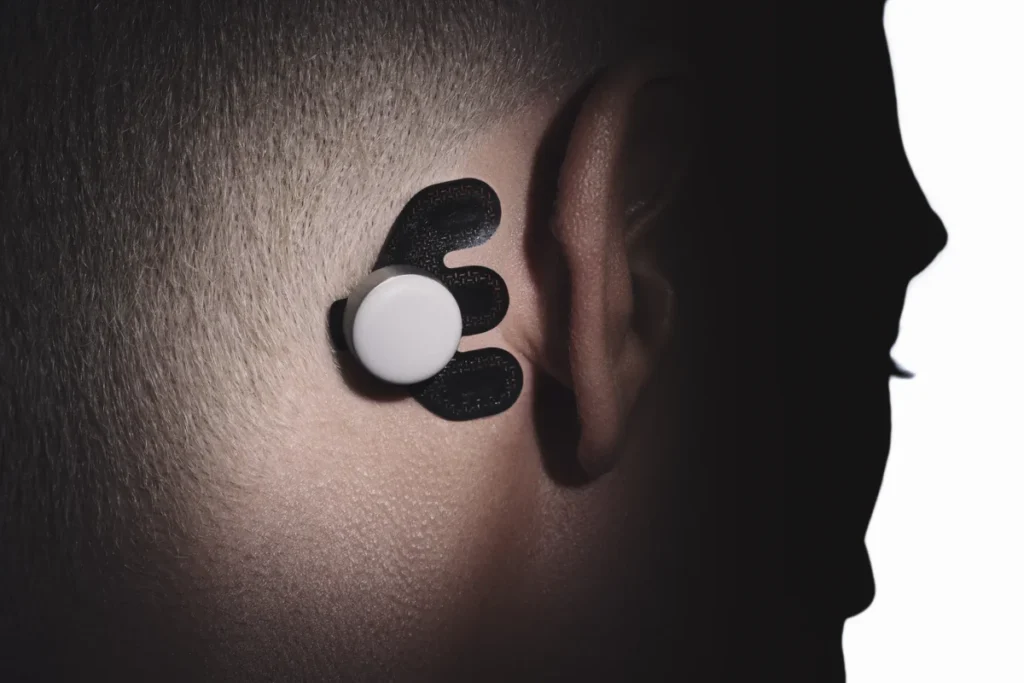
In order to comprehend how the brain tracker wearable by Atlas works, it is important to examine the technology behind the product. The technology of Atlas EEG records the electrical activity that the brain generates. Conventionally, in order to record this kind of activity, an individual needs to stay very still in a clinical environment and wear a wired cap. It is quite difficult for the traditional EEG devices to work around movements since any kind of movement produces a great deal of noise.
For this reason, Atlas wearable EEG uses a small sensor located right behind the ear. Since just a single type of sensor is not enough to filter out noise in regular environments, the EEG technology is combined with a few other sensors, including:
- IMU (Inertial Measurement Unit): Monitors the head’s motion and position.
- GSR (Galvanic Skin Response): Measures changes in skin conductance associated with sympathetic arousal.
- Bone Conducted Sensing: Monitors speaking actions and vibrations of your voice.
It is very important to note that the Atlas EEG wearable only detects speaking activities and patterns of your voice. Atlas says the sensor detects speaking activity and voice patterns, but not speech content. According to Atlas, the combination of EEG, IMU, GSR and bone conducted sensing allows their device to keep monitoring your brain activity while in motion.
What Does the Atlas Brain Wearable Actually Measure?
When the Atlas brain wearable device is always tracking your brain activity, what data will you get to see? When you open the companion Atlas Health app, you will not be bombarded with raw brainwaves. Instead, the company processes the data into three proprietary consumer metrics.
Presence
Presence is a metric designed by Atlas which tries to gauge whether your attention is focused inwards (distracted in thoughts) or outwards (concentrating on the environment). The objective of the application is to let you know whether your attention in a particular conversation is extremely distracted or well-preserved. It is vital for one to know that this is a metric created by the company for consumers and not a clinical measure.
Stress
In relation to Stress, the wearable device from Atlas measures the combination of neurological and physiological signals. With the help of GSR sensor along with the Atlas EEG sensors, Atlas claims to detect the real-life scenarios when there is an increased amount of stress and even after that recovery phase.
Energy Burn
Unlike a smartwatch, which counts the physical calories being burned, Energy Burn is what Atlas considers as the measurement of your mental effort or the mental resources that you are using up. This is intended to measure the amount of mental endurance that you are utilizing through the course of your day. Just like Presence and Stress, this is not a direct measurement of the physical calories that you burn from your brain.
Atlas Claims Its EEG Works While You Are Moving
The biggest technical challenge faced by any wearable EEG is that of motion. Since motion tends to be extremely hard to detect by the highly sensitive EEG sensors, the most important technical claims made by Atlas have to do with their ability to filter out this particular source of noise.
According to Atlas, the technology was thoroughly benchmarked against the high-end $30,000 EEG setup. Atlas reports that the Atlas 1.0 brain tracking device showed 20× better signal quality when moving compared to standard equipment. To support this claim, they have over 2,500 hours of controlled tests and over 15,000 hours of actual brain data gathered during use. Altogether, they claim to have 500,000+ Brain activity recordings.
It is extremely important to understand that these are the results reported by the company itself. A better signal quality during the controlled benchmark doesn’t guarantee flawless performance of the end-user device in all situations.
What Could You Actually Use Atlas For?
© Atlas
Similarly, platforms like Whoop track physical strain and recovery, while Atlas is trying to bring brain activity into the picture. So, why would you want an Atlas brain wearable stuck behind your ear all day? The main reason for that would be longitudinal tracking instead of isolated measurements. By wearing it consistently, the Atlas brain wearable allows you to connect your brain state patterns with contextual information.
The user will have the opportunity to start identifying the periods when he puts the greatest effort into his work and when he needs to take a break to recover and hence realize his brain-states patterns. The developers of the Atlas app promote the idea of correlating brain-states with calendar events, sleep patterns, exercises, travels, certain people or places. This could also add another layer to the data collected by smart rings, including devices such as Oura, which mainly focus on areas like sleep and recovery. You may find out that your weekly meeting generates huge peaks of Stress or certain type of training increases your Presence.
Nevertheless, we should not be misled by thinking that the Atlas brain wearable knows everything about us. It does not know what we think, it does not diagnose our psychological problems and it does not tell us why we feel in a certain way.
Atlas 1.0 Price, Subscription and Availability
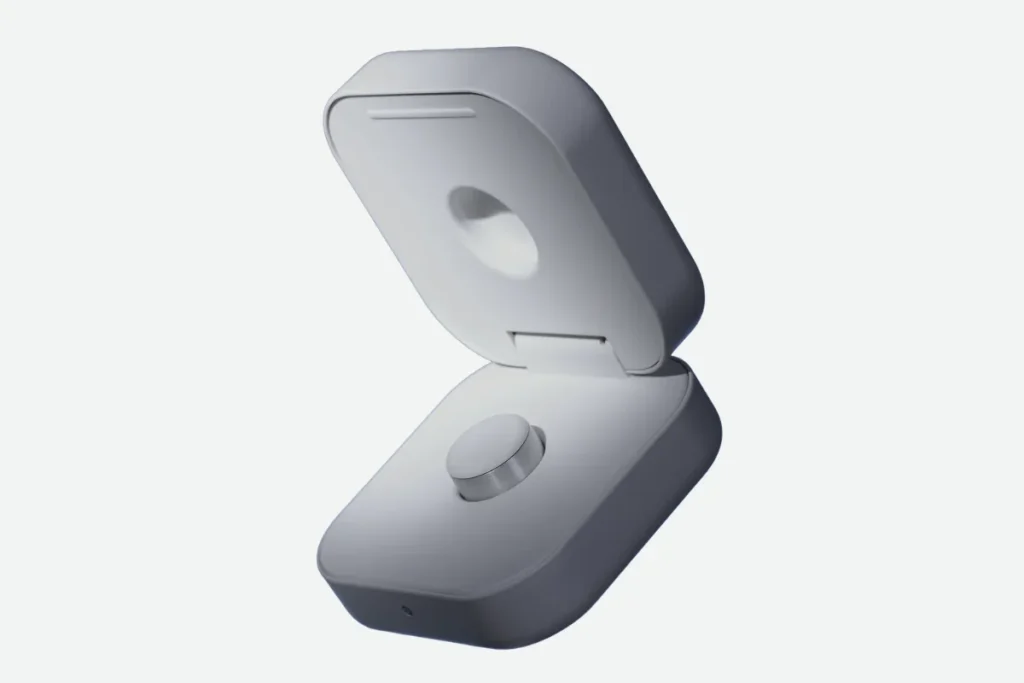
The Atlas brain wearable price is currently listed at $499. However, that is not the complete cost of using the device. Atlas also requires a $29.99 monthly membership. According to the company, the membership covers things such as Access to the Atlas app, Ongoing software and AI-powered insights, Sensor replenishment and Adhesive replenishment. The first 3 months are reportedly included with the initial purchase.
Atlas is currently offering a Pioneer Edition, which is listed as a U.S. only release and the company expects shipping to begin in Q1 2027. For Atlas 1.0 users will also need an iPhone 12 or later running iOS 18 or newer. The current release is only designed for English language availability.
What We Still Don’t Know About Atlas
Although the pitch for the Atlas brain wearable may sound fantastic, there are many things that remain unknown like:
- Comfort and Accuracy: How well the device works on people of different head sizes and different skin types is yet to be seen.
- Validation by Third Party: Until independent testing is available, the 20x signal-quality figure should be treated as an Atlas-reported benchmark rather than proof that the device delivers research-grade EEG in everyday use.
- Long Term Comfort: Whether there are any issues with daily wear of the device in terms of its physical comfort and the necessity to change adhesives every single day is also left open to question.
- Real World Battery Usage: Although real world battery performance is an unknown factor.
- Metric Accuracy: Whether the unique metrics of Presence, Stress and Energy Burn will be proved to be reliable enough in comparison to clinical numbers.
- Subscription Worthiness: Whether it makes sense to pay that $29.99 per month after the initial period of time passes.
Is Atlas the Next Big Wearable Category?
The continuous brain monitoring is set to be another incredibly valuable wearable device category in the future. The Atlas brain wearable is undoubtedly very ambitious and its main differentiator is the ambition to capture usable EEG data while moving. Technology used by this device may arguably be way more interesting than its three consumer-oriented parameters.
It also reflects how wearable health tracking is expanding beyond basic fitness and body-related data. However, paying $499 for the gadget and $29.99 for the subscription each month is quite a considerable amount of money. Being a person that loves to test platform-agnostic devices since I can change my phone and not worry about losing my data on the specific brand’s app ecosystem, the iOS 18 requirement for the device is quite a pity, although connecting to Apple Health sounds quite reasonable.
But the verdict can only be given after independent testing of this device. The Atlas brain wearable is without a doubt one of the most bizarre and impressive wearables of 2026, but its real value totally depends on whether or not independent reviewers confirm that it collects useful EEG data in action.
Wrap Up
The Atlas brain wearable is trying to take wearable technology in a completely new direction. While most devices focus on tracking the body, Atlas wants to help users understand what is happening in their brains during everyday life.
Its technology and claims are certainly interesting, especially its attempt to collect EEG data while users are moving. However, the real test will come when independent testing shows how well it actually performs outside the company’s own research.
For now, Atlas is one of the most interesting wearable launches to watch. Whether it becomes the beginning of a new wearable category or just an ambitious experiment is something we’ll have to wait and see.
Faqs
Decode the Decor
The Smart Jewelry Revolution
A practical guide to wearable tech's future — delivered straight to your inbox.
Author
