

If you use prescription glasses and have been thinking about smart glasses, you understand this dilemma. They do not always fit your regular prescription. Either you will need to purchase your own custom lenses, use some rather strange lens insert systems, or simply get used to the fact that you cannot see half of what is shown on the screen. It’s frustrating.

But here’s the thing, there have been many improvements in smart glasses for vision correction during the past year. We are at the stage when it is possible to get smart glasses with prescription without any difficulties. There are brands that incorporate prescription support in their frames right from the beginning. Other models allow you to insert additional inserts with your prescription. And finally, there are models which allow you to go to your local optician to change the whole pair of lenses.
Decode the Decor
The Smart Jewelry Revolution — a practical guide to wearable tech.
Honestly, if you need vision correction, that changes which smart glasses make sense for you, so here is my list of the best smart glasses with prescription for you.
What Are Smart Glasses With Prescription?
Smart glasses with prescription are exactly what they sound like. These are smart glasses that have been developed with the aim to work with rather than against your vision. There are two categories within this type of smart glasses, the ones that come with prescription lenses right out of the box and the other one which uses inserts or clips to enable the prescription correction inside the frame, so the AR display sits on top of or next to your corrected vision.
The key difference between integrated Rx and prescription-compatible frames matters more than you’d think. If a brand builds Rx support into the design from the start, the optics usually align better. In case the prescription glasses feature was bolted-on later by the manufacturers, the optical path alignment might not be perfect and your eyes will get tired due to the mismatch between your prescription correction and the AR display.
If you are wearing glasses or contacts on a daily basis, these smart glasses are meant for you.
How Prescription Integration Actually Works
There are basically three ways brands handle this now. It matters because the process, the cost and how it feels are all different.
Built-in Prescription Options
Some brands let you order the glasses with your actual prescription already ground into the lenses. You follow the order process, input your prescription data and receive glasses ready for immediate use. No inserts, no adapters, just regular glasses that help you see properly. That would be the most hassle-free solution if available for your prescription strength.
Prescription Inserts and Clip Systems
Some other companies provide glasses with dummy lenses or optical elements and then you need to order prescription inserts that clip or slide inside. This solution works well with RayNeo which utilizes magnetic inserts placed behind the display. XREAL offers something similar. The insert goes behind the optical element, therefore your prescription remains in focus when you look at the AR layer.
Aftermarket Lens Replacement
There are some companies that allow you to bring the glasses to any optician and get the optical elements replaced with your prescription altogether. That gives the greatest freedom since it could be done by any optical laboratory.
Quick Comparison: Smart Glasses With Prescription
| Model | Price | Type | Display | Prescription Support | Battery | Key Features |
|---|---|---|---|---|---|---|
| Ray-Ban Meta | $379 | AI Voice | Available in Audio-Only and Display | Built-in Rx (-6 to +4) | 8 hrs (48 hrs with case) | 12MP camera, Meta AI, Live translation, Open-ear speakers |
| XREAL One | $699 | AR Display | 1080p per eye | Prescription inserts available | USB-C tethered | 50° field of view, 600 nits, USB-C tethered |
| Even Realities G2 | Starts at $599 | Minimalist AR Display | Narrow text overlay | Built-in Rx (−12.00 to +12.00) | Up to 2 days | Notifications + navigation without immersion |
| RayNeo Air 4 Pro | $299 | AR Display | 1080p per eye | Magnetic Rx inserts | USB-C tethered | 3DoF tracking, 1080p display, wide FOV |
| Brilliant Labs Halo | $349 | AI Voice + Microdisplay | 0.2″ microLED | Built-in Rx (-6 to +2) | 14 hrs | Local AI processing, Open-source, Bone-conduction audio |
| Rokid AI Glasses Style | $269 | AI Voice | None (Audio) | Broad support (up to +15.00) | 12 hrs | 12MP Sony camera, Multi-LLM, 4K video, Real-time multimodal AI |
| Solos AirGo 3 | $199–$299 | AI Voice | None (Audio) | Custom built-in Rx | 10 hrs music / 7 hrs calls | ChatGPT integration, 25-language translation, Modular frames |
Ray-Ban Meta Smart Glasses (with Built-in Rx Option)

Starting at $379, the Ray-Ban Meta Gen 2 represents the point of entry into this niche market for smart glasses with prescription lenses. It has a 12MP ultrawide camera capturing videos in 3K resolution at 30fps, which for a glasses form factor is pretty decent. Its five mic array manages to cope with background noise very effectively, and open ear speakers eliminate the impression of ignoring the surroundings.
On the AI aspect, it comes with an assistant powered by Meta’s Llama 4 processor. Furthermore, it can use information from Instagram and WhatsApp to give personalized answers. The live translation works in real time in English, Spanish, French and Italian. The battery lasts up to 8 hours and even reaches 48 hours in combination with its charger. In just 20 minutes of charging, you get 50 percent of its capacity.
With respect to the prescription, Ray-Ban integrates Rx frames with prescription lenses right from -6 to +4 diopters. You need to order them through LensCrafters or selected opticians and it will be ready to use immediately with a prescription included. The optics are excellent since the prescription correction is built right into the frame.
The display version, the Scriber and Blyzer optics as well as the newest Meta glasses in collaboration with EssilorLuxottica, are all prescription friendly smart glasses.
Pros:
- Very good quality AI functionality
- A decent camera
- Battery life is very good.
- It integrates prescription lenses effortlessly.
- Meta ecosystem integration is quite smooth.
Cons:
- No AR display in Gen 2, so the responses are delivered through speakers.
- Camera sometimes lags.
- In some cases, people may prefer smarter AI responses.
- Outdoor sounds can escape into the indoor environment a little.
- Privacy concerns with dim camera indicator light.
XREAL One with Prescription Kit
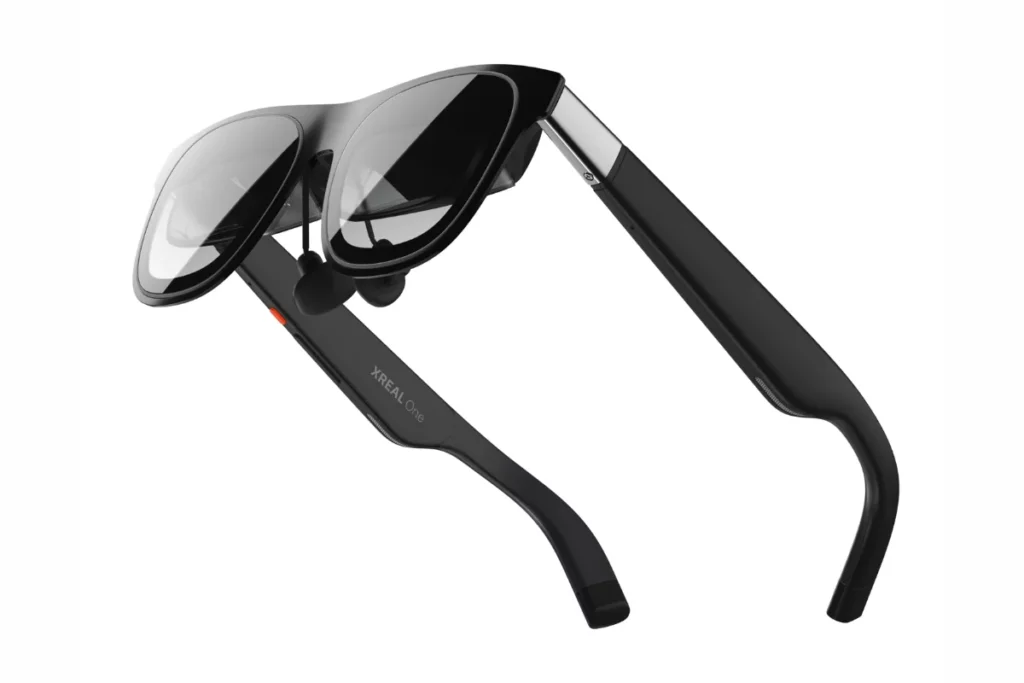
Starting at $699 for the base model, and adding prescription inserts as required, the XREAL One is an AR display glass, so you’ll get actual overlays. It offers a 1080p resolution per eye with a field of view of 50 degrees, which is surprisingly wide for a device of this class. It’s also bright enough, 600 nits, so it will be readable indoors and outdoors.
Prescription inserts work thanks to their positioning behind the waveguide display. The prescription correction and the AR overlay are two different things, residing in different optical planes. The display works at a 90 Hz refresh rate to keep motion smooth. You’ll be connecting the device to any computer, mobile phone, Beam Pro, Steam Deck, PlayStation Portal or anything else with a video output port using USB-C connection.
No battery needed because it’s tethered. Display quality and clarity have been prioritized by the company. The colors are vibrant, text is readable and if you’re doing a lot of work on a laptop or watching videos while traveling or having coffee in the morning, these smart glasses will make the experience smoother and not like you’re staring at a tiny screen.
Pros:
- The display quality is outstanding at its price point.
- A 50-degree field of view is very wide indeed.
- USB-C tethering removes all concerns about batteries.
- Prescription inserts fit correctly.
- It works with pretty much any device.
- It’s lightweight and socially acceptable.
Cons:
- Being tethered requires having a device with you.
- The prescription inserts come at extra cost.
- This isn’t a standalone platform.
- For some people, 50 degrees isn’t enough for immersive AR.
- Setup may require playing with adapters on your source device.
Even Realities G2

Even Realities G2 is based on just one concept: that AR glasses must look like real glasses and prioritize text legibility over an immersive AR experience. Starting at $599, they feature a subtle microLED display capable of presenting notifications, navigation and AI answers in a legible text format without using bulky waveguide technology.
The display itself has a limited field of view, working in a way similar to a heads-up display. In other words, there will be no need to immerse yourself in graphics, it will present all the necessary information without hindering your perception of the world around you.
Prescription lenses can be installed by the factory in the range from −12.00 to +12.00. Optional R1 Smart Ring ($249) allows you to control glasses with gesture interface (tap, scroll, long press), measuring heart rate, HRV, blood oxygen, skin temperature, steps and sleep with data synced to the app. Battery life is up to 2 days per charge.
Pros:
- Genuinely looks like normal eyewear.
- Text is crisp and highly readable.
- Prescription support built in from day one.
- Integrated health tracking ring is genuinely useful.
- No optical distortion or weird visual artifacts.
- Minimalist design means less social awkwardness.
- Light and comfortable for all-day wear.
Cons:
- Narrow field of view by design might feel limiting if you want broader AR.
- Display isn’t bright enough for very sunny outdoor conditions.
- No camera for capturing videos or photos.
- R1 ring is sold separately and adds to total cost.
- Emerging ecosystem means fewer third-party integrations.
- Battery life depends heavily on brightness settings.
RayNeo Air 4 Pro

RayNeo is a recognized brand within the affordable segment of AR glasses and Air 4 Pro is its flagship for 2026. With 1080p per eye display and a wider field of view, this glass is above average for the price range. Magnetically installed prescription inserts are implemented quite well by RayNeo. The inserts go inside the waveguide, they are magnetic to prevent them from falling out and the optical alignment is accurate as all components were designed together.
3DoF tracking allows the image to stay in place while moving your head a little bit which makes it more comfortable to use than older 2D display glasses. There is no built-in battery and it depends on the connection to a phone or PC or console, which is made through a USB-C port. The frame is well-designed without being cheap and the build quality is good for the price.
In terms of display specifications, the Air 4 Pro is close to XREAL One, although at the same time you get a lower price and better build quality at $299. However, you lose some ecosystem and third-party integrations at the same time, but this glass suits you perfectly if you need only an AR display with prescription support.
Pros:
- Great value for money based on the specifications.
- Magnetic prescription lenses work well.
- The 1080p screen is crystal clear and has sufficient brightness for most situations.
- True 3DoF tracking ensures great comfort.
- High frame rate compared to the competition.
Cons:
- It has a limited library of apps.
- It requires tethering.
- Less developed customer support service than XREAL and Apple.
- Lack of some spatial functionalities.
- Not able to operate stand-alone.
Brilliant Labs Halo
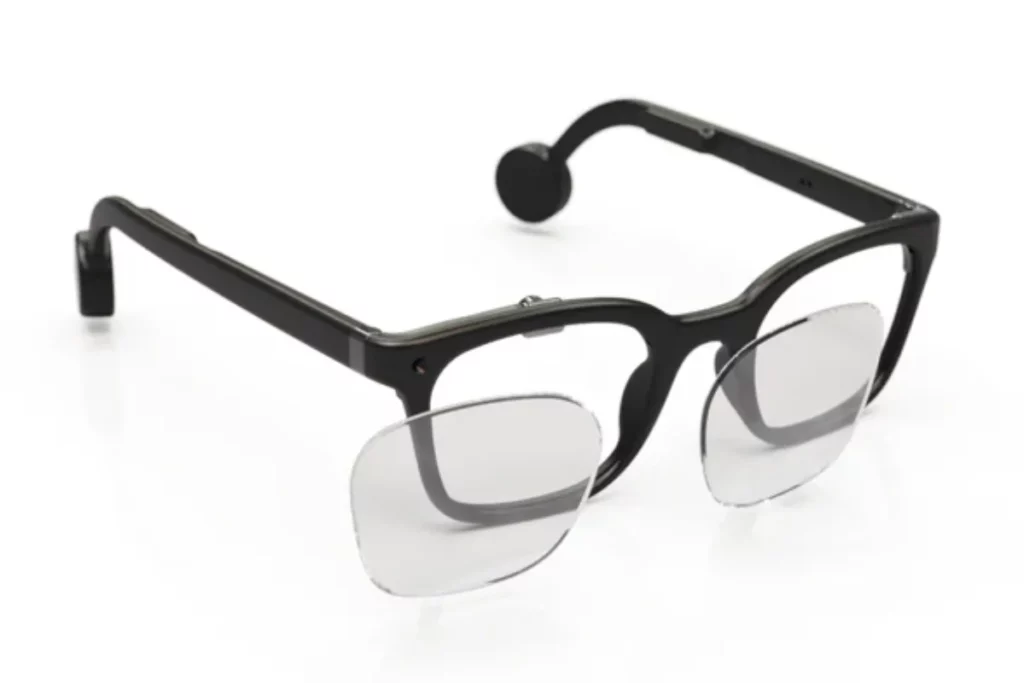
The Halo is crazy because it’s the only truly open-source AI glasses out there. It runs ZephyrOS on an Alif B1 processor with an on-device NPU, meaning your AI isn’t getting routed to the cloud for every single interaction. The AI agent is called Noa and it has narrative memory, so it remembers context across sessions. That’s not nothing.
The display is 0.2-inch full-color microLED, 20-degree field of view in the right lens and only weighs just over 40g. It’s tiny, but it does the job showing text overlays, notifications and other stuff. The camera is VGA resolution which is pretty low for today’s standard but works fine. Estimated 14 hours battery life is impressive enough. Audio uses two bone-conduction speakers which have mixed reviews.
Prescription is supported from -6 to +2. Priced at $349 currently, will go up to $399.
Pros:
- Truly open-source platform.
- Local AI processing means better privacy.
- Bone-conduction audio is unique.
- Exceptional battery life.
- Narrative memory is genuinely useful.
Cons:
- Not a polished consumer product.
- VGA camera is low-res by modern standards.
- Support and documentation are sparse.
Rokid AI Glasses Style (No Display)

Rokid is a Chinese XR company which has been selling AR hardware for years and the Style was launched worldwide in January 2026. It is priced at $449, currently available at $269. It works on Qualcomm AR1 processor and features a multimodal AI stack powered by both ChatGPT GPT-5 and DeepSeek. There is no screen, it is designed for voice-first usage like the Ray-Ban Meta.
The best part is that the real-time multimodal AI is available. The 12MP Sony camera is capable of describing what is happening in the environment, recognizing objects, translating any text around the user and narrating what is happening around. The camera records video at 4K and 30 fps. The battery will work up to 12 hours when using the internal power supply but there is an option to purchase an additional case featuring 3,000 mAh battery.
It supports a wide range of prescription eyewear options with 200+ color options and supports Deep Myopia, Astigmatism, Progressive and Presbyopia (up to +15.00). Although the Rokid does not offer the same ecosystem as Meta.
Pros:
- Good price for prescription smart glasses.
- The camera is great.
- Battery life is better than that of Ray-Ban Meta.
- Accommodates many prescriptions.
- Multi-LLM option means you get different models.
Cons:
- Integration with the ecosystem is poor compared with Meta.
- App maturity is behind competitors.
- Customer support infrastructure is newer and less established.
- No social platform integration.
- Firmware updates can be slow.
Solos AirGo 3
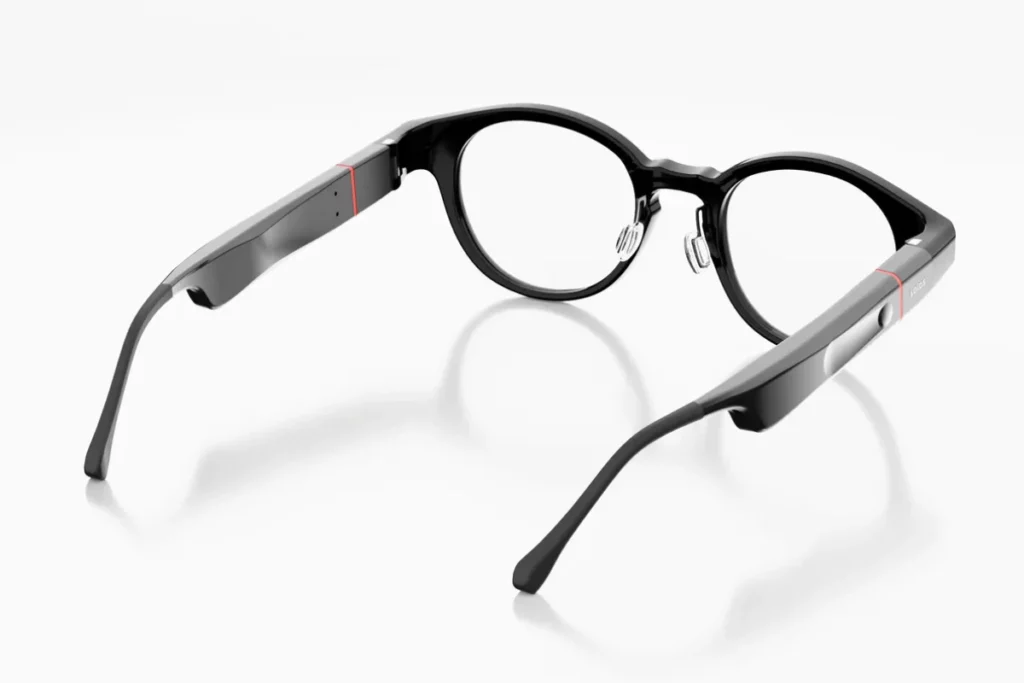
Solos AirGo 3 price ranges between $199 and $299 depending on the model. This is an audio-first pair of smart glasses with no display or camera. The product comes with ChatGPT support, 25-language translation services, open-ear speakers and beamforming microphones designed to ensure clear voice detection. The battery lasts up to 10 hours when playing music and 7 hours when making phone calls.
Its most significant strength is the modular design. There are several frame designs to choose from and it is possible to get glasses with prescription lenses already installed using the online service that allows you to upload your prescription information.
Pros:
- Customizable frames that truly provide style options.
- Simplified ordering process for prescription lenses.
- Excellent battery life.
- Lightweight (~39g) and easy to wear all day.
- Beamforming microphones deal with noise efficiently.
- ChatGPT integration for translation is solid.
- Good value for money.
Cons:
- The lack of a display, everything is done via voice commands.
- Lack of cameras for photos and videos.
- Virtual button may be hard to find at first.
- AI responses are only delivered through speakers, not shown on a display.
What to Actually Look For When You’re Choosing Smart Glasses with Prescription
Optical Quality and Visual Comfort
It plays a much bigger role than its specifications would suggest. If your prescription adjustment is not done right with respect to the AR display, your eyes will be tired in less than 15 minutes. See if the company designed prescription support into their frame originally or just added it later. Native prescription will almost always provide better optical performance.
Consider lens thickness as well. The higher the correction is, the thicker the lenses become and it can look strange if a particular frame was not designed to accommodate that.
Prescription Process and Price
Some companies allow ordering prescription glasses directly from them, some want you to go through the optical partners. It is important to know which approach works for your prescription power. If you have an unusual prescription, chances are high some companies will not support it.
Also consider the price of replacement lenses. If in two years you will get new glasses, would you get new prescription lenses only or would you have to buy a whole new pair of smart glasses?
Comfort and Fit
Prescription glasses put on extra weight, the higher the strength of your prescription lenses, the more weight your glasses will have. Smart glasses are naturally heavier than the standard ones due to their electronic components. When you combine them with heavy prescription glasses, the difference in comfort is real. Light materials and weight distribution are more important than the producers make them appear.
Also, consider whether there are several sizes available for a particular frame since the prescription inserts are size sensitive as well.
Who Should Buy Smart Glasses With Prescription
Buy Them If:
- You wear prescription glasses all the time and you wish to have smart features but do not want to switch to contacts.
- You want AI help, audio or AR features along with vision correction.
- You like glasses which come with prescription lenses rather than clip-on or insert lenses.
- You wish to have smart glasses without any compromises on your vision.
Skip Them If:
- You have a prescription that is beyond the limit allowed by most brands.
- You usually wear contacts while using smart glasses.
- You want an immersive AR experience as smart glasses are currently quite basic.
Wrap Up
Choosing the best smart glasses with prescription depends on finding a pair that suits not only your vision requirements but also the way you are going to use them. No matter whether you need help from AI, an AR display, hands-free audio or a daily device to replace your usual glasses, today there is a prescription smart glass solution for each purpose.
Before you buy one, always check whether it is capable of working as prescribed and will go well with your vision. With the increasing development of smart glasses, being able to use prescription lenses is no longer an exception but a rule.
Decode the Decor
The Smart Jewelry Revolution
A practical guide to wearable tech's future — delivered straight to your inbox.
Author
