

As I’ve grown up, I’ve started to realize that stress doesn’t really go away anymore, it just kind of sits there in the background of everything I do. The mail I forgot to reply to, the brunch plan I have to squeeze into a busy workday, the trip I have to save up for.
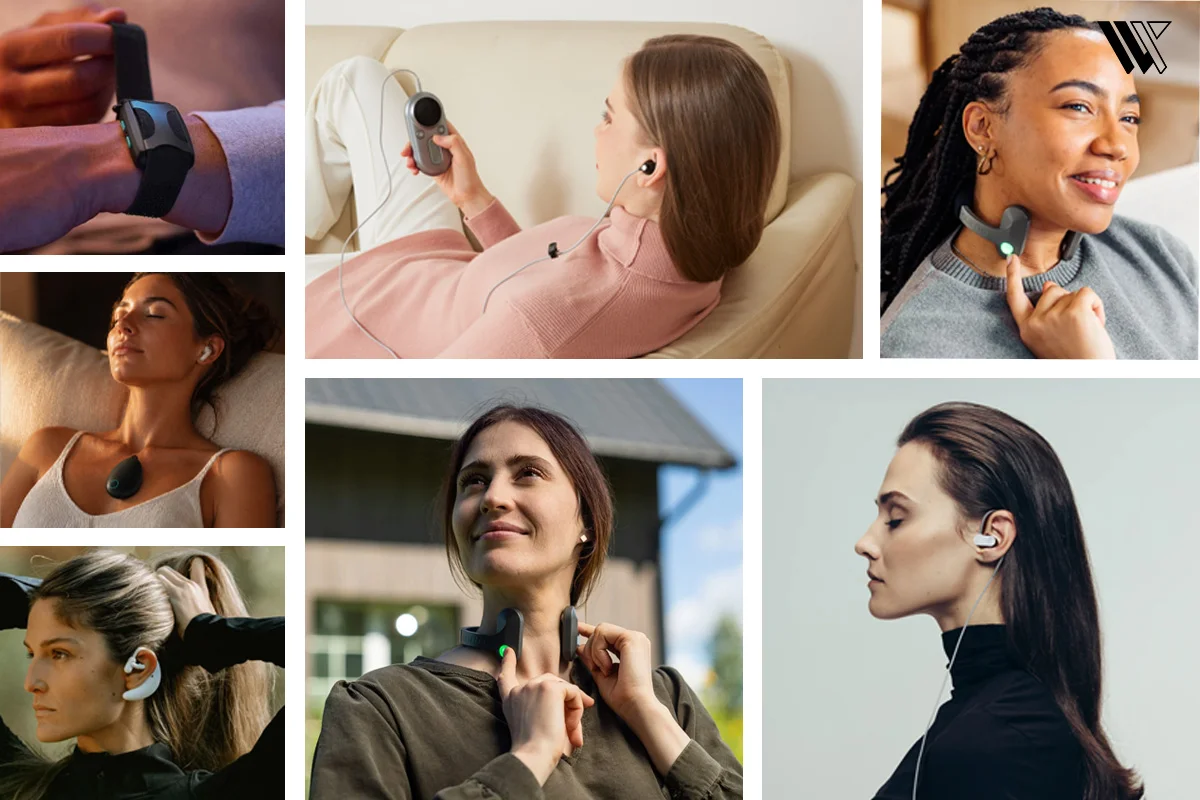
This is precisely the reason why wearable vagus nerve stimulators have become so popular these days. The Truvaga, Pulsetto and Sona brands keep showing up in my feed and promise to reset your nervous system in a couple of minutes daily. So naturally, as a stressed-out millennial, I dove deep into the science behind it and the actual user experience with these gadgets to find out which ones are worth their price. But first…
What Is a Wearable Vagus Nerve Stimulator?
A wearable vagus nerve stimulator is a compact device that emits low-intensity electrical impulses through your skin to stimulate the vagus nerve, which is the nerve connecting the brainstem through the neck to your chest and gut. Essentially, it’s a relaxation switch. Once stimulated, the body shifts from the “fight or flight” mode to “rest and digest.”
Decode the Decor
The Smart Jewelry Revolution — a practical guide to wearable tech.
Up until recently, these kinds of devices could only be used surgically for the treatment of epilepsy or drug resistant depression. Today, there’s a non-surgical option available: a device that you wear around your neck or clip to your ear. People use these gadgets to relieve themselves of stress, anxiety, insomnia, “brain fog” and headaches, although the latter one remains rather controversial and unproven.
I should warn you that these are not medical devices. If you suffer from any health problem that requires professional help, discuss it with your doctor first.
Neck-Based vs Ear-Based: What’s the Difference?
Cervical (Neck) Stimulation
Used by Truvaga and Pulsetto, these devices stimulate the vagus nerve through the side of the neck. Sessions are brief (2 minutes on average) and result in a slight tingling sensation or a muscle twitch. Research is promising but still in progress.
Auricular (Ear) Stimulation
Used by Sona, Xen, Nurosym, and ZenoWell Luna, these gadgets stimulate a part of the vagus nerve via the earlobe. They have a broader research base with studies indicating their possible impact on mood, anxiety, sleep, cognition and heart rate variability.
Vibroacoustic (Non-Electrical)
Sensate uses vibrations and sounds rather than the electrical stimulation of nerves. The aim of this procedure is to help with relaxation, although the process is different from vagus nerve stimulation.
Which One Should You Pick?
If you want something fast, no fuss and don’t love the idea of anything near your ear canal, go neck-based.
For those who want a hands-free system which they can wear and do other things at the same time, or have been told that the ear branch has more research behind it, the auricular choices could be better for you.
Quick Comparison
| Device | Placement | Session Length | Price | Battery Life | App Required | Subscription |
|---|---|---|---|---|---|---|
| Nuropod | Ear clip | 15-60 min | $900 | 1 week | No (optional app) | No |
| ZenoWell Luna | Ear clip | 20 min | $409 | 8 hours | No | No |
| Pulsetto Lite | Necklace, hands-free | 4-10 min | $251-$469 | 8-12 days | Yes | Optional |
| Sona | Earpiece | 10 min | $939 | Weeks | Yes | No |
| Xen by Neuvana | Earbud | 15-30 min | $449 | 3 hours | Yes | No |
| Sensate | Chest-held | 10-30 min | $269-279 | One week | Yes | $49.99/yr recommended |
| Apollo Neuro | Wristband or clip | 3 hours a day | $368 | Up to 12 hours | No | No |
| DUSQ | Behind ear | 2-3 hours before bed | $350 | Not disclosed but has a rechargeable case | Yes (optional) | No (patch refills ~$25/3mo) |
Top Wearable Nerve Stimulators
1. Nuropod (aka Nurosym)
© Nuropod
Price: $900 | Type: Ear-based taVNS | Session: 15-60 minutes
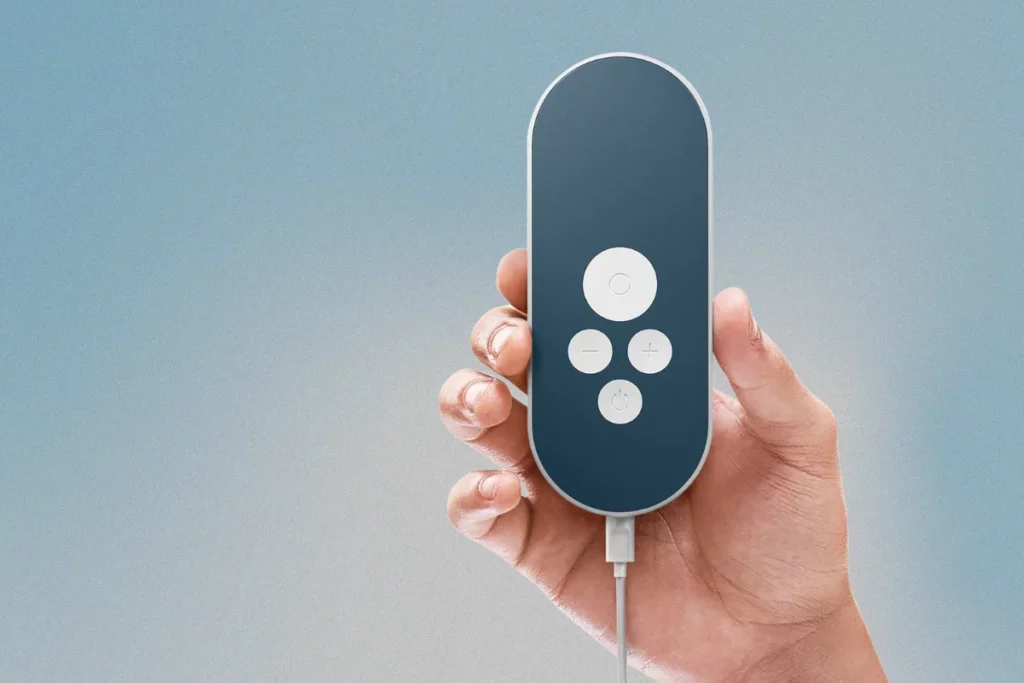
Nuropod clearly stands out as the one with research credibility in this category. It is different from the majority of other devices on the market, as it boasts 50+ scientific studies and collaboration with Harvard, UCLA and NHS facilities.
One of the main benefits of the device is that you don’t need an app. You simply clip it onto your tragus, control all actions with a simple physical controller and do not need any Bluetooth connection to sync everything. The latter was a breakthrough during the testing period: you simply clip it and go without using apps and worrying about your phone battery.
The sensations are sharp and tingling initially and become soothing after adjustment. Sessions can last for up to 60 minutes, which is quite long compared to other devices and it is recommended to use daily in order to get the long-lasting effects on the nervous system. According to the research, taVNS might be helpful in improving heart rate variability and even cognition in the long term.
The main drawback is the price tag and it is ear-based, which means someone with an oddly shaped ear might need more adjustments.
Pros:
- Most compelling research and clinical credibility
- No subscription
- App-free interface
- Multiple modes for different goals
- 2 years warranty and 30 days money-back guarantee
Cons:
- Very expensive
- Ear clip fit depends on anatomy
- Optional app is apparently glitchy
- Needs to be used daily for best effects
- Long session time
2. ZenoWell Luna
© ZenoWell
Price: $409 | Type: Ear-based taVNS | Session: 20 minutes
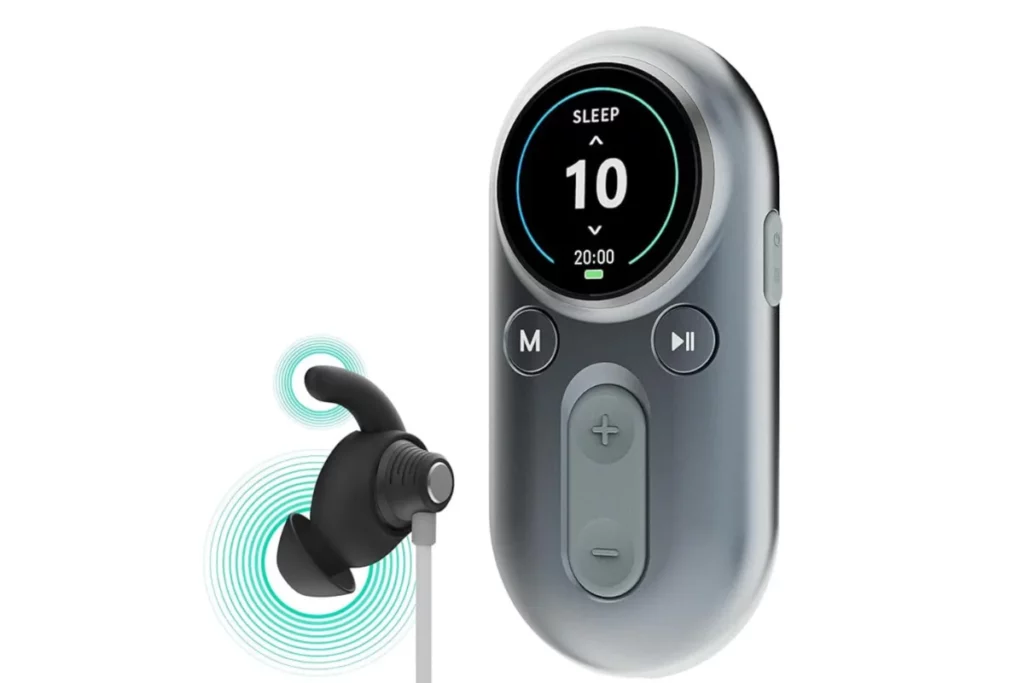
ZenoWell Luna fills the gap between budget options and premium Transcutaneous Auricular Vagus Nerve Stimulation (taVNS) devices. It is ear-based like Nuropod, doesn’t need an app and costs almost half as much. The earpiece is flexible and available in several colors (gray, white, black, blue and purple). Controls are also manual, no Bluetooth needed.
The drawback here is a longer session time (20 minutes instead of varying one of Nurosym) and a somewhat bigger controller. ZenoWell Luna provided us with expected results without any surprises. No breakthrough effects were reported, but consistent users noticed the difference in their stress level after several weeks. There are four modes, each designed for a specific purpose (Relief, Sleep, Relax and Medit), but they differ only slightly in their functions.
Pros:
- Affordable
- Ear-based
- App-free simplicity
- Multiple color options
- No ongoing costs
Cons:
- Longer sessions (20 min)
- Controller feels bulky
- No data tracking or app insights
- May require gel or water for contact
3. Pulsetto

© Pulsetto
Price: $251-$469 | Type: Neck-based taVNS | Session: 4-10 minutes
Pulsetto is the neckband wearable vagus nerve stimulator. It was the one worn by Bryan Johnson in the Netflix longevity documentary and this could explain the sudden spike in search interest. This is a U-shaped band that you put on your neck and costs anywhere between $251 for the Lite version (currently) and $469 for FIT (currently). Battery life ranges anywhere between 7 and 12 days depending on usage and it takes one hour to charge.
You do need conductivity gel for it to work, which can get pretty messy as there is a high tendency for the gel to get into the charging port. Five preset programs are available in the app for stress, sleep, anxiety, burnout and pain, along with a sound library for those who want it. The premium tier has additional meditations and affirmations but it’s not really required.
Hands-free wearability is one of the benefits compared to other handheld devices. You can exercise while working, meditating or relaxing without having to hold something. The session duration is rather short, about 4-10 minutes, which makes consistency possible. The feeling was quite strange at first (tingling and jaw vibrations), but it soon turned out to be pleasant.
One caveat to consider is that the fit is different depending on the size of your neck.
Pros:
- Cheapest hands-free choice on the list
- Decent battery life for regular use
- The app has plenty of diverse programs
- Not need to subscribe for core features
- Hands-free design promotes relaxation
- Good price-for-performance balance
Cons:
- Gel application can be messy
- The fit depends significantly on your neck size
- There have been reported problems with durability after a few months of use
- Needs to be refilled regularly with gel (a small recurring cost)
- Sensation unpleasant when used at higher levels
4. Sona
© Sona
Price: $939 | Type: Ear-based taVNS | Session: 10 minutes
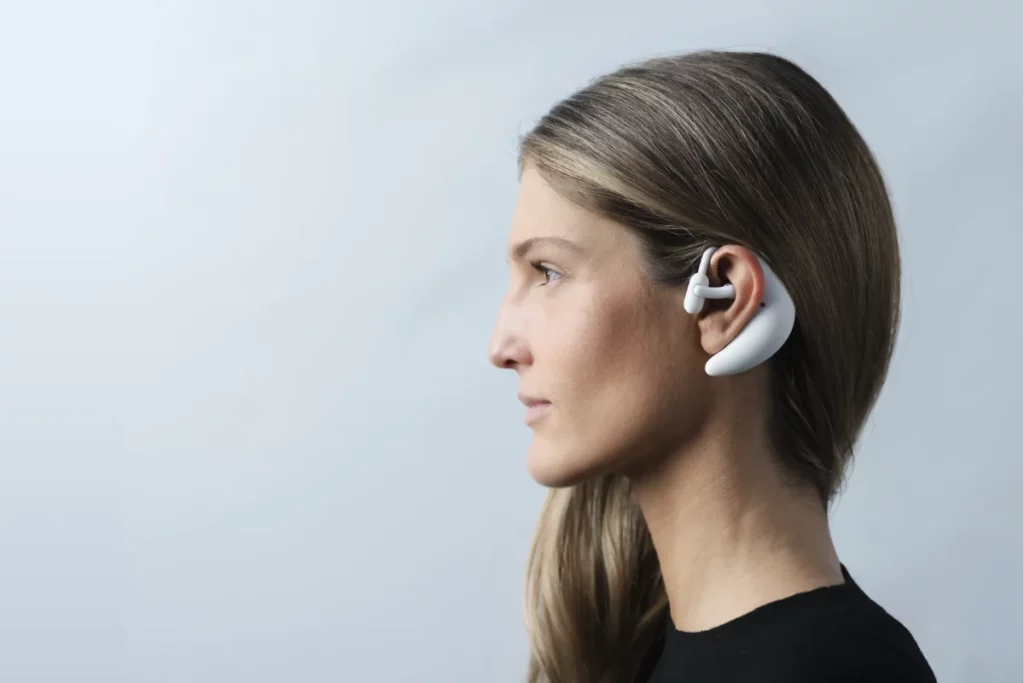
Sona is the AI-driven wearable nerve stimulator. It attaches itself to your ear and measures both your heart rate and breathing in real time and adjusts the stimulation accordingly rather than using the same pattern for everyone. This is definitely a unique feature compared to all other devices listed here. The only downside is that it is also the most expensive, costing $939.
Its app experience is praised for its clarity and ease of follow and no gels or subscriptions are needed after purchase. The sessions take 10 minutes and involve continuous biometric monitoring. One of the cons is that it is relatively bulky in comparison to usual earbuds. The price puts it out of reach for a lot of people who are just curious and want to try a vagus nerve stimulator without dropping serious money.
It is fascinating how AI is used for tailoring the electrical stimulation according to one’s biometrics.
Pros:
- Personalizes sessions with live biometric data
- Doesn’t use gel and no subscription cost
- Very simple app interface
- Better sleep and stress results
- Ergonomic and flexible earbud design
Cons:
- Very expensive
- Less comfortable in terms of fit compared to other ear devices
- It is not FDA cleared yet
- Has to be used via an app
- AI layer is additional with uncertain added benefit
5. Xen by Neuvana
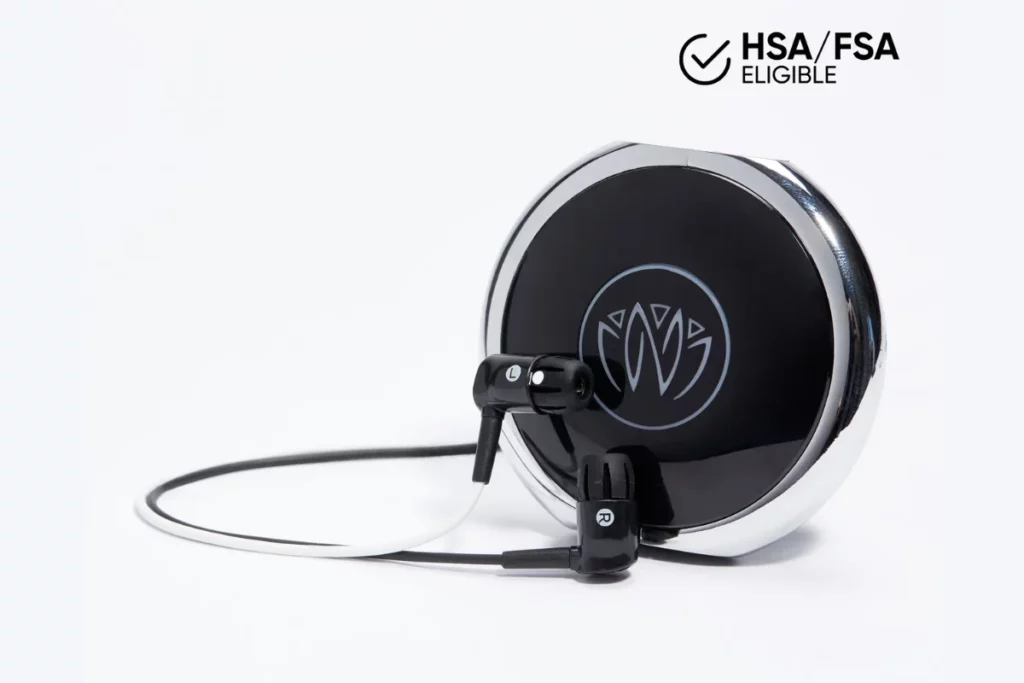
© Neuvana
Price: $449 | Type: -Ear-based taVNS | Session: 15-30 minutes
Xen is the earbud version, which doubles as actual headphones. It will allow you to sync the stimulation sessions with your music or podcast. Xen costs $449 and comes equipped with a 900mAh battery, which offers 3 hours of use per charge and a charging time of two hours. You need saline spray on the left earbud for conductivity, which may take time getting used to.
With the app, you can design waveforms and sensations, which will be enjoyable for those who love experimenting. The app interface seems a bit clunky initially when it comes to pairing with Bluetooth, but after that, it easily integrates with your routine, especially at night when you listen to soothing audio.
Functional audio capability (acts as real headphones/earbuds) makes Xen unique within the category.
Pros:
- Also functions as normal headphones
- Highly customisable stimulation options
- Good for passive listening like while meditating or sleeping
- Integration of music/podcasts prevents sessions from being too clinical
Cons:
- Learning curve with the app and some connection problems
- Needs saline spray for the earbud to function properly
- Faster battery consumption compared to the neck based competitors
- Bigger than normal earbuds
6. Sensate
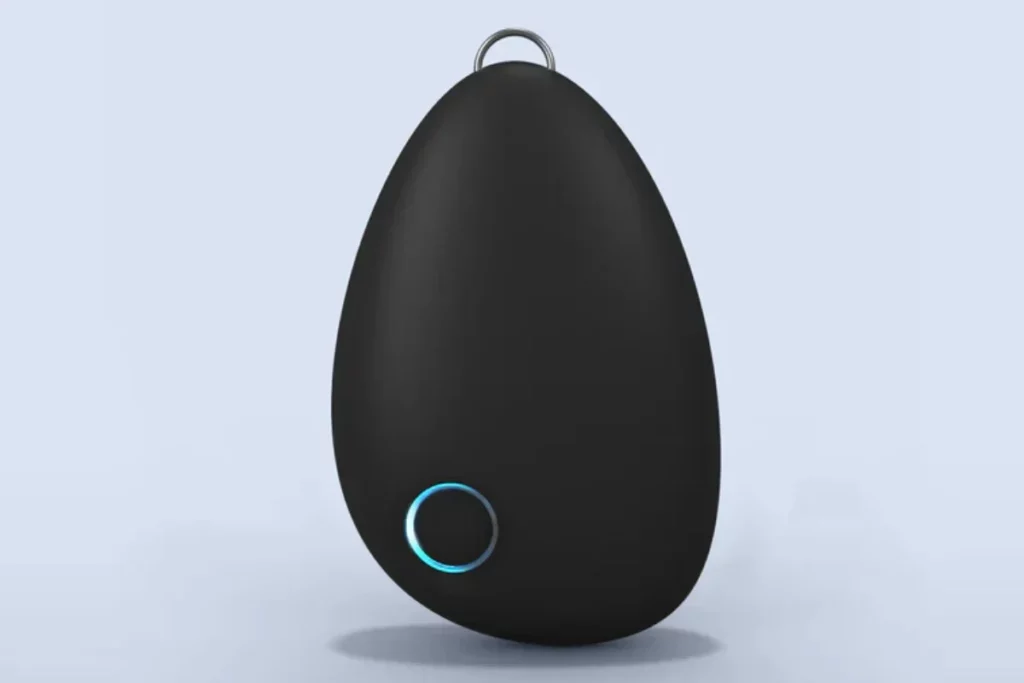
© Sensate
Price: $269-279 | Type: Vibroacoustic (not VNS) | Session: 10-30 minutes
Sensate is not a conventional vagus nerve stimulator, it’s marketed as a “vagal nerve toning” device, and that makes all the difference. Instead of electrical stimulation, the device uses low-frequency vibrations synced with guided soundscapes and music by the app. The device is pebble-shaped and easy to hold or wear with a lanyard.
The immediate impact of Sensate is noticeable, within minutes, most people feel relaxed. The combination of vibration and audio generates a relaxing ritual, which is very enjoyable. Yet, this should be seen as a meditative practice that helps achieve the state of mindfulness rather than vagus nerve stimulation targeting long-term nervous system changes.
There are a few studies on Sensate compared to electrical VNS machines. One company-sponsored study involving 25 individuals over 14 days found self-reports of reduced stress and anxiety levels, although this is a small sample size without any physiological markers. Still, whether Sensate affects the vagus nerve in the same way as the rest of the devices isn’t clear yet.
Pros:
- Instant calming effects
- Affordable price
- Soft texture and pleasant design
- Does not have any electrical sensation (safe for sensitive individuals)
- Can be used whenever required
Cons:
- Not a conventional VNS device
- Limited clinical evidence
- Effect is temporary
- Subscription for the app is essential for better performance
- Handheld design
7. Apollo Neuro
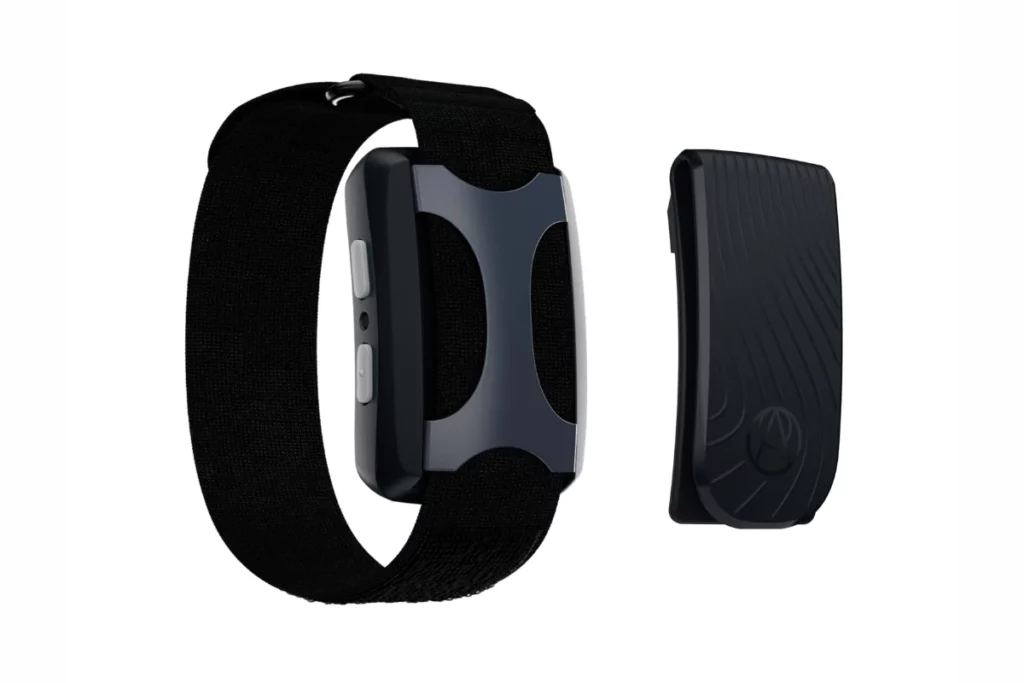
© Apollo
Price: $368 | Type: Vibroacoustic (not VNS) | Session: Recommended 3 hours a day
A different type of vibroacoustic device that works similarly to Sensate, but it has a wristband or is attached to clothes is called the Apollo Neuro. It sends gentle vibrations without electricity and suits people who cannot tolerate electric impulses.
It doesn’t provide electrical stimulation and direct stimulation of the vagus nerve.
A 12-week randomized controlled trial showed that Apollo Neuro improved burnout and overall wellness in medical and pharmacy students compared with a control group. However, it had no significant effect on resilience or alcohol use.
Pros:
- Wearable design
- Soothing vibration
- No electrical stimulation
- Clip can be attached to clothes and used as a bracelet
- Portable and discreet
Cons:
- Not a real VNS tool (uses vibroacoustic technology)
- Lack of peer-reviewed studies
- $349 price does not provide any benefit over cheaper Sensate
- Possible long-term impact on nervous system unknown
- Effects seem to be situational, not systemic
8. DUSQ Sleep Regulator
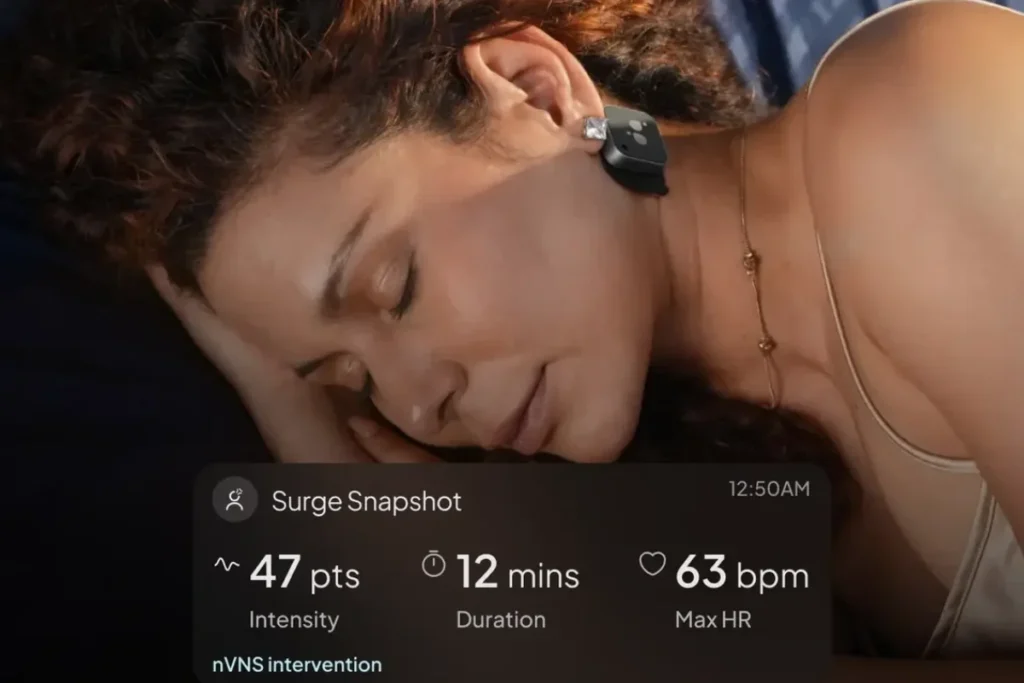
© DUSQ
Price: $350 | Type: Behind-ear dual VNS + vestibular stimulation | Session: All night, automatic
DUSQ is the odd one out on this list since it does not offer timed stimulation, it senses first and then responds accordingly. The 12gram patch goes behind the ear using medical-grade adhesive and a proprietary EDA sensor to measure skin conductance and detect micro-arousals (the company states that there can be up to 20-30 per night) which are responsible for breaking up deep sleep without fully waking up a person.
You put it on 2-3 hours before bed so that it can start calming you down before you actually need to sleep and then adapts throughout the night without repeating the same stimulation pattern again and again. It comes with a USB-C charging case which also records bedroom sounds, lights and temperature, as well as an app which will show you every detected surge and intervention rather than a single score the next morning.
DUSQ is the most recent and least reviewed/used device so I will leave the pros and cons for when I actually test it out. It is still in its Kickstarter stage and not in the retail market, but although the company uses its internal study and a controlled clinical trial, it is not enough for me to recommend or not recommend you the same.
How to Choose a Wearable Nerve Stimulator
- Consider your goal: Do you need assistance to improve sleep, reduce stress and anxiety, boost concentration, or strengthen the nervous system?
- Battery life: The higher the battery capacity, the lower the frequency of charging and the convenience of use.
- Choose the stimulation method: The taVNS devices have more scientific support, while tcVNS devices allow for faster and more convenient operation.
- App or no app: There are vagus nerve stimulators that come with special apps and those that don’t require them.
- Electrical stimulation or vibroacoustic: The former is scientifically supported by evidence, while the latter uses vibrations and sounds to induce relaxation.
- Consider long-term costs: Take into account the cost of consumable parts and subscriptions.
Safety, Risks & Contraindications
Wearable vagus nerve stimulators are mostly considered to be safe for at-home use, but they’re not for everyone. You should avoid using these devices or at least consult your doctor before using them if you have a pacemaker, any implanted electrical devices, are pregnant, have a seizure disorder, heart condition or severe bradycardia.
Mild side effects might occur like irritation of the skin where the device sits, dizziness or headache if you use the device at a very high intensity for the first time. Several reviewers claimed that they felt sick the day after having used the device for the first time at too high intensity, so better start slowly and work your way up. None of this is meant to replace a conversation with an actual healthcare provider if you have an existing condition.
Vibroacoustic stimulation devices, such as Sensate and Apollo Neuro, have fewer contraindications, but they do not possess sufficient evidence of nervous system changes.
Who Should Buy a Wearable Nerve Stimulator
Buy If You:
- Have trouble managing stress or anxiety, or find it hard to relax.
- Would like an alternative to medication to help your nervous system.
- Are fascinated with technology and biohacking
- Will commit to using the device properly.
Skip It If You:
- Need treatment for a medical or mental health condition.
- Need a fitness or activity tracker.
- Have a medical condition that requires clearance before using a nerve stimulator.
Final Verdict
What no one ever tells you while trying to convince you to use vagus nerve stimulators is that consistency becomes a key factor instead of the exact device you choose. I have tried fancy devices, which I keep in my nightstand and cheaper devices that actually became a part of my daily routine. Everything depends on the use of the specific product instead of the technology or science behind it. Will you remember to charge it? Can you tolerate the sensation? Can it become a part of your routine or do you need to adjust something?
The second thing no one ever tells you: it works gradually and in small steps. Most likely, you will not experience a huge shift after just one session of VNS. However, after some time, you will notice that you sleep better, your body will cope with stress much easier, or you feel somewhat more relaxed.
The science behind non-invasive vagus nerve stimulation is promising, but it is still developing and you should adjust your expectations accordingly. These gadgets cannot fix the root of stress but can help create small moments of rest that, with consistent use, add up over time. The best device is the one you’ll consistently use. That’s not wisdom, it’s just math.
If you wanna take your self-care a step further, here are the best light therapy glasses and best red light therapy devices for pain relief!
FAQs
Decode the Decor
The Smart Jewelry Revolution
A practical guide to wearable tech's future — delivered straight to your inbox.
Author

Good roundup. The Bryan Johnson mention is what got me to try Pulsetto too, and I tested the Lite for 21 days. Your gel note is spot on, it does creep toward the charging port if you are not careful. I found intensity 5 or higher is where the neck stimulation actually feels like it engages.
Thanks, Alex! Really interesting to see how your experience compares.