

If you’re hoping to conceive or even if you’re just trying to better understand your cycle without having to obsessively pee on sticks every morning, a smart ring could be one of the easiest upgrades you can make this year. Fertility monitoring is truly great right now, especially with smart rings for fertility tracking in the picture. Not flawless, but great.
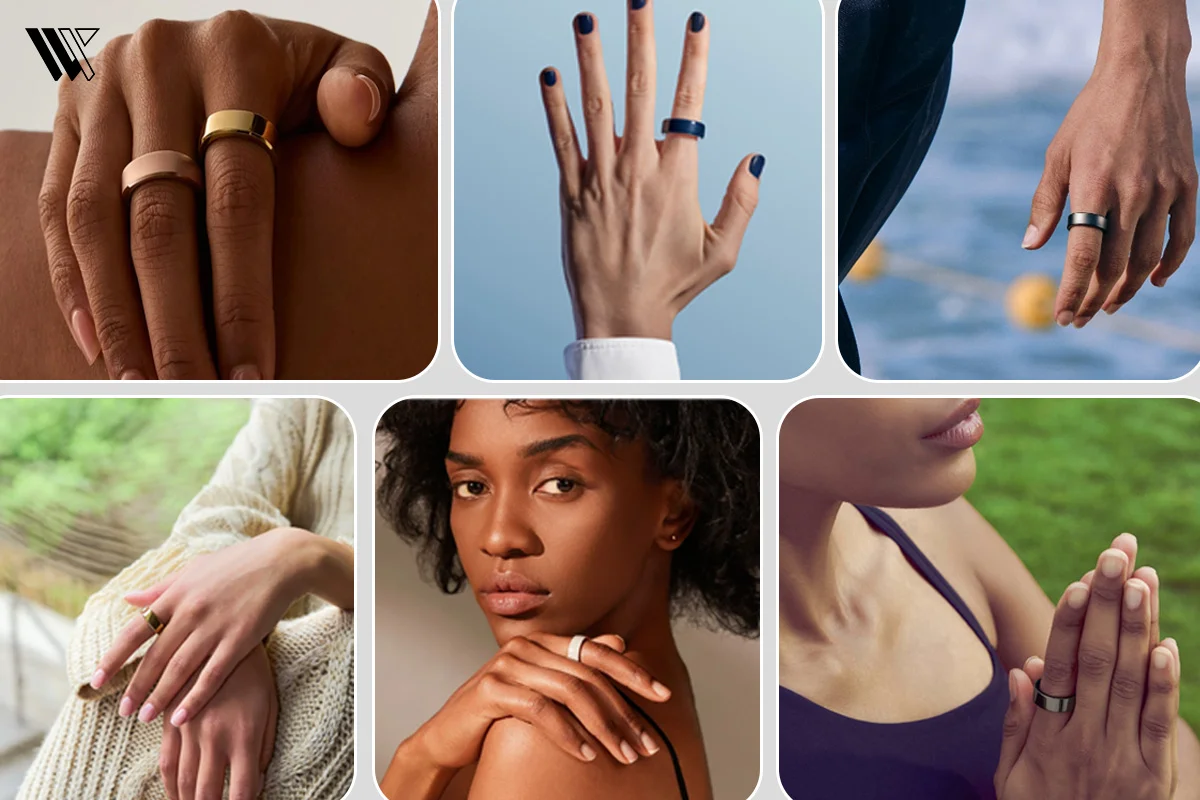
But here’s something that no one tells you right away- these rings aren’t diagnostic at all. Essentially, what they’re doing is taking your body’s temperature during sleep as a way of determining where you are in your cycle. That’s it. And yet that single piece of data, recorded consistently every night, is actually very helpful.
Which smart ring actually does that successfully? Let’s break it down.
Decode the Decor
The Smart Jewelry Revolution — a practical guide to wearable tech.
Why a Smart Ring Even Works for This
Your basal body temperature, the temperature at which your body is when you first wake in the morning, changes after ovulation. Progesterone starts working after the corpus luteum is formed and it raises your temperature by about half a degree. It may be a small change, but it is consistent enough that fertility awareness techniques have taken advantage of it for decades.
The manual way requires you to take your temperature at precisely the same time every morning with an oral thermometer precise enough to record one-tenth of a degree difference. This isn’t very easy for most people. Smart rings for fertility tracking solve that problem by tracking your skin temperature constantly throughout the night as you sleep. No alarm, no thermometer in your mouth at 6 in the morning and hundreds of data points a month rather than thirty.
Quick Comparison
| Smart Ring | Temp Tracking | Ovulation Insight | Battery | Subscription | Price |
|---|---|---|---|---|---|
| Oura Ring 4 | Yes | Trend-based | 5 – 8 days | $5.99/month | Starts at $349 |
| RingConn Gen 3 | Yes | Trend-based | 10 – 14 days | No | $349 |
| Ultrahuman Ring Air | Yes | Trend-based | 4 – 6 days | No (US sales paused) | $349 |
| Femometer Gen 2 | Yes | Trend-based | Up to 7 days | No | $199.99 |
| Evie Ring | Yes | Calendar-based | 4+ days | No (orders paused) | $269 |
| Samsung Galaxy Ring | Yes | Trend-based | 6-7 days | No | $399.99 |
How Fertility Tracking Rings Work
Basal Body Temperature (BBT) Tracking
Your basal body temperature, the temperature your body sits at first thing in the morning before you’ve moved or eaten or had coffee, shifts after ovulation. This is due to the increase in progesterone levels, resulting in an increase in temperature by about 0.3 to 0.5 °C. Though small, this increase is very accurate, which has long been used in fertility awareness methods.
How BBT changes around ovulation: Temperature remains relatively low during the follicular phase and then there is a sharp increase followed by constant high temperatures once ovulation has occurred. When you observe this continuous increase, you basically know that ovulation has already occurred.
Continuous monitoring vs spot check: For manual calculation of BBT, this involves recording your temperature at the same time every morning using an oral thermometer accurate to the nearest tenth of a degree, even before doing any activity at all. Maintaining consistency when manually calculating your BBT can be a task. Continuous monitoring by the ring monitors your skin temperature continuously through the night while sleeping. So you receive hundreds of readings a month instead of thirty, and one bad night doesn’t throw off the whole picture.
Heart-Rate Variability & Sleep Context
The heart rate variability decreases during the luteal phase due to the effect of progesterone on your autonomic nervous system. Your resting heart rate increases, too, usually by 2 to 5 bpm. Both signs aren’t too significant individually, but together with body temperature, they allow the algorithm to feel more sure about which phase you’re actually in. Changes in heart rate variability could even be an early sign that there will be a missed period and you can detect them before it becomes obvious. Poor sleep quality in the late luteal phase gives additional information, too.
Algorithmic Prediction
The algorithms are spotting a pattern after it’s already happened and using your history to guess when it’ll happen again next cycle. This is the trend prediction and not a clinical ovulation test that could detect anything in real time using LH levels or an ultrasound.
Trend vs clinical prediction: The smart rings for fertility tracking become more intelligent the longer you wear them because they learn your personal baseline through several cycles. However, you won’t get the same level of accuracy that would be provided to you by a test strip or a doctor’s office.
The reasons why smart rings estimate and do not diagnose: You can fall ill, consume alcohol, go on a trip and have some stressful events that will affect your temperature in one way or another for a couple of days.
Best Smart Ring for Fertility Tracking in 2026
Oura Ring 4
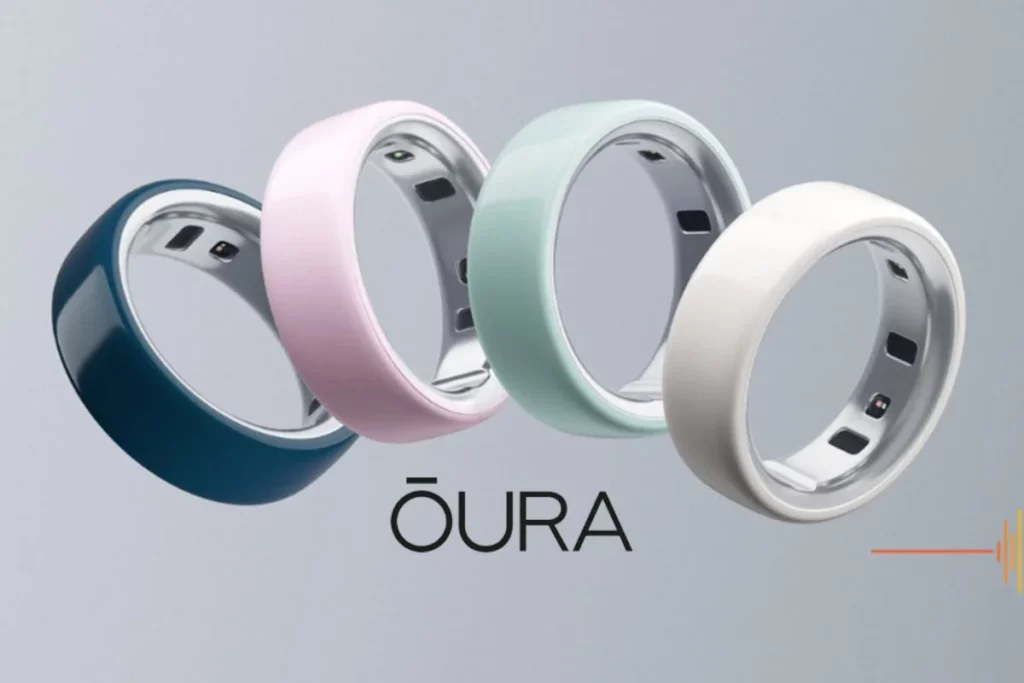
If your main goal is fertility tracking, the Oura Ring is still the benchmark. It is the most recommended smart ring for fertility tracking because it is based on scientific research, provides accurate nightly temperature monitoring and is the most advanced platform for women’s health currently available. After using the ring for a couple of cycles, it forms an individual baseline, which improves the accuracy of cycle predictions significantly.
The Oura app is what makes the ring truly shine. It provides a clear representation of cycle stages, temperature, readiness, sleep, HRV and resting heart rate without being overwhelming. For more detailed fertility tracking, it is integrated with Natural Cycles and Clue. This feature makes it one of the few rings that can be used along with fertility apps.
Battery life lasts up to 8 days, depending on the size and use of the ring, which gives you plenty of time to wear it without any concerns about charging. It has a titanium body and is lightweight and comfortable enough that I even forget I’m wearing it. In fact, the new Oura Ring 5 is 40% smaller than the Ring 4 and is the world’s smallest smart ring.
The biggest drawback is the subscription. The Oura Ring 4 starts at $349, but you will need to spend $5.99 every month for access to all of the health data that makes this wearable attractive in the first place. The Oura Ring without a subscription is basically a paperweight. It is also quite pricey compared to other alternatives and its titanium coating may scratch over time. Oura Ring 4 is widely available in the US through their own website and many retailers such as Amazon, Best Buy, Target and others.
Pros
- Best fertility and cycle monitoring
- Great app with Natural Cycles support
- Accurate overnight temperature
- Comfortable design with up to 8-day battery life
Cons
- Requires a monthly subscription
- Premium price
- Scratches easily on the outside
RingConn Gen 3

RingConn Gen 3 is the most suitable choice for those who require strong fertility tracking yet don’t want to pay a monthly fee. It offers everything you need, from overnight skin temperature, sleep monitoring, heart rate variability and stress tracking to women’s health data with the added benefit of vascular health trends that only a few competitors provide.
The RingConn app is very intuitive and surprisingly polished as well. Everything is available within the app without subscription fees. Cycle tracking, pregnancy tracking and recovery tracking are all included in the price of the ring. Even though RingConn does not make as thorough fertility predictions as Oura, these are still sufficient for those who need to track their cycles in the long run.
One of the biggest advantages of RingConn Gen 3 is its battery life. This smart ring for fertility tracking can last up to 14 days with a full charge, which means it is one of the longest-lasting smart rings on the market. Additionally, it is equipped with an IP68 waterproofing rating up to 100 meters in depth.
RingConn Gen 3 is priced at $349 and has no subscription cost.
Pros
- No subscription cost
- Great battery life
- Good women’s health monitoring
- Long-term value
Cons
- Not as advanced for fertility tracking as Oura
- Small ecosystem compared to competitors
Ultrahuman Ring Air

Even though the Ring Air is no longer available to buy in the USA, it’s still used by many people to monitor their fertility and metabolism. In case you own it, it’s still supported and the latest device from Ultrahuman is the Ring Pro.
The main focus of the Ultrahuman app is metabolism, recovery, sleep and temperature. The app tracks your overnight skin temperature, HRV, resting heart rate and sleep quality, which helps in cycle tracking. While the prime focus is not on cycle tracking, it was the Ultrahuman Ring AIR that flagged two consecutive anovulatory cycles for me, which later explained why my period was so late that month. Since then, I have been subscribed to the Cycle & Ovulation Pro PowerPlug, which is an additional paid feature that is as good as it can get.
Comfort is one of the Ring Air’s strongest points. The ring is among the lightest smart rings, which makes it convenient to wear even during sleep. The battery lasts up to 6 days, depending on your usage.
The problem with this smart ring for fertility tracking is its availability. But, while the Ring AIR is not available for purchase to new customers in the USA, the Ring Pro is already open for orders at $479 and will be available. The good thing about both products is that they are subscription-free.
Pros
- No subscription
- Extremely lightweight and comfortable
- Strong sleep and metabolic tracking
- Good overall sensor accuracy
Cons
- No longer sold new in the USA
Femometer Smart Ring Gen 2
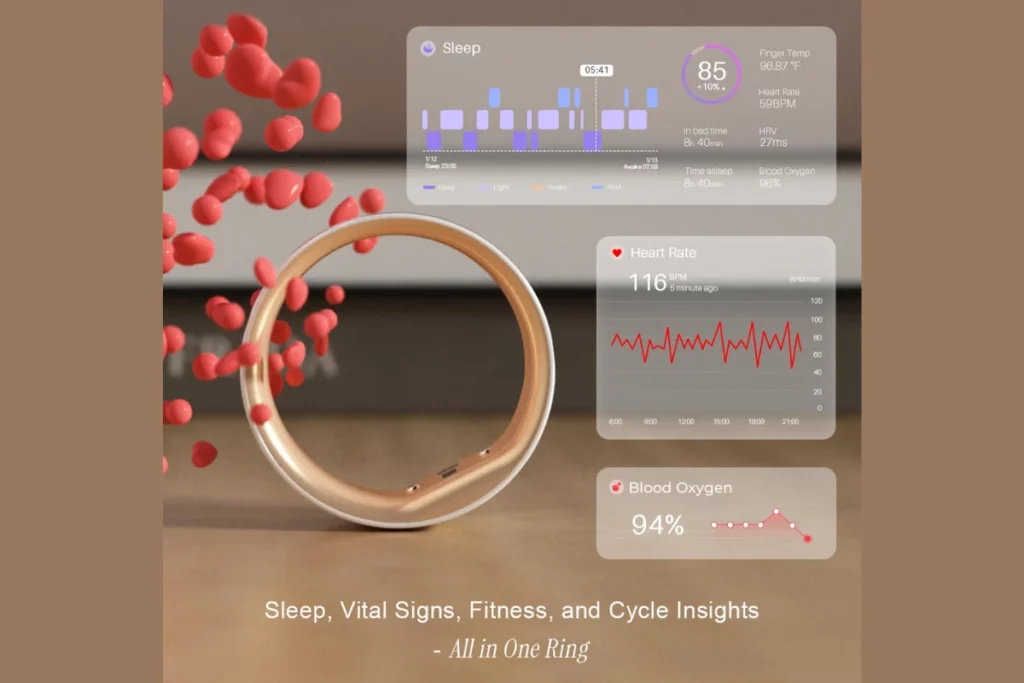
For those who want an advanced fertility tracker, Femometer is a good choice because it solely concentrates on basal body temperature and ovulation tracking, in contrast to other companies that make recovery, wellness and fitness-related devices.
This Femometer app is impressively easy to use. There are only temperature measurements, ovulation period predictions and menstrual cycle forecasting without a large amount of unnecessary information, such as dozens of other unrelated indicators of users’ health state. This device doesn’t require a subscription either.
The Femometer ring can collect more than 1,400 temperature measurements per night, which means that there is significantly more data for an algorithm compared to ordinary morning thermometers. The battery life lasts up to 7 days and the provided charger allows using the ring for about 35 days without connecting it to any power source.
The starting price of this product is $199.99, which is considerably cheaper than any other premium brand of rings on the market.
Its main drawback is versatility. Outside of fertility tracking, the feature set is fairly basic compared to Oura and RingConn, and its reported accuracy rate of 99% for ovulation is based on internal tests, not published independent clinical studies.
Pros
- Built specifically for fertility tracking
- Budget friendly
- No need for subscription
- Easy-to-use app
Cons
- Limited features
- Shorter battery than premium rivals
- Lack of independent accuracy verification
Evie Ring

The Evie Ring is unique in the way that it has been created solely for women’s anatomy and not by modifying a unisex device. The flexibility and the open band design allow taking into account the natural swelling of fingers during the menstrual cycle, which makes it more comfortable compared to the classic closed smart rings.
The Evie app is aimed at menstrual tracking as well as at monitoring sleep, physical activity, heart rate, moods, symptoms and includes all of those elements in the user-friendly interface. There are no additional subscription charges and the company has even obtained an FDA clearance for its pulse oximeter.
The battery works for 3-4 days, while the charging case prolongs this time significantly.
The Evie Ring costs $269. However, it is not currently available. The drawback is that the fertility prediction is still based mainly on the data entered by you, unlike other smart rings for fertility tracking which make use of your overnight temperature.
Pros
- Designed specifically for women
- Comfortable, flexible band design
- No subscription
- Excellent app
Cons
- Shorter battery life
- New orders are currently paused
- Fertility predictions rely more on logged cycle data than temperature trends
Samsung Galaxy Ring

If you’re already a Samsung user, the Galaxy Ring becomes one of the most convenient smart rings to recommend. In addition to overnight skin temperature, menstrual cycle, sleep, resting heart rate, HRV and recovery tracking, it integrates into the Samsung Health ecosystem seamlessly. Another feature is the AI-powered Energy Score that helps determine whether your body is ready for training or not.
The Samsung Health app looks professional and is easy to use, offering predictions of the menstrual cycle based on overnight skin temperature along with other wellness tracking features. No additional subscriptions are needed, making the Galaxy Ring cheaper than its alternatives in the long run.
The battery operates for 6-7 days and the charging case offers several extra charges. The price of the Galaxy Ring is priced at $399.99 and it is available on Samsung, Amazon and other retailers. The biggest downside is ecosystem lock-in. It only works with Android devices, with the best AI features reserved for Samsung Galaxy phones. No iOS compatibility, whatsoever.
Pros
- No subscription
- Excellent Samsung Health app
- Strong sleep and menstrual tracking
- Up to 7-day battery
- Seamless Galaxy integration
Cons
- Android only
- Best features require a Samsung phone
- Less advanced fertility insights than Oura
- No illness logging
Ring vs Smartwatch for Fertility Tracking
Most people (aka: Me) are not comfortable sleeping with a smartwatch strapped to their wrist, but that’s precisely the time at which you want to collect the temperature information. This is where smart rings for fertility come in. They are small enough that you can wear it round-the-clock without even realizing it. For GPS workout data collection, we have the best smartwatches for women available in the market that will always take the cake. For temperature tracking while sleeping, a ring is a much better tool.
Wrap Up
Even the best smart rings for fertility tracking will not be able to tell you exactly when you’ll ovulate or replace a visit to your doctor. They will enable you to identify long-term patterns related to your temperature, sleep and recovery that may go unnoticed without them.
If you want the best fertility solution, Oura Ring 4 should remain your number one choice. If you prefer to pay once and forget about subscriptions, Ultrahuman Ring AIR can be considered a great value buy with no recurring subscriptions.
They’re worth considering if you want hands-free overnight temperature tracking and prefer wearing a ring over a smartwatch to bed. But if you need clinical-grade ovulation confirmation or are dealing with fertility concerns, they’re best used alongside medical advice rather than as a replacement.
FAQs
Decode the Decor
The Smart Jewelry Revolution
A practical guide to wearable tech's future — delivered straight to your inbox.
Author
