

When people first hear that a tiny smart ring can “measure stress,” the reaction is usually the same: How is that even possible? Stress feels emotional and personal. Some days you feel calm but exhausted. On other days, you feel mentally fine while your body feels completely drained.
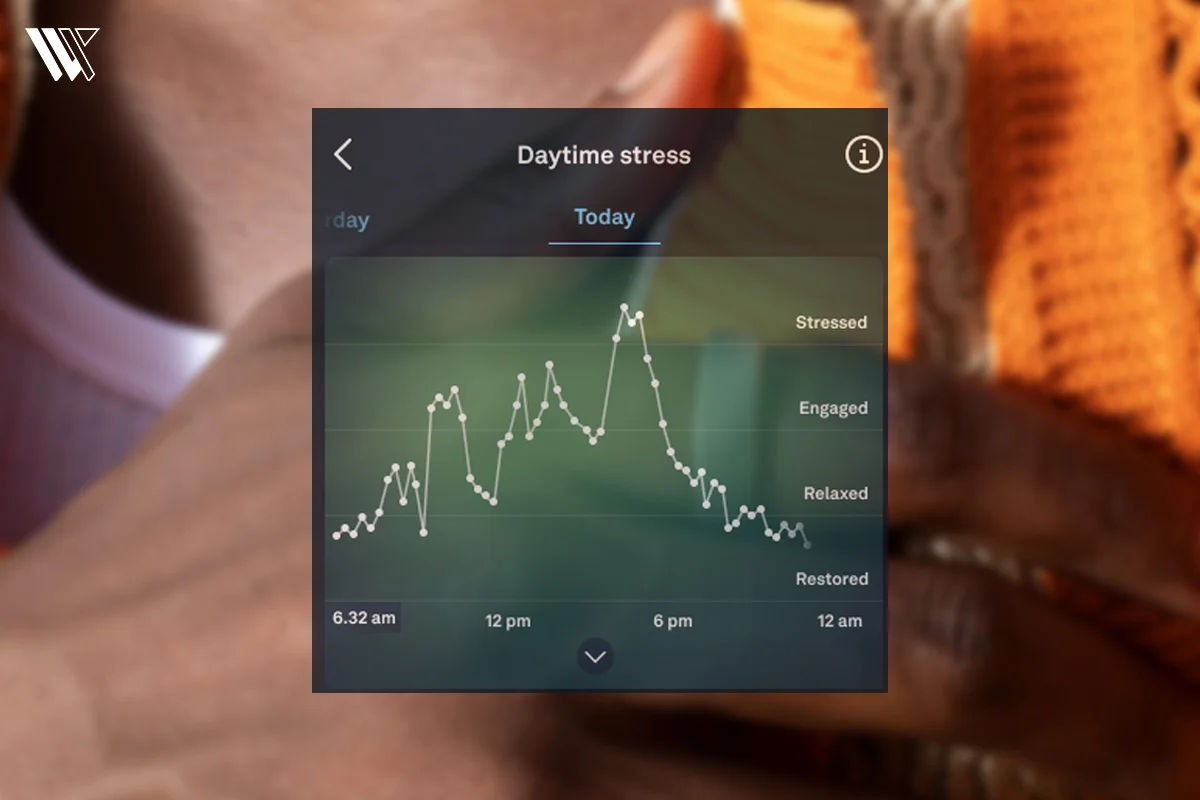
That’s exactly where the Oura Ring tries to help. Instead of asking how you feel, Oura Ring stress tracking looks at how your body behaves throughout the day and night. The smart ring quietly tracks changes in heart rate, recovery, body temperature, movement and especially HRV to estimate how much strain your body is under.
So, how does Oura Ring measure stress and how accurate is it really? Let’s break it down.
What Is the Oura Ring Stress Tracking Feature?
Oura approaches strain differently than most health trackers. Instead of giving you a single, static daily score, it monitors your body continuously through a dedicated feature called Daytime Stress. Introduced to provide real-time visibility into your autonomic nervous system, this feature is designed to map out how your body reacts and adapts to the challenges of your day.
Decode the Decor
The Smart Jewelry Revolution — a practical guide to wearable tech.
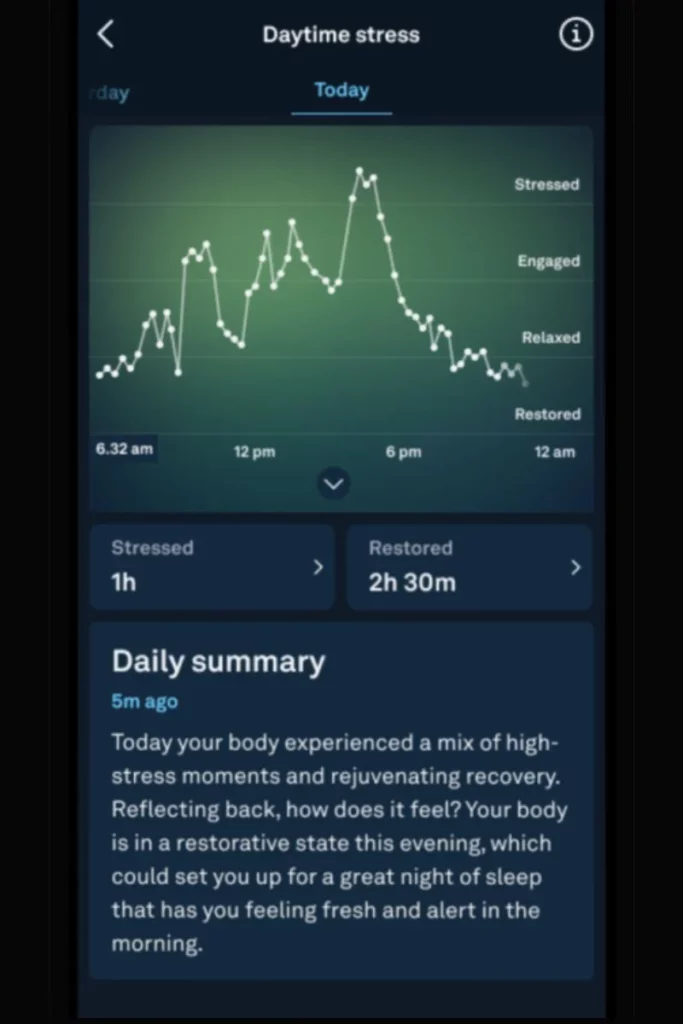
The purpose of Oura daytime stress monitoring is not to give you a medical diagnosis. Instead, it serves as a foundational wellness and recovery tool. In the Oura app, this data updates every 15 minutes, categorizing your physiological state into 4 distinct zones:
- Stressed: Your body is showing clear physiological signs of strain. This is a normal part of life, but it serves as a clear signal that your body needs a moment to slow down.
- Engaged: Your heart rate and nervous system are slightly elevated. This state is common during periods of high focus, productivity or light physical movement.
- Relaxed: Your body is resting comfortably, showing clear signs of entering a mild state of physical recovery.
- Restored: The ultimate goal for recovery. Your body is actively recharging in a deep state of physiological calm, which often triggers Restorative Time credits in the app.
With the release of the Oura Ring 4, this feature became substantially more precise. Thanks to an upgraded internal system called the Smart Sensing platform, the ring dynamically adjusts its signal paths based on your finger structure and changes in blood flow. This ensures that your daily timeline accurately reflects your internal state, rather than surface-level noise.
What Data Does Oura Ring Use to Measure Stress?
Oura does not guess how you feel, it reads direct physical changes. To answer exactly how Oura Ring measures stress, we have to look at the specific mix of five core biometric signals it monitors continuously:
- Heart Rate Variability (HRV)
This is the single most important metric in the entire algorithm. HRV measures the specific timing changes, down to the millisecond, between each consecutive heartbeat. It serves as a direct window into how your brain is managing your involuntary bodily functions.
- Resting and Daytime Heart Rate
While your overnight resting heart rate shows your overall recovery baseline, your daytime heart rate highlights real-time spikes in strain. A sudden jump in your beats per minute while you are sitting perfectly still tells the algorithm that your body is working harder to maintain balance.
- Skin Temperature Trends
When your brain senses pressure, it initiates a classic survival response: it pulls blood away from your skin and extremities and pushes it toward your core organs. By tracking micro-fluctuations in the skin temperature of your finger, Oura can detect this subtle stress-induced cooling effect.
- Movement and Activity Data
Context is everything. If your heart rate spikes because you are sprinting or doing cardiovascular activities, that is healthy physical exertion, not an unexpected anxiety response. Oura uses a high-precision accelerometer to constantly track your movement. The algorithm purposefully pauses stress tracking during active workouts, ensuring physical exercise does not break your data accuracy.
- Recovery Signals and Baselines
Oura compares your real-time daytime data against your personal historical baselines. It factors in your sleep quality, sleep architecture and overall Readiness Score from the previous night to determine how well-equipped your body is to handle strain on any given day.
How HRV Helps Oura Detect Stress
To truly understand how Oura Ring stress tracking works, we need to take a quick look at the human nervous system. Your involuntary actions are controlled by your Autonomic Nervous System (ANS), which is split into two competing branches:
- The Sympathetic Nervous System: This drives your fight-or-flight response. When your brain senses a challenge, the sympathetic branch takes over, preparing your muscles for action, increasing your heart rate and making your heart beat like a rigid metronome.
- The Parasympathetic Nervous System: This drives your rest-and-digest response. When you are safe and calm, this branch takes over, lowering your heart rate and allowing your body to focus on cellular repair, digestion and deep recovery.
When you are relaxed and your parasympathetic nervous system is in control, your heart rate naturally fluctuates. If your average pulse is 60 beats per minute, it does not actually beat exactly once every second. One gap might be 0.95 seconds, the next might be 1.05 seconds and the one after that might be 1.02 seconds.
This healthy, natural variation is high Heart Rate Variability (HRV). It shows that your body is highly adaptable and ready to respond to its environment.
When your body feels stressed, your nervous system goes into “fight or flight” mode. This makes your heart beat in a steadier and more controlled pattern instead of its normal, flexible rhythm. Because of this, the small time differences between heartbeats become smaller, which causes your HRV to drop.
Oura continuously tracks this beat-to-beat variation using a specific mathematical standard called RMSSD (Root Mean Square of Successive Differences). When the ring detects a sustained drop in your daytime HRV alongside a rising heart rate, it recognizes that your sympathetic nervous system is working overtime, prompting the app to mark that period as “Stressed.”
Can Oura Ring Actually Detect Mental Stress?
A common point of confusion is whether a smart ring can read your mind. The simple answer is no because physiological stress is not the same as an emotional diagnosis.
Your Oura Ring measures physical strain and bodily responses. It cannot tell the difference between the panic of missing an important flight, the excitement of opening a great gift or the physical work your body does to digest a massive, heavy meal. All 3 of these events trigger a similar sympathetic nervous system response: a higher heart rate and a drop in HRV.
Because of these wearable limitations, it is important to remember that a high stress reading in your app does not always mean you are feeling emotionally anxious. It simply means your body is currently experiencing an increased workload or structural strain.
How Sleep and Recovery Affect Oura Stress Scores
Your daytime stress metrics do not exist in a vacuum. They are deeply linked to your sleep quality and your overall Readiness Score.
When you get deep, restorative sleep, your nervous system spends hours in a deeply parasympathetic state, allowing your tissues to repair and your brain to clear away metabolic waste. This structural recovery lowers your baseline heart rate and boosts your baseline HRV for the following day.
If you are dealing with chronic overtraining or poor sleep, your body stays trapped in a sympathetic state overnight. You will likely notice that your morning Readiness Score drops and your Daytime Stress graph will show you entering the “Stressed” or “Engaged” zones much faster during normal daily tasks. Oura looks at these multi-day recovery trends to calculate long-term resilience, letting you see exactly how a bad night of sleep leaves you vulnerable to minor daytime stressors.
What Causes High Stress Readings on Oura?
Because the ring tracks overall physiological strain, many different daily habits and lifestyle factors can cause your stress metrics to spike into the high zone. Common triggers include:
- Illness: An oncoming virus or immune response will cause your resting heart rate to jump and your skin temperature to rise long before you feel sick.
- Poor Sleep Architecture: Lacking deep or REM sleep stages prevents your nervous system from resetting properly overnight.
- Alcohol Consumption: Alcohol acts as a significant physical stressor. Processing even a single drink close to bedtime can make your HRV and keep your heart rate elevated for hours.
- Overtraining: Pushing through high-intensity workouts without proper rest days leaves your muscles and nervous system in a constant state of structural strain.
- Anxiety and Mental Load: Intense cognitive load, emotional arguments or prolonged periods of worry cause your brain to trigger physical adrenaline spikes.
- Caffeine and Stimulants: Drinking strong coffee or energy drinks directly stimulates your heart rate and mimics an acute sympathetic nervous system reaction.
How Accurate Is Oura’s Stress Tracking?

When assessing wearable stress monitoring, it is helpful to view Oura as an excellent tool for tracking long-term trends rather than an exact clinical instrument.
No consumer wearable can provide an absolute, flawless measurement of human stress. However, Oura holds a distinct advantage over smartwatches because of where it is worn: the blood vessels at the base of your finger and are much closer to the skin surface and provide a significantly cleaner signal than the tissue on top of your wrist.
Rather than focusing on a single 15-minute window, the real power of Oura’s platform lies in its multi-layered approach to tracking your data over time:
- Daytime Stress: Focuses on the present moment, showing your real-time autonomic nervous system balance throughout your waking hours.
- Stress Resilience: Analyzes a rolling 14-day window to evaluate how quickly your body naturally bounces back and returns to baseline after a high-pressure event.
- Cumulative Stress: A highly advanced feature developed alongside health researchers that scans a full 31 days of data. This metric is designed to catch slow-building, chronic exhaustion that daily summaries completely miss.
By looking at these three layers together, you get a highly reliable overview of how well your lifestyle matches your body’s capacity to handle strain.
Oura Ring vs Apple Watch Stress Tracking
If you are trying to find the best wearable for stress tracking, you will likely find yourself choosing between the Oura Ring 4 and the Apple Watch. Both devices are incredibly powerful, but they take entirely different approaches to managing your health data.
| Feature | Oura Ring 4 | Apple Watch |
| Tracking Style | Continuous, passive background monitoring. | Primarily reactive or periodic measurements. |
| Primary Metric | Multi-layer HRV (RMSSD), Heart Rate, and Temp. | HRV (SDNN) and optional ECG sensor readings. |
| Measurement Window | Updates every 15 minutes when sitting still. | Takes snapshots during calm gaps or explicit tests. |
| HRV Interpretation | Maps HRV against a personal baseline across 4 distinct zones | Records raw HRV values without a dedicated native stress score |
| Ecosystem Approach | Holistic, quiet lifestyle companion | High-interaction, notification-heavy smartwatch |
The key difference lies in how they manage context. The Apple Watch treats your day as a collection of active workouts, notifications and instant communication, occasionally taking HRV snapshots in the background.
Oura takes a much more patient, passive approach. It quietly collects your data in the background, focuses heavily on your recovery windows and blends your daytime strain and overnight sleep into a cohesive picture of your overall well-being.
Who Benefits Most From Oura Stress Tracking?
The stress monitoring architecture inside the Oura Ring is incredibly valuable for several specific lifestyles:
- Athletes and Fitness Enthusiasts: Great for preventing overtraining injuries by matching your workout volume to your daily resilience metrics.
- High-Stress Professionals: Ideal for identifying which specific work habits or meeting structures trigger severe physical strain.
- Sleep Optimization Users: Perfect for pinpointing how daytime habits directly impact your deep sleep and resting heart rate down the road.
- Wellness and Mindfulness Seekers: Helps you visually track how meditation, deep breathing exercises or outdoor time lowers your physical vitals.
Who Should NOT Rely on It?
While it serves as an excellent health guide, certain users should avoid relying on the Oura Ring for specific medical needs like:
- Clinical Mental Health Diagnostics: People looking for formal psychological evaluations or panic disorder monitoring.
- Chronic Anxiety Management: Individuals who might feel extra stress or anxiety by constantly checking fluctuating wellness numbers.
- Severe Medical Conditions: Anyone requiring continuous medical-grade tracking for heart conditions or nervous system disorders.
Wrap Up
So, how does Oura Ring measure stress? The answer comes down to biology and recovery tracking. The ring studies HRV, resting heart rate, body temperature, activity and recovery signals to estimate how much strain your body is under throughout the day.
What makes Oura interesting is that it doesn’t just focus on exercise or calories. It tries to understand recovery and nervous system balance in a more complete way. That makes the experience feel more personal and wellness-focused than many traditional wearables.
Still, it’s important to stay realistic. Oura cannot read emotions or diagnose mental health conditions. What it can do is help you notice patterns, poor sleep, overtraining, burnout or recovery problems, before they become bigger issues. For many people, that awareness alone makes Oura stress tracking genuinely useful rather than just another health metric.
FAQs
Decode the Decor
The Smart Jewelry Revolution
A practical guide to wearable tech's future — delivered straight to your inbox.
Author
