

For the longest time, the screenless fitness tracker category was dormant or shall I say, dominated by one brand name. Well, the sudden shake in the market by Google made it interesting again. This Fitbit Air vs WHOOP strap battle has everyone talking.

When it comes to a device that tracks recovery, strain, sleep, and passive metrics, but does not bombard you with notifications of its capabilities via its screen every few seconds, WHOOP was the only option out there. Of course, it did come at a rather hefty cost, but there was nothing else that could compare with the features offered by WHOOP. That changed with the arrival of Fitbit Air.
Google’s new wearable feels like it’s made for people who love the whole “WHOOP idea” but don’t want the high price tag, the long-term commitment, or that super intense athlete vibe. It takes the concept and makes it simply accessible.
Now the big question everyone’s asking is obvious: can the Fitbit Air actually replace WHOOP? Let’s find out!
Decode the Decor
The Smart Jewelry Revolution — a practical guide to wearable tech.
Fitbit Air vs WHOOP: Quick Comparison
| Feature | Fitbit Air | WHOOP 5.0 |
|---|---|---|
| Price | Hardware $99 | Subscription starts at $199/year |
| Subscription | Optional | Required |
| Battery | Up to 7 days | 14+ days |
| Screen | No | No |
| Focus | Wellness + health tracking | Recovery + strain analytics |
| Weight | 12g | 26.5g |
| AI Features | Google Health Coach (Gemini) | WHOOP Coach |
| Sleep Tracking | Yes | Yes |
| HRV Tracking | Yes | Yes |
| AFib Detection | Yes | No |
| Charging | Standard charging | Wear-while-charging battery pack |
| Best For | Everyday users | Athletes and recovery-focused users |
Fitbit Air vs WHOOP: What’s the Real Difference?

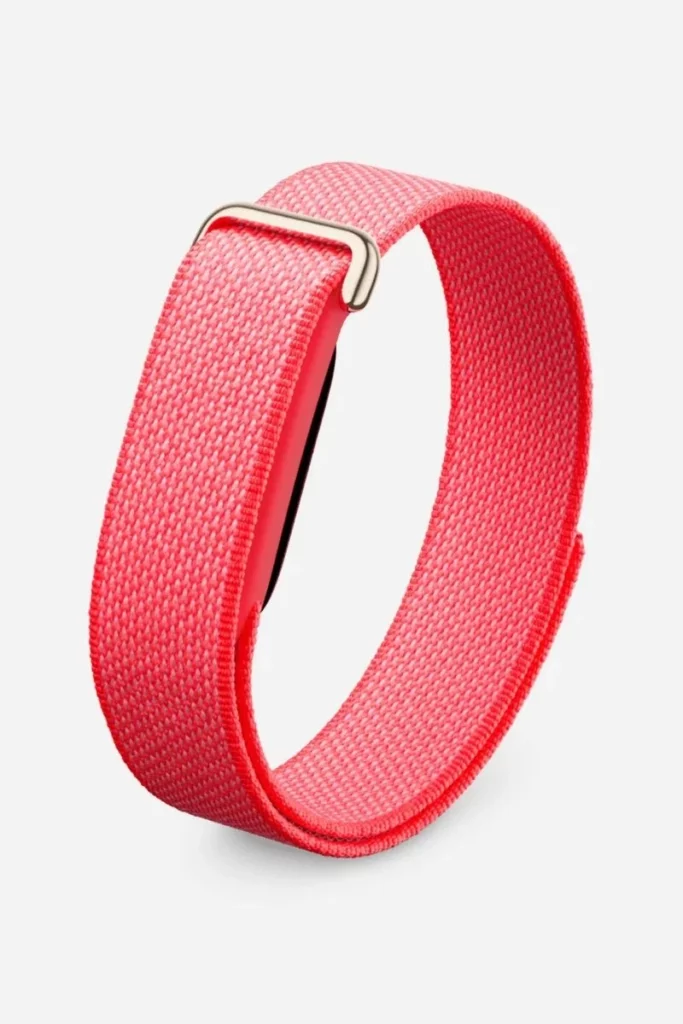
Here are the real differences between Fitbit Air vs WHOOP strap that actually matter:
- Core Purpose: WHOOP was created as an advanced tool for recovery and performance optimization. It expects that you would actively analyze your health using parameters such as strain target, recovery percentage, HRV trends and coaching tips. The Fitbit Air is a passive device, meaning that you would simply wear it and then review easy-to-understand insights related to your sleep, stress, and readiness.
- User Experience: WHOOP offers a high level of user engagement with sophisticated data, graphs and trends analysis. On the other hand, the Fitbit Air makes your life simpler with easy-to-understand information and not overwhelming you with complicated terminology.
- Target Audience: WHOOP targets active people and athletes who need professional recovery analytics and training optimization. Fitbit Air targets ordinary people who like WHOOP but need something a little less complicated.
- App Philosophy: WHOOP overwhelms you with lots of metrics and trends related to your physiological processes right away. The Fitbit Air provides you with clear dashboards and Google Health Coach.
- Ecosystem: WHOOP operates within its own subscription-based environment. The Fitbit Air blends well into the wider ecosystem provided by Google, including Gemini and the Pixel Watch.
Health Tracking and Recovery Features
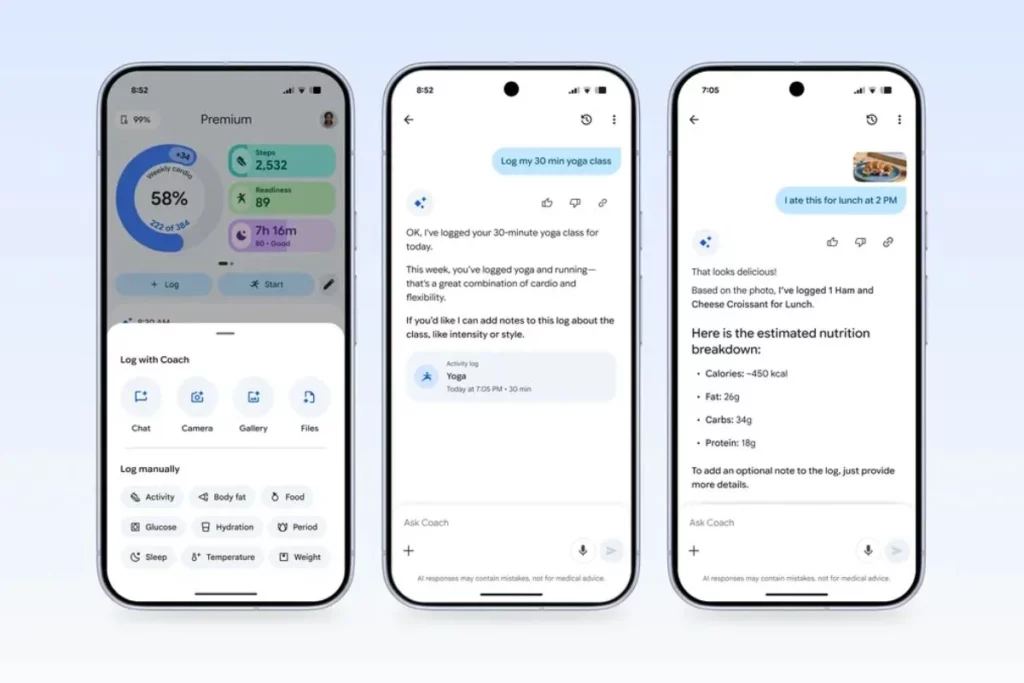
On paper, both devices cover the basics and they do it pretty well. You get continuous heart rate tracking, sleep monitoring, HRV tracking, stress insights, activity detection and readiness-style metrics from both the Fitbit Air and the WHOOP. Neither one feels like it’s missing the core health tracking features.

The real difference comes down to how they interpret all that data. While WHOOP is very keen on making its users focus on analyzing recovery metrics and providing training advice based on those, the Fitbit Air offers a more general approach to wellness and fitness.
For example, while both devices analyze recovery and other similar metrics, the Fitbit Air does it in a less aggressive manner than WHOOP. It is not as focused on making its user think about the strain balance, sleep debt and exertion. Moreover, the whole philosophy of WHOOP is built on the premise that one’s body is a performance system that requires optimization. It works great for people who train hard regularly, but it may be too much for someone whose training consists of a 30-minute walk after work.
Google Health Coach also makes a big difference in the user experience. Instead of just throwing numbers at you, it actually explains what the metrics mean in a simple language, not tech jargon. That makes the Fitbit Air feel way more friendly for casual users who don’t already live and breathe recovery metrics.
Sleep Tracking

Now, let us take a closer look at the sleep tracking capabilities of both devices in this Fitbit Air vs WHOOP comparison. In terms of reputation, the advantage belongs to WHOOP because it has been improving its sleep analytics and recovery algorithms for many years now. Its sleep coaching algorithm is one of the most advanced in the wearable industry.
But the FitBit Air is not behind. It closes the gap more than most people expect. It tracks sleep stages, HRV, skin temperature, blood oxygen, and readiness metrics, while also adding useful features like AFib notifications, which WHOOP offers via its MG model, priced at $359/year.
In terms of overall health monitoring, the Fitbit Air appears to be balanced and more approachable. At the same time, WHOOP remains superior in terms of performance tracking.
Battery Life and Everyday Wearability

Battery life is one of the biggest real-world differences in the Fitbit Air vs WHOOP battle.
The advantage goes to WHOOP when it comes to battery life quite comfortably. The WHOOP 5.0 model is capable of lasting up to 14 days which is truly impressive for such a device.
When it comes to looks, the similarity was very evident, even from Fitbit Air’s first reveal. Now that we know more, the sensor pod weighs only 26.5g while the net weight is 110g, still pretty comfortable on the wrist once you get used to it.
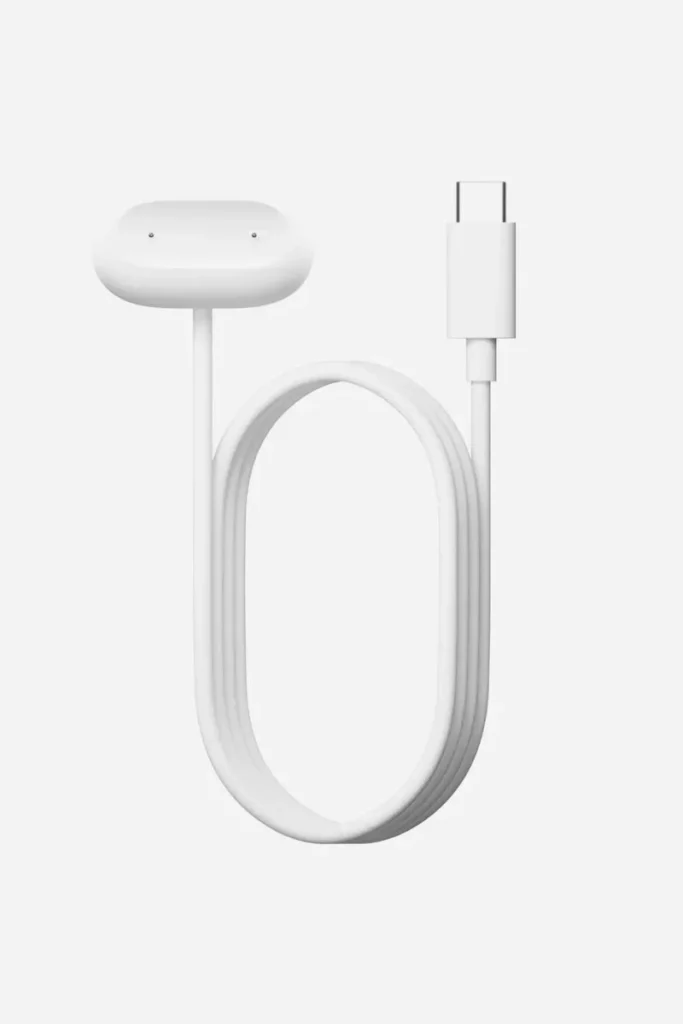
And the charging method itself is something I have never seen in any wearable device before. It offers the ability to charge your WHOOP even when you are wearing it, which does not seem like anything special until you try it out. No metrics lost! Trust me, WHOOP has spoiled me with this small feature and you will be constantly annoyed by the regular charging method.
Fitbit Air lasts around 7 days on a single charge, which is still very respectable, especially for something so small and light. At just 12g net weight, and only 5.2g without the band, the Fitbit Air almost disappears on your wrist. I can’t imagine how ridiculously light it feels and that matters a lot, especially for sleep tracking, because any wearable that feels uncomfortable usually ends up on my nightstand after a week or two.
I know the difference in weight seems significant, but let me clarify, WHOOP isn’t heavy exactly, but it does feel more substantial on the wrist. Fitbit Air is far more invisible and that’s clearly intentional. Google is following the trend and wants this thing to blend into your daily life instead of constantly reminding you it’s there.
The quick charging on the Fitbit Air helps too, just five minutes will charge it enough for one whole day, which is quite useful. Still, if battery anxiety is a deal breaker for you and you hate to add another device to your charging station, WHOOP’s charging is elite.
Price, Subscription Costs and Long-Term Value

This is where Fitbit Air makes WHOOP hard to ignore. WHOOP’s business model has always been controversial.
You are not purchasing the product, instead, you pay for access to the service. The WHOOP band relies entirely on its subscription status, which means that if you unsubscribe, then the entire experience goes away, too.
The lowest-cost WHOOP subscription, WHOOP One, will run you at least $199 each year, with the WHOOP 5.0 device and the upper tiers cost even more.
Over time, those costs add up quickly. For example, even if I take the WHOOP One membership, in 3 years, it’ll cost me $597. With the Fitbit Air, the price will be $99.99 even after 3 years and $429.66 if I take the Google Health Premium (inclusive of a 3 month free trial).
Fitbit Air is all about offering you value upfront, without any hidden fees attached to it. By purchasing the device, you get to use the tracking feature without having to subscribe to it. The Google Health Premium service that will provide you additional perks such as AI-based training sessions and other things, is optional.
That’s why Fitbit Air feels positioned as a WHOOP alternative more than a direct WHOOP killer.
Fitbit Air vs WHOOP: App Experience

Because these devices don’t have screens, the app becomes essentially everything when it comes to the product experience. The WHOOP app offers a deeper look at the analytics with a lot of data involved. If you enjoy digging into metrics, trends, graphs, and detailed breakdowns, WHOOP might be your best option. There are so many things that you will be able to dive into for hours. Analyzing sleep, strain, recovery, stress and exertion trends, all this sounds amazing for some but completely useless for others.
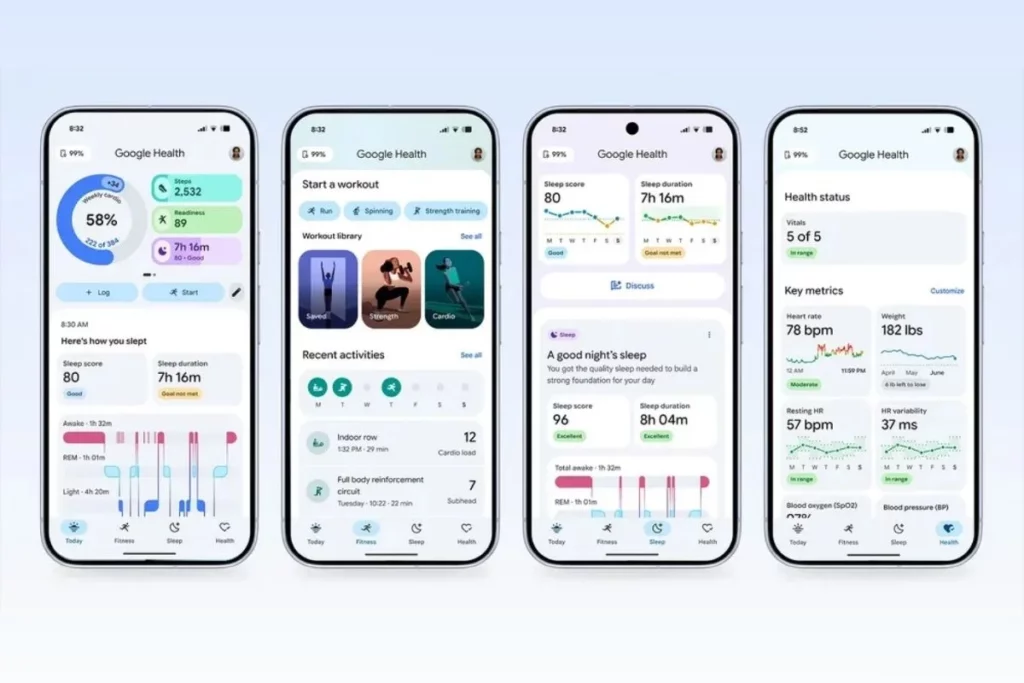
Fitbit Air uses the Google Health app, which seems to deliberately be a minimalistic app, much like the device itself. As for Google Health Coach, it summarizes things in a cleaner and more conversational way, instead of bombarding you with numbers. The app tries to give you insights and practical daily guidance. If I have to sum it up, it almost feels like the difference between a sports science lab and a friendly wellness app.
And then there’s the AI angle. While WHOOP introduced AI coaching quite some time ago, it seems to me that Fitbit Air relies more heavily on integration with Gemini technology. Google is definitely trying to sell its vision of a product that uses artificial intelligence to analyze your data instead of letting you read complex graphs by yourself. Whether that actually works well consistently is something longer-term testing will show, but conceptually it makes a lot of sense.
WHOOP also has another feather to its cap with Advanced Labs, a feature wherein you can book/upload your blood work into the app to take a more broader look at your metrics.
Which One Is Better for Fitness and Recovery?
Casual Users
In the case of most casual users, Fitbit Air would probably be a better option than WHOOP based on this WHOOP vs Fitbit Air comparison. In terms of price, weight, ease of use and flexibility, the Air definitely stands out. While both offer health metrics, you won’t feel forced to maximize every aspect of your lifestyle.
Athletes
When it comes to professional athletes, WHOOP wins, hands down. Recovery analysis, strain assessment, sleep coaching and overall performance-centered approach make WHOOP better for people engaged in high-intensity sports. When it comes to improving sports performance, particularly when training multiple times a week or being an endurance sportsperson, WHOOP simply gives you more useful tools.
Sleep Tracking
This one’s a tighter competition than a lot of people think. WHOOP certainly has the edge when it comes to reputation in general, especially when it comes to interpreting recovery and coaching. But Fitbit Air offers fantastic sleep tracking as well as adds broader wellness features on top. For everyday sleep monitoring, Fitbit Air is probably more than enough for most people.
Recovery Tracking
This one clearly falls in WHOOP’s hands. Recovery is really what the brand and platform were founded upon, so it’s no surprise that they have the edge here. Fitbit Air does offer some information and guidance about your state of readiness and recovery, but not to the extent of WHOOP.
Who Should Buy Fitbit Air?
Fitbit Air makes the most sense for people who want passive fitness tracking without turning health tracking into a chore. It’s especially good for:
- Casual users
- People switching from traditional fitness bands
- Users who hate subscriptions
- Anyone wanting lightweight wearable tech
- Users getting into sleep tracking
- People curious about recovery tracking
It’s also more friendly. In other words, you don’t have to be an expert on HRV trends or recovery science to reap its benefits.
Who Should Buy WHOOP?
WHOOP still makes sense for a specific category of users. You should check it out if:
- You train seriously several times a week
- Recovery metrics genuinely matter to your routine
- You love analyzing health metrics in detail
- You want deeper strain and recovery insights
- You’re comfortable paying a yearly subscription
- You actively use health data to adjust workouts
- You have health concerns that need a device like the WHOOP MG
WHOOP is still probably the best recovery tracking wearable overall, it’s just not necessarily the best wearable for everybody.
Who Should Avoid Both
Everyone may not need a screenless wearable device. If you want alerts, apps, music control features, productivity tools, GPS, or smart watch capabilities, none of these gadgets will seem complete.
That is especially true for those already using smartwatches such as the Apple Watch Series 11 or Garmin.
These screenless trackers are deliberately minimalistic. The lack of features is what draws certain people to the devices. To others, it may prove frustrating right from the get-go.
Final Verdict: Simplicity vs Recovery Analytics
Fitbit Air and WHOOP might look similar on paper, but in reality, they reflect two entirely different mindsets in the Fitbit Air vs WHOOP war. WHOOP is more analytical, detailed and demanding. It requires a lot of involvement from you in your recovery tracking and definitely appreciates users that are interested in improving their performance.
Fitbit Air, on the other hand, is everything that WHOOP is not. It’s easy to use, light, affordable, simple and definitely not intimidating for those average Joe and Jane folks that just want their health tracking improved. So, can Fitbit Air replace WHOOP?
Not really for elite athletes and users obsessed with their recovery data. For everyone else though, it might be more than enough. What I, as a user, am happy about, is that what seemed “exclusive”, has been made far more approachable by Google. Can I say, people’s WHOOP? This is exactly what WHOOP didn’t have before- a real competition.
FAQs
Decode the Decor
The Smart Jewelry Revolution
A practical guide to wearable tech's future — delivered straight to your inbox.
Author
